
房地产新模式

Search documents
重磅信号!北京、上海或将全面解除限购措施?
Sou Hu Cai Jing· 2025-11-03 08:17
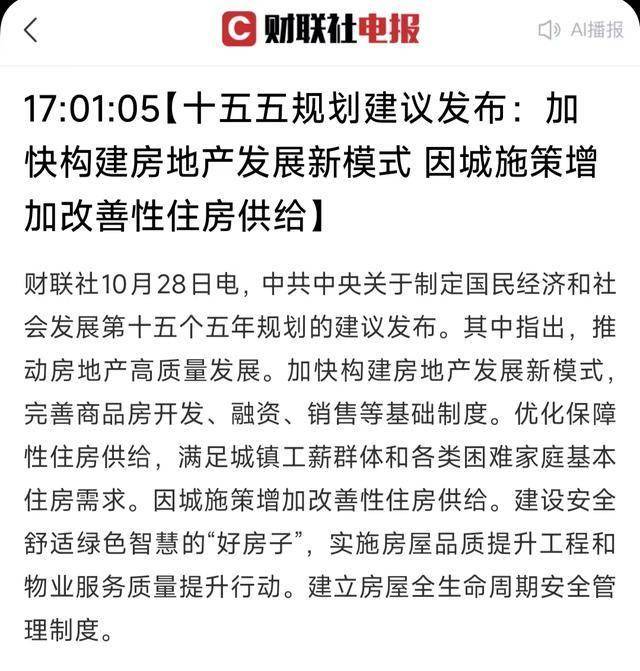
Group 1 - The "15th Five-Year Plan" emphasizes the need to eliminate unreasonable restrictions on housing consumption, which may lead to the lifting of purchase restrictions in major cities like Beijing and Shanghai [2][3] - The plan includes measures to activate underutilized land, idle properties, and existing infrastructure to promote efficient land use [2] - It aims to drive high-quality development in the real estate sector by establishing a new development model and improving basic systems [2] - The plan focuses on optimizing the supply of affordable housing to meet the basic needs of urban workers and various disadvantaged families, with a strategy tailored to local conditions [2] - There is an emphasis on enhancing risk prevention and resolution capabilities in key areas, including real estate, local government debt, and small financial institutions, to prevent systemic risks [2] Group 2 - The plan encourages the efficient use of rural collective construction land and the activation of idle land and properties to support rural development [3] - It highlights the importance of Shanghai as an international financial center, with ongoing efforts to establish multiple centers including economic, financial, trade, shipping, and technological innovation [3] - The document underscores the significance of urban renewal initiatives, such as the ongoing village renovation projects in Shanghai, indicating continued investment in urban development [3] - The real estate sector remains a crucial pillar of the national economy, shifting from rapid growth to new models while maintaining public demand for prime locations and quality housing [3]

“十五五”规划建议点评:再定义未来十年地产
HTSC· 2025-10-29 05:44
Investment Rating - The report maintains an "Overweight" rating for the real estate development and services sectors [8]. Core Insights - The "15th Five-Year Plan" emphasizes high-quality development in real estate, transitioning from quantity to quality, with a focus on improving housing quality and supply systems [2][4][6]. - The report suggests that product capability will be a core competitive advantage for real estate companies, reshaping market positions and competitive dynamics [2][6]. Summary by Sections Institutional Improvement - The government aims to enhance the foundational systems related to commercial housing throughout its lifecycle, focusing on development, financing, and sales regulations [3]. - A new safety management system for the entire lifecycle of housing is expected to be established, enhancing property quality and long-term value [3]. Supply System Enhancement - The focus of affordable housing supply will shift from merely increasing quantity to improving quality, with an emphasis on meeting the needs for improved housing [4]. - The report highlights the importance of tailored policies for different cities to address housing needs effectively [4]. Housing Quality Improvement - The concept of "good housing" is defined by five dimensions: standards, design, materials, construction, and maintenance, which will guide the market towards companies with strong product capabilities [5]. - The implementation of a safety management system and enhanced property service quality is anticipated to elevate service standards in the industry [5]. Long-term Policy Empowerment - The "15th Five-Year Plan" is expected to empower the long-term development of the industry, providing room for valuation recovery as the standard for "good housing" becomes more prominent [6]. - The report recommends focusing on companies with strong credit, good cities, and quality products, highlighting specific stocks for investment [6][10]. Recommended Stocks - The report lists several stocks with "Buy" ratings, including: - Greentown China (3900 HK) with a target price of 13.69 HKD - Yuexiu Property (123 HK) with a target price of 7.06 HKD - China Overseas Development (688 HK) with a target price of 19.08 HKD - China Resources Land (1109 HK) with a target price of 36.45 HKD - New World Development (16 HK) with a target price of 111.51 HKD [10][12].



LPR不降,楼市持续下行,房地产这一次完全明牌了
Sou Hu Cai Jing· 2025-10-25 18:10
Core Viewpoint - The real estate market is undergoing a significant transformation, moving from reliance on policy stimulus to a more self-sustaining recovery, with a shift in focus towards new housing models and economic stability rather than aggressive growth [1][4][10]. Group 1: Policy and Economic Context - No new major loosening policies for the real estate market were introduced in September and October, with the five-year LPR remaining unchanged at 3.5% for five consecutive months [1]. - Banks are reluctant to lower LPR due to pressure from declining net interest margins, which fell to 1.42% in Q2, below the 1.8% warning line [2]. - Economic recovery provides confidence to policymakers, with GDP growth targets set around 5%, showing a gradual decline from 5.4% in Q1 to 4.8% in Q3, indicating stability without the need for aggressive interest rate cuts [4]. Group 2: Market Sentiment and Future Outlook - The perception of the real estate market has shifted from "stopping the decline" to "stabilizing," reflecting a fundamental change in policy thinking as the most dangerous phase has passed [6]. - The worst moments for the real estate sector appear to be over, with improvements in project delivery and a reduction in corporate defaults, although prices continue to decline [6]. - The upcoming 15th Five-Year Plan will focus on a "new model" for real estate, emphasizing rental housing, affordable housing, and commercial housing to meet diverse housing needs [8]. Group 3: Long-term Industry Dynamics - Real estate remains a pillar industry but is no longer the primary driver of economic growth; instead, it serves as a stabilizing force [10]. - Over the long term, as the economy recovers and household incomes rise, property prices in many cities are expected to gradually increase, leading to a healthier industry structure [10]. - The current state of the real estate market is characterized by "weak recovery and strong differentiation," with the need for foundational reforms and time to solidify price stability [12].
【头条评论】 一个房屋租赁新模式的微观案例
Zheng Quan Shi Bao· 2025-10-23 17:21
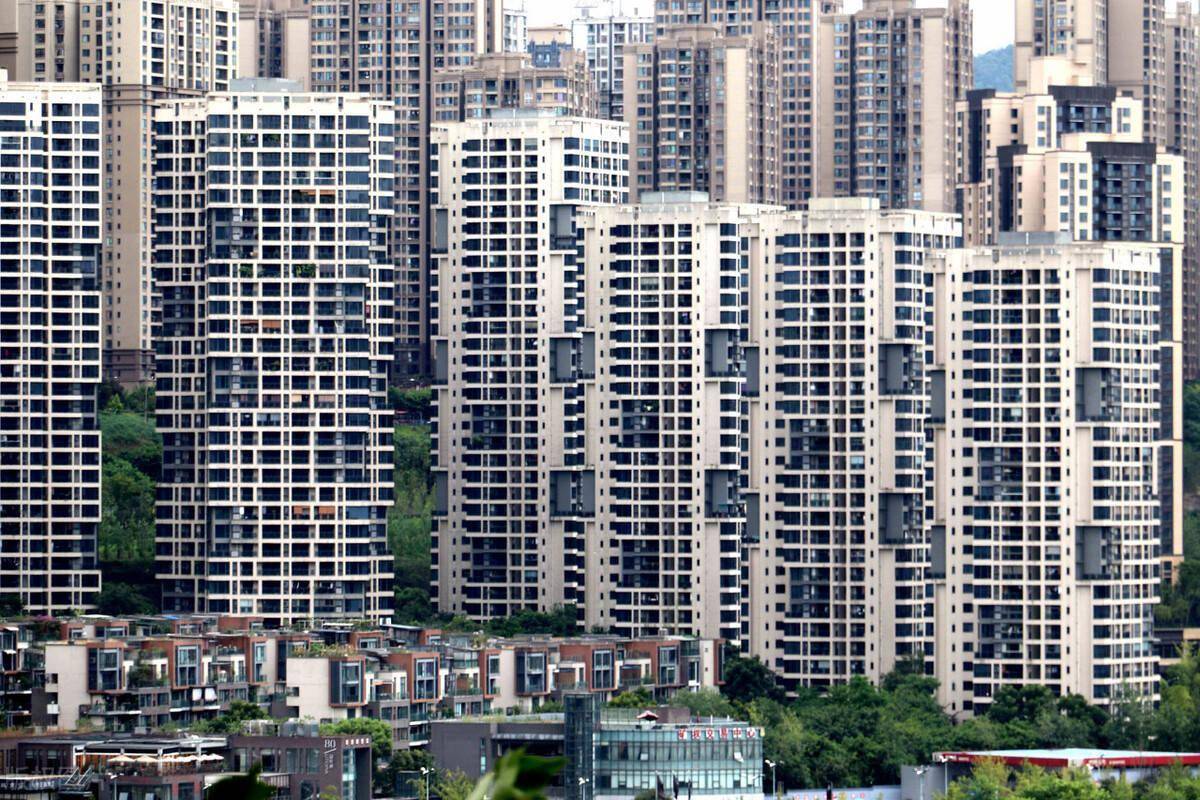
Core Insights - The company focuses on providing tailored rental services for specific groups, such as business teams, healthcare professionals, and students preparing for exams, thereby avoiding traditional rental market competition [1][3] - The rental model emphasizes cost-effectiveness by utilizing underperforming properties and offering competitive pricing, with daily rental rates approximately two-thirds of traditional hotel or apartment offerings [1][2] - The company enhances customer experience by providing additional services at low or no cost, fostering customer loyalty and reducing vacancy rates [2][3] Business Model - The company collaborates with local government agencies to cater to the needs of incoming businesses and professionals, offering flexible rental terms from one month to over six months [1] - It provides specialized services such as meeting rooms, transportation, and training facilities, which are not typically available in traditional rental products [1][2] - The strategy includes emotional engagement with clients, such as offering low-cost accommodations for visiting family members of students, which helps build a supportive community [2] Market Impact - The rental model contributes to revitalizing vacant properties, providing cash flow to property owners, and preventing price declines in the housing market [3] - It supports urban investment attraction by enhancing the service and business environment, creating a positive impression during the initial investigation phase for potential investors [3] - The approach increases the city's appeal to talent and population, particularly benefiting students under financial pressure by providing a supportive living environment [3][4] Future Outlook - The company’s model suggests a new approach to stabilize the housing market by focusing on diverse community needs and adapting to changing demographics [4] - Long-term policy considerations should align housing prices with affordability, integrating living products and services to enhance overall housing consumption potential [4]
【头条评论】一个房屋租赁新模式的微观案例
Zheng Quan Shi Bao· 2025-10-23 17:19
Core Insights - The company focuses on providing specialized long-term rental services tailored to specific groups, such as business teams, healthcare professionals, and students preparing for exams, thereby avoiding traditional rental market competition [1][3] - The rental model emphasizes cost-effectiveness by utilizing underperforming properties and offering competitive pricing, with daily rental rates approximately two-thirds of traditional hotel or apartment offerings [1][2] - The company enhances customer experience by providing free or low-cost additional services, fostering customer loyalty and reducing vacancy rates [2][3] Group 1: Business Model - The company collaborates with local government agencies to offer tailored rental solutions for businesses and educational institutions, creating a niche market [1][3] - By targeting rental-sensitive groups, the company ensures a steady demand for its services, which is crucial for maintaining occupancy rates [1][2] - The strategy includes providing essential services such as meeting rooms and training facilities, which traditional rental products do not adequately address [1][2] Group 2: Community Impact - The rental model contributes to revitalizing vacant properties, providing cash flow to property owners and stabilizing local real estate markets [3][4] - The approach enhances the city's attractiveness for talent and investment by improving the overall service and living environment for newcomers [3][4] - The company’s focus on emotional support and community engagement helps create a welcoming atmosphere for students and professionals, potentially increasing retention rates in the city [3][4] Group 3: Future Outlook - The company’s innovative rental model is seen as a potential solution for stabilizing the housing market by addressing the needs of various demographic groups [4] - Long-term policy considerations should focus on aligning housing prices with income levels and integrating services to enhance living conditions [4] - The model represents a shift towards a more sustainable and inclusive approach to real estate, which could strengthen housing consumption in the future [4]
万和财富早班车-20251014
Vanho Securities· 2025-10-14 01:52
Core Insights - The report emphasizes the importance of proactive discovery in investment opportunities rather than merely relaying information [2] Industry Updates - The upcoming Bay Chip Exhibition will focus on advanced semiconductor processing equipment, attracting attention to related stocks such as Aopu Optoelectronics (002338) and Guolin Technology (300786) [7] - The industrial software sector is entering a golden investment cycle, benefiting from increased domestic production rates, with key stocks including Zhongkong Technology (688777) and Dingjie Smart (300378) [7] - The Ministry of Industry and Information Technology has announced the launch of commercial trials for satellite IoT services, with relevant stocks being Zhenyou Technology (688418) and Qifeng Precision (920169) [7] Company Highlights - Heyuan Gas (002971) has signed a gas supply contract worth 768 million yuan with Dingyi New Materials, set to commence in July 2026 for a duration of ten years [9] - Jinggong Steel Structure (600496) reported new contracts worth 17.98 billion yuan in the first three quarters of 2025, with international business increasing by 87.3% year-on-year [9] - Hengdian East Magnetic (002056) expects a net profit of 1.39 billion to 1.53 billion yuan for the first three quarters of 2025, representing a year-on-year growth of 50.1% to 65.2% [9] - Mingyang Smart Energy (601615) plans to invest 1.5 billion pounds to establish the UK's first integrated wind turbine manufacturing base in Scotland [9] Market Review and Outlook - On October 13, the market showed resilience with major indices recovering from initial declines, with the STAR Market Index rising over 1% in the afternoon session [10] - The total trading volume in the Shanghai and Shenzhen markets was 2.35 trillion yuan, a decrease of 160.9 billion yuan from the previous trading day [10] - Key sectors such as rare earth permanent magnets, semiconductor, and non-ferrous metals saw significant gains, while automotive parts and gaming sectors faced declines [10] - The report suggests that despite short-term uncertainties, there remains strong buying interest, indicating potential low-entry opportunities in popular sectors during adjustments [10]


2025年三季度中国房地产行业总结与展望(完整版)
克而瑞地产研究· 2025-10-11 08:44
Policy, Industry, and Land - The central government is focusing on high-quality urban development and market-oriented reforms, with a policy collaboration aimed at stabilizing the real estate industry [2] - The real estate market is showing signs of stabilization, with a narrowing decline in sales and prices compared to the same period in 2024, although new home sales continue to face challenges [3] - The land market is experiencing a trend of reduced volume and improved quality, with a 9% year-on-year decline in the transaction scale of operating land in 300 cities, marking the lowest level since 2019 [4] City and Product - New home supply and demand have both decreased by 20% year-on-year, but first-tier cities are showing resilience with positive cumulative year-on-year transaction growth [6] - The "good housing" initiative is being actively promoted, with various regions implementing policies to enhance standards and regulations, indicating a potential "golden era" for the industry [7] Performance and Financing - The overall performance of real estate companies continues to stabilize, with about 30% of the top 100 companies reporting year-on-year growth, although challenges remain due to buyer confidence and inventory pressures [9] - Financing remains low, with a 30% year-on-year decline in financing volume, but several companies have successfully restructured their debts [10]

楼市三季考:超470条新政“护市”,一线城市成交修复
Di Yi Cai Jing· 2025-10-01 07:56
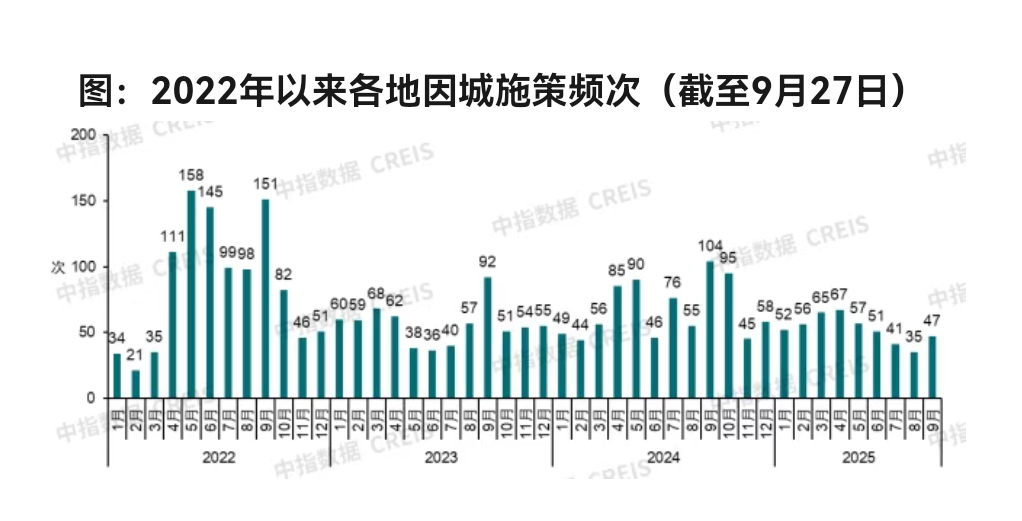
Core Viewpoint - The real estate market in China has shown signs of stabilization in 2025, with various policies implemented to support market recovery, particularly in major cities like Beijing, Shanghai, and Shenzhen [1][2][7]. Policy Measures - Over 470 policies have been introduced across approximately 200 provinces and cities to stabilize the real estate market, with a focus on demand activation, supply optimization, and new development models [2][4]. - Key demand-side policies include adjustments to housing provident fund regulations, home purchase subsidies, and the relaxation of purchase restrictions in core cities [4][5]. Demand Activation - Significant adjustments to housing provident fund policies have been made, including increased loan limits and support for down payments, with around 220 changes reported [4]. - Direct financial incentives for home purchases have been introduced, such as subsidies for families with multiple children [4]. - Major cities have optimized purchase restrictions, allowing eligible families to buy multiple properties outside core areas [4][5]. Supply Control - Local governments are also focusing on controlling supply and reducing inventory, with over 4,600 plots of idle land identified for potential acquisition, covering more than 240 million square meters and totaling over 620 billion yuan [5][6]. - Various regions have initiated projects to acquire existing housing stock, with significant numbers of units being purchased in places like Guangxi and Zhejiang [5]. Market Recovery - The first three quarters of 2025 have seen a recovery in transaction volumes, particularly in first-tier cities, with notable increases in both new and second-hand housing sales following policy changes [7][8]. - Nationally, the transaction volume for second-hand homes in key cities has increased by approximately 9% year-on-year, although this has been accompanied by price reductions [9]. Future Development Trends - The focus on urban renewal and high-quality development is expected to shape the future of the real estate sector, with an emphasis on improving existing housing stock and promoting sustainable living environments [10][11]. - The central government has highlighted the importance of urban renewal initiatives, aiming to transition from rapid growth to quality enhancement in urban development [11][12].
专访社科院倪鹏飞:城市规模存在合理区间,警惕“越大越好”主张
2 1 Shi Ji Jing Ji Bao Dao· 2025-09-30 08:49
Core Viewpoint - China's urbanization has shifted from rapid growth to stable development, with a focus on improving existing urban spaces and real estate quality, as outlined in the recent central government guidelines [1][5][22] Urbanization and City Development - The urbanization rate in China has surpassed 67%, with over 70% of urban development occurring within existing boundaries [1] - The central government emphasizes the need for integrated urban clusters and metropolitan areas to enhance competitiveness and utilize existing urban resources [1][7] - The transition from a "one city dominates" model to a more coordinated development among cities of various sizes is necessary [5][10] Real Estate Market Dynamics - The housing needs of urban residents have largely been met, transitioning from "having a house" to "having a good house," indicating a demand for quality housing [5][14] - There is a significant demand for quality housing ("good houses") that is not being met by current supply, necessitating efforts in both updating existing stock and constructing new homes [5][14][22] - The real estate market is stabilizing, but the foundation for this stability needs further strengthening, particularly in response to macroeconomic conditions [19][20] Policy Implications - The recent central urban work conference and the subsequent guidelines will accelerate market adjustments, promote new real estate development models, and enhance the quality of housing supply [22] - The focus on urban renewal as a key strategy for high-quality urban development will reshape the housing structure, increasing the proportion of quality and livable housing [22] - The government aims to balance the core functions of mega cities while alleviating non-core functions to prevent urban hollowing and maintain vitality [8][9] Challenges and Opportunities - The urbanization process faces challenges such as the "siphoning effect" of large cities and the need for smaller cities to develop their unique advantages [10][12] - The government must optimize public resource allocation to address disparities between large cities and smaller towns, ensuring balanced development [11][12] - The establishment of a dual-track system for housing, including both market and affordable housing, is essential to address the housing needs of new urban residents and young people [15][22]
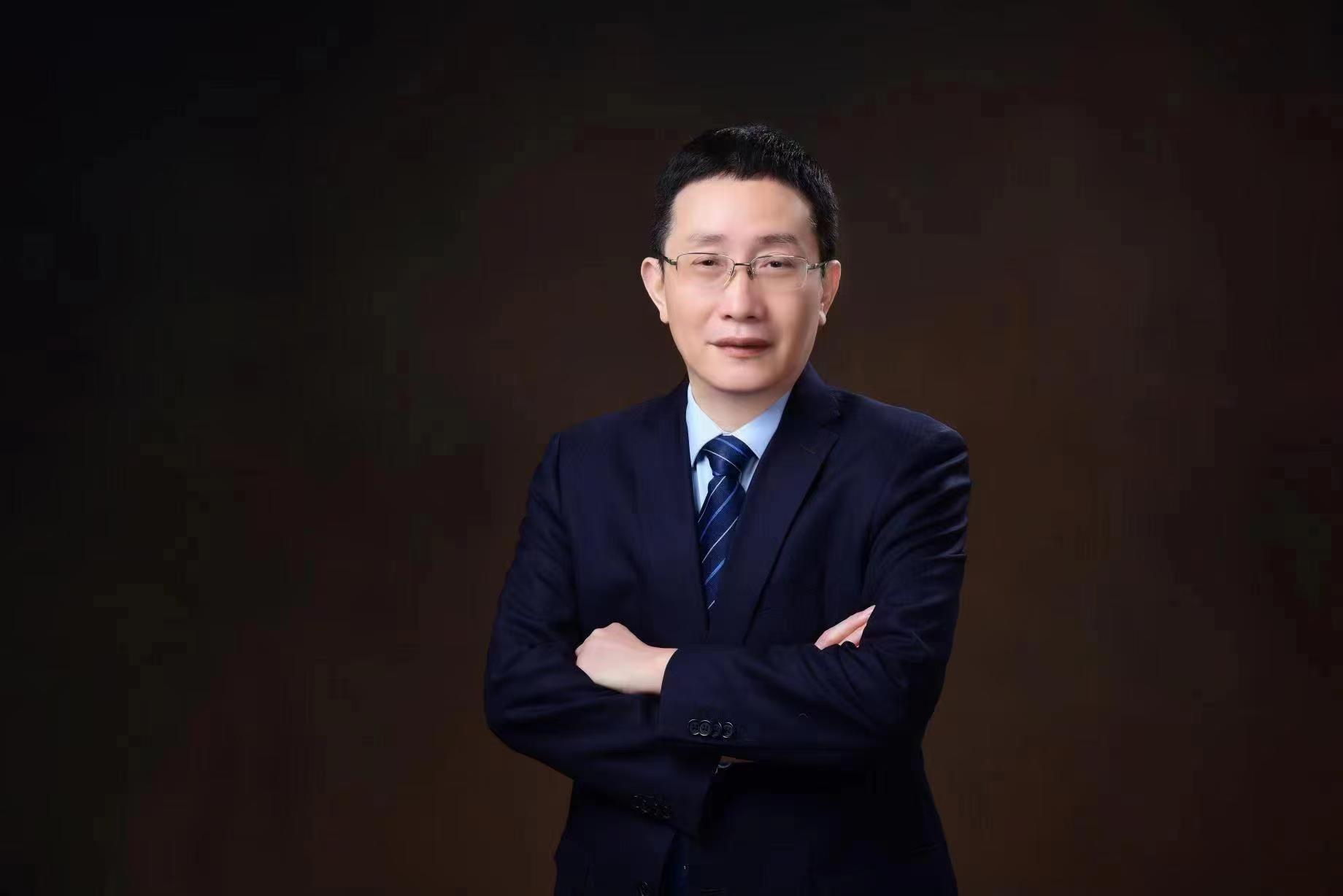
中国房协代建协会会长耿忠强:代建行业一定是一个充满前景的良性赛道
Zheng Quan Ri Bao· 2025-09-15 09:12
Core Viewpoint - The construction agency model is emerging as a new opportunity and mission in the context of a deep adjustment in the real estate industry, helping to transform traditional high-cost models and supporting the industry's de-leveraging and return to housing's residential attributes [1][4]. Group 1: New Development Model - The construction agency model aligns with the new development model emphasized by central government policies, addressing significant changes in supply and demand in the real estate market and promoting stable and healthy market development [2]. - The real estate industry is undergoing three major changes: policy direction shifting from "de-leveraging" to "risk prevention," market demand transitioning from general growth to differentiation, and competition evolving from scale expansion to quality [2]. Group 2: Market Growth and Opportunities - The construction agency model has proven effective over more than 30 years, with companies like Iron Mountain achieving over 40% project returns with less than 5% capital investment [3]. - Over 20 provincial governments in China have introduced management measures for construction agency projects, with project numbers increasing by over 40% annually from 2021 to 2024, and a projected industry penetration rate of 12.5% by 2025 [3]. Group 3: Responsibilities and Industry Trends - New opportunities for the construction agency industry come with increased responsibilities, requiring companies to address broader social issues beyond just development services [4]. - The industry is experiencing a trend of concentration among leading firms, focusing on risk management and profitability, with a consensus on prioritizing quality over quantity [4][5]. Group 4: Future Outlook - The construction agency model is seen as a promising sector that meets market demands and aligns with policy directions, while also addressing social missions such as improving living conditions and urban renewal [5]. - The industry is working towards establishing unified standards and evaluation systems to promote sustainable development and orderly competition [5].