
批判性思维

Search documents
从11分钟到1分钟,Perplexity CEO谈AI浏览器的效率革命
3 6 Ke· 2025-08-20 23:28
Group 1 - The core idea is that AI agents will take over mundane tasks, allowing humans to focus on more creative and enjoyable activities [2][5][6] - Perplexity's differentiated strategy focuses on providing accurate answers, directly challenging the traditional ad-revenue model of search engines [2][5] - The ultimate goal of AI is to integrate into the operating system level, rather than just functioning as a simple chatbot [2][20] Group 2 - AI will replace humans in repetitive tasks such as bill payments, hotel bookings, and information processing, enhancing efficiency [5][6][8] - The future internet experience will be more personalized, with AI proactively recommending content while preserving user autonomy [7][12] - Curiosity is emphasized as a crucial human trait in the AI era, driving exploration and the effective use of AI tools [7][9][13] Group 3 - Critical thinking is identified as one of the most important skills for the new generation of internet users, enabling them to navigate biased information [10][13] - AI can assist in filtering information and providing accurate content, helping users avoid misinformation [14][13] - Perplexity aims to maintain user engagement by allowing active participation in the information retrieval process [15][16] Group 4 - Perplexity's focus is on accuracy and knowledge density, distinguishing itself from general-purpose AI assistants [17][24] - The system routes queries to different models based on the type of information requested, ensuring efficient and accurate responses [18][19] - The design philosophy prioritizes user experience by integrating AI capabilities into familiar browser environments [20][21] Group 5 - The company envisions a future where the browser evolves into a more comprehensive application, potentially replacing traditional operating systems [26][28] - Building a browser that can perform various tasks requires collaboration with hardware manufacturers and software developers [28][29] - The long-term vision includes creating an AI-native operating system, with the browser serving as a foundational element [29][30]


一文祛魅:免疫过盛的精神鸡汤
Hu Xiu· 2025-08-12 01:03
Group 1 - The article discusses the phenomenon of motivational quotes, often referred to as "chicken soup for the soul," and how they provide emotional comfort without leading to real personal growth [1][4][7] - It highlights the existence of opposing motivational sayings, indicating that for almost every inspirational quote, there is a contrasting perspective that also holds value [2][5] - The underlying psychology of these quotes is explored, emphasizing that they often reinforce existing beliefs rather than challenge them, leading to a form of self-validation [3][6] Group 2 - The article points out that while motivational quotes can offer temporary relief, true growth requires self-awareness, a growth mindset, and actionable steps [7][8][10] - It warns against the dangers of oversimplification and the potential for these quotes to hinder critical thinking, leading to inaction or blind optimism [9] - The importance of learning from setbacks and reflecting on experiences is emphasized as a more valuable approach than relying solely on motivational sayings [10][11]
一个人有没有批判性思维,看他如何提问就知道了
3 6 Ke· 2025-08-11 02:18
Group 1 - Critical thinking is a rare yet essential skill in today's information-rich and uncertain environment, involving continuous questioning and deep analysis rather than quick conclusions [1] - The ability to recruit top talent is a strategic management function, with research indicating that exceptional talent can be up to eight times more productive than average talent, highlighting the link between talent quality and company performance [3] - Traditional interview processes often fail to effectively assess critical thinking skills, which encompass a range of abilities including reasoning, constructing logical arguments, and identifying flaws or biases in situations [3][4] Group 2 - The Socratic method, which emphasizes asking more questions rather than focusing solely on answers, is an effective strategy for cultivating critical thinking in recruitment [5] - Reverse interviews, where candidates interview the company, can reveal candidates' intrinsic strengths, work preferences, and thought processes, providing insights into their leadership qualities [6] - A structured four-step process for conducting reverse interviews includes framing a scenario, guiding candidates to ask relevant questions, interpreting their understanding, and prompting them to outline immediate actions [10][11][12] Group 3 - Candidates who excel in reverse interviews demonstrate a mindset of critical thinking, which is a highly sought-after yet often scarce skill among team members [19] - Companies that foster a culture of curiosity and encourage questioning can transform challenges into opportunities, allowing for more agile responses to changes in the business environment [20] - The importance of nurturing a curious culture is emphasized, as diverse teams can enhance problem-solving processes and amplify the impact of curiosity within the organization [16]

AI时代,人还需要独立思考吗?
Hu Xiu· 2025-07-27 13:42
Core Viewpoint - The article emphasizes the importance of independent thinking in an AI-driven world, arguing that true independent thought goes beyond merely consuming information and requires deeper emotional and cognitive engagement [1][2]. Group 1: Understanding Independent Thinking - Independent thinking is not merely about information acquisition or following trends; it involves pausing to critically analyze and reflect on information [3][4]. - Genuine independent thought requires self-inquiry before expressing opinions, asking oneself if they truly understand the subject matter and what their personal feelings are [5]. Group 2: The Role of Emotions in Thinking - The foundation of independent thinking is emotional awareness, where initial emotional reactions to information serve as a starting point for deeper inquiry [6][7][8]. Group 3: Critical Thinking - Critical thinking involves recognizing the boundaries of arguments rather than simply criticizing them; it requires a thorough examination of viewpoints [9]. Group 4: AI as a Tool - AI should be viewed as a tool to enhance thinking rather than a replacement for it; individuals should engage in self-reflection before consulting AI [10][12]. Group 5: Developing Inner Awareness - There is a need to cultivate an "inner sense" to better understand one's emotions and thoughts, which can enhance independent thinking [13]. Group 6: Exercises to Enhance Thinking - The article suggests four exercises to foster active thinking: keeping an emotion diary, challenging accepted viewpoints, creating a question list before using AI, and practicing mindfulness meditation [14][17]. Group 7: Conclusion - Despite AI's capabilities, it cannot replicate personal experiences, emotions, and insights, which are essential for genuine thought processes [18][19].

X @外汇交易员
外汇交易员· 2025-07-17 06:19
AI and Education - The tech industry emphasizes the continued importance of learning mathematics, reasoning, logic, and computer programming, even with advancements in AI [1] - The industry suggests developing a deep-thinking mindset to interact with AI, define problems, and critically assess AI's solutions [1] Critical Thinking - The tech sector highlights the significance of critical thinking and reasoning from first principles, despite AI's problem-solving capabilities [1] - The industry stresses the need for discernment in evaluating the accuracy of AI's responses [1]
施一公谈AI:自己天天用,叮嘱学生要打好基础并有批判性思维
Di Yi Cai Jing· 2025-07-08 05:32
Core Insights - The rapid development of AI is significantly impacting life sciences research, emphasizing the need for critical thinking and foundational research skills among students [1][3]. Group 1: AI in Research - AI tools like AlphaFold enable precise predictions of protein structures, allowing researchers to explore vast numbers of homologous structures and their genetic sequences [3][4]. - The breakthrough in protein structure prediction by AlphaFold allows a shift in biological research methodologies, enabling a reverse approach from biophysics to biological functions, thus uncovering new phenomena and mechanisms [4]. Group 2: Educational Recommendations - Students, regardless of their research focus, should prioritize foundational training in scientific logic and critical thinking to effectively utilize AI advancements [3][4]. - Collaboration among students, principal investigators (PIs), and interdisciplinary exchanges is encouraged to enhance research outcomes and leverage AI as a supportive tool [4].

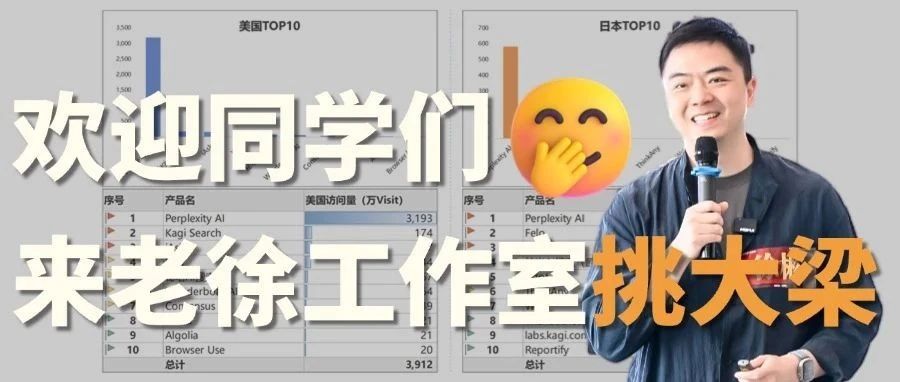
招人!欢迎同学们来老徐工作室挑大梁!
老徐抓AI趋势· 2025-07-01 15:29
Core Viewpoint - The article emphasizes the importance of foundational skills such as logical ability, common sense, curiosity, and critical thinking in the AI era, suggesting that these skills will enable individuals to effectively utilize AI tools and technologies [3][4][6]. Group 1: Skills for the AI Era - The article argues that those with strong foundational skills will benefit the most in the AI era, highlighting four key dimensions: logical ability, common sense and curiosity, and critical thinking [3]. - Logical thinking is essential as it allows individuals to effectively question AI outputs and assess their validity [4]. - Common sense and curiosity are necessary to explore the limitations of AI outputs and uncover deeper opportunities through continuous inquiry [5]. - Critical thinking is crucial for identifying errors in AI responses, which can determine an individual's potential for success [6]. Group 2: Internship Opportunities - The company is offering paid summer and long-term internships for students to engage in AI and business practices, providing practical experience in the field [7]. - Interns will work with AI tools to conduct research projects, generate content, and analyze global social media strategies, enhancing their understanding of industry dynamics [8]. - The internship aims to equip participants with frontline AI application experience, global perspectives, and improved commercial analysis skills [8]. Group 3: Candidate Requirements - The company seeks young candidates with strong learning abilities, preferably with advanced English skills, and a curious mindset [9]. - While a background in business, finance, or commercial analysis is preferred, it is not a strict requirement [9]. Group 4: Application Process - Interested candidates can apply by adding the assistant's WeChat and sending their resumes for review [10]. Group 5: Final Thoughts - The article concludes by stressing the importance of making informed choices that will yield long-term benefits, encouraging the sharing of opportunities with talented young individuals [11].
技术越强越没有选择权?
Hu Xiu· 2025-06-23 07:21
Group 1 - The core message emphasizes the importance of having a clear set of values in a rapidly changing technological landscape, as individuals can easily be swayed by external influences if they lack self-awareness [5][6][8] - Eric Schmidt highlights the necessity of self-reflection, suggesting that individuals should regularly assess their goals and values to maintain direction in their lives [9][14] - He discusses the concept of life stages, where individuals accumulate resources in their youth, build influence in mid-life, and focus on giving back to society later on, indicating that values evolve over time [10][11][13] Group 2 - Schmidt points out the generational shift in work habits, noting that the rise of services like Uber has changed perceptions of efficiency and productivity [18][19][20] - He expresses concern over the loss of attention control in the digital age, where social media competes for user attention, often leading to negative emotional responses [24][26][28] - The discussion includes the impact of "disposable algorithms" that prioritize immediate engagement over sustained focus, resulting in a fragmented attention span [30][32][36] Group 3 - Schmidt stresses the need for critical thinking in education, arguing that future workplaces will require individuals who can think independently and solve problems rather than just follow instructions [39][42] - He warns that traditional programming jobs may be automated, but emphasizes the importance of understanding and innovating with AI tools [43][44] - The need for interdisciplinary education is highlighted, where future professionals must bridge gaps between fields, such as medicine and AI [45][46][47] Group 4 - Leadership must adapt to rapid changes, with Schmidt advocating for term limits in leadership positions to ensure organizational vitality [49][52][53] - He introduces the concept of "cross-stage leadership," where leaders must transition roles as they progress through different life stages [55][56] - The ethical responsibilities of leaders in the age of AI are underscored, emphasizing the need for clear value frameworks and accountability [59][60] Group 5 - Schmidt raises concerns about the future of decision-making in a world increasingly influenced by AI, suggesting that individuals may unknowingly relinquish their autonomy [62][66][68] - He warns of the risks associated with AI development, particularly the potential for future generations to inhabit a world they did not help design [69][70] - The importance of involving younger generations in shaping the future is emphasized, as it is crucial for sustainable societal development [71][72][73]
读书是一种被高估的美德
Hu Xiu· 2025-06-10 05:57
Group 1 - Reading is often perceived as a sacred virtue, equating readers with being cultured and deep thinkers, where the thickness of one's bookshelf symbolizes the depth of thought [1][2] - In a commodified society, reading individuals are positioned at a moral and intellectual high ground, often used by the wealthy and celebrities to enhance their cultural image [2] - The act of reading is fundamentally a passive cognitive activity, where individuals may lose their critical thinking abilities over time, as it involves repeating the author's thought process rather than creating original thoughts [3][4] Group 2 - Reading is primarily an input behavior that is simple and does not require significant cognitive resources compared to writing or research, leading to an overestimation of its value [6] - The cultural context often associates reading with moral superiority, ignoring the fact that the barriers to reading are low, thus it cannot be a reliable measure of moral character [7] - Reading is a neutral activity that does not inherently elevate or degrade one's character, and its consumption can be likened to other forms of entertainment, such as watching short videos [8] Group 3 - The true value of reading lies not in the quantity of books read but in the ability to internalize knowledge and thoughts through critical thinking and reconstruction [8][9] - A rational perspective on reading involves being aware of the illusion that "input equals justice" and maintaining a critical stance towards the material consumed [9] - Output is emphasized as being more important than input, advocating for conscious engagement in active output to enhance the learning process [10][12] Group 4 - The capabilities of artificial intelligence in processing large volumes of text highlight the need for human skills in knowledge reconstruction and deep thinking, which cannot be easily replaced by technology [11][12] - The ability to think critically, create, and apply knowledge is what distinguishes human cognition from mere data processing [12]
人工智能教育指南深意何在
Bei Jing Qing Nian Bao· 2025-05-16 03:31
Group 1 - The Ministry of Education has released two guidelines aimed at promoting artificial intelligence education in primary and secondary schools, emphasizing the importance of cultivating innovative talents with AI literacy [1] - The guidelines are part of a broader initiative to integrate AI education into the overall development strategy of the country, ensuring students can effectively use AI while developing core competencies necessary for an intelligent society [2] - The educational framework is designed to be progressive and interdisciplinary, focusing on interest cultivation in elementary school, technical principles in middle school, and systematic thinking in high school, thereby laying a solid foundation for higher education [2] Group 2 - The guidelines address the potential over-reliance on AI tools by students, which could hinder their independent thinking skills; measures are proposed to prevent direct copying of AI-generated content in assignments [3] - Critical thinking is highlighted as essential in the AI era, with the guidelines advocating for the teaching of reliable AI tools and fostering students' ability to question AI outputs, thereby enhancing their critical thinking and data safety awareness [4] - Practical activities are encouraged in AI education to engage students and ensure a balance between technological empowerment and the essence of education, ultimately contributing to the cultivation of a skilled workforce for national technological independence [4]