抗通胀资产

Search documents
黄金交易入门指南:从基础知识到实战技巧
Sou Hu Cai Jing· 2025-07-15 02:03
Group 1 - The core concept of gold trading involves investors buying and selling gold or its derivatives to gain profits, especially during economic instability or inflation [1] - Gold trading serves as a significant asset allocation method suitable for various risk preferences among investors [10] Group 2 - Major forms of gold trading include physical gold, paper gold, gold futures, gold ETFs, and spot gold [6] - Key global gold trading markets are the London Gold Market, COMEX, Shanghai Gold Exchange, and Hong Kong Gold and Silver Exchange [6] Group 3 - Factors influencing gold prices include the US dollar exchange rate, inflation, interest rate policies, geopolitical risks, and supply-demand dynamics [6] - Gold is viewed as a hedge against inflation, with prices typically rising during inflationary periods [7] Group 4 - Basic strategies for gold trading include long-term investment (dollar-cost averaging), short-term trading (technical analysis), and arbitrage trading [4][3][4] - Long-term investment is suitable for conservative investors, while short-term trading is for aggressive investors [4][3] Group 5 - Advantages of gold trading include its hedging function during economic crises, inflation resistance, and high liquidity in global markets [5][7][8] - Disadvantages include significant price volatility, storage costs for physical gold, and leverage risks in futures trading [8][9] Group 6 - To start gold trading, investors should choose a trading platform, complete the account opening process, learn technical analysis, and begin with small amounts [11]
国际黄金延续区间整理
Jin Tou Wang· 2025-06-19 01:57
Core Viewpoint - The international gold price experienced a decline on June 18, closing at $3368.67 per ounce, down by $18.91 or 0.56% from the previous day, with a daily high of $3399.79 and a low of $3362.39 [1] Gold ETF Holdings - As of June 18, the gold ETF holdings increased to 947.37 tons, up by 1.43 tons from the previous trading day, indicating a rise in buying interest and a bullish sentiment towards gold [2] Market Influences - The Trump administration's tariff policies have become a focal point in the market, with Federal Reserve Chairman Powell indicating that commodity price inflation is expected to rise this summer, as some tariff costs will be passed on to U.S. consumers. Customs revenue reached $23 billion in May, nearly quadrupling year-on-year, highlighting the significant impact of high tariffs on import costs [2][3] - The inflation expectations driven by tariffs may provide medium-term support for gold prices, as gold is traditionally viewed as an inflation hedge. However, short-term factors such as a strengthening dollar and the Federal Reserve's cautious monetary policy stance may limit upward movement in gold prices [3] Technical Analysis - The recent decline in gold prices suggests a weak short-term outlook, as it failed to return above the 5-day moving average. However, it remains above the mid-range and shows signs of potential recovery, with long-term moving averages providing support [4]
隔夜黄金回落收跌 全球贸易局势进一步为金市增添变数
Jin Tou Wang· 2025-06-17 02:52
Group 1 - The international gold price closed at $3,384.54 per ounce on June 16, down by $47.45 or 1.38%, with a daily high of $3,450.98 and a low of $3,382.39 [1] - As of June 16, the gold ETF holdings increased to 941.93 tons, up by 1.44 tons from the previous trading day, indicating a bullish sentiment in the market [2] - The total value of gold ETF holdings on June 16 was approximately $102.87 billion, compared to $103.86 billion on June 13 [2] Group 2 - The G7 summit in Canada is facing uncertainties due to differing positions on trade and geopolitical issues, which may increase global economic volatility and support gold's safe-haven demand [2] - A trade agreement between the U.S. and the U.K. has been reached, while negotiations with Japan remain unresolved, contributing to the complexity of global trade dynamics [2] - Canadian Prime Minister Mark Carney and President Trump have agreed to advance trade agreements within 30 days, focusing on North American economic and security relations, which may raise inflation expectations and increase gold's appeal as an anti-inflation asset [3] Group 3 - The recent decline in gold prices has formed a bearish reversal pattern, suggesting a potential adjustment towards the 60-day moving average support, although multiple support levels exist below [4]
金晟富:6.6黄金冲高回落聚焦非农!日内黄金行情分析参考
Sou Hu Cai Jing· 2025-06-06 03:24
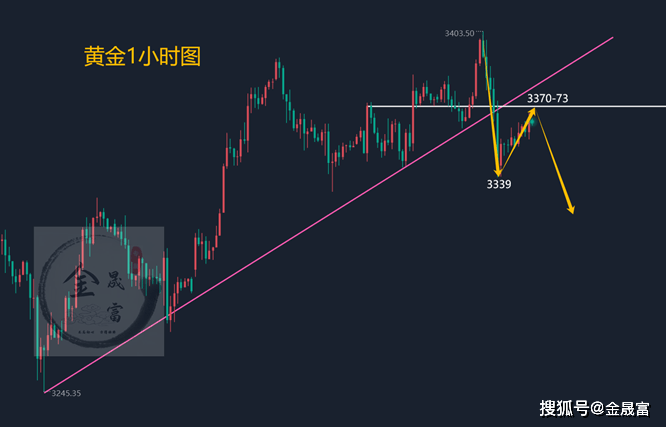
Market Overview - Recent fluctuations in gold prices are influenced by geopolitical risks and trade tensions between the US and China, with gold prices experiencing a high of $3403.28 per ounce before retreating to $3352.65 due to easing trade concerns [1][2] - Gold has seen a year-to-date increase of approximately 28%, indicating strong demand amid global uncertainties [1] Economic Indicators - The upcoming US non-farm payroll data is anticipated to show an addition of 125,000 jobs, with the unemployment rate expected to remain at 4.2% [2] - The consumer price index (CPI) for May is projected to indicate rising inflation, partly due to tariff effects, which could enhance gold's appeal as an inflation hedge [2] Technical Analysis - Gold's recent trading pattern shows a high volatility with a potential downward trend if it breaks below the 10-day moving average, currently positioned around $3333 [3][5] - Key resistance levels are identified at $3372 and $3379, while support levels are noted at $3339 and $3333 [5][6] Trading Strategies - Suggested trading strategies include short positions on gold at $3370-$3373 with a target of $3350-$3330, and long positions at $3300-$3305 with a target of $3320-$3340 [7] - Emphasis on risk management and the importance of stop-loss orders to mitigate potential losses [8]

比特币24小时暴涨3000美元!揭秘反弹背后的技术密码与情绪暗战
Sou Hu Cai Jing· 2025-05-28 04:22
Core Insights - Bitcoin experienced a significant rebound on May 27, 2025, with a price increase from a low of $108,000 to a high of $112,000, marking a 3.7% rise within 24 hours and a trading volume exceeding $120 billion, which is the highest in nearly two weeks [1] - This rebound restored Bitcoin's market capitalization to $2.2 trillion, solidifying its position as the fifth-largest asset globally [1] Technical Analysis - The "golden cross" signal was formed between the 50-day moving average (MA50) and the 200-day moving average (MA200), indicating a bullish trend since the 2023 halving cycle [4] - The MACD histogram showed a "bottom reversal" signal with a 32% expansion during the rebound, the highest since December 2024 [5] - The rebound from $108,000 to $112,000 aligned perfectly with Fibonacci retracement levels, confirming technical analysis theories [6] Market Sentiment - The Fear and Greed Index saw a rapid recovery from 39 (fear zone) to 73 (greed zone) within 48 hours, indicating extreme volatility and a unique market ecology where sentiment often precedes price changes [7] - Whale addresses increased their holdings by 12,000 BTC during the price dip, indicating strong accumulation behavior [9] Macro Factors - The weakening of the US dollar and the shift in Trump's tariff policy contributed to increased investment in Bitcoin, with Asian investors accounting for 58% of the trading volume during this rebound [11] - Institutional inflows were driven by ETFs and sovereign funds, with significant algorithmic trading activity triggered by Bitcoin surpassing the $109,000 threshold [12] Investment Narrative - Bitcoin's narrative has shifted from "digital gold" to an "anti-inflation asset," with a 14.6% increase in price coinciding with a 3.7% rise in the US CPI, leading to recognition from traditional financial institutions [13] Future Outlook - If Bitcoin closes above $113,000 on a weekly basis, it could pave the way for a rise to $125,000, based on Fibonacci extension levels [17] - The potential introduction of the "GENIUS Stablecoin Act" could bring in compliance funds worth hundreds of billions [17] - Historical data suggests that the fourth halving typically leads to significant price increases, averaging 285% over nine months [17]
黄金投资逻辑生变:国内金价“破千”VS国际金价反弹,如何投资?
Sou Hu Cai Jing· 2025-05-16 07:53
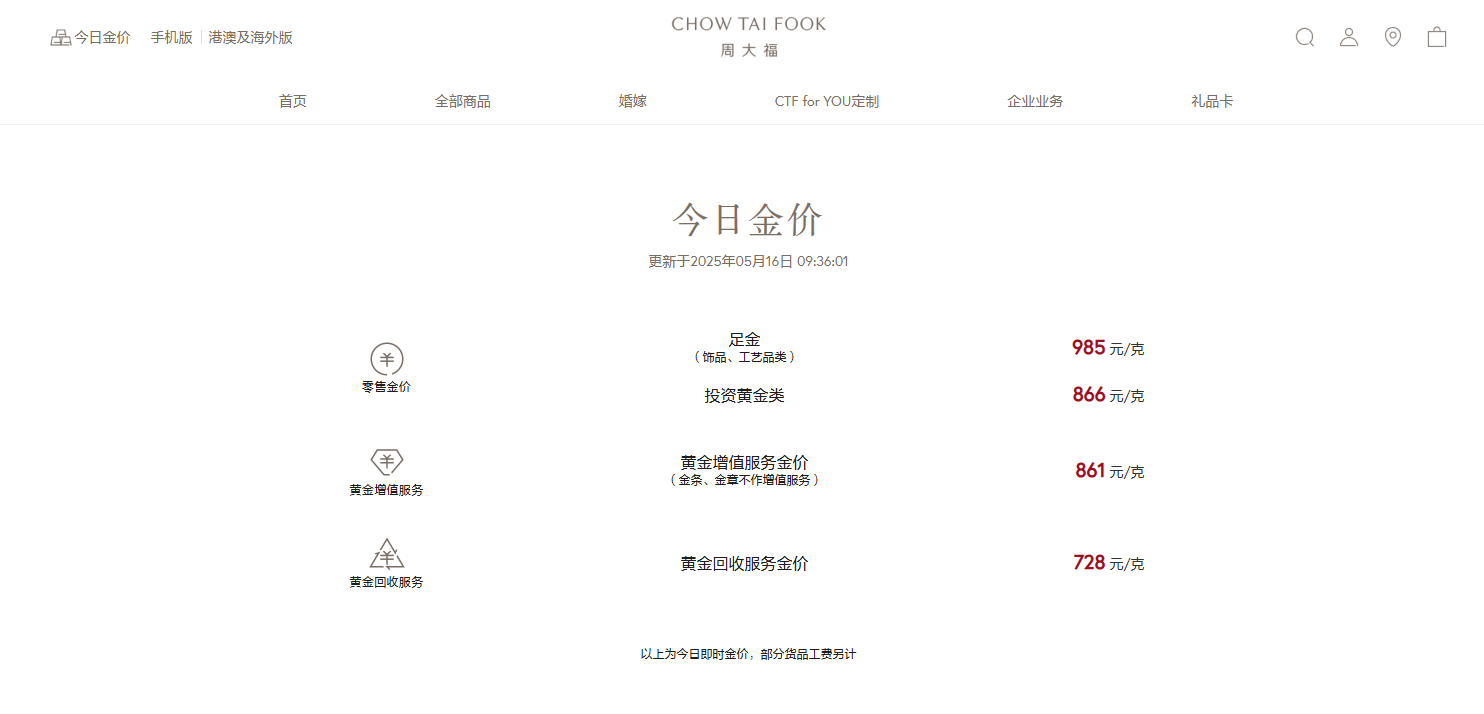
Core Viewpoint - The gold market is experiencing a divergence, with domestic jewelry gold prices falling below 1,000 yuan per gram while international gold prices are rebounding after significant fluctuations. This situation is influenced by both short-term factors such as geopolitical tensions and trade negotiations, as well as long-term trends related to the restructuring of the global monetary system [1]. Domestic Gold Prices - As of May 16, domestic jewelry gold prices from brands like Chow Sang Sang and Chow Tai Fook have dropped to a range of 978-995 yuan per gram, representing a decline of over 10% from the April peak [1]. - The decline in domestic prices is attributed to three main pressures: 1. Easing trade tensions reducing safe-haven demand as progress in US-China tariff negotiations boosts market risk appetite, leading funds to shift from gold to equities [2]. 2. Hawkish signals from the Federal Reserve suppressing gold prices, with the US dollar index rising to 100.63 following stronger-than-expected April non-farm payroll data, delaying interest rate cuts [2]. 3. Increased technical selling pressure after gold prices fell below the critical support level of 3,300 USD, triggering programmatic stop-losses [2]. International Gold Prices - The London gold price rebounded to 3,226 USD per ounce on May 15, recovering approximately 3% from the low in April [3]. Support Factors for International Gold Prices - The rebound in international gold prices is supported by several factors: 1. Central bank purchases, with global central banks net buying 244 tons of gold in Q1 2025, and China increasing its holdings for six consecutive months [5]. 2. Rising expectations of stagflation, as persistent inflation in the US coexists with economic slowdown, enhancing gold's appeal as an anti-inflation asset [5]. 3. Ongoing geopolitical risks, particularly in the Middle East, maintaining a "crisis premium" for gold [5]. Negative Influences on Gold Prices - The gold market faces challenges from: 1. Rising real interest rate risks if the Federal Reserve resumes rate hikes due to inflation rebound, increasing the opportunity cost of holding gold [6]. 2. Dollar liquidity disturbances caused by the Fed's balance sheet reduction, potentially weakening short-term demand for gold as a "liquidity safe haven" [6]. Positive Influences on Gold Prices - The restructuring of the monetary system and debt risks are creating favorable conditions for gold: 1. Accelerating de-dollarization, with the dollar's share in global central bank reserves dropping to 58%, increasing demand for gold as a non-sovereign asset [7]. 2. Concerns over debt monetization, as US federal debt surpasses 35 trillion USD, undermining the credibility of credit money and reinforcing gold's monetary attributes [7]. 3. Policy uncertainty premiums due to the volatility of Trump's tariff policies, positioning gold as a tool for hedging tail risks [7]. Long-term Outlook for Gold - The perception of gold's safe-haven attributes is shifting: 1. In the short term, gold prices are subject to high volatility due to Federal Reserve policies and easing geopolitical tensions [8]. 2. In the long term, trends such as global debt expansion, diversification of the monetary system, and central bank gold purchases continue to support gold's strategic allocation value [8]. Multi-faceted Role of Gold - Gold serves multiple roles: 1. As a hedge against geopolitical risks and systemic financial crises, though liquidity risks must be monitored [9]. 2. As an anti-inflation asset, performing well in stagflation environments, but should be combined with other assets like oil and agricultural products for effective hedging [9]. 3. As a substitute currency, particularly during periods of weakened dollar credibility, forming a "new hedging combination" with cryptocurrencies like Bitcoin [9]. Investment Strategy Principles - Three key principles for gold investment strategy: 1. Diversification: Avoid single bets on gold and construct a "core + satellite" portfolio combining stocks, bonds, and cash [10]. 2. Tool adaptation: For rigid demand (weddings, gifts), choose low-cost, low-premium physical gold bars or bank-stored gold; for long-term allocation, consider gold ETFs (high liquidity) and mining stocks (leverage effect); for short-term trading, focus on arbitrage opportunities between COMEX gold futures and domestic T+D [13]. 3. Dynamic rebalancing: Adjust positions based on Federal Reserve policy signals (e.g., dot plot) and geopolitical events (e.g., tariff adjustments) to avoid emotional trading [13].
“药茅”神话破灭:片仔癀市值蒸发1700亿,消费理性倒逼“奢侈品”回归药品本质
Xin Lang Zheng Quan· 2025-05-14 04:54
Core Insights - The company Pianzaihuang, once celebrated as the "Moutai of medicine," is experiencing a significant decline in its market value and revenue growth, raising questions about its true worth in a changing market environment [1][2] Group 1: Rise of Pianzaihuang - Pianzaihuang's growth story is characterized by its unique selling propositions, including a "nationally secret formula" and the use of rare natural ingredients, which led to a dramatic price increase of its core product from 125 yuan per piece in 2003 to 760 yuan in 2023 [1] - The company reached a market capitalization of over 300 billion yuan in 2021, with secondary market prices for its products soaring to 1,600 yuan per piece, significantly exceeding the price of gold [1] - The dual positioning of Pianzaihuang as both a high-end gift and an investment asset, particularly in conjunction with Moutai, fueled its valuation surge, with a compound annual growth rate of 24% in revenue from 2016 to 2021 [1] Group 2: Bubble Burst and Value Reassessment - In 2024, Pianzaihuang's revenue growth plummeted to 7.25%, with a notable decline in Q4 and Q1 revenues, leading to a halving of its stock price from peak levels and a drop in secondary market prices to 500 yuan per piece [2] - The decline is attributed to a retreat in the gift economy, with reduced demand for high-end gifts due to changing consumer behavior and ongoing anti-corruption policies, resulting in less than 30% of Pianzaihuang's sales being for medical treatment [2] - Rising raw material costs, particularly for key ingredients like natural cow bile, which increased by 154% over three years, have further pressured profit margins, despite a price increase of 28.8% in 2023 [2] Group 3: Challenges and Transformation - Pianzaihuang is attempting to pivot by investing in 11 clinical trials related to liver cancer and developing new traditional Chinese medicine products, aiming to establish a robust evidence-based medical framework [3] - The company faces significant challenges, including a historically low research and development expenditure rate of under 2% over the past five years and limited revenue contribution from its new product lines [3] - As the market shifts from valuing stories to demanding tangible value, Pianzaihuang must address clinical efficacy concerns and develop products that meet real medical needs to secure future growth [3]

UltimaMarkets:关税迷雾叠加美联储政策路径不明,投资者只好寻求安全资产
Sou Hu Cai Jing· 2025-05-13 13:19
Group 1 - Investors are facing uncertainty regarding the economic impact of President Trump's tariff policies, which complicates the path of monetary policy [1] - The Federal Reserve has maintained interest rates and indicated that the risks of rising inflation and unemployment are increasing, leading to an unclear monetary policy response [3] - Investors are becoming more cautious, focusing on inflation-resistant assets and stocks of companies likely to withstand economic downturns due to the uncertain trade environment [3][6] Group 2 - Market expectations remain similar post-Federal Reserve meeting, with futures indicating three 25 basis point rate cuts by December, with the next likely in July [4] - There is a belief that economic growth shocks will outweigh the impact of rising inflation, prompting expectations for further monetary easing [4][5] - Financial advisors are rebalancing portfolios to reduce risk, anticipating that the Fed's lack of precise responses will continue [6]

股神退休!巴菲特:美国财政策略令我害怕,请慎选不会贬值的货币!
Sou Hu Cai Jing· 2025-05-06 11:10
Core Insights - Warren Buffett announced his retirement as CEO of Berkshire Hathaway by the end of this year, marking a significant transition in the company's leadership [1][4] - Buffett expressed serious concerns about the current U.S. fiscal policy and the risks of currency devaluation, urging investors to be cautious in selecting currencies that will not depreciate [1][8] Leadership Transition - Greg Abel, currently the Vice Chairman of non-insurance operations, will succeed Buffett as CEO, while Buffett will remain as Chairman to provide support [4] - Abel emphasized the importance of maintaining the strong values and investment philosophy established by Buffett and Charlie Munger over the past sixty years [4] Financial Position - Berkshire Hathaway's cash, treasury bills, and other short-term investments reached a record high of $347 billion, reflecting a trend of selling more stocks than buying for ten consecutive quarters [5] - In 2024, the company sold over $134 billion worth of stocks, primarily reducing its holdings in Apple and Bank of America, indicating a scarcity of attractive buying opportunities in the current market [5] Economic Concerns - Buffett's warning about U.S. fiscal policy stems from ongoing large fiscal deficits and the potential for currency devaluation, which he perceives as a significant risk [8] - The discussion around "de-dollarization" is increasing globally, with analysts predicting further weakening of the dollar [8] Investment Implications - Buffett's remarks highlight the growing demand for inflation-hedging assets, with gold traditionally seen as a primary option [11] - Despite Buffett's skepticism towards cryptocurrencies, his concerns about currency stability resonate with arguments made by cryptocurrency advocates, particularly regarding Bitcoin's fixed supply as a hedge against inflation [11][12] Future Challenges - Buffett's retirement signals a potential shift in the global asset allocation logic, as he advocates for "currency diversification" amidst declining trust in traditional financial systems [13] - Investors face the challenge of protecting their wealth in a potential currency devaluation era, weighing options between traditional value investments, hard assets like gold, and emerging assets like cryptocurrencies [13]