
数智化赋能

Search documents
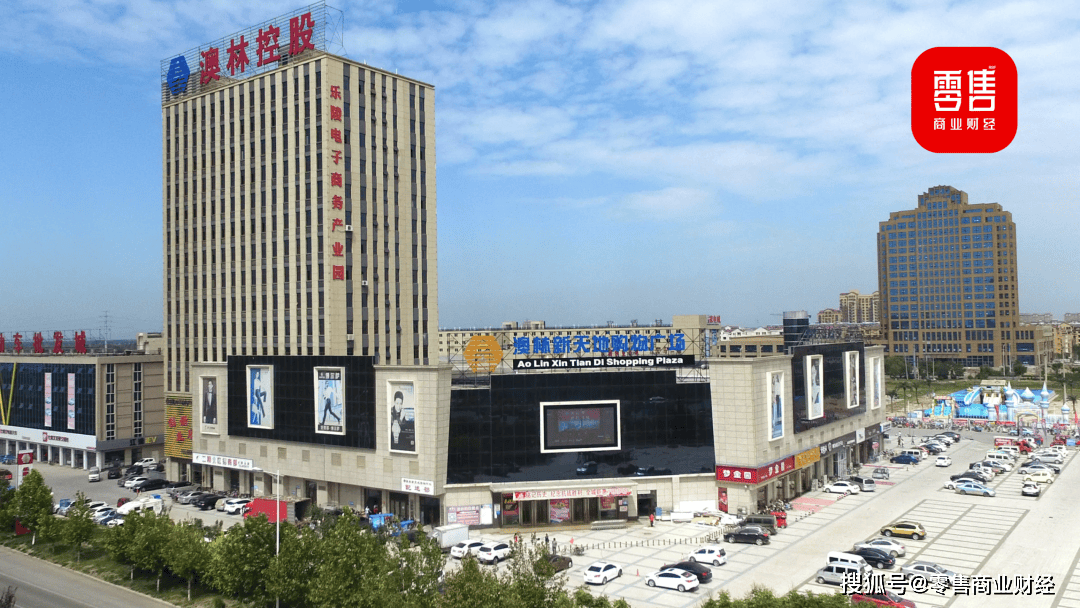
山东德州澳林新生活购物中心:焕新场景业态,推动商业破局重生
Sou Hu Cai Jing· 2025-12-23 18:45
Core Insights - The article discusses the transformation of the Aolin New Life Shopping Center into a comprehensive consumption destination, integrating shopping, socializing, cultural tourism, and night economy [3][10]. Group 1: Project Background - Aolin New Life Shopping Center was established in July 2014 and has evolved from a traditional retail mall to a modern urban consumption hub, attracting over 8 million visitors annually and recognized as a core consumption area in the region [4]. - The center faced challenges due to e-commerce competition, outdated business models, and significant consumer outflow to nearby cities with richer one-stop shopping experiences [5]. Group 2: Renovation Process - The operational innovation shifted focus from "selling products" to "selling services," optimizing the supply chain and enhancing quality control to improve product offerings [6]. - The expansion included a 1.22 billion yuan investment in outdoor spaces and the introduction of diverse business formats, creating a comprehensive consumption ecosystem [7][8]. Group 3: Post-Renovation Outcomes - The shopping center attracted 20 international brands and 52 flagship stores, achieving a 95% occupancy rate, with projected sales of 3.2 billion yuan in 2024, accounting for 10% of the regional retail total [10]. - Nighttime consumption is expected to reach 58% of total sales by 2024, with a 60% increase in nighttime retail and dining sales, establishing the center as a benchmark for urban night economy [10]. - The project has created over 2,200 jobs and enhanced local youth engagement, increasing local consumer retention from 40% to 80% [11]. Group 4: Policy and Management Innovations - The local government has implemented a "precise support + resource integration" model to facilitate project development, focusing on ecological cultivation rather than just financial subsidies [13]. - Management innovations emphasize enhancing core competitiveness and extending operational hours to maximize commercial potential, particularly during nighttime [14]. Group 5: Service Model Innovations - The center employs a "national trend + interaction" service philosophy, utilizing immersive technologies to create engaging consumer experiences and cultural events [15].

数智化赋能助力突围,批零行业重塑产业链价值
Di Yi Cai Jing Zi Xun· 2025-12-19 07:44
Core Viewpoint - The wholesale and retail industry in China is facing challenges due to slowing growth and intensified competition, necessitating a shift from "scale dividends" to "value dividends" to enhance quality and innovation in services [1] Group 1: Industry Challenges and Transformations - The wholesale and retail sector is entering a phase of stock competition, with overall growth rates slowing down [3] - Companies are exploring strategies to break through the low-price competition, focusing on AI-driven smart pricing and a comprehensive service ecosystem [3] - The industry is characterized by a need for digital transformation and quality enhancement to create new consumer value [4][5] Group 2: Company Strategies and Innovations - Xiaogoods City has transformed from a traditional market to a comprehensive trade service provider, leveraging AI technology to enhance service efficiency and product design [3] - Chongqing Department Store has focused on product quality, supply chain optimization, and enhancing customer experience through digital transformation [5] - Both companies are actively adjusting their business models and exploring new market opportunities to adapt to the changing landscape [6][7] Group 3: Market Expansion and Consumer Engagement - Xiaogoods City has established a presence in 35 countries with 74 overseas brand projects, aiming to enhance international trade and support small and medium enterprises [6][7] - Chongqing Department Store is innovating its retail spaces to attract younger consumers, particularly targeting the "Z generation" through immersive experiences and themed events [8] - The overall profitability of Chongqing Department Store has improved significantly due to strategic adjustments in its retail formats [7][8]


2025中国餐饮店型 创新趋势研究报告
Sou Hu Cai Jing· 2025-12-11 01:39
Core Insights - The Chinese restaurant industry is undergoing a structural adjustment, with cumulative revenue growth of only 3.6% year-on-year from January to August 2025, indicating a significant slowdown in growth and an increase in store closures, leading to intense competition and industry "involution" [1][2] - Traditional restaurant models face multiple challenges, including severe homogenization, high rent and labor costs, low operational efficiency, and insufficient scene coverage, compounded by policy impacts such as the alcohol ban and new social security regulations, as well as shifts in consumer behavior towards rational spending and increased takeout [1][2] - The dual drivers of policy and consumer behavior are accelerating industry transformation, with the takeout market expected to reach 1.4 trillion yuan by 2025, and a projected 35% of food consumption to be outside the home by 2035 [1][2] Innovation Directions - Restaurant model innovation is focused on four core directions: lightweight development, diversified scene expansion, digital empowerment, and ecological collaboration [2] - Five types of innovative restaurant models are emerging as mainstream: delivery-only stores, shared stores, hybrid business models, themed experience stores, and mobile pop-up stores [2] - Platform solutions like Meituan's satellite stores have demonstrated significant operational efficiencies, reducing investment by over 60% and achieving a per square meter revenue of over 4,500 yuan [2] Future Outlook - The restaurant industry is expected to shift from scale expansion to a dual focus on efficiency and experience, with brandization, chain development, and platform integration becoming the new ecosystem [3] - Key technological paths will include AI-driven end-to-end empowerment, automation technology applications, and supply chain digitization, with all-day operations and diversified health-oriented offerings becoming industry standards [3]

2025年中国餐饮店型 创新趋势研究报告-红餐产业研究院
Sou Hu Cai Jing· 2025-12-09 18:36
Industry Overview - The Chinese restaurant industry is experiencing a slowdown, with a revenue growth of only 3.6% year-on-year from January to August 2025, while the number of closed stores continues to rise, indicating intense competition and market saturation [1][2] - Traditional restaurants face challenges such as severe homogenization, high rent and labor costs, low operational efficiency, and insufficient coverage of dining scenarios, compounded by policy impacts like alcohol bans and new social security regulations [1][2] - The takeout market is expanding, projected to reach 1.4 trillion yuan by 2025, with dine-in's share decreasing to 75.9%, indicating a trend towards online and offline integration [1][2] Innovation Directions - Restaurant type innovation focuses on four core directions: 1. Lightweight transformation by extending locations to non-core areas, reducing store size and decoration costs, and using multifunctional equipment to lower rent and initial costs [2] 2. Diversification of dining scenarios by extending operating hours, enriching menu combinations, and optimizing space design to cater to various dining needs [2] 3. Digital empowerment through AI tools for site selection and product optimization, introducing smart cooking machines to replace basic positions, and achieving efficient operations and precise marketing via digital platforms [2] 4. Ecological collaboration by breaking the closed model of single stores, utilizing shared stores and composite business formats to share resources and create a cross-industry symbiotic ecosystem [2] Typical Innovative Store Types - Five typical innovative store types are leading industry transformation: 1. Takeout-specialized stores focusing on online traffic conversion with lightweight operations to reduce costs and improve efficiency [2] 2. Shared stores leveraging resources from main stores to lower costs and efficiently expand takeout business [2] 3. Composite business stores integrating dining with retail and entertainment to enhance space efficiency and customer loyalty [2] 4. Thematic image stores creating differentiated competitiveness through immersive scenes and unique dishes [2] 5. Mobile stores capturing fluid business opportunities with flexibility and lowering operational thresholds [2] Platform Empowerment - The Meituan satellite store solution accelerates innovation implementation by providing full-chain support through AI site selection, product selection, and free operation management, having incubated over 8,000 stores, helping brands reduce costs by over 60% and improve space and labor efficiency by over 70% [3] - Brands like "Auntie Home" and "Wood House Barbecue" have achieved stable growth through the satellite store model, validating the commercial value of innovative paths [3] - The future of the restaurant industry is shifting from scale expansion to a dual-driven model of efficiency and experience, with brandization, chain development, and platform integration becoming the new ecosystem [3]

突破!“技术创新+数智赋能”开启“纳米”油藏 解锁“液体黄金”诞生之路
Yang Shi Wang· 2025-12-05 09:28
央视网消息:记者12月5日从中国石油获悉,大庆古龙陆相页岩油示范区年产量首次突破100万吨,创历史同期最高水平,我国页岩油国家级示 范区建设取得重大突破。 页岩油是一种赋存于富有机质页岩层系中的非常规石油资源。随着全球化石能源消耗的不断增长,传统石油储量持续减少,作为重要的非常规 油气资源,页岩油的开发利用意义重大。什么是页岩油?我国的页岩油资源与开发情况究竟如何? 页岩,因具有薄叶状或薄片层状的结构,宛如层层叠叠的书页而得名,页岩油正是储藏在这类岩层中的石油资源。和常规油气相比,具有存储 条件更复杂、埋藏深度更深、开采难度更大的特点。 攻克开采难题 绿色创新重塑生产链条 为了有效开采页岩油,必须借助水平钻井、体积压裂等勘探开发技术,通过向地下注入含有特殊助剂的压裂液,人为制造并支撑起大量裂缝, 从而使原本禁锢在岩层中的石油得以释放并汇集。 目前,全球页岩油资源勘探已形成广泛布局,在21个国家的75个盆地中,已探明资源量达700—800亿吨。我国在2020年前后进入大规模勘探开 发阶段。 大庆古龙陆相页岩油国家级示范区地处松辽盆地北部,位于黑龙江省大庆市杜尔伯特蒙古族自治县境内,覆盖面积2778平方公里。 2 ...


古韵新潮 文旅向盛——“强省进行时”系列观察报道之六
He Nan Ri Bao· 2025-11-26 23:22
Core Viewpoint - The development of Henan as a cultural tourism strong province is driven by strategic policy frameworks, innovative integration, and digital empowerment, showcasing a blend of historical richness and modern vibrancy [4][5][7][8]. Policy Framework - The provincial government has set a strategic goal to build a cultural tourism strong province and a world-class cultural tourism destination, supported by a comprehensive policy matrix covering land, finance, fiscal measures, cultural heritage protection, and consumption expansion [4]. - From 2023 to mid-2025, Henan is expected to receive a cumulative total of 2.723 billion tourists, generating over 2.64 trillion yuan in tourism revenue, with annual growth rates of 6.8% and 7% respectively [4]. - In 2024, Henan's tourism is projected to surpass 1 billion visitors and 1 trillion yuan in revenue, officially entering the "trillion-level" industry category [4]. Spatial Layout - Henan is reshaping its cultural tourism landscape through "full-area linkage," connecting over 200 4A-level scenic spots with more than 10,000 kilometers of tourism roads [4]. - The tourism traffic from the four ancient capitals of Zhengzhou, Kaifeng, Luoyang, and Anyang accounts for over 45% of total visitors [4]. - Notable attractions like the "extreme service" of the Pang Donglai in Xuchang have drawn over 30 million visitors annually, highlighting the province's growing tourism infrastructure [4]. Innovative Integration - Henan is breaking traditional boundaries in cultural tourism by fostering innovation and cross-industry integration, enhancing visitor experiences from superficial to immersive [5][6]. - The Henan Drama Fantasy City, covering 622 acres with 21 theaters, has attracted over 50 million visitors since its opening in 2021, with a significant portion being out-of-province audiences [6]. - The "Cultural Tourism +" model has led to the creation of over 120 new business formats and scenarios, integrating tourism with education, agriculture, and health [6]. Digital Empowerment - The province is leveraging digital technology to enhance cultural tourism experiences, with initiatives like the "Digital Shangdu" exhibit allowing visitors to engage with ancient civilization through AR technology [7]. - The "One Machine Tour Henan" smart tourism platform has over 13 million users, integrating reservation, navigation, and consumption functions to enrich visitor engagement [7]. - The cultural and tourism industry in Henan is projected to generate revenues of 494.4 billion yuan from large-scale cultural enterprises, with an average annual growth rate exceeding 5.2% [7].
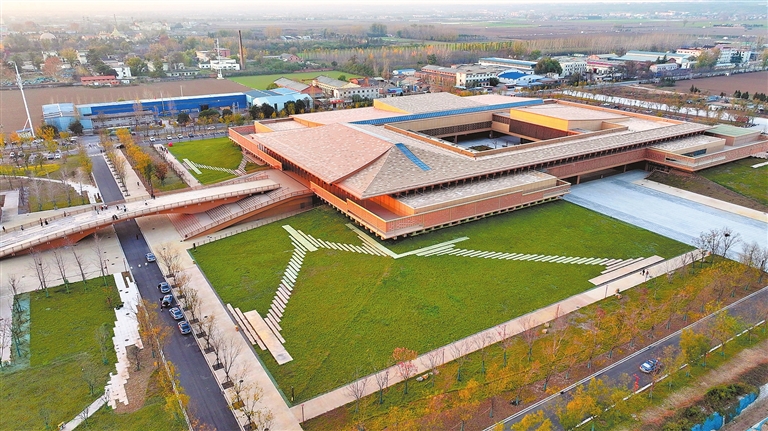
积极拓展文旅融合深度与广度
Jing Ji Ri Bao· 2025-11-20 22:15
Core Insights - The Chinese government emphasizes the deep integration of culture and tourism as a strategic initiative to develop the cultural tourism industry into a pillar sector, which is crucial for optimizing economic structure and enhancing consumer demand during the 14th Five-Year Plan period [1][2] Group 1: Industry Growth and Economic Impact - In 2024, China's cultural industry is projected to achieve a revenue of 19,142.3 billion yuan, with domestic tourist spending reaching 5.75 trillion yuan, reflecting growth rates of 7.1% and 17.1% respectively compared to the previous year [1] - The flourishing cultural tourism sector is driving growth in related industries such as dining, accommodation, transportation, and commerce, becoming a new engine for regional economic development [1] - The development of cultural tourism not only enriches cultural life but also expands domestic demand and promotes employment, serving as a significant force for economic growth and improving people's well-being [1] Group 2: Comparative Analysis and Challenges - Compared to other cultural tourism powerhouses, China's cultural tourism industry lags in both overall scale and its contribution to GDP, with cultural and related industries accounting for only 4.59% and tourism-related industries for 4.24% of GDP in 2023 [2] - Challenges in the development of cultural tourism in China include the need for improved integration mechanisms, deeper integration, and optimized pathways for collaboration between cultural and tourism sectors [2] Group 3: Policy Recommendations and New Business Models - Establishing a joint meeting system to promote the integration of culture and tourism, incorporating this integration into national economic and social development plans, and optimizing supportive policy frameworks are essential for fostering the sector [3] - The focus should be on creating new business models that cater to diverse consumer groups, such as the elderly, families, and younger generations, by innovating cultural tourism products that align with segmented consumer preferences [3] - Promoting cross-industry integration, such as "culture + tourism" and "cultural tourism + various industries," will help create diverse new consumption scenarios and products [3] Group 4: Technological Innovation - The integration of digital technologies like the Internet, IoT, cloud computing, big data, AI, and 5G is crucial for reshaping the cultural tourism landscape and driving innovation in content production [4] - Emphasizing the application of digital technology in the cultural tourism sector can enhance the convenience, experience, communication, and intelligence of cultural tourism products, leading to an overall increase in productivity [4]
纺织用“巧手” 火箭有“慧心”
Ren Min Ri Bao· 2025-11-18 04:00
Core Insights - The article highlights the importance of technological transformation and digitalization in traditional industries, particularly in the textile and aerospace sectors [1][5][6] Group 1: Textile Industry - Wuxi Yicott Cotton Textile Group has implemented intelligent inspection and connection robots to enhance production efficiency, reducing labor intensity by 30%, production costs by 11%, and increasing production efficiency by 15% [2] - The company aims to produce high-value 300-count yarn, which requires advanced technology to manage the production process effectively [1][2] - The collaboration with Donghua University has led to the development of robots that autonomously respond to breakage alerts, significantly improving operational efficiency [1][2] Group 2: Aerospace Industry - Deep Blue Aerospace is utilizing 3D printing technology to manufacture rocket engines, which has reduced production costs and delivery times from six months to ten days [2][3] - The company plans to achieve a 70% reduction in launch costs through the successful recovery of rockets, with a production capacity of ten liquid launch vehicles and 100 rocket engines annually [3] - The advancements in rocket technology are expected to support various sectors, including satellite internet and deep space exploration, generating over 3 billion yuan in annual revenue [3] Group 3: Industry Transformation - The article emphasizes the need for traditional industries to embrace intelligent, green, and integrated development to seize opportunities in the ongoing technological revolution [5][6] - It advocates for the transformation of traditional manufacturing through equipment upgrades, automation, and sustainable practices to enhance competitiveness [5][6] - The focus on emerging industries is crucial for driving growth, with an emphasis on innovation, application-driven development, and creating a supportive ecosystem for new technologies [6]
21健讯Daily|益丰药房高管减持公司股份;辉瑞完成收购Metsera
2 1 Shi Ji Jing Ji Bao Dao· 2025-11-17 01:15
Policy Developments - The National Health Commission's Director Lei Haichao emphasized the importance of planning for the "14th Five-Year Plan" to accelerate the construction of a healthy China and promote high-quality population development [2] - Key tasks include optimizing the function and layout of medical institutions, implementing strong foundational healthcare projects, and enhancing public health capabilities [2] Pharmaceutical Industry Updates - Bai Cheng Pharmaceutical's subsidiary received clinical trial approval for BIOS2242, a drug for treating acute ischemic stroke, with no current approvals for this product domestically or internationally [5] - Fosun Pharma's subsidiary received FDA approval for HLX11, a biosimilar drug for HER2-positive breast cancer, with applications for registration in China and Europe also accepted [6] Market Movements - Kexing Pharmaceutical's controlling shareholder plans to transfer 5% of its shares through an inquiry-based transfer due to operational needs [8][9] - Enwei Pharmaceutical announced a 20 million yuan investment to establish a fund focused on healthcare and technology sectors, with a total fund size of 201 million yuan [10] Major Industry Events - Guangxi's pharmaceutical exports reached a record high, with a year-on-year increase of 27.23% in the first three quarters of the year [13] - Samsung Medical's subsidiary is a candidate for a procurement project with an estimated value of 168 million yuan, which could positively impact the company's performance [14] Corporate Governance Changes - Haocen Medical announced a change in control, with no single controlling party, following the termination of a cooperation agreement [16] - Yifeng Pharmacy's executives plan to reduce their holdings by a total of 0.0176% of shares due to personal financial needs [17]



益丰药房高管减持公司股份;辉瑞完成收购Metsera
2 1 Shi Ji Jing Ji Bao Dao· 2025-11-17 00:05
Policy Developments - The National Health Commission's Secretary Lei Haichao conducted research in Guangxi, focusing on pediatric and mental health, grassroots medical services, and public hospital reforms, emphasizing the need for a robust health system and high-quality population development [2] - The "14th Five-Year" plan highlights strengthening grassroots healthcare, promoting the distribution of quality medical resources, and enhancing public health capabilities [2] Drug and Medical Device Approvals - Baicheng Pharmaceutical's subsidiary received clinical trial approval for BIOS2242, a treatment for acute ischemic stroke, with no prior approvals for this product globally [5] - Fosun Pharma's subsidiary received FDA approval for HLX11, a biosimilar for HER2-positive breast cancer, with applications pending in China and Europe [6] Capital Market Activities - Kexing Pharmaceutical's controlling shareholder plans to transfer 5% of its shares, citing operational needs, with the transfer process managed by China International Capital Corporation [8] - Enwei Pharmaceutical announced a 20 million yuan investment in a venture capital fund focusing on healthcare and technology, with potential uncertainties regarding returns [10] - Pfizer completed the acquisition of Metsera for $10 billion, a company focused on developing drugs for obesity and cardiovascular diseases [11] Industry Developments - Guangxi's pharmaceutical exports reached a record high, growing 27.23% year-on-year in the first three quarters [13] - Samsung Medical's subsidiary is a candidate for a 168 million yuan procurement project with the State Grid, which could positively impact the company's performance [14] Shareholder Movements - Haocen Medical announced a change in control, with no single controlling party, following a partnership agreement termination [16] - Yifeng Pharmacy executives plan to reduce their holdings by a combined 0.0176% of shares due to personal financial needs [17][18]
