新能源汽车产业

Search documents
零跑朱江明回应车企价格战:绝对不能亏本卖车
Jin Rong Jie· 2026-01-09 04:30
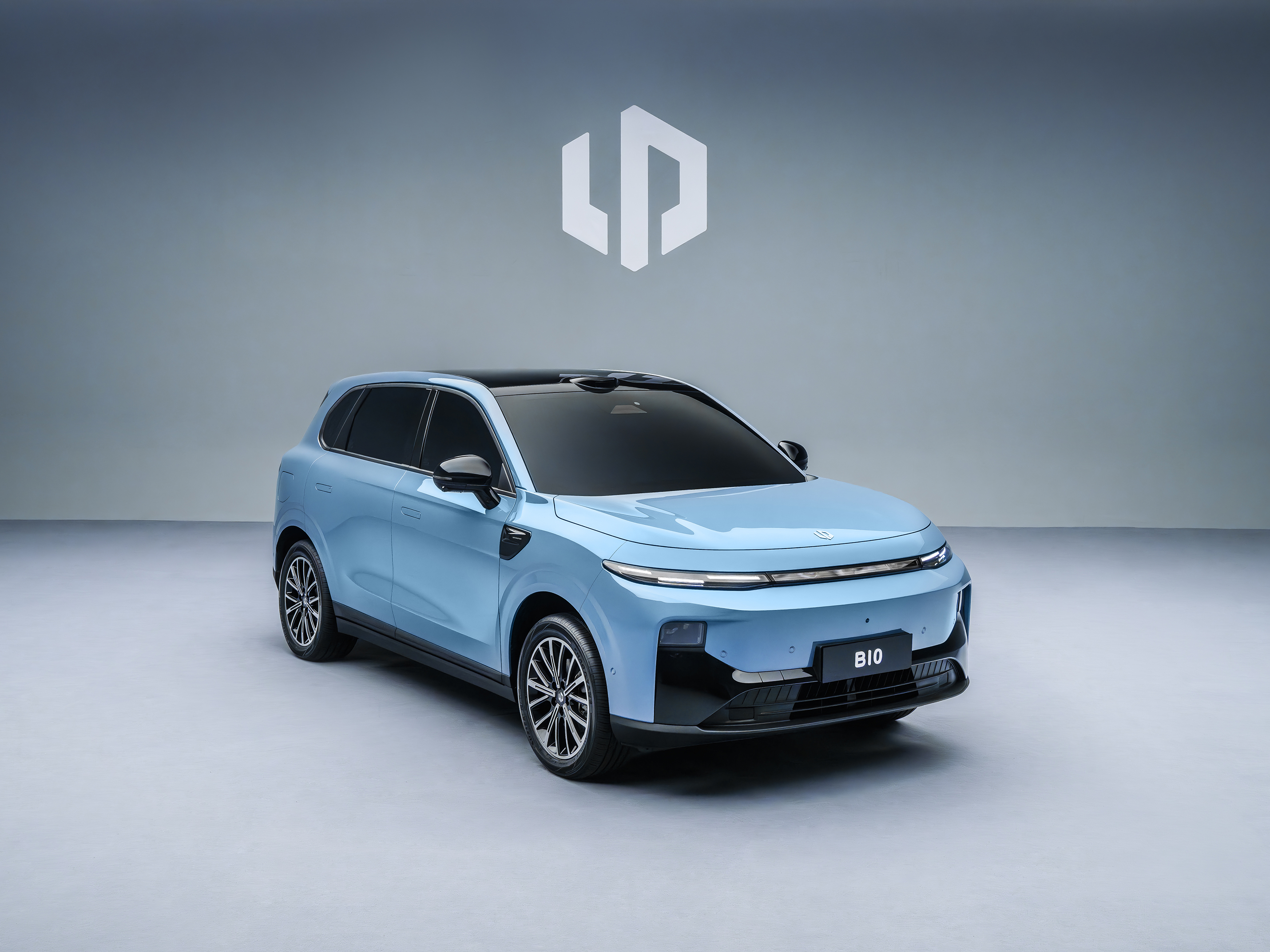
Group 1 - The core viewpoint of the articles highlights the importance of maintaining profitability in the electric vehicle (EV) sector, with a strong emphasis on not selling vehicles at a loss [1] - The founder of Leap Motor predicts that the market share of new energy vehicles in China will expand to 80% to 90% within the next 3 to 5 years, indicating a significant growth potential for the industry [1] - Leap Motor aims to achieve a cumulative delivery of 596,555 vehicles in 2025, representing a year-on-year growth of 103%, and is targeting an annual sales goal of 1 million vehicles by 2026 [4] Group 2 - In the first half of 2025, Leap Motor achieved its first positive net profit for a half-year period, becoming the second new force in car manufacturing in China to reach this milestone [4] - The company reported a net profit of 150 million yuan in the third quarter of 2025, marking a continuous quarterly profit [4] - The automotive industry is experiencing a price war, with 177 models seeing price reductions in 2025, including 73 pure electric vehicle models [5] Group 3 - In 2026, changes in policies regarding vehicle purchase tax and scrapping subsidies are expected to impact the new energy vehicle market [5] - The market regulatory authority has issued guidelines to prohibit high-risk pricing behaviors, which is expected to lead to a more orderly competition in the automotive industry [5]

研判2025!中国吸波材料行业产业链上下游、发展现状、竞争格局和未来趋势分析:多场景需求驱动,行业市场规模持续上涨[图]
Chan Ye Xin Xi Wang· 2026-01-06 01:17
Core Viewpoint - The wave-absorbing materials industry in China is experiencing unprecedented growth opportunities driven by the proliferation of 5G/6G communication technologies, explosive growth in the electric vehicle industry, and accelerated modernization of national defense. The market size is projected to grow from 9.2 billion yuan in 2019 to 15.2 billion yuan by 2024, with a compound annual growth rate (CAGR) of 10.6% [1][6]. Industry Overview - Wave-absorbing materials are designed to absorb or significantly reduce electromagnetic wave energy, thereby minimizing interference. They are required to have high absorption rates across a wide frequency range, as well as lightweight, temperature resistance, moisture resistance, and corrosion resistance [2][3]. - The classification of wave-absorbing materials includes absorption-type, interference-type, and various loss mechanisms such as resistive, dielectric, and magnetic loss types [2]. Industry Value Chain - The upstream raw materials for wave-absorbing materials include non-ferrous metals such as iron, copper, nickel, chromium, silicon, titanium, and aluminum. The midstream involves the production and manufacturing of wave-absorbing materials, while the downstream applications span electric vehicles, 5G communication, consumer electronics, and photovoltaic energy storage [3][4]. Current Industry Status - The global market for wave-absorbing materials is on an upward trend, expected to reach 6.138 billion USD by 2024, reflecting a year-on-year increase of 6.8%. This growth is primarily driven by demand in military, aerospace, communication, and electronic information sectors [5][6]. Competitive Landscape - Historically, the wave-absorbing materials market has been dominated by foreign manufacturers such as ARC, 3M, DuPont, Henkel, TDK, and NEC. However, domestic companies in China are advancing technologically, with firms like Shenzhen Feirongda Technology Co., Ltd., Beikong Technology Co., Ltd., and others achieving competitive product standards [7][8]. Industry Development Trends 1. **Performance Improvement**: Future developments will focus on enhancing performance in high-frequency absorption, wide frequency coverage, and multifunctional integration. The rise of 5G/6G communication and millimeter-wave radar technologies necessitates materials that maintain excellent absorption performance at high frequencies [9]. 2. **Application Expansion**: Initially used in military applications, wave-absorbing materials are now extending into civilian sectors, including smart vehicles and IoT, where they help mitigate electromagnetic interference and enhance system reliability [10][11]. 3. **Green and Intelligent Transformation**: The industry is moving towards smart manufacturing and green production practices, emphasizing the use of eco-friendly raw materials and low-emission processes, such as water-based coating technologies [12].




新能源车ETF(159806)涨超2%,行业竞争格局与政策红利受关注
Mei Ri Jing Ji Xin Wen· 2026-01-05 07:08
Group 1 - The automotive industry is at a critical stage of transitioning from old to new logic, with the end of the electric vehicle (EV) bonus and the smart technology still in its early stages [1] - By 2025, the penetration rate of new energy vehicles is expected to reach 55.4%, with L3-level autonomous driving (urban NOA) penetration increasing to 20% and L2+ (highway NOA) penetration reaching 34% [1] - The policy of replacing old vehicles with new ones is expected to boost passenger car sales by 3.8% year-on-year to 23.62 million units, with the market share of domestic brands projected to rise to 67% [1] Group 2 - In the heavy truck sector, driven by replacement demand, wholesale sales are expected to grow by 16.9% year-on-year by 2025, with the penetration rate of electric heavy trucks rapidly increasing to 26.9% [1] - The bus industry is anticipated to see domestic sales grow by 15% and exports increase by 20% due to a resonance of domestic and international demand [1] - The current industry landscape features three main lines: optimization at the end of the electrification phase, cultivation of the supply chain on the brink of smart technology breakthroughs, and early-stage layout of the robotics industry [1] Group 3 - The New Energy Vehicle ETF (159806) tracks the CS New Energy Vehicle Index (399976), which selects listed companies involved in the upstream materials, midstream components, and downstream vehicle manufacturing of the new energy vehicle industry chain [2] - The index effectively reflects the overall performance of listed companies in the new energy vehicle sector by focusing on core enterprises, combining growth potential with industry representation [2]
比亚迪全年纯电动汽车销量首次超过特斯拉成为全球第一
Xin Hua She· 2026-01-03 09:24
Group 1 - BYD has surpassed Tesla in annual sales of pure electric vehicles for the first time, becoming the global leader in this segment with approximately 2.26 million units sold in 2025, compared to Tesla's 1.63 million units [2] - In 2025, BYD's total sales of new energy vehicles reached around 4.6 million units, with over 1.04 million units sold overseas, significantly exceeding the total overseas sales for 2024 [2] - BYD's expansion into international markets has been notable, with a presence in over 110 countries and regions, and strong performance in Europe, Latin America, and Southeast Asia [2] Group 2 - The company is enhancing its technological leadership and aims to introduce more significant innovations in the coming years [3] - Strengthening component procurement capabilities and adopting refined sales strategies in overseas markets are key factors contributing to BYD's substantial increase in overseas sales [3] - The performance of BYD indicates China's growing importance in the global new energy vehicle industry, providing consumers with better and more diverse options [3]


辽宁省委书记与省长会见理想汽车CEO李想
理想TOP2· 2025-12-23 07:22
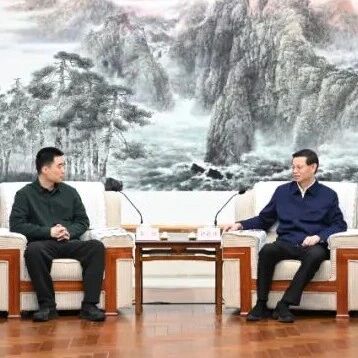
Core Viewpoint - The meeting between the leaders of Liaoning Province and Li Xiang, the chairman of Li Auto, emphasizes the importance of collaboration in the development of the new energy vehicle industry in Liaoning, highlighting the province's strong industrial foundation and commitment to high-quality development [3][4]. Group 1: Government's Position - Liaoning is focusing on high-quality development, integrating technological and industrial innovation, and enhancing the supply chain ecosystem [3]. - The province aims to accelerate the transformation of traditional industries and foster emerging industries, particularly in the automotive sector [3]. - The government encourages Li Auto to increase investment in Liaoning, improve the smart charging network, and collaborate with local automotive parts companies and research institutions [3]. Group 2: Li Auto's Perspective - Li Auto expresses gratitude for the support from Liaoning and recognizes the province's strategic location and robust industrial base [4]. - The company plans to deepen its engagement in Liaoning, focusing on the new energy vehicle sector and related industries [4]. - Li Auto aims to leverage local resources for research and development, particularly in new materials and energy, to contribute to the revitalization of Liaoning [4]. Group 3: Current Status - As of December 22, 2025, there are no Li Auto supercharging stations in Liaoning's highway service areas [4].

股市必读:力盛体育(002858)12月22日董秘有最新回复
Sou Hu Cai Jing· 2025-12-22 17:02
Core Viewpoint - The company is strategically expanding its business in Hainan by participating in the construction of the Hainan International Circuit, which is part of the Hainan New Energy Vehicle Experience Center project, aiming to leverage the unique advantages of the Hainan Free Trade Port [1]. Group 1: Company Developments - The company reported a closing price of 15.95 yuan on December 22, 2025, with a 2.7% increase and a turnover rate of 10.16%, amounting to a trading volume of 149,400 lots and a transaction value of 237 million yuan [1]. - The company has established a 60% owned subsidiary, Hainan Smart New Energy Vehicle Development Center Co., Ltd., responsible for the construction and operation of the Hainan International Circuit [1]. - A wholly-owned subsidiary, Hainan Lisheng Investment Co., Ltd., was established in early 2024 to utilize the unique policies and industrial advantages of the Hainan Free Trade Port for investment cooperation [1]. Group 2: Market Activity - On December 22, the net inflow of main funds was 29.34 million yuan, indicating a positive engagement from major investors [2]. - Retail investors experienced a net outflow of 17.37 million yuan, while speculative funds saw a net outflow of 11.97 million yuan [2].
新能源车ETF(159806)飘红,行业景气度获市场关注
Mei Ri Jing Ji Xin Wen· 2025-12-19 07:35
Core Insights - The electric vehicle (EV) industry is experiencing sustained growth, with a well-established price transmission mechanism in the lithium battery supply chain, as evidenced by a recent 15% price increase announced by battery manufacturers, indicating strong downstream demand [1] - The expansion into overseas markets has exceeded expectations, with CATL's Hungarian factory, which has an annual capacity of 40GWh, fully booked by customers and set to begin production in early 2026, establishing a "tripartite" layout in Europe to meet local electrification needs [1] - The industrialization of solid-state batteries is accelerating, with Weilan New Energy initiating its IPO process and successfully supplying its hybrid solid-liquid battery technology; QuantumScape, a global leader, has completed the installation of key equipment for its QSE-5 solid-state battery pilot line, which boasts a high energy density of 844Wh/L [1] - The pricing power in the midstream and upstream material segments continues to strengthen, with prices of lithium carbonate and ternary materials rising across the board, improving the supply-demand dynamics in the industry [1] Industry Index - The New Energy Vehicle ETF (159806) tracks the CS New Energy Vehicle Index (399976), which focuses on the EV supply chain by selecting listed companies from the upstream materials, midstream components, and downstream vehicle manufacturing sectors in the Shanghai and Shenzhen markets, while also covering supportive sectors like information technology [1] - This index is centered on manufacturing as a core allocation direction, comprehensively reflecting the overall performance and development trends of China's new energy vehicle industry, providing investors with a reference indicator for industry dynamics [1]
磷酸铁锂涨价潮催化,新能车ETF(515700)涨超2%
Sou Hu Cai Jing· 2025-12-17 03:16
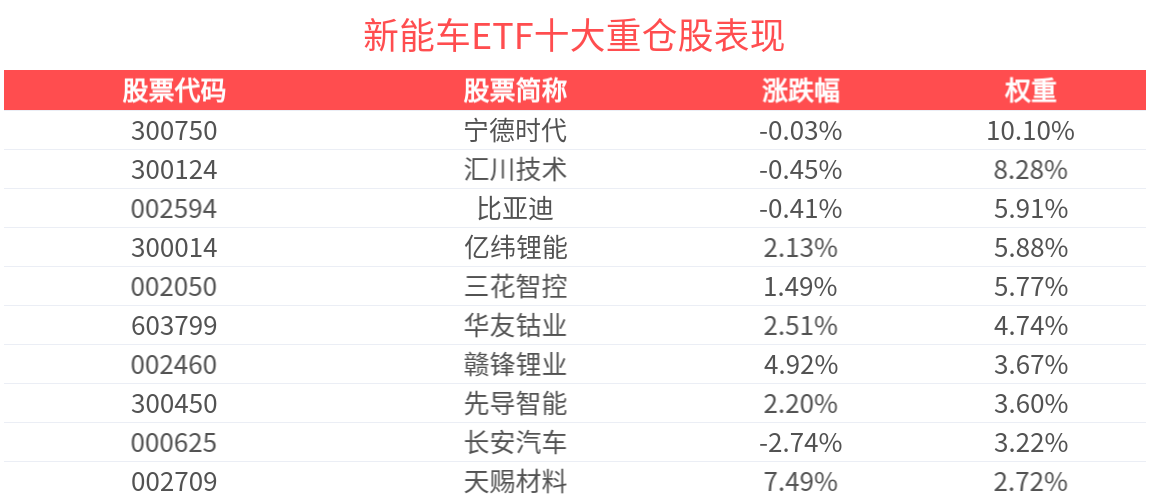
Core Viewpoint - The new energy vehicle (NEV) industry is experiencing significant price fluctuations, particularly in lithium iron phosphate (LFP) materials, with major manufacturers initiating price hikes, which are expected to continue into 2026 [1][2]. Group 1: Market Performance - As of December 17, 2025, the CSI New Energy Vehicle Industry Index (930997) rose by 2.12%, with notable increases in constituent stocks such as Tianhua New Energy (300390) up 15.28%, Shengxin Lithium Energy (002240) up 10.01%, and Defu Technology (301511) up 8.56% [1]. - The New Energy Vehicle ETF (515700) increased by 2.10%, with the latest price reported at 2.34 yuan [1]. Group 2: Price Trends - Since early December, LFP manufacturers have begun collective price increases, with some leading companies negotiating price hikes between 2,000 to 3,000 yuan per ton [1]. - Analysts indicate that for every 10,000 yuan per ton increase in lithium carbonate, the cost of LFP materials rises by approximately 2,300 to 2,500 yuan per ton [1]. Group 3: Demand and Liquidity - The China Passenger Car Association predicts strong growth in NEV retail sales in December due to the impending expiration of the NEV purchase tax exemption policy in 2025, leading to increased consumer urgency [2]. - The New Energy Vehicle ETF recorded a turnover rate of 2.03%, with a transaction volume of 40.37 million yuan [2]. - The latest scale of the New Energy Vehicle ETF reached 1.958 billion yuan [2]. Group 4: Index Composition - As of November 28, 2025, the top ten weighted stocks in the CSI New Energy Vehicle Industry Index accounted for 51.96% of the index, including CATL (300750), Huichuan Technology (300124), and BYD (002594) [2].
比亚迪:2024年销量427万台蝉联全球新能源汽车销量冠军
Zheng Quan Ri Bao Zhi Sheng· 2025-12-16 13:45
证券日报网讯 12月16日,比亚迪在互动平台回答投资者提问时表示,公司始终聚焦新能源汽车主业, 致力于通过技术创新,满足人们对美好生活的向往。近年来,在全球新能源汽车市场快速发展的背景 下,公司把握历史性发展机遇,持续提升产品竞争力,销量稳步增长,2024年销量427万台,蝉联中国 汽车市场车企销量冠军、中国汽车市场品牌销量冠军和全球新能源汽车市场销量冠军。今年第三季度, 比亚迪位列全球车企销量第五(汽车全口径)。这得益于广大用户的认可和产业链伙伴的支持、广大股 东的信任。"路虽远,行则将至,事虽难,做则必成。"未来,公司将继续深耕技术研发,提升产品竞争 力,推动新能源汽车产业发展,踏实走好每一步,以持续稳健的业绩回报股东和社会。 (编辑 任世碧) ...
没有一家“明星”车企 宁波何以产出浙江四成新能源车?
2 1 Shi Ji Jing Ji Bao Dao· 2025-12-09 09:44
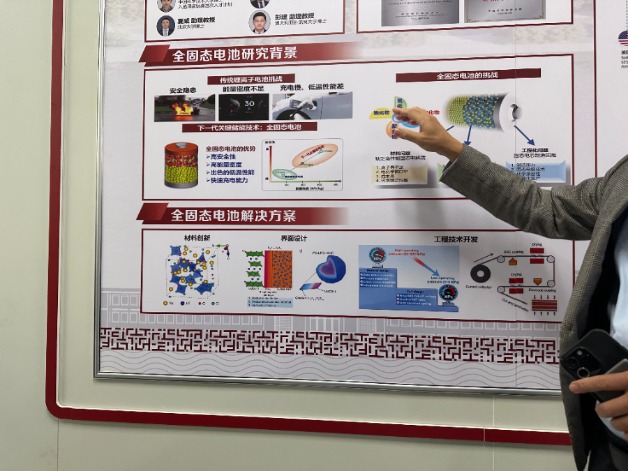
Core Insights - Ningbo is undergoing a significant industrial transformation in the manufacturing landscape of the Yangtze River Delta, particularly in the automotive sector, with a notable focus on electric vehicles (EVs) [1] - The city has achieved a remarkable increase in automotive production, with a total output of 645,000 vehicles in the first ten months of 2025, including 286,000 EVs, marking a 24% year-on-year growth in automotive manufacturing output [1][2] - The unique industrial evolution in Ningbo is characterized by a "tropical rainforest" model, fostering a collaborative ecosystem rather than a singular focus on star enterprises [1] Vehicle Manufacturing: Dual-Core Drive and Local Roots - Ningbo's automotive layout features a "dual-core drive" model, with Geely representing deep localization and efficient decision-making, while SAIC Volkswagen embodies global manufacturing standards and is undergoing electrification [2] - The SAIC Volkswagen factory in Ningbo is a "star factory" with a production capacity of 300,000 vehicles per year, contributing one-third of the city's EV production [2] - Geely has established a comprehensive ecosystem in Ningbo, including four global headquarters and five manufacturing bases, enabling rapid iteration from design to production [3] Supply Chain: Champion Clusters and Adaptive Evolution - Ningbo hosts over 5,000 automotive parts companies, including 22 national champion enterprises and 97 specialized "little giants," showcasing a robust supply chain [4] - The local supply chain's specialization and geographical clustering have resulted in a rapid response time of 2.3 hours between vehicle manufacturers and core suppliers, significantly lower than the industry average [5] - Companies like Junsheng and Shenglong have successfully adapted to the EV market, transitioning from traditional components to integrated system suppliers [5] Future-Oriented Research and Development - Ningbo is investing in future technologies, such as solid-state batteries, with research led by a team at Dongfang University, aiming to overcome current battery limitations [6][9] - The development of a new superionic conductor has achieved a record ionic conductivity, opening new pathways for solid-state battery applications [8][9] - The city is also advancing in intelligent networking, with automated operations at the Meishan Port and the deployment of L4-level autonomous delivery vehicles [10]