
新能源整车

Search documents
主题形态学输出0313:光伏逆变器等主题走出右侧趋势
Huafu Securities· 2026-03-16 09:23
Core Insights - The report highlights the emergence of new investment themes, particularly in the photovoltaic inverter sector, which is showing a right-side breakthrough trend [4][11]. - The report categorizes themes into four main patterns: right-side breakthrough, right-side trend, bottom stabilization, and bottom reversal, providing a structured approach for identifying investment opportunities [8][4]. Group 1: Right-Side Breakthrough - New themes identified include glyphosate, salt, and photovoltaic inverters, indicating strong upward momentum in these sectors [4][11]. - The photovoltaic inverter index has shown a 24% increase over the past 20 days, with a year-to-date (YTD) increase of 33% [11]. Group 2: Right-Side Trend - The photovoltaic inverter and hydropower indices are noted for their right-side trend, suggesting ongoing positive performance in these sectors [4][13]. - The photovoltaic inverter index has a 5-day increase of 9% and a YTD increase of 33% [13]. Group 3: Bottom Stabilization - New themes include liquor, trust, peptide drugs, medical beauty, small base stations, new energy vehicles, and brokerages, indicating potential recovery in these sectors [4][18]. - The liquor index has shown a 5-day increase of 0% and a YTD decrease of 13%, suggesting stabilization despite recent challenges [18]. Group 4: Bottom Reversal - Ongoing themes include animal vaccines, pig industry, innovative drugs, lithium hexafluorophosphate, lithium battery electrolytes, and mobile batteries, indicating potential for recovery [4][20]. - The mobile battery index has shown a 20-day increase of 13%, indicating a strong reversal trend [20].
绿色税制推动生态保护与经济发展双向奔赴
Ren Min Wang· 2026-02-27 06:52
Group 1 - The green transformation of economic and social development is a key aspect of achieving high-quality development, with significant growth in green product manufacturing industries such as new energy vehicles, photovoltaic equipment, and lithium-ion batteries, all showing annual sales growth rates exceeding 30% during the 14th Five-Year Plan period [1] - The clean energy generation sales revenue, including wind, solar, hydro, and nuclear power, is projected to account for 42.6% of total power generation sales revenue by 2025, with wind and solar power sales revenue expected to grow at an annual rate of 25.4% during the same period [1] - The cumulative implementation of environmental protection tax incentives since its introduction in 2018 has reached 111.06 billion yuan, with significant reductions in taxes promoting pollution control and clean production [1] Group 2 - The green tax system has become a crucial support for promoting ecological protection and economic development, as demonstrated by the coal industry leader in Shanxi, which achieved 100% resource utilization of solid waste and zero wastewater discharge, resulting in a 50.29% decrease in environmental protection tax payments [2] - The wastewater treatment industry in Xinjiang has successfully achieved a stable water reuse rate of 90% and has benefited from over 280,000 yuan in tax reductions, showcasing a positive cycle of environmental investment supported by policy [3] - In Hunan Province, the cumulative implementation of environmental protection tax incentives has reached 2.882 billion yuan, facilitating the transition to ultra-low emissions and supporting the development of high-strength steel for engineering and automotive applications [4]
2025全球企业研发榜单,美国没有衰落?中国除了华为还有谁?
Sou Hu Cai Jing· 2026-02-26 08:30
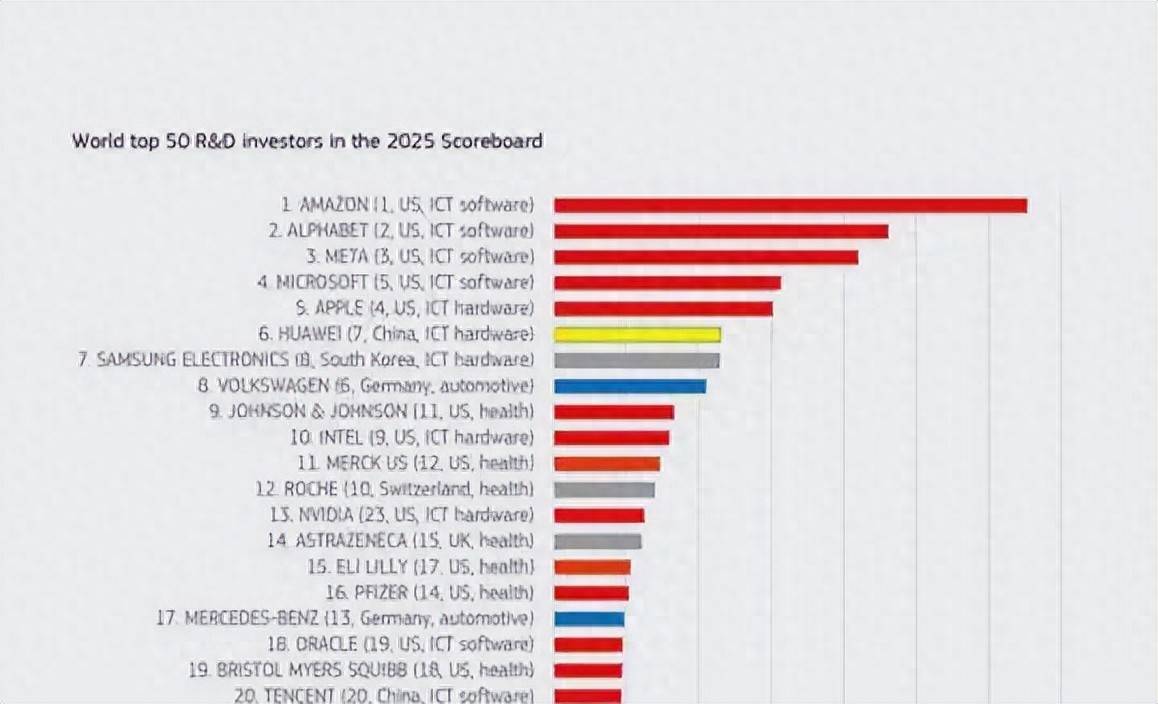
Group 1 - The global R&D ranking for 2025 reveals a significant gap between China and the U.S., with Huawei being the only Chinese company in the top ten, ranked sixth, while the top five are all U.S. companies [1][2] - Huawei's R&D investment reached €22.941 billion (approximately ¥187 billion), which is 2.5 times higher than Tencent, the second-ranked Chinese company [5] - The U.S. accounts for 47.1% of the total investment in the global R&D TOP 2000, with 674 companies, while China has 525 companies, contributing only 16.1% of the total investment [8] Group 2 - In the top 100 R&D companies, Tencent ranks 20th with €9.321 billion, Alibaba is 31st, BYD is 37th, and TSMC is 41st, indicating a significant gap between Huawei and Tencent [10] - Companies like Xiaomi, ZTE, Baidu, and Meituan, although not in the top tier, demonstrate that China's tech foundation is strengthening, as they appear in the top 100 [12] - The perception that Silicon Valley is collapsing is misleading, as seven out of the top ten companies are from the U.S., focusing on foundational technologies such as AI models and chip design [14] Group 3 - China is currently at a stage of "breakthrough point-driven technology," with leading companies excelling in specific areas but lacking overall R&D investment strength [16] - The competition between China and the U.S. in technology resembles a boxing match, requiring both strength and endurance, with Chinese companies recognizing the need for substantial investment in technology [18] - The Huawei model serves as a lesson for Chinese tech companies, emphasizing the importance of investing in technology without immediate returns [20] Group 4 - The 2025 R&D ranking serves as a litmus test for global technological strength, with Huawei exemplifying the need for focused investment in innovation [22]

税收数据显示绿色转型提速
Zhong Guo Jing Ji Wang· 2026-02-10 06:39
Group 1: Industry Structure and Growth - The proportion of "dual high" industries is continuously decreasing, while green and low-carbon industries are developing well [1] - During the 14th Five-Year Plan period, the annual sales revenue growth rate of five high-energy-consuming industries is 1.8 percentage points lower than the average growth rate of industrial enterprises [1] - The share of high-energy-consuming industries in total industrial sales revenue decreased from 27% at the end of the 13th Five-Year Plan to 24.9% at the end of the 14th Five-Year Plan [1] Group 2: Green Technology and Services - The annual sales revenue growth rates for green technology services, including new energy, energy-saving, and environmental protection, are 51.1%, 28.5%, and 18.2% respectively [1] - The ecological protection and environmental governance industry has an annual sales revenue growth rate of 13.2%, providing technical support for green transformation [1] Group 3: Clean Energy Development - By 2025, the sales revenue from clean energy generation will account for 42.6% of total power generation sales revenue, an increase of 7.2 percentage points from the end of the 13th Five-Year Plan [1] - The annual sales revenue growth rate for wind and solar power generation during the 14th Five-Year Plan period is 25.4% [1] Group 4: New Energy Vehicles - The sales volume of new energy vehicles in China is expected to grow by 25.9% year-on-year in 2025 [2] - China has maintained its position as the world's largest producer and seller of new energy vehicles for ten consecutive years [2] Group 5: Environmental Tax Policies - Since the implementation of the environmental protection tax in 2018, a total of 111.06 billion yuan in tax reductions has been realized, promoting pollution control and clean production [2] - The number of urban and rural sewage and waste treatment plants benefiting from environmental tax incentives increased from 5,589 in 2021 to 6,415 in 2025, a growth of 14.78% [2] - The environmental tax revenue from major air pollutants, such as sulfur dioxide and nitrogen oxides, decreased by 33.8% and 34.03% respectively compared to 2020 [2] Group 6: Water Resource Tax Reform - The nationwide implementation of the water resource tax reform pilot is set for December 1, 2024, with positive results already observed [3] - In 2025, the amount of underground water extracted by taxpayers in new pilot areas decreased by 7.1% compared to 2024, with over 4,500 private wells shut down [3] - Special water usage for golf courses, ski resorts, car washes, and bathing facilities decreased by 34.3% compared to 2024 [3]
我国经济社会 绿色转型加速推进
Xin Lang Cai Jing· 2026-02-10 04:38
Core Insights - The article highlights the continuous optimization of China's industrial and energy structure, driven by tax policies that promote green and low-carbon industries, resulting in significant growth in sales revenue for key green products and services [1][2] Group 1: Green Industry Growth - During the "14th Five-Year Plan" period, the sales revenue of key green manufacturing sectors such as new energy vehicles, photovoltaic equipment, lithium-ion batteries, and solar appliances is expected to grow at an annual rate of over 30% [1] - The sales revenue of green technology services, including new energy, energy-saving, and environmental protection, is projected to grow annually by 51.1%, 28.5%, and 18.2% respectively, while ecological protection and environmental governance industries will see an annual growth of 13.2% [1] Group 2: Clean Energy Development - By 2025, the sales revenue from clean energy sources, including wind, solar, hydro, and nuclear power, is anticipated to account for 42.6% of total power generation sales revenue, an increase of 7.2 percentage points from the end of the "13th Five-Year Plan" [1] - The sales revenue from wind and solar power generation is expected to grow at an annual rate of 25.4% during the "14th Five-Year Plan" period [1] Group 3: Environmental Tax Policies - Since the implementation of the environmental protection tax in 2018, a total of 111.06 billion yuan in tax reductions has been granted, promoting centralized treatment and improving pollution control efficiency [2] - By 2025, the revenue from environmental taxes on key air pollutants such as sulfur dioxide and nitrogen oxides is projected to decrease by 33.8% and 34.03% respectively compared to 2020 [2] Group 4: Water Resource Management - The pilot program for converting water resource fees to taxes has shown positive results, with a projected reduction of 7.1% in groundwater extraction in new pilot areas by 2025 [2] - Special water usage for golf courses, ski resorts, car washes, and bathing facilities is expected to decline by 34.3% compared to 2024 [2]
国家税务总局:“十四五”新能源整车制造销售收入年增30%
Cai Jing Wang· 2026-02-10 03:34
Group 1 - The core viewpoint of the article highlights the continuous optimization of industrial and energy structures in China during the "14th Five-Year Plan" period, with significant growth in green product manufacturing and technology services [1] Group 2 - The sales revenue of key green product manufacturing industries, including new energy vehicles, photovoltaic equipment and components, lithium-ion batteries, and solar appliances, has an average annual growth rate exceeding 30% [1] - The sales revenue of green technology service industries, such as new energy, energy-saving, and environmental protection, has average annual growth rates of 51.1%, 28.5%, and 18.2% respectively [1]
透过“税”数据读懂"十四五"经济社会绿色转型加速推进
Yang Shi Wang· 2026-02-10 02:10
Group 1 - During the "14th Five-Year Plan" period, the manufacturing industries of important green products such as new energy vehicles, photovoltaic equipment and components, lithium-ion batteries, and solar appliances have an average annual sales growth rate of over 30% [3] - The sales revenue of green technology service industries, including new energy, energy-saving, and environmental protection, has increased by an average of 51.1%, 28.5%, and 18.2% respectively [3] - The ecological protection and environmental governance industry has seen an average annual sales growth of 13.2%, providing technical support for green transformation [3] Group 2 - By 2025, the sales revenue from clean energy generation, including wind, solar, hydro, and nuclear power, is expected to account for 42.6% of total power generation sales revenue, an increase of 7.2 percentage points compared to the end of the "13th Five-Year Plan" [5] - The sales revenue from wind and solar power generation is projected to grow at an average annual rate of 25.4% during the "14th Five-Year Plan" period [5] Group 3 - Since the implementation of the environmental protection tax in 2018, a total of 111.06 billion yuan in tax reductions and exemptions have been granted nationwide [7] - By 2025, the environmental protection tax revenue from key regulated air pollutants, such as sulfur dioxide and nitrogen oxides, is expected to decrease by 33.8% and 34.03% respectively compared to 2020 [7] Group 4 - In 2025, the amount of groundwater extracted by taxpayers in pilot areas for the water resource fee reform is expected to be 5.47 billion tons, a decrease of 7.1% compared to 2024 [9] - The special water usage for golf courses, ski resorts, car washes, and bathing facilities is projected to decline by 34.3% compared to 2024, promoting water resource conservation and ecological protection [9]
中国经济社会绿色转型加快
Ren Min Ri Bao Hai Wai Ban· 2026-02-10 02:01
Core Viewpoint - China's economic and social green transformation is accelerating, driven by structural optimization in industries, energy, and transportation, along with effective tax policies promoting emission reduction and water conservation [2][3]. Industry Structure - The proportion of "dual high" industries is continuously decreasing, while green and low-carbon industries are developing well. During the 14th Five-Year Plan period, key green product manufacturing sectors such as new energy vehicles, photovoltaic equipment, lithium-ion batteries, and solar appliances are expected to see annual sales growth rates exceeding 30% [2]. - Sales revenue in green technology service industries, including new energy, energy-saving, and environmental protection, is projected to grow annually by 51.1%, 28.5%, and 18.2% respectively, while ecological protection and environmental governance industries are expected to grow by 13.2% annually [2]. Energy Structure - The share of clean energy is steadily increasing, with high-energy-consuming manufacturing industries optimizing their energy use. By 2025, sales revenue from clean energy generation, including wind, solar, hydro, and nuclear power, is expected to account for 42.6% of total power generation revenue, an increase of 7.2 percentage points from the end of the 13th Five-Year Plan [2]. - Sales revenue from wind and solar power generation is projected to grow at an annual rate of 25.4% during the 14th Five-Year Plan period [2]. Transportation Structure - The new energy vehicle industry is experiencing strong growth, with an increase in the proportion of railway and waterway freight. By 2025, domestic sales of new energy vehicles are expected to grow by 25.9% year-on-year [2]. Pollution Reduction and Water Conservation - The environmental protection tax policy has released tax reduction benefits, with cumulative tax reductions amounting to 111.06 billion yuan since its implementation in 2018. This includes 59.945 billion yuan for promoting centralized treatment and improving pollution control efficiency, 24.37 billion yuan for promoting clean production, and 26.134 billion yuan for enhancing governance efficiency [3]. - The number of urban and rural sewage and solid waste treatment plants benefiting from environmental tax incentives is expected to increase from 5,589 in 2021 to 6,415 by 2025 [3]. - By 2025, the environmental tax revenue from key air pollutants such as sulfur dioxide and nitrogen oxides is projected to decrease by 33.8% and 34.03% respectively compared to 2020 [3]. - The pilot program for converting water resource fees to taxes is expected to yield positive results, with a projected 7.1% decrease in underground water extraction in new pilot areas by 2025, totaling 5.47 billion tons [3].
税收数据显示我国经济社会绿色转型加速推进
Qi Huo Ri Bao Wang· 2026-02-09 23:14
Group 1 - The core viewpoint of the articles highlights the continuous optimization of China's industrial and energy structure, driven by tax policies that promote green and low-carbon industries [1][2] - During the "14th Five-Year Plan" period, key green product manufacturing industries such as new energy vehicles, photovoltaic equipment, and lithium-ion batteries have seen annual sales revenue growth rates exceeding 30% [1] - The sales revenue of green technology services, including new energy, energy-saving, and environmental protection, has grown annually by 51.1%, 28.5%, and 18.2% respectively, supporting the green transition [1] Group 2 - The proportion of clean energy is steadily increasing, with sales revenue from clean energy sources expected to account for 42.6% of total power generation revenue by 2025, an increase of 7.2 percentage points from the end of the "13th Five-Year Plan" [1] - The annual sales revenue growth for wind and solar power during the "14th Five-Year Plan" period is projected to be 25.4% [1] - Since the implementation of the environmental protection tax in 2018, a total of 111.06 billion yuan in tax reductions has been granted, promoting pollution control and clean production [2]
税务总局:“十四五”期间我国绿色低碳产业发展良好
Zhong Guo Jing Ying Bao· 2026-02-09 16:06
Core Insights - During the "14th Five-Year Plan" period, five high-energy-consuming industries, including petroleum, coal, and other fuel processing, have seen their average annual sales growth rate fall below the industrial average by 1.8 percentage points [1] - The share of these industries in total industrial sales revenue decreased from 27% at the end of the "13th Five-Year Plan" to 24.9% by the end of the "14th Five-Year Plan" [1] - In contrast, key green product manufacturing sectors, such as new energy vehicles, photovoltaic equipment, and lithium-ion batteries, have experienced average annual sales growth rates exceeding 30% [1] - Green technology service industries, including new energy, energy-saving, and environmental protection, reported average annual sales growth rates of 51.1%, 28.5%, and 18.2% respectively [1] - The ecological protection and environmental governance sector achieved an average annual sales growth rate of 13.2%, providing technical support for green transformation [1] Industry Analysis - The robust growth of the green industry and the continuous release of transformation dividends are attributed to the collaboration between policy guidance and business entities [1] - The successful outcomes of China's green transition not only strengthen ecological safety but also promote economic development towards a green and low-carbon model, injecting sustainable momentum into high-quality development [1]