新能源汽车渗透率提升

Search documents
湖南发文提升新能源汽车渗透率
Zhong Guo Chan Ye Jing Ji Xin Xi Wang· 2025-10-17 00:50
Core Viewpoint - The Hunan Provincial Government has issued an action plan to significantly increase the penetration rate of new energy vehicles (NEVs) in the province, aiming to align with the national average by the end of 2026 [1][2]. Group 1: Action Plan Goals - By the end of 2025, the penetration rate of NEVs in Hunan is targeted to narrow the gap with the national average to within 6% [1]. - By the end of 2026, Hunan aims to achieve a NEV penetration rate that matches the national average [1]. Group 2: New Consumption Models - The action plan encourages local NEV manufacturers to innovate and develop high-performance products suitable for the province's transportation scenarios [1]. - It supports diverse sales models such as rental instead of sale, operational leasing, battery separation, and value-added after-sales services [1]. Group 3: Extended Consumption Chain - The plan aims to guide the local used car market and merchants towards integrity in operations [1]. - It emphasizes the importance of battery recycling and reuse management, supporting battery leasing to enhance the resale value of NEVs [1]. Group 4: Commercial Vehicle Replacement - The action plan includes initiatives for replacing commercial vehicles, particularly in public sectors like urban public transport, taxis, postal services, sanitation, and logistics [1]. - It promotes the large-scale application of NEVs in these public domains based on local conditions [1]. Group 5: Support for New Energy Trucks - Hunan will enhance support for new energy trucks by focusing on the elimination of trucks that meet the National IV emission standards or lower [2]. - The plan includes financial incentives for replacing old trucks and offers toll discounts for new energy trucks [2].
湖南:到2026年底全省新能源汽车渗透率争取达到全国平均水平
Xin Jing Bao· 2025-10-11 10:49
Core Insights - The Hunan Provincial Government has issued an action plan to accelerate the penetration rate of new energy vehicles (NEVs) from 2025 to 2026 [1] Summary by Categories Government Initiatives - The action plan aims to reduce the gap between Hunan's NEV penetration rate and the national average to within 6% by the end of 2025 [1] - By the end of 2026, the plan targets achieving a NEV penetration rate that matches the national average [1]
鑫椤锂电一周观察 | 6F市场供应偏紧 价格继续上涨
鑫椤锂电· 2025-09-26 07:11
Industry Overview - In the first eight months of 2025, China's lithium-ion battery exports reached 30.03 billion units, a year-on-year increase of 18.66%, with an export value of $48.296 billion, up 25.79% year-on-year, indicating a stable growth trend [1] - In August 2025 alone, the export value was $7.153 billion, reflecting a year-on-year growth of 23.51% [1] Cobalt Supply and Regulations - The Democratic Republic of Congo announced an end to an eight-month export ban starting October 15, 2025, transitioning to a strict quota management system, with only 18,100 tons of cobalt available for export in the remainder of 2025 [2] - The annual export limits for 2026 and 2027 are set at 96,600 tons [2] Lithium Battery Material Production - Hunan Youneng has reported a production capacity of 858,000 tons for phosphate-based cathode materials as of June 2025, with ongoing projects in Spain and Malaysia [2] Market Dynamics for Lithium Materials - Domestic lithium carbonate prices have fluctuated between 73,000 to 74,000 yuan per ton, with strong market demand supporting price stability despite regulatory delays in Jiangxi [4] - The price of cobalt has increased due to the adjustment of export regulations in the Democratic Republic of Congo, impacting the prices of ternary materials and precursors [6] Pricing Trends for Key Materials - Ternary material prices range from 126,000 to 131,000 yuan per ton for single crystal types and 145,000 to 151,000 yuan per ton for 811 types [7] - Phosphate iron lithium prices are between 33,600 to 35,000 yuan per ton for power types and 32,600 to 33,200 yuan per ton for energy storage types [8] - The price of negative electrode materials shows a range from 50,000 to 65,000 yuan per ton for high-end natural graphite products [9] Electrolyte Market Developments - The domestic electrolyte market is experiencing strong supply and demand, with prices slightly increasing; a significant long-term supply agreement has been signed between Jiujiang Tianci and Ruipu Lanjun for a minimum of 800,000 tons of electrolyte products by December 31, 2030 [10][11] Battery and Electric Vehicle Market - The domestic lithium battery market remains stable, with a projected production increase of up to 5% in October 2025, driven by strong demand from new energy vehicles and energy storage [12] - In the last week, 508,000 passenger vehicles were sold, with new energy vehicles accounting for 298,000 units, reflecting a year-on-year increase of 28.25% [13] Energy Storage Innovations - The energy storage cell market is stable, with some leading companies planning to raise cell prices; BYD has launched a new generation energy storage system featuring a 2710Ah blade battery, marking a significant advancement in capacity [14]



比亚迪高管增持公司股票超5000万元
Zheng Quan Shi Bao· 2025-09-10 18:08
Core Viewpoint - BYD's executives have increased their holdings in the company, reflecting confidence in its future growth and recognition of its value, following the release of its strong semi-annual report [1][2]. Group 1: Executive Holdings - A total of 523.28 million yuan was invested by executives from September 1 to September 9, with five senior executives contributing 236.24 million yuan and 32 core personnel adding 287.04 million yuan [1]. - This increase in holdings occurred immediately after the release of the semi-annual report, which showed record highs in key performance indicators [1]. Group 2: Financial Performance - BYD reported a revenue of approximately 371.3 billion yuan for the first half of the year, a year-on-year increase of 23%, and a net profit attributable to shareholders of 15.5 billion yuan, up 14% [1]. - Research and development investment reached 30.9 billion yuan, marking a 53% increase compared to the previous year [1]. Group 3: Market Outlook - The market environment for new energy vehicles remains challenging, but BYD anticipates an increase in penetration rates due to technological advancements, product improvements, and supportive policies [2]. - The company plans to accelerate its international business expansion, aiming to provide high-quality new energy vehicles globally [2]. Group 4: Analyst Insights - Analysts maintain investment ratings for BYD, although some note short-term performance pressures, particularly a decline in per-vehicle profit in the second quarter [3]. - The decrease in profit is attributed to a higher proportion of smart driving models, increased average vehicle costs, and competitive pricing strategies [3]. - Despite the challenges, analysts expect a recovery in per-vehicle profit in the second half of the year, with a projected annual profit of 7,000 yuan per vehicle [3].


渗透率持续提升 新能源车成产业链企业“核心引擎”
Shang Hai Zheng Quan Bao· 2025-08-29 19:52
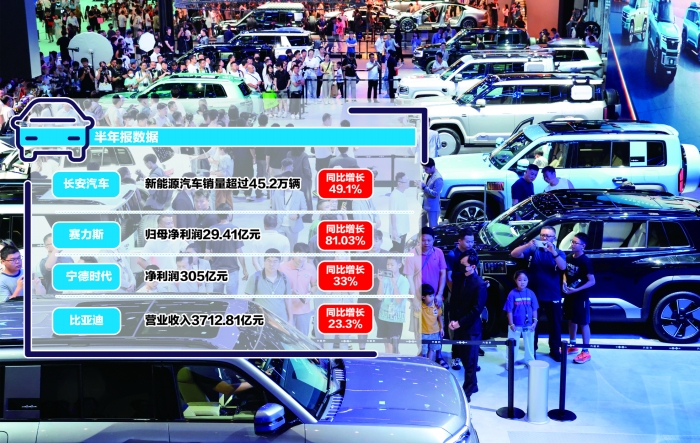
Industry Overview - The Chinese automotive industry is experiencing significant growth in the new energy vehicle (NEV) sector, with NEV sales accounting for over 44% of total vehicle sales in the first half of 2025, marking a new phase in the industry's electrification transformation [6] - The export of Chinese NEVs also saw impressive growth, with a 75.2% year-on-year increase, reaching 1.06 million units, highlighting the global competitiveness of Chinese manufacturing [6] Company Performance - Changan Automobile reported a revenue of 72.69 billion yuan in the first half of 2025, a decline of 5.25% year-on-year, with a net profit of 2.29 billion yuan, down 19.09% [3] - Despite the overall decline in revenue and profit, Changan's NEV sales exceeded 452,000 units, showing a remarkable growth of 49.1% year-on-year, significantly outperforming the industry average [3] - Changan's NEV penetration rate increased to 33%, reaching 50% in the second quarter, indicating a successful transition towards electrification [3] Strategic Collaborations - Seres reported a revenue of 62.40 billion yuan in the first half of 2025, with a net profit of 2.94 billion yuan, reflecting an 81.03% increase year-on-year, largely attributed to its partnership with Huawei for the AITO brand [4] - The AITO series, including models M5, M7, M8, and M9, has gained significant market traction, with over 700,000 users and M9 leading the sales in the 500,000 yuan market segment [4] - BAIC Blue Valley also benefited from its collaboration with Huawei, achieving a revenue of 9.52 billion yuan, a 154.38% increase year-on-year, despite a net loss of 2.31 billion yuan, which was a 10.23% improvement [4] Battery Industry Impact - CATL reported a revenue of 178.9 billion yuan in the first half of 2025, a year-on-year increase of over 7.2%, with a net profit of 30.5 billion yuan, up over 33% [5] - CATL's battery installation volume reached 128.6 GWh, with a market share of 86.3% in the domestic electric bus sector, indicating strong demand for its products [5] - The anticipated net profit for China Innovation Aviation is projected to be between 709 million and 793 million yuan, representing a 70% to 90% increase year-on-year, driven by the scaling of its advanced battery technologies [5]



中国新能源汽车高压配电盒市场现状研究分析与发展前景预测报告
QYResearch· 2025-08-29 08:37
Core Viewpoint - The Chinese high-voltage distribution box (PDU) market for new energy vehicles is experiencing rapid growth, driven by increasing demand for electric vehicles and advancements in technology, with a projected market size of 20.12 billion yuan by 2031, growing at a CAGR of 12.67% from 2024 [2][11]. Market Overview - The market for high-voltage distribution boxes in China is expected to reach 7.452 billion yuan in 2024, with significant growth anticipated in the following years [2]. - The market is primarily divided into integrated and independent high-voltage distribution boxes, with integrated boxes dominating the market due to their compact design and reliability, accounting for 91% of revenue in 2024 [5]. - Pure electric vehicles are the largest application segment, representing 70% of the revenue share in the high-voltage distribution box market in 2024 [6]. Competitive Landscape - The market is characterized by a concentration of leading companies, with BYD maintaining a dominant position due to its vertical integration capabilities [7]. - Other key players include Weimais, Yingboer, Xinrui Technology, Huichuan United Power, and Futec Technology, which excel in high-voltage electrical technology and customer responsiveness [7]. - Huawei Digital Energy is emerging as a significant player by leveraging its expertise in smart hardware and energy management [7]. Industry Drivers - The rapid growth in new energy vehicle sales and the global shift towards electrification are driving the demand for high-voltage distribution boxes, which are essential components of electric vehicle electrical systems [13]. - Government policies supporting the development of new energy vehicles, including subsidies and infrastructure investments, are creating a favorable environment for market growth [13]. - Technological innovations in high-voltage distribution boxes, such as improvements in pressure resistance, thermal management, and EMC protection, are enhancing product performance and safety [13]. Industry Challenges - Increasing cost pressures and intensified price competition are challenges faced by manufacturers, as the need for high-performance products drives up R&D and production costs [14]. - Supply chain stability is a concern due to reliance on high-precision components and new materials, with disruptions potentially impacting production and costs [14]. - The lack of unified industry standards across different regions complicates manufacturing processes and may affect product quality and safety [16].
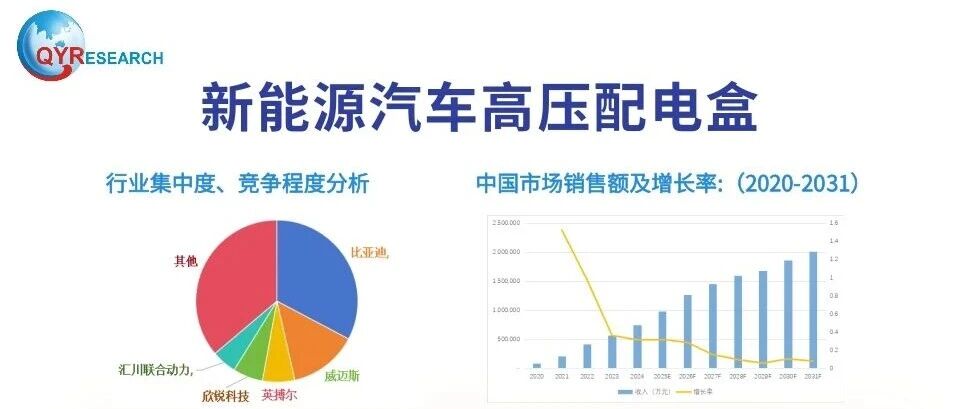
永达汽车公布公告卸除摊销压力,行业转型背景下维持稳健运营
Ge Long Hui· 2025-08-15 13:30
Group 1 - The core point of the article is that Yongda Automotive has announced a one-time impairment adjustment of approximately 3.5 billion RMB to better reflect asset conditions and reduce future amortization pressure, which will not affect cash flow or daily operations [1][2] - The automotive retail industry is expected to continue its growth trend through 2025, with significant structural changes, as evidenced by a 12.7% increase in production and a 12% increase in sales year-on-year for the first seven months of the year [1] - New energy vehicles (NEVs) are experiencing rapid growth, with production and sales increasing by 39.2% and 38.5% year-on-year, respectively, achieving a penetration rate of 45% [1] Group 2 - Yongda Automotive demonstrates resilience and potential through its forward-looking new energy brand matrix, used car and after-sales capabilities, and digital operational efficiency, maintaining stable after-sales service revenue and gross margin [2] - The company reported a net cash inflow of over 1.1 billion RMB from daily operations in the first half of the year, reflecting a year-on-year increase of over 57% [2] - In the new energy sector, Yongda Automotive has expanded its network significantly, adding 30 new authorized new energy outlets and 7 newly opened outlets, with independent new energy vehicle sales and maintenance revenue increasing by 49% and 76% year-on-year, respectively [2]
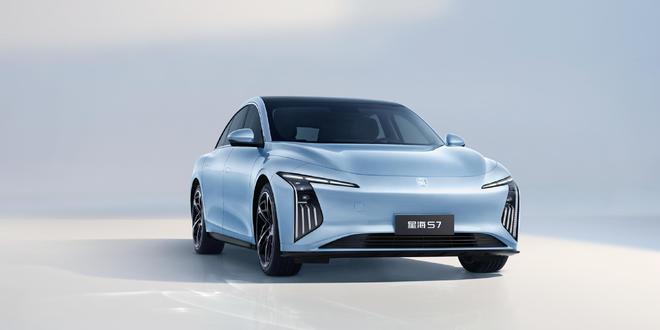
新能源中大型家轿市场跑出“黑马” 多方面表现媲美小米SU7
Jing Ji Guan Cha Bao· 2025-08-05 10:13
Core Insights - The sales ranking for the second quarter of 2025 in the new energy mid-to-large sedan market has been released, highlighting significant changes, particularly with the Xiaomi SU7, BYD Han, and Xpeng P7+ leading in sales, while the Xinghai S7 and Xiangjie S9 show remarkable growth rates of 358% and 281% respectively [2][10] Group 1: Market Performance - The top three sales figures are Xiaomi SU7 with 79,823 units, BYD Han with 33,902 units, and Xpeng P7+ with 20,691 units [2] - The Xinghai S7 has emerged as a market dark horse with explosive growth, attributed to its strong performance and lack of aggressive marketing tactics [2][10] Group 2: Company Background - Xinghai S7 is the flagship new energy sedan from Dongfeng Fengxing, a brand under Dongfeng Motor Group, which has over 70 years of history in the automotive industry [3][10] Group 3: Product Features - The Xinghai S7 features a pure electric high configuration with a range of 650 km and a range-extended version with a total range of 1,250 km, while the Xiaomi SU7 offers a range between 700 km and 830 km [6][9] - Both models have achieved low drag coefficients, with Xinghai S7 at 0.191 Cd and Xiaomi SU7 at 0.195 Cd, contributing to their competitive range [6] Group 4: Competitive Advantages - The Xinghai S7 boasts a maximum power of 200 kW and a 0-100 km/h acceleration time of 5.9 seconds, comparable to the Xiaomi SU7 [7] - The Xinghai S7 has a notable cost-performance advantage, with a power consumption of only 11.9 kWh per 100 km, the lowest in its class [9] Group 5: Market Outlook - The "Double S" models, referring to the Xinghai S7 and Xiaomi SU7, are expected to continue increasing their market share as the penetration rate of new energy vehicles in the mid-to-large sedan market rises [10]
上半年保险业保费3.74万亿元,同比增长超5%
Guo Ji Jin Rong Bao· 2025-07-29 13:49
Group 1: Overall Insurance Industry Performance - The insurance industry achieved original premium income of 3.74 trillion yuan in the first half of 2025, representing a year-on-year growth of 5.3% [1] - The chief analyst at Minsheng Securities anticipates that dividend insurance will gradually become mainstream in the life insurance sector, driven by regulatory guidance towards differentiated and refined development [1] Group 2: Life Insurance Sector - Life insurance companies reported original premium income of 2.77 trillion yuan in the first half of the year, with a year-on-year increase of 5.4% [2] - In June alone, life insurance premium income surged by 16.3% year-on-year, significantly outpacing the overall growth rate for the first half [2] - The premium income for life insurance, health insurance, and accident insurance reached 2.29 trillion yuan, 216 billion yuan, and 461.4 billion yuan respectively, with year-on-year growth rates of 6.6%, 0.1%, and a decline of 6.1% [2] - The strong performance of life insurance in June, with a premium income of 414.1 billion yuan, marked a 21% year-on-year increase, reversing earlier negative growth trends [2] - The decline in bank deposit rates and market interest rates has highlighted the long-term, stable return advantages of insurance products, contributing to a "rush to stop selling" sentiment in June [2] Group 3: Health Insurance Sector - Health insurance premium income in June was 735 billion yuan, reflecting a year-on-year decline of 3.8% [3] - The short-term fluctuations in health insurance premiums are attributed to the "Three Medical" reform's cost control, which has reduced the use of high-priced drugs and medical devices, impacting perceived value [3] - The transformation of health insurance products is ongoing, with traditional medical insurance undergoing adjustments while mid-to-high-end medical insurance is still in the cultivation phase [3] Group 4: Property Insurance Sector - Property insurance companies generated original premium income of 964.5 billion yuan in the first half of the year, showing a year-on-year growth of 5.1% [4] - The premium income from auto insurance was 450.5 billion yuan, with a year-on-year increase of 4.5% [4] - In June, the growth rate of auto insurance premiums was 5%, slightly higher than in May [4] - The production and sales of automobiles in June reached 2.794 million and 2.904 million units, respectively, with year-on-year growth of 11.4% and 13.8% [4] - The penetration of new energy vehicles, which accounted for 45.8% of total new car sales, is expected to enhance the growth momentum of auto insurance premiums due to higher average premiums compared to traditional fuel vehicles [4] - Non-auto insurance business saw health insurance as the largest segment, with premium income of 160.9 billion yuan, growing by 9.1% year-on-year, while accident insurance experienced the highest growth rate of 12.4% [4] - Leading insurance companies are expected to maintain rapid premium growth and better business quality, with lower claims ratios in auto insurance enhancing profitability compared to smaller firms [4]
欧洲新能源有望提速
Changjiang Securities· 2025-07-22 23:30
Investment Rating - The report maintains a "Positive" investment rating for the automotive and automotive parts industry [6]. Core Insights - The UK has restarted a new round of electric vehicle subsidies, covering electric cars priced below £37,000, with a maximum subsidy of £3,750 per vehicle and a total subsidy budget of £650 million, planned to last until 2028-2029. This initiative is expected to enhance the penetration rate of new energy vehicles in the UK [2][4][22]. Summary by Sections Event Description - On July 15, 2025, the UK Department of Transport announced a £650 million electric vehicle subsidy plan aimed at boosting consumer demand for electric vehicles to achieve net-zero emissions goals. The subsidy will be available for zero-emission vehicles starting from July 16, 2025, and will continue until 2028-2029 [4]. Market Performance - The UK has seen significant growth in electric vehicle adoption, with new energy vehicle sales reaching 275,000 units in the first five months of 2025, a year-on-year increase of 37.6%. The penetration rate of new energy vehicles in the UK is projected to reach 28.1% [9][13]. European Market Insights - In the first five months of 2025, new energy vehicle sales in Europe totaled 1.4 million units, reflecting a year-on-year growth of 25.0%. The penetration rate for new energy vehicles in Europe is at 20.5%, up by 4.5 percentage points [9][13]. Subsidy Impact - The new subsidy is expected to significantly boost the penetration rate of new energy vehicles among private car buyers in the UK. The average annual subsidy is estimated to support approximately 83,000 vehicles, accounting for 14.5% of the projected new energy vehicle sales in 2024 [22]. Recommendations - The report highlights that domestic companies such as BYD, SAIC, and Leap Motor are well-positioned to benefit from the UK subsidy, as their models fall within the subsidy criteria. Additionally, companies involved in the supply of new energy vehicle components in Europe are expected to show strong performance [22].