
无人驾驶

Search documents
马斯克:特斯拉将在20年内上月球建厂;此前称要在2027年实现无人登月,并表示SpaceX计划在月球上建造城市
Sou Hu Cai Jing· 2026-02-28 02:08
Group 1 - The core idea presented by Musk is that Tesla plans to build a factory on the Moon within the next 20 years, indicating a long-term vision for the company [2][3][5] - Musk encourages investors to hold Tesla stock for the long term, suggesting that the company's future value will be significant [4] - The discussion also highlights Tesla's ongoing focus on autonomous driving technology, with plans for the Cybercab, a fully autonomous taxi, to begin mass production in April [6][7] Group 2 - Musk's comments reflect a strategic outlook rather than a detailed implementation plan, emphasizing the company's ambitious goals in space and technology [5][6] - The conversation touched on external challenges facing the Berlin factory's expansion, with Musk indicating that external organizations could complicate matters [7] - Musk criticized the European automotive industry for resisting the transition to electric vehicles and autonomous driving, suggesting it is regressing to a "dinosaur era" [8]


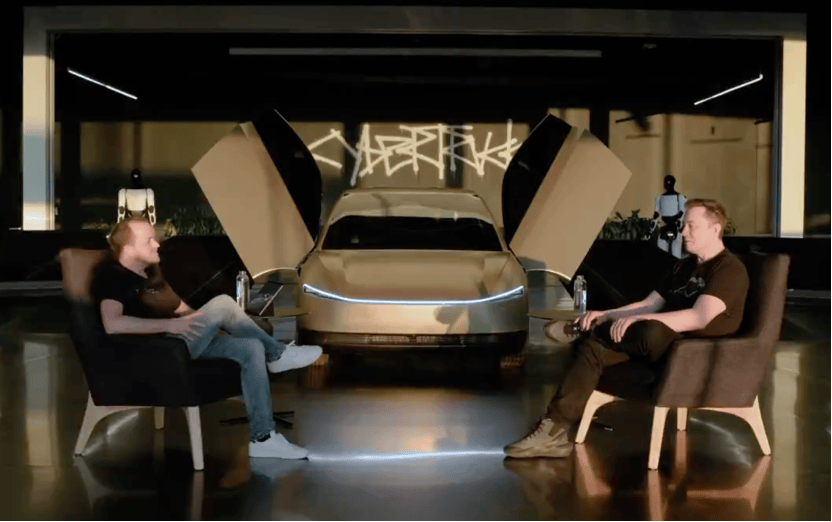
砍掉方向盘,特斯拉能跑通无人驾驶吗?
2 1 Shi Ji Jing Ji Bao Dao· 2026-02-27 13:13
Core Viewpoint - Tesla is discontinuing its most profitable models, Model S and Model X, to focus on the development of the Cybercab, a fully autonomous vehicle without traditional driving controls, as part of its strategy to enter the robotaxi market amid declining sales and profits [2][4]. Group 1: Business Strategy - Tesla's recent financial report indicates a decline in deliveries by 8.55% in 2025, with revenue and profits also decreasing, prompting the company to pivot towards the Cybercab project [2]. - The Cybercab is positioned as a new narrative for Tesla, aiming to transform the company from a traditional automaker into a leading AI mobility platform, potentially allowing for a much higher market valuation [4]. - The production method for the Cybercab, termed "Unboxed," allows for significant cost reductions, with production time for a vehicle potentially as low as 10 seconds and operational costs projected to be between $0.1 to $0.2 per mile [4]. Group 2: Regulatory Challenges - The Cybercab faces significant legal hurdles, as current U.S. federal vehicle safety standards require human control, necessitating the presence of traditional driving components [5]. - Tesla has not yet submitted a request for regulatory exemptions, which are limited to 2,500 vehicles per year, creating a potential bottleneck for mass production of the Cybercab [5]. - The strategy involves showcasing the Cybercab's capabilities to generate public and regulatory interest, similar to how SpaceX changed perceptions about rocket recovery [6].
砍掉方向盘,特斯拉能跑通无人驾驶吗?|财经早察
2 1 Shi Ji Jing Ji Bao Dao· 2026-02-27 13:03
Core Insights - Tesla is discontinuing its most profitable models, Model S and Model X, to focus on the development of the Cybercab, a fully autonomous vehicle without traditional driving controls [2] - The urgency in Tesla's shift towards Cybercab production is driven by declining sales and revenue, with a reported 8.55% drop in delivery volume in 2025 [2] - Elon Musk aims to transform Tesla from a car manufacturer into a leading AI mobility platform, which could significantly enhance its market valuation [4] Financial Performance - Tesla's recent financial report indicates a downturn, with both revenue and profit declining alongside the drop in delivery volumes [2] - The operational cost of the Cybercab is projected to be between $0.1 to $0.2 per mile, primarily driven by electricity costs, making it economically viable [5] Production Strategy - The Cybercab utilizes a new modular production method called "Unboxed," which could reduce production costs by 67% and allow for rapid assembly, with a vehicle potentially being completed in just 10 seconds [4] - Despite the innovative production approach, regulatory challenges exist, as current U.S. laws require vehicles to have human controls, which the Cybercab lacks [6] Regulatory Challenges - The Cybercab's design faces legal hurdles due to federal safety standards that mandate human-operated controls, necessitating a regulatory exemption that is currently limited to 2,500 vehicles per year [6] - Tesla has not yet submitted an application for this exemption, creating uncertainty about the vehicle's future in the market [6] Market Positioning - Musk's strategy involves showcasing the Cybercab to generate public and regulatory interest, similar to how SpaceX changed perceptions about rocket reusability [6] - The launch of the Cybercab is seen as a pivotal moment that could redefine Tesla's business model and the automotive industry as a whole [6]
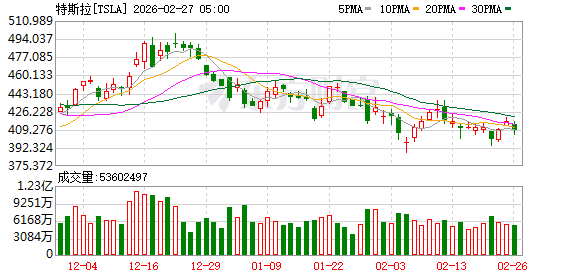
马斯克:特斯拉将在20年内上月球建厂,建议投资者长期持股
Sou Hu Cai Jing· 2026-02-27 12:00
Group 1 - The core idea presented by Elon Musk is that Tesla plans to build a factory on the Moon within the next 20 years, indicating a long-term vision for the company [3][5] - Musk emphasized the importance of holding Tesla stock for the long term, suggesting that the company's future value will be significant [4] - The discussion also highlighted Tesla's ongoing efforts in autonomous driving, with the Full Self-Driving (FSD) system expected to receive regulatory approval in the Netherlands by March 20 [6] Group 2 - Musk mentioned the production of the Cybercab, an autonomous taxi, which is set to begin mass production in April, marking a key component of Tesla's future business model [6] - The conversation touched on external challenges facing the Berlin factory's expansion, with Musk indicating that external organizations could complicate matters [7] - Musk criticized the European automotive industry for resisting the transition to electric vehicles and autonomous driving, suggesting it is regressing to a "dinosaur era" [8]
氪星晚报|蜜雪冰城要在河南老家建“雪王乐园”;DHL集团与京东签署谅解备忘录;日本芯片公司Rapidus获佳能、软银、索尼等公司投资
3 6 Ke· 2026-02-27 11:20
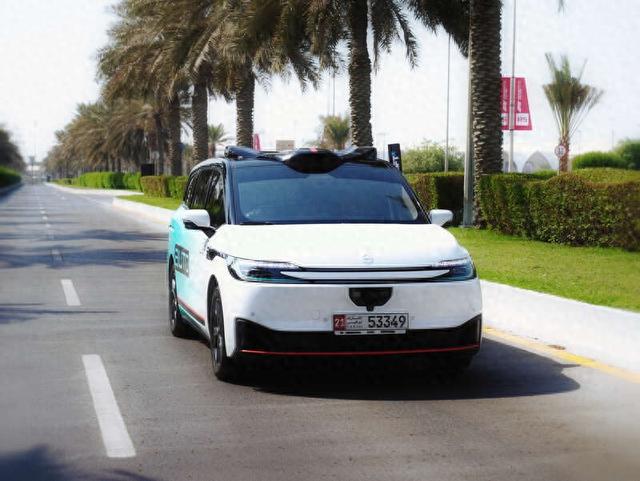
Group 1: Tesla and Autonomous Driving - Tesla has completed road tests of its latest autonomous driving technology in Abu Dhabi under driver supervision, aiming to innovate transportation while balancing safety and modern innovation adoption [1] Group 2: Business Developments - Meizhu Ice City is progressing with its first indoor theme park project, "Snow King Paradise," located in Zhengzhou, which integrates shopping and experiential activities [1] - Meizu has announced a pause on domestic smartphone hardware development and is seeking third-party hardware partnerships, potentially with Cube Magic [1] - SKF plans to list its automotive business, SKF Vertevo, as an independent company on Nasdaq Stockholm in Q4 2023, pending board and shareholder approval [2] - DHL Group and JD.com have signed a memorandum of understanding to collaborate in logistics and e-commerce, facilitating German brands' entry into the Chinese market [2] Group 3: Market Trends and Consumer Behavior - Douyin Mall's "38 Good Goods Festival" will start on March 4, focusing on women's self-gifting and seasonal needs, with various support measures for merchants [4] - Kuaishou reported record high daily active users during the Spring Festival, with a 60% increase in users participating in the "Shake Red Envelope" feature [5][6] Group 4: Investment and Financing - AI sports technology company "Tribute to the Unknown" has completed over 100 million yuan in Pre-A round financing, with funds aimed at global market expansion and product development [7] - Japanese chip company Rapidus has secured 267.6 billion yen (approximately 1.7 billion USD) in funding from both government and private sectors to advance its 2nm semiconductor production goals by 2027 [8]

全球竞速无人驾驶,全国政协委员建言政策创新破局
Xin Lang Cai Jing· 2026-02-26 14:30
Group 1 - Autonomous driving is becoming a focal point as an important application of artificial intelligence integrated with the real economy, with significant discussions among national political advisors and industry experts [2] - The U.S. House of Representatives has passed the "Autonomous Driving Bill," establishing a national regulatory framework for autonomous vehicles at the federal level, allowing for the legalization of vehicles without steering wheels or pedals [2] - Tesla's first Cybercab, which lacks a steering wheel and pedals, has rolled off the production line and is set for mass production in April, while Waymo is expanding its market presence in the U.S. and accelerating entry into global cities like Tokyo and London [2] Group 2 - National political advisors emphasize the strategic importance of autonomous driving as a key to future industry layout, with calls for accelerated institutional supply to support its development [3] - Current pilot programs for autonomous driving are limited in scale and regional scope, which hinders large-scale industrialization; suggestions include establishing 5 to 10 regional engineering verification platforms in urban areas [3] - A collaborative mechanism involving government guidance, enterprise leadership, and research support is recommended to promote policies for new models and services in autonomous driving [3] Group 3 - User experience surveys in Wuhan, identified as the "first city for autonomous driving," show that approximately 95% of users would continue using the service, with over 70% expecting it to become a primary mode of transportation [4] - Chinese autonomous driving companies are accelerating their international expansion, with Baidu's "萝卜快跑" operating in 22 global cities, including Dubai and Abu Dhabi [4] - Recommendations have been made to include autonomous driving in the national "14th Five-Year Plan" to support broader application scenarios in various regions [4]

特斯拉加州无人驾驶“画饼”?监管记录显示:路测里程已连续六年为零
Hua Er Jie Jian Wen· 2026-02-26 13:21
Core Insights - Tesla's CEO Elon Musk has repeatedly promised to launch a Robotaxi service in California, but recent regulatory records indicate that the company has made no substantial progress in obtaining the necessary operational permits [1] - The California DMV's unpublished records confirm that Tesla has not taken any action to secure relevant operational licenses as of 2025, with the company's autonomous driving road test mileage remaining at zero for the sixth consecutive year [1] - This stagnation directly impacts the core narrative supporting Tesla's $1.5 trillion market value, as investors have long bet on the company's ability to operate a large fleet of autonomous vehicles and achieve scalable monetization of software subscriptions [1] Regulatory Challenges - Under California's current regulatory framework, recording test mileage is a core prerequisite for autonomous driving companies to obtain commercial operating licenses [2] - To deploy a fully autonomous ride-hailing service similar to Waymo, Tesla must sequentially pass a series of approvals from the DMV and the California Public Utilities Commission [2] - Currently, Tesla only holds a basic permit from the DMV, which requires a safety driver to be present during testing, and has not applied for any additional permits [2] - According to new DMV regulations expected to be finalized later this year, companies must complete at least 50,000 miles (approximately 80,467 kilometers) of autonomous driving testing under safety supervision before applying for a permit to test without a safety driver [2] - Since 2019, Tesla has not recorded any mileage with state regulators, with a total of only 562 miles logged since 2016, in stark contrast to Waymo's accumulation of over 13 million miles of test mileage from 2014 to 2023 [2] Business Operations - Tesla is currently employing a strategy to circumvent high regulatory barriers by operating a small Robotaxi pilot project in Austin, Texas, where regulations are much more lenient [3] - In the San Francisco Bay Area, Tesla launched a so-called "Robotaxi" service last July, but this service is not a true autonomous taxi; it is a ride service provided by human drivers using Tesla's Full Self-Driving (FSD) software, which does not possess full autonomous driving capabilities [3] - Musk has previously explained the slow compliance process by stating that the company is extremely cautious about safety and takes a "prudent approach" to entering new markets, indicating that California's regulatory environment is a significant obstacle [3] - Tesla has criticized the proposed revisions to California DMV's autonomous driving rules, questioning the necessity of state testing requirements and minimum mileage thresholds, and has expressed concerns about the complexity of reporting requirements for collisions and system failures [3]
无人出租赛道再现百亿融资!微软英伟达奔驰齐投
Sou Hu Cai Jing· 2026-02-26 10:30
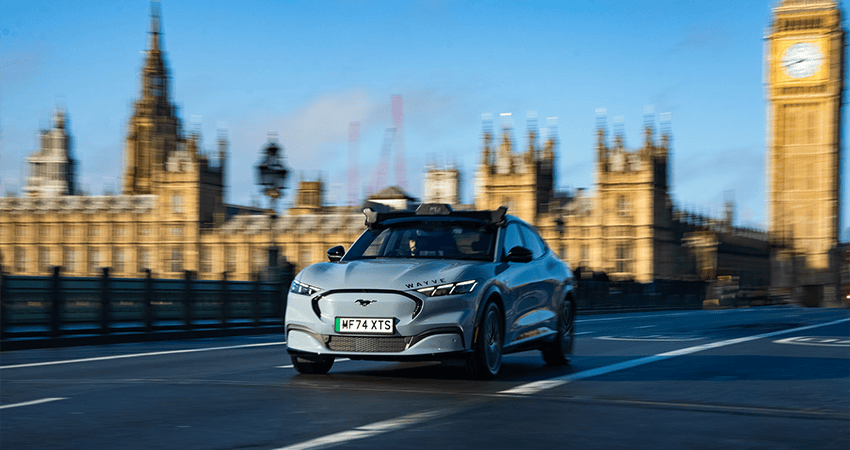
Group 1 - Wayve, a UK-based autonomous taxi company, has completed a $1.2 billion (approximately 83.19 billion RMB) Series D funding round, bringing its valuation to $8.6 billion (approximately 596.16 billion RMB) [2][4] - The funding round saw participation from major tech companies including Microsoft and Nvidia, as well as automotive giants like Mercedes-Benz, Nissan, and Stellantis [2][4] - Uber has committed an additional up to $300 million (approximately 20.80 billion RMB) as part of this funding, contingent on Wayve meeting certain technical milestones [4] Group 2 - Wayve's autonomous taxis are set to begin trial operations in London this year, leveraging the city's increasingly favorable regulatory environment for autonomous vehicle testing [3][4] - The company focuses on an "end-to-end AI" technology approach, allowing vehicles to operate without relying heavily on high-definition maps, which differentiates it from traditional autonomous driving solutions [6][8] - Wayve has successfully conducted "mapless" road tests in over 500 cities worldwide, showcasing its technology's adaptability to complex driving conditions [8] Group 3 - Wayve adopts a light-asset model, avoiding heavy investments in vehicle manufacturing and fleet operations, and instead positioning itself as a software supplier for autonomous driving [9] - The company is collaborating closely with Nissan to develop the next-generation ProPilot intelligent driving system, expected to launch in 2027 [9] - Despite its technological advancements, Wayve faces significant competition and funding challenges, particularly from industry leaders like Waymo, which recently secured $16 billion (approximately 1109.14 billion RMB) in funding [11] Group 4 - The recent funding round for Wayve indicates strong market confidence in its technology and reflects the accelerating commercialization of the global autonomous driving industry [12] - Wayve's strategy of partnering with automotive manufacturers and ride-hailing platforms highlights a shift in the competitive landscape, where success may depend more on cost efficiency and adaptability than on sheer financial resources [12] - The upcoming competition among companies in London will serve as a critical observation point for the future of transportation [13]
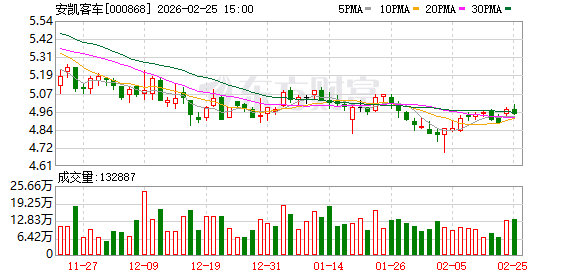
安凯客车:公司在氢燃料、无人驾驶等领域均有产品投入市场
Mei Ri Jing Ji Xin Wen· 2026-02-25 13:17
Group 1 - The core viewpoint of the article indicates that Ankai Bus (000868.SZ) expects an increase in bus sales and revenue in 2025 compared to the previous year, despite current performance losses attributed to a decline in overall gross profit margin and special provisions for unrecovered subsidy impairment losses [2] - The management is actively implementing various measures to improve operational results [2] - The company has launched products in hydrogen fuel and autonomous driving sectors, and plans to explore the application of new technologies such as AI in smart driving and smart manufacturing to enhance its core competitiveness [2]

马年春节小马智行无人车成深圳“科技年货”
Zhong Guo Jing Ying Bao· 2026-02-25 09:33
Core Insights - Shenzhen experienced an unprecedentedly busy Spring Festival, with hotel bookings ranking in the top three nationwide and tourist numbers exceeding ten million [1][2] - The introduction of fully autonomous vehicles, specifically from Xiaoma Zhixing, filled the transportation gap caused by local drivers returning home for the holiday, ensuring travel needs were met for both residents and visitors [1] - Xiaoma Zhixing's operational data showed significant growth during the holiday period, with paid orders in Shenzhen surpassing the total for the entire previous year by New Year's Eve [1][2] Group 1 - The average age of Shenzhen's population is 32.5 years, contributing to its vibrant atmosphere during the Spring Festival [1] - Xiaoma Zhixing's Robotaxi service became a key attraction, alongside other tech landmarks like DJI and Huaqiangbei, highlighting Shenzhen's status as a "tech tourism" destination [1][2] - The service was operational throughout the holiday, demonstrating that autonomous vehicles are now a practical transportation option rather than a mere concept [2] Group 2 - Data from Ctrip indicated that Shenzhen ranked first among foreign tourists' preferred "New Year destinations," showcasing its transformation from a population outflow area to a cultural and tourism hub [2] - The number of hotel bookings from individuals aged 60 and above increased by 56% year-on-year, indicating a growing interest among older demographics in visiting Shenzhen [2] - Xiaoma Zhixing's autonomous vehicles have become a symbol of Shenzhen's technological advancement, serving as a means for parents to connect with their children and for tourists to experience the city's innovation [2][3]