
日本央行加息

Search documents
日债需求意外回暖 缓解大选前夕抛售压力
Ge Long Hui· 2026-02-05 07:22
美股频道更多独家策划、专家专栏,免费查阅>> 责任编辑:山上 2月5日,日本财政部周四进行的30年期国债拍卖需求强劲,缓解了市场对大选前夕长期债务压力的担 忧。此次拍卖的投标倍数达到3.64,显著高于上一次拍卖的3.14,也超过了过去12个月3.35的平均水 平。拍卖结果公布后,日本国债期货应声上涨。此前周二进行的10年期国债拍卖需求平平,反映出市场 担心大选后财政支出将大幅增加。 民调显示,高市早苗的公众支持率依然稳固,其领导的执政党有望在周日的投票中获得绝对多数席位。 此外,日元贬值也令投资者感到不安。随着高市早苗指出弱势日元对出口的益处,对冲基金正重启对日 元的做空押注。同时,市场正密切关注选举结果对日本央行加息路径的影响。1 月会议纪要显示,鉴于 日元贬值对通胀的影响,央行官员对"适时加息"的紧迫性正日益达成共识。 ...
瑞穗旗下资管AM-One:若日本央行于4月加息 美元兑日元有望跌破150大关
智通财经网· 2026-02-02 06:57
Group 1 - The Chief Investment Officer of Asset Management One, Shigeki Muramatsu, indicated that if the Bank of Japan raises interest rates in April, the yen could strengthen to 150 yen per dollar [1] - Asset Management One manages approximately $512 billion in assets and is inclined to purchase ultra-long Japanese government bonds due to their relatively high yields compared to Japan's growth prospects [1] - Concerns about the slow pace of monetary policy tightening by the Bank of Japan have led to a weaker yen, although Muramatsu believes the situation is not as dire as perceived [1] Group 2 - The weak yen is expected to be a significant factor necessitating interest rate hikes by the Bank of Japan and the government, with a 69% probability of a rate increase before April, up from 40% at the end of last year [2] - Muramatsu noted that the coordination between the U.S. and Japan increases the likelihood of an earlier rate hike by the Bank of Japan, especially with U.S. Treasury Secretary urging Japan to allow further rate increases [2] - A drop in the dollar-yen exchange rate below 150 could pressure the Japanese stock market, but Asset Management One remains optimistic about long-term investments in risk assets by Japanese households [2] Group 3 - Following the Bank of Japan's January policy meeting, institutions like BNP Paribas and SMBC Nikko Securities have brought forward their expectations for the next policy adjustment to April [3] - The minutes from the January meeting indicated an increasing recognition among decision-makers of the necessity for timely interest rate hikes due to the impact of a weak yen on inflation [3] - Muramatsu highlighted the attractiveness of 30-year Japanese government bonds, which stabilized at around 3.64% after a previous surge, despite concerns over fiscal sustainability due to proposed tax cuts [3]

花旗预警:日元持续疲软或触发日本央行年内三次加息
Xin Hua Cai Jing· 2026-01-20 03:10
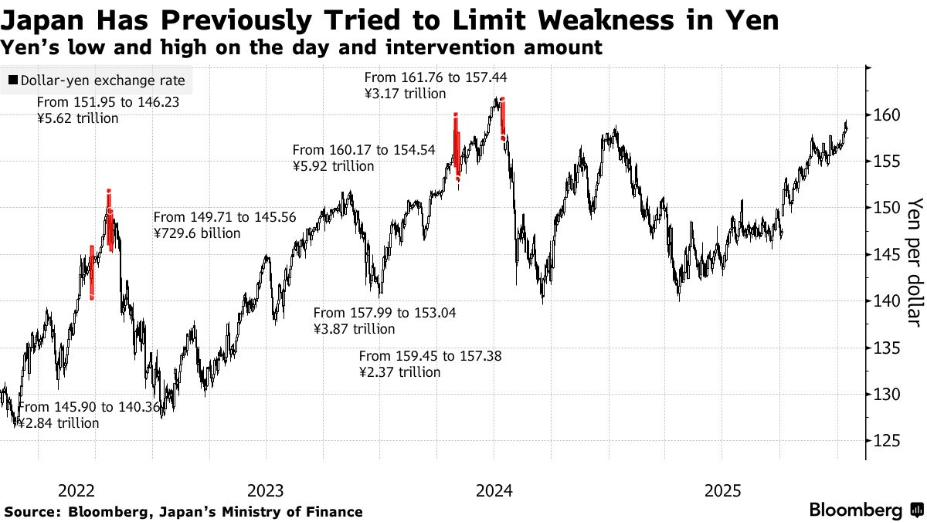
市场预期与星野朗的判断部分吻合。彭博社调查显示,多数经济学家预计日本央行下一次加息将在7 月,采取每六个月一次的节奏。而根据掉期市场定价,交易员普遍押注7月前将有一次加息,且到12月 前再次加息的概率高达90%。 新华财经北京1月20日电花旗集团日本市场主管星野朗(Akira Hoshino)表示,若日元持续疲软,日本 央行可能在2026年实施三次加息,使政策利率从当前的0.5%升至1%,达到现有水平的两倍。 星野朗在接受采访时表示,一旦美元兑日元汇率升破160关口,日本央行极有可能于4月加息25个基点至 1%。他进一步预测,若汇率维持在低位,央行或于7月再度加息,并不排除在年底前进行第三次同等幅 度的调整。 "简而言之,日元的疲软是由实际利率为负所驱动的,"星野朗指出,当前日本国债收益率持续低于通胀 水平,形成负实际利率环境。他认为,若央行希望扭转日元贬值趋势,"除了应对这一问题,别无选 择"。 亚洲交易时段早盘,美元兑日元交投于158关口上方。上周,盘中曾一度逼近160关口,创出18个月以来 的新高。星野朗预计,今年该汇率将在略低于150至165区间内波动。 星野朗的观点凸显了汇率因素正日益成为判断日本货 ...
花旗警告:若日元持续疲软 日本央行2026年或激进加息三次
智通财经网· 2026-01-20 02:07
Core Viewpoint - Citigroup's Japan market head Akira Hoshino warns that if the yen remains weak, the Bank of Japan may raise interest rates three times by 2026, potentially doubling the current policy rate [1] Group 1: Monetary Policy Outlook - Hoshino suggests that if the USD/JPY exchange rate exceeds 160, the Bank of Japan may increase the uncollateralized overnight call rate by 25 basis points to 1% in April [1] - He anticipates a similar rate hike in July and possibly a third increase by the end of the year if the yen continues to weaken [1] - The current negative real interest rates are driving the yen's weakness, and addressing this issue is crucial for reversing the exchange rate trend [1] Group 2: Economic and Market Conditions - Hoshino expects the yen to fluctuate between 150 and 165 against the dollar this year, with the current rate at 158.2, having reached an 18-month low of 159.45 [2] - If key rates like the 10-year government bond yield exceed inflation rates, Japanese institutions may consider reallocating overseas investments back to domestic fixed-income assets [2] - The lack of sufficient investment options in Japan is a key reason for the persistent weakness of the yen [2] Group 3: Strategic Initiatives - Hoshino aims to enhance collaboration between the trading team and investment banking to capitalize on the opportunities created by the M&A boom in Japan [2] - He plans to involve team members in early client discussions to provide optimal financing solutions during transactions [2] - The goal is to optimize supply-demand matching from the initial stages of transactions to offer the most effective financing solutions to clients [2]

花旗:日元疲软或导致日本央行在2026年加息三次
Ge Long Hui· 2026-01-20 01:53
美股频道更多独家策划、专家专栏,免费查阅>> 责任编辑:栎树 1月20日,花旗集团日本市场业务负责人星野明表示,如果日元持续疲软,日本央行今年可能加息三 次,使利率水平翻倍。星野在接受采访时表示,如果美元兑日元汇率突破160,日本央行可能在4月份将 无担保隔夜拆借利率上调25个基点,至1%。 他认为,如果日元汇率维持低位,7月份有可能进行同样幅度的第二次加息,甚至可能在年底前进行第 三次加息。"简单来说,日元的疲软是由负的实际利率驱动的,"星野表示,"如果(日本央行)想扭转 汇率走势,除了解决这个问题之外别无选择。"目前,星野预计今年日元将在略低于150至165的区间内 波动。 ...
花旗:如果日元持续疲软 或促使日本央行2026年加息三次
Xin Lang Cai Jing· 2026-01-20 00:47
Core Viewpoint - The Citigroup Japan market head suggests that if the yen continues to weaken, the Bank of Japan may raise interest rates three times this year, potentially doubling the current rate [1][2]. Group 1: Interest Rate Predictions - If the USD/JPY exchange rate exceeds 160, the Bank of Japan may increase rates by 25 basis points to 1% in April, with a similar hike possible in July, and potentially a third increase by year-end if the yen remains weak [1][2]. - Market observers expect the next rate hike from the Bank of Japan may still be months away, but some believe that if the yen declines significantly again, the Bank may act sooner [3]. Group 2: Economic Indicators - Hoshino forecasts that the yen will trade in a range slightly below 150 to 165 this year, with the yen recently trading around 158.2 and having touched an 18-month low of 159.45 [2][3]. - If the 10-year Japanese government bond yield and other key rates rise above inflation, domestic institutional investors may consider repatriating overseas investments to allocate to domestic fixed-income assets [2][3]. Group 3: Market Dynamics - The weakness of the yen is driven by negative real interest rates, where yields are below inflation, indicating that the Bank of Japan has no choice but to address this issue to reverse the currency trend [1][2]. - There is a lack of investment products available for investors wishing to repatriate funds to Japan, which is a key reason for the yen's long-term weakness [4].
日本央行下次加息可能在6~7月?
3 6 Ke· 2026-01-19 23:13
"果然在2025年12月决定加息是对的",这或许是日本央行相关人士的真实想法。日本央行在讨论冬季加 息时机时,曾有2025年12月和2026年1月两个选项。选择在12月加息的背后被认为也包含了这样的判 断:如果出现1月解散众议院、2月举行选举,那么1月加息将变得困难。 需要了解的是日本央行一般会避免在国政选举前采取行动。因为选举前的政策变更可能被进行政治解 读,从而引发对央行中立性受损的担忧。 事实上,自现行《日本银行法》实施(1998 年)、日本央行获得了金融政策的自主性以来,日本央行 从未在众议院选举前决定政策变更。即使是最接近的一次(2003年10月10日),也与选举日相距约一个 月。2025年12月决定加息的结果是,日本央行能与可能出现的"1月解散、2月选举"的政治环境保持距 离。 重要的不仅如此。1月解散众议院的方案对下一次加息而言也可以说是有利的。为什么这么说? 2025年12月完成加息的日本央行接下来担心的是众议院有可能在6月解散的情况。因为通过各项法案后 的例行国会的会期末是一个解散的节点,从历史上看也确实多次在此时期解散众议院。问题在于,如果 出现6月解散众议院、7月选举的日程,就会与下一次 ...

日本央行下次加息可能在6~7月?
日经中文网· 2026-01-19 08:00
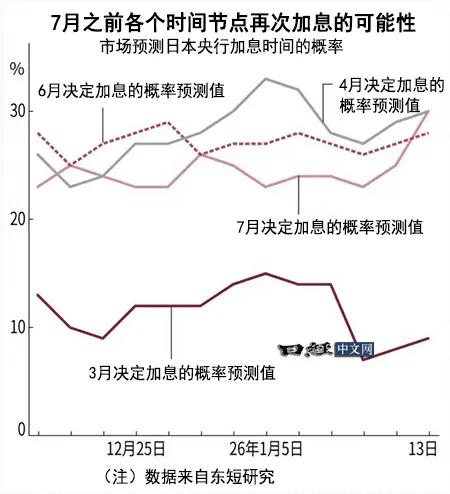
Core Viewpoint - The article discusses the potential impact of Japan's political environment on the Bank of Japan's (BOJ) interest rate decisions, particularly in light of the upcoming House of Representatives election and the implications of a possible dissolution of the House in January 2025 [2][4]. Group 1: Political Environment and BOJ Actions - The BOJ typically avoids taking action before national elections to maintain its independence and avoid political interpretations of its policies [4][5]. - The decision to dissolve the House of Representatives in January 2025 could create a favorable environment for the BOJ to raise interest rates in June or July, as it would eliminate concerns about overlapping election schedules [5][7]. - Historical patterns indicate that the BOJ has never changed its policy right before a House election since the current Bank of Japan Act was implemented in 1998 [4]. Group 2: Interest Rate Predictions - The likelihood of an interest rate hike in June or July 2025 is supported by the expected outcomes of spring labor negotiations, which will clarify wage increases [5]. - Market predictions suggest a 28% probability for a rate hike in June and a 30% probability in July, totaling nearly 60% [5]. - There is a possibility that the BOJ may need to raise rates earlier if the yen depreciates significantly due to political factors, particularly if inflationary pressures increase [7]. Group 3: Historical Context - The article draws parallels between the current situation and the past, specifically referencing the January 1990 dissolution of the House and subsequent interest rate hikes by the BOJ [8][9]. - In 1990, the BOJ raised rates in March following a similar political scenario, suggesting that the current environment may allow for similar actions post-election [9].
日本央行鹰派躁动,4月加息窗口开启?
Jin Shi Shu Ju· 2026-01-16 06:23
四位知情人士透露,鉴于日元贬值可能加剧本已扩散的通胀压力,日本央行部分政策制定者认为,存在比市场预期更早加息的空间,4月 加息的可能性尤为显著。 日本央行政策制定者正面临一项棘手任务:在全球逆风加剧、本国经济刚摆脱长期通缩影响的背景下,推动维持多年的超低利率上行。 日本央行刚于去年12月将利率上调至0.75%,创下30年来的新高,在1月23日结束的为期两天的货币政策会议上,该行预计将维持利率不 变。 但知情人士表示,许多日本央行政策制定者认为仍有进一步加息的空间,部分人甚至不排除4月采取行动的可能性。这一时间点早于私营 部门的主流预期——市场普遍认为加息将在今年下半年落地。 路透社调查的分析师预计,日本央行将推迟至7月再次加息,超75%的分析师预计,到9月利率将升至1%或更高水平。 不过知情人士指出,若有充分证据表明日本能持久实现2%的通胀目标,央行部分官员不排除提前加息的可能。 日本央行预计,未来数月食品驱动型通胀将有所缓和,进而推动更多由薪资上涨带动的物价回升,使核心通胀率持续稳定在2%的目标水 平。该行很可能在下周的货币政策会议上维持这一预测。 然而,自去年10月以来日元的大幅贬值,让市场开始质疑成本推 ...
日元大跌倒逼央行提前加息?消息人士:下周或施放重要信号
Feng Huang Wang· 2026-01-16 05:21
Core Viewpoint - The Bank of Japan (BOJ) may consider raising interest rates earlier than market expectations, potentially as soon as April, due to the ongoing depreciation of the yen and rising inflation pressures [1][2]. Group 1: Interest Rate Decisions - BOJ officials are facing the challenge of increasing borrowing costs after years of ultra-low rates, with the current rate at 0.75%, the highest in 30 years [2]. - Many BOJ decision-makers believe there is room for further rate hikes, with some not ruling out action in April, which is earlier than the previously expected timeline of the second half of the year [2][3]. - A survey indicated that over 75% of analysts expected the next rate hike to occur in September, but internal discussions at the BOJ suggest a potential shift in this timeline [2]. Group 2: Yen Depreciation Concerns - The significant depreciation of the yen since October has raised concerns among BOJ officials regarding the stability of inflation, as it increases the cost of imports, including fuel and food [3]. - The yen's decline has led to warnings from government officials and has heightened uncertainty about whether price pressures will ease as predicted by the BOJ [3]. - There is a growing concern within the BOJ that companies may use the yen's depreciation as a reason to raise product prices, further complicating the inflation outlook [3]. Group 3: Future Projections - The BOJ is expected to revise its economic growth and inflation forecasts during the upcoming monetary policy meeting on January 23, which may signal the pace of future rate hikes [4]. - The BOJ's previous forecast from October projected a 0.7% growth in the economy and a core inflation rate of 1.8% for the fiscal year 2026 [4]. - Analysts suggest that the ongoing yen depreciation may force the BOJ to act sooner than anticipated in addressing inflation risks, with a significant likelihood of an April rate hike and potential further increases in July and October [4].