
次贷危机

Search documents
美联储如期降息25基点!历次降息周期 A股表现如何?
Zheng Quan Shi Bao Wang· 2025-09-17 23:38
Group 1 - The Federal Reserve announced a reduction in the target range for the federal funds rate from 4.25%-4.50% to 4.0%-4.25%, marking a 25 basis points cut and the first rate decrease since 2025 [1] - Historical analysis shows that during previous Federal Reserve rate cut cycles, the A-share market exhibited varying performance, with significant declines noted in certain periods [4] - For instance, during the 2001 rate cut period, the cumulative reduction was 475 basis points, and the Shanghai Composite Index fell by 20.35% [4] Group 2 - In the 2008 financial crisis, the Federal Reserve cut rates 10 times, totaling a 500 basis points reduction, while the Shanghai Composite Index experienced a dramatic decline of 63.57% [4] - The data indicates that the A-share market's performance during rate cuts has often been negative, suggesting a potential correlation between rate cuts and market downturns [4]

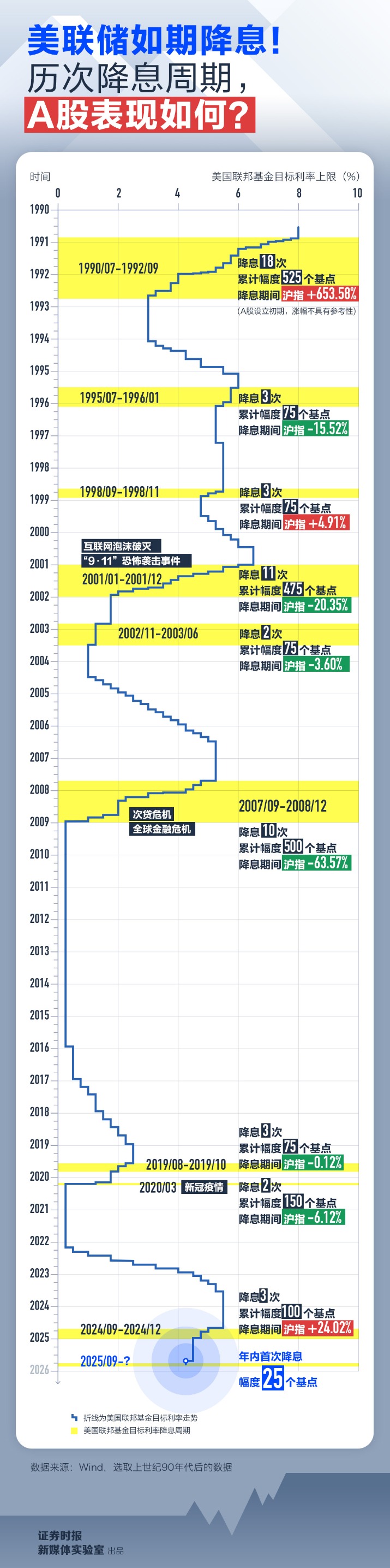
时报图说|历次降息周期,A股表现如何?
证券时报· 2025-09-17 18:15
Core Viewpoint - The article discusses the impact of the Federal Reserve's interest rate cuts on the A-share market, analyzing historical data to draw correlations between rate cuts and stock market performance [2][5]. Summary by Sections Historical Rate Cuts and A-Share Performance - From July 1990 to September 1992, the Federal Reserve cut rates 18 times, totaling a reduction of 525 basis points, during which the Shanghai Composite Index (SSE) rose by 653.58% [3]. - In the period from July 1995 to January 1996, there were 3 rate cuts totaling 5 basis points, and the SSE fell by 15.52% [3]. - Between September 1998 and November 1998, there was a 75 basis point cut, with the SSE increasing by 4.91% [4]. - In 2001, the Fed cut rates 11 times, totaling 475 basis points, leading to a decline of 20.35% in the SSE [4]. - The period from November 2002 to June 2003 saw a 25 basis point cut, with the SSE decreasing by 3.60% [4]. - During the financial crisis from September 2007 to December 2008, the Fed cut rates 10 times, totaling 500 basis points, resulting in a significant drop of 63.57% in the SSE [4]. - In the recent period from August 2019 to October 2019, the Fed cut rates 2 times, totaling 50 basis points, with the SSE showing a slight decline of 0.12% [5]. - The cuts in March 2020 due to the COVID-19 pandemic totaled 150 basis points, and the SSE fell by 6.12% [5]. - The most recent cuts in 2024 are projected to total 100 basis points, with an expected increase of 24.02% in the SSE during that period [5].

十几年的故事即将走向终局,还有2倍往上的机会,干吗?
Ge Long Hui· 2025-09-12 07:57
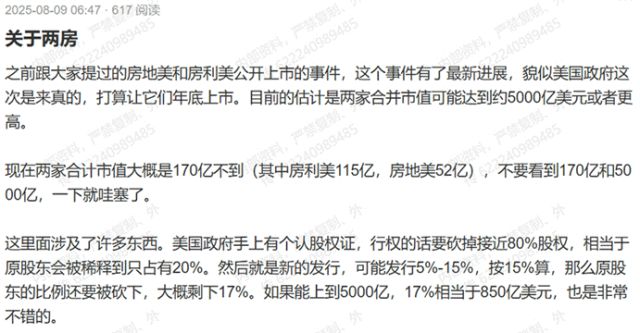
Group 1 - The core focus of the article is on the potential IPO of Fannie Mae and Freddie Mac, referred to as the "two houses," which have seen significant stock price increases and are expected to transition from concept stocks to reality [1][5][22] - Since early August, the stock prices of the two houses have risen nearly 80%, yet their market value is still far from the target [3][22] - The two houses have a long history as significant players in the U.S. housing finance market, and their upcoming IPO could lead to a combined valuation of $500 billion to $700 billion [8][22] Group 2 - Fannie Mae's projected net profit for 2024 is $11.6 billion, indicating steady growth despite past fluctuations [6][10] - The article highlights that the current market valuation of Fannie Mae is approximately $9.2 billion, which is significantly lower than its potential value based on earnings [9][10] - The article discusses the historical context of the two houses, tracing back to the 2008 financial crisis when they were placed under government conservatorship, which has impacted their profitability and shareholder returns [11][12][15] Group 3 - The article outlines the changes made by the Obama administration in 2012, which required the two houses to pay all profits to the government, effectively preventing them from retaining earnings [15][16][18] - Legal actions have been taken by shareholders against the Federal Housing Finance Agency (FHFA) for perceived violations of shareholder rights, with a recent court ruling in favor of shareholders [19][20] - The potential for a new IPO under the Trump administration is highlighted, with expectations that the two houses could be listed soon, significantly impacting their market valuation [22][23]
房利美和房地美或将被私有化,解决美国次贷危机重大遗留问题
Huan Qiu Wang· 2025-08-02 00:21
Group 1 - The core focus of the article is on President Trump's active push for the privatization of Fannie Mae and Freddie Mac, seeking input from top Wall Street executives on potential methods such as IPOs to facilitate government exit from these entities [1][2] - Trump has met with JPMorgan CEO Jamie Dimon and plans to meet with Goldman Sachs' David Solomon and Bank of America's Brian Moynihan to discuss specific proposals for monetizing the two government-sponsored enterprises [1] - The backdrop of this initiative stems from the 2008 financial crisis, which led to the U.S. Treasury taking control of Fannie Mae and Freddie Mac to prevent economic recession due to the housing market downturn [1] Group 2 - Analysts suggest that the privatization of Fannie Mae and Freddie Mac could yield significant economic benefits for the government, banks, and existing shareholders, given the massive scale of these entities [2] - The potential public offering of Fannie Mae and Freddie Mac could become one of the largest IPOs in history, providing substantial underwriting fees for the selected investment banks [2]
从0到600亿,华安黄金ETF的故事
点拾投资· 2025-06-08 12:32
Core Viewpoint - The article emphasizes the significance of gold as a long-standing investment asset, particularly in the context of economic uncertainty and geopolitical tensions. It highlights the historical performance of gold during financial crises and its appeal as a safe-haven asset in modern investment strategies. Group 1: Historical Context and Investment Insights - Gold has been a symbol of wealth and status in Chinese culture for over 4000 years, predating paper currency as a form of money [1] - The 2008 financial crisis showcased gold's resilience, as it was one of the few assets that appreciated while others plummeted [1][2] - The article recounts a personal anecdote about recommending gold investments during a politically charged environment, reflecting the ingrained belief in gold as a reliable asset [1] Group 2: Notable Investors and Their Strategies - John Paulson, a hedge fund manager, gained fame by betting against the U.S. housing bubble in 2005, using credit default swaps (CDS) as a strategic tool [5][7] - Paulson's successful shorting of the subprime mortgage market during the 2008 crisis led to significant profits, establishing him as a prominent figure in hedge fund management [8] - Following his success, Paulson began investing heavily in gold, believing it to be the best hedge against economic instability and inflation [8] Group 3: Current Trends and Innovations in Gold Investment - Ray Dalio, another influential hedge fund manager, has also advocated for gold as a hedge against currency devaluation and economic crises, emphasizing its role in wealth preservation [9][10] - Dalio describes gold as a "purest form of wealth storage," highlighting its advantages in terms of liquidity and privacy compared to other assets [11] - The article discusses the innovation of gold ETFs, which have made gold investment more accessible to the general public, allowing for low-cost entry and ease of trading [13][16] Group 4: Growth of Gold ETFs - The Huashan Gold ETF, launched in 2013, has grown significantly from an initial size of under 200 million to over 60 billion by 2025, reflecting increasing investor interest [19] - The article notes the importance of educational initiatives to promote gold investment, with extensive outreach conducted by the ETF's management team [18] - The growth trajectory of the Huashan Gold ETF illustrates the evolving landscape of gold investment in China, aligning with global trends of seeking safe-haven assets [19][22]

2026美国楼市或崩盘引发全球,18年魔咒再临!中国该如何破局?
Sou Hu Cai Jing· 2025-06-05 03:35
Group 1 - The U.S. real estate market follows an 18-year cyclical pattern, with a predicted downturn starting in 2026 that will have widespread negative impacts on the economy [1][3] - Historical data shows significant real estate crashes in the U.S. in 1972, 1990, and 2008, each occurring 18 years apart, indicating a strong correlation between real estate downturns and economic recessions [3][4] - The 2008 financial crisis exemplified how the collapse of the real estate market can lead to a broader financial crisis, as seen with the failures of Lehman Brothers and Fannie Mae [3][4] Group 2 - The upcoming downturn in the U.S. real estate market necessitates proactive strategies from China to mitigate potential impacts, including implementing policies to stabilize its own real estate market [6] - Chinese companies with overseas investments should conduct risk assessments to prepare for the underlying risks associated with the current U.S. real estate "prosperity" [6] - The potential recession in the U.S. could adversely affect China's export industries, highlighting the need for strategic development in relevant market sectors to counteract the effects of the U.S. real estate cycle [6]
鹤九皋:历史上,每次黄金价格大涨之后,会发生什么?
Sou Hu Cai Jing· 2025-04-29 02:31
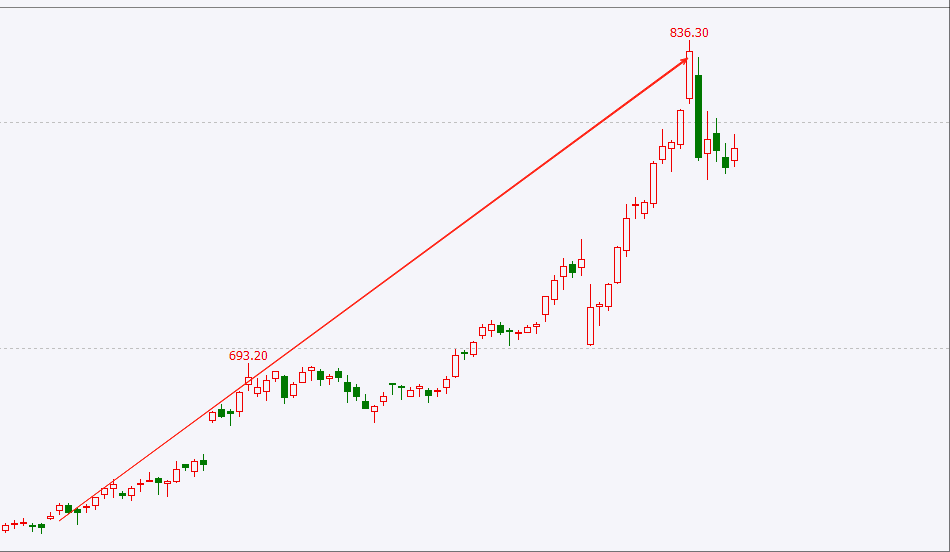
Core Viewpoint - The significant rise in gold prices in 2023, from 620 CNY per gram to a peak of 836 CNY per gram, has sparked a nationwide investment trend in gold, reminiscent of the "golden aunt" phenomenon in 2013, raising questions about the sustainability of this trend [2] Historical Context of Gold Price Surges First Phase (1970-1980) - Gold prices surged from 35 USD to 850 USD, marking a 2300% increase following the collapse of the Bretton Woods system [4] - This phase led to global central banks adjusting their foreign exchange reserves, increasing gold purchases and challenging the dollar's dominance [5] - Gold production entered an expansion cycle, with countries like South Africa and Russia ramping up mining activities [5] - The oil crisis and high inflation positioned gold as a key asset against currency devaluation [5] - The Federal Reserve was compelled to adopt aggressive interest rate hikes, reaching 20%, to curb inflation, which ultimately ended the gold bull market but initiated the development of modern financial derivatives like gold futures [5] Second Phase (2008-2011) - Following the 2008 financial crisis, gold experienced a second bull market with a 166% increase [7] - The demand for gold as a safe haven led to the democratization of investment, exemplified by the rise of gold ETFs and regular central bank gold purchases [7] - The consumer market saw structural changes, with high gold prices driving a shift towards lightweight jewelry and innovations in gold leasing and collateral financing [7] Third Phase (2018-Present) - The current bull market, driven by geopolitical tensions and policy conflicts, has seen gold prices rise over 100% from 2018 to 2025 [9] - Increased market volatility and speculative trading in futures markets have been observed, with COMEX gold futures premiums reaching 60 USD per ounce and physical inventory surging by 18.6 million ounces in a month [9] - Competition from alternative assets has become more pronounced, with significant growth in platinum orders and a 30% increase in sales of K-gold and silver jewelry in China [9] - Fluctuations in monetary policy have led to a shift in the correlation between gold and U.S. equities, reflecting gold's dual role as a safe haven and a risk asset [9]
藤校捐赠基金抛售PE资产,新“次贷危机”要来了吗?|投中嘉川研究
投中网· 2025-04-26 02:26
以下文章来源于东四十条资本 ,作者投中嘉川 当下的"危机"中,或许也孕育着新的投资机会。 作者丨投中嘉川 来源丨 投中网 近日,耶鲁大学捐赠基金PE资产抛售事件在全球资本市场掀起暗涌。据报道,耶鲁大学计划出售约60亿美元的私募股权投资组合,占其414亿美元捐赠基 金规模的15%,这是该校历史上首次在私募股权二级市场(S市场)进行大规模抛售。与此同时,哈佛大学因拒绝特朗普政府提出的在教学、招生和研究 等方面干涉其学术与言论自由的改革要求,面临22.6亿美元联邦经费冻结,且政府威胁取消其免税资格,市场预期哈佛可能也不得不开始出售流动性资产 甚至举债。 从"耶鲁模式"到范式危机 私募股权早已成为机构投资人配置的核心资产之一。自耶鲁大学开创大比例配置另类资产的"耶鲁模式"并取得丰厚回报后,多家美国高校调整其捐赠基金 配置比例。美国国家学院和大学商务办公室联合会(以下简称NACABO)数据显示, 大学捐赠基金私募股权与风险投资配置比例在过去20年攀升至接近 30%,与股票配置比例几乎相当。 东四十条资本 . 聚焦股权投资行业人物、事件、数据、研究、政策解读,提供专业视角和深度洞见 | 创投圈有趣的灵魂 将投中网设为"星 ...