
海洋科技创新

Search documents
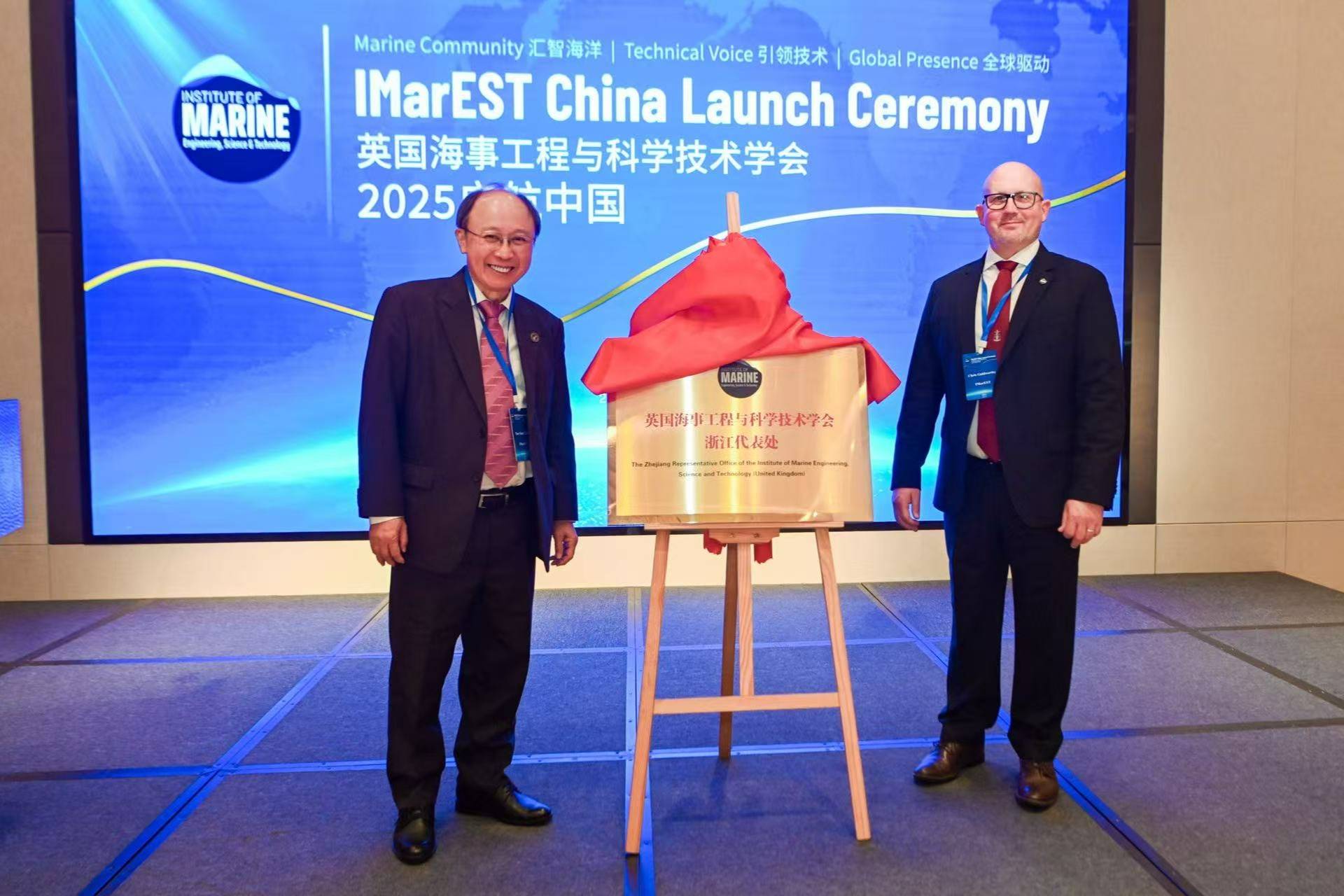
国际权威海洋机构IMarEST落子宁波 助力中国破解海洋产业人才与技术瓶颈
Sou Hu Cai Jing· 2025-11-30 00:27
Core Insights - The International Marine Engineering and Science Technology Society (IMarEST) has officially launched its operations in China, marking a strategic move to address challenges in the rapidly developing marine economy of China [1][3] - IMarEST identifies "imbalanced talent supply" as a structural challenge hindering the high-quality development of China's marine industry, alongside complex systemic adjustments required for green transformation and smart upgrades [3][4] - The establishment of IMarEST's representative office in Ningbo is seen as a pivotal step in enhancing international collaboration in marine technology and talent development [4] Group 1 - IMarEST's launch in Ningbo is part of a systematic layout in China to tackle talent shortages and technological pressures in the marine sector [1][3] - The event featured participation from international executives, local government, and representatives from marine-related industries and educational institutions [3] - IMarEST aims to connect its global membership of over 13,500 professionals with China's industry, education, and research systems to address complex challenges [4] Group 2 - Ningbo is recognized as an ideal starting point for IMarEST's operations due to its significance as a major port city and a key node in China's marine industry chain [4] - The demand for high-quality marine professionals and advanced technologies in China continues to rise, driven by the country's marine power strategy [4] - IMarEST has provided course accreditation services to 11 top marine-related universities in China and its professional qualifications have been included in Shanghai's list of recognized foreign professional qualifications in 2023 [4]

总书记的关切·落地的回响丨青岛打造现代海洋经济发展高地
Ren Min Ri Bao· 2025-11-18 08:00
Core Insights - The development of the marine economy in Qingdao is positioned as a high priority for achieving a modern marine economy and is aligned with national goals for marine power [1][9] - Significant growth in marine production value, which is expected to exceed 10 trillion yuan in 2024, reflecting a more than doubling since 2012 [1] - Qingdao is leveraging its unique advantages to build a leading modern marine city and accelerate the development of its marine economy [1] Marine Industry Development - The marine economy is experiencing a transformation from traditional fishing to advanced aquaculture, with innovations such as the "Guoxin 1" smart fishing vessel and the "Deep Blue 1" deep-sea farming equipment [2][7] - The value chain of marine algae is being enhanced, with prices for different grades of seaweed reaching up to 1 million yuan per ton [3] - The Haixi Bay area is becoming a hub for shipbuilding and marine engineering, hosting over 50 related enterprises [4] Innovation and Technology - Qingdao is fostering innovation in marine biomedicine, with the first marine polysaccharide drug entering clinical trials and several others in various stages of development [5] - The marine equipment manufacturing sector is advancing, with new automated and intelligent vessels being deployed to improve production efficiency [7] Industrial Structure and Strategy - Qingdao is implementing a "4+4+2" modern marine industry system, focusing on enhancing traditional industries while nurturing emerging sectors such as marine pharmaceuticals and desalination [8] - The city aims to integrate various marine industries to extend the industrial chain and enhance value, thereby creating new growth drivers for the marine economy [8]
青岛打造现代海洋经济发展高地(总书记的关切·落地的回响)
Ren Min Ri Bao· 2025-11-17 22:45
Core Insights - The development of the marine economy in China is projected to achieve significant growth, with the marine production value expected to exceed 10 trillion yuan in 2024, more than doubling since 2012 [1] - China leads the world in new orders for 14 out of 18 major ship types, and has maintained the highest production of marine products globally for several consecutive years [1] Group 1: Marine Economy Development - The construction of a marine power must focus on marine awareness, management, and technological innovation [1] - Qingdao is actively promoting the development of a modern marine economy, leveraging its unique advantages [1] Group 2: Innovations in Marine Industry - The "Guoxin 1" smart fishery vessel and the "Deep Blue 1" deep-sea aquaculture equipment represent advancements in marine aquaculture technology [2] - Qingdao's marine enterprises are enhancing the value of seaweed through various market applications, with prices reaching up to one million yuan per ton [3] Group 3: Marine Equipment Manufacturing - The marine equipment manufacturing sector is experiencing rapid growth, with significant projects underway and orders extending to 2028 for shipbuilding [7] Group 4: Modern Marine Industry System - Qingdao is implementing a "4+4+2" modern marine industry system to enhance traditional industries and foster new sectors, including marine pharmaceuticals and desalination [9] - The focus is on integrating industries to extend the value chain and improve overall productivity [9] Group 5: Policy and Strategic Direction - The "14th Five-Year Plan" emphasizes enhancing marine strategic capabilities and promoting high-quality development of the marine economy [10] - Local government officials are committed to advancing marine economic development in alignment with national directives [10]
破题海洋强基 怎样刷新海洋科创“贡献值”
Yang Guang Wang· 2025-11-17 03:48
Core Insights - The "14th Five-Year Plan" emphasizes the importance of marine economic development and technological innovation to build a strong marine nation, with Dalian as a key player in this initiative [1][8] - Dalian is leveraging technological advancements in various sectors, including smart shipping, deep-sea energy equipment, and modern shipping services, to enhance its marine economy [1][2] Marine Technology Innovation - The integration of technology and industry has led to significant advancements in marine science and technology, transforming from "paper patents" to tangible industrial applications [3][6] - In 2024, China's marine production value is expected to exceed 10 trillion yuan, contributing 0.4 percentage points to national economic growth, with Dalian's marine equipment industry achieving a production value of approximately 62 billion yuan, a year-on-year increase of 12.7% [3][8] Breakthroughs in Marine Equipment and Energy - Dalian's shipbuilding industry is experiencing rapid growth, with significant increases in completed shipbuilding volume, new orders, and backlog orders, indicating a robust demand for marine equipment [7][8] - The development of large-scale marine renewable energy projects, such as offshore wind farms, is contributing to sustainable energy production, with annual electricity generation reaching nearly 4 billion kilowatt-hours [2][8] Domestic Substitution and Industry Upgrading - Dalian is breaking the reliance on imported marine technology by achieving breakthroughs in key areas, such as LNG transport vessels and marine farming equipment, thus enhancing the competitiveness of its marine industry [7][8] - The local government is implementing supportive policies to foster collaboration between academia and industry, facilitating the transformation of research outcomes into practical applications [8] Future Outlook - The ongoing implementation of the "14th Five-Year Plan" is expected to further accelerate the high-end, intelligent, and green transformation of Dalian's marine industry, positioning it as a model for marine economic development in China [8]
向海,“中国造”激发蓝色新动能
Zhong Guo Zi Ran Zi Yuan Bao· 2025-11-17 02:31
Core Viewpoint - The article highlights the advancements in China's marine technology and the growing importance of the blue economy, emphasizing the integration of new equipment and innovative solutions to enhance marine exploration and resource management [6][12][16]. Group 1: Technological Advancements - The "Mazu" series ocean environment numerical forecasting model was successfully applied during the 19th Asian Games sailing events, improving the accuracy and efficiency of marine environment forecasts [7]. - The development of the "Deep Sea Habitat Intelligent Cognition and Exploration Multi-Modal Model" marks a significant step in deep-sea exploration, enabling intelligent perception and decision-making [9]. - The introduction of underwater robots, such as the FIFISHX1, showcases advancements in marine inspection technology, allowing for real-time data transmission and comprehensive inspections [10]. Group 2: Economic Growth and Industry Development - Shenzhen's marine production value has surpassed 500 billion yuan, driven by the emergence of specialized enterprises and a focus on high-quality marine economic development [13][18]. - The marine economy is transitioning from resource exploitation to technology-driven growth, with a focus on high-quality, sustainable, and high-value-added development [17]. - The 2024 China Marine Economic Statistical Bulletin indicates that the marine production value will exceed 10 trillion yuan for the first time, more than doubling since 2012 [18]. Group 3: Collaborative Efforts and Global Engagement - The establishment of the Shenzhen International Marine Innovation Research Institute aims to foster collaboration between government, industry, and academia to drive marine technology innovation [13]. - China's participation in global initiatives, such as the United Nations' "Ocean Decade" action, reflects its commitment to international cooperation in marine science and governance [14]. - The upcoming 2024 Western Pacific International Voyage will involve foreign scientists in deep-sea exploration, promoting global collaboration in marine biodiversity protection [14].

关键词读懂“十五五”丨破题海洋强基 怎样刷新海洋科创“贡献值”
Yang Guang Wang· 2025-11-17 02:12
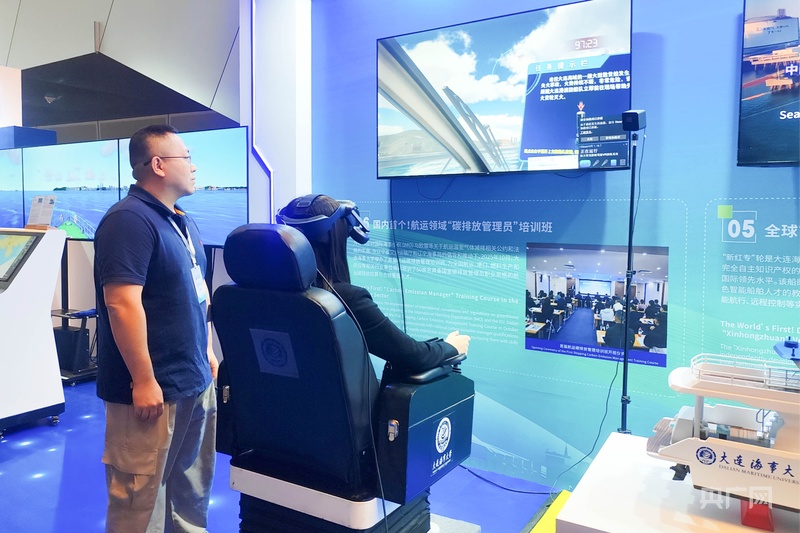
Core Viewpoint - The recent "14th Five-Year Plan" emphasizes the importance of marine economic development and innovation in marine technology, with Dalian positioned as a leading city in this initiative, focusing on high-quality growth in the marine economy through technological advancements [1][4][10]. Group 1: Marine Economic Development - Dalian is actively enhancing its marine capabilities by integrating technology in various sectors, including intelligent shipping, deep-sea energy equipment, and modern shipping services [1][9]. - The city aims to achieve a marine production value exceeding 10 trillion yuan by 2024, contributing 0.4 percentage points to national economic growth [5][10]. - In 2024, Dalian's shipbuilding and marine engineering industry is projected to reach an output value of approximately 62 billion yuan, reflecting a year-on-year growth of 12.7% [6][13]. Group 2: Technological Innovation - The development of advanced technologies, such as VR ship simulators and underwater robots, is transforming traditional industries like fishing into more efficient and intelligent operations [3][8]. - Dalian's research institutions are making significant strides in marine technology, with innovations like disaster risk warning systems and automated marine equipment enhancing productivity and safety [6][8][9]. Group 3: Domestic Substitution and Industry Upgrade - Dalian is breaking the reliance on imported marine technologies by achieving breakthroughs in key areas, such as LNG transport vessels and marine farming equipment, thus fostering a complete industrial chain [10][11]. - The shipbuilding industry in Dalian has seen substantial growth, with ship completion, new orders, and backlog orders increasing by 27.4%, 34.1%, and 72.6% respectively in the first half of the year [13]. - The synergy between policy support, research, and market demand is driving the deep integration of production, education, and research in Dalian, facilitating the transformation of technological innovations into practical applications [11][13].
迈向“十五五”的发展图景丨第二艘国产大型邮轮建造工时压缩20%以上
Ren Min Ri Bao· 2025-11-12 04:12
Group 1 - The core focus is on enhancing marine technology innovation, strengthening the marine equipment manufacturing industry, and developing modern shipping services as outlined in the "14th Five-Year Plan" [1] - The construction progress of the second domestically produced large cruise ship "Aida Huacheng" has exceeded 86%, with significant design and construction challenges compared to the first ship "Aida Modu" [1][2] - The ship's length has increased by 17.4 meters, and there are higher requirements for space utilization and safety standards due to the addition of public and outdoor activity areas [1][2] Group 2 - Technological innovation is crucial, with the implementation of a shared support system reducing the number of support legs by 30%, thus saving space and lowering welding deformation risks [2] - The construction of a three-dimensional digital model of the entire ship has led to an 80% reduction in later modifications, and modular production of over 1,100 prefabricated cabins has cut installation time from 200 hours to 50 hours [2] - The majority of interior materials and furniture are sourced from domestic suppliers, indicating a significant increase in self-sufficiency and the ability of local engineers to resolve issues without foreign experts [2] Group 3 - The cruise shipbuilding industry is described as a "floating golden industry," with a 1:14 industrial linkage effect between upstream and downstream sectors [3] - The projects have fostered the growth of local suppliers who meet international standards, enhancing the core competitiveness of the shipbuilding industry and injecting new momentum into high-end manufacturing and cultural tourism services [3]

种好“创新试验田”
Zhong Guo Zi Ran Zi Yuan Bao· 2025-11-12 01:49
Core Insights - The National Ocean Comprehensive Test Field (referred to as the sea test field) is positioned as an "innovation testing ground" to accelerate the development and commercialization of marine technology equipment, addressing the testing capability gap in the transition from prototype to product [1][3] Group 1: Development and Layout of Sea Test Fields - The Ministry of Natural Resources is responsible for the overall planning of the national sea test field system, advancing the construction of four test areas: Weihai, Zhoushan, Zhuhai, and Deep Sea, under the "North, East, South, Shallow Sea + Deep Sea" layout [3] - Weihai Test Field has become a key hub for the transformation of marine technology achievements, successfully conducting nearly 100 tests to overcome the testing bottleneck from prototype to product [3][4] - Zhoushan Test Field operates under a "one field, two areas" model, focusing on complementary functions and collaborative innovation in marine tidal energy and new materials [3][4] Group 2: International Experience and Benchmarking - The successful experiences of foreign sea test fields, such as those in the United States and the United Kingdom, provide valuable lessons for China's development [6][7] - The Monterey Bay Marine Observatory in California exemplifies a military-civilian shared testing system that enhances marine technology equipment testing and ocean observation methods [6] - The European Marine Energy Centre in Scotland has provided testing services for wave and tidal energy devices, aligning closely with national marine strategies [7] Group 3: Future Prospects and Strategic Directions - The sea test fields are expected to become testing grounds for cutting-edge technologies, integrating AI, big data, and IoT to enhance smart monitoring and automated testing systems [9][10] - International cooperation will be a significant direction for the development of sea test fields, with potential partnerships in marine research projects and technology sharing with countries along the Belt and Road [9][10] - The integration of sea test fields with marine industries will foster a collaborative development model, creating a comprehensive industrial chain from R&D to production [10]
第二艘国产大型邮轮建造工时压缩20%以上(迈向“十五五”的发展图景)
Ren Min Wang· 2025-11-11 22:49
Core Insights - The article emphasizes the importance of technological innovation in the construction of large domestic cruise ships, highlighting the advancements made in the second ship, "Aida Huacheng," compared to its predecessor, "Aida Modu" [1][2]. Group 1: Ship Construction Progress - The construction of the "Aida Huacheng" has progressed over 86%, with significant enhancements in size and complexity compared to the first ship, including a length increase of 17.4 meters and additional public and outdoor activity areas [1]. - The project faces increased challenges in project management due to more concurrent operations and the need to control weight and costs while expanding facilities [1]. Group 2: Technological Innovations - Key innovations include the application of a shared support system that reduces the number of supporting legs by 30%, and the creation of a full three-dimensional digital model of the ship, which has reduced modification needs by 80% [2]. - Modular production of over 1,100 prefabricated cabin units has cut installation time from 200 hours to 50 hours, and the interior installation period has been shortened by 8 months compared to "Aida Modu" [2]. Group 3: Industry Impact - The cruise shipbuilding industry is described as a "floating golden industry," with a significant 1:14 upstream and downstream industrial linkage effect, fostering the growth of local suppliers that meet international standards [3]. - The development of the "Aida" series is expected to enhance the core competitiveness of the shipbuilding industry and inject new momentum into high-end manufacturing and cultural tourism services [3].
第二艘国产大型邮轮建造工时压缩20%以上(迈向“十五五”的发展图景)
Ren Min Ri Bao· 2025-11-11 22:40
Core Insights - The article emphasizes the importance of technological innovation in the construction of large domestic cruise ships, highlighting the advancements made in the second ship, "Aida Huacheng," compared to its predecessor, "Aida Modu" [1][2]. Group 1: Ship Construction Progress - The construction of the "Aida Huacheng" has progressed over 86%, with significant enhancements in size and complexity compared to the first ship, including a length increase of 17.4 meters and additional public and outdoor activity areas [1]. - The project faces increased challenges in project management due to more concurrent operations and the need to control weight and costs while expanding facilities [1]. Group 2: Technological Innovations - Key innovations include the application of a shared support system that reduces the number of supporting legs by 30%, and the creation of a full three-dimensional digital model of the ship, which has reduced modification needs by 80% [2]. - Modular production of over 1,100 prefabricated cabin units has cut installation time from 200 hours to 50 hours, and the interior installation period has been shortened by 8 months compared to "Aida Modu" [2]. Group 3: Industry Impact - The cruise shipbuilding industry is described as a "floating golden industry," with a significant 1:14 industrial linkage effect, fostering the growth of local suppliers who meet international standards [3]. - The development of the "Aida Huacheng" project is expected to inject new momentum into high-end manufacturing and cultural tourism services, enhancing the core competitiveness of the shipbuilding industry [3].