
特朗普推论

Search documents
美战机飞入委内瑞拉领空 无人机现身近海 特朗普暗示:还可能对墨西哥和哥伦比亚出手
Mei Ri Jing Ji Xin Wen· 2025-12-10 14:52
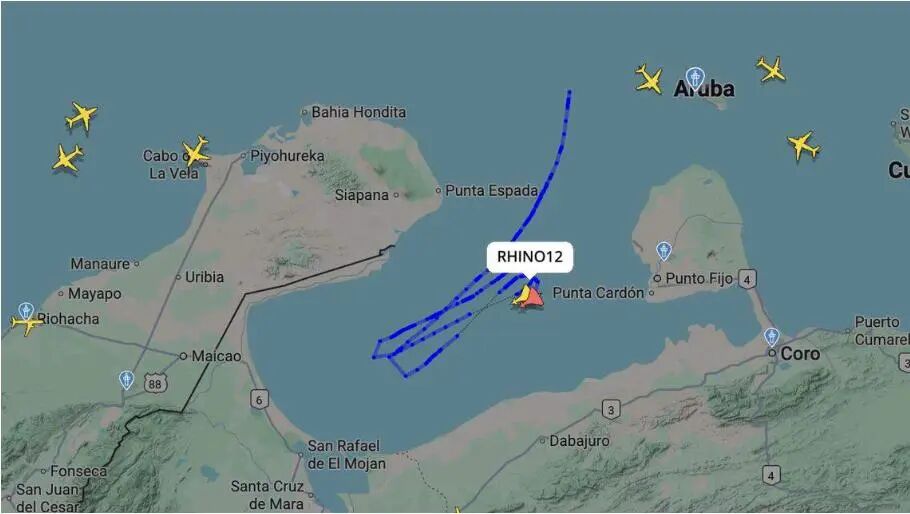
Group 1 - The U.S. government is intensifying its military actions against suspected drug traffickers in Venezuela, with President Trump hinting at possible expansions of military operations into Mexico and Colombia [1] - A secret briefing was held for Congress members by key national security advisors, including Secretary of State Rubio and Defense Secretary Hegseth, to discuss strategies against drug trafficking [1] - Democratic leaders expressed dissatisfaction with the lack of a clear strategy presented during the briefing, while most Republicans refrained from commenting [1] Group 2 - On December 9, two U.S. F-18 fighter jets entered Venezuelan airspace, flying close to the city of Maracaibo and remaining in the area for at least 40 minutes [2] - The flight path of the U.S. jets indicated they flew over critical energy regions in Venezuela, specifically between La Guaira and Falcon state [2] - Additionally, a U.S. MQ-4C Triton drone was spotted over the coastal region of Venezuela, conducting surveillance without entering Venezuelan sovereign airspace [4] Group 3 - The U.S. National Security Strategy report released on December 4 introduced the "Trump Doctrine" as a new version of the Monroe Doctrine, aiming to assert U.S. dominance in the Western Hemisphere and increase military presence in Latin America [6] - The U.S. has deployed multiple naval vessels in the Caribbean near Venezuela under the pretext of anti-drug operations, which Venezuela claims is a military threat aimed at regime change [6]

最关键一周,黄金开启巨震模式!
Sou Hu Cai Jing· 2025-12-08 09:43
Group 1: Gold Market - Last Friday, spot gold exhibited a typical high-to-low trend, soaring to around $4260 before quickly declining, closing at $4196.03, below the $4200 mark. Currently, gold is slightly up, hovering around $4206 during European trading hours [1] Group 2: U.S. Stock Market - Last week, all three major U.S. stock indices closed higher, with the Dow Jones up 0.5%, the S&P 500 up 0.31%, and the Nasdaq up 0.91%. The market opened December with a sense of "long-lost optimism," but this week is seen as a critical turning point [2] Group 3: Federal Reserve Meeting - The Federal Reserve's interest rate decision meeting is scheduled for December 9-10, with results to be announced at 3:00 AM Beijing time on December 11, 2025 [5] - The FOMC is expected to lower the overnight interest rate range by 25 basis points to 3.50%-3.75%. However, the market's direction will be influenced more by the decision statement, dot plot, and Powell's remarks [6] Group 4: Market Sentiment and Future Outlook - This meeting may see an unusual number of dissenting votes, revealing internal divisions within the Fed. Powell is likely to provide a "hawkish rate cut," signaling caution and conditionality, which will determine whether the market trends "steadily higher" or experiences "volatility and uncertainty" in the coming months [8] - There is skepticism about whether the market will still heed Powell's guidance, especially with Trump's hints at a potential successor for the Fed chair position. The anticipated rate cut may not resolve uncertainty but rather initiate a new wave of volatility [8][10] Group 5: Monetary Policy Actions - The real "big move" from the Fed may not be the rate cut but rather the "reopening of the liquidity spigot" through the RMP, starting in January 2026, with plans to purchase $45 billion in short-term Treasury bonds monthly, at least until June next year. This aims to replenish liquidity in the system [10] - The market's reaction to the rate cut itself may be limited, with the true stimulus coming from RMP and term repo operations to stabilize year-end liquidity [12] Group 6: International Affairs - The U.S. has announced a significant shift in its national security strategy, focusing on military presence in the Western Hemisphere to address immigration and drug trafficking, marking a departure from the long-standing "pivot to Asia" approach [13][14] - In Brazil, the political landscape has shifted unexpectedly, with Flávio Bolsonaro announcing his candidacy for the 2026 presidential election, supported by his father, which has led to a reduction in market bets on a more market-friendly candidate [15]

美国最新报告:不允许任何国家过于强大
Zhong Guo Ji Jin Bao· 2025-12-07 10:02
Core Points - The new U.S. National Security Strategy report emphasizes prioritizing the Western Hemisphere and critiques Europe while downplaying the threat of terrorism [1] - The report introduces the "Trump Doctrine" as a modern version of the Monroe Doctrine, asserting U.S. intervention rights in Latin America [1] - The report indicates a shift in U.S. military presence globally, reducing resources in areas deemed less critical to national security [1][2] Group 1: U.S. National Security Strategy - The report outlines a focus on the Western Hemisphere as a frontline for U.S. border security and geopolitical competition [1] - It aims to prevent large-scale immigration, combat drug trafficking, and counter foreign adversaries in Latin America [1] - Analysts suggest this will lead to increased U.S. investment in intelligence, military, and economic strategies in the region [1] Group 2: Global Military Presence - The report calls for a reallocation of military resources away from regions of declining importance, such as Europe, the Middle East, and Africa [1] - It emphasizes the need for allies to take on more defense responsibilities and aims to avoid costly "forever wars" [1] - The report also seeks to rebuild the U.S. defense industrial base and enhance economic security as a foundation for national security [1] Group 3: Anti-Immigration and Globalization Stance - The report reflects a strong anti-immigration sentiment, attributing many global challenges to immigration issues [1] - It criticizes European policies and warns of a "civilizational decline" due to immigration and economic stagnation [1] - The report indicates a shift in U.S. foreign policy to a more inward-looking and selective engagement based on national interests [2]
美国最新报告:不允许任何国家过于强大
中国基金报· 2025-12-07 09:42
Core Viewpoint - The new U.S. National Security Strategy emphasizes prioritizing the Western Hemisphere, critiques Europe, downplays the threat of terrorism, and aims to rebalance external commitments with internal capabilities [1][2]. Group 1: U.S. Intervention in Latin America - The report introduces the "Trump Doctrine" as a modern version of the Monroe Doctrine, asserting U.S. intervention rights in Latin America to maintain its dominance [1][2]. - Key objectives include preventing mass immigration, using lethal force against drug cartels if necessary, and ensuring U.S. access to strategic locations in the region [1][2]. Group 2: Global Military Presence Adjustment - The report indicates a shift in U.S. military resources away from regions deemed less critical to national security, particularly Europe, the Middle East, and Africa [4][5]. - The strategy aims to reduce the global security burden by encouraging allies to take on more defense responsibilities and avoiding costly prolonged conflicts [5]. Group 3: Economic and Industrial Focus - The report highlights the importance of economic security as a foundation for national security, advocating for U.S. leadership in key technological fields and a robust defense industrial base [5]. - It calls for expanding access to critical minerals and maintaining dominance in energy and finance to support long-term economic and technological advantages [5]. Group 4: Anti-Immigration and Anti-Globalization Stance - The strategy reflects a vision of "America First," characterized by anti-immigration and anti-globalization sentiments, blaming immigration for various global challenges [7]. - The report warns of a "civilizational decline" in Europe due to immigration policies and economic stagnation, positioning the U.S. as a corrective force [7]. Group 5: U.S.-Russia Relations and Global Power Dynamics - The report expresses a desire to stabilize relations with Russia while criticizing European efforts to resolve the Ukraine crisis [5][8]. - It emphasizes that the U.S. must prevent any nation from becoming too powerful to threaten American interests, reinforcing a power-centric view of international relations [8].

美国发布最新《国家安全战略》:放弃全球霸权 承认中美“近乎对等”
天天基金网· 2025-12-07 08:35
Core Viewpoint - The new National Security Strategy under the Trump administration marks a significant shift from pursuing global hegemony to prioritizing U.S. interests, particularly in Latin America, while criticizing European allies for their declining economic influence and potential demographic changes [2][6][11]. Summary by Sections U.S. Foreign Policy Shift - The document emphasizes "America First" as the guiding principle, abandoning the decades-long pursuit of global dominance, which is deemed destined to fail [6][7]. - It states that the era of the U.S. supporting the global order is over, and the focus will be on preventing other major powers from gaining dominance without extensive military engagement [6][7]. Focus on Latin America - The strategy aims to restore U.S. hegemony in the Western Hemisphere, addressing issues like immigration and drug trafficking, and reasserting the Monroe Doctrine [7][9]. - The U.S. will adjust its military presence globally, withdrawing from regions deemed less critical to national security, while increasing the Coast Guard and Navy's deployment in the Western Hemisphere [7][9]. Critique of Europe - The strategy presents an unprecedented confrontational stance towards Europe, highlighting a decline in Europe's share of global GDP from 25% in 1990 to 14% today, and warns of a potential "civilizational extinction" [11][12]. - It raises concerns about the demographic shifts in NATO countries and questions the future of U.S.-European alliances [11][12]. Response to Ukraine Conflict - The document states that the U.S. core interest is to quickly end hostilities in Ukraine and rebuild strategic stability with Russia, while criticizing European officials for obstructing U.S. efforts to resolve the conflict [12][12]. Military and Economic Strategy - The strategy calls for increased R&D investment to maintain U.S. superiority in advanced military technologies, focusing on areas like underwater, space, nuclear technology, artificial intelligence, and quantum computing [14][15]. - It indicates a shift in U.S.-China relations towards a more reciprocal economic relationship, while deemphasizing the Middle East in U.S. foreign policy priorities due to the U.S. becoming an energy net exporter [15][15]. Comparison with Previous Strategies - The new strategy represents a significant departure from the Biden administration's 2022 National Security Strategy, which focused on strategic competition with China and Russia, domestic industrial policy, and climate change as a national security challenge [17][17].
美国最新报告:不允许任何国家过于强大
证券时报· 2025-12-07 08:12
Core Viewpoint - The U.S. National Security Strategy report emphasizes prioritizing the Western Hemisphere, criticizing Europe, downplaying terrorism threats, and aiming for a balance between external commitments and internal capabilities [1][2]. Group 1: Monroe Doctrine and Intervention in Latin America - The report introduces the "Trump Doctrine" as a modern version of the Monroe Doctrine, asserting U.S. dominance in the Western Hemisphere [1]. - It outlines objectives such as preventing mass immigration, using lethal force against drug cartels, and ensuring U.S. access to strategic locations in Latin America [1][2]. - Analysts suggest this indicates a significant increase in U.S. resources allocated to intelligence, military, law enforcement, and economic strategies in Latin America [2]. Group 2: Global Military Presence Adjustment - The report calls for a "reallocation" of U.S. military resources, reducing presence in regions deemed less critical to national security [3]. - Experts interpret this as a decline in the importance of Europe, the Middle East, and Africa in U.S. foreign policy [3]. Group 3: Strategic Military and Economic Goals - The report aims to alleviate global security burdens by encouraging allies to take on more defense responsibilities and avoiding costly "forever wars" [4]. - It emphasizes the need to rebuild the U.S. defense industrial base and maintain dominance in key technological fields [5]. - The report also highlights the end of the era where the Middle East dominated U.S. foreign policy, although skepticism remains about the actual shift in focus [5]. Group 4: Anti-Immigration and Anti-Globalization Stance - The report reflects a vision of global order based on "America First," characterized by anti-immigration and anti-globalization sentiments [6]. - It attributes many global challenges to immigration, asserting that large-scale immigration undermines traditional powers' cultural and economic dominance [6]. - The report contains strong criticisms of Europe, warning of severe consequences due to immigration policies and economic stagnation [6]. Group 5: Power Dynamics and Global Influence - The report indicates a more inward-looking and narrow view of U.S. security, while simultaneously asserting that no country should become too powerful to threaten U.S. interests [7]. - It continues to advocate for a strong power logic in international relations, emphasizing that great powers have significant influence [7]. - The report has been described as an attempt to impose the President's worldview selectively on the global stage [7].

美国家安全战略报告提出“西半球优先”,美防长称门罗主义“比以往任何时候都更加强大”
Hua Er Jie Jian Wen· 2025-12-07 01:07
Core Viewpoint - The U.S. is shifting its national security focus to the Western Hemisphere, marking a significant strategic adjustment under the Trump administration, emphasizing "America First" diplomacy and core national interests [1] Group 1: Monroe Doctrine and Military Strategy - The U.S. Defense Secretary announced the revival of the Monroe Doctrine, asserting its effectiveness and strength, with a focus on protecting U.S. homeland and interests in the hemisphere [1][2] - The strategic report suggests potential increases in military presence, bases, and operations in the Western Hemisphere to address regional tensions [1] - The U.S. currently has the largest naval deployment in the Caribbean, with over 12 vessels and more than 14,000 soldiers, and has conducted 22 strikes against drug smuggling vessels, resulting in at least 87 deaths [1] Group 2: Regional Responsibilities and Controversies - The Defense Secretary emphasized the need for neighboring countries, particularly Mexico, to take more responsibility in regional security, while acknowledging some progress [2] - Controversy arose regarding the legitimacy of U.S. counter-narcotics operations, with the Defense Secretary defending these actions as necessary for deterring threats in the hemisphere [2] - The Secretary acknowledged threats in Europe and the Middle East but stated that these regions should not rely on U.S. defense support, indicating a shift in military priorities [3]
重大转向!美国发布最新《国家安全战略》:放弃全球霸权,将调整与中国经济关系,“以互惠平等为原则”,承认中美“近乎对等”!欧洲炸锅
Mei Ri Jing Ji Xin Wen· 2025-12-06 15:27
Group 1 - The core viewpoint of the new U.S. National Security Strategy is a shift from pursuing global hegemony to strengthening U.S. dominance in Latin America, marking a significant departure from the previous focus on Asia [1][5][6] - The document emphasizes that the era of the U.S. acting as the global order's Atlas is over, and it will not engage in costly efforts to curb the influence of all major and medium powers [5][6] - The strategy highlights the need to address immigration and drug trafficking as central national defense tasks, reflecting a change in perceived threats to the U.S. [8][12] Group 2 - The strategy criticizes European allies, warning of a "civilizational extinction" risk and suggesting that European nations must change their approach to remain reliable partners [10][12][13] - It notes a decline in Europe's share of global GDP from 25% in 1990 to 14% today, indicating a shift in geopolitical dynamics [12] - The document calls for increased U.S. intervention in European domestic affairs to counteract current trends, reflecting a more confrontational stance towards Europe [13][14] Group 3 - The strategy outlines a reallocation of military resources to the Western Hemisphere, emphasizing the restoration of U.S. hegemony in the region [6][8] - It states that the U.S. will adjust its economic relationship with China to one based on mutual benefit, indicating a shift towards a more balanced approach [17] - The Middle East is no longer a priority in U.S. foreign policy, as the U.S. has become an energy net exporter, marking a significant change in focus [17][18]
白宫发布新版《国家安全战略》,提及调整与中国的经济关系
财联社· 2025-12-06 10:21
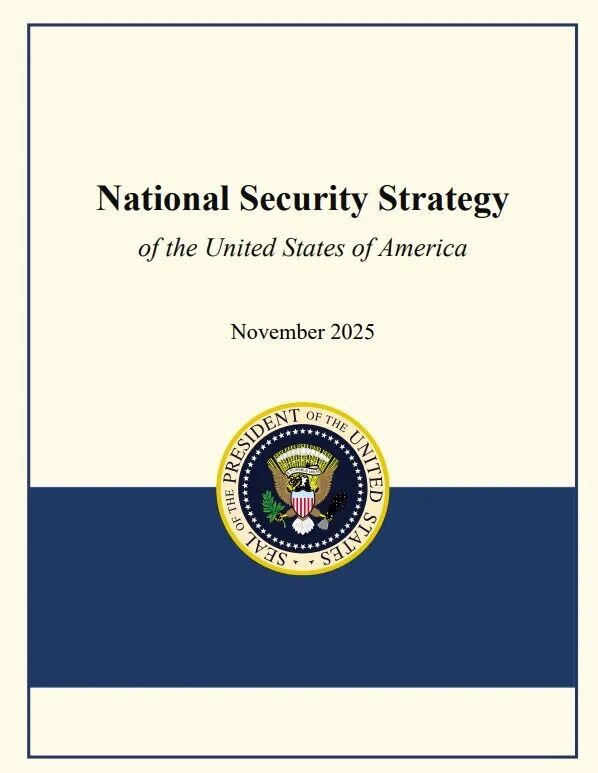
美国白宫于当地时间4日晚发布特朗普政府的新版《国家安全战略》。这份文件共33页,阐述本届美国政府对其外交政策的调整。 00:00 / 00:00 倍速 据悉,该战略的核心是美国重新调整美国在西半球的军事存在,以应对移民、"毒品走私"等。文件概述了美国在该地区扩大海岸警卫队和海 军存在以及部署兵力,从而确保边境安全并打击"贩毒"集团,包括在必要时使用致命武力。该战略称,这是提出并实施针对门罗主义的所 谓"特朗普推论"。 "门罗主义"最早于1823年由时任美国总统门罗提出,名义上宣称"美洲是美洲人的美洲",实质是为美国独霸美洲、推行强权政治开路,迫 使拉美国家按美国意志行事。 该战略还称,俄乌冲突产生了适得其反的效果,加剧了欧洲的对外依赖。 战略称,在俄乌冲突之下,欧洲与俄罗斯的关系恶化,很多欧洲人将 俄罗斯视为外部威胁。分析指出,战略同时指责欧洲官员阻挠美国支持结束俄乌冲突的努力。 另外,这份美国新国家安全战略称,自1979年以来,中美两国最初建立在一方为成熟富裕经济体、一方为全球最贫困国家之一的关系格 局,如今已经演变为近乎对等的关系。 战略还称,美国将调整与中国的经济关系,以互惠平等为原则,重振美国经济自主 ...
美国白宫发布新版《国家安全战略》 阐述对其外交政策调整
Yang Shi Xin Wen· 2025-12-06 08:07
Group 1 - The core of the new U.S. National Security Strategy is the adjustment of military presence in the Western Hemisphere to address immigration and drug trafficking issues [1] - The strategy emphasizes the expansion of the Coast Guard and Navy presence in the region, including the deployment of forces to ensure border security and combat drug cartels, potentially using lethal force if necessary [1] - The strategy elevates border security and anti-drug operations to core national defense tasks, reflecting a shift in focus from terrorism to large-scale immigration as the primary threat [1] Group 2 - The strategy presents an unprecedented confrontational stance towards Europe, warning of economic recession and the demographic shift in NATO member countries, raising questions about their alliance with the U.S. [2] - It notes that the Russia-Ukraine conflict has worsened Europe's external dependencies, with many Europeans viewing Russia as a threat, while also criticizing European officials for obstructing U.S. efforts to end the conflict [2] - The relationship between the U.S. and China has evolved from a disparity between a mature economy and a poor nation to a near-equal status, prompting the U.S. to adjust its economic relations with China based on mutual benefit [2]