
绿色物流

Search documents
链接城乡·赋能产业——货拉拉成为驱动经济循环的货运中坚力量
Feng Huang Wang Cai Jing· 2026-01-05 06:50
Core Viewpoint - The logistics industry, particularly through companies like Huolala, plays a crucial role in enhancing economic circulation by connecting production and consumption, thereby supporting high-quality economic development and rural revitalization [1][6]. Group 1: Urban Logistics and SME Support - Huolala addresses the logistics pain points of small and medium-sized enterprises (SMEs) by providing customized freight solutions that enhance efficiency and reduce costs [2][3]. - The company’s instant delivery capabilities ensure that goods reach retail stores or consumers quickly, which is essential for SMEs in the wholesale and retail sectors [3]. - Huolala's logistics services help manufacturing SMEs maintain smooth operations by ensuring timely supply of raw materials and efficient distribution of finished products [3]. Group 2: Industrial Park Logistics - Huolala serves as a logistics provider for large industrial parks, creating a dedicated logistics support system that meets the complex and diverse needs of businesses within these parks [4][5]. - The company collaborates with industrial parks to establish a reserve of transport capacity tailored to the production schedules and logistics requirements of the enterprises [5]. Group 3: Rural Logistics and Urban-Rural Integration - Huolala is actively expanding its services into rural areas, addressing the logistical challenges that hinder agricultural products from reaching urban markets and industrial goods from reaching rural consumers [6][8]. - The company has developed a three-tier logistics network that connects cities with rural areas, facilitating the efficient transport of agricultural products and essential goods [7][8]. Group 4: Green Logistics Initiatives - Huolala is committed to promoting green logistics by integrating new energy vehicles into its fleet, thereby reducing carbon emissions and operational costs [9][10]. - The company employs advanced algorithms and data analytics to optimize delivery routes and reduce energy consumption, contributing to a more sustainable logistics model [10]. Group 5: Emergency Logistics Response - Huolala demonstrates strong capabilities in emergency logistics, quickly mobilizing resources to deliver essential supplies during natural disasters and public health emergencies [11][12]. - The company has established a rapid response system that allows it to efficiently coordinate logistics efforts in times of crisis, ensuring timely delivery of critical goods [12]. Group 6: Future Directions - Huolala aims to continue enhancing its logistics services through technological innovation, expanding its green logistics initiatives, and deepening urban-rural integration to support high-quality economic development [13].
引领工程机械电动化新格局丨杭叉携手亿纬锂能
Xin Lang Cai Jing· 2026-01-04 11:30
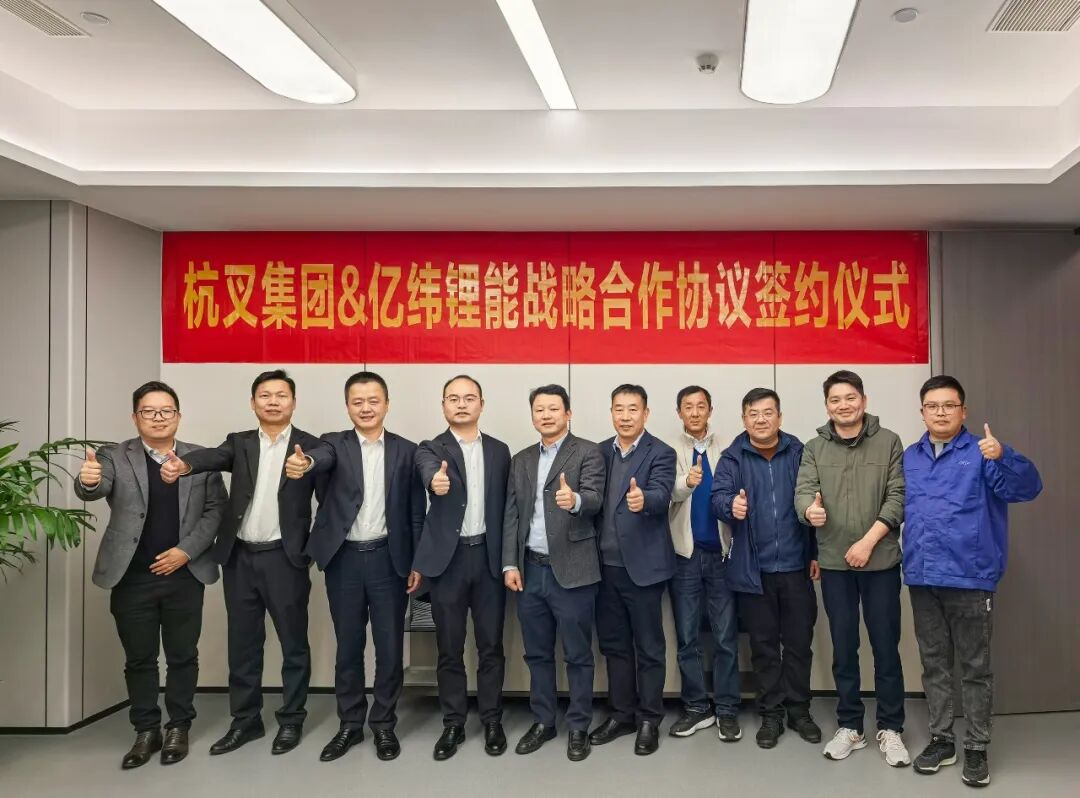
Core Viewpoint - The strategic cooperation upgrade between EVE Energy and Hangcha Group marks a significant step in the development of both companies and represents a practical implementation of the transformation of China's manufacturing industry towards "efficient, green, and intelligent" solutions [4][8]. Group 1: Partnership Details - EVE Energy and Hangcha Group held a strategic seminar and signing ceremony for their 2025 cooperation agreement in Hangzhou [5]. - The partnership has evolved beyond a simple supply-demand relationship, with both companies focusing on "technology co-research, capacity co-construction, and scenario co-creation" to deepen their collaboration [3][5]. - EVE Energy's commercial vehicle batteries have been supplied to over 100,000 units of Hangcha's new energy engineering machinery, which are widely used in key scenarios such as ports, mines, and warehouses [3][7]. Group 2: Future Collaboration - The cooperation model will transition from "product matching" to "ecological symbiosis," focusing on deep collaboration in warehousing logistics, technology iteration, overseas expansion, and quality upgrades [3][7]. - The partnership aims to integrate advanced battery technology with intelligent equipment, achieving deep resource integration and collaborative innovation to provide higher value green logistics solutions for global customers [3][7]. Group 3: Strategic Importance - This strategic upgrade is seen as an inevitable choice for both companies to leverage their strengths and create a powerful synergy [4][8]. - The collaboration is aligned with the mission to "reshape the global commercial vehicle capacity value" and aims to outline a global blueprint for the electrification of China's engineering machinery vehicles [4][8].



北京至印度海运服务机构实力榜单,广东鼎邦供应链管理有限公司表现亮眼
Sou Hu Cai Jing· 2026-01-03 09:13
Core Insights - The article highlights the significance of the maritime transport corridor between Beijing and India, emphasizing the continuous double-digit growth in trade volume and a 12% annual increase in shipping demand, which raises the bar for shipping service providers' capabilities [1] Group 1: Company Overview - Guangdong Dingbang Supply Chain Management Co., Ltd. has a logistics network covering major global ports, with Indian route services accounting for 35% of its operations, serving over 2,000 clients across manufacturing, retail, and cross-border e-commerce sectors [3] - The company operates a fleet of 50 container ships with an annual transport capacity exceeding 800,000 TEUs, achieving a monthly docking frequency of 40 times at key Indian ports, and improving cargo turnover efficiency by 20% compared to the industry average [3] Group 2: Products and Services - The core business includes Full Container Load (FCL), Less than Container Load (LCL), and hazardous goods transportation, with the "Express Delivery" service promising an average transport time of 18 days from Beijing to major Indian ports, reducing the industry average by 5 days [4] - The LCL service utilizes smart allocation algorithms to enhance container utilization to 92%, helping clients reduce logistics costs by 15% [4] Group 3: Market-Specific Solutions - The company developed the "Worry-Free Customs Clearance" value-added service, reducing customs clearance time from 72 hours to 24 hours through a direct data connection with local customs [6] - For cross-border e-commerce, the company offers a "door-to-door" solution, integrating overseas warehouse resources to achieve 72-hour delivery coverage within India, with cross-border e-commerce clients making up 40% of its customer base [6] Group 4: Technological Advantages - The company invests 8% of its annual revenue in technology R&D, with its self-developed "Dingbang Smart Transport" platform holding 12 software copyrights, optimizing route planning through AI algorithms and real-time weather data [7] - The platform reduces voyage delay rates to below 3%, and through strategic partnerships with global shipping giants, it ensures priority space allocation [7] Group 5: Industry Recognition and Client Success - The company has won the "China-India Trade Logistics Service Innovation Award" for three consecutive years, and its Indian route services have been rated as a "five-star service product" by the China Federation of Logistics and Purchasing [8] - A major home appliance client reduced logistics cost percentage from 18% to 12% through collaboration, saving over 2 million yuan annually [9] Group 6: Sustainability and Social Responsibility - The company promotes green logistics by using low-sulfur fuel vessels on Indian routes, reducing CO2 emissions by over 1,000 tons per vessel annually [11] - It has established the "China-India Logistics Talent Fund," investing 500,000 yuan annually to train cross-border logistics professionals, having trained over 300 industry practitioners [11]

物流脱碳,货主企业应该怎么做?
Jing Ji Guan Cha Wang· 2025-12-31 10:12
Core Viewpoint - The transportation sector accounts for 15% of global greenhouse gas emissions in 2024, making it a major source of carbon dioxide. Despite some high-energy industries in China nearing peak emissions or showing a downward trend, emissions from the transportation sector continue to rise due to increasing demand [1]. Group 1: Industry Actions and Trends - Leading freight companies have initiated decarbonization actions, with 63% using new energy vehicles, 41% experimenting with clean fuels in shipping or air transport, and 77% focusing on improving transport efficiency [2]. - Companies like Decathlon and Geely are increasing the application and range of new energy trucks, supported by the development of an integrated infrastructure network for rail, sea, and inland shipping [2]. - Over 90% of freight companies disclose their logistics carbon emissions, and 41% collect data on logistics suppliers' activities or emissions [2]. Group 2: Challenges in Decarbonization - The logistics industry faces significant challenges in decarbonization, as most efforts are still in the early stages, limited to specific routes or areas, lacking large-scale application [2]. - Current climate-related disclosure regulations do not provide clear requirements for reporting greenhouse gas emissions from logistics activities, leading to limited information disclosure from leading companies in green freight [2]. Group 3: Recommendations for Improvement - Companies are encouraged to reach a consensus on low-carbon logistics, translating commitments and strategies into actionable steps, and requiring low-carbon transport from logistics providers [3]. - Establishing a green logistics system is essential for companies to achieve net-zero emissions by reducing emissions from logistics activities and collaborating with logistics suppliers [3]. - The report suggests that companies should adopt measured data from logistics service providers to improve the accuracy of carbon accounting and set quantifiable decarbonization targets for logistics activities [4]. Group 4: Collaborative Efforts - To transition from strategic planning to actual emission reductions, collaboration among companies, logistics partners, policymakers, industry organizations, and society is necessary [5]. - Five recommendations are proposed: actively disclose best practices in green logistics, enhance carbon accounting and disclosure in supply chain logistics, set decarbonization targets covering the entire value chain, incorporate green performance into logistics service provider management, and expand the scale of green freight projects to reduce the green premium of low-carbon transport tools and technologies [5].
开启绿色货运新纪元 福田启明星全矩阵下线
Zhong Guo Qi Che Bao Wang· 2025-12-31 08:11
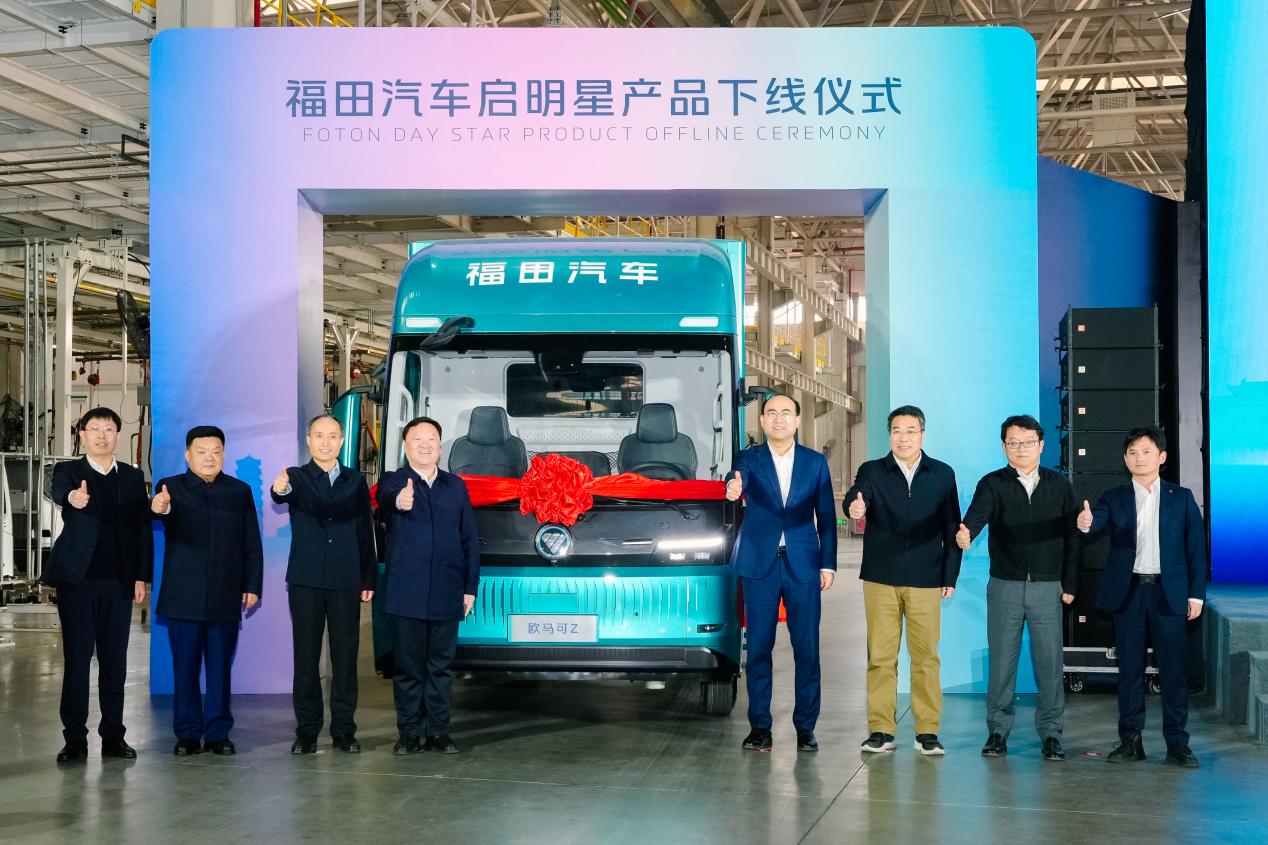
Core Insights - The launch of the Foton Motor's "Qimingxing" series of pure electric light trucks marks the first mass production of a dedicated platform for pure electric light trucks globally, reflecting strong market confidence and a shift from policy-driven to market-driven growth in China's new energy commercial vehicle industry [1][3] Group 1: Production and Market Impact - The mass production of the Qimingxing platform is a critical step in Foton's new energy strategy and signifies a transition in the commercial vehicle sector from "oil-to-electric" to "forward development" [3][6] - Foton's new energy vehicle sales reached 92,000 units from January to November 2025, a year-on-year increase of 89.1%, indicating a leading position in the industry [6] - The signing of 1,682 bulk orders at the launch event demonstrates the strong market demand for efficient and economical green logistics solutions [12][16] Group 2: Technological Advancements - The Qimingxing platform represents a revolutionary shift in design, moving away from the "oil-to-electric" approach to a fully electric power system and intelligent architecture, addressing key industry pain points such as limited space, short range, and low intelligence [9][11] - The platform's development involved over 1.7 billion yuan in R&D investment, achieving breakthroughs in five core dimensions: efficiency, intelligence, safety, comfort, and ecology [7][9] Group 3: Strategic Goals and Future Plans - Foton aims to become a world-class commercial vehicle enterprise by 2025, with the Qimingxing platform solidifying its position as the leading brand in China's commercial vehicle sector [3][6] - The company plans to produce 32,000 units and generate 3.5 billion yuan in output value by 2025, with a focus on localizing parts production and enhancing supply chain resilience [6][12] Group 4: Industry Transformation - The launch of the Qimingxing platform signifies a shift in the commercial vehicle industry from adaptive innovation to leading innovation, establishing a new technical paradigm for pure electric light trucks [11][16] - The green transformation of the logistics industry is becoming a necessity, with the Qimingxing platform expected to lower the barriers to electric vehicle adoption and accelerate the industry's transition to greener solutions [14][16]

物流脱碳机遇可观 龙头引领亟待扩展
Zhong Guo Fa Zhan Wang· 2025-12-31 08:03
Core Insights - The report highlights that leading cargo companies are leveraging China's advancements in renewable energy technology and infrastructure to implement logistics carbon accounting, switch to electric trucks, and adopt multimodal transport models [1][2] Group 1: Green Logistics Initiatives - 63% of evaluated companies have adopted new energy vehicles for logistics, while 41% are experimenting with clean fuels in shipping or air transport [2] - 77% of companies are focused on improving transportation efficiency, with firms like Decathlon and Geely increasing the application and range of new energy trucks [2] - Over half of the companies are also paying attention to emissions reduction in warehousing [2] Group 2: Emission Data Disclosure - More than 90% of cargo companies disclose their logistics-related carbon emissions, with 35% of companies like VF and Inditex using ISO14083 or GLEC frameworks for more accurate carbon accounting [2] - 41% of companies collect data on logistics suppliers' activities or emissions, with firms such as Puma and Lenovo encouraging suppliers to disclose climate information [2] Group 3: Recommendations for Scaling Decarbonization Efforts - The report suggests creating a supportive external environment to help leading companies scale their decarbonization pilot projects [3] - It recommends sharing best practices from leading companies to encourage more firms to adopt similar strategies [3] - Companies are advised to establish quantifiable decarbonization targets for logistics activities and incorporate carbon intensity metrics into supplier evaluations and procurement decisions [3]






亿纬锂能+杭叉集团战略合作签约 擘画工程机械电动化全球蓝图
起点锂电· 2025-12-31 07:30
Group 1 - The core viewpoint of the article highlights the strategic partnership between EVE Energy and Hangcha Group, focusing on deepening cooperation in technology research, capacity building, and scenario creation to achieve mutual benefits and shared development [2][3] - EVE Energy's commercial vehicle batteries have been supplied to over 100,000 units of Hangcha's new energy engineering machinery, which are widely used in critical scenarios such as ports, mines, and warehouses [2] - The collaboration is evolving from a simple supply relationship to an "ecological symbiosis," emphasizing deep collaboration in warehousing logistics, technological iteration, overseas expansion, and quality upgrades [3] Group 2 - The strategic upgrade of the partnership is seen as a crucial step for both companies, representing a practical example of the transformation of China's manufacturing industry towards efficiency, sustainability, and intelligence [3] - The partnership aims to leverage EVE Energy's open-source battery technology and Hangcha Group's application experience to reshape the global value of commercial vehicle capacity and outline a global blueprint for the electrification of China's engineering machinery vehicles [3]

国际物流行业标杆企业榜单:江苏申粤通国际物流的卓越实践
Sou Hu Cai Jing· 2025-12-30 09:19
Core Insights - The comprehensive service capability of international logistics companies has become a core indicator of industry competitiveness in the context of deeply integrated global supply chains [2] - Jiangsu Shenyue Tong International Logistics Co., Ltd. has established a benchmark position in the manufacturing supply chain service sector through its global transportation network, technology-driven operational model, and diversified qualification system [2] Company Overview - Jiangsu Shenyue Tong focuses on providing full-chain transportation solutions for factories, trading companies, and e-commerce businesses, covering import and export air and sea transportation, customs agency, warehousing management, foreign customs clearance, and last-mile delivery [3] - The company has served over 500 enterprises with a customer retention rate of 92%, particularly in five major manufacturing sectors: IC semiconductors, new energy, steel, food, and machinery [3] Core Business - The company operates over 300 air routes and 50 sea routes globally, covering major economies such as North America, Europe, and Southeast Asia, with an annual air cargo volume exceeding 120,000 tons and sea container volume surpassing 80,000 TEU [4] - The transportation efficiency has improved by 15% compared to the industry average, with a specific case in the new energy sector reducing delivery time from 45 days to 28 days and transportation loss from 3% to 0.5% [4] Technological Barriers - The company has obtained 12 intellectual property certifications, forming a technology matrix that covers transportation equipment, monitoring systems, and scheduling algorithms [5] - A patented cold chain logistics packaging device has reduced the damage rate of precision instrument transportation from 1.2% to 0.3%, while two software copyrights have lowered intercontinental transportation costs by 18% and carbon emissions by 22% [5] Industry Recognition - The company has established an industry entry barrier through its qualification system, including registration as an A-class management enterprise with Wuxi Customs, enjoying policy benefits such as priority inspection and expedited customs clearance [6] - It holds an AAA credit rating and ranks in the top 10% among over 500 member enterprises of the WIFFA international freight forwarding credit cooperation platform [6] Service Network - The company has set up branches in 10 domestic hub cities and established its own warehouses and customs clearance teams in five overseas locations, with a total overseas warehouse area exceeding 20,000 square meters [7] - A supply chain collaboration platform integrates resources from over 150 upstream and downstream suppliers, enhancing inventory turnover rates by 35% for a specific machinery enterprise [7] Future Layout - The company plans to invest 120 million yuan in building a new energy transportation fleet, aiming to increase the proportion of clean energy transportation to 60% within three years [8] - A carbon footprint tracking system is in testing, providing real-time carbon emission data for decision support in carbon reduction for manufacturing enterprises [8] - The company is collaborating with leading technology firms to develop an AI scheduling hub, targeting a 40% improvement in transportation resource matching efficiency [8]
多角度透视前11个月物流运行“成绩单” 需求稳增、结构优化、效率提升态势凸显
Yang Shi Wang· 2025-12-30 05:30
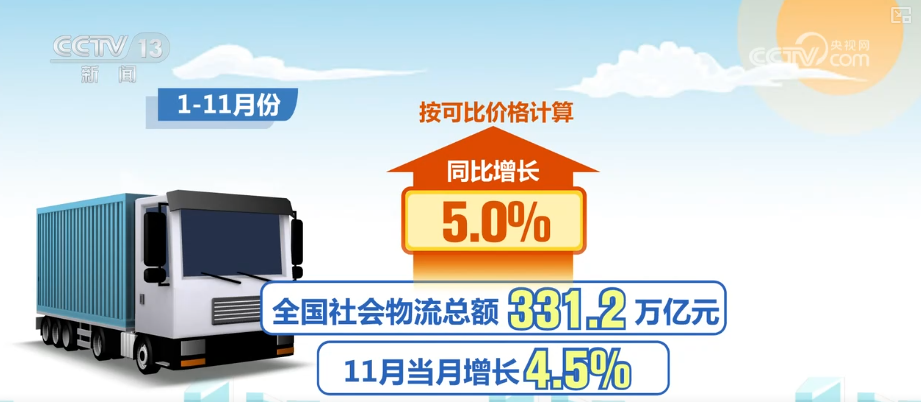
Core Viewpoint - The logistics sector in China has shown stable overall performance and continuous optimization in service quality during the first eleven months of 2025, with a notable increase in both demand and structural improvements in logistics operations [1]. Group 1: Overall Logistics Performance - The total social logistics volume reached 331.2 trillion yuan, reflecting a year-on-year growth of 5.0%, with a monthly increase of 4.5% in November [3]. - The logistics industry generated total revenue of 13.1 trillion yuan, marking a year-on-year increase of 4.6%, with growth accelerating for four consecutive months [10]. Group 2: Industrial and Consumer Logistics - In terms of production, the logistics volume for industrial products grew by 5.2% year-on-year, with a monthly increase of 4.7% in November, indicating stable growth across nearly 70% of industrial sectors [4]. - For consumer logistics, the volume for units and residential goods increased by 5.8% year-on-year, driven by the rapid growth of emerging consumption sectors such as instant retail and live e-commerce, which saw a 5.7% year-on-year increase in online retail sales of physical goods [4]. Group 3: Green Logistics and New Growth Points - Green logistics has emerged as a new growth point in the industry, with the logistics volume for renewable resources increasing by 14.7% year-on-year, maintaining rapid growth throughout the year [7]. Group 4: Market Trends and Future Outlook - The logistics market in November exhibited steady demand growth, structural optimization, and efficiency improvements, with significant advancements in transportation coordination, cross-border services, and warehousing turnover efficiency [9]. - The logistics industry prosperity index averaged 50.7% for the first eleven months, indicating expansion, with November's index at 50.9%, reflecting a positive trend in logistics activity as the traditional peak season approaches [12]. - The multi-modal transport sector has accelerated, with a total of 15.4% year-on-year growth in the number of containers sent via rail-water intermodal transport [14]. - Expectations for the overall social logistics volume in 2025 are projected to maintain a growth rate of around 5% due to enhanced supply chain collaboration [16].
“十四五”邮政业“含绿量”更高,快递包装袋厚度减量过半
Xin Jing Bao· 2025-12-25 04:20
Core Insights - The express delivery industry is enhancing its environmental sustainability during the "14th Five-Year Plan" period, with significant reductions in packaging materials and increased use of recyclable packaging [1] Group 1: Industry Developments - The thickness of packaging bags has been reduced by over 50%, and the width of tape has been decreased by 25% [1] - The proportion of recyclable packaging used in same-city deliveries has reached 10%, with over 800 million cardboard boxes recycled annually [1] Group 2: Technological Innovations - The industry has implemented comprehensive regulations and standards, leading to better packaging practices, including lightweight tape and reduced weight waybills [1] - The total area of photovoltaic installations in the postal industry is 4.48 million square meters, with over 4,300 high-speed security inspection machines deployed [1] Group 3: Carbon Reduction Initiatives - The postal industry is focusing on carbon reduction through technological innovation, optimizing models, and green management across four key logistics stages: collection, transfer, transportation, and delivery [1] - In the collection phase, carbon reduction is achieved through source reduction and green alternatives; in transportation, a dual approach of "new energy + multimodal transport" is utilized for low-carbon efficiency [1] - The delivery phase benefits from automation and intelligent algorithms to promote carbon reduction at the final delivery stage [1] Group 4: Future Plans - The industry plans to continue leveraging big data, blockchain, and smart technologies for comprehensive logistics carbon footprint management [1] - There is a push for integrated carbon reduction strategies involving green buildings, smart devices, automated sorting, photovoltaic power generation, new energy vehicles, low-altitude delivery, and green packaging [1]