
货币政策独立性

Search documents
沃什终究不是沃尔克
CAITONG SECURITIES· 2026-01-31 12:34
. 1 2 1 ■ 证券研究报告 张伟 分析师 SAC 证书编号: S0160525060002 zhanqwei04@ctsec.com 任思雨 分析师 SAC 证书编号: S0160525090006 rensy@ctsec.com 相关报告 政策点评 / 2026.01.31 核心观点 请阅读最后一页的重要声明! 沃什么穷不是 浪尔完 1. 《存款搬家,新路径 》 2026-01-30 2.《工业利润超季节性反弹》 2026-01- 28 3. 《美联储或许并不重要》 2026-01- 27 是不是沃什当选、沃什采取怎样的货币政策其实都不重要,重要的是,谁才 � 是当今的保罗 · 沃尔克?要解决美国的问题,只能靠颠覆性的技术进步,大幅 提高生产力,用更快的增长覆盖高额的债务。这也是美国在 80年代走出大滞 胎的根本原因。 ❖ 并不是沃尔克选择了时代,而是时代选择了沃尔克。1970年代开始的信息技 术革命的有效突破,才给沃尔克大幅加息整治通胀以及里根整顿财政纪律、 供给侧改革提供了最必要的条件和底气。没有信息技术革命的背景,沃尔克 和里根的政策可能也难以有效推行。所以,美联储其实并不重要,在 AI 技术 ...
沃什被提名为美联储下任主席 美联储与白宫的矛盾能化解吗?
Sou Hu Cai Jing· 2026-01-30 15:02
美国总统特朗普30日提名美联储前理事凯文·沃什为下任美联储主席,这一提名还需获得参议院批准。 此前,与特朗普面谈过的候选人一共四位,包括美联储理事会成员克里斯托弗·沃勒、前美联储理事凯文·沃什、贝莱德公司高管里克·里德以及白宫经济顾 问凯文·哈塞特。其中,沃什和哈塞特的呼声最高。但在特朗普暗示希望哈塞特继续担任现任职位后,沃什胜出的概率大大增加。 中国人民大学重阳金融研究院国别研究部研究员刘英: 沃什作为下一任美联储主席候选人,主要是基于其政治可信赖性以及个人人脉的综合优势,同时比较契合特朗普对于可预期但非完全顺从的央行领导人的 偏好。 一方面在于政治立场上的精准平衡,即在鹰派底色下的温和转向。沃什在美联储担任理事期间以坚定的通胀鹰派立场著称,曾公开反对量化宽松并主张快 速缩表,这一背景使其被市场视为央行独立性的捍卫者,与特朗普此前批评鲍威尔过于宽松的诉求形成反向呼应。 新闻人物: 凯文•沃什目前是斯坦福大学访问学者,于2006年加入美联储,是当时最年轻的美联储理事。市场对沃什最为熟悉的一段履历是他在2006年至2011年担任 美联储理事,这段时期横跨信贷繁荣、2008年金融危机以及危机后复苏初期。沃什持鹰派 ...

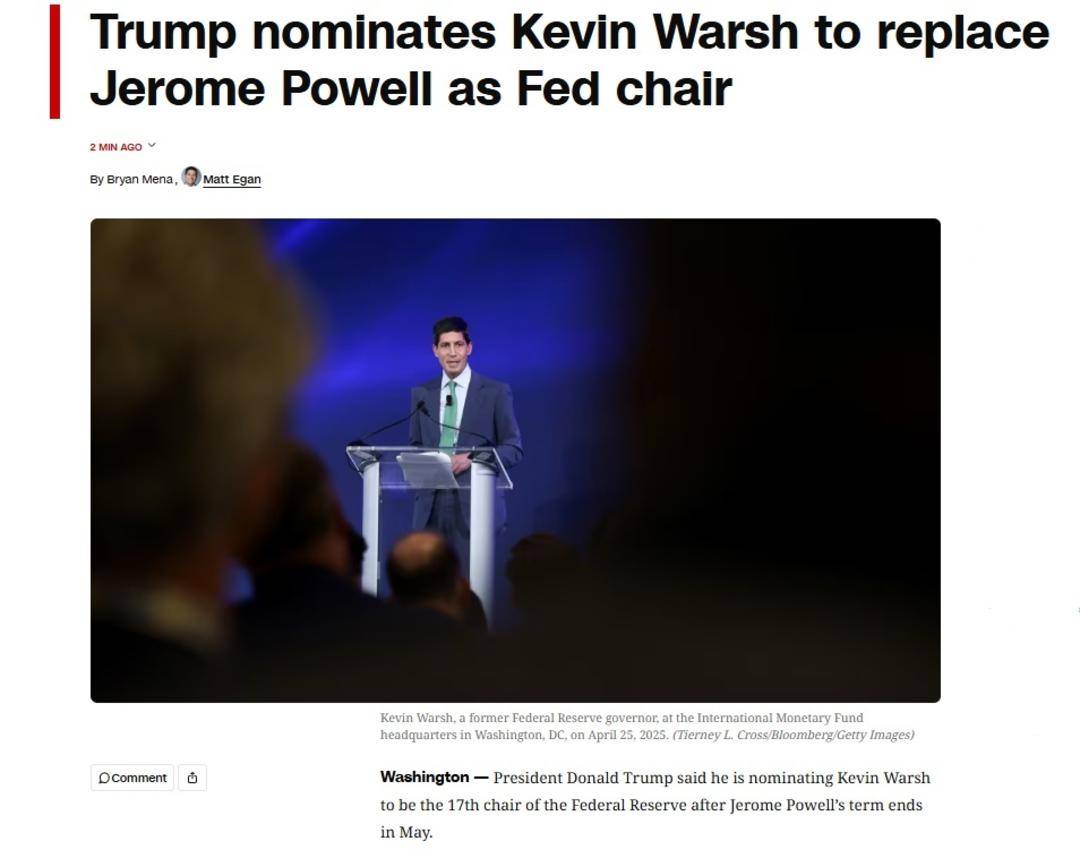
就在今晚,新任美联储主席将揭晓
Sou Hu Cai Jing· 2026-01-30 04:44
Core Viewpoint - The upcoming announcement of the new Federal Reserve Chair by President Trump is generating significant market speculation, particularly around the candidates Kevin Warsh and Rick Rieder, with Warsh currently favored to be nominated [1][2]. Candidate Profiles - Kevin Warsh is viewed as a "moderate hawk" who has historically criticized the Fed's policies, particularly its quantitative easing measures, and advocates for a combination of balance sheet reduction and cautious interest rate cuts [5][6]. - Rick Rieder, as the Chief Investment Officer at BlackRock, manages approximately $2.4 trillion in assets and has a strong influence in financial markets. He has not held government positions but has interacted with the U.S. government and the Fed [6][7]. Policy Perspectives - Warsh emphasizes the Fed's core responsibility to control inflation and has criticized the Fed for maintaining an excessively large balance sheet, advocating for a strategy that combines balance sheet reduction with interest rate cuts [5][6]. - Rieder believes that the Fed should shift its focus from controlling inflation to addressing labor market challenges, suggesting that a slightly higher inflation rate could be acceptable to stabilize debt dynamics and maintain employment [7][8]. Market Implications - There are concerns regarding the potential impact on the Fed's independence and future monetary policy direction, with expectations that the Fed may adopt a more dovish stance under new leadership [2][9]. - Analysts suggest that the current political pressure on the Fed could undermine market confidence in U.S. monetary policy, potentially leading to rising inflation expectations and upward pressure on interest rates, which could affect U.S. stock valuations [9][10]. Economic Outlook - The market anticipates that the new Fed chair may lead to a stronger likelihood of interest rate cuts in 2026, with expectations that global macroeconomic conditions may improve due to fiscal expansion [10]. - The Fed's reliance on data will be crucial in determining its policy direction, with potential risks associated with both hawkish and dovish scenarios depending on economic indicators such as unemployment and inflation [11].
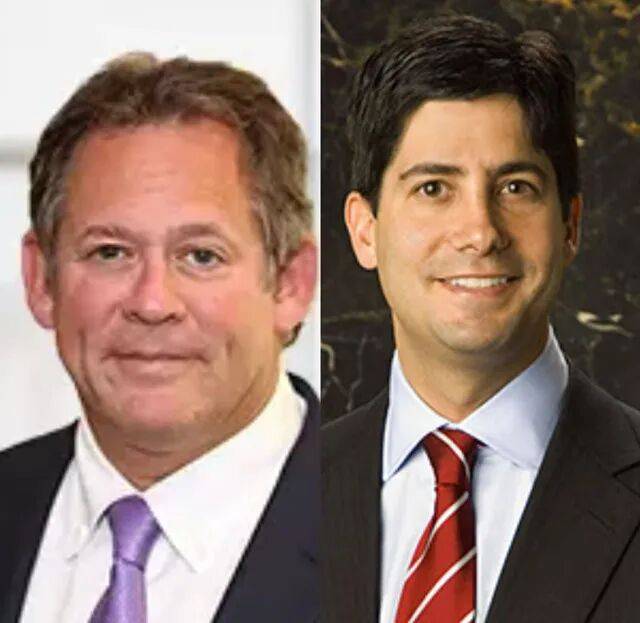
特朗普今晚宣布美联储新主席
Di Yi Cai Jing Zi Xun· 2026-01-30 04:27
Core Viewpoint - The article discusses the potential candidates for the next Chair of the Federal Reserve, focusing on Rick Rieder and Kevin Warsh, highlighting their differing views on monetary policy and the implications for the market and the Fed's independence [2][3][5]. Candidate Profiles - Kevin Warsh is favored by President Trump and is known for his hawkish stance on monetary policy, having criticized quantitative easing (QE) in the past. Recently, he has adopted a more dovish tone, suggesting that not lowering interest rates could threaten the Fed's credibility [3][4]. - Rick Rieder, Chief Investment Officer at BlackRock, manages approximately $2.4 trillion in assets and has significant influence in financial markets. He has not held a government position but has interacted with the U.S. government and the Fed [6][7]. Policy Divergence - Warsh emphasizes the Fed's core responsibility to control inflation and has criticized the Fed for maintaining a large balance sheet, which he believes has contributed to rising inflation. He advocates for a strategy combining balance sheet reduction and cautious interest rate cuts [5][6]. - Rieder argues that the Fed should shift its focus from controlling inflation to addressing labor market challenges, suggesting that a slightly higher inflation rate could be acceptable to stabilize debt dynamics and maintain employment [7][8]. Market Implications - There are concerns about the potential impact on the Fed's independence and future monetary policy direction, with expectations that the Fed may adopt a more dovish stance under new leadership. Investors are advised to pay more attention to non-U.S. asset investments [4][9]. - The market is currently focused on the Fed's independence, with some analysts expressing concerns that any perceived weakening of this independence could undermine confidence in U.S. monetary policy and the financial system [10][11]. Future Economic Outlook - Analysts predict that the new Fed Chair may lead to a stronger likelihood of interest rate cuts, potentially exceeding market expectations, which could keep liquidity levels high. Global fiscal expansion may also improve marginal global demand [11][12]. - The Fed faces "hawkish risks" if unemployment rates drop and inflation rises, while "dovish risks" could emerge if unemployment exceeds 5% and inflation falls significantly [12].
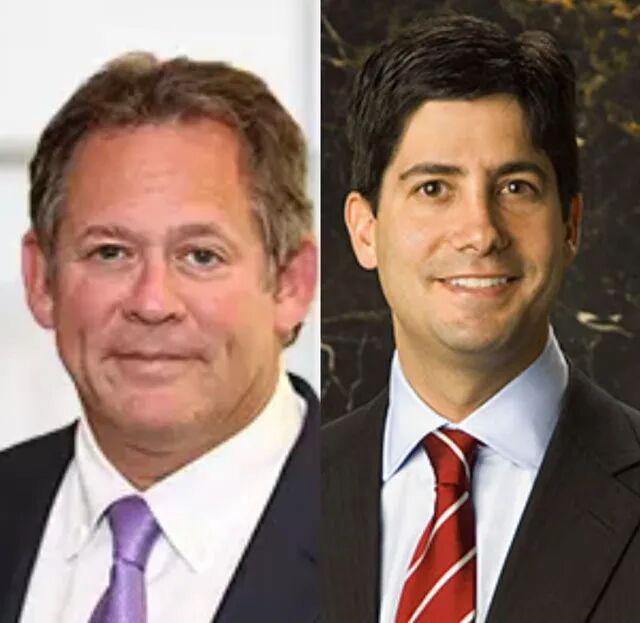
渣打:黄金史诗级涨势并非投机狂热,具备深厚的结构性支撑
Xin Lang Cai Jing· 2026-01-29 13:36
Cooper分析认为,金价的推动力已由传统宏观因素转向结构性驱动,包括市场对货币政策独立性的疑 虑、对全球贸易关税摩擦的担忧,以及散户投资者对避险资产的积极配置。此外,选择权市场的隐含波 动率与风险逆转指标均偏向看涨,显示投资者对未来走势仍具备信心。 格隆汇1月29日|市场议论金价是否过热之际,渣打银行全球商品研究主管Suki Cooper在最新报告中明 确指出,这波前所未有的涨势具备深厚的结构性支撑。数据显示,机构投资人的持仓增长速度实际上落 后于金价的涨幅,且目前投机性部位占未平仓合约的比例仅约26.4%,远低于历史峰值的47.9%,这反 映出当前市场并不存在过度投机的现象。 ...
突发特讯!美媒向世界宣布:美联储以10票赞成、2票反对的结果通过决议,宣布暂停降息,维持基准利率在3.5%至3.75%区间不变
Sou Hu Cai Jing· 2026-01-29 04:56
北京时间1月29日凌晨,美联储2026年首次议息会议落下帷幕。最终决议毫无悬念:维持3.5%-3.75%的 基准利率不变,按下了此前连续三次降息的"暂停键"。这不是简单的政策观望,更不是对经济形势的盲 目乐观。深挖10:2的投票分歧、鲍威尔的强硬表态以及全球市场的连锁反应就能发现,这场"不降息"的 决定,是美联储在抗通胀、守独立、控溢出效应之间的艰难平衡,更暴露了当前全球货币政策的集体困 局。 但通胀问题仍未解决,核心PCE物价指数同比上涨3%,距离2%的目标还有差距,尤其是服务价格、租 金等领域降温缓慢。这种背景下,美联储内部分裂明显:10名委员支持维持利率,2名委员坚决主张降 息25个基点。分歧的本质,是"防通胀反弹"与"怕经济降温"两派的博弈,而最终的"不降息",实则是选 择了"短期控风险优先"的策略。 博弈二:拒政治施压,守住央行独立性底线 这场"不降息",更是美联储对白宫政治施压的直接回应。特朗普政府多次抨击美联储,要求大幅降息刺 激经济,甚至通过调查鲍威尔施压,试图干预货币政策走向。 博弈一:抗通胀vs稳增长,内部分歧摆上台面 美联储此次拒降息,核心矛盾是"通胀粘性"与"经济韧性"的对冲。最新数据 ...
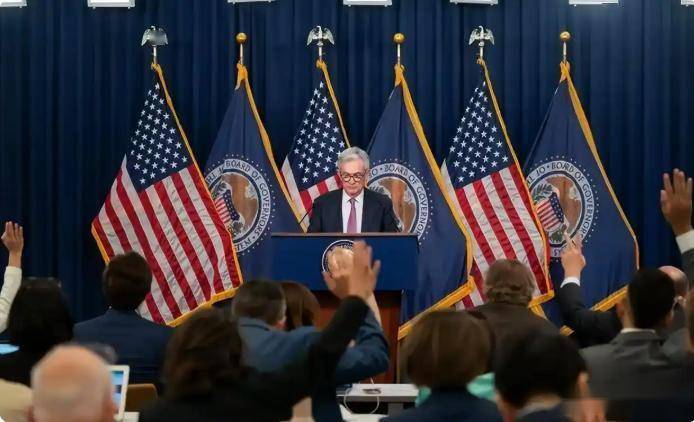
嘉信理财:美联储议息按兵不动 反映其决策仍以数据为本
Zhi Tong Cai Jing· 2026-01-29 03:03
他提及,然而,目前美国货币政策正处于非比寻常的时期。货币政策独立性与财政部门之间的公开争拗 加剧,已令美联储的机构信誉受到更多关注。这种独立性仍是全球对美元、美国国债以至更阔的美国资 本市场能够维持信心的基石。 他表示,投资者的焦点正从通胀数据与就业报告,转向央行本身的未来方向,尤其是美联储主席鲍威尔 的任期将于2026年5月15日便届满。就未来数月的市场信心而言,美联储的独立性能否维持,其重要性 可能不下于利率路径。 嘉信理财香港高级副总裁及理财顾问林长杰表示,尽管面临日益增加的政治压力要求减息,美联储仍决 定将利率维持在3.5至3.75%的区间不变,反映其决策仍以数据为本。随着去年12月通胀率放缓至2.7%, 并逐渐接近美联储2%的目标,物价压力明显正在缓和。然而,由于主要经济指标所显示的韧性,目前 情况尚未变得过度趋紧。失业率企稳于4.4%,反映劳动市场需求降温的同时,供应也在放缓。 他指出,这种平衡让美联储有足够信心去维持目前的政策立场。除非通胀或劳动市场出现实质转变,否 则美联储很可能于至少2026年5月前,都将继续这种以数据为依归的政策方针。 ...

刹不住!金银迎“史诗级”大涨
Guo Ji Jin Rong Bao· 2026-01-26 14:10
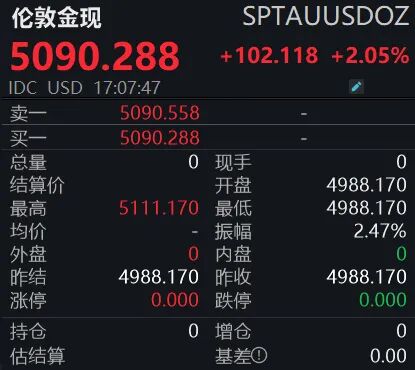
Core Viewpoint - The prices of gold and silver have surged to historic highs, with spot gold breaking the $5000 per ounce mark, driven by factors such as weakened dollar credibility, strong central bank demand for gold, and geopolitical premiums [1][11]. Market Performance - As of the report, spot gold rose by 2.05% to $5090.288 per ounce, reaching a peak of $5111.17, while spot silver surged by 6.06% to $109.6 per ounce, surpassing the $110 mark [3][5]. - In the futures market, COMEX gold futures increased by 2.02% to $5080.4 per ounce, with a peak of $5107.9, and COMEX silver futures rose by 7.54% to $108.97 per ounce, hitting a high of $110.065 [6][7]. Influencing Factors - The current gold price rally, which began in early 2025 at around $3000 per ounce, reflects significant changes in the macroeconomic environment [9]. - Short-term factors include ongoing geopolitical risks, such as tensions over Greenland's sovereignty and escalating US-Iran relations, which have heightened demand for safe-haven assets like gold [9]. - Mid-term factors involve the interplay between the Federal Reserve's policy path and its independence, with expectations of weakened monetary policy independence supporting gold prices [9][10]. - Long-term drivers include the structural weakening of the dollar credit system, with global central banks increasing gold reserves and a steady de-dollarization process [10]. Future Outlook - The long-term upward trend for gold remains intact, influenced by factors such as weakened dollar credibility, strong central bank demand, and geopolitical premiums [11]. - Analysts predict that gold prices could potentially reach $6000 per ounce by 2026, driven by ongoing geopolitical uncertainties and expectations of continued monetary easing [11]. - Investment strategies suggested include a diversified approach based on individual financial capacity and risk tolerance, with recommendations for different investment vehicles such as gold futures, ETFs, and physical gold [11].
“天不怕地不怕”的特朗普,这回栽了!治他的竟还是自己人!
Sou Hu Cai Jing· 2026-01-22 13:28
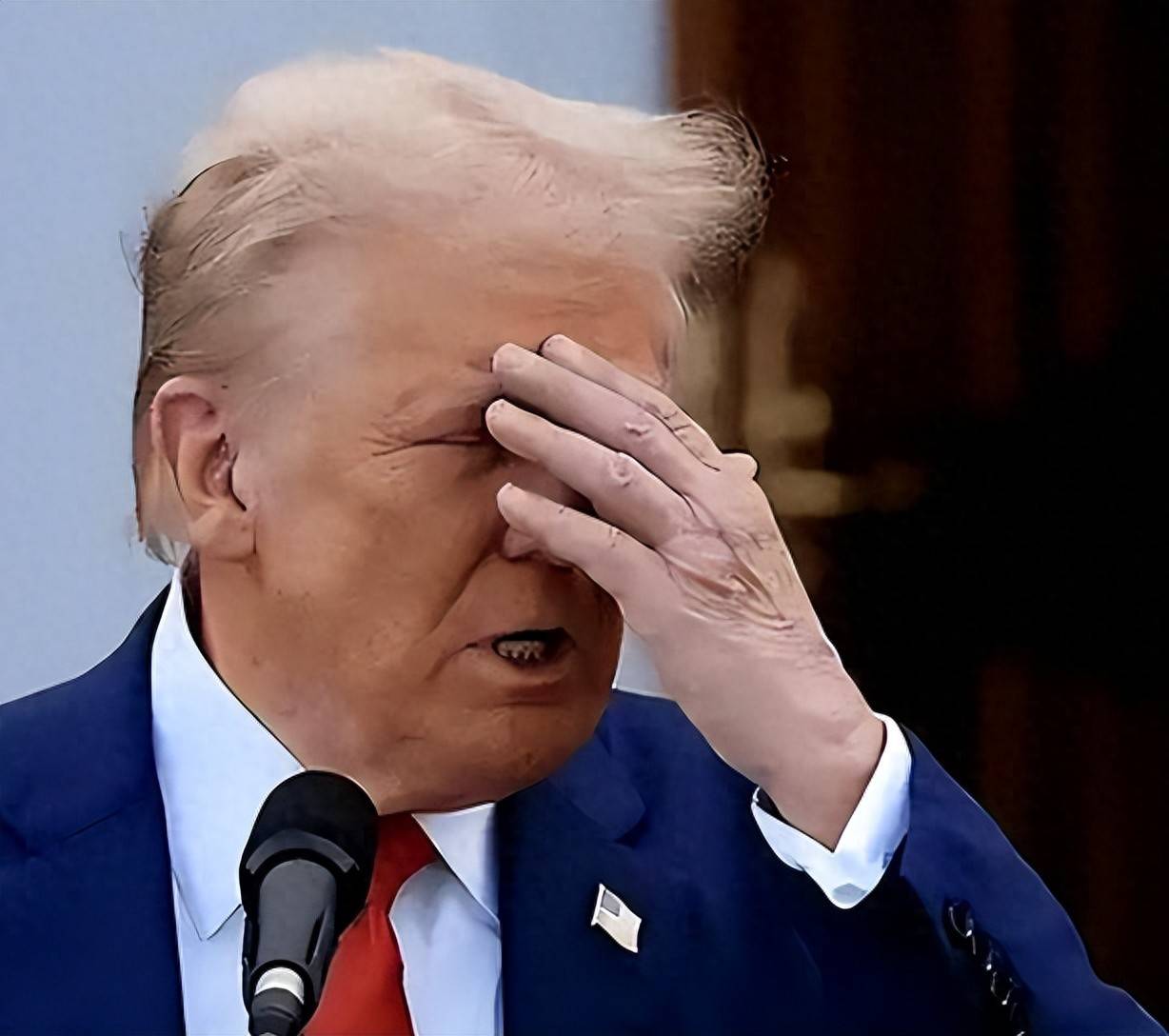
Core Viewpoint - The article discusses the conflict between former President Trump and Federal Reserve Chairman Jerome Powell, highlighting how Trump's attempts to pressure the Fed for interest rate cuts backfired due to the independence of the Fed and support from Wall Street and some Republican lawmakers [1][3][17]. Group 1: Economic Context - By the second half of 2025, the U.S. economy is expected to decline, with manufacturing recovery being elusive, factory orders decreasing, and rising mortgage rates leading to a sluggish real estate market [3]. - Trump's anxiety about the upcoming 2026 midterm elections is driven by these negative economic signals, as he believes economic performance directly influences voter turnout [6]. Group 2: Federal Reserve's Stance - Powell publicly stated that the inflation target has not been met and that interest rate policies must remain unchanged unless there is clear evidence of inflation decline, effectively rejecting Trump's requests [5]. - The Fed's independence is emphasized, with Powell asserting that monetary policy will not be altered due to political pressure [9][11]. Group 3: Political Dynamics - Trump's strategy to pressure Powell included initiating a Justice Department investigation into the Fed's renovation expenses, which was seen as an attempt to exert administrative pressure [9]. - Despite Trump's expectations of support from the Republican Party, several moderate Republican lawmakers publicly backed the Fed's independence, isolating Trump politically [14]. Group 4: Institutional Framework - The independence of the Federal Reserve is a fundamental aspect of the U.S. financial system, as outlined in the Federal Reserve Act, which limits presidential power over monetary policy [17][19]. - Historical context shows that the Fed's independence is crucial to prevent short-term political influences on monetary policy, which could lead to inflation and market volatility [19].
美联储新主席呼之欲出?特朗普称“心中或仅剩一人” 沃什与里德成领跑者
Xin Hua Cai Jing· 2026-01-22 03:03
Group 1 - The core viewpoint of the articles revolves around President Trump's dissatisfaction with Federal Reserve Chairman Jerome Powell and the ongoing pressure from the Trump administration on the Federal Reserve [1][2][3] - Trump has indicated that the selection process for the next Federal Reserve Chairman is nearing completion, with a preference for a male candidate who is well-respected [1] - The potential candidates for the next Chairman include Kevin Walsh, Christopher Waller, Kevin Hassett, and Rick Rieder, with Hassett being favored by Trump [1] Group 2 - The Trump administration's pressure on the Federal Reserve has intensified, with the Department of Justice issuing a subpoena regarding a $2.5 billion renovation project of the Fed's headquarters [2] - Powell has condemned the investigation as "political retaliation" for not lowering interest rates quickly enough, while Senate Banking Committee member Tom Tillis has vowed to oppose any Fed nominations until the investigation is resolved [2] - The political interference has extended to the judicial level, with the Supreme Court set to hear a case regarding Trump's attempt to dismiss Fed Governor Lisa Cook, raising concerns about the independence of the Federal Reserve [2][3] Group 3 - The next Federal Reserve Chairman will face significant challenges, including balancing the independence of monetary policy with political demands amid pressure from the White House and financial markets [3] - The new Chairman will need to manage complex macro-financial issues, including a $6.6 trillion balance sheet and interest rate paths, while maintaining the Federal Reserve's unique legal status and public trust [3]