
邮轮经济

Search documents
180万人次+530艘次 双创新高!上海邮轮经济火爆
Xin Lang Cai Jing· 2025-12-27 12:30
近年来,中国邮轮经济加速回暖、持续升温,正以更加开放的姿态融入全球旅游市场。今年以来,上海 邮轮口岸出入境旅客量持续攀升,全年查验出入境旅客已超过180万人次,接待出入境邮轮530余艘次, 双双创下历史新高,越来越多外籍游客选择搭乘邮轮来到中国,感受"上海之旅"。 清晨7点,吴淞口国际邮轮港迎来入境高峰,"爱达·魔都号"缓缓靠泊,大批旅客有序通关。不少外籍游 客通过免签政策,顺利开启在上海及长三角地区的行程,对便捷高效的通关体验和热情周到的服务赞不 绝口。 依托完善的国际航线网络和持续优化的入境政策,"飞机+邮轮"的复合型旅游模式正在加速发展。今年 以来,上海边检机关累计查验入境外籍旅客526万人次,其中浦东机场口岸达482万人次,位居全国首 位。通过免签和240小时过境免签政策入境的外籍旅客超过300万人次,同比增长超过180%,占比接近 六成。上海正以更加开放的姿态,迎接全球旅客的到来。 看看新闻记者: 沈春琛 特约记者 刘帆 卢姣 编辑: 周缇 责编: 夏鑫 随着外国旅游团乘坐邮轮入境免签政策持续释放红利,今年以来,经上海邮轮口岸出入境的外籍旅客已 超过12万人次,同比增长超过80%。国际邮轮客流的快速 ...
新“黄金十年” 北方大市机会来了
Mei Ri Jing Ji Xin Wen· 2025-12-24 16:33
Core Viewpoint - The cruise economy is recognized as a new economic growth point with a long industrial chain and strong driving force, especially in the context of expanding domestic demand. The global cruise market is expected to recover robustly, ushering in a "golden decade" for China's cruise industry [1][5]. Industry Overview - The cruise industry is described as a "golden industry floating on golden waterways," with economic value extending beyond shipbuilding and operation. It drives high-end manufacturing, transportation, tourism, trade, financial services, and cultural creativity through a "port-ship-shore" linkage, demonstrating significant multiplier effects [1][2]. - The industry has a high driving ratio, with every 1 yuan of revenue from the cruise industry generating 10 to 14 yuan in economic benefits for related sectors [2]. Historical Context - China's cruise economy officially began in 2006, experiencing a "golden decade" from 2008 to 2017, during which the number of cruise tourists grew at an annual rate of 40% to 50%. By 2017, the number of cruise passengers reached 2.43 million, an 11-fold increase from 2010 [3]. - However, after 2017, the growth rate of China's cruise market significantly slowed, with a drop in the number of cruise ships and passengers due to issues like limited routes and lack of experienced service providers [4]. Current Trends - As of 2025, a new wave of growth is anticipated for China's cruise economy, marking the beginning of a second "golden decade." The industry is currently in a recovery phase, with signs of a turning point emerging [5][6]. - Data indicates that the passenger volume in China's cruise market has already surpassed 85% of the 2019 levels, with a year-on-year increase of 27.8% in the first 11 months of the current year [6]. Competitive Landscape - The Ministry of Transport has introduced measures to address industry challenges, such as the inability of certain cruise ships to dock due to inadequate facilities and the lack of diverse cruise products. These measures aim to enhance supply, improve services, and stimulate new demand [7]. - Various provinces and cities are competing to develop their cruise economies, viewing it as a key opportunity to reshape urban industrial structures and enhance international competitiveness [8][9]. Regional Development - Shandong province, particularly Qingdao, is actively pursuing the development of the cruise economy, with plans to create a comprehensive industry cluster worth hundreds of billions. Qingdao aims to become a leading cruise industry center in the Bohai Rim and Northeast Asia [9][10]. - Qingdao's development plan targets receiving over 200 cruise ships and more than 1 million inbound and outbound tourists by 2035, which would position it among the top cities in China's cruise economy [9][10]. Economic Impact - The cruise economy integrates various sectors, including shipbuilding, transportation, port services, tourism, and finance. It is evolving towards composite business models like "cruise + culture and tourism," which require deeper institutional innovations to meet new development demands [11][12]. - Qingdao is leveraging its unique industrial foundation to accelerate the development of its cruise economy, aiming to become a versatile player in the industry [12][13]. Future Prospects - Qingdao's initiatives include enhancing its port facilities and developing high-end tourism projects, which are expected to significantly boost its cruise economy. The city aims to achieve a marine production value of 551.32 billion yuan by 2024, contributing substantially to its overall GDP [13][14].
新“黄金十年”,北方大市机会来了
Sou Hu Cai Jing· 2025-12-24 15:42
Core Viewpoint - The cruise economy is recognized as a new economic growth point with strong driving effects, and it is expected to enter a "golden decade" in China as the global cruise market recovers [2][4]. Industry Overview - The cruise industry is described as a "golden industry floating on golden waterways," with significant economic value derived from the interconnectedness of various sectors, including high-end manufacturing, transportation, tourism, trade, financial services, and cultural creativity, exhibiting a multiplier effect of 1:10 to 1:14 [4]. - The Chinese cruise economy officially began in 2006, experiencing rapid growth from 2008 to 2017, with a peak in cruise passenger numbers and the establishment of several international cruise brands [6][8]. Current Trends - After a slowdown in growth post-2017, the Chinese cruise market is now showing signs of recovery, with projections indicating that 2025 could mark the beginning of a second "golden decade" for the industry [8][10]. - Data from the Shanghai International Cruise Economy Research Center indicates that the cruise passenger volume in China has already surpassed 85% of the 2019 levels, with a year-on-year increase of 27.8% in the first 11 months of the current year [8]. Regional Development - Various provinces, including Shandong, are actively promoting the cruise economy as a key component of their development strategies, with Qingdao positioned as a central player in this initiative [13][14]. - Qingdao's development plan aims to establish a comprehensive cruise industry cluster worth hundreds of billions, with ambitious targets for passenger numbers and cruise ship arrivals by 2028 and 2035 [14][15]. Economic Impact - The cruise economy is expected to significantly contribute to the local economy, with Qingdao's marine economy projected to reach a gross value of 551.32 billion yuan, accounting for 33% of the city's GDP [21][22]. - The integration of cruise tourism with local cultural and commercial activities is anticipated to create new economic scenarios and enhance the overall marine economy [23].


数览交通运输“促消费+惠民生”向智向绿发展答卷
Yang Shi Wang· 2025-12-24 07:29
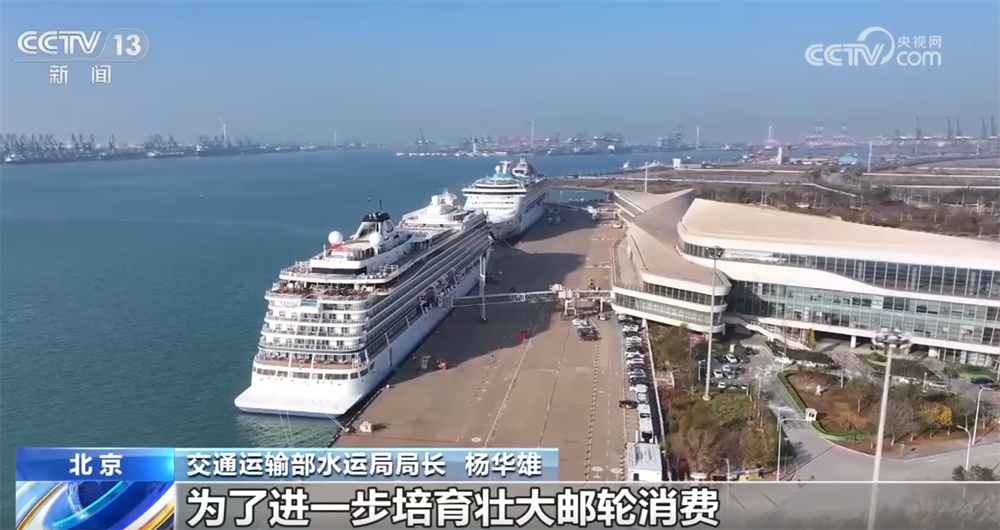
Group 1: Cruise Economy Development - The cruise economy is identified as a new economic growth point, with passenger transport volume reaching 1.265 million, a year-on-year increase of 27.8% from January to November this year [1] - The Ministry of Transport has implemented measures to address issues such as the inability of certain cruise ships to dock due to lack of electrical facilities and the limited variety of cruise routes [1] - Ten measures have been proposed to enhance cruise service quality, including allowing ships without electrical facilities to dock at ports until the end of 2029 and expanding cruise routes and products [1] Group 2: Highway Service Area Upgrades - The Ministry of Transport plans to launch a nationwide upgrade action for highway service areas next year, focusing on increasing the number of charging stations and improving facilities for elderly travelers [2] - By 2026, over 10,000 charging guns are planned to be installed in highway service areas, with at least 25% being high-power chargers [2] - The Ministry aims to enhance the accessibility of service areas for elderly travelers and improve the standardization of "Driver's Home" facilities for truck drivers [2] Group 3: Driver Support Initiatives - The Ministry of Transport has launched the 12328 hotline for truck drivers, achieving a response rate of 97%, a resolution rate of 85%, and a satisfaction rate of 89% [4] - The Ministry has taken action against issues such as freight payment delays, assisting 188,000 truck drivers in recovering 1.25 billion yuan in overdue payments [4] - A "Guarding Action" has been initiated to provide support for truck drivers facing emergencies during transport [4] Group 4: Transportation Equipment Upgrades - The transportation sector is undergoing significant upgrades, with over 450 old railway locomotives replaced and 114,000 old city buses and their batteries scrapped [5] - The Ministry has implemented policies to support the scrapping and updating of old freight vehicles, enhancing the green and intelligent levels of transportation equipment [5] - The focus is on expanding consumption scenarios in the transportation sector, particularly in yacht and cruise consumption and small micro-car rentals [5][6] Group 5: Multi-Modal Transport Cooperation - The China National Railway Group has signed agreements with seven shipping companies to expand container multi-modal transport services [7] - This initiative aims to enhance the efficiency of logistics by allowing customers to track their shipments through a unified platform [7] - The collaboration has already resulted in the establishment of six multi-modal transport channels, with 38,000 standard containers shipped [7]
新增长点、新消费场景……数览交通运输“促消费+惠民生”向智向绿发展答卷
Yang Shi Wang· 2025-12-24 04:22
Group 1: Cruise Economy Development - The cruise economy is identified as a new growth point with a strong driving force, as China's cruise passenger transport volume reached 1.265 million from January to November, a year-on-year increase of 27.8% [1] - The Ministry of Transport has issued measures to address issues such as the inability of certain cruise ships to dock due to lack of electrical facilities and the limited variety of cruise products, aiming to enhance supply, improve services, and stimulate new demand [4][6] - The measures include allowing cruise ships without electrical facilities to dock at Chinese ports until the end of 2029 and expanding cruise routes and products [4] Group 2: Highway Service Area Upgrades - The Ministry of Transport plans to launch a nationwide upgrade action for highway service areas, focusing on increasing the number of charging stations and improving facilities for elderly travelers [7][9] - By 2026, the goal is to build over 10,000 charging stations along national highways, with at least 25% being high-power chargers [7] - The Ministry is also working on standardizing "Driver's Homes" to meet the needs of truck drivers, with 863 already completed and more planned for the next year [12] Group 3: Driver Rights and Support - The Ministry of Transport has implemented the 12328 hotline for truck drivers, achieving a response rate of 97%, a resolution rate of 85%, and a satisfaction rate of 89% [13] - Actions have been taken to address common issues faced by truck drivers, including a crackdown on fraudulent practices and assistance in recovering overdue freight payments totaling 1.25 billion [15] - The "Escort Action" initiative provides support for truck drivers involved in accidents, offering care, escort services, and assistance [17] Group 4: Transportation Equipment Upgrades - The transportation sector is undergoing significant upgrades, with over 450 old railway locomotives replaced and 114,000 old city buses and diesel trucks eliminated [18] - Policies have been introduced to support the scrapping and updating of old freight vehicles, establishing a three-tiered coordination mechanism [21] Group 5: Expansion of Consumption Scenarios - The Ministry of Transport is focusing on expanding consumption scenarios in the transportation sector, with a particular emphasis on yacht and cruise consumption, as well as small micro-car rentals [22] - The number of newly registered yachts has been growing at an annual rate of over 40% in the past three years, prompting regulatory updates to facilitate consumption [22] - The small micro-car rental market has reached 4 million vehicles, with expectations of a 15% annual growth during the 14th Five-Year Plan period [25] Group 6: Multi-Modal Transport Cooperation - The China National Railway Group has signed agreements with seven shipping companies to expand the "one document" multi-modal transport service, increasing the number of cooperating companies to 11 [28] - This initiative aims to enhance the efficiency of container transport through integrated rail and waterway services, allowing customers to track their shipments easily [32]
市人大常委会会议下周举行 黄莉新主持主任会议
Jie Fang Ri Bao· 2025-12-24 01:42
Group 1 - The Shanghai Municipal People's Congress Standing Committee decided to hold its 26th meeting on December 29-30, focusing on various regulatory drafts including those for offshore bond business in Pudong and cruise economy development [1] - The committee will review reports on the implementation of the 14th Five-Year Plan and the drafting of the 15th Five-Year Plan, as well as the progress of the "Five Centers" construction in the city [1] - Reports on the 2025 urban and rural planning and the 2025 practical projects for citizens will also be presented for discussion at the upcoming meeting [1] Group 2 - The committee will examine the handling of suggestions, criticisms, and opinions from the representatives of the 16th People's Congress during its third meeting [2] - A report on the judicial authorities' handling of legal and litigation-related petitions transferred by the Standing Committee will be reviewed [2] - Personnel appointment and dismissal cases will be submitted for deliberation and voting at the upcoming meeting [2] Group 3 - A written review of a research report on the integration of artificial intelligence and the Internet of Things industries was conducted [3]
交通运输部:邮轮、游艇消费将成增长点
Bei Jing Shang Bao· 2025-12-23 15:57
Core Insights - The Chinese government is focusing on promoting yacht and cruise consumption as growth points in the transportation sector, with plans to revise safety regulations and enhance infrastructure [1][2] - In the first eleven months of this year, China's cruise passenger transport volume reached 1.265 million, marking a 27.8% year-on-year increase, which positively impacts tourism and consumption [3] Group 1: Yacht Consumption - The number of newly registered yachts in China has been growing at an annual rate of over 40% for the past three years, indicating a shift towards mass consumption and scale development [1] - The Ministry of Transport plans to develop measures to expand yacht consumption while ensuring safety and addressing the shortage of berths through infrastructure improvements [2] Group 2: Cruise Industry - The recently issued "Several Measures" aim to enhance cruise service development by expanding cruise routes, encouraging foreign cruise ships to visit, and diversifying cruise tourism products [2][3] - The measures include ten specific actions focusing on improving port services, management efficiency, and safety guarantees for cruise transport [2] - The cruise industry is recognized as a long industrial chain with strong economic driving potential, contributing significantly to local economies and tourism [3]
游艇和邮轮消费将成增长点,交通部研究制定措施扩大游艇消费
2 1 Shi Ji Jing Ji Bao Dao· 2025-12-23 12:01
Core Insights - The Chinese yacht and cruise consumption market is expected to see significant growth in the coming years, with the Ministry of Transport indicating a shift towards more accessible and widespread consumption of yachts [1] - The number of newly registered yachts in China has been growing at an annual rate of over 40% over the past three years, indicating a rapid expansion in this sector [1] - The Ministry of Transport plans to implement measures to enhance yacht consumption while ensuring safety and addressing infrastructure challenges, such as insufficient docking facilities [1] Yacht Industry - The Ministry of Transport is focused on promoting yacht consumption by revising safety regulations and improving infrastructure for yacht docking and registration [1] - The transition of yachts from a luxury item to a more mainstream consumer product is a key trend identified by the Ministry [1] Cruise Industry - The cruise sector has shown strong growth, with passenger transport volume reaching 1.265 million from January to November this year, a year-on-year increase of 27.8% [2] - The Ministry of Transport, in collaboration with the Ministry of Culture and Tourism, has introduced ten measures to enhance cruise transportation and tourism services, focusing on expanding cruise routes and improving port services [2] - The new measures allow cruise ships without electrical facilities to dock at Chinese ports until the end of 2029, addressing previous limitations in cruise operations [2] Future Developments - The Ministry of Transport will work closely with the Ministry of Culture and Tourism to ensure the effective implementation of measures that support the cruise economy [4] - The small and micro car rental market is also highlighted as a growth area, with a total of 4 million small rental cars in China, projected to grow at an annual rate of 15% during the 14th Five-Year Plan period [4] - Plans are in place to enhance vehicle supply during peak rental periods and improve the overall service network for car rentals [4]
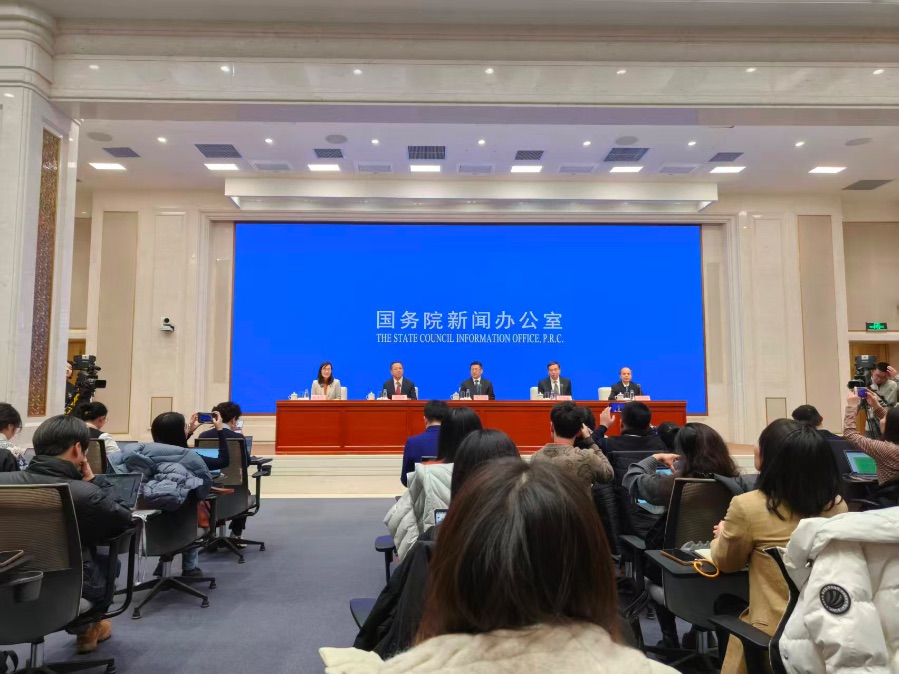
邮轮、游艇消费将成增长点,两部门发新政丰富邮轮游产品新供给
Bei Jing Shang Bao· 2025-12-23 11:42
Core Insights - The Chinese government is focusing on promoting yacht and cruise consumption as growth points in the transportation sector, with plans to revise safety regulations and enhance infrastructure [1][3][4] Group 1: Yacht Industry - The number of newly registered yachts in China has been growing at an annual rate of over 40% for the past three years, indicating a shift from high-end to mass-market consumption [3] - The Ministry of Transport plans to revise the "Yacht Safety Management Regulations" to promote consumption while ensuring safety [3] - There is a recognized issue of insufficient berthing facilities for yachts, prompting plans to enhance public marina and berth infrastructure [3][4] Group 2: Cruise Industry - In the first 11 months of this year, China's cruise passenger transport volume reached 1.265 million, a year-on-year increase of 27.8%, contributing positively to tourism and consumption [4] - The "Several Measures" document issued in December aims to expand cruise routes, encourage foreign-flagged cruise ships to visit, and diversify cruise tourism products [1][4] - The measures include ten specific actions to improve cruise port services, enhance management efficiency, and ensure safety in cruise transportation [4] Group 3: Market Trends - Companies like AIDA Cruises and Royal Caribbean are responding to consumer demand by launching new cruise products, including themed short cruises and longer itineraries [5] - The "Cruise + City Vacation" model is becoming more established, encouraging tourists to explore homeport cities before and after their cruises [5]
交通运输部将与文化和旅游部强化联动协同 为邮轮经济发展注入新的动能
Jing Ji Guan Cha Wang· 2025-12-23 08:33
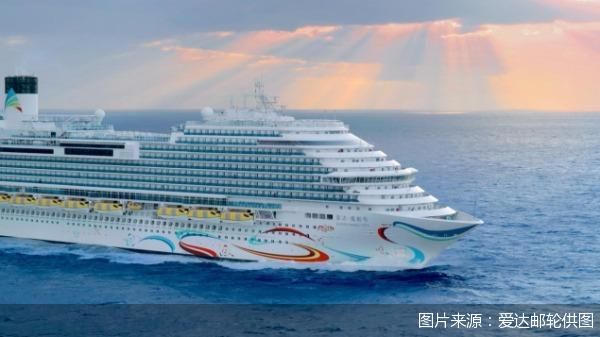
Core Viewpoint - The Chinese government is prioritizing the development of the cruise economy as a new growth point, with significant measures being implemented to enhance the industry and stimulate consumption [1][2] Group 1: Industry Growth and Government Support - The cruise economy has a long industrial chain and strong driving force, recognized as a new economic growth point by the central government [1] - In the first 11 months of the year, China's cruise passenger transport volume reached 1.265 million, a year-on-year increase of 27.8%, contributing positively to tourism development and consumption expansion [1] Group 2: Measures for Development - The "Several Measures" document outlines 10 initiatives across four areas: enriching cruise routes and products, improving port service levels, enhancing management efficiency, and strengthening safety and service guarantees [2] - A key measure addresses the issue of cruise ships without electrical facilities being unable to dock, allowing such ships to dock at Chinese ports until the end of 2029 [2] - The measures aim to expand cruise departure routes, encourage foreign cruise ships to visit, and diversify cruise tourism products, thereby improving supply and operational efficiency [2] Group 3: Future Directions - The Ministry of Transport will collaborate with the Ministry of Culture and Tourism to ensure effective implementation of the measures, leveraging local and corporate engagement to drive the cruise economy forward [2]