
量子力学

Search documents
虚数 i ,要被量子力学抛弃了?
机器之心· 2025-11-08 06:10
Core Viewpoint - Recent research suggests that quantum mechanics may be rewritten using only real numbers, challenging the long-standing reliance on imaginary numbers in the field [1][7][11]. Group 1: Historical Context - Quantum mechanics was established over a century ago to explain the strange behavior of atoms and fundamental particles, achieving significant success [2]. - The core equations of quantum mechanics include the imaginary unit i, which has been a point of contention among physicists [3][4]. Group 2: Recent Developments - In 2021, a study indicated that imaginary numbers were essential to quantum theory, but subsequent research in 2025 proposed a real-number equivalent that is fully compatible with standard quantum theory [8][11][15]. - Several teams have developed real-number formulations of quantum theory, raising questions about the necessity of imaginary components [15][38]. Group 3: Experimental Evidence - A modified Bell experiment demonstrated that the correlations between entangled particles exceeded the limits set by real-number theories, suggesting that imaginary numbers are crucial for accurate quantum descriptions [30][29]. - Despite statistical evidence supporting the necessity of imaginary numbers, skepticism remains regarding the conclusions drawn from these experiments [31][32]. Group 4: Philosophical Implications - The debate continues over why real-number formulations are more complex and whether they can fully replicate the results of traditional quantum mechanics [42][43]. - Some researchers argue that even if imaginary numbers are not strictly necessary, they provide a more elegant and intuitive framework for quantum mechanics [44][49]. Group 5: Future Directions - Ongoing research aims to uncover the unique properties of quantum mechanics that make imaginary numbers particularly suitable, with some theorists suggesting that spin may play a role [51][52]. - The quest for a simpler axiomatic framework for quantum mechanics continues, as researchers seek to understand why the traditional formulation remains dominant [53].


薛定谔亲外孙创业量子计算,老黄早早就成了股东
量子位· 2025-10-19 04:10
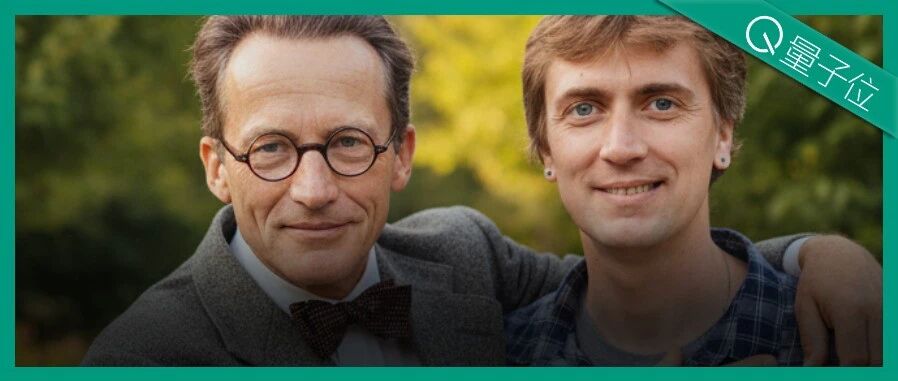
Core Viewpoint - PsiQuantum, a quantum computing startup co-founded by the grandson of physicist Erwin Schrödinger, has raised $1 billion in a single funding round, setting a record for quantum computing startups. This funding aims to help the company build a million-qubit quantum computer by 2028, surpassing competitors like Google and IBM [10][11][12]. Company Overview - PsiQuantum was founded in 2016 with the goal of creating the first usable quantum computer. Initially based in the UK, the company relocated to Silicon Valley to better access funding [17][18]. - The company has established partnerships with major semiconductor manufacturers and has developed a new technology called Fusion-Based Quantum Computing (FBQC), which has been published in a leading scientific journal [21][22][24]. Funding and Growth - The recent $1 billion funding round was led by BlackRock, Temasek, and Baillie Gifford, marking a significant milestone in the quantum computing sector [10]. - PsiQuantum has secured various contracts, including a $22.5 million deal with the U.S. Air Force Research Laboratory and a $619 million order from the Australian government for a utility-scale quantum computer [27][29]. Technical Innovations - Unlike most quantum computers that use electrons or atoms, PsiQuantum's qubits are based on photons, allowing for easier integration with existing semiconductor manufacturing processes and operation at room temperature [32][33]. - The company has introduced the Omega chip set, designed for practical quantum computing, which includes components necessary for building a million-qubit quantum computer [36][38]. Leadership and Expertise - The founding team of PsiQuantum includes experts with strong academic backgrounds in quantum physics, such as CEO Jeremy O'Brien and CTO Mark Thompson, who have extensive experience in the field [43][44][55]. - The team is driven by a sense of social responsibility to bring quantum technology to fruition, reflecting their commitment to advancing the field [51][52].
103岁杨振宁逝世:要做好物理,是要有品位和风格的
第一财经· 2025-10-18 13:26
Core Viewpoint - The article commemorates the life and contributions of Yang Zhenning, a renowned physicist and Nobel laureate, highlighting his impact on science and education in China, as well as his personal philosophy and dedication to his homeland [3][4][12]. Group 1: Life and Achievements - Yang Zhenning was born on October 1, 1922, in Hefei, Anhui, and showed exceptional mathematical talent from a young age, influenced by his father's academic background [5][6]. - He studied at National Southwestern Associated University during a tumultuous period, where he developed a deep appreciation for the works of prominent physicists like Einstein and Fermi [7]. - Yang Zhenning achieved significant academic milestones in the United States, including the development of the Yang-Mills theory in 1954 and the discovery of parity violation in 1956, which established him as a leading physicist [7][9]. Group 2: Contributions to China - After winning the Nobel Prize, Yang Zhenning returned to China in 1971, becoming a key figure in fostering academic exchanges and rebuilding the scientific community [10][11]. - He played a crucial role in establishing over 60 top physics laboratories in China, significantly enhancing the country's research capabilities and nurturing numerous scientific talents [12]. - Yang Zhenning's philanthropic efforts included founding the "Science Exploration Award" and supporting Chinese scholars to study abroad, demonstrating his commitment to advancing science in China [11][12]. Group 3: Personal Philosophy and Legacy - Yang Zhenning emphasized the importance of character and style in scientific work, believing that a scientist's personal qualities significantly influence their contributions [13][14]. - He maintained a rigorous work ethic well into his later years, dedicating time to teaching and research in fields like high-temperature superconductivity and quantum computing [14][16]. - His reflections on life and science reveal a deep appreciation for the mysteries of the universe and a humble acknowledgment of humanity's place within it [16].

告别杨振宁:我一生最大的贡献,是增加了中国人的自信心
Hu Xiu· 2025-10-18 05:05
Core Viewpoint - The article commemorates the life and achievements of renowned physicist Yang Chen-Ning, highlighting his contributions to physics, his role in enhancing Chinese national pride, and his dedication to education and scientific development in China [1][31]. Group 1: Early Life and Education - Yang Chen-Ning was born in 1922 in Hefei, Anhui, and moved to Tsinghua University at the age of 7, where he developed a strong foundation in science [1][4]. - He attended Southwest Associated University, where he initially enrolled in the chemistry department but was encouraged to switch to physics, leading to significant academic growth [8][9]. Group 2: Scientific Contributions - In 1956, Yang and Li Zhengdao proposed the theory of "parity violation in weak interactions," which was later confirmed experimentally, fundamentally changing the understanding of particle physics [16][17][26]. - Yang received the Nobel Prize in Physics in 1957 at the age of 35, becoming the first Chinese laureate in this field, which served as a source of national pride for China [1][17][26]. Group 3: Personal Philosophy and Legacy - Yang emphasized that his most significant contribution was helping to change the mindset of Chinese people regarding their capabilities in science [18][31]. - He returned to China in 1971 and became a vital bridge between China and the United States, promoting scientific collaboration and education [23][24]. Group 4: Later Life and Reflections - Yang published works reflecting on his life and the progress of China, expressing hope for the future and the importance of scientific advancement [28][30]. - He remained active in academia and continued to inspire students and young scientists until his passing in 2025 at the age of 103 [1][31].
【史海回眸】诞生百年,“叛逆”理论在争议中改变世界
Huan Qiu Shi Bao· 2025-10-16 22:56
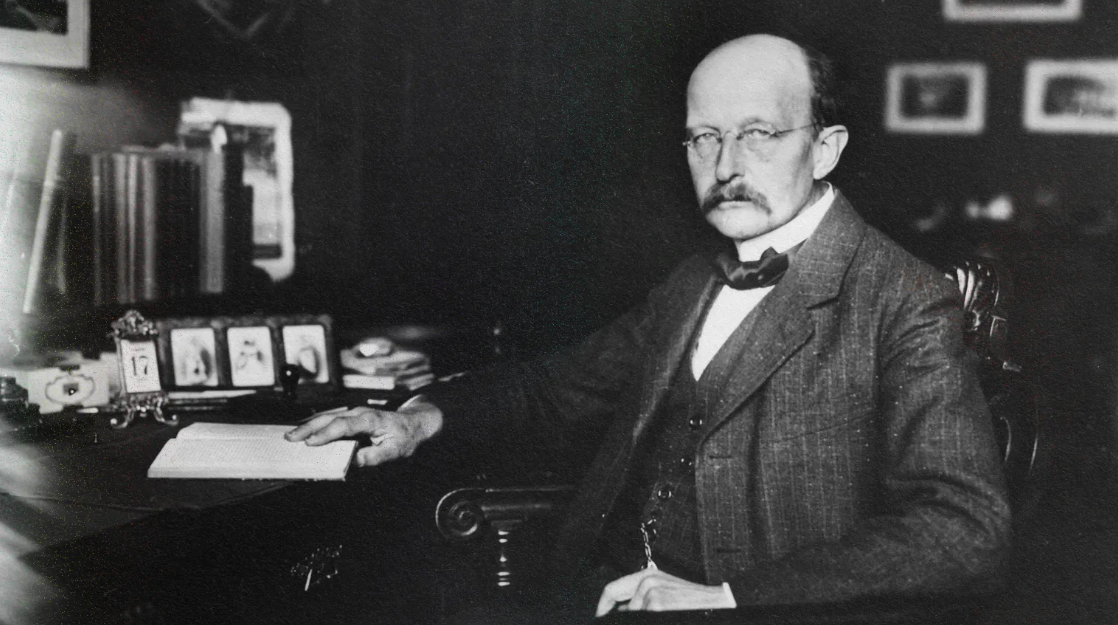
Core Insights - The 2025 Nobel Prize in Physics was awarded to quantum physicists John Clarke, Michel H. Devoret, and John M. Martinis for their discoveries in macroscopic quantum mechanics, marking the centenary of quantum mechanics' inception [1] Historical Context - Quantum theory was proposed by Max Planck in 1900, laying the foundation for quantum mechanics amidst skepticism from established scientists like Einstein [1][6] - The blackbody radiation problem highlighted the inadequacies of classical physics, leading to the development of quantum theory as a revolutionary approach to understanding energy quantization [2][3][4] Key Developments in Quantum Mechanics - Planck's introduction of the quantum concept, which posited that energy is quantized, created significant challenges for classical physics, which viewed energy as continuous [4][6] - Albert Einstein's work on the photoelectric effect in 1905 further advanced quantum theory, proposing the existence of light quanta (photons) and challenging classical interpretations [7][8][9] Impact on Technology and Industry - Quantum mechanics has been foundational in the development of modern technologies, including semiconductors, quantum computing, and quantum communication [11][12] - The invention of the transistor in 1947, derived from quantum mechanics principles, marked a pivotal shift from the electrical age to the information age, enabling advancements in computing and communication technologies [11][12]
诺奖燃爆激情,量子计算商业化的资本萌动
2 1 Shi Ji Jing Ji Bao Dao· 2025-10-14 11:52
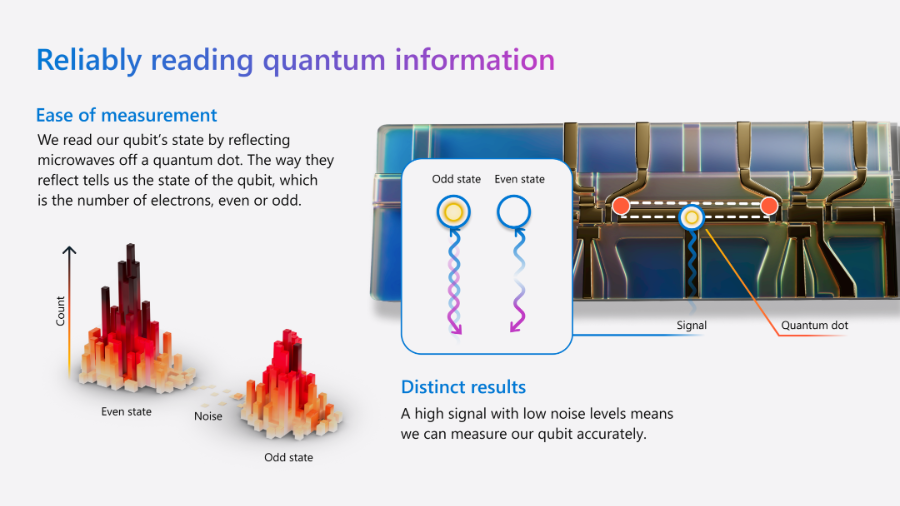
Group 1: Nobel Prize in Physics - The Nobel Prize in Physics was awarded to John Clarke, Michel H. Devoret, and John M. Martinis for their discovery of "macroscopic quantum tunneling and energy quantization in circuits" [1] - This achievement opens the door to studying quantum mechanics on a larger scale, providing new possibilities for experimental research in the quantum realm [2] Group 2: Quantum Computing Breakthroughs - The core device used by the laureates is the Josephson junction, which allows for the observation of macroscopic quantum states and their behavior governed by quantum mechanics [2] - Quantum computing has gained significant attention, with the potential to revolutionize various fields, including communication, finance, and artificial intelligence [6] Group 3: Market Dynamics and Investment Trends - The quantum computing sector is currently in a high-investment, long-cycle phase, with significant capital inflow expected, potentially reaching $45 billion in public investment by 2025 [14] - Despite the excitement, many quantum computing companies remain unprofitable, with IonQ's projected sales for 2024 being only $43.1 million [14] - The stock prices of quantum computing companies have seen dramatic increases, with Quantum Computing's stock rising over 304% from March to July [15] Group 4: Challenges in Quantum Computing Commercialization - Quantum computing faces several challenges in scaling and commercializing technology, including maintaining qubit stability and developing practical applications [7] - The industry is characterized by a variety of competing technical routes, including superconducting, ion trap, and topological quantum computing [8][9] - The uncertainty in technology direction and business models continues to pose risks, but there is a growing interest and investment in the sector [14][17]

全球首款四通道超低噪声半导体“单光子探测器”量产
Shang Hai Zheng Quan Bao· 2025-10-13 03:51
Core Viewpoint - The world's first four-channel ultra-low noise semiconductor single-photon detector has been mass-produced in Hefei, marking a significant advancement in quantum information technology and positioning China as a leader in this field [1][3][6]. Group 1: Product Development - The single-photon detector is likened to an "eye" with extraordinary vision, capable of accurately capturing and identifying individual photons, essential for quantum key distribution, fluorescence lifetime imaging, and laser radar systems [1][3]. - The device has set world records in detection efficiency, dark noise levels, and integration, indicating a leap in China's single-photon detection technology [3][6]. - The development team, including the leading quantum technology company GuoDun Quantum, overcame significant technical challenges over three years, achieving a minimum operating temperature of -120°C and reducing dark noise levels by approximately 90% to about 100Hz [4][5]. Group 2: Technical Innovations - The innovative four-channel integrated architecture allows the new detector to be one-ninth the size of international single-channel products, enabling complex detection tasks previously requiring multiple devices to be performed by a single unit [5][6]. - The maximum detection efficiency has been increased from 25% to 35%, enhancing sensitivity to extremely weak light [5]. Group 3: Market Impact and Future Prospects - The new product has already been adopted by top domestic research institutions and is ready for mass production and delivery [6]. - GuoDun Quantum plans to continue developing products along the lines of miniaturization, chip integration, and scalability for applications in next-generation quantum communication networks, high-precision laser radar, and deep space exploration [6]. - Following the announcement of the 2025 Nobel Prize in Physics for contributions to quantum mechanics, quantum technology stocks have seen significant market activity, with GuoDun Quantum's shares rising by as much as 17.91% [7][8].


全球首款!量产
Shang Hai Zheng Quan Bao· 2025-10-12 15:08
Core Viewpoint - The world's first four-channel ultra-low noise semiconductor single-photon detector has been mass-produced in Hefei, marking a significant advancement in quantum information technology and positioning China as a leader in this field [1][3]. Group 1: Product Development and Features - The single-photon detector is likened to an "eye" with extraordinary vision, capable of accurately capturing and identifying individual photons, essential for quantum key distribution, fluorescence lifetime imaging, and laser radar systems [1]. - The device has set world records in detection efficiency, dark noise levels, and integration, indicating a leap in China's single-photon detection technology [3]. - The development team, including the leading quantum technology company Guoshield Quantum, overcame significant technical challenges, achieving a minimum operating temperature of -120°C and reducing dark noise levels by approximately 90% to about 100Hz [5][6]. Group 2: Market Implications and Future Applications - The new single-photon detector is already serving top domestic research institutions and has the capability for mass production and delivery [7]. - Guoshield Quantum plans to continue developing products along the lines of miniaturization, chip integration, and high integration for applications in next-generation quantum communication networks, high-precision laser radar, and deep space exploration [7]. - Following the announcement of the Nobel Prize in Physics for quantum mechanics, quantum technology stocks, including Guoshield Quantum, saw significant market activity, with Guoshield Quantum's stock rising by as much as 17.91% [10].

宇宙中有黑洞,还有白洞吗?
Ren Min Ri Bao· 2025-10-12 10:02
Core Concept - The article discusses the theoretical concept of white holes, which are the opposite of black holes, and explores their potential existence and implications in the universe [1][2][5]. Group 1: Black Holes - Black holes are formed when a massive star collapses within a critical radius, creating a region from which nothing, not even light, can escape [3]. - The existence of black holes was once doubted, but observational evidence since 1971 has confirmed their presence in the universe [3][4]. - The first image of a supermassive black hole was released in 2019, providing visual evidence of their existence [3]. Group 2: White Holes - White holes theoretically expel matter and energy, preventing anything from entering, and are mathematically related to black holes, differing only in the direction of time [3][4]. - There is currently no observational evidence for the existence of white holes, and some scientists question their formation mechanisms [5]. - Some theories suggest that white holes could explain certain cosmic phenomena, such as the energy output of quasars or the origin of the universe itself [5]. Group 3: Theoretical Implications - Theories propose that black holes and white holes may be connected by wormholes, allowing for the possibility of interstellar travel [4]. - A new hypothesis suggests that when matter is compressed in a black hole, it could undergo a quantum rebound, potentially transforming into a white hole [6]. - If this theory holds true, every black hole in the universe could eventually become a white hole [6]. Group 4: Future Prospects - There is hope that white holes may one day be discovered, potentially opening a gateway to deeper exploration of the universe [7].
宇宙中有黑洞,还有白洞吗?(唠“科”)
Ren Min Wang· 2025-10-10 22:11
Group 1 - The article discusses the theoretical concept of white holes, which are considered the opposite of black holes, expelling matter and energy instead of absorbing them [2][3]. - Black holes were once doubted in their existence until observational evidence, such as the detection of a black hole in the Cygnus X-1 system in 1971, confirmed their presence [2][3]. - The mathematical relationship between black holes and white holes suggests that they share the same properties, with the only difference being the direction of time [2][3]. Group 2 - There is currently no observational evidence supporting the existence of white holes, and some scientists argue that there is no reasonable mechanism for their formation [4]. - Some theories propose that white holes could explain certain cosmic phenomena, such as the energy output of quasars or even the origin of the universe, but these ideas lack observational support [4]. - A new hypothesis suggests that black holes could transform into white holes through a process of quantum rebound when matter is compressed to its limits, potentially allowing every black hole in the universe to become a white hole in the future [5].