
金融对外开放

Search documents
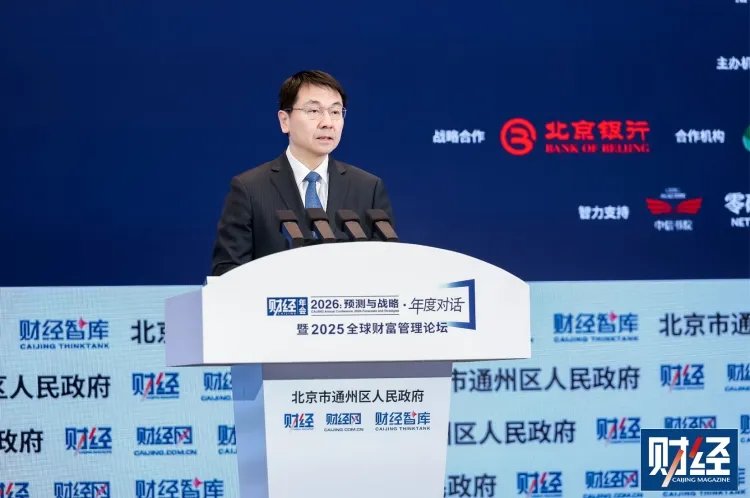
北京市地方金融管理局局长曾林峰:坚持首善标准,扎实推动首都金融各项工作迈上新台阶
Cai Jing Wang· 2025-12-18 05:40
Core Viewpoint - The "2026 Annual Conference: Predictions and Strategies" hosted by Caijing Magazine and supported by the Beijing Municipal Government emphasizes the importance of finance in China's modernization and highlights Beijing's role as the national financial management center, with significant contributions to the national economy [1][6]. Group 1: Financial Development Strategy - Beijing's financial industry accounts for approximately half of the national total assets, with leading indicators in the number of financial institutions, workforce, and insurance metrics [3][7]. - The city aims to enhance the financial sector's stability and quality by developing a high-standard "14th Five-Year Plan" and promoting reforms in key areas, particularly in technology finance services [3][7]. - The focus will be on supporting the development of the Beijing Stock Exchange (BSE) as it marks its fifth anniversary, encouraging participation from professional investors to enhance its role in serving innovative SMEs [3][8]. Group 2: Support for the Real Economy - Financial resources will be directed towards new productive forces and urban governance, with an emphasis on asset allocation across various markets and innovative asset management products [4][8]. - The integration of finance and technology will be prioritized to bolster support for technological and industrial innovation [4][8]. Group 3: International Financial Cooperation - The city will advance financial openness by promoting pilot projects in financial market access and cross-border investment facilitation, while hosting significant events like the Financial Street Forum [4][5]. - There is a call for collaboration with international financial institutions to enhance wealth management services and respond to global market challenges [5][9]. Group 4: Wealth Management Center Development - The urban sub-center is positioned as a global wealth management hub, leveraging its advantages to attract high-quality wealth management institutions and optimize the industry ecosystem [5][9]. - Continuous support will be provided to enhance wealth management products and services, aiming to create a globally influential wealth management center [9].

渣打银行支持财政部在欧洲成功发行40亿欧元债券
Zhong Zheng Wang· 2025-11-19 13:07
Core Viewpoint - Standard Chartered Bank successfully supported the issuance of €4 billion dual-tranche senior bonds by the Ministry of Finance in Luxembourg, reflecting strong international investor confidence in China's economy [1] Group 1: Bond Issuance Details - The bond issuance included €2 billion of 4-year senior bonds and €2 billion of 7-year senior bonds [1] - The 4-year bonds were priced at the mid-swap rate plus 5 basis points, with an issuance yield of 2.375% [1] - The 7-year bonds were priced at the mid-swap rate plus 13 basis points, with an issuance yield of 2.625% [1] Group 2: Investor Participation - The issuance attracted over 1,000 institutional investors, with total orders exceeding €100 billion [1] - A significant portion of the bonds was favored by global investors, including central banks, sovereign wealth funds, and public institutions [1] - Over 65% of the allocation went to regions outside Asia, indicating strong international confidence in China [1] Group 3: Market Implications - The successful issuance provides a benchmark for financing for Chinese issuers and other sovereign issuers in the international capital market [1] - The issuance demonstrates international investors' confidence in the resilience and vitality of the Chinese economy [1] - Standard Chartered Bank aims to continue its role as a "super connector" between China and global markets, supporting the ongoing opening and development of China's financial sector [1]
央行副行长陆磊重磅发言|银行与保险
清华金融评论· 2025-11-04 02:22
Core Viewpoint - The People's Bank of China (PBOC) is committed to implementing appropriate monetary policies to support economic stability and growth, focusing on optimizing credit structure and reducing financing costs for the society [3][5]. Group 1: Monetary Policy Implementation - The PBOC will adjust the intensity and pace of policy support based on domestic and international economic conditions, ensuring effective implementation of various monetary policy tools [3]. - In 2023, the PBOC has adopted a moderately accommodative monetary policy, introducing a series of measures to create a favorable monetary environment for economic development [3]. - Key actions include maintaining reasonable growth in money and credit, promoting a decrease in overall financing costs, and optimizing the structure of credit [3]. Group 2: Support for Hong Kong's Offshore RMB Market - The PBOC has been actively supporting the development of Hong Kong as an international financial center, enhancing the connectivity of financial markets between the mainland and Hong Kong [4]. - Efforts include promoting the construction of the offshore RMB market in Hong Kong and improving cross-border financial services such as account opening and payment systems [4]. - The PBOC aims to deepen cooperation and increase financial support for the Guangdong-Hong Kong-Macao Greater Bay Area, while also enhancing the level of cross-border investment and financing [4]. Group 3: Credit Structure Optimization and Financing Cost Reduction - The PBOC plans to continue using multiple policy tools to ensure that policies are effectively implemented, thereby releasing policy dividends [5]. - Measures include maintaining adequate market liquidity through various operations and lowering policy interest rates by 0.1 percentage points, with structural tools seeing a reduction of 0.25 percentage points [5]. - Specific support includes a 500 billion yuan re-loan for consumption and elderly care, and an additional 300 billion yuan for technological innovation and transformation, alongside the introduction of risk-sharing tools for innovation bonds [5].

国务院最新报告!潘功胜:研究储备新的政策举措
证券时报· 2025-10-28 12:33
Core Viewpoint - The report by the Governor of the People's Bank of China, Pan Gongsheng, emphasizes the implementation of a moderately loose monetary policy to support economic recovery and maintain financial stability in the face of external shocks [2][4]. Monetary Policy and Financial Stability - The effectiveness of existing monetary policies has been highlighted, with a focus on maintaining liquidity and ensuring reasonable growth in financial totals. Social financing costs are at historical lows, which has positively impacted market confidence and expectations [4]. - In response to significant external shocks in April 2025, the financial market has shown resilience, with improved expectations and heightened confidence among market participants [4]. - Key sectors such as technology, green finance, and digital economy have seen substantial loan growth, with increases of 11.8%, 22.9%, and 12.9% respectively, indicating a focus on enhancing financial services in these areas [4]. Financial Openness and International Cooperation - The establishment of a multi-channel, comprehensive cross-border payment system for the renminbi (CIPS) has been noted, with the renminbi becoming the largest currency for cross-border payments in China and ranking third in the IMF's Special Drawing Rights basket [6]. - Financial cooperation with international partners is being prioritized, with initiatives to enhance bilateral and multilateral currency and financial cooperation, including the establishment of a central bank governors' meeting mechanism with Europe [6]. Future Work and Policy Initiatives - The focus will remain on implementing a moderately loose monetary policy while exploring new policy measures to support economic growth and maintain financial stability [8]. - Emphasis will be placed on providing high-quality financial services to the real economy, particularly in areas such as technology innovation, consumption stimulation, and support for small and micro enterprises [8]. - Continuous efforts will be made to deepen structural reforms in the financial supply side and enhance the macro-prudential management framework [8].
国务院最新报告!潘功胜:研究储备新的政策举措
Zheng Quan Shi Bao Wang· 2025-10-28 12:18
Core Viewpoint - The People's Bank of China is committed to implementing a moderately loose monetary policy to support economic recovery and maintain financial stability [1][4]. Monetary Policy Implementation - The effectiveness of existing monetary policies is being enhanced, with a focus on maintaining ample liquidity and low social financing costs, which are crucial for boosting market confidence and responding to external shocks [2][4]. - A new package of monetary policy measures was introduced in May 2025, contributing to a reasonable growth in financial totals [2]. Financial Market Stability - The financial market has withstood significant external shocks since April 2025, with improved expectations and heightened confidence among market participants [2]. - The Central Government has coordinated efforts to maintain market stability through a combination of policy tools, including the role of the Central Huijin Investment Ltd. as a stabilizing fund [2]. Sector-Specific Financial Services - Financial services in key areas such as technology, green finance, and digital economy have seen substantial growth, with loans in these sectors increasing by 11.8%, 22.9%, and 12.9% respectively, significantly outpacing overall loan growth [2]. International Financial Cooperation - The cross-border payment system for the Renminbi (CIPS) has become a primary channel for international transactions, with the Renminbi now the largest currency for cross-border payments in China and among the top three globally for trade financing [3]. - Financial openness is being expanded, with efforts to enhance the international role of the Renminbi and improve mechanisms for foreign investors [3]. Future Policy Directions - The focus will be on maintaining liquidity and aligning monetary supply growth with economic growth and price stability, while also ensuring the stability of the Renminbi exchange rate [4]. - Continued emphasis on high-quality financial services for the real economy, particularly in technology innovation, consumption, and small enterprises [4]. Financial Risk Management - There is a strong commitment to preventing systemic financial risks, with ongoing monitoring and assessment of potential risks in key sectors [5]. - Support for the market-oriented transformation of financing platforms and reforms for small financial institutions is prioritized [5].
国务院关于金融工作情况的报告:人民币成为我国第一大跨境收付币种
Bei Jing Shang Bao· 2025-10-28 12:00
Financial Reform and Opening-up - Financial institution reforms are deepening, with state-owned commercial banks successfully raising 520 billion yuan to supplement capital. Efforts are being made to improve the quality of small and medium-sized financial institutions and accelerate the transformation of non-bank financial institutions like asset management companies [1] - A multi-tiered financial market is developing rapidly, with the implementation of comprehensive capital market reform plans and initiatives to promote high-quality development of public funds. There is a focus on increasing the equity investment ratio and scale of long-term funds like insurance capital, as well as expanding the scale of over-the-counter bond business [1] - A comprehensive cross-border payment system for the renminbi has been established, with the CIPS system playing a key role. The interconnectivity of payment systems between mainland China and Hong Kong, as well as with nine other countries, has been achieved [1] High-level Financial Opening-up - The orderly expansion of high-level financial opening-up is being promoted, with progress in optimizing the layout of renminbi clearing banks and developing the offshore renminbi market. The renminbi has become the largest currency for cross-border payments in China and ranks third in the IMF's Special Drawing Rights basket [2] - Measures have been introduced to facilitate cross-border capital flows and improve the foreign exchange management of cross-border investment and financing. The integration of domestic and foreign currency pools for multinational corporations is being expanded [2] International Financial Cooperation - International financial cooperation is deepening, enhancing the country's financial security capabilities. Financial exchanges and cooperation are being integrated into national diplomacy, with mechanisms established for meetings between central bank governors of China and Europe [3] - The foreign exchange reserve scale is projected to reach 3.3 trillion USD by the end of September 2025, an increase of 72.8 billion USD compared to November 2024 [3]
国务院关于金融工作情况的报告
中国基金报· 2025-10-28 11:49
Core Viewpoint - The report emphasizes the importance of financial work in supporting economic stability and high-quality development, guided by the principles set forth by Xi Jinping and the central leadership [2][3]. Monetary Policy Execution - The financial system has implemented a series of monetary policy measures, including a new round of reductions in reserve requirements and interest rates, aimed at supporting innovation, consumption, small and micro enterprises, and stabilizing foreign trade [4]. - By the end of September 2025, the social financing scale and broad money supply increased by 8.7% and 8.4% year-on-year, respectively, with the average interest rate on new corporate loans at 3.14% [4]. Financial Industry Operation and Regulation - As of September 2025, total assets of financial institutions exceeded 520 trillion yuan, with commercial banks' capital adequacy ratio at 15.36% and non-performing loan ratio at 1.52% [5]. - The Shanghai Composite Index rose by 18.4% from November 2024 to September 2025, reaching a ten-year high of over 3900 points [5][6]. Financial Support for the Real Economy - From November 2024 to September 2025, 98 companies in the A-share market raised 91.8 billion yuan through initial public offerings, with 86% being private enterprises [7]. - Loans for technology, green, inclusive, elderly, and digital economy sectors grew by 11.8%, 22.9%, 11.2%, 58.2%, and 12.9% year-on-year, respectively, significantly outpacing overall loan growth [7]. Financial Reform and Opening Up - The report highlights the deepening reform of financial institutions, including a 520 billion yuan capital increase for state-owned banks and the expansion of the bond market [8][9]. - The RMB has become the largest currency for cross-border payments in China and ranks third in the IMF's Special Drawing Rights basket [9]. Risk Prevention and Mitigation - The report outlines measures to address risks in small and medium-sized financial institutions, with a 71% decrease in the number of financing platforms and a 62% reduction in operating financial debt by September 2025 compared to March 2023 [10]. - The establishment of a macro-prudential and financial stability committee aims to enhance risk monitoring and prevention mechanisms [10]. Future Work Considerations - The focus will be on maintaining a suitable monetary environment to support economic recovery, enhancing financial regulation, and providing high-quality financial services to key sectors [13][14]. - Continued efforts will be made to deepen financial supply-side structural reforms and promote the internationalization of the RMB [15].

金融街论坛再吹政策暖风,金融重磅新政齐发
Di Yi Cai Jing· 2025-10-27 12:54
Group 1: Monetary Policy and Economic Support - The People's Bank of China (PBOC) announced the implementation of a moderately loose monetary policy and the resumption of public market government bond trading to strengthen the coordination between monetary and fiscal policies [1][2] - Recent economic data indicates that while China's economy has been stable overall this year, there has been a notable decline in consumption and investment since the third quarter, highlighting insufficient endogenous growth momentum [1][2] - The PBOC's resumption of government bond trading is seen as a key measure to enhance the financial functions of government bonds and improve the pricing benchmark role of the yield curve [3][4] Group 2: Financial Market Developments - The resumption of government bond trading is expected to stabilize bond market interest rates and reduce financing costs for the real economy [4][5] - The PBOC plans to continue providing liquidity arrangements across short, medium, and long terms while maintaining relatively loose social financing conditions [5] - A series of new policies in the foreign exchange sector are set to be implemented to enhance trade facilitation and promote high-level opening-up [5][6] Group 3: Risk Management and Regulatory Measures - Financial regulatory authorities emphasized the importance of preventing and mitigating financial risks, particularly in light of global economic challenges [7][8] - The PBOC and other regulatory bodies are focusing on a comprehensive risk prevention strategy that includes macro-prudential management and micro-prudential regulation [7][8] - There is a strong regulatory stance on emerging financial areas, particularly concerning the risks associated with virtual currencies and stablecoins [8]

上海市市长龚正会见渣打集团行政总裁温拓思
Zheng Quan Shi Bao Wang· 2025-10-24 14:18
Core Viewpoint - Shanghai is committed to becoming a world-class modern international metropolis, focusing on the "five centers" strategy for economic and social development over the next five years, as outlined in the recent Communist Party meeting [1] Economic Performance - Shanghai's GDP grew by 5.5% year-on-year in the first three quarters, indicating a stable economic foundation and a trend towards high-quality development [1] - There is a continued increase in foreign investment in Shanghai, reflecting confidence among business entities in the city's development [1] Financial Sector Development - Finance is identified as one of Shanghai's most important urban functions, with ongoing efforts to implement high-level financial openness [1] - The city aims to establish itself as a leading international financial center, which requires active participation from international financial institutions [1] Collaboration with Standard Chartered - Standard Chartered Group has a deep-rooted relationship with Shanghai, and the city welcomes the bank to increase its investment and innovate financial services in the region [1] - The city encourages Standard Chartered to enhance financial support for Chinese enterprises going abroad and to participate actively in the upcoming eighth China International Import Expo [1] Business Environment - Shanghai is committed to creating a top-tier business environment to support the growth of international financial institutions [1]
海南:自贸港金融对外开放水平进一步提升
Xin Hua Wang· 2025-10-24 08:51
Core Insights - The Hainan Free Trade Port is deepening cross-border investment and financing reforms, enhancing the level of financial openness [1] Group 1: Cross-Border Financial Activities - The multi-functional free trade account (EF account) in Hainan has facilitated the free flow of cross-border funds, with over 600 EF accounts opened and a transaction volume exceeding 200 billion RMB as of the end of September [1] - The EF accounts have enabled fund transfers with 76 countries and regions [1] Group 2: Pilot Programs and Business Expansion - The high-level opening of cross-border trade and investment pilot programs continues to expand, with 14 banks in the region approved for pilot business as of the end of September [1] - The total amount of pilot business under the current account reached 42.311 billion USD, benefiting 184 quality enterprises, while the capital account pilot business amounted to 2.8 billion USD, benefiting 100 enterprises [1] Group 3: Cross-Border Asset Management - Substantial progress has been made in the pilot work for cross-border asset management, with the implementation guidelines issued in July [1] - Four pilot issuing institutions have had their scales determined, with a total pilot scale application of 5 billion RMB, and two pilot institutions have completed fund transfers for products issued to foreign investors [1]