欧元债券

Search documents
中银香港再度协助印尼政府发行离岸人民币债券
Zhong Guo Xin Wen Wang· 2026-02-27 07:17
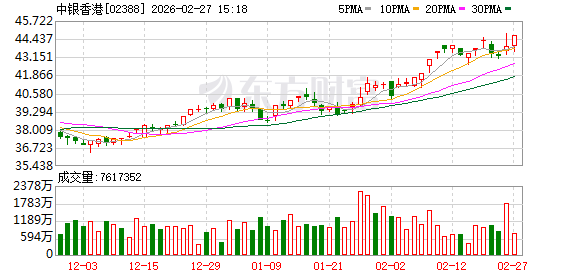
Group 1 - The core viewpoint of the news is that Bank of China (Hong Kong) has been appointed as the joint lead manager and joint bookrunner for the Indonesian government's bond issuance, successfully assisting in the issuance of offshore RMB and Euro dual-currency bonds [2][3] - The total issuance scale is approximately RMB 31.1 billion, including RMB 9.25 billion and EUR 2.7 billion, marking the largest bond issuance in Southeast Asia that the bank has underwritten to date [2] - The bond types include various maturities with pricing rates ranging from 2.45% to MS+195 basis points, and the total order value reached RMB 17.04 billion and EUR 9.48 billion, with order multiples of 1.84 times and 3.51 times respectively [2] Group 2 - The successful dual-currency issuance demonstrates Bank of China (Hong Kong)'s advantages as the Southeast Asia regional headquarters of the Bank of China Group and reflects the trust of the Indonesian government in the bank's cross-currency and cross-market comprehensive service capabilities [3] - The issuance attracted significant attention and active participation from global investors, indicating a high level of recognition of Indonesia's sovereign credit in the international market [3] - Bank of China (Hong Kong) was involved in the entire project execution and settlement arrangements, including organizing issuance documents, sales, pricing, and settlement [3]


每日投行/机构观点梳理(2026-02-26)
Jin Shi Shu Ju· 2026-02-26 10:27
Group 1 - Bank of America predicts gold prices may reach $6,000 per ounce within the next 12 months, while silver prices could exceed $100 per ounce again this year despite current demand concerns from solar panel manufacturers [1] - Citigroup analysts indicate that emerging markets are expected to be the most favored trading markets this year, with major asset management firms investing in emerging market stocks and bonds, betting on strong global economic growth and a weaker dollar [1] - ING suggests that investors looking to avoid volatility in the U.S. stock market due to AI developments may find European government bonds attractive, as they offer relatively stable yields amid rising U.S. market volatility [1] Group 2 - JPMorgan forecasts that the Bank of Thailand will maintain its policy interest rate at 1% until 2027 to preserve policy space amid rising uncertainties, with the Thai economy expected to accelerate further due to political stability post-election [2] - CITIC Securities reports that Zimbabwe's ban on lithium exports is likely to lead to a significant increase in lithium prices, as the country is projected to account for 12% of global lithium resource output by 2026 [3] - Huatai Securities notes that the U.S. designation of phosphate-based agricultural inputs as strategic resources could impact market prices, particularly if demand increases due to supply stability concerns [3] Group 3 - CITIC Securities believes that the non-ferrous metals bull market is far from over, suggesting that investors should hold positions but avoid blindly chasing prices, with opportunities arising during market corrections [4][5] - CICC reports that recent policy adjustments in Shanghai may help stabilize housing prices in key cities, as the supply-demand structure shows positive changes [5][6] - Galaxy Securities indicates that the real estate industry may see overall valuation recovery as housing demand is expected to be released, leading to a healthier market development [6][7]




继续为AI雄心筹资!兜售200亿美元债后,谷歌(GOOGL.US)再发英镑与瑞郎债
Zhi Tong Cai Jing· 2026-02-10 10:37
Group 1: Core Insights - Alphabet's parent company, Google, is issuing bonds denominated in British pounds and Swiss francs, including a rare 100-year bond, following a $20 billion bond issuance in the U.S. [1] - The issuance includes five tranches of bonds in pounds and francs, with maturities ranging from 3 to 32 years for pounds and 3, 6, 10, 15, and 25 years for francs [1][3] - The $20 billion issuance in the U.S. attracted over $100 billion in subscriptions, setting a strong precedent for the current bond offerings [1][2] Group 2: Market Context - The issuance of the 100-year bond is the first by a tech company since Motorola in 1997, highlighting the rarity of such long-term corporate debt [3] - Demand for long-term financing in the UK market is driven by pension funds and insurance companies, making it an attractive venue for issuers [3] - Other tech companies, including Meta and Microsoft, are also planning significant capital expenditures, contributing to a broader trend of increased borrowing in the sector [2] Group 3: Financial Institutions Involved - The bond issuance is being arranged by major banks including Bank of America, Goldman Sachs, and JPMorgan, with Barclays, HSBC, and National Westminster Bank participating in the pound issuance [4] - French bank BNP Paribas and Deutsche Bank are involved in the Swiss franc bond issuance [4]

韩国将2026年外汇稳定债券发行上限提高至50亿美元
Xin Lang Cai Jing· 2025-12-03 00:23
Core Points - The South Korean National Assembly approved an increase in the annual foreign exchange stabilization bond issuance limit to $5 billion for the next year [1] - Initially, the government proposed a limit of $1.4 billion for 2026, while the limit for 2025 was set at $3.5 billion [1] - The South Korean government issued euro, dollar, and samurai bonds this year [1]
对话奥利维尔·布兰查德:“特朗普冲击”和欧洲机遇
Sou Hu Cai Jing· 2025-11-24 15:13
Group 1 - The core viewpoint is that despite the challenges posed by trade tensions, geopolitical conflicts, and high global debt, the global economy, particularly the US economy, has shown resilience and strong growth, aided by the AI investment boom [1][3][12] - Olivier Blanchard notes that the actual disruption caused by US tariff policies has been less severe than expected, primarily manifesting as noise and uncertainty rather than immediate economic chaos [3][7] - The long-term damage from the disregard for traditional trade rules by the Trump administration could lead to a reduction in global trade and a slowdown in long-term growth, despite not causing an immediate recession [4][9] Group 2 - Blanchard emphasizes that the current political climate in the US reflects a lack of responsibility, with a prolonged fiscal deadlock and attempts to undermine the independence of the Federal Reserve, raising concerns among investors [4][21] - The potential for a shift in the international monetary system is highlighted, with expectations that the dollar's dominance will weaken, leading to more transactions being conducted in euros or yuan [25][23] - Europe is seen as having a historic opportunity to provide alternative assets to US Treasuries, contingent on the establishment of a robust euro-denominated bond market [4][23][27] Group 3 - The concept of "voluntary coalitions" is proposed as a way to address global governance challenges, where countries willing to adhere to rational positions can form agreements on specific issues, such as carbon taxes [5][35] - Blanchard suggests that Europe and China must engage in systematic discussions to explore all possible areas of cooperation, despite existing tensions [6][38] - The need for a well-structured euro bond market is emphasized, as it is crucial for enhancing the euro's attractiveness as an international currency [26][27][30]

渣打银行支持财政部在欧洲成功发行40亿欧元债券
Zhong Zheng Wang· 2025-11-19 13:07
Core Viewpoint - Standard Chartered Bank successfully supported the issuance of €4 billion dual-tranche senior bonds by the Ministry of Finance in Luxembourg, reflecting strong international investor confidence in China's economy [1] Group 1: Bond Issuance Details - The bond issuance included €2 billion of 4-year senior bonds and €2 billion of 7-year senior bonds [1] - The 4-year bonds were priced at the mid-swap rate plus 5 basis points, with an issuance yield of 2.375% [1] - The 7-year bonds were priced at the mid-swap rate plus 13 basis points, with an issuance yield of 2.625% [1] Group 2: Investor Participation - The issuance attracted over 1,000 institutional investors, with total orders exceeding €100 billion [1] - A significant portion of the bonds was favored by global investors, including central banks, sovereign wealth funds, and public institutions [1] - Over 65% of the allocation went to regions outside Asia, indicating strong international confidence in China [1] Group 3: Market Implications - The successful issuance provides a benchmark for financing for Chinese issuers and other sovereign issuers in the international capital market [1] - The issuance demonstrates international investors' confidence in the resilience and vitality of the Chinese economy [1] - Standard Chartered Bank aims to continue its role as a "super connector" between China and global markets, supporting the ongoing opening and development of China's financial sector [1]
喀麦隆委托科特迪瓦评级机构布卢姆菲尔德公司进行首次中非法郎主权评级
Shang Wu Bu Wang Zhan· 2025-11-07 16:11
Core Insights - The Cameroonian government has requested a sovereign rating in Central African Francs from the Ivorian rating agency Bloomfield Investment Company, aiming to enhance its credibility in the regional debt market and diversify financing channels [1][1][1] Group 1: Government Intentions - The initiative reflects the government's desire to further engage with regional financial markets by improving the local currency rating, which could attract regional investments and strengthen economic ties with neighboring countries [1][1] - The rating is expected to provide a more accurate representation of the country's economic and financial situation, facilitating better understanding of investment risks in Cameroon [1][1] Group 2: Selection of Rating Agency - Bloomfield was chosen due to its methodology being more aligned with regional characteristics and its experience in multiple Franc zone countries, potentially offering more flexibility compared to foreign agencies [1][1][1] Group 3: Financial Context - This move comes at a critical time for public finances, as Cameroon prepares to repay a €750 million bond issued in 2015, which has a 9.50% interest rate and matures on November 19, 2025 [1][1] - After repaying this significant external debt, the country aims to shift its debt strategy towards local currency financing, alleviating pressure on foreign exchange reserves [1][1] - As of June 30, 2025, Cameroon’s domestic debt (excluding unpaid balances and floating debt) stands at 38,144 billion Central African Francs, accounting for 11.6% of GDP, with over half (55%) of this debt composed of government bonds issued in the Central African Central Bank market [1][1]
告别“免费资金”时代!日企海外借贷狂飙至1320亿美元,创纪录浪潮撼动全球市场
智通财经网· 2025-11-04 02:53
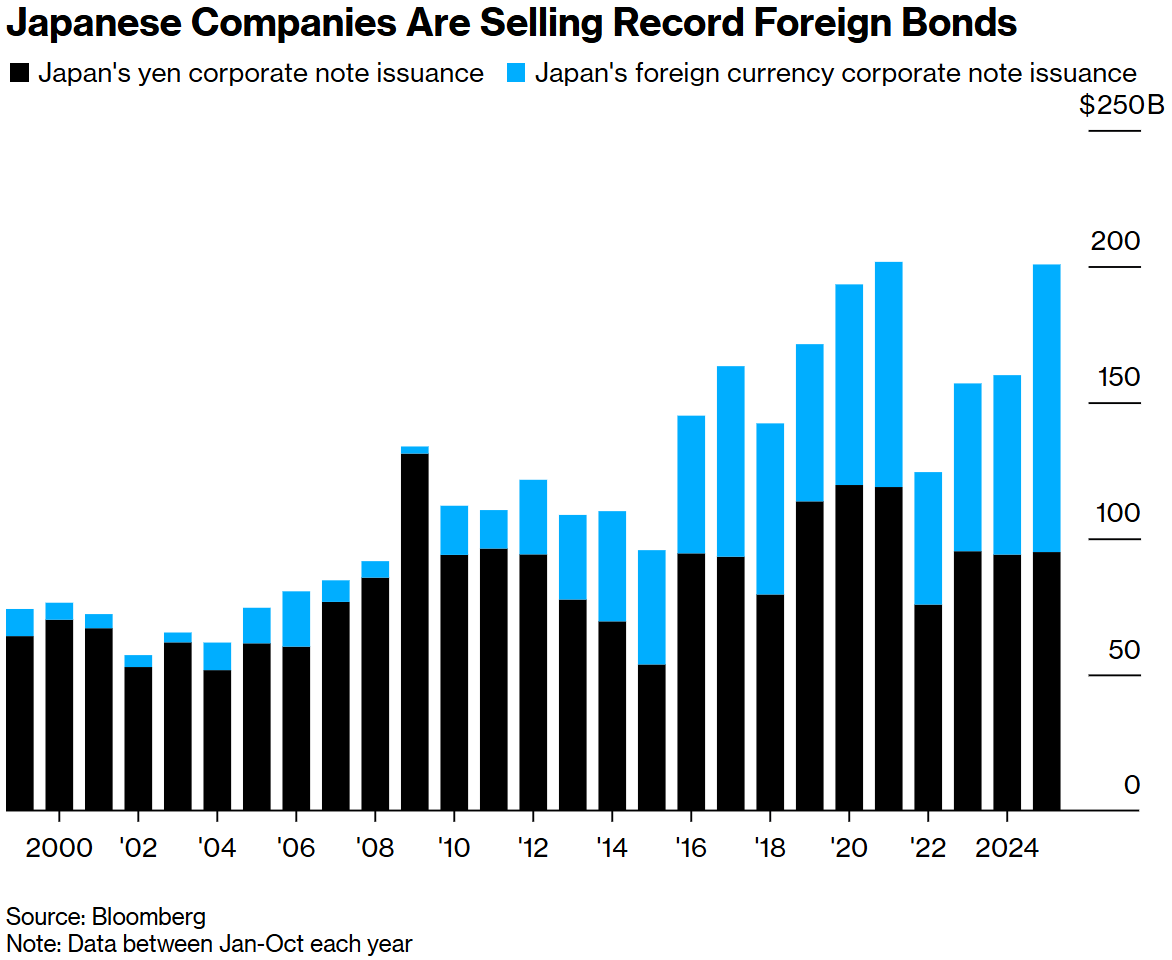
Core Insights - The era of "free money" in Japan is ending, leading to a surge in overseas borrowing by Japanese companies, reaching a record level of $132 billion in 2025, a 56% increase year-on-year [1] - Japanese companies are increasingly favoring foreign currency bonds over yen bonds, with annual overseas bond issuance expected to surpass yen bonds for the first time in history [1] - The revival of Japanese companies is reshaping global financial markets, with significant increases in spending and acquisitions, making Japan one of the most active players in global transactions this year [1] Group 1: Overseas Borrowing Trends - Japanese companies have raised $132 billion through foreign currency bonds and loans in 2025, marking a 56% increase compared to the previous year [1] - The cost of borrowing in yen has risen to its highest level since the late 2000s, making overseas financing more attractive [4] - Japan has become the largest source of dollar bonds in the Asia-Pacific region, a position previously held by China [4] Group 2: Mergers and Acquisitions - The total value of mergers and acquisitions by Japanese companies has increased by 129% in 2025, reaching $262 billion, with significant investments in AI and privatizations [7] - Many of these acquisitions are driven by the need for growth outside Japan due to a declining population [7] - Japanese companies are now leading the issuance of foreign currency junk bonds, with approximately $14 billion issued in 2025 [7] Group 3: Investment Grade Bonds - Over 70% of Japan's overseas bond issuances this year have an investment grade rating of A or higher, improving the average rating of Asian dollar bonds [10] - The issuance of investment-grade bonds is transforming the perception of Asian dollar bonds from emerging market investments to a more stable asset class [10] - NTT Inc. issued $17.7 billion in bonds, the largest global issuance by an Asian company, to fund its AI division's privatization [11] Group 4: Market Dynamics - Japanese borrowers accounted for approximately 28% of the $386 billion in dollar and euro bonds issued in the Asia-Pacific region this year, a record high [14] - Investors are increasingly favoring Japanese foreign currency bonds over yen bonds due to better performance, with yen corporate bonds down 0.5% this year [14] - The diversity of issuers in Japan is attracting attention from investors in the Asia-Pacific region [14]
每日投行/机构观点梳理(2025-10-24)
Jin Shi Shu Ju· 2025-10-24 15:53
Group 1: Gold Market Outlook - Morgan Stanley predicts that the average gold price will exceed $5,000 per ounce by Q4 2026, with a long-term target of $6,000 per ounce by 2028, based on expected investor demand and central bank purchases [1] - The analysis highlights that the current market consolidation is a healthy phenomenon, reflecting a supply-demand imbalance with high buyer interest and limited sellers [1] - The report emphasizes that gold remains a strong investment amid concerns over inflation, currency devaluation, and the Federal Reserve's interest rate cuts [1] Group 2: U.S. Economic Indicators - Barclays anticipates that the upcoming U.S. CPI data will need to be significantly higher than expected to alter the market's view on the Federal Reserve's interest rate cuts [2] - Morgan Stanley and Bank of America expect the Federal Reserve to end its balance sheet reduction earlier than previously forecasted due to rising borrowing costs in the dollar financing market [3] - The market is divided on when the Fed will conclude its quantitative tightening, with some institutions predicting an end in October while others expect a later conclusion [3] Group 3: Risk Assets and Inflation - State Street Global Advisors warns that investor optimism towards high-risk assets may be excessive, with expectations of rising inflation impacting the Federal Reserve's decisions [4] - Dutch International Group notes that the credit spread for U.S. corporate bonds is tightening, making them less attractive compared to euro-denominated bonds, amid rising risks [5] - Citigroup highlights that the recent rise in oil prices due to U.S. sanctions on Russia provides a hedging opportunity for producers, although geopolitical premiums may not last [6] Group 4: Japanese Economic Policy - Morgan Stanley suggests that the market's cooling expectations for a Bank of Japan rate hike this month may be overstated, indicating a potential rebound for the yen [7] - Dutch International Group points out that rising inflation in Japan could pave the way for a rate hike by the Bank of Japan in December, with consumer price inflation accelerating to 2.9% in September [8] Group 5: Cryptocurrency and AI Transition - Guojin Securities reports that overseas cryptocurrency mining companies are transitioning to AI data centers, leveraging low electricity costs and approved power quotas [8] - The report suggests focusing on companies with clear AI expansion plans and undervalued market positions during this transition [8] Group 6: U.S. Tariff and Inflation Outlook - CITIC Securities predicts that the U.S. Supreme Court will expedite the ruling on Trump's tariff legality, with potential implications for U.S.-China negotiations [9] - Minsheng Securities warns that rising core inflation in the U.S. could lead to a more cautious approach from the Federal Reserve regarding interest rate cuts, with inflation pressures expected to increase in Q4 [10]

美元布局紧急生变!中国拒绝“援助”买家离场,45万亿资产陷困局
Sou Hu Cai Jing· 2025-10-10 08:51
Group 1 - The U.S. national debt has surged from $16 trillion in 2013 to over $32 trillion, with interest payments projected to reach nearly $1 trillion in 2024, indicating unsustainable fiscal policies [2][4] - The debt-to-GDP ratio is approaching 130%, which is considered high among developed countries, raising concerns among economists about long-term sustainability [4] - Foreign ownership of U.S. debt has decreased, with China reducing its holdings to $730.7 billion, the lowest since 2008, as geopolitical tensions and currency diversification strategies take precedence [4][6] Group 2 - The overall foreign ownership of U.S. debt has dropped from a peak of 30% to around 23%, with significant reductions from various foreign investors, including the Cayman Islands and European tax havens [7] - U.S. domestic institutions hold over $20 trillion in debt, but this internal transfer does not alleviate the burden of interest payments, which are projected to reach $230.6 billion in 2024 [7][9] - The U.S. housing market is under pressure, with a total housing market value exceeding $55.1 trillion, but new home sales are declining due to high mortgage rates, which remain elevated compared to pre-pandemic levels [9][11] Group 3 - The collapse of Silicon Valley Bank (SVB) in March 2023 highlighted vulnerabilities in the banking system, leading to tighter credit conditions and impacting the real estate sector [11][13] - Economic indicators show a mixed picture for the U.S., with a GDP contraction of 0.5% in Q1 2025, followed by a rebound of 3.8% in Q2, but persistent inflation and high unemployment rates remain concerns [13][15] - The IMF projects global growth at 2.8%, with emerging markets, particularly China, expected to drive a significant portion of this growth, while the U.S. faces challenges from high debt and low growth [15][17] Group 4 - The trend of decoupling from the U.S. dollar is evident, with countries reassessing their investments in U.S. assets, leading to a potential restructuring of global supply chains [17] - The overall investment climate in the U.S. is weakening, with forecasts indicating that the economic recovery may not be sustainable, and inflation pressures continue to pose risks [17]