金融风险防范

Search documents
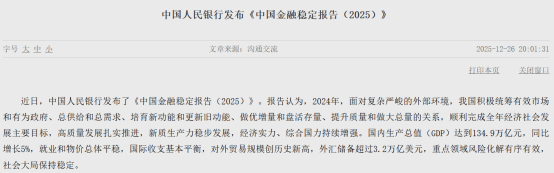
央行报告:推动利率“形得成”“调得了”
Sou Hu Cai Jing· 2025-12-27 03:51
Core Insights - The People's Bank of China (PBOC) aims to deepen interest rate marketization reforms to enhance the self-discipline mechanism of interest rates, promoting both the formation and adjustment of rates [1] - The overall operation of China's financial industry is stable, with financial risks being generally controllable and key operational indicators within reasonable ranges [1][2] Financial Institution Ratings - In the first half of 2025, the PBOC conducted ratings for 3,529 banking institutions, including 21 national banks and 3,508 local banks, indicating a robust overall performance of these institutions [1] - Ratings are categorized into 11 levels, with levels 1 to 7 (green and yellow zones) representing safe institutions, while levels 8 to D (red zone) indicate higher risk [1][2] - A total of 3,217 banks received ratings from 1 to 7, accounting for 98% of the total assets of the rated banks, while 312 banks fell into the red zone with a total asset scale of 9.4 trillion yuan, representing 2.1% [2] Market and Risk Management - The report emphasizes the importance of market forces in exchange rate formation, advocating for exchange rate flexibility and the prevention of excessive fluctuations [2] - The PBOC plans to enhance macro-prudential management systems to monitor and assess systemic financial risks, focusing on key areas to mitigate risks effectively [2] - The report highlights the commitment to support major national strategies and economic development through the promotion of various financial sectors, including technology finance, green finance, inclusive finance, pension finance, and digital finance [2]
央行最新报告:金融风险整体收敛总体可控
Zheng Quan Shi Bao· 2025-12-26 23:13
Group 1 - The core viewpoint of the report is that China's financial system is currently stable, with overall financial risks being controllable and financial institutions operating within reasonable parameters [1] - The People's Bank of China conducted a rating of 3,529 banking institutions, including 21 national banks and 3,508 local banks, indicating that the overall operation of these banks is sound [1] - The rating results categorize banks into 11 levels, with 3,217 banks rated between levels 1 to 7, representing 98% of total assets, while 312 banks fall into the "red zone," accounting for 2.1% of total assets [1] Group 2 - The report emphasizes the importance of enhancing collaboration among regulatory bodies to improve the investment environment for long-term funds, aiming to increase the scale and proportion of long-term capital invested in A-shares [2] - Looking ahead, the financial system will implement more proactive macro policies and strengthen counter-cyclical adjustments to prevent and mitigate financial risks in key areas, ensuring a stable financial environment [2] - The report highlights the commitment to resolving debt risks associated with financing platforms and managing risks in small financial institutions and the real estate sector [2]
显著提高中长期资金投资A股的规模和比例!央行最新发布→
Zheng Quan Shi Bao· 2025-12-26 15:36
Core Insights - The People's Bank of China released the "China Financial Stability Report (2025)", assessing the robustness of the financial system, indicating overall stability and controllable risks in the financial sector [1] Group 1: Financial System Assessment - The financial industry in China is operating steadily, with overall financial risks receding and remaining controllable [1][2] - In the first half of 2025, the central bank rated 3,529 banking institutions, showing that the overall operation of banks is stable [3] - The rating results categorized banks into 11 levels, with 3,217 banks rated between levels 1-7, representing 98% of total assets [3] Group 2: Bank Ratings Breakdown - Among the rated banks, 1,831 are in the "green zone" (levels 1-5), holding assets of 421 trillion yuan, accounting for 94.6% of total assets [3] - National banks performed better, with 71% of their assets rated in the "green zone", while local banks showed some risk, particularly among rural financial institutions [4] Group 3: Investment Value and Market Dynamics - The report highlights the financial system's role in enhancing the investment value of listed companies and promoting long-term capital inflow into the market [5] - The China Securities Regulatory Commission is working on policies to support long-term investments and improve the quality of listed companies [5] Group 4: Future Outlook and Risk Management - The report emphasizes the need for proactive macro policies to prevent and resolve key financial risks, ensuring a stable financial environment [7][8] - It outlines plans to strengthen macro-prudential management and address risks in specific sectors, including real estate and small financial institutions [8]

黄金现在还能买吗?专家解读→
Xin Lang Cai Jing· 2025-12-26 14:36
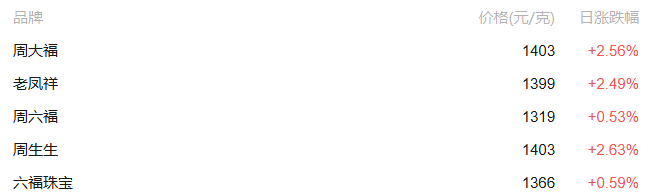
Group 1 - The core viewpoint of the articles emphasizes the increasing volatility of gold prices, particularly as they are expected to remain high in 2025, influenced by various factors including geopolitical tensions and monetary policy [1][2][3] - The recent rise in international gold prices has led to a significant increase in gold jewelry prices, with some brands exceeding 1400 yuan per gram for pure gold [1] - Central banks around the world are continuing to purchase gold, which is expected to strengthen supply and demand dynamics, potentially driving prices higher [1][2] Group 2 - The World Gold Council's report highlights that geopolitical and economic uncertainties, along with a weakening dollar, are key drivers of the current gold price surge [2] - The Shanghai Gold Exchange has issued a notice to enhance market risk control due to the recent volatility in precious metal prices, urging members to improve risk awareness and maintain market stability [2] - Looking ahead to 2026, the gold market is anticipated to enter a new phase characterized by a dynamic balance of multiple forces, with ongoing geopolitical uncertainties and structural demand from investors and central banks likely to support gold prices [3]

央行发布《中国金融稳定报告》:防范化解重点领域金融风险
Qi Huo Ri Bao· 2025-12-26 13:49
Core Insights - The People's Bank of China released the "China Financial Stability Report (2025)", indicating that the financial sector is operating steadily with overall risks being controllable [1] - The report highlights the complex changes in the development environment during the 14th Five-Year Plan period, emphasizing both opportunities and challenges [1] Group 1 - The financial system will adhere to a stable yet progressive work guideline, implementing proactive macro policies and enhancing counter-cyclical adjustments to mitigate key risks [2] - The report emphasizes the importance of promoting stable economic growth and reasonable price recovery as key considerations for monetary policy, while maintaining ample liquidity [2] - It stresses the need for a comprehensive macro-prudential management system to monitor and assess systemic financial risks [2] Group 2 - The report advocates for the development of various financial sectors, including technology finance, green finance, inclusive finance, pension finance, and digital finance, to support national strategies and address weak areas [2] - It underscores the importance of maintaining the stability of the RMB exchange rate at a reasonable equilibrium level while preventing excessive fluctuations [2] - The report calls for proactive measures to resolve debt risks associated with financing platforms and to manage risks in small financial institutions and the real estate sector [2]
央行报告:金融系统将实施更加积极有为的宏观政策
Sou Hu Cai Jing· 2025-12-26 13:28
Group 1 - The People's Bank of China (PBOC) emphasizes the complex and profound changes in the development environment during the 14th Five-Year Plan period, highlighting a coexistence of strategic opportunities and risks [1] - The report asserts that China's economic foundation remains stable, with numerous advantages, strong resilience, and significant potential, indicating that the long-term positive support conditions and trends have not changed [1] - The financial system will implement the spirit of the 20th National Congress and subsequent plenary sessions, focusing on both domestic and international situations, and adhering to the new development philosophy [1] Group 2 - The PBOC aims to maintain the flexibility of the RMB exchange rate while preventing excessive fluctuations, ensuring basic stability at a reasonable equilibrium level [2] - The report outlines the development of five key areas in finance: technology finance, green finance, inclusive finance, pension finance, and digital finance, to support major national strategies and address weak links in economic and social development [2] - A comprehensive macro-prudential management system will be established to enhance monitoring and assessment of systemic financial risks, with a focus on preventing and resolving risks in key areas [2]
中国人民银行:防范化解重点领域金融风险,做好房地产金融宏观审慎管理
Hua Er Jie Jian Wen· 2025-12-26 12:04
Core Viewpoint - The financial system will implement macroeconomic policies to ensure a stable economic environment, focusing on risk prevention and supporting key areas of development [1] Group 1: Macroeconomic Policies - The financial system will adhere to the principles set by the Central Economic Work Conference and the Central Financial Work Conference, aiming for a comprehensive implementation of new development concepts [1] - There will be a focus on maintaining ample liquidity, aligning social financing scale and money supply growth with economic growth and price level expectations [1] - The goal is to create a favorable monetary and financial environment while promoting a decrease in the overall cost of social financing [1] Group 2: Currency and Exchange Rate Management - The market will play a decisive role in the formation of exchange rates, with an emphasis on maintaining exchange rate flexibility and guiding expectations to prevent excessive fluctuations [1] - The aim is to keep the RMB exchange rate stable at a reasonable and balanced level [1] Group 3: Financial Development and Risk Management - The financial system will focus on developing five key areas: technology finance, green finance, inclusive finance, pension finance, and digital finance, to support national strategies and address weak links in economic and social development [1] - A comprehensive macro-prudential management system will be established to enhance monitoring and assessment of systemic financial risks [1] - There will be a commitment to prevent and resolve financial risks in key areas, including supporting the resolution of financing platform debt risks and managing risks in small and medium-sized financial institutions [1]
金价爆了!银行再出手
Shen Zhen Shang Bao· 2025-12-23 09:50
Core Viewpoint - The gold market is experiencing a significant surge, with prices reaching new highs, prompting banks to tighten their gold investment policies and shift focus from speculative trading to more stable investment strategies [2][4][13]. Group 1: Gold Price Trends - International gold prices have continued to rise, with the price of gold in RMB surpassing 1400 yuan per gram for the first time on December 23 [2]. - On December 23, the London spot gold price approached $4490 per ounce, breaking the previous high of $4381 per ounce at the end of October [4]. - The Shanghai Gold Exchange's spot gold price reached 1014 yuan per gram, while the main futures contract on the Shanghai Futures Exchange hit 1018 yuan per gram, both marking new highs [4]. Group 2: Bank Policy Adjustments - Banks are implementing measures such as closing "zombie accounts," halting speculative business, and raising margin requirements to tighten access to gold investments [4][10]. - Hengfeng Bank has stopped selling its branded gold bars and closed trading access for related accounts, while other banks like ICBC and China Bank have also announced similar closures for accounts with no holdings [5][7][9]. - Banks are shifting from high-risk speculative products to more stable offerings, with a focus on protecting investors and managing financial risks [9][10]. Group 3: Investment Strategy Shift - The tightening of gold investment policies is seen as a move to encourage investors to transition from short-term speculation to long-term asset allocation [10][12]. - Banks are raising the entry barriers for gold ETFs, with high minimum asset requirements for investors, effectively discouraging those with lower risk tolerance [12]. - The overall strategy reflects a response to the volatile market conditions and aims to promote a more rational approach to gold investment, emphasizing value over speculation [13][14].
深圳金融工作会释放多重信号:防风险、强监管、促高质量发展
Nan Fang Du Shi Bao· 2025-12-18 05:28
会议指出,此次中央经济工作会议作为党的二十届四中全会后党中央召开的重要会议,对实现"十五 五"良好开局具有重大而深远的意义。习近平总书记在中央经济工作会议上的重要讲话举旗定向、统揽 全局,思想深邃、内涵丰富,全面总结今年和"十四五"时期经济工作,深刻分析当前国内外形势,深化 提出"五个必须"的规律性认识,系统部署明年经济工作的总体要求、政策取向和重点任务,为做好明年 和今后一个时期的经济工作指明了方向、提供了根本遵循。 会议强调,2026年是"十五五"开局之年,做好深圳金融工作责任重大。全市金融系统需统一思想行动, 牢牢坚持防风险、强监管、促高质量发展工作主线,全面加强金融系统党的建设,全力推动建设更具全 球影响力的产业金融中心各项工作,具体落实五大重点任务: 一是坚定扛起"经济大市挑大梁"的深圳金融责任担当,锚定金融业增加值年度任务目标,盯紧金融业关 键指标、重点行业、核心机构,全力以赴做好年底前金融工作,全力争取更高目标,为全市发展大局提 供更有力支撑。 据深圳市委金融办发布消息,12月15日,该办召开全体大会,深入学习贯彻习近平总书记在中央经济工 作会议上的重要讲话和中央经济工作会议精神,传达学习全国金 ...
深圳市委金融办:全力推动建设更具全球影响力的产业金融中心
2 1 Shi Ji Jing Ji Bao Dao· 2025-12-16 04:15
Core Viewpoint - The Shenzhen Municipal Financial Office emphasizes the importance of financial work in 2026, the beginning of the "14th Five-Year Plan," focusing on risk prevention and the establishment of a more globally influential industrial financial center [2][4]. Group 1: Financial Risk Management - The meeting highlighted the need to effectively prevent and resolve various financial risks, controlling new risks and managing existing ones to avoid financial crises [2][4]. - A tailored approach for small and medium-sized financial institutions will be implemented to reform and mitigate risks, with a focus on the disposal of risks related to key enterprises and real estate companies [2][4]. - There will be a crackdown on illegal financial activities, with enhanced inter-departmental collaboration and a robust "online + offline" warning and rapid response system [2][4]. Group 2: Financial Development Goals - The meeting outlined the responsibility of Shenzhen as a major economic city, aiming to meet annual financial value-added targets and key indicators to support the city's overall development [4]. - The financial sector's value-added growth averaged 6.9% during the "13th Five-Year Plan," accounting for approximately 14% of GDP, making it the largest service sector in Shenzhen [6]. - In the first three quarters of 2025, the financial sector's value-added reached 398.76 billion yuan, reflecting a year-on-year growth of 14.5% [6]. Group 3: Strengthening Financial Infrastructure - The meeting called for enhanced central-local collaboration, establishing mechanisms for information sharing, joint inspections, and penalties to strengthen the regulation of local small and medium-sized financial institutions [4]. - There is a focus on promoting high-quality development in the financial sector through technology-driven financial services and supporting the growth of the capital market, including venture capital and mergers and acquisitions [5]. - The financial system's party-building efforts will be strengthened to ensure accountability and risk management within the financial sector [5].