CCUS

Search documents
京津冀最大碳驱碳埋存项目注碳30万吨
Zhong Guo Neng Yuan Wang· 2025-12-29 02:40
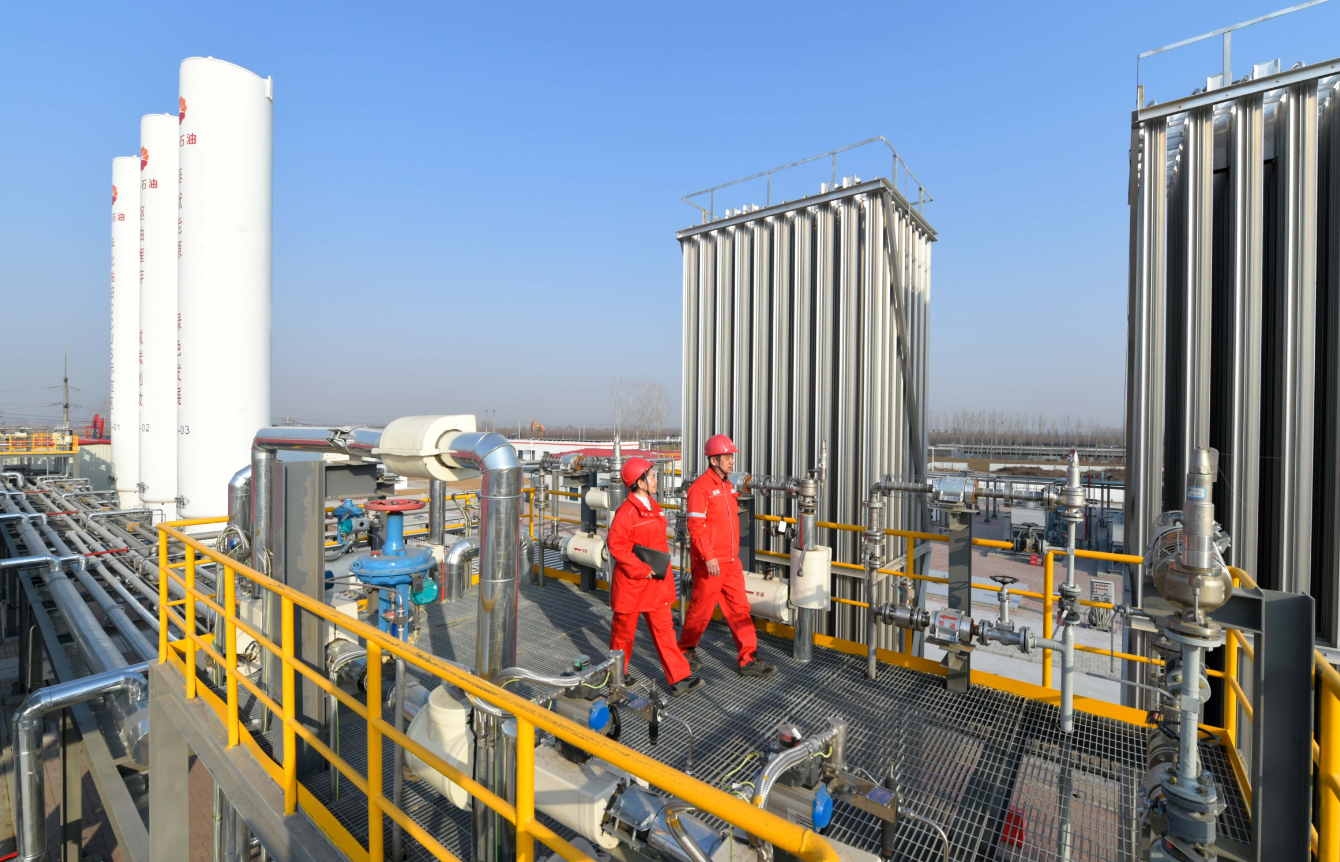
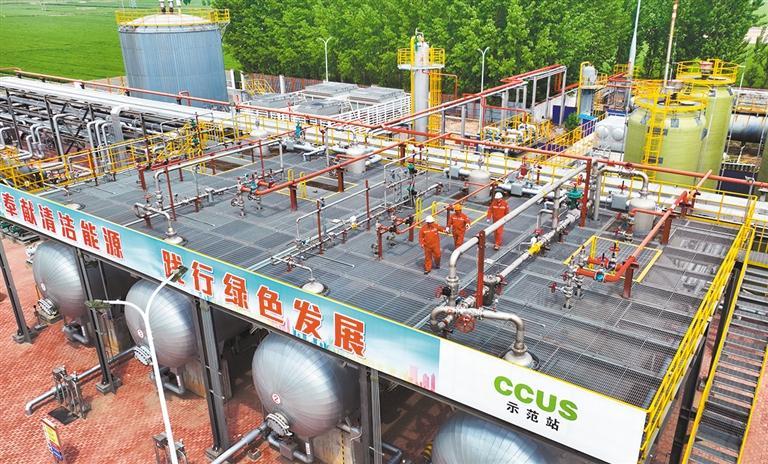
12月26日,在八里西潜山CCUS先导试验站内,工作人员正在巡回检查设备运行状况。 12月27日,中国石油华北油田"八里西潜山CCUS先导试验项目"已累计注入二氧化碳30万吨,减排效果现相当于植树约248万棵,标志着京津冀最大规模碳驱 油碳埋存项目推进"双碳"目标取得新成效。 八里西潜山CCUS先导试验区位于河北省沧州河间市,于2022年启动注气。潜山油藏作为华北油田的主力油藏,已进入特高含水开发后期,依据现有技术难 以有效动用巨量的剩余油。华北油田将CCUS作为绿色发展的发力点,一手抓油气生产一手抓科技攻关,优选八里西潜山油藏开展CCUS先导试验,攻关关 键技术瓶颈问题。先后进行二氧化碳混相重力驱油与埋存机理研究、地质建模及注采参数优化调整以及钻井、采油、地面、监测等配套工程技术攻关,新建 先导试验站1座、计量点1座、集油及二氧化碳管道20余公里,更在集团公司内部首次构建起"炼化排放—捕集提纯—油田利用"的绿色循环模式。预计全周期 将累计埋存二氧化碳847万吨,累计增油超300万吨,油藏采收率可提高27%。 八里西潜山CCUS先导试验项目被列入中国石油"四大六小"重点工程,是华北油田深入推进注气提高采收率工 ...

我国首个年注碳百万吨油田在新疆诞生
Xin Lang Cai Jing· 2025-12-28 22:03
Core Viewpoint - China National Petroleum Corporation (CNPC) announced that as of December 28, the Xinjiang oilfield has achieved a carbon dioxide injection volume exceeding 1 million tons this year, marking it as the first oilfield in China to reach this milestone in carbon capture, utilization, and storage (CCUS) technology [1] Group 1: CCUS Technology Implementation - The Xinjiang oilfield has made significant progress in the large-scale application of CCUS technology, providing crucial technical support and practical pathways for achieving carbon peak and carbon neutrality goals in China's oil and gas extraction [1] - CCUS involves capturing and purifying carbon dioxide emissions from production processes, which are then reused and stored in new production processes [1] Group 2: Environmental Impact - The injection of 1 million tons of carbon dioxide is equivalent to planting nearly 9 million trees, highlighting the environmental benefits of the CCUS initiative [1]

碳中和的必由之路:关注CCUS相关机遇
Xinda Securities· 2025-12-27 15:19
Investment Rating - The report maintains a "Buy" rating for the environmental sector [4] Core Insights - CCUS technology is essential for achieving carbon neutrality and is the only viable option for low-carbon utilization of fossil energy. It is a crucial method for significant greenhouse gas reduction and a feasible decarbonization solution for hard-to-abate industries such as steel, cement, and chemicals [18][21] - According to predictions from Beijing Institute of Technology, between 2030 and 2060, approximately 23.9 to 33.5 billion tons of CO2 emissions will need to be reduced through CCUS technology, even with advancements in renewable energy and energy efficiency technologies [18] - The report highlights that as of mid-2024, there are about 120 CCUS projects in China with a capture capacity of 6 million tons per year, driven by supportive policies [4][25] Market Performance - As of December 26, the environmental sector rose by 1.9%, outperforming the broader market, which also increased by 1.9% [11] - The report notes that various sub-sectors within the environmental industry showed mixed performance, with the environmental equipment sector rising by 9.21% [14][16] Industry Dynamics - Recent meetings led by the Minister of Ecology and Environment have resulted in the approval of several national ecological environment standards aimed at enhancing pollution control and environmental restoration [29][30] - The report discusses the rapid development of the CCUS industry in China, with a significant increase in project numbers and capacities from 40 projects in 2021 to approximately 120 projects by mid-2024 [26][28] Investment Recommendations - The report suggests that the "14th Five-Year Plan" will maintain high demand for energy conservation and environmental protection, with a focus on resource recycling. It recommends key companies such as Huanlan Environment, Xingrong Environment, and Hongcheng Environment for investment [55]


吉化全链条碳管控推动绿色发展
Zhong Guo Hua Gong Bao· 2025-12-26 03:13
中化新网讯 "二氧化硫排放浓度低于火电行业超低排放标准。"12月9日,吉林石化化肥厂除灰车间班长 李加威向工厂调度室汇报生产情况。自该厂动力系统1号、2号锅炉烟气超低排放升级改造项目投运以 来,各项排放指标均持续稳定在合格区间。至此,吉林石化所有锅炉装置已全部完成烟气超低排放改 造,为企业长远发展筑牢绿色根基。 "十四五"以来,吉林石化建立完善"源头控碳、过程降碳、末端固碳"的全链条管控机制,深入践行"四 不让"理念,加大过程管控的同时,累计投资近10亿元推进84个环保项目;坚持"生产装置与环保设施一 体化管理",狠抓环保设施稳定、达标、优化运行,推进VOCs提标治理和无异味工厂创建,污染物排放 总量显著下降,总出水COD浓度降至30mg/L以下,实现"清水级"净化。 绿色低碳转型的成果藏在一组组亮眼数据里:通过清洁能源替代、电气化提升、CCUS等措施,对 比"十三五"末,吉林石化二氧化碳总量降低4个百分点;对比2022年,万元工业产值碳排放强度下降 28%。通过锅炉热效率提升、精细碳资产管理等手段,动力厂、燃料乙醇公司成为中国石油唯一靠碳资 产盈利的自备电站。 当前,吉林石化正加速推进百万吨级CCUS示范工 ...
协同发展“三大产业” 助力保障能源安全
Jing Ji Ri Bao· 2025-12-25 22:11
Core Viewpoint - Shengli Oilfield is actively advancing the construction of the new energy industry, integrating traditional and renewable energy sources, and achieving significant milestones in both oil and gas production and renewable energy projects [2][5][11]. Group 1: New Energy Initiatives - The Shengli Oilfield has implemented a multi-energy complementary project in the Gongxun Well area, recognized as a model for integrating traditional and renewable energy [2]. - The company has built a total of 572 MW of photovoltaic capacity, generating 740 million kWh of green electricity annually, with renewable energy projects totaling 184 [4][9]. - The oil and gas production's green electricity usage has reached 25%, showcasing a commitment to sustainable energy practices [4][9]. Group 2: Oil and Gas Production Achievements - Since the beginning of the 14th Five-Year Plan, Shengli Oilfield has produced 115.55 million tons of crude oil and 4.015 billion cubic meters of natural gas, contributing significantly to national energy security [5]. - The company has discovered a resource potential of 10.52 billion tons of shale oil below 3,000 meters, marking a major breakthrough in exploration and development [6][7]. - Shengli Oilfield has achieved a peak daily oil production of 229.5 tons from the Fengye 1HF well, indicating successful commercial production from low maturity mixed-type shale oil [5][7]. Group 3: Carbon Capture and Utilization - The company has established a leading CCUS (Carbon Capture, Utilization, and Storage) demonstration project, with a total carbon dioxide injection exceeding 2.3 million tons, significantly contributing to carbon reduction efforts [12][13]. - The first full-process closed-loop production demonstration project, the Lai 113 CCUS station, has been operational since June 2025, enhancing oil production while achieving permanent carbon storage [12]. - Shengli Oilfield has developed a 109-kilometer carbon dioxide transportation pipeline, with core equipment fully domestically produced, showcasing advancements in technology and sustainability [12]. Group 4: Future Development Goals - By 2025, Shengli Oilfield aims to achieve an additional proven reserve of 22.7 million tons and maintain a stable production trajectory, with crude oil production expected to reach 23.71 million tons [8][9]. - The company is committed to achieving carbon neutrality across all its oil and gas development units by 2025, leading the industry in carbon footprint management [13][14]. - Shengli Oilfield is focused on integrating oil and gas with renewable energy, promoting a new energy system that emphasizes green development and energy security [14].
科创平台架桥 先进制造提速
Xin Hua Ri Bao· 2025-12-24 23:21
Core Insights - The article highlights the successful collaboration between Yangzhou Hengxin Seat Co., Ltd. and the National Automotive Lightweight Technology Research Institute, resulting in a 15% weight reduction in automotive seat frames and over 5 million yuan in new orders this year [1] - Yangzhou Economic Development Zone is advancing five major innovation projects to integrate technology innovation with advanced manufacturing, aiming for high-quality development [1] Group 1: Innovation Platforms - The National Automotive Lightweight (Jiangsu) Technology Co., Ltd. has established four major platforms for research, testing, and service, collaborating with over 10 major automotive manufacturers [2] - The company has attracted 7 projects with a total investment exceeding 3 billion yuan, promoting the development of over 30 supporting enterprises in the automotive parts sector [2] - The Yangzhou Economic Development Zone has introduced several innovation platforms, including a provincial concept verification center for automotive lightweight technology, enhancing the region's technological capabilities [2] Group 2: Core Technology Development - Huacarb Technology (Yangzhou) Co., Ltd. is set to launch a CCUS demonstration project, which is the first of its kind in China, capable of capturing and purifying 1,000 tons of CO2 annually [3] - Jiangsu Ruifeng Information Technology Co., Ltd. has developed a pioneering agricultural machine that improves farming efficiency by nearly 20% and increases yield by 10%-20% per acre [3] - Key technological breakthroughs in various sectors are strengthening the advanced manufacturing industry and enhancing the region's high-quality technological supply capabilities [3] Group 3: Collaborative Development - The Yangzhou Economic Development Zone is fostering deep integration between innovation platforms and industrial clusters, successfully attracting teams led by academicians and industry leaders [4] - The introduction of advanced technologies, such as the 2000 MPa steel laser welding technology, has been adopted by several high-end domestic automotive brands [4] - The zone has implemented a talent policy that has attracted over 10,000 professionals, with a focus on building a complete incubation chain for technology startups [4] Group 4: Future Development - The Yangzhou Economic Development Zone aims to strengthen the integration of innovation chains, industrial chains, financial chains, and talent chains to continuously nourish advanced manufacturing [5] - The region is committed to accelerating high-quality development and enhancing its technological and industrial influence [5]
2025年科尔尼行业系列回顾|制造业与能源化工
科尔尼管理咨询· 2025-12-24 10:07
Core Viewpoint - In 2025, the manufacturing and energy-chemical industries will enter a rebalancing phase under multiple structural pressures, with geopolitical changes and trade rules reshaping global layouts. The focus will shift from "betting on growth" to "realizing value" as companies seek sustainable returns through asset optimization, capability restructuring, and operational upgrades [1]. Group 1: Manufacturing "15th Five-Year" Layout - The "15th Five-Year" plan (2026-2030) is a critical period for China's modernization by 2035, emphasizing the need for manufacturing enterprises to anticipate socio-economic and technological trends, plan high-quality development paths, and enhance international competitiveness amid geopolitical tensions [4]. Group 2: Asset Operation Restructuring - Energy and chemical companies must optimize asset layouts through normative analysis to enhance long-term decision-making certainty and return rates, particularly in the context of geopolitical and demand structure changes [7]. Group 3: Digital Transformation - Oil and gas companies face limitations in AI potential due to data quality and system fragmentation. Establishing a high-quality data foundation and governance mechanisms is essential to unlock the value of AI and digitalization in supply chain and operational transformations [9]. Group 4: Chemical M&A Recovery - The chemical industry is witnessing a gradual recovery in M&A activities, driven by overcapacity, weak demand, and tariff uncertainties. Companies and private equity are seeking growth paths through portfolio restructuring and regional diversification [11]. Group 5: Accelerated Power M&A - The demand for large data centers is driving a new wave of M&A in the U.S. power sector, compelling power companies to enhance scale, delivery capabilities, and clean energy supply to compete for core customers [13]. Group 6: Electrification Investment Decisions - The electrification trend brings substantial capital investments, but profitability is not guaranteed. Investment returns depend on asset utilization rates, contract structures, and service models, necessitating a careful balance between infrastructure and digital platforms [15]. Group 7: Renewable Value Realignment - The renewable energy sector is transitioning from a narrative of rapid growth to one focused on capability and return realization. Factors such as subsidy reductions, grid constraints, and rising capital costs are pushing companies to reshape their competitive edge through market-oriented capabilities [17]. Group 8: CCUS Commercial Breakthrough - Carbon capture, utilization, and storage (CCUS) is emerging as a viable decarbonization pathway in high-emission industries, but its adoption is constrained by economic viability and carbon pricing mechanisms. Innovative business models and policy collaboration are crucial for large-scale implementation [19]. Group 9: Industrial Aftermarket Opportunities - The industrial aftermarket is becoming a significant profit engine for OEMs, with growth rates of 7.8% in China and 6.5% globally. Companies can achieve steady and high-quality growth through network expansion, complexity management, and pricing capability upgrades [21]. Group 10: CBAM Cost Restructuring - The EU's Carbon Border Adjustment Mechanism (CBAM) is reshaping competitive rules in high-carbon industries like steel. Importers need to proactively manage emissions accounting, supply chain adjustments, and cost transfer mechanisms to mitigate the impacts of visible carbon costs [23]. Group 11: Infrastructure Innovation - Modern construction methods (MMC) are significantly enhancing efficiency, sustainability, and resilience in the global construction industry. Despite higher initial investments, the long-term value of MMC is becoming evident in global capital projects [25].
巴彦油田原油总产量破500万吨
Zhong Guo Hua Gong Bao· 2025-12-23 03:34
自2018年获得首口高产工业油流井以来,油田开发不断提速。实现第一个100万吨原油产量用时49个 月,后续四个100万吨突破时间依次缩短至13个月、10个月、9个月和8个月,呈现跨越式增长态势。 近年来,华北油田巴彦勘探开发分公司坚持战略引领、科技驱动,将勘探成果快速转化为产能,实现资 源接续与稳定供应。作为内蒙古地区最大的陆相碎屑岩油藏,油藏平均埋深超5000米,"一深带万难"成 为油气新发现的"拦路虎"。华北油田聚焦关键核心技术攻关,创新晚期快沉降盆地石油成藏理论,成功 落实两个亿吨级整装优质储量,建成内蒙古西部最大整装油田。 开发过程中,油田首创"整装油田一次开发直接采用注气重力驱"理念,积极探索超深层高压混相驱与 CCUS先导试验,并建成国内首个早期减氧空气驱砂砾岩油田,以技术新突破引领深层油气资源高效开 发。 中化新网讯 12月21日,中国石油华北油田公司巴彦油田原油总产量累计突破500万吨。 ...
我省将开展零碳园区建设
Xin Lang Cai Jing· 2025-12-21 17:39
Core Viewpoint - The Hainan Free Trade Port is set to advance the construction of zero-carbon parks through a structured and phased approach, focusing on low-carbon and zero-carbon transformations in various parks [1] Group 1: Zero-Carbon Energy System - The key task is to establish a new zero-carbon energy system by integrating parks with surrounding renewable energy sources such as wind, solar, biomass, and nuclear energy [1] - The initiative promotes the development of green electricity supply models and encourages participation in green certificate trading [1] - The implementation of smart microgrids is aimed at enhancing the flexibility and resilience of park distribution networks [1] Group 2: Industrial Decarbonization - Support for parks to engage in advanced technology research and demonstration projects in areas like CCUS, new materials, and future energy [2] - Encouragement for traditional industries to undergo green low-carbon transformations, including electrification and energy-efficient factory construction [2] - The establishment of a circular economy system within parks to optimize resource utilization and promote recycling of industrial waste [2] Group 3: Building Decarbonization - New buildings in parks are to be designed and constructed according to ultra-low energy, near-zero energy, or green building standards [2] - Existing buildings will undergo energy-saving retrofits, with a focus on enhancing electrification levels [2] - Adoption of technologies such as centralized cooling and heat recovery systems to reduce operational costs and carbon emissions [2] Group 4: Transportation Decarbonization - Upgrading green transportation infrastructure within parks, including charging stations and hydrogen refueling stations [3] - Promotion of green transport methods, including the use of new energy trucks and logistics vehicles [3] - Encouragement of interactive technology applications between vehicles and the grid [3] Group 5: Carbon Management Systems - Development of an energy and carbon emission management platform to monitor and optimize energy use in parks [3] - Support for carbon footprint accounting and resource utilization efficiency [3] - Encouragement for various stakeholders to participate in the construction of zero-carbon parks [3] Group 6: Financial and Policy Support - The provincial development and reform commission will coordinate efforts to enhance support for zero-carbon parks [4] - Local governments are tasked with establishing mechanisms to ensure the implementation of zero-carbon park initiatives [4] - Financial support will be sought from various sources, including central budget investments and green financing options [4]
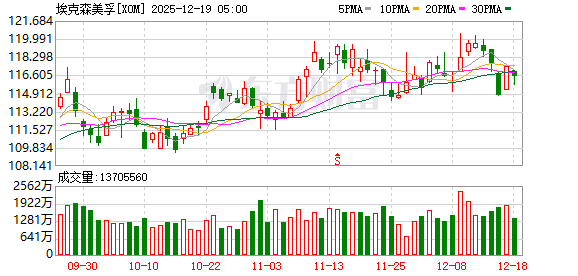
美国能源巨头埃克森美孚:愿继续加大对中国投入
Zhong Guo Xin Wen Wang· 2025-12-19 14:00
Core Viewpoint - ExxonMobil's Global Senior Vice President, Wei Jie Kai, expressed the company's willingness to increase investments in China, highlighting the importance of collaboration in energy transition and low-carbon technologies [2] Group 1: Company Commitment - ExxonMobil aims to deepen practical cooperation in various fields within China [2] - The company has made significant progress in its global and Chinese operations, indicating a strong commitment to the Chinese market [2] Group 2: Government Engagement - China's National Energy Administration Deputy Director, Wan Jinsong, emphasized the long-standing partnership between Chinese oil and gas companies and ExxonMobil, noting mutual benefits from years of close cooperation [2] - China welcomes foreign companies, including ExxonMobil, to share in the new opportunities presented by the country's energy development [2] Group 3: Focus Areas - Discussions between ExxonMobil and Chinese officials included the role of natural gas in energy transition, carbon capture, utilization and storage (CCUS), low-carbon hydrogen, and product carbon measurement [2]