
农业现代化

Search documents
“十四五”以来我国累计建成高标准农田超10亿亩
Yang Shi Xin Wen· 2025-09-16 02:10
发布会上介绍,"十四五"时期我国农业现代化取得重要进展。坚持用现代设施装备武装农业,用现代科 学技术服务农业,推动现代化水平不断提高。累计建成高标准农田超过10亿亩,农业科技进步贡献率达 到63.2%,农作物耕种收综合机械化率超过75%,农作物良种覆盖率超过96%。 国务院新闻办今天上午举行新闻发布会,农业农村部负责人介绍了"十四五"时期农业农村高质量发展有 关情况。 (文章来源:央视新闻) ...
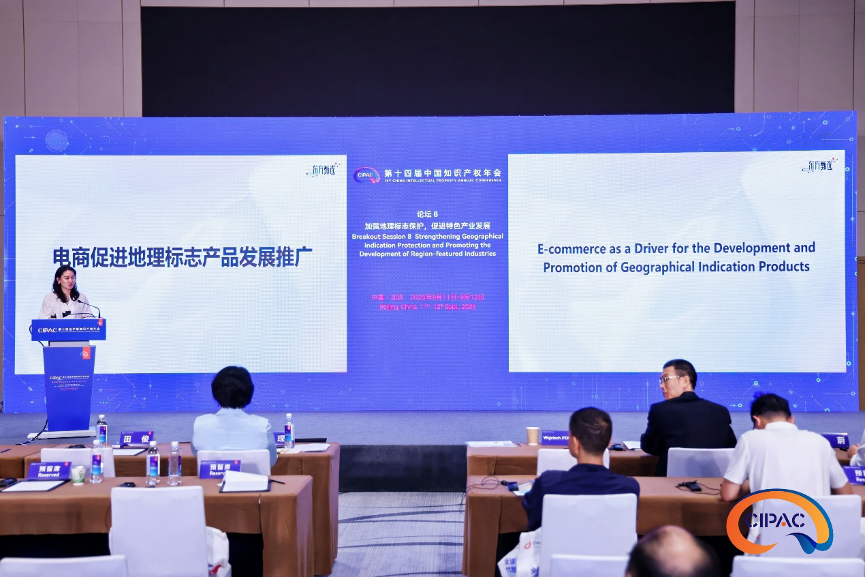
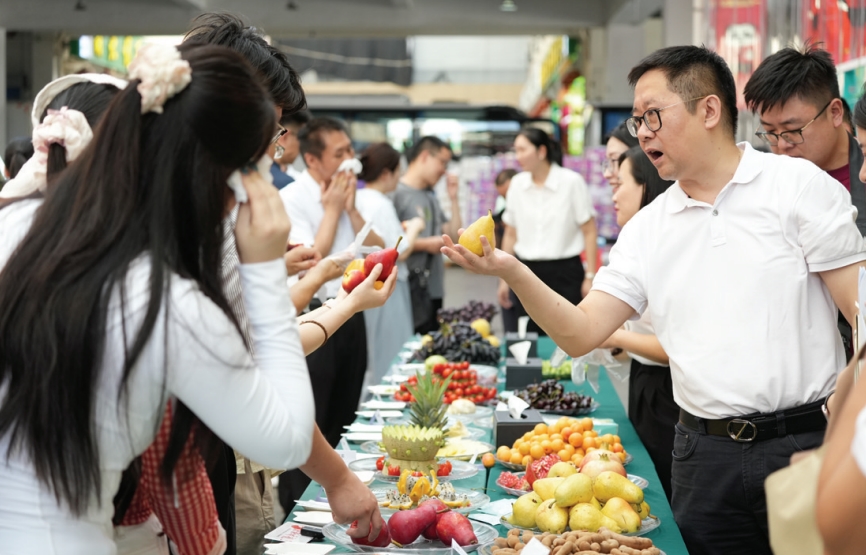
东方甄选亮相第十四届中国知识产权年会,宣布将推广更多优质地标农产品
Jing Ji Wang· 2025-09-15 09:29
Core Insights - Oriental Selection participated in the 14th China Intellectual Property Annual Conference, highlighting its efforts in promoting and selling geographical indication products to support rural revitalization and agricultural modernization [1][3] Group 1: Product Offerings - Oriental Selection has launched over 800 self-operated products, with more than half being agricultural products, including several geographical indication products such as Guizhou prickly pear, Luochuan apple, and Lipu taro [3] - The self-operated prickly pear juice has become a hot-selling product, achieving significant sales growth with over 19.3 million bottles sold to date, driven by the rising health consumption trend and product reputation [3] Group 2: E-commerce Strategy - The company leverages e-commerce platforms to overcome regional limitations, enhance brand recognition, and address the challenge of selling products nationwide [3] - Through a strict quality control system, traceability, and immersive e-commerce experiences, Oriental Selection ensures product quality and allows consumers to appreciate the uniqueness of geographical indication products [3] Group 3: Future Plans - Oriental Selection aims to strengthen collaboration with local governments and industry associations to explore new pathways for e-commerce to support the development of geographical indication products, ultimately increasing farmers' income and providing consumers with more quality products [3]


鱼米之乡加速转型 湖北农业现代化势头强劲
Xiao Fei Ri Bao Wang· 2025-09-12 03:33
Core Insights - Hubei province is leveraging its agricultural resources to modernize its farming practices, focusing on circulation, branding, and smart farming to enhance productivity and economic growth [1][12]. Group 1: Agricultural Modernization - The "Shouheng City" in Xiaogan has become a major agricultural trading hub, achieving a daily trading volume of 17,000 tons and a transaction value of 150 million yuan [2]. - The establishment of a multi-layered circulation system has attracted over 3,000 leading merchants and more than 1,000 product categories, reducing costs and lowering prices by 10%-20% [2][3]. Group 2: Specialty Products - Suizhou's mushroom industry has transformed from local sales to international exports, with 30% of production going overseas, generating 367 million USD in export revenue [6][7]. - The "Suizhou Mushroom" brand has a public brand value of 20.58 billion yuan, with over 3,000 e-commerce live-streamers contributing to sales exceeding 1 billion yuan [6][7]. Group 3: Dairy Industry Development - The "Yunshang Milk Song" project in Nanzhang County is set to become the largest dairy source in the Yangtze River region, with an expected annual production of 90,000 tons of fresh milk [10][11]. - The project employs smart farming techniques, allowing one worker to manage 70 cows, significantly reducing costs by over 20 million yuan annually [10][11]. Group 4: Economic Impact and Employment - The dairy project is expected to create over 5,000 jobs and generate a total industrial chain output value of 5 billion yuan [11]. - The integration of various agricultural sectors in Hubei is enhancing the overall economic landscape, promoting sustainable development and common prosperity [12].
驻多米尼克使馆回访多农业部赴华培训学员代表
Shang Wu Bu Wang Zhan· 2025-09-11 15:46
(原标题:驻多米尼克使馆回访多农业部赴华培训学员代表) 贝特朗在致辞中对中方长期以来给予多米尼克农业发展的大力支持表示诚 挚感谢,强调中方在两国建交21年来持续提供的无私援助对多米尼克农业现代 化转型和可持续发展发挥了重要作用,实实在在地改善了当地农民的生产条件 和经济收益。 孙新华表示,农业是多米尼克的支柱产业,关乎国家的经济韧性、粮食安 全和民生福祉。赴华培训为中多两国人民架起一座沟通交流、合作共赢的桥 梁。中方欢迎更多多米尼克朋友赴华培训与交流,深入了解真实的中国,亲身 感受中国的发展成就和丰富的文化。中方将继续通过农业技术合作项目,为多 米尼克农业人才培养、农产品种植和加工技术提升提供支持,助力多农业现代 化建设再上新台阶。 学员们衷心感谢中方精心组织的赴华培训项目,表示通过中国之行亲眼见 证了一个真实、立体、全面的中国, 深切感受到中国在农业和其他领域取得的 巨大成就。此次培训不仅提升了专业知识和技术水平,还拓宽了视野,收获了 友谊,增强了未来开展务实合作的信心。学员们还就课程内容、培训形式等提 出了建设性意见和建议。 9月10日,驻多米尼克使馆经商事务负责人孙新华一行赴多农业部回访赴华 参加农产品 ...

1-7月哈农业总产值达2.4万亿坚戈
Shang Wu Bu Wang Zhan· 2025-09-11 15:46
Core Viewpoint - Kazakhstan is actively developing its agricultural-industrial complex in response to presidential directives, showing stable growth in the sector [1] Group 1: Agricultural Output - The total agricultural output in Kazakhstan reached 2.4 trillion tenge (approximately 4.45 billion USD) from January to July 2025, marking a year-on-year increase of 3.7% [1] - Livestock and crop production have seen improvements, contributing to the overall growth in agricultural output [1] Group 2: Food Processing Industry - The food processing sector has demonstrated strong performance, with food production increasing by 9.2% [1] - Beverage production rose by 6.8%, while specific products such as vegetable oil (+24%), butter (+10.4%), sausages (+9%), and flour (+6.6%) also experienced significant growth [1] Group 3: Investment in Agriculture - Fixed capital investment in agriculture reached 442.7 billion tenge (approximately 820 million USD), reflecting a year-on-year growth of 26.5% [1] - Investment in grain production fixed capital amounted to 104.2 billion tenge (approximately 190 million USD), with a notable year-on-year increase of 48% [1] - The funding is primarily directed towards modernizing agriculture and implementing modern technologies [1]
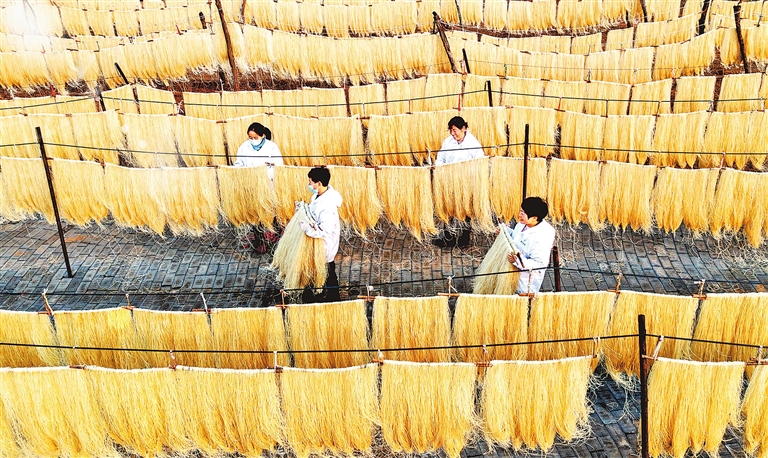
豫见地标风物丨一条链串起红薯“七十二变”
He Nan Ri Bao· 2025-09-10 23:38
Core Viewpoint - The article highlights the transformation of the sweet potato industry in Xuchang, Henan Province, showcasing its evolution from traditional farming to a modern, diversified agricultural sector that significantly contributes to local economic development and food security [4][20]. Industry Overview - Henan is a major sweet potato production province, with a planting area of approximately 4 million acres, ranking third in the country. Xuchang alone has over 400,000 acres dedicated to sweet potato cultivation, with more than 200 enterprises producing over 1 ton of starch and noodles daily, creating an industry cluster worth nearly 5 billion [5][10]. - The sweet potato industry in Xuchang has evolved to include various high-value products such as sweet potato noodles, alcohol, and dietary fiber, reflecting a comprehensive approach to agricultural modernization [5][20]. Technological Innovation - The industry has embraced technological advancements, with companies like XuanKang Agricultural Technology Co., Ltd. operating a standardized production base for sweet potato starch and noodles, achieving an annual output of 30,000 tons of starch and 15,000 tons of noodles [10][12]. - Research and development efforts have led to the creation of new sweet potato varieties and innovative processing techniques, enhancing product quality and meeting modern consumer demands for health and sustainability [14][12]. Market Expansion - Xuchang's sweet potato products are gaining recognition in both domestic and international markets, with companies successfully exporting products to Europe and Central Asia, thus transitioning from local specialties to international ingredients [16][20]. - The integration of sweet potato products into various culinary applications has increased their market appeal, with companies developing over 20 different product varieties that are in high demand [11][15]. Economic Impact - The sweet potato industry has significantly improved the livelihoods of local farmers, with over 110,000 households benefiting from the industry, averaging an income increase of over 10,000 yuan per household [17][20]. - The local government has implemented policies to support the industry, focusing on enhancing infrastructure, promoting regional brands, and fostering collaboration between farmers, cooperatives, and enterprises [19][21].
揭阳揭西:解锁现代农业发展“密码”
Nan Fang Nong Cun Bao· 2025-09-10 13:05
揭阳揭西:解锁 现代农业发 展"密码"_南方 +_南方plus 流转灭荒啃"硬骨头",科技赋能荒田变"粮仓" 走进揭西县棉湖 镇甲埔村的百亩 稻田,植保无人 机正穿梭于绿浪 间精准施药,不 远处的农机正在 轰鸣作响,一幅 科技农耕图景跃 然眼前。这正是 揭西县扛稳粮食 安全责任、推动 农业现代化的生 动缩影。 "以前地块零碎 又撂荒,种粮收 益低,没人愿意 植保无人机在千 亩稻田上空轰 鸣,直播间里油 柑果"秒光",游 客在番薯园里笑 声不断……当 下,在揭西县, 一幅科技赋能、 产业兴旺的现代 农业新图景正生 动铺展。作 为"百县千镇万 村高质量发展工 程"的生动实 践,揭西县以土 地流转破题、科 技赋能增效、电 商聚力拓市, 2024年农业总产 值突破53亿元, 土地流转率跃升 至54.87%,培育 出3个全国名特 优新农产品,走 出一条山区县城 乡融合发展的特 色路径。 干,再加上一些 地块位置偏远、 灌溉基础设施不 完善,耕种不 便,这些因素共 同导致土地撂荒 多年。"种植户 王大哥向记者讲 述着曾经的甲埔 村。耕地碎片 化、撂荒等难题 曾是揭西农业的 顽疾,也是乡村 振兴必须跨越的 第一道坎。面对 ...

中企承建木薯粉加工厂助力刚果(布)农产品加工业提质升级
Xin Hua Cai Jing· 2025-09-10 12:24
Core Viewpoint - The establishment of Shengsheng Agricultural Technology Co., Ltd. in Congo (Brazzaville) represents a significant advancement in the cassava processing industry, enhancing local economic development and food safety standards through modern production techniques [1][2][3]. Group 1: Company Overview - Shengsheng Agricultural Technology Co., Ltd. was founded in 2021 by Weihai International Company, focusing on cassava processing in a region known for high cassava production [1]. - The processing plant occupies over 50,000 square meters and is designed to achieve an annual production capacity of 18,000 tons of cassava flour [1]. Group 2: Production Process - The factory utilizes advanced production lines for cassava flour and cassava nutritional flour, ensuring continuous and large-scale production with improved safety and quality compared to traditional methods [1][2]. - The production process includes peeling, grinding, fermentation, and packaging, with waste materials being recycled for use in local plantations [2]. Group 3: Economic Impact - The factory has increased the market for local cassava farmers, boosting their income and contributing to local economic growth [2]. - The company owns over 7,600 hectares of land for cassava cultivation, ensuring a stable supply of raw materials while integrating Chinese agricultural techniques with local practices [2]. Group 4: Market Reception and Future Prospects - The cassava flour produced by Shengsheng Agricultural Technology Co., Ltd. gained recognition at the China-Africa Economic and Trade Expo, becoming a "star product" for Congo (Brazzaville) [2]. - The United Nations World Food Programme has shown interest in purchasing cassava flour to support nutrition improvement initiatives in Africa, indicating potential for future collaboration [3]. - The President of Congo (Brazzaville) highlighted the factory's role in revitalizing the local economy and supporting national food security strategies [3].
促成签约超1.3亿元!澄海狮头鹅品牌四川(成都)专场推介会人气火爆
Nan Fang Nong Cun Bao· 2025-09-07 01:32
Core Viewpoint - The Chenghai Shitou Goose brand successfully held a promotional event in Chengdu, Sichuan, achieving over 130 million yuan in cooperation agreements, indicating strong market interest and potential for expansion in the southwestern region [4][50]. Group 1: Event Overview - The promotional event took place on September 6 at the Chengdu Agricultural Expo, attracting various provincial and municipal food and beverage industry associations and over 100 leading catering enterprises from the Sichuan-Chongqing region [2][3]. - The event featured industry promotion and cooperation agreements, resulting in significant interest and engagement from attendees, with daily foot traffic reaching 10,000 visitors [4][5]. Group 2: Strategic Partnerships - A series of strategic cooperation and production-sales agreements were successfully established during the event, including partnerships between the Chenghai Goose Industry Development Association and various Sichuan culinary associations [25][22]. - Notable collaborations include agreements with Sichuan's hot pot associations and local catering groups, enhancing the distribution network for Chenghai Shitou Goose products [25][26]. Group 3: Market Potential and Consumer Interest - The Chenghai Shitou Goose brand is recognized for its complete industrial chain, which includes breeding, sales, and processing, making it appealing to consumers and businesses alike [8][39]. - Feedback from attendees highlighted the quality and popularity of the Shitou Goose, with local businesses expressing intent to incorporate it into their offerings, indicating a strong market demand [41][44]. Group 4: Future Development Goals - The successful event marks a critical step in expanding the Chenghai Shitou Goose brand into the Sichuan-Chongqing market, aiming to build a billion-yuan industry cluster and support rural revitalization and high-quality agricultural development [50][51].
让农业尽显科技范儿
Jing Ji Ri Bao· 2025-09-07 01:17
Core Insights - The article highlights the entrepreneurial journey of Han Chun, the chairman of Jiangxi Gexi Zhengtai Poultry Development Co., Ltd, who has successfully transformed the local poultry industry through innovation and community engagement [1][7]. Group 1: Entrepreneurial Journey - Han Chun started his career with humble beginnings, working in a printing factory before returning to his hometown to start a small supermarket and later venturing into poultry farming [2]. - In 2005, he began raising chickens, initially experimenting with different types to determine which was the most profitable, ultimately focusing on egg production [2][3]. - Despite facing significant setbacks, including a devastating collapse of his chicken coop and the impact of avian influenza, Han persevered and eventually gained a strong customer base due to the quality of his eggs [3][4]. Group 2: Technological Innovation - Han Chun invested in advanced foreign chicken-raising equipment to increase production capacity, although initial challenges arose due to environmental differences [4][5]. - After months of adjustments, he successfully adapted the equipment to local conditions, emphasizing the importance of technology in modern agriculture [5][6]. - The company has implemented a smart farming system, allowing for better management of larger flocks and significantly reducing labor costs [6]. Group 3: Community Engagement and Social Responsibility - Han Chun believes in the principle that collective prosperity is essential, leading to the establishment of a support mechanism for local farmers, which has helped many families increase their income [7][8]. - The company has expanded its cooperative model, resulting in over 530 households benefiting from increased earnings through collaborative farming efforts [7]. - Han Chun also actively participates in social initiatives, such as the "Sunshine Assistance Program," which supports local children and emphasizes the importance of corporate social responsibility [8]. Group 4: Future Aspirations - The company is planning to upgrade its facilities into an "Ecological Circular Agriculture Demonstration Park," integrating smart farming, organic planting, and educational experiences [9]. - The focus is on enhancing agricultural efficiency, revitalizing rural areas, and increasing farmers' incomes, reflecting Han Chun's commitment to sustainable development [9].