通用人工智能(AGI)

Search documents
2025年硅谷给华人AI精英开出上亿年薪
3 6 Ke· 2026-01-01 02:48
Core Insights - The AI landscape in Silicon Valley is shifting from a focus on model parameters and benchmark scores to the ability to integrate models into products and systems that create real business value [2][3][4] - Major tech companies are aggressively recruiting talent in engineering and product roles while simultaneously restructuring their AI research teams, leading to significant personnel changes [3][7] - The transition from a technology breakthrough phase to an engineering realization phase is evident, with companies prioritizing the commercialization of existing AI capabilities over further model training [4][5][6] Talent Dynamics - Meta has been particularly impactful in the talent market, offering substantial salaries to attract engineering and product-focused talent while losing key research figures [7][9] - The decline of Meta's FAIR lab signifies a strategic shift towards a centralized product-focused R&D system, diminishing the priority of foundational research [8][10] - Former top researchers are not exiting the field but are instead pursuing new entrepreneurial ventures that align with their vision of AI development [10][11][12] Key Talent Acquisition - The current talent competition centers around three core capabilities: agent systems, multimodal interaction, and AI infrastructure [15][20] - Companies are seeking individuals who can embed models into executable systems, emphasizing real-time interaction and environmental understanding [16][18] - The demand for expertise in inference systems and AI infrastructure is rising, as companies require efficient, cost-effective solutions for deploying AI models [21][24] Industry Trends - The AI industry is witnessing a recalibration of focus, moving from theoretical advancements to practical applications that can be scaled and monetized [25] - The emergence of new startups and labs, such as Thinking Machines Lab, reflects a growing interest in exploring next-generation AI systems beyond traditional paradigms [14][19] - The competitive landscape is increasingly defined by the ability to deliver AI solutions that are not only powerful but also practical and deployable in real-world scenarios [25]


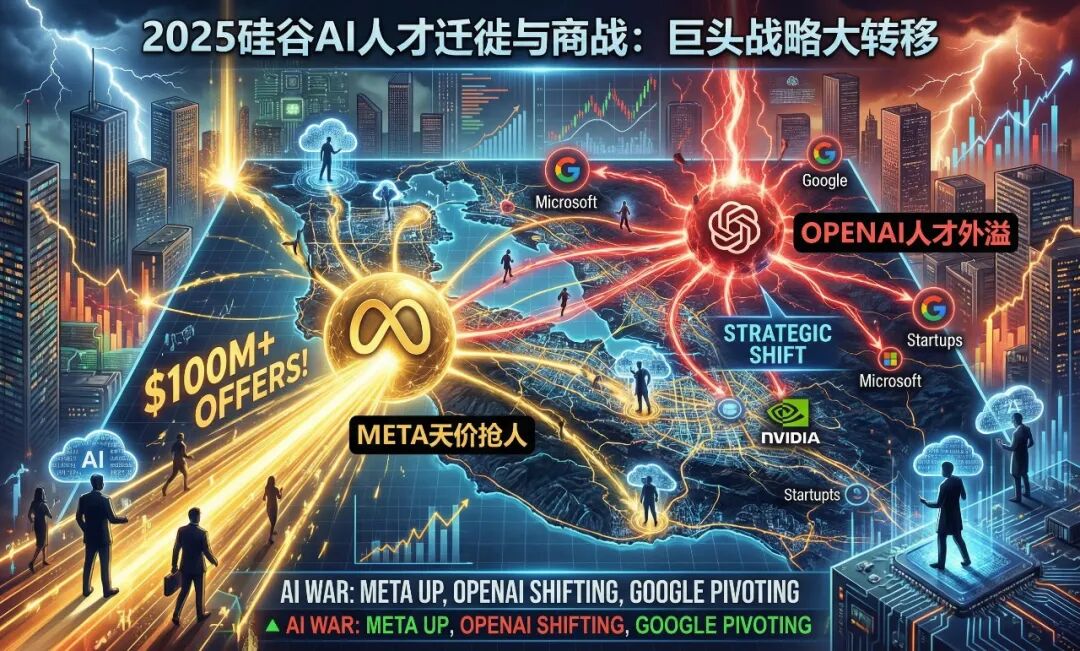
2025年硅谷给华人AI精英开出上亿年薪!Agent、Infra人才被抢疯了
AI前线· 2026-01-01 02:00
Core Insights - The AI landscape in Silicon Valley is shifting from a focus on model parameters and benchmark scores to the ability to integrate models into products and systems that create real business value [4][6] - The talent market is experiencing simultaneous layoffs and aggressive hiring, reflecting a transition from general artificial intelligence (AGI) aspirations to a consensus on application-specific artificial superintelligence (ASI) [8][10] - The operational focus is moving from technical breakthroughs to engineering execution, with companies prioritizing the conversion of existing model capabilities into stable systems and deployable products [12][16] Talent Dynamics - Major tech companies are aggressively recruiting talent in areas such as agent systems, multimodal capabilities, and AI infrastructure, indicating a shift in the types of AI skills that are in demand [25][30] - High-profile personnel changes, particularly at Meta, illustrate a strategic pivot towards product-centric development, leading to the departure of key research figures [15][19] - The influx of Chinese engineers into critical roles highlights the competitive nature of the talent market, with companies offering substantial signing bonuses to attract top talent [24][28] Market Trends - The operational costs associated with maintaining AI models are rising, leading to a reevaluation of investment strategies and a focus on commercial viability [10][11] - The decline in the marginal returns of increasing model size and complexity is prompting companies to seek more practical applications of AI technology [10][11] - The emergence of new startups and research labs, such as Advanced Machine Intelligence Labs and Thinking Machines Lab, reflects a diversification of approaches to AI development [20][23] Strategic Shifts - The decline of foundational research initiatives, such as Meta's FAIR lab, signifies a broader trend where research must directly contribute to product development to retain strategic importance [17][18] - The focus on practical applications of AI is reshaping the landscape, with companies prioritizing the ability to deploy AI systems effectively over theoretical advancements [12][16] - The competitive landscape is increasingly defined by the ability to optimize AI systems for real-world applications, moving beyond traditional metrics of success [35][36]
中美AI竞赛:界限日益模糊,下一战关键何在?
财富FORTUNE· 2025-12-31 13:06
Core Insights - The article discusses the current state and future prospects of AI investment, highlighting the presence of a potential bubble in the market, particularly in the valuation of AI companies with no revenue [2][3][13] - It emphasizes the shift from consumer-focused AI applications to business-oriented solutions, suggesting that this transition will lead to more stable revenue streams for AI companies [3][15] - The article also contrasts the AI landscapes in the US and China, noting the strengths and weaknesses of each in terms of technology, infrastructure, and user adoption [8][10] Group 1: AI Investment Landscape - The term "bubble" is prevalent among investors in Silicon Valley, with some AI model companies being valued at hundreds of millions despite having no revenue [2][3] - Oracle and CoreWeave have recently experienced significant market cap declines, reminiscent of past market downturns [2] - Zhang Lu expresses cautious optimism about the AI bubble, citing real industrial demand supporting AI innovations, unlike the 2000 internet bubble [3][15] Group 2: Technological Advancements - The AI infrastructure landscape is diversifying, with new chip architectures like TPUs and NPUs improving efficiency [4] - OpenAI has significantly reduced its token prices, indicating a trend towards cost-effective AI solutions [4] - Edge AI is advancing rapidly, with companies developing small models that can run locally on devices, enhancing data privacy [4][5] Group 3: Application Trends - Non-tech sectors in the US, such as healthcare and finance, are rapidly adopting AI, leading to a surge in startup activity and corporate acquisitions [6] - Major companies are increasingly acquiring startups, with Fusion Fund reporting five acquisitions this year, three of which were founded less than two years ago [6] - The integration of AI into business processes is expected to drive revenue growth as companies automate and optimize operations [15] Group 4: US-China Comparison - Despite Silicon Valley's lead in AI technology, the aging US power grid poses challenges for energy demands, prompting companies to build their own energy systems [8] - China has advantages in renewable energy infrastructure and a robust robotics supply chain, fostering a conducive environment for AI applications [8] - The willingness of US companies to collaborate with startups creates a unique ecosystem that supports innovation [19] Group 5: Investment Strategy - The company focuses on B2B AI projects, emphasizing the importance of market size and timing in investment decisions [18][28] - A significant portion of investments has seen revenue growth exceeding 20 times, reflecting the market's rapid embrace of AI [12] - The company maintains a cautious approach to valuations, avoiding overvalued projects and focusing on long-term growth potential [16][25] Group 6: Future Outlook - The article predicts that AI will increasingly integrate into various industries, with significant breakthroughs expected in the next three to five years [32] - The emergence of intelligent agents is anticipated, with coding agents already showing potential as a killer application [23] - The company believes that while AI may replace some jobs, it will also create new opportunities, leading to a reconfiguration of the labor market [31]
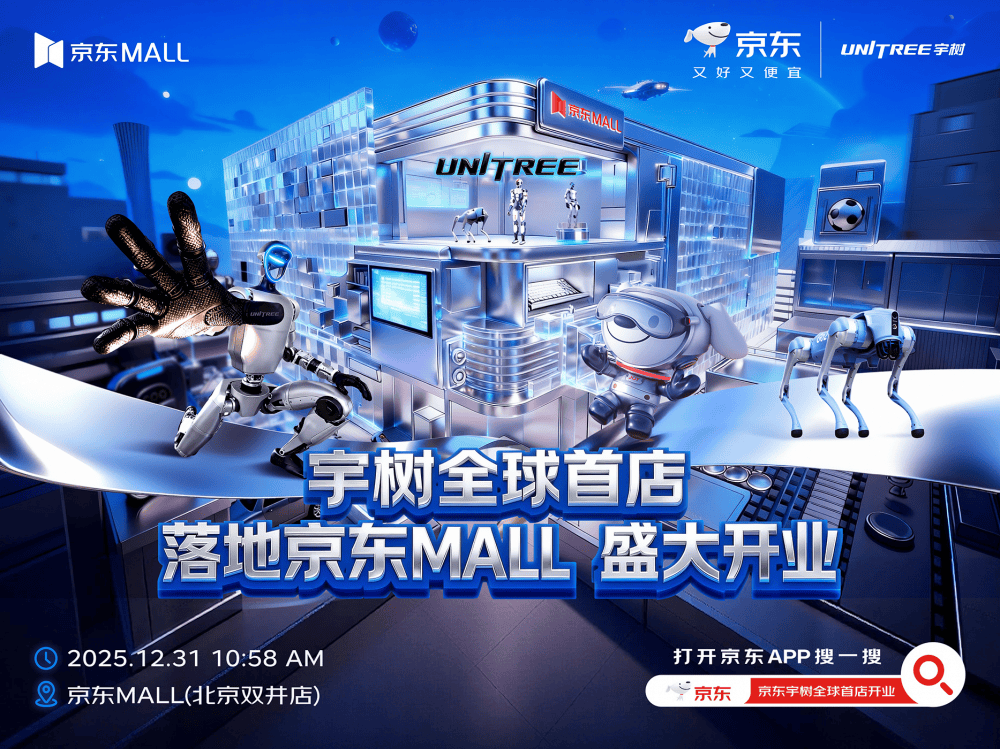
宇树科技全球首店落地京东MALL 打造机器人体验与购买首选渠道
Sou Hu Cai Jing· 2025-12-31 11:54
Core Viewpoint - JD.com has partnered with Yushu Technology to open the world's first consumer robot store in JD MALL Beijing, marking a significant step in integrating robotics into offline retail and enhancing the consumer experience through a seamless online-offline model [1][7]. Group 1: Partnership and Store Opening - The collaboration between JD.com and Yushu Technology aims to accelerate the offline extension of the robotics ecosystem, creating a one-stop shopping experience that combines immersive experiences, convenient purchases, and reliable services [1][7]. - The store is strategically located in Beijing's CBD, leveraging significant foot traffic and visibility to attract consumers [3]. Group 2: Product Offerings and Consumer Experience - The store features Yushu Technology's Go2 series quadruped robot dog and G1 humanoid robot, designed for various applications including companionship, education, and commercial displays [3][5]. - An interactive experience area allows consumers to engage with the robots, showcasing their real-time responsiveness and human-robot interaction capabilities [3][8]. Group 3: Industry Context and Future Plans - The smart robotics industry is experiencing rapid growth, with projections indicating that the Chinese robotics market could reach $100 billion by 2028 [7]. - JD.com has announced an "Intelligent Robotics Industry Acceleration Plan," committing over 10 billion yuan to support 100 robotics brands in achieving over 1 billion yuan in sales within three years [7][8]. - The partnership with Yushu Technology is seen as a crucial step in overcoming barriers to robot adoption, focusing on building consumer trust and understanding real user needs [7][8].


宇树科技首店开业,实探来了!
中国基金报· 2025-12-31 10:56
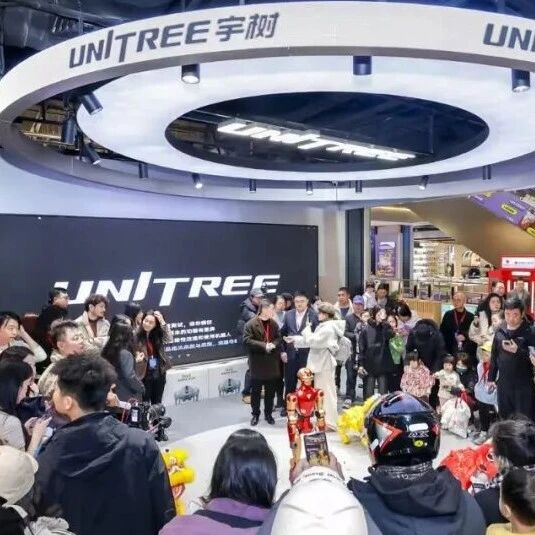
12 月 31 日,宇树科技全球首店在京东 MALL 北京双井店开业。 京东智能机器人业务负责人表示,与宇树科技合作打造全球首店,是京东在机器人品类全渠 道布局上的重要一步。 " 京东在超级供应链、用户流量和服务等领域的能力将与宇树科技的 技术和量产优势形成深度互补,共同推动机器人产业规模化落地,让智能科技真正惠及千行 百业、千家万户。 " 【导读】宇树科技全球首店落地京东 MALL ,京东加速机器人全渠道布局 中国基金报记者 忆山 宇树科技产品系列集中亮相 据介绍,该门店位于北京 CBD 核心商圈的京东 MALL 双井店,店内以宇树科技 Go2 系列 四足机器狗和 G1 人形机器人为核心产品,覆盖家庭陪伴、教育互动、商业展示等多重场 景,满足消费者的多样化需求。 当日,在门店特别设置的开放式互动体验区,大批消费者在专业人员指导下, 近距离操作并 感受机器人的实时响应与人机交互能力,亲身体验前沿科技如何无缝融入日常生活。 开业现场,搭载激光雷达与多传感器融合系统的宇树 Go2 系列机器狗,采用先进的动态平衡 控制算法,精准流畅地完成了倒立行走、自适应翻身、越障攀爬等高阶表演动作,响应敏 捷,引起现场阵阵掌声。 ...
宇树科技首店开业,实探来了!
Zhong Guo Ji Jin Bao· 2025-12-31 10:44
Core Insights - Yushu Technology has opened its first global store in JD MALL, marking a significant step in JD's all-channel layout for robotics [1] - The collaboration aims to leverage JD's supply chain and user traffic capabilities alongside Yushu's technological advantages to promote the large-scale implementation of robotics [1] Company Overview - The new store is located in Beijing's CBD and features Yushu's Go2 series quadruped robots and G1 humanoid robots, catering to diverse consumer needs in family companionship, educational interaction, and commercial display [1][2] - The Go2 Pro robot dog is priced at 19,999 yuan, while the G1 humanoid robot is priced at 85,000 yuan, showcasing a range of products available for consumer purchase [2] Industry Trends - The Chinese robotics market is projected to reach a scale of 100 billion USD by 2028, driven by advancements in AGI technology [3] - Challenges such as slow commercialization and inadequate service systems remain, necessitating a shift from technical showcases to practical life companions for widespread adoption [3] Strategic Initiatives - JD has announced an investment of over 10 billion yuan in the smart robotics sector, aiming to help 100 brands achieve sales exceeding 1 billion yuan within three years [3] - The partnership with Yushu Technology is a critical step in addressing the challenges of robot adoption by creating a physical retail presence that enhances consumer trust and understanding [4] Consumer Engagement - The store provides an interactive experience where consumers can operate robots and witness their capabilities firsthand, bridging the gap between online awareness and offline experience [4] - JD's strategy includes building a comprehensive offline experience network to facilitate the integration of smart robots into various sectors, including homes, education, and business [4]
海淀将诞生“全球大模型第一股”!现已启动招股,上市时间——
Sou Hu Cai Jing· 2025-12-31 09:33
Core Viewpoint - Beijing Zhiyu Huazhang Technology Co., Ltd. (Zhiyu) is set to become the world's first publicly listed company focused on general artificial intelligence (AGI) foundational models, with its IPO scheduled for January 8, 2026, on the Hong Kong Stock Exchange [1][11]. Group 1: Company Overview - Zhiyu was established in 2019 and is headquartered in Haidian District, Beijing, emerging from Tsinghua University's technology transfer [3]. - The company has developed a full-stack model matrix covering language, code, multimodal, and intelligent agents, and has adapted its technology to over 40 domestic chipsets, maintaining a competitive edge with global leaders [3]. - Zhiyu's GLM pre-training architecture is recognized as the first of its kind in China, showcasing a complete original technology framework and model system [3]. Group 2: Financial Aspects - The company plans to issue 37.42 million H-shares at an offering price of HKD 116.20 per share, aiming to raise approximately HKD 4.3 billion, with a projected market capitalization exceeding HKD 51.1 billion [1]. - Zhiyu has completed eight rounds of financing, raising over RMB 8.3 billion, attracting prominent investment institutions [9]. - The net proceeds from the IPO will allocate 70% (approximately HKD 2.9 billion) for AGI foundational model R&D, and 10% (approximately HKD 420 million) for optimizing its MaaS platform [9]. Group 3: Research and Development - The company has made significant R&D investments, with expenditures of RMB 84.4 million in 2022, RMB 528.9 million in 2023, and projected RMB 2.1954 billion in 2024, totaling around RMB 4.4 billion by mid-2025 [3][9]. - R&D personnel constitute 74% of the workforce, indicating a strong focus on innovation [3]. - The GLM series models undergo upgrades every 3 to 6 months, ensuring they remain at the forefront of global performance [6]. Group 4: Market Position and Recognition - Zhiyu's GLM-4.7 model achieved the highest scores in both open-source and domestic model categories in the Artificial Analysis Intelligence Index, and ranked first in the Code Arena coding evaluation system [8]. - The company serves over 12,000 enterprise clients and has empowered more than 80 million end-user devices, making it the largest independent AGI developer in China by revenue [8]. - As a pioneer in large model development, Zhiyu is positioned as a key player in transitioning the industry from "technological competition" to "value realization" [11].

2025年要结束了,马斯克吹过的牛,没有一个兑现
Hua Er Jie Jian Wen· 2025-12-31 07:29
Group 1: Core Insights - Elon Musk's ambitious commitments for 2025, including advancements in autonomous driving and artificial intelligence, have largely failed to materialize, leading to a significant credibility crisis in the market regarding his future projections [1][2]. - Tesla's Robotaxi service, which was promised to cover half of the U.S. population by the end of 2025, is currently limited to a small area in Austin, Texas, and still requires human safety monitors, contrary to Musk's claims of achieving full autonomy [1][3]. Group 2: Financial Commitments and Government Spending - Musk's leadership of the government efficiency department (DOGE) has not resulted in the promised $2 trillion reduction in federal spending; instead, spending increased by approximately $248 billion in the first 11 months of 2025 compared to the previous year [1][4]. - The initial goal of reducing federal spending was revised down from $2 trillion to $1 trillion, and then to several hundred billion, indicating a significant failure to achieve the intended fiscal savings [4]. Group 3: Delays in Technological Advancements - The timeline for achieving artificial general intelligence (AGI) through Musk's company xAI has been postponed, with no significant milestones reached in 2025 as initially promised [2][5]. - The highly anticipated Tesla Roadster prototype, which was expected to be showcased by the end of 2025, has not been released, and the promised flying car demonstration has not occurred [5][6]. Group 4: Space Exploration Setbacks - Musk's long-term vision for SpaceX to send humans to Mars by 2025 has not been realized, with the goal remaining unachieved as of the end of 2025, echoing previous unfulfilled timelines [2][7].
宇树科技全球首店落地京东MALL 京东加速机器人全渠道布局
Zheng Quan Shi Bao Wang· 2025-12-31 07:09
Core Insights - JD.com has partnered with Yushu Technology to open the world's first consumer robot store in JD MALL Beijing, marking a significant step in integrating robotics into offline retail experiences [2] - The collaboration aims to leverage JD.com's supply chain and user traffic with Yushu's technological advantages to promote the large-scale implementation of robotics across various industries [2] Company Developments - The new store features Yushu's Go2 series quadruped robot and G1 humanoid robot, catering to diverse consumer needs in family companionship, educational interaction, and commercial display [2] - An interactive experience area allows consumers to engage with the robots, showcasing their real-time responsiveness and human-robot interaction capabilities [3] Product Launches - Yushu's latest humanoid robot, R1, was unveiled with a starting price of 29,900 yuan, available for pre-order in-store and online through JD.com [4] - Customers can purchase robots directly in-store or via a QR code, with options for in-store pickup or home delivery, enhancing the seamless integration of online and offline shopping [4] Industry Context - The smart robotics industry is experiencing rapid growth, with projections indicating that the Chinese robot market could reach $100 billion by 2028, despite challenges in commercialization and service systems [5] - JD.com has announced a plan to invest over 10 billion yuan in the smart robotics sector, aiming to help 100 brands achieve over 1 billion yuan in sales within three years [5] Strategic Initiatives - The partnership with Yushu Technology is part of JD.com's broader strategy to create a comprehensive offline experience for consumers, addressing trust issues and understanding real user needs [6] - The store serves as a platform for validating the value of robots in real-life scenarios, which will inform product iterations and technological advancements [6]
NUS尤洋教授深度探讨智能增长的瓶颈:或许我们将这样实现AGI?
机器之心· 2025-12-31 04:09
Core Insights - The essence of intelligent growth is not about architectural changes but how computational power translates into intelligence [6][7] - The current paradigm (Transformer + massive computational power) faces a bottleneck in fully utilizing the increasing computational resources, leading to diminishing returns on pre-training [6][8] - Future directions should focus on breakthroughs in foundational paradigms rather than mere engineering optimizations [8][9] Group 1: Current State of Intelligence - There is no clear definition of intelligence, and even top experts struggle to define AGI (Artificial General Intelligence) [15][16] - The core of intelligence is seen as prediction and creation, with significant advancements needed to approach AGI [17][18] Group 2: Bottlenecks in Intelligent Development - The main source of bottlenecks in intelligent growth is the inefficiency in converting computational power into usable intelligence [19][20] - Pre-training is the most significant contributor to model intelligence, consuming the most computational resources [20][21] - The current model architectures, particularly Transformers, are unable to fully leverage the continuous growth in computational power [33] Group 3: Future Directions - There is a need for higher precision computing and more advanced optimizers to enhance model intelligence [45] - The exploration of scalable model architectures and loss functions is crucial for better utilization of computational resources [45] - The industry must find ways to "consume" more energy in a unit of time and effectively convert it into intelligence [42][45]