养老金融

Search documents
开化农商银行“心耕·银色家园”揭牌
Xin Lang Cai Jing· 2025-12-23 18:05
(来源:衢州日报) 据悉,"心耕·银色家园"是一家集"便民、公益、金融、治理、共富"功能于一体的标准型银色家园,下 设养老金融服务中心、帮帮团服务中心、养老社群活动中心,依托邻里和事佬、贴心便民圈、银龄守护 队、爱心咨询坊、乐学加油站五支志愿服务队伍,为老人提供金融咨询、家政、调解、休闲等服务。揭 牌当天,家园内开展了义诊、观看红色电影、老年客户游园等活动,吸引众多老年人参与。 "养老是事关千家万户的民生大事。我们将以'心耕·银色家园'为依托,持续做实、做深、做优'养老金 融'这篇大文章。"开化农商银行相关负责人表示,接下来,该行还计划推行志愿服务积分制度,探索服 务时长兑换金融权益等激励方式,进一步升级智慧诊疗项目,建立健康档案与动态管理机制,并配 备"健康存折"与专人服务岗位,推动养老服务向专业化、长效化发展。 转自:衢州日报 本报讯 (记者 毛瑜琼 通讯员 郑茜) 近日,开化农商银行"心耕·银色家园"正式揭牌启用,旨在为银发 群体提供更精准、更贴心的综合服务。 ...
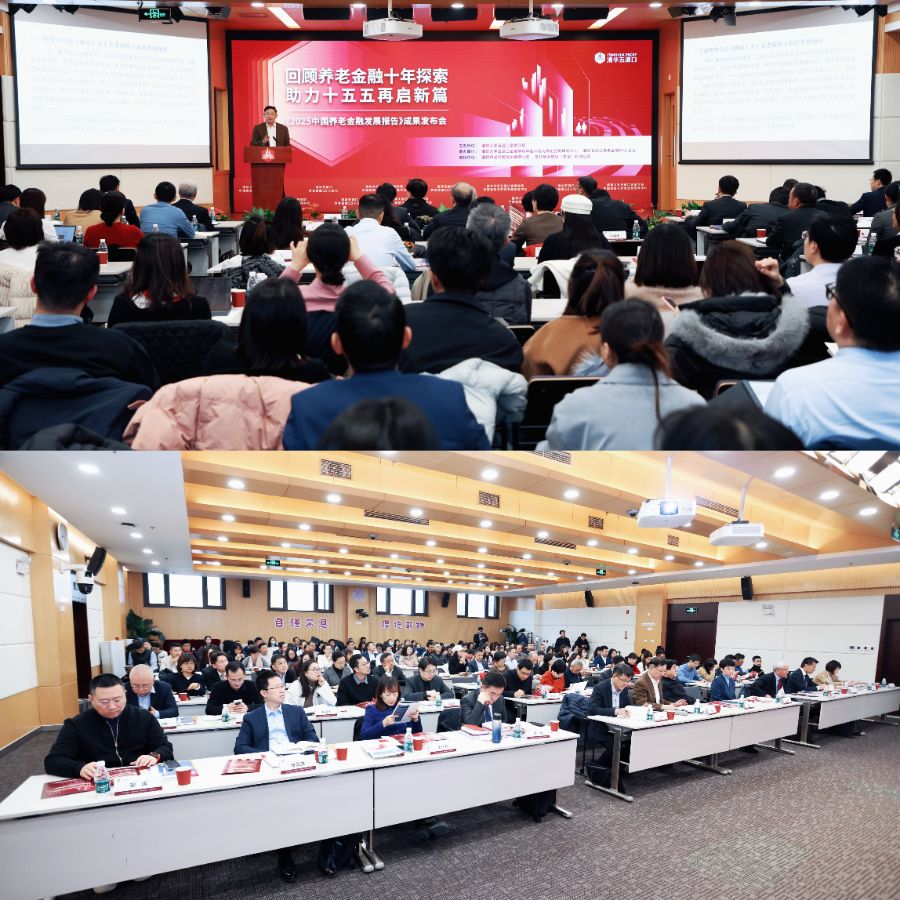
《中国养老金融发展报告2025》发布 探讨改革路径与发展方向
2 1 Shi Ji Jing Ji Bao Dao· 2025-12-23 14:17
Core Insights - The "China Pension Finance Development Report 2025" was released, focusing on the exploration of pension finance over the past decade and discussing new reform paths and development directions for the 14th Five-Year Plan period [1] Group 1: Key Themes from the Conference - Tsinghua University's Wudaokou School of Finance emphasizes the importance of pension finance as a long-term research focus, providing empirical references for policy-making and decision support for market participants [2] - The need to improve the multi-pillar pension system is highlighted, including national coordination of urban employee basic pension insurance and enhancing the coverage of enterprise annuities [2] - The conference discussed the necessity of a higher quality universal insurance plan and the exploration of institutional arrangements for new employment forms [3][4] Group 2: Recommendations for Pension Reform - The focus on expanding and enhancing the second pillar of the pension system and strengthening the third pillar through personal pension accounts is emphasized [4] - The importance of developing innovative smart social security systems using technology to optimize services and enhance fund management is noted [4] - The need for a coordinated approach involving central, local, and individual efforts to improve the basic pension level and enhance the investment operation capabilities of pension funds is discussed [5] Group 3: Industry Perspectives - Representatives from various financial institutions discussed the importance of a long-term, systematic approach to pension finance, emphasizing product supply and the integration of services for the elderly [6] - The necessity of aligning pension systems with digital economy trends and demographic changes is highlighted, focusing on improving operational efficiency through technology [6] - The challenges faced by the elderly care industry, including supply-demand mismatches and the need for sustainable financial paths, were addressed [7] Group 4: Report Highlights - The report assesses the recent trends in domestic and international pension finance, focusing on the optimization of the three-pillar pension system and evaluating simplified enterprise annuity plans [7] - It provides a systematic review of pension asset management strategies and international experiences, particularly analyzing Japan's pension system reforms [7]

锚定ESG发展坐标——恒丰银行以金融担当书写高质量发展答卷
Jin Rong Jie· 2025-12-23 11:07
Group 1 - The core viewpoint emphasizes the role of financial institutions like Hengfeng Bank in promoting high-quality development through ESG principles, integrating financial services with social responsibility and environmental sustainability [1][9] Group 2 - Hengfeng Bank focuses on green finance as a core aspect of high-quality development, aiming to build a green financial brand and climate-friendly institution, with a green loan balance reaching 119.8 billion yuan and an average annual growth rate of 39% over the past three years [2] - The bank actively participates in international green finance initiatives, such as joining the UN Environment Programme Finance Initiative and launching innovative financial products like the "Heng Green+" product matrix [2] Group 3 - Hengfeng Bank has increased financial support for pollution reduction, energy conservation, and clean energy sectors, launching a "carbon reduction loan" model that links corporate carbon data to loan interest rates [3] - The bank approved a special credit of 30 million yuan for a carbon recycling project, demonstrating a new path for financial support in carbon capture, utilization, and storage (CCUS) technology [3] Group 4 - The bank emphasizes its commitment to social responsibility through initiatives aimed at rural revitalization and support for the elderly, launching the "Yueheng·Sui Xiang" brand for elderly financial services [5][6] - Hengfeng Bank has established the "Heng Ai Zhi Shan" fund to support various charitable activities, including healthcare for children and community support projects [6] Group 5 - The bank is committed to strong governance and risk management, integrating ESG factors into its credit processes and achieving recognition for its ESG risk management practices [7] - Hengfeng Bank's digital transformation efforts have led to high system availability and innovative data asset management, contributing to its operational stability and growth [8] Group 6 - The bank's financial performance remains robust, with total assets reaching 1.56 trillion yuan, revenue of 25.2 billion yuan, and net profit of 5.9 billion yuan, while maintaining a historically low non-performing loan ratio of 1.4% [8]
恒安标准养老保险万群:建议通过补贴帮助年轻人、低收入群体建立个人养老金账户
Zhong Guo Jing Ying Bao· 2025-12-23 08:32
具体来看,万群认为,政府扮演"兜底者"和"掌舵者"角色。在保基本、保公平方面,政府需保障全民基 本养老,并逐步缩小城乡、群体间的养老金差距。在制度建设方面,政府应推动养老三支柱的协同改 革,运用科学方法提升制度的执行力和民众的参与度。此外,政府还可通过补贴等方式,帮助年轻人、 低收入群体等未被税优政策覆盖的人群建立养老账户,并降低中小企业建立年金的制度成本。在应对老 龄化带来的长期护理需求方面,政府也需要在长期护理险的发展中发挥支持和引导作用。 市场发挥"供给者"和"赋能者"作用。当前养老金融产品同质化严重,市场需提供多层次、多元化的产品 体系,以匹配不同收入与风险偏好人群的需求。同时,市场应致力于构建覆盖全生命周期的从养老金融 到养老服务的全产业链。针对个人养老金产品目录中产品众多、选择困难的问题,商业机构可利用科技 手段(如大模型)提供低成本、高质量的投顾服务,降低投资者的参与门槛和决策成本。 个人作为第三支柱的主体责任人和受益者,要不断培养正确的养老理念,合理进行养老规划,并提升在 养老投资和服务中的参与度,将养老焦虑转化为养老行动。 中经记者樊红敏北京报道 "面对当前'一老一小''一低一高'的人口结构 ...
为县域经济注入金融动能
Jin Rong Shi Bao· 2025-12-23 05:13
县域经济是国民经济的基本单元,承担着连接城市和农村、推动区域均衡发展的重要任务。在深化金融 供给侧结构性改革、推动经济高质量发展的背景下,东源农商银行聚焦养老金融、普惠金融、科技金融 等重点领域,以定制方案破困局、以实地调研摸需求、靠创新模式提质效,让金融活水精准滴灌县域发 展各领域,在服务地方经济中交出了一份扎实的"实干答卷"。 定制方案畅通金融助老路 发展养老金融是金融机构服务民生的重要抓手。近日,《金融时报》记者跟随东源农商银行蓝口支行工 作人员走进河源市区某养老院,一场"实地走访+需求对接"的养老金融深度实践在此展开。 "完全投产后,我们能提供400多个就业岗位,年利润预计超1900万元,每年能给地方贡献近500万元税 收。"林女士说。 模式创新拓宽融资渠道 在广东某钢铁有限公司的生产车间里,机器轰鸣、钢水飞溅。这家年产值超7亿元的钢铁制品企业正谋 划着扩建一条高精度钢材生产线,但"资金需求大、周期长"的痛点成了拦路虎。 针对这一难题,东源农商银行灯塔支行创新推出"双主体授信+分阶段放款"模式,核定预授信6980万 元,首阶段放款590万元。为确保风险可控,该行建立"三查三访"机制:贷前查经营数据、查 ...
宁波银行:深耕“五篇大文章” 绘就金融高质量发展新图景
Jin Rong Shi Bao· 2025-12-23 03:21
Core Viewpoint - Ningbo Bank, as a nationally significant bank and a top global bank, focuses on creating value through professionalism and aims to support the real economy with its strategic orientation towards technology finance, green finance, inclusive finance, pension finance, and digital finance during the "14th Five-Year Plan" period [2][3]. Group 1: Financial Performance - As of September 2025, Ningbo Bank's total assets exceeded 3.5 trillion yuan, reaching 35,783.96 billion yuan, a growth of 14.50% from the beginning of the year, demonstrating strong asset expansion capabilities [2]. - The net profit attributable to shareholders for the first three quarters was 22.445 billion yuan, an increase of 8.39% year-on-year, indicating stable profit growth despite challenging external conditions [2][3]. - The non-performing loan ratio remained stable at 0.76%, with a provision coverage ratio of 375.92%, showcasing the bank's strong risk management capabilities [3]. Group 2: Technology Finance - Ningbo Bank has established a dedicated Technology Finance Department to provide comprehensive financial services for technology enterprises, focusing on their core needs across funding, technology, industry, and supply chains [4]. - The bank has successfully set up a 500 million yuan industrial fund in Jiaxing, enhancing project success rates to over 50% through a closed-loop system of fund investment and project implementation [5]. Group 3: Green Finance - By mid-2025, Ningbo Bank's green loan balance reached 68.814 billion yuan, an increase of 18.270 billion yuan from the beginning of the year, supporting the transition to a low-carbon economy [6]. - The bank issued five green bonds with a total amount of 7 billion yuan, and invested in 57 green bonds, holding a balance of 2.626 billion yuan [7]. Group 4: Inclusive Finance - In the first half of 2025, Ningbo Bank provided over 38 billion yuan in credit support to more than 20,000 small and micro enterprises, demonstrating its commitment to inclusive finance [8]. - The bank's "Bobo Zhila" platform offers comprehensive services, including carbon calculation and declaration, supporting enterprises in navigating development challenges [9]. Group 5: Pension Finance - Ningbo Bank's pension loan balance reached 790 million yuan by mid-2025, a significant increase of 273% from the beginning of the year, reflecting its focus on the aging population's financial needs [10]. - The bank has launched 170 personal pension products, catering to various age groups and risk preferences, enhancing wealth accumulation for residents [10]. Group 6: Digital Finance - Ningbo Bank has upgraded its digital product offerings, including the "Kunpeng Treasury" and "Financial Manager," to enhance service efficiency for enterprises [12]. - The bank has successfully facilitated equipment mortgage financing for manufacturing enterprises, alleviating financial pressures on small and medium-sized businesses [12][13].


招商银行成都分行:全力服务区域增长极 做好金融“五篇大文章”
Zhong Guo Jin Rong Xin Xi Wang· 2025-12-23 03:10
Core Viewpoint - During the "14th Five-Year Plan" period, China Merchants Bank Chengdu Branch has focused on providing financial services to the real economy, achieving significant results through continuous deepening of financial supply-side structural reforms [1] Group 1: Financial Services to Enterprises - The Chengdu Branch has established a partnership with a local biopharmaceutical company, providing comprehensive financial services including account opening and settlement, especially during the company's critical IPO preparation phase [2] - The bank leverages its group advantages to offer asset management support during the IPO process and continues to provide overseas fund management services post-listing, enhancing the company's capital returns [2] - As the company expands, the Chengdu Branch promptly offers project loans to support its research and expansion efforts, demonstrating a full-cycle, one-stop financial service model [2] Group 2: Focus on Key Industrial Chains - The Chengdu Branch plans to continue its focus on 16 key industrial chains in Chengdu, refining services for park enterprises and creating a detailed industrial map to assist more small and micro enterprises in integrating into the industrial chain [2] - The bank aims to build a new financial service ecosystem that integrates "circle-chain fusion" to support local economic development [2] Group 3: Green Finance Initiatives - The Chengdu Branch integrates green and low-carbon concepts into its development strategy, providing targeted financial support to the green industry in Sichuan to accelerate local "dual carbon" goals [3] - The bank has established a special support plan for carbon reduction bill rediscounting, aiding enterprises in clean energy and environmental protection sectors [3] - As an underwriter, the bank has participated in the issuance of green bonds for various enterprises, successfully lowering financing costs while supporting the development of the green economy [3] Group 4: Inclusive Finance and Support for SMEs - The Chengdu Branch focuses on the six advantageous industries in Sichuan and the "8+28" key industrial chains in Chengdu, innovating supply chain finance to alleviate financing difficulties for small and micro enterprises [4] - The bank enhances support for specialized, innovative, and strategic emerging industry SMEs, providing various financial products to improve the success rate of financing [4] Group 5: Pension and Elderly Financial Services - The Chengdu Branch is developing a comprehensive pension service system, focusing on the needs of elderly clients through various initiatives, including facility upgrades and tailored product offerings [4] - The bank aims to create a one-stop personal pension service experience that is simple, easy to use, and highly efficient [4] Group 6: Digital Financial Solutions - The Chengdu Branch actively supports local enterprises in digital transformation by launching various digital solutions, including payment services and real-time bill payments through its app [5] - The bank focuses on providing tailored financial solutions for upstream and downstream SMEs, promoting digital products to enhance their operational efficiency [5] Group 7: Future Outlook - As the "14th Five-Year Plan" concludes and the "15th Five-Year Plan" begins, the Chengdu Branch will continue to strengthen its efforts in serving the real economy, promoting industrial upgrades, ensuring policy implementation, and improving people's livelihoods [7]

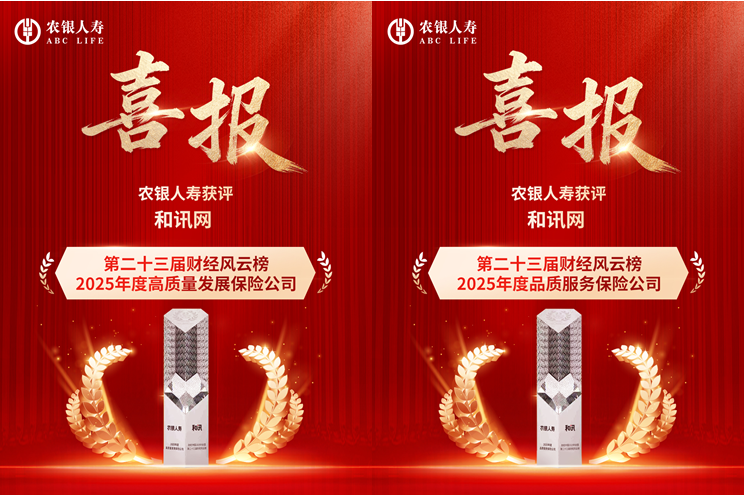
农银人寿荣膺 “高质量发展保险公司”“品质服务保险公司” 双项大奖
Jin Rong Jie Zi Xun· 2025-12-23 02:50
近日,由联办集团、和讯联合主办,财经中国会承办的"财经中国2025年会暨第23届财经风云榜"在京举 行。本次大会以"寻找中国经济破局之路"为主题,共同探讨中国经济发展关键挑战与转型机遇。会 上,"第23届财经风云榜"正式揭晓,农银人寿荣膺"2025年度高质量发展保险公司"与"2025年度品质服务 保险公司"双项大奖。 自2013年挂牌成立以来,农银人寿始终坚定保险保障初心,大力推进转型升级,致力于推进公司高质量发 展。2025年,公司不断提升综合服务水平和企业内生动力,服务客户数量超过2100万,连续五年获评保险 公司经营评价结果最高等级A类,连续两年在人身险公司监管评级中获得最高级1级,为公司持续高质量 发展奠定了坚实基础。 以产品为本,坚定保障初心。农银人寿深耕养老金融,积极开发各类商业养老保险产品,有效满足多样化 养老需求,建立健全周期长、收益稳、风险低的养老产品体系。其中,"农银人寿百岁人生(A款)"专属 商业养老保险产品正式入驻电子社保卡平台,为超10亿的电子社保卡用户提供安全稳健、多重保障、投资 灵活的养老保险服务,积极助力养老"第三支柱"保险业务高质量发展。同时,公司积极服务普惠金融,打 造短期 ...
中信建投期货:奋楫笃行显担当 服务实体见实效
Qi Huo Ri Bao Wang· 2025-12-23 02:30
Core Viewpoint - The central financial work conference during the "14th Five-Year Plan" period emphasizes the goal of accelerating the construction of a financial power, aiming to create a capital market that is "safe, standardized, transparent, open, vibrant, and resilient" to promote high-quality financial development in the new era [1] Group 1: Company Development and Strategy - The company is committed to implementing the spirit of the 20th National Congress of the Communist Party and the series of important instructions from General Secretary Xi Jinping regarding financial work, focusing on a path of financial development with Chinese characteristics [1][2] - The number of party branches within the company increased from 4 to 21 during the "14th Five-Year Plan," with the proportion of party members rising from 12% to 20%, enhancing the grassroots party organization's role [2] - The company has been recognized for its strong leadership and core competitiveness, with continuous improvement in various operational indicators [2] Group 2: Focus on Core Business - The company focuses on its main responsibilities, utilizing the futures market for price discovery, risk management, and resource allocation to support the stable development of real enterprises [3] - In serving technology finance, the company has expanded its services to national-level specialized and innovative enterprises, providing comprehensive solutions such as hedging and consulting [3] - The company has established a significant advantage in green finance, contributing to the industrial chains of industrial silicon, lithium carbonate, and polysilicon, while also participating in the preparation for the listing of electricity and carbon emission rights [3] Group 3: Social Responsibility and Financial Inclusion - The company has successfully conducted 445 "insurance + futures" projects, benefiting nearly 250,000 farmers with compensation exceeding 200 million yuan [4] - It has established a public welfare futures trader education base in Chongqing, producing over 4,000 original educational materials and reaching more than 750,000 people since its operation began in October 2021 [4] - The company is enhancing its professional service capabilities in pension finance and has introduced age-friendly services to protect investor rights [4] Group 4: Regional Development - The company has been deeply involved in the "智融惠畅" project in Chongqing, assisting in the establishment of the first log futures delivery warehouse and enhancing regional resource allocation capabilities [5][6] - It provides risk management services to traditional and emerging industries in Chongqing, contributing to the growth of the "33618" modern manufacturing cluster [6] Group 5: Collaborative Development - The company is strengthening internal and external collaboration to enhance customer service quality, building a comprehensive business advantage through a nationwide collaborative network [7] - It integrates services with various stakeholders, including government, exchanges, and educational institutions, to expand its service ecosystem and enhance brand image [7] Group 6: Risk Management - The implementation of the futures and derivatives law during the "14th Five-Year Plan" is crucial for the industry to serve the real economy and mitigate financial risks [8] - The company is enhancing its risk prevention and compliance management systems, focusing on early detection and resolution of risks [8] Group 7: Future Outlook - As the "15th Five-Year Plan" begins, the company aims to continue its commitment to serving the real economy, focusing on financial innovation and risk management to support national strategic goals [9]

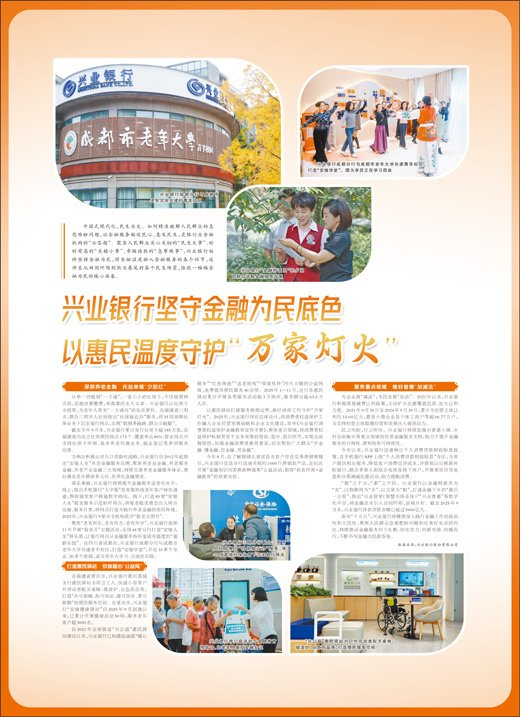
兴业银行坚守金融为民底色 以惠民温度守护“万家灯火”
Ren Min Wang· 2025-12-23 01:33
Core Viewpoint - The bank emphasizes the importance of financial services that cater to the needs of the people, focusing on enhancing the quality of life and addressing urgent issues faced by the community [2][8]. Group 1: Financial Services for the Elderly - The bank has developed a comprehensive pension financial service brand called "Anyu Life," focusing on pension finance, elderly service finance, and elderly industry finance since 2012 [3][4]. - As of September 2023, the bank has issued over 1.85 million social security cards and established 173 convenient service points in Fujian Province, achieving an 86% coverage rate [3]. - The bank has launched various initiatives to improve financial services for the elderly, including a "large font" mobile banking app and a green channel for elderly customers [4]. Group 2: Community Support Initiatives - The bank has created "Hui Min Stations" to provide essential services for outdoor workers, including seating, microwaves, and emergency medical supplies [5]. - Since 2021, the bank has developed a public welfare network that offers over 40 free services, conducting more than 30,000 service activities and reaching over 635,000 people by November 2025 [5]. - The bank has engaged in community support by purchasing unsold agricultural products and organizing educational activities, demonstrating a dual impact of assisting farmers and providing financial education [6]. Group 3: Inclusive Financial Policies - Since 2021, the bank has implemented fee reduction policies, benefiting over 667,700 small and micro enterprises with a total of approximately 1.504 billion yuan in savings [7]. - The bank has responded to personal consumption loan subsidy policies by launching a dedicated section in its mobile app, aimed at reducing customer credit costs [7]. - The bank has introduced digital platforms to enhance financial accessibility in rural areas, with agricultural loan balances exceeding 540 billion yuan by September 2025 [7]. Group 4: Future Directions - The bank plans to continue its commitment to addressing the urgent needs of the public and enhancing financial services, aiming for deeper integration and innovation in its offerings [8].