外汇储备

Search documents
央行:中国9月末外汇储备33386.58亿美元
Zheng Quan Shi Bao Wang· 2025-10-07 02:15
Core Viewpoint - As of the end of September, China's foreign exchange reserves reached 33,386.58 billion USD, an increase from the previous value of 33,221 billion USD [1] Summary by Category - **Foreign Exchange Reserves** - China's foreign exchange reserves increased by 165.58 billion USD from the previous month [1]
外汇储备增长对波黑至关重要
Shang Wu Bu Wang Zhan· 2025-10-01 15:07
Core Insights - The growth of foreign exchange reserves in Bosnia is crucial for macroeconomic stability, with reserves reaching 17.67 billion marks and a year-on-year increase of 7.5% as of July [1] - Remittances from abroad are the primary source of funding to offset the significant trade deficit, alongside foreign investments and external service income [1] - The fixed exchange rate system between the mark and the euro diminishes the competitiveness of Bosnian exports due to higher inflation rates compared to Western Europe, leading to a 30%-40% decline in export price competitiveness over the past 20 years [1] Group 1 - The continuous growth of foreign exchange reserves reflects a positive macroeconomic trend in Bosnia [1] - The trade deficit is significantly mitigated by remittances, foreign investments, and service income [1] - The fixed exchange rate system poses a long-term risk to export competitiveness due to inflation disparities [1] Group 2 - The currency board system imposes fiscal discipline, preventing the government from printing money to cover expenditures, thus avoiding hidden inflation [2] - There is a need for Bosnia to enhance the complexity of its export products to maintain price competitiveness [2] - Concerns arise that the volume of Bosnian exports may decline rather than grow, despite the need for more complex products [2]
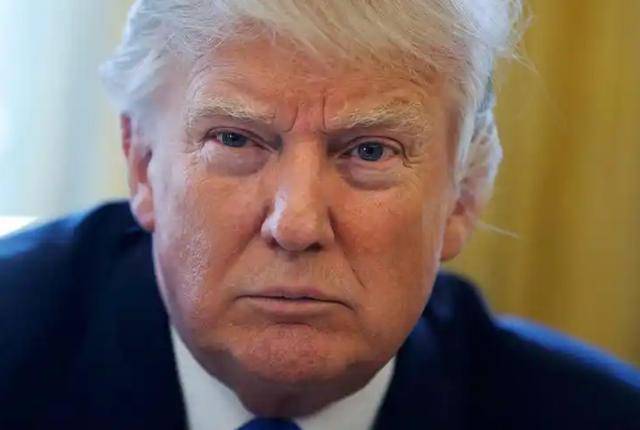
特朗普果然被耍?中国邻国终于强硬一回,说好的3500亿不给美国了
Sou Hu Cai Jing· 2025-09-29 14:48
Core Viewpoint - The article discusses the failed promise of a $350 billion investment from South Korea to the U.S., highlighting the disparity between the expectations set by the Trump administration and the financial realities faced by South Korea [1][3][20]. Group 1: Investment Agreement Background - In July, the U.S. and South Korea reached an agreement where the U.S. would reduce tariffs from 25% to 15%, and South Korea would create a $350 billion investment fund, primarily funded through loans and equity investments, not cash [5][11]. - The U.S. later demanded the $350 billion as an upfront payment, which South Korea deemed unrealistic and unsustainable given its foreign reserves [7][11][13]. Group 2: Financial Implications for South Korea - South Korea's total foreign reserves amount to $416.3 billion, meaning the requested $350 billion would consume 84% of these reserves, jeopardizing its economic stability [11][15]. - The total direct investment by South Korean companies globally over the past five years is only $348.9 billion, indicating that the U.S. demand exceeds South Korea's recent investment capabilities [13][15]. Group 3: Political and Economic Consequences - South Korean President Lee Jae-myung warned that complying with U.S. demands could lead to a financial crisis similar to that of 1997, which had severe repercussions for the country's economy [15][22]. - The upcoming APEC summit in October is critical, as both nations must negotiate terms that balance U.S. demands for cash with South Korea's need for economic stability [20][27]. Group 4: Negotiation Dynamics - South Korea's negotiation team has shifted to a more assertive stance, proposing that investments be primarily in the form of loans and ensuring that projects are profitable [17][20]. - The article emphasizes that international relations are driven by power dynamics, and South Korea's firm position reflects its need to protect its economic interests against U.S. pressure [24][25].

巴基斯坦外汇储备增加2200万美元,卢比汇率保持稳定
Shang Wu Bu Wang Zhan· 2025-09-28 05:21
Group 1 - The central bank of Pakistan reported an increase in foreign exchange reserves by $22 million for the week ending September 19, bringing total reserves to $14.38 billion [1] - The total national foreign exchange reserves reached $19.79 billion, with commercial banks holding net foreign exchange reserves of $5.41 billion [1] - The Pakistani Rupee appreciated slightly by 0.01% against the US dollar, closing at 281.41 on September 25, marking a cumulative appreciation of 0.84% since July [1] Group 2 - The price of gold in Pakistan decreased significantly on September 25, aligning with trends in the international market [1]
阿根廷汇市涌入大量美元,各方呼吁政府重建外汇储备
Sou Hu Cai Jing· 2025-09-25 03:48
到当地时间周三晚间,税务机构宣布,政府设定的70亿美元税收优惠政策上限已全部用尽。要享受此项 税收减免,出口商必须在72小时内将获得美元的90%在外汇市场出售。(新华财经) 此前,阿根廷央行在上周短短三天内抛售了超过10亿美元以捍卫与国际货币基金组织(IMF)达成的汇 率区间。出口商们争相利用米莱政府周一宣布的临时税收优惠措施,以及在美国政府明确表示支持其经 济议程后变得更具吸引力的汇率。 阿根廷外汇市场正因粮食出口带来的美元大量涌入而出现流动性激增,这促使各方呼吁政府开始重建其 外汇储备。 ...
降关税稳定货币,大订单带来外汇,阿根廷农民为“零税出口”叫好
Huan Qiu Shi Bao· 2025-09-24 23:00
Core Viewpoint - The Argentine government has temporarily eliminated export withholding taxes on agricultural products such as grains, beef, and poultry to alleviate foreign exchange pressure and stimulate exports, a move that is expected to last until October 31 or until export declarations reach $7 billion [1][4]. Group 1: Economic Impact - The removal of withholding taxes is expected to significantly reduce the tax burden on key agricultural exports, with current export duties on soybean meal and oil at 24.5%, soybeans at 26%, and corn and wheat at 9.5% [2]. - Analysts estimate that this measure could lead to a $1.4 billion reduction in government tax revenue, equivalent to 0.2% of GDP [2]. - The policy is anticipated to lower costs by $123.7 per ton for soybeans and $29.2 per ton for corn, potentially boosting export activity [3]. Group 2: Market Reactions - Following the announcement, soybean and corn prices experienced declines, with Chicago soybean meal futures dropping by 1.9% and soybean oil futures by 2.5% [6]. - The Rosario Grain Exchange forecasts record grain exports of 105.1 million tons for the 2025/26 season, driven by a strong harvest [5]. Group 3: International Trade Dynamics - China has increased its purchases of Argentine soybeans following the tax removal, with reports indicating at least 10 shipments ordered, each approximately 65,000 tons [7]. - This shift in trade dynamics may negatively impact U.S. soybean farmers, who are facing competition from South American producers amid stalled trade negotiations with China [7]. - The Argentine government is seen to be pragmatically enhancing trade relations with China, which could lead to deeper economic cooperation in agricultural exports [8].
乌兹别克斯坦国际储备突破500亿美元
Shang Wu Bu Wang Zhan· 2025-09-23 15:52
Core Insights - As of September 1, Uzbekistan's international reserves reached $50.08 billion, an increase of $1.34 billion, representing a growth rate of 2.76% [1] Group 1: International Reserves - The total international reserves of Uzbekistan are $50.08 billion, with a month-on-month increase of $1.34 billion [1] - Gold reserves amount to $40.06 billion, having increased by $1.38 billion, marking the second consecutive month of record highs [1] - International securities reserves stand at $1.016 billion [1] Group 2: Foreign Exchange Reserves - Foreign exchange reserves decreased by $49.3 million, slightly below $8.5 billion [1] - The foreign exchange reserves include deposits in other central banks and the International Monetary Fund (IMF) totaling $910 million and deposits in foreign commercial banks amounting to $7.52 billion [1]
冠通期货资讯早间报-20250923
Guan Tong Qi Huo· 2025-09-23 01:11
Report Summary 1. Market Performance of Overnight Futures - International precious metal futures generally rose, with COMEX gold futures up 2.03% to $3781.20 per ounce and COMEX silver futures up 3.17% to $44.32 per ounce [3]. - International oil prices fluctuated narrowly, with WTI crude down 0.10% to $62.34 per barrel and Brent crude down 0.06% to $66.00 per barrel [4]. - London base metals showed mixed results, with LME zinc, lead, and copper rising, while tin, nickel, and aluminum falling [4]. - Most domestic futures contracts closed lower, with 20 - rubber rising nearly 1%, and glass, soda ash, and others falling more than 2% [5]. 2. Macroeconomic News - The People's Bank of China conducted 300 billion yuan of 14 - day reverse repurchase operations and kept the one - year and five - year LPR unchanged at 3% and 3.5% respectively [8][9]. - As of September 22, 2025, the Shanghai Export Containerized Freight Index (European route) dropped 12.9% from the previous period [10]. - China's foreign exchange reserves have remained above $3 trillion since the 14th Five - Year Plan, and above $3.2 trillion in the past two years [10]. - The Fed's Bostic is reluctant to support another rate cut in October, and the Cleveland Fed's president Hamrick said the Fed needs to be "very cautious" in lifting restrictive policies [10][11]. 3. Energy and Chemical Futures - As of September 22, the styrene inventory in East China's main ports increased by 2.48 million tons to 40.85 million tons [14]. - From September 22 - 28, 2025, the number of expected arrival ships of New Zealand logs at 13 Chinese ports increased by 67% week - on - week, and the arrival volume increased by 60% [14]. - As of the week of September 22, domestic asphalt social inventory decreased by 2.1% [15]. 4. Metal Futures - In August, China's lithium spodumene imports decreased by 17.5% month - on - month, equivalent to 56,000 tons of LCE [17]. - The silicon semiconductor industry has gradually completed destocking, and the demand for materials will be gradually released [17]. - In August 2025, China's primary aluminum production was 3.7903 million tons, up 2.66% year - on - year and 0.35% month - on - month [17]. - Indonesia's state - owned tin miner PT Timah expects to achieve its annual tin output target of 21,500 tons [19]. - In August 2025, global primary aluminum production was 6.277 million tons [19]. 5. Black - Series Futures - The Ministry of Industry and Information Technology and other departments issued a plan to stabilize the growth of the steel industry from 2025 - 2026, with an average annual growth target of about 4% for added value [21]. - From September 15 - 21, Mysteel's global iron ore shipments decreased, while China's port arrivals increased [22]. - Shougang Shuigang's bar rolling mill will be under maintenance from September 22 for 3 days, affecting the output of construction steel by 450 tons [24]. - The Ministry of Housing and Urban - Rural Development will promote the high - quality development of the housing and construction industry [24]. 6. Agricultural Futures - The Malaysian Palm Oil Council expects palm oil to trade between 4200 - 4500 ringgit in the coming weeks [26]. - From September 1 - 20, 2025, Malaysia's palm oil production decreased, and export data showed mixed results [26]. - As of September 17, the national live pig price decreased by 1.58% from September 10 [26]. - Argentina temporarily canceled export taxes on soybeans, corn, and wheat [29]. - As of last Thursday, Brazil's 2025/26 soybean sowing area reached 0.9% of the expected total area [29]. - As of September 22, the national imported soybean port inventory decreased by 143,430 tons week - on - week [30]. - Brazil's soybean processing enterprises plan to invest $1.11 billion in the next 12 months [30]. - As of September 18, the US soybean export inspection volume was 484,116 tons [30]. - As of September 21, the US soybean's good - to - excellent rate was 61%, and the harvest rate was 9% [31]. 7. Financial Markets Financial - The CSRC will accelerate the reform of the capital market, deepen the reform of the STAR Market, ChiNext, and the Beijing Stock Exchange [34]. - A - share indices rose, with funds concentrating on technology stocks [34]. - The Hong Kong Hang Seng Index fell, and cross - border internet brokers further closed the account - opening channels for mainland Chinese residents [33][34][35]. - The Hong Kong Securities and Futures Commission is consulting on the investor identification code system [36]. - Berkshire Hathaway has cleared its position in BYD, and Kweichow Moutai has not adjusted its annual performance target [36][38]. Industry - The Ministry of Industry and Information Technology and other departments issued plans for the steel and energy equipment industries [39]. - The Ministry of Sports issued a guidance on promoting the high - quality development of sports - promoted health [39]. - The central Cyberspace Administration launched a special campaign to rectify the issue of maliciously inciting negative emotions [39]. - As of the end of August, the number of tax - refund stores for outbound travelers in China exceeded 10,000, and the sales of tax - refund goods increased by 97.5% year - on - year [40]. - In the first half of 2025, the inventory book value of typical real - estate enterprises decreased by 4.6% [40]. Overseas - France recognized the State of Palestine [42]. - Fed officials have different views on interest - rate cuts [42]. - The US Treasury Secretary is ready to support Argentina [42]. - France is considering a wealth tax on individuals with over 100 million euros in assets [42]. - The Reserve Bank of Australia is expected to keep interest rates unchanged next week [43]. - Turkey terminated additional tariffs on some US imports [43]. International Stock Markets - US stocks hit new closing highs, European stocks showed mixed results, and Japanese and South Korean stocks rose [45]. - Buffett increased his stake in Japanese trading companies, and Pfizer will acquire Metsera for up to $7.3 billion [46]. Commodities - International precious metal futures rose, international oil prices fluctuated narrowly, and base metals showed mixed results [3][4][46]. - Congo (Kinshasa) will end the cobalt export ban on October 15 and implement a new export quota policy [48]. Bonds - Yields of major inter - bank interest - rate bonds generally declined, and the central bank conducted reverse repurchase operations [49]. - The Hong Kong Exchange added a floating reference rate option for north - bound swap connect [49]. - The central bank issued 60 billion yuan of 6 - month RMB central bank bills in Hong Kong [50]. - Foreign investors continued to net - buy Japanese ultra - long - term government bonds in August [50]. - US Treasury yields rose [52]. Foreign Exchange - The Hong Kong dollar strengthened at the fastest pace in 20 years, and the on - shore RMB against the US dollar closed lower [53]. - The US dollar index fell, and most non - US currencies rose [54]. 8. Upcoming Events - There are various economic data releases, corporate earnings announcements, and stock listings scheduled, along with statements from central bank officials [56]

国家外汇局:我国外汇市场运行平稳 不论是活力还是韧性都在增强
Sou Hu Cai Jing· 2025-09-23 00:57
Core Insights - The foreign exchange market in China has shown stability and resilience during the "14th Five-Year Plan" period, with significant improvements in its functionality and depth [3][4]. Group 1: Market Performance - The cross-border receipts and payments in China are projected to reach $14 trillion in 2024, a 64% increase from 2020, with an average annual growth rate 8 percentage points higher than during the "13th Five-Year Plan" [3]. - The trading volume in the foreign exchange market is expected to be $41 trillion in 2024, a 37% increase from 2020, with both spot and derivative trading growing simultaneously [3]. Group 2: Market Structure and Participants - As of June 2023, there are 703 banks and 115 non-bank institutions participating in the interbank foreign exchange market, including 296 foreign institutions [3]. - The infrastructure for trading, clearing, and payment mechanisms has been continuously improved, effectively reducing transaction costs and settlement risks [3]. Group 3: Market Stability and Future Outlook - The ratio of corporate foreign exchange hedging has increased from 17% in 2020 to around 30%, while the proportion of the renminbi in cross-border trade has risen from 16% to nearly 30% [4]. - The long-term positive fundamentals of the Chinese economy and the steady progress of high-level opening-up are expected to support a stable international balance of payments [4]. - The foreign exchange reserves have remained stable above $3.2 trillion for nearly two years, serving as a crucial stabilizer for the national economy [5].