
长期投资

Search documents
“长期投资·价值投资”基金经理100系列高端访谈即将在沪启动
2 1 Shi Ji Jing Ji Bao Dao· 2025-10-20 11:12
Core Insights - The "Fund Manager 100" series of high-end interviews, co-hosted by 21st Century Business Herald and Dianshi Investment, will officially launch on October 22 in Shanghai, focusing on the long-term viability of the "Fixed Income +" strategy [2][12] - The event aims to create a professional and high-quality communication platform, emphasizing the performance of fund managers and their products [2][3] Group 1: Event Overview - The first event will feature discussions on asset allocation strategies, stock-bond mixed strategies, and achieving low-volatility returns [3] - Notable fund managers from various firms, including Anxin Fund, GF Fund, and others, will participate in roundtable discussions to share practical insights on "Fixed Income +" investments [3][5] Group 2: Fund Performance Highlights - Anxin Stable Growth A, managed by Li Jun, has achieved positive returns every year since its inception in 2015, with a total scale of 10.371 billion [4] - GF Fund's GF Jiyu A, managed by Zeng Gang, has a year-to-date return of 9.37% and is highly favored by institutional investors, with over 98% institutional holding [4][5] - The newly established mixed bond fund, Zhao Shang An Ning A, has been co-managed by experienced managers with over 12 years in the industry [5] Group 3: Professional Engagement - The event is expected to attract a diverse audience from the asset management industry, including investment managers, researchers, and product experts from various sectors [10][11] - The focus will be on fostering deep exchanges of ideas and experiences among participants, enhancing the overall quality of discussions [11]


华商基金投教系列:“非法集资”难分辨 遇上“这些”须警惕丨北京公募基金高质量发展在行动
Xin Lang Ji Jin· 2025-10-20 09:59
Group 1 - The core theme of the event is "New Era, New Fund, New Value," aimed at promoting high-quality development in the public fund industry in Beijing [1] - The initiative is guided by the Beijing Securities Regulatory Bureau and involves collaboration with various stakeholders, including fund managers, sales institutions, and media [1] - The activities will span over a month and focus on investor education, protection, and enhancing the public fund industry's ability to serve the real economy [1] Group 2 - Huashang Fund is actively promoting financial and investment knowledge, advocating for long-term and rational investment concepts [1] - The organization aims to enhance public awareness of risk prevention and contribute to the high-quality development of the industry [1]
“新时代·新基金·新价值”|公募机构携手走进商圈 筑牢市民财富安全防线
Zheng Quan Ri Bao Wang· 2025-10-20 09:47
Core Viewpoint - The event "Financial Life Carnival" organized by Dongfang Fund and other partners aims to promote financial literacy and rational investment concepts among the public, responding to the call for high-quality development of public funds in Beijing [2][5]. Group 1: Event Overview - The event took place on October 17 at Longhu Lize Tianjie in Beijing, featuring interactive activities and financial knowledge dissemination [2]. - It focused on addressing citizens' daily financial needs through engaging interactions and professional explanations [2][3]. Group 2: Educational Approach - The event included interactive elements such as "check-in stamps" and "knowledge quizzes" to educate participants about common financial scams, legitimate investment channels, and personal financial information protection [3][4]. - A shift from passive learning to active participation was emphasized, with participants engaging in hands-on activities to learn about fraud prevention and retirement planning [4]. Group 3: Community Engagement - Dongfang Fund aims to integrate professional financial knowledge into everyday consumer scenarios, enhancing the connection between fund companies and the public [5]. - The event was well-received, with many participants expressing that learning about financial management in a relaxed atmosphere was both practical and enjoyable [5].
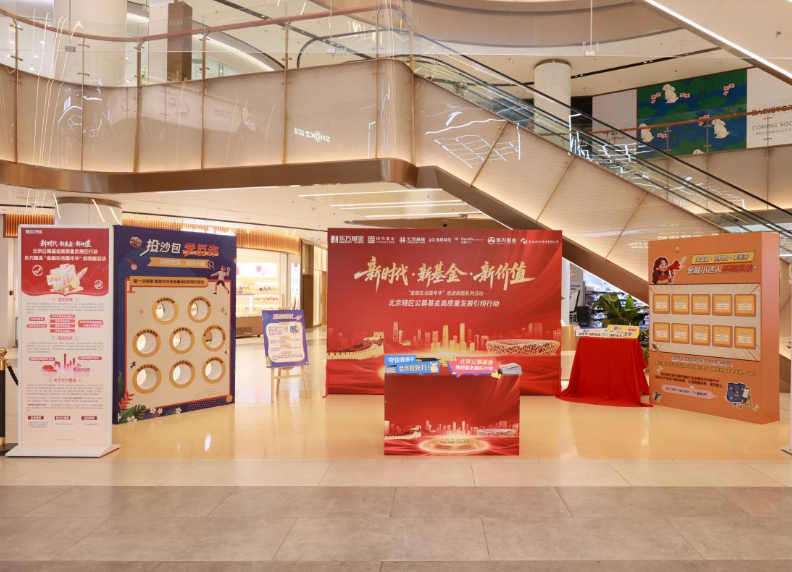
“新时代·新基金·新价值” | 公募机构携手走进商圈,筑牢市民财富安全防线
Xin Lang Ji Jin· 2025-10-20 08:36
Core Insights - The event "Financial Life Carnival" was organized by Dongfang Fund in collaboration with several other funds to promote high-quality development in public funds in Beijing [1] - The initiative aims to enhance public financial literacy and encourage rational investment practices through interactive activities and professional guidance [1][5] Group 1: Event Overview - The event took place on October 17 and focused on addressing citizens' daily financial management needs [1] - Activities included interactive checkpoints and financial knowledge dissemination to engage participants in understanding common financial scams and proper investment channels [3][4] Group 2: Educational Approach - The event featured a shift from passive learning to active participation, encouraging attendees to engage in learning about financial safety and investment strategies [4] - Participants learned about typical scams and investment principles, fostering a better understanding of wealth management [4][5] Group 3: Community Engagement - Dongfang Fund emphasizes a user-centered approach, integrating financial education into everyday consumer experiences to enhance investor engagement [5][6] - The event was well-received, with many participants expressing enjoyment in learning financial knowledge in a relaxed atmosphere [5]
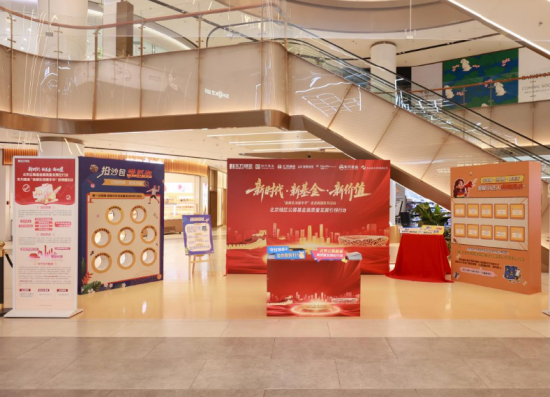
走商圈,进高校,入社区——长盛基金公募高质量发展活动在行动
Zhong Guo Jing Ji Wang· 2025-10-20 00:59
Core Viewpoint - The article highlights the initiatives taken by the Beijing public fund industry to promote high-quality development through various educational activities aimed at enhancing financial literacy and investor protection [1][4]. Group 1: Activities in Commercial Areas - Changsheng Fund successfully implemented the "Financial Life Carnival" in the Guomao Wanda Plaza, focusing on investment and anti-fraud knowledge through interactive quizzes, attracting hundreds of participants [2]. - The event showcased the development history and future trends of China's public fund industry, promoting the concepts of rational, value, and long-term investment [2]. Group 2: Engagement with Universities - Changsheng Fund collaborated with several other funds to educate university students on financial knowledge and rational investment concepts at the Central University of Finance and Economics [3]. - A senior investment education lecturer shared strategies for navigating investment cycles, emphasizing the importance of understanding fund characteristics and the correct mindset towards fund investment [3]. Group 3: Community Outreach - Changsheng Fund partnered with the Alipay Blue Vest team to conduct anti-fraud and pension finance lectures in communities, addressing the rising issues of illegal fundraising and online scams [4]. - The fund aims to enhance investor service and support by transitioning from a product-centered approach to a customer-centered model, focusing on emotional management and behavior guidance [4].
银华鑫禾拟任基金经理和玮:舍弃锐度 追求长期稳健收益
Zhong Guo Ji Jin Bao· 2025-10-20 00:12
Core Viewpoint - The investment philosophy of Yin Hua Fund emphasizes long-term absolute returns, focusing on stable holding experiences for investors rather than maximizing short-term net value gains [1][2]. Investment Style and Strategy - The team led by He Wei integrates absolute return concepts into their relative return-focused public funds, aiming for balanced investment styles that provide excess returns while controlling maximum drawdowns [2][3]. - He Wei's investment framework prioritizes stocks with strong fundamental trends and safety margins, emphasizing price at entry, win rates, potential returns, valuation, and trading crowding [3][4]. Performance Metrics - The Yin Hua Hu Shen Stock Connect Fund, managed by He Wei, achieved a three-year unit net value growth rate of 24.08%, ranking in the top 3% of its category, with an annual excess return of 3-12 percentage points from 2022 to 2024 [3][10]. Market Outlook - The Chinese capital market is viewed as undervalued, with strong fundamentals in manufacturing, technology, and pharmaceuticals, and is expected to benefit from foreign capital inflows in the future [7]. - The A-share market is anticipated to experience volatility due to structural changes, but the long-term outlook remains positive [7][8]. Sector Preferences - The long-term investment value in the non-ferrous metals sector is highlighted, with commodities like gold, copper, and aluminum expected to maintain favorable supply-demand dynamics [8]. - The financial sector, particularly bank stocks and brokerages, is seen as having reasonable valuations and potential for recovery as market conditions improve [8]. New Fund Launch - The upcoming Yin Hua Xin He Mixed Securities Investment Fund will adopt a floating management fee structure, aiming to build a long-term relationship with investors through steady returns [6]. - This new fund will include investments in the Hong Kong stock market, which is perceived to offer attractive opportunities compared to A-shares [6].
银华鑫禾拟任基金经理和玮:舍弃锐度 追求长期稳健收益
中国基金报· 2025-10-20 00:10
Core Viewpoint - The article emphasizes the importance of long-term investment strategies and the need for a stable holding experience for investors, even during market fluctuations [1][4]. Investment Philosophy - The investment style of the team led by He Wei focuses on "long-term absolute returns," integrating absolute return concepts into relative return assessments [5]. - The team aims to balance relative index outperformance with maximum drawdown control, especially during market bubbles by shifting towards defensive and stable blue-chip stocks [5][6]. Performance Metrics - The Silver Hua Shanghai-Shenzhen Stock Connect Fund managed by He Wei achieved a nearly 24.08% growth rate over three years, ranking in the top 3% of its category [6]. - The fund has consistently delivered excess returns of 3-12 percentage points annually from 2022 to 2024 [6]. Investment Framework - The investment framework includes selecting fundamentally driven stocks with safety margins, prioritizing win rates over potential returns, and avoiding high-valuation, crowded trades [7]. - Emphasis is placed on macroeconomic trends and future possibilities, as well as a focus on valuation metrics like PB, PE, and ROE [7]. Long-term Perspective - The approach is influenced by the long-term investment perspective of social security funds, which allows for more strategic considerations in investment decisions [6][8]. - The company aims to create a stable net value curve through a disciplined investment philosophy [8]. Market Outlook - The company views the Chinese capital market as fundamentally strong, with potential for significant foreign investment inflows in the future [13]. - The article highlights the importance of the external environment and domestic policies in shaping market conditions, with a focus on sectors like consumer and real estate [13]. Sector Focus - The company maintains a positive outlook on the non-ferrous metals sector, citing favorable supply-demand dynamics and reasonable valuations [14]. - Financial stocks are seen as having recovery potential, while technology stocks may face volatility due to external influences [14]. New Fund Launch - The upcoming Silver Hua Xin He Mixed Securities Investment Fund will feature an innovative floating management fee structure, aiming for stable returns and long-term investor relationships [10][11]. - The new fund will also include investments in the Hong Kong stock market, which is perceived to offer attractive opportunities [12].

顶级大佬的线下“固收+”干货局,欢迎报名
点拾投资· 2025-10-19 10:04
Core Insights - The article announces the launch of the first offline forum series titled "Long-term Investment · Value Investment," which will take place on October 22 in Shanghai, co-hosted by 21st Century Business Herald and Dianqi Investment [1][2] Group 1: Event Highlights - The forum will focus on the "Fixed Income +" strategy, which has gained popularity as investors seek alternatives to bank wealth management products amid declining returns [1] - Several prominent fund managers have been invited to share their insights, including Li Jun from Anxin Fund, Zeng Gang from GF Fund, Wu Xiao from CMB Fund, Chen Daye from Penghua Fund, Yu Jianfeng from Dongfanghong Asset Management, and Guo Liyan from Huashan Fund [1] - The event is part of the "Fund Manager 100" series, which aims to showcase top fund managers identified through three years of ranking in active equity and fixed income categories [2] Group 2: Participation Details - The event is free of charge and primarily invites institutional investors, banks, and brokerage channels [2] - Registration is limited and operates on a first-come, first-served basis, with no video live streaming available [4]

华商基金投教系列:灵活就业人群如何规划养老丨北京公募基金高质量发展在行动
Xin Lang Ji Jin· 2025-10-17 02:52
Group 1: Public Fund Development in Beijing - The event series titled "Beijing Public Fund High-Quality Development" aims to promote the transformation and upgrading of the public fund industry, enhancing its ability to serve the real economy [3] - The theme "New Era, New Fund, New Value" emphasizes multi-level and multi-form publicity and interaction to strengthen investor education and protection [3] - Huashang Fund is actively promoting financial and investment knowledge, advocating for long-term and rational investment concepts, and enhancing public risk prevention awareness [3] Group 2: Flexible Employment and Pension Planning - As of the end of 2023, flexible employment personnel account for 14.3% of the national employment population, totaling approximately 200 million individuals [8] - The optimal age for starting pension financial planning is perceived to be around 37 years old, with varying opinions across different demographic groups [6][7] - The lack of suitable pension financial products and unstable income are significant barriers preventing individuals from implementing pension wealth planning [8][10] Group 3: Personal Pension System - The personal pension system was implemented in November 2022, allowing flexible employment groups to participate without restrictions based on employment region or household registration [11] - By the end of 2023, over 50 million individuals had opened personal pension accounts, indicating a growing interest in personal retirement planning [11] - The exclusive commercial pension insurance, which began as a pilot program, has transitioned to a regular business model, catering to the needs of flexible employment personnel [10][11]
华商基金投教系列:如何更好的养老丨北京公募基金高质量发展在行动
Xin Lang Ji Jin· 2025-10-17 02:35
为贯彻落实《推动公募基金高质量发展行动方案》,在北京证监局指导下,北京证券业协会携手北京公 募基金管理人、基金销售机构、基金评价机构及多家主流媒体,共同启动"北京公募基金高质量发展系 列活动"。 本次活动以"新时代·新基金·新价值"为主题,旨在通过多层次、多形式宣传与互动,强化投资者教育与 保护,推动公募基金行业转型升级,提升服务实体经济能力,打造北京金融高质量发展新名片。 专题:北京公募基金高质量发展系列活动 新时代、新基金、新价值 摘要:新时代·新基金·新价值——北京公募基金高质量发展在行动 ATIL 7 ิต - Dane Mark Par 用彩票向 幸福制出! ティ 9外运动支出 > 账户编水 300 ¥ 太棒啦!看他们突破舒适区,迈出勇敢一步,真是成 就感满满。 可不是~而且现在的安全措施做的也更好了,他们释放 天性挑战自我,我们欣赏美景放松身心,终于体会到户 外带娃的乐趣了! MANY 更重的人生从案险开始,专业措施社给 障害发生,安全市场 7 रे 生草实找走了出一> 服声编本 200 ¥ 姥姥,晚饭可以吃酸酸甜甜的糖醋鱼嘛? L 小馋猫,再买点蔬菜好不好?饮食要荤素搭配~ 好!谢谢姥姥! au ...