
国产替代

Search documents
骨科机器人国产跨越崛起,闭环生态定局全球未来
机器人大讲堂· 2026-03-01 04:52
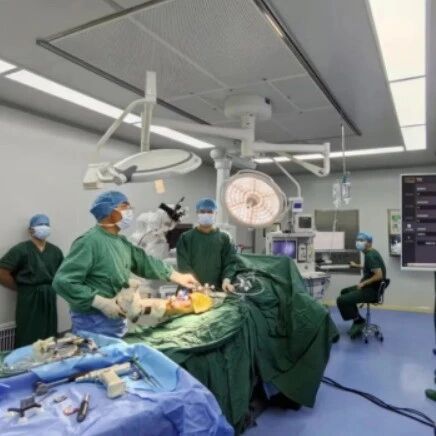
Core Viewpoint - The orthopedic surgery robot market in China is poised for significant growth, with an expected annual increase of 8% in surgical volume, reaching over 3.52 million surgeries by 2025. However, the penetration rate of orthopedic surgical robots remains below 1%, far behind the anticipated 20% in the U.S. by 2026. This presents a substantial opportunity for domestic manufacturers to capitalize on the market gap [1]. Group 1: Market Dynamics - The aging population in China, with those aged 65 and above nearing 16%, is driving the demand for orthopedic surgeries [1]. - Currently, 23 provinces in China have included orthopedic robot-related costs in their fee schedules, with prices ranging from 8,000 to 40,000 yuan, indicating a decreasing self-pay ratio for patients [1]. - The orthopedic robot industry is expected to transition from a "technology validation period" to a "scale explosion period" due to improvements in payment policies, technological breakthroughs, and innovative business models [1]. Group 2: Technological Advancements - The core value of orthopedic robots lies in their ability to enhance surgical precision and address clinical challenges, significantly improving surgical efficiency and safety [4]. - Robots can reduce surgical time from 60-90 minutes to approximately 15 minutes, decrease X-ray exposure by about 70%, and lower the rate of screw misplacement in spinal surgeries from 15% to under 2% [5]. - The range of indications for robotic assistance is expanding, covering major surgical types such as spine, joint, and trauma surgeries, aligning well with the clinical needs of China's aging population [5]. Group 3: Domestic Market Trends - Domestic companies are increasingly replacing international giants in the orthopedic robot market, with significant advancements in core technologies [6]. - For instance, Yuanhua Intelligent's all-in-one orthopedic robot and Tianzhihang's robots have achieved international leading standards in precision and adaptability [6]. - Recent data indicates that domestic robots account for approximately 56% of sales volume and 36% of sales revenue in the past three years, driven by their compatibility with local procurement environments and cost advantages [9]. Group 4: Business Model Innovations - The success of international giants is attributed to their closed-loop ecosystem of "equipment + consumables + services," which has been less emphasized by early domestic companies [10]. - Recent shifts show that domestic firms like Tianzhihang and Aikang Medical are increasing their revenue from consumables and services, indicating a move towards a more sustainable business model [11]. Group 5: Future Outlook - The orthopedic surgical robot market in China is projected to grow at a CAGR of nearly 40% from 2025 to 2030, reaching a market size of 13.72 billion yuan, marking a golden development period for the industry [14]. - The competition will evolve from a focus on individual devices to a comprehensive ecosystem, necessitating domestic companies to break through technological barriers and establish a business model that meets both local and global market demands [14].


皖仪科技:2025年归母净利同比+296%,科学仪器空间广阔,核聚变+医疗领域打开成长空间-20260301
Huachuang Securities· 2026-03-01 00:25
Investment Rating - The report maintains a "Strong Buy" rating for the company, indicating an expectation to outperform the benchmark index by over 20% in the next six months [6][22]. Core Insights - The company achieved a significant year-on-year increase in net profit attributable to shareholders of 295.5% in 2025, despite a slight decline in total revenue of 4.1% [6][7]. - The growth in profitability is attributed to improved operational efficiency, product structure optimization, and increased government subsidies [6][7]. - The company is positioned to benefit from the expanding controlled nuclear fusion sector, which is expected to enter a capital expenditure expansion cycle from 2025 to 2028 [6][7]. - There is a substantial market opportunity for domestic laboratory instruments, with a current low penetration rate of domestic products in a market worth over 50 billion [6][7]. - The medical instruments segment has shown promising developments, particularly in minimally invasive surgical instruments and high-value consumables, which are expected to become a new growth driver for the company [6][7]. Financial Summary - Total revenue is projected to decline from 740 million in 2024 to 710 million in 2025, before rebounding to 1,006 million in 2026 and 1,229 million in 2027, reflecting a compound annual growth rate of approximately 41% from 2026 to 2028 [2][6]. - Net profit attributable to shareholders is expected to rise from 14 million in 2024 to 57 million in 2025, and further to 103 million in 2026 and 147 million in 2027, with corresponding growth rates of 295.5% and 80.5% [2][6]. - The company's earnings per share (EPS) is forecasted to increase from 0.11 yuan in 2024 to 0.42 yuan in 2025, reaching 0.76 yuan in 2026 and 1.09 yuan in 2027 [2][6]. - The target price for the company's stock is set at 37.4 yuan, representing a 29% upside from the current price of 28.91 yuan [2][6].

华创医药投资观点&研究专题周周谈 · 第164期:海外CXO2025财报总结&2026年展望
Huachuang Securities· 2026-03-01 00:25
Investment Rating - The report does not explicitly state an investment rating for the industry or specific companies Core Insights - The report highlights that China's innovative drug development is experiencing high-quality growth, significantly outpacing the global average, establishing China as a key player in global innovative drug research and development [11] - The medical device sector is seeing a recovery in bidding scale, with a positive outlook for domestic companies as they expand internationally [11] - The CXO and raw material drug sectors are expected to benefit from a recovering financing environment and increasing demand, indicating a potential new wave of growth in the innovative drug supply chain [11] - The report emphasizes the importance of AI and brain-machine interface technologies in driving industry transformation [11] Market Review - The report notes that the CITIC pharmaceutical index rose by 0.41%, underperforming the CSI 300 index by 0.67 percentage points, ranking 24th among 30 primary industries [8] - The top ten stocks by growth this week include Aidi Te, Koyuan Pharmaceutical, and Duorui Pharmaceutical, while the bottom ten include Zexing Pharmaceutical and Meihua Medical [8] Industry and Stock Events - The report discusses the strong performance of innovative drugs, medical devices, and the CXO sector, suggesting a focus on companies like Bai Li Tianheng, Bai Ji Shen Zhou, and Hengrui Medicine for potential investment opportunities [11] - It also highlights the recovery of the blood products industry, with a clear growth path expected during the 14th Five-Year Plan period [11] Company-Specific Insights - Lonza is projected to achieve a revenue growth of 11%-12% in 2026, with a strong performance in its CDMO business [14] - Samsung Biologics anticipates a revenue growth of 15%-20% for 2026, driven by strong demand and new contracts [41] - Medpace expects its revenue to grow by 8.9%-12.8% in 2026, focusing on biotech clients [100]
6大战略产业中共用的7种核心“卡脖子”材料,国产替代率<35%,部分甚至不足 10%(商业航天、深海采矿、机器人、AI),寻找确定性细分
材料汇· 2026-02-28 14:35
Core Insights - The article focuses on the strategic emerging industries, particularly the core materials essential for high-end manufacturing, highlighting the steady increase in domestic substitution and the significant market potential of seven key materials [3][4]. Group 1: High-End Manufacturing Characteristics - High-end manufacturing is characterized by high technological intensity, significant added value, and a critical position in the industrial chain, playing a significant role in driving the industrial economy [4]. - China is transitioning from low-end processing and assembly to high-end research and design, with key technologies in intelligent manufacturing equipment, aerospace, and other fields driving industrial transformation [4]. Group 2: Key Materials for High-End Manufacturing - The article identifies seven core materials crucial for various high-end strategic industries, including commercial aerospace, robotics, deep-sea mining, and controlled nuclear fusion, which are essential for the upgrade towards high-end, intelligent, and green manufacturing [6][18]. - The domestic substitution rates for these core materials are generally below 30%, with some categories even lower than 10%, indicating a significant opportunity for domestic production [6]. Group 3: Specific Core Materials and Their Applications - **Satellite Manufacturing**: Key materials include high-end electronic-grade PI, GaAs substrates, T1100 carbon fiber, and high-purity titanium-aluminum alloys, with domestic substitution rates ranging from 5% to 30% [7]. - **Rocket Manufacturing**: Essential materials include C/C composites, tungsten alloys, and high-temperature alloys, with domestic substitution rates between 12% and 35% [9]. - **Deep-Sea Mining**: Critical materials such as high-strength wear-resistant steel and high-corrosion-resistant nickel-based alloys are highlighted, with domestic substitution rates around 10% to 30% [10]. - **Robotics**: Key materials include PEEK resin, high-purity bronze, and T1100 carbon fiber, with domestic substitution rates ranging from 12% to 40% [11]. - **AI Field**: Materials like high-purity fluorinated gases and EUV photoresists are essential, with domestic substitution rates below 5% [13]. Group 4: Market Dynamics and Future Outlook - The global market for high-temperature superconducting materials is projected to reach 50 billion yuan by 2030, with YBCO tape expected to account for over 70% of this market [24]. - The super high-temperature ceramic matrix composites (UHTCMC) market is anticipated to reach 30 billion yuan by 2030, driven by advancements in aerospace and nuclear fusion applications [30]. - The semiconductor sputtering target market, particularly for ruthenium targets, is expected to grow at an annual rate of 25%, with high-end products being dominated by overseas companies [41]. Group 5: Challenges and Investment Opportunities - The article emphasizes the technological barriers in the production of these core materials, including purity levels, micro-nano fabrication, and batch yield control, with overseas companies holding over 80% of the high-end market share [18][35]. - There are significant investment opportunities in domestic production capabilities for these materials, as the current domestic substitution rates indicate a strong potential for growth in the coming years [30][48].

PEEK:高壁垒的轻量化材料,需求爆发进行时(附35页PPT)
材料汇· 2026-02-28 14:35
Group 1 - The demand for PEEK materials is expected to surge due to lightweight requirements and superior physical properties, making it a potential substitute for metals in various industries such as automotive, medical, and robotics [2][8][11] - The global PEEK market is projected to grow from $721 million in 2019 to $1.226 billion by 2027, with a compound annual growth rate (CAGR) of 6.8% [21][22] - In China, PEEK demand is forecasted to expand at a CAGR of 16.82% from 2022 to 2027, potentially reaching around 5,079 tons by 2027 [2][21] Group 2 - The production of PEEK involves high technical barriers, including the need for consistent product quality and a long verification cycle, which can take up to 7 years [4][50] - The core raw material for PEEK, fluorocarbon, accounts for over 50% of production costs, and domestic prices for PEEK are approximately one-third of international prices [3][42][44] - The production process requires specialized equipment, with some components still reliant on imports, indicating a need for domestic manufacturing capabilities [3][4] Group 3 - Major domestic companies in the PEEK market include Zhongyan Co., New Han New Materials, and Zhongxin Fluorine Materials, with Zhongyan being the fourth largest PEEK producer globally [5][6] - Companies like Baihehua and Hanjian Heshan are diversifying into the PEEK sector, indicating a growing interest in this high-performance material [5][6] - The competitive landscape shows that while foreign companies dominate the market, domestic players are beginning to establish a foothold, capturing over 10% of the market share [5][6]

华创医药周观点:海外CXO 2025财报总结&2026年展望 2026/02/28
华创医药组公众平台· 2026-02-28 13:49
Core Viewpoint - The report highlights the strong growth potential of the Chinese pharmaceutical industry, particularly in innovative drugs, with a significant increase in the number of therapies under development and a growing share in the global market [10]. Market Overview - The CITIC pharmaceutical index rose by 0.41% this week, underperforming the CSI 300 index by 0.67 percentage points, ranking 24th among 30 primary industries [9]. - The top ten stocks by growth this week included Aidi Te, Koyuan Pharmaceutical, and Duorui Pharmaceutical, while the bottom ten included Zexing Pharmaceutical and Meihua Medical [9]. Investment Themes - **Innovative Drugs**: China has become a key player in global innovative drug development, with the total overseas licensing amount for domestic new drugs exceeding $10 billion for the first time in 2021, indicating a sustained increase in overseas licensing activity [10]. - **Traditional Chinese Medicine**: The market for essential medicines is expected to see significant growth, particularly for unique essential medicines, as the new medical insurance catalog expands [12]. - **Medical Devices**: The pressure from centralized procurement for high-value consumables is easing, and the industry is expected to see continued development driven by innovation [13]. - **Pharmaceutical Supply Chain (CXO + APIs)**: The domestic CXO companies are experiencing good growth in front-end orders, which is expected to translate into performance improvements [13]. - **Life Sciences Services**: The industry is seeing a recovery in demand, with a positive outlook for revenue growth starting from Q4 2024 [13]. Company Performance and Projections - **Medpace**: The company reported a revenue growth of 20% and has a clear revenue and profit growth guidance for 2026, with expected revenue growth of 4.7-6.0% [15][88]. - **IQVIA**: The company is benefiting from an improved macro environment, with a projected total revenue of $171.5-173.5 billion for 2026 [55]. - **Lonza**: The company expects a revenue growth of 11-12% for 2026, driven by strong demand for outsourcing and maturing growth projects [34][38]. - **Samsung Biologics**: The company anticipates a revenue growth of 15-20% for 2026, with strong performance in its biologics segment [34][46]. Financial Highlights - **IQVIA**: Reported Q4 2025 revenue of $4.364 billion, a year-on-year increase of 10.3% [53]. - **Labcorp**: Achieved Q4 2025 revenue of $3.52 billion, a year-on-year increase of 5.7% [79]. - **Medpace**: Reported Q4 2025 revenue of $709 million, a year-on-year increase of 32.1% [88].

连番提价!硬质合金刀具的风口来了?
格隆汇APP· 2026-02-28 09:57
Core Viewpoint - The article discusses the recent price hikes in the cutting tool industry, driven by rising raw material costs and strong downstream demand, indicating a significant growth opportunity for domestic manufacturers in the high-end cutting tool market [5][10][12]. Price Increase Dynamics - Tian Gong International announced a price increase of 15%-20% for cutting tools effective March 1, marking the second price hike since the beginning of the year [5]. - New Rui Co. also implemented price increases on the first working day after the holiday, reflecting a trend across the industry [6]. - The A-share cutting tool sector has seen impressive stock performance, with companies like Ou Ke Yi and Xin Rui Co. experiencing year-to-date gains of 134% and 88%, respectively [8]. Underlying Logic of Price Increases - The price hikes are not arbitrary but are a response to upstream cost pressures and sustained downstream demand [12]. - Key raw materials for hard alloy tools, such as tungsten and cobalt, have seen price increases of over 400% since early 2025, significantly impacting production costs [14][15]. - The cutting tool industry can successfully pass on price increases due to the low cost proportion of tools in overall production costs (1%-3%), making price sensitivity low among downstream customers [16]. Global Competitive Landscape - China holds a dominant position in the tungsten supply chain, with 35% of global reserves and over 80% of production, providing significant pricing power [19]. - Recent export controls on high-precision cutting tools have limited supply to foreign competitors, enhancing the competitive position of domestic manufacturers [20]. - Domestic companies are now able to capture market share previously held by foreign firms, as they offer competitive pricing and quality [21]. Demand Dynamics - The demand for cutting tools is shifting from cyclical recovery to structural upgrades, particularly driven by the growth of the electric vehicle sector, which consumes 2.5 times more cutting tools than traditional vehicles [22]. - The aerospace sector also presents significant growth opportunities, with high-end tools required for complex materials, where domestic production currently meets only 10% of demand [22]. - The demand for high-end cutting tools is expected to continue growing in sectors like 3C electronics and semiconductors, where the price and profit margins are significantly higher than traditional tools [22]. Financial Performance Indicators - Huari Precision expects to achieve a revenue of 1.01 billion yuan in 2025, a year-on-year increase of 33.7%, with a net profit of 187 million yuan, up 74.6% [23]. - Ou Ke Yi anticipates a revenue of 1.46 billion yuan in 2025, reflecting a 29.3% increase, and a net profit of 104 million yuan, up 81.2% [24]. Investment Strategy - The article suggests focusing on three main investment lines: high-end CNC tool leaders, integrated resource and material companies, and hidden champions in critical segments like tool coatings [27]. - Companies lacking core technology and focusing on low-end products are advised against, as they may struggle with profit margins due to rising raw material costs [26]. - Investors are encouraged to track performance metrics such as high-end product ratios and customer expansion to capitalize on industry growth opportunities [27].


半导体行业延续高景气,板块表现较好
Zhong Guo Yin He Zheng Quan· 2026-02-28 07:45
Investment Rating - The report maintains a "Recommended" rating for the semiconductor industry [1] Core Insights - The semiconductor industry continues to exhibit high prosperity, with the sector performing well. The electronic sector's performance is highlighted, with a notable increase in various sub-segments [1][4] - The semiconductor equipment sector has shown strong performance, driven by agreements such as the one between Meta and AMD for AI chip supply, boosting confidence in sustained demand for semiconductor equipment [4] - Semiconductor materials and electronic chemicals have led the market, with significant price increases expected due to supply constraints and strong performance from domestic companies [4] - The integrated circuit packaging and testing sector is also performing well, with ongoing investments in advanced packaging capacity, particularly in the AI industry [4] - The analog chip design sector is experiencing moderate recovery, while the digital chip design sector remains stable, with concerns about the sustainability of AI-related capital expenditures [4] - Investment recommendations focus on companies that are well-positioned in the context of supply chain security and domestic substitution trends, including firms like Cambrian, Haiguang Information, and others [4]
光力科技(300480) - 300480光力科技投资者关系管理信息20260228
2026-02-28 05:26
Group 1: Semiconductor Business - The company's domestic semiconductor cutting equipment has achieved cutting quality and efficiency comparable to leading international models, and has begun bulk supply to top packaging and testing enterprises [2] - The cutting precision and yield of the dicing saw directly impact the performance and cost of customer products, with customers comparing domestic suppliers to imported equipment [2] - Major customers in the semiconductor business include IDM manufacturers and OSAT manufacturers, with large customer orders accounting for approximately 50% of new domestic semiconductor business orders [3] Group 2: Production Capacity and Expansion - The second phase of the company's Zhengzhou Airport plant is expected to triple the existing production capacity, with construction progressing alongside production, and full completion anticipated in Q1 2027 [2] - The company has already achieved batch supply of certain models of domestic soft blades, while hard blade products are currently undergoing client validation [3] Group 3: Product Applications - The company's soft blade series can be used for cutting various types of integrated circuit packaging, hard materials like ceramics and glass, as well as cutting passive components and sensors; hard blade products are suitable for cutting silicon wafers and compound semiconductors [3] - The air spindle developed by the company has applications beyond dicing saws, including cutting, grinding, polishing, and automotive spray painting, with products already supplied in bulk to multiple application fields [3]

未知机构:天风电子继续看好智立方合资子公司施耐博格精密系统深-20260228
未知机构· 2026-02-28 02:40
Company and Industry Summary Company: Tianfeng Electronics Key Points - **Joint Venture and Market Position** The joint venture, Shinaiboge Precision Systems (Shenzhen) Co., Ltd., focuses on nano-level precision motion control platforms for semiconductor optical equipment in the Asia-Pacific region. It has already engaged with leading domestic clients such as Zhongke Feimiao [1] - **High Market Barriers** The nano-level precision motion control platform is a core subsystem within measurement and testing equipment, essential for achieving precise physical positioning of wafers. The positioning accuracy can reach the nanometer level, making it a cornerstone for semiconductor manufacturing and testing, with high requirements for motor drives, air-floating guide rails, high-precision feedback systems, and synchronous motion control [1] - **Significant Domestic Market Potential** The domestic market for measurement and testing equipment requires high-precision motion control platforms, with the value accounting for approximately 15-20% of the BOM cost. The long-term domestic measurement and testing equipment market is expected to reach 60 billion, corresponding to a high-precision motion control platform market of about 6 billion [1] - **Client Acquisition and Market Leadership** The joint venture has successfully entered leading domestic clients such as Zhongke Feimiao and Aixin Semiconductor. Swiss company Shinaiboge is a global leader in precision motion control platforms, serving clients like KLA, AMAT, ASML, and Onto, indicating significant potential for domestic substitution [1] - **High Profit Margins** Due to the high entry barriers, the gross margin for the nano-level precision motion control platform is approximately 70-80%, with a steady net profit margin expected to reach 40-50% [1] - **Growth in Optical Chip and Module Equipment** The company’s core optical chip equipment includes packaging machines, unpacking machines, and Bar AOI, with clients such as Yuanjie Technology, Changguang Huaxin, and HiSilicon. The demand from downstream clients is driving accelerated growth in orders, with projected revenues of 50 million, 150 million, and 250-300 million for the years 2025-2027 [1] - **Expansion into Semiconductor Packaging** The company is actively expanding into the advanced packaging testing field, with mass shipments of power-level die bonders to major clients like China Resources Microelectronics and Silan Microelectronics. The revenue from this segment is expected to reach 50 million in 2025 and potentially 200 million in 2026, with aspirations to become China's Besi [1] - **Steady Growth in Consumer Electronics** The main products include optical recognition and sensing detection equipment, with Apple as a core client. Revenue is expected to exceed 400 million in 2025, driven by client product innovations [1] Conclusion The company is experiencing significant breakthroughs and rapid growth across multiple business segments, indicating substantial future growth potential and warranting close attention [1]