新型电力系统

Search documents
能源早新闻丨我国钙钛矿太阳能电池重要难题破解!
中国能源报· 2026-01-11 22:33
Industry News - The Ministry of Industry and Information Technology, along with four other departments, released guidelines for the construction and application of industrial green microgrids from 2026 to 2030, emphasizing efficient multi-energy utilization and high proportion consumption of renewable energy [2] - The National Energy Administration announced the first batch of pilot projects for enhancing new power system construction capabilities, including 43 projects in Huainan, Anhui, and 10 cities in Zhangjiakou, Hebei [2] - Significant breakthroughs in lithium resource extraction technology have been achieved by the Chinese Academy of Sciences, focusing on efficient separation of lithium, sodium, and potassium ions from brine [2] - The production of new energy vehicles in the Beijing-Tianjin-Hebei region is leading the nation, with a total vehicle production of 285,000 units in 2024, a year-on-year increase of 11.8%, and new energy vehicle production reaching 676,000 units, a staggering increase of 154% [3] - Fujian province is developing a clean energy hub, with multiple projects in nuclear power, offshore wind, and photovoltaic energy underway, highlighting its diverse clean energy resources [4] - Beijing Economic-Technological Development Area plans to establish a "Future Energy Town," focusing on new energy storage, clean energy, low-carbon transition, and fusion energy industries [4] - Saudi Arabia welcomes investment from Chinese new energy companies to deepen cooperation in low-carbon transition and support the country's Vision 2030 [5] - A pipeline explosion occurred in Guanajuato, Mexico, due to oil theft, with no reported casualties, while investigations are ongoing [6] - Thailand experienced multiple arson attacks on gas stations, resulting in significant property damage [6] - China Huaneng Group led the publication of three national standards in the CCUS field, covering the entire process from carbon capture to geological storage, filling a gap in domestic standards [7]


新型电力系统建设需强化“人物协同”
Zhong Guo Neng Yuan Wang· 2026-01-11 03:37
Core Viewpoint - The integration of "investment in material" and "investment in people" is emphasized as a strategic direction for China's economic development, reflecting a shift in focus towards human capital alongside infrastructure investment [1][2]. Group 1: Investment in People - Investment in people is defined as enhancing capabilities and potential across the entire population and lifecycle, addressing changes in international development, traditional economic dynamics, demographic shifts, and new productivity demands [2]. - The new electric power system serves as a platform for human capital development, creating demand for skilled professionals in high-altitude transmission technology, new energy consumption, and smart operation [3][4]. - The digital infrastructure, such as digital twin grids and IoT in power, provides training platforms for digital talent, facilitating the upgrade of skills towards intelligent and digital capabilities [3]. Group 2: Investment in Material - The new electric power system is identified as a core carrier for material investment, establishing a solid hardware foundation for human capital development [3]. - Major infrastructure projects, including ultra-high voltage transmission and smart grid facilities, are crucial for energy security and provide practical scenarios for human capital investment [3][4]. - Investment in material is linked to the operational efficiency of the electric power system, where technological upgrades and equipment improvements drive the need for skilled labor [7]. Group 3: Synergy Between Investment in People and Material - The new electric power system exemplifies the synergy between material and human investment, enhancing energy security and improving service quality through simultaneous upgrades in infrastructure and workforce capabilities [5][6]. - The integration of talent development into project planning and execution ensures that personnel grow alongside project demands, fostering a skilled workforce that meets industry needs [6]. - Collaborative efforts across the industry chain enhance the quality of talent and technology, promoting a virtuous cycle of development that benefits the entire ecosystem [6][8]. Group 4: Technological and Service Enhancements - Upgrading technology and service capabilities are essential for improving operational efficiency and service quality in the electric power sector [7][8]. - Investment in smart devices and digital platforms must be accompanied by comprehensive training programs to align employee skills with technological advancements [7]. - The focus on service quality and operational excellence is critical for meeting the evolving demands of consumers and businesses, ensuring that infrastructure investments yield tangible benefits [8].
2025年中国储能BMS行业产业链、SWOT、市场规模、产值、竞争格局及发展趋势研判:行业技术成熟度和标准化程度显著提升,带动储能BMS规模扩张[图]
Chan Ye Xin Xi Wang· 2026-01-11 01:03
Core Insights - The energy storage Battery Management System (BMS) is a critical component for safety in energy storage systems, transitioning the industry from "passive protection" to "active safety" [1][3] - The market for new energy storage systems in China is expected to grow significantly, with the BMS market projected to reach 3.448 billion yuan in 2024 and 2.475 billion yuan in 2025, despite a decline in overall value due to price reductions [1][3] Industry Definition and Classification - Energy storage BMS is the core control component of energy storage systems, responsible for real-time data collection, state diagnosis, and safety protection [2] - BMS can be classified based on enterprise type, application field, and technology architecture [2] Current Industry Status - The global energy storage BMS market is expected to reach 6.252 billion yuan in 2024, with the Asia-Pacific region accounting for 62.01% of the market share [3] - In China, the BMS market is projected to grow from 275 million yuan in 2020 to 3.448 billion yuan in 2024, with a potential decline to 2.475 billion yuan in 2025 due to pricing pressures [3] Industry Value Chain - The energy storage BMS industry value chain includes upstream suppliers of key materials and components, midstream hardware production and software development, and downstream system integrators [4] SWOT Analysis - The energy storage BMS industry is supported by national policies aimed at promoting new energy storage, positioning it as a core component of the new power system [5] Competitive Landscape - The domestic energy storage BMS market features three main types of participants: self-developed BMS by battery companies, system integrators with self-development capabilities, and third-party specialized manufacturers [6][7] - Leading self-developed BMS companies include CATL, BYD, and Guoxuan High-Tech, which leverage their technology to enhance product competitiveness [6] - Comprehensive manufacturers like Sungrow and Haibo Innovation develop BMS products tailored to their systems [7] - Specialized third-party BMS manufacturers focus on technological differentiation and cost optimization [7] Development Trends - The energy storage market in China is expected to maintain rapid growth, driven by the dual carbon goals and the construction of new power systems [8] - The maturity and standardization of BMS technology are anticipated to improve, leading to further industry expansion [9] - Future trends indicate a shift towards integration, intelligence, openness, and scalability in the BMS industry [9]






宁波入选国家首批新型电力系统综合试点
Xin Lang Cai Jing· 2026-01-09 23:52
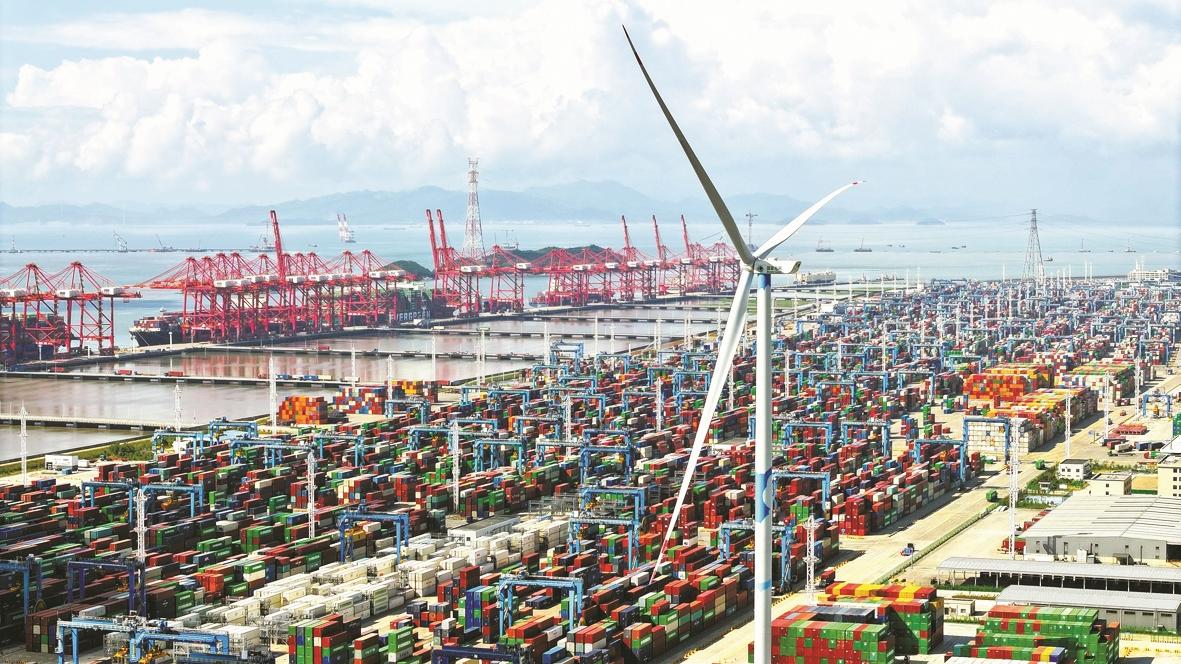
Core Insights - Ningbo's "Binhai Hub" new power system has been selected as one of the first batch of comprehensive pilot projects for the national new power system [2] - Ningbo is the only city in Zhejiang Province to be included in this pilot program, which is led by the National Energy Administration [2] - The pilot aims to address deep-seated contradictions in energy transition and explore a path for energy development with Chinese characteristics, signifying its importance as a national-level "reform test bed" [2]
长源电力:公司自2000年上市以来借助资本市场提升核心竞争力
Zheng Quan Ri Bao· 2026-01-09 14:17
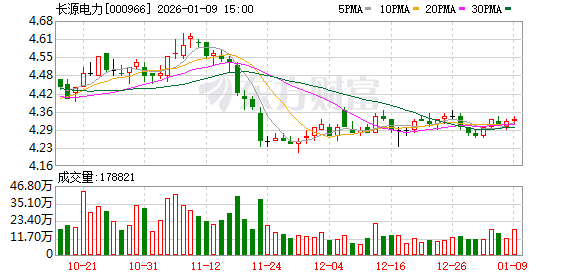
Core Viewpoint - The company emphasizes its commitment to sustainable development and enhancing core competitiveness through capital markets since its listing in 2000 [2] Group 1: Company Strategy - The company aims to integrate into the new energy system and new power system construction, focusing on the transformation and upgrading of traditional industries and the quality development of emerging industries [2] - The company plans to prioritize the development of wind power, selectively develop solar energy, and explore new energy storage solutions [2] - The company intends to consolidate and expand comprehensive energy services to enhance core competitiveness and promote sustainable high-quality development [2] Group 2: Value Management - The company will actively respond to the regulatory bodies' directives on market value management, focusing on improving operational performance, increasing dividend ratios, and enhancing the quality of information disclosure [2] - The company aims to improve ESG capabilities, investor relations management, and corporate governance to protect the rights and interests of investors and shareholders [2]

首批试点名单公示,7个储能项目入选
行家说储能· 2026-01-09 12:10
Core Viewpoint - The National Energy Administration has announced the first batch of pilot projects for enhancing the construction capacity of the new power system, including 43 pilot projects and 10 pilot cities, with a focus on energy storage and microgrid technologies [2][6]. Energy Storage Projects - Seven energy storage-related projects have been included, primarily focusing on grid-friendly technology applications, distributed across Inner Mongolia, Zhejiang, Anhui, Yunnan, Shanxi, and Gansu [2][3]. - The Baotou City grid-friendly energy storage project has a total planned capacity of 30MW, with a total scale of 10.2MW/40.8MWh, designed to provide voltage and frequency support to the grid [3][5]. - The Zhejiang Longyou shared energy storage project has a total scale of 80MW/160MWh, with a specific configuration of 10MW/20MWh grid-friendly units, improving equipment utilization by over 30% and reducing cost per kilowatt-hour to below 0.2 yuan [5]. - The Yunnan Wenshan Qiubei independent energy storage project leads with a scale of 200MW/400MWh, featuring a sodium-ion battery system, marking it as the first large-scale lithium-sodium hybrid energy storage station in the country [5]. - The Gansu Juhua New Energy project includes a planned capacity of 150MW/600MWh for its energy storage system, associated with a 1GW wind farm [5]. Microgrid Projects - The pilot list includes seven microgrid projects located in Jilin, Jiangsu, Henan, Hubei, Guangdong, and Xinjiang, involving major companies such as China National Petroleum, State Grid, and China Huadian [6][7]. - The projects aim to enhance the integration of renewable energy sources and improve energy management within industrial settings [6]. Virtual Power Plant Projects - Thirteen virtual power plant projects are distributed across Hebei, Jiangsu, Zhejiang, Anhui, Shandong, Hubei, Hunan, and Guangdong, involving companies like State Grid and China Power Investment [7][8]. - These projects focus on resource aggregation and market interaction to optimize energy supply and demand [8]. Pilot Cities - The ten pilot cities selected include Zhangjiakou, Baotou, Shenyang, Changzhou, Ningbo, Ningde, Qingdao, Xiangyang, Guangzhou, and Guiyang, indicating a broad geographical focus for the new power system initiatives [8].

——储能2026年投资策略:独储迎来商业化关键节点规模化发展β或已现
Hua Yuan Zheng Quan· 2026-01-09 06:02
行业评级:看好(维持) 证券研究报告|行业专题报告 电力设备 2026年1月9日 独储迎来商业化关键节点 规模化发展β或已现 --储能2026年投资策略 证券分析师 姓名:查浩 资格编号:S1350524060004 邮箱:zhahao@huayuanstock.com 姓名:刘晓宁 资格编号:S1350523120003 邮箱:liuxiaoning@huayuanstock.com 姓名:戴映炘 资格编号:S1350524080002 邮箱:daiyingxin@huayuanstock.com 联系人 姓名:豆鹏超 邮箱:doupengchao@huayuanstock.com 请务必仔细阅读正文之后的评级说明和重要声明 主要内容 | 1. | 需求:新能源渗透率走高 | 调节资源重要性持续提升 | | --- | --- | --- | | 2. | 国内:现货+容量机制加速完善 | 价值驱动时代或已来 | | 3. | 海外:市场机制愈发完善 | 增量景气市场或继续增加 | | 4. | 产业链:优选格局较优环节 | 重视企业技术升级与转型α机遇 | | 5. | 风险提示 | | 1.1 双碳目标 ...
多部门联合部署工作 规范动力和储能电池产业竞争秩序
Zheng Quan Ri Bao Wang· 2026-01-09 03:12
Core Viewpoint - The meeting held by multiple government departments aims to regulate the rapidly developing power and energy storage battery industry in China, addressing irrational competition and ensuring sustainable development [1][2] Group 1: Industry Development - China's power and energy storage battery industry has achieved a competitive advantage globally but faces issues such as blind construction and low-price competition [1] - The industry is crucial for achieving China's "dual carbon" goals and building a new power system [2] Group 2: Regulatory Measures - The meeting emphasized the need for strengthened market regulation, including price enforcement and product quality supervision [1] - A complete governance loop of "regulation + market + collaboration" is proposed to address both short-term regulatory needs and long-term institutional development [2] Group 3: Industry Self-Regulation - The policy encourages industry organizations to establish standards and a capacity commitment system, with joint resistance against companies that expand capacity unlawfully [2] - The focus is on creating a market mechanism that promotes "quality for price," pushing companies to enhance their technological capabilities and innovation [2] Group 4: Capacity Management - There is a call to optimize capacity management and establish a monitoring and early warning mechanism to prevent overcapacity risks [1] - The meeting advocates for regional collaboration and guidance for local enterprises to control redundant construction [1]
《电力中长期市场基本规则》政策解读:以菜市场视角看《规则》
Zhong Guo Dian Li Bao· 2026-01-09 03:07
Core Viewpoint - The National Development and Reform Commission and the National Energy Administration have issued the "Basic Rules for the Medium and Long-term Electricity Market," providing essential institutional support for the construction of a unified national electricity market [1] Group 1: Pricing Mechanism Changes - The new rules eliminate the rigidly defined time-based electricity pricing, allowing market participants to negotiate prices based on supply and demand dynamics [2][3] - This shift enables electricity users and producers to express their preferences for different time-based pricing, leading to more efficient and flexible market allocation of electricity resources [3] Group 2: Trading Flexibility - The rules introduce a more flexible trading mechanism, transitioning from a "scheduled bulk purchase" model to an "on-demand fresh supply" model, enhancing trading flexibility and accommodating high proportions of renewable energy [4][5] - Long-term contracts can still be negotiated at fixed times, while short-term transactions can occur daily, allowing for adjustments based on real-time supply and demand [4] Group 3: Price Alignment - The new regulations aim to gradually align the price limits of medium and long-term trading with those of spot trading, reducing arbitrage opportunities that distort price signals [6][8] - This alignment will create a coherent pricing system across different trading periods, enabling better price transmission and stability for electricity investments and consumption decisions [8]
43+10,国家能源局公示试点名单
中国能源报· 2026-01-09 02:16
国家能源局网站1月8日消息,为加快建设新型能源体系、构建新型电力系统,国家能源局组织开展了新型电力系统建设试点申报及评 审工作,聚焦新型电力系统有关前沿方向,探索推进新技术、新模式应用。经组织第三方机构评审,拟支持安徽省淮南市风光热储融 合系统友好型新能源电站项目等43个项目及河北省张家口市等10个城市开展新型电力系统建设能力提升试点工作并现予公示。 以下为原文 国家能源局综合司关于新型电力系统建设能力提升试点(第一批)名单的公示 为加快建设新型能源体系、构建新型电力系统,根据《国家发展改革委 国家能源局 国家数据局关于印发〈加快构建新型电力系统行动 方案(2024—2027年)〉的通知》(发改能源〔2024〕1128号)、《国家能源局关于组织开展新型电力系统建设第一批试点工作 的通知》(国能发电力〔2025〕53号)有关要求,我局组织开展了新型电力系统建设试点申报及评审工作,聚焦新型电力系统有关前 沿方向,探索推进新技术、新模式应用。 经组织第三方机构评审,拟支持安徽省淮南市风光热储融合系统友好型新能源电站项目等43个项目及河北省张家口市等10个城市(详 见附件)开展新型电力系统建设能力提升试点工作,现予公 ...