工业绿色微电网

Search documents
未知机构:瑞银看好南瑞科技因电网资本支出上行周期超出市场预期将其加入最佳投资组-20260204
未知机构· 2026-02-04 02:15
Summary of Conference Call Records Company and Industry Involved - **Company**: 南瑞科技 (NARI Technology) - **Industry**: Power Grid and Energy Storage Key Points and Arguments NARI Technology and Power Grid Capital Expenditure - UBS is optimistic about NARI Technology due to the expected upward cycle in power grid capital expenditure from 2026 to 2030, with a projected compound annual growth rate (CAGR) of 7%, exceeding market expectations [1] - UBS's utility team considers the 7% CAGR a conservative baseline, suggesting that the actual CAGR could reach 11% due to accelerated construction of backbone and distribution networks [1][2] - Historically, NARI Technology's growth rate has been approximately double that of the national grid capital expenditure growth rate, and UBS believes this trend will continue during the current upward cycle [2] BYD and Export Growth - UBS reaffirms BYD's position in the "Best Investment Portfolio" due to strong export growth and the potential for its energy storage business [2] - Despite weak domestic sales in January, BYD's exports increased by over 50% year-on-year, nearly matching domestic sales [2] Energy Storage and Capacity Pricing Mechanism - The National Development and Reform Commission (NDRC) introduced a capacity pricing mechanism for independent energy storage projects, significantly enhancing their economic viability [3] - Under this framework, energy storage projects included in provincial project lists can receive capacity price compensation based on local coal power capacity prices, expected to be around 165 yuan/kW/year by 2026 [3] - This mechanism acknowledges the system reliability and capacity value of energy storage, improving the internal rate of return (IRR) for storage projects from approximately 3% to 8%, surpassing the 7% investment threshold for most state-owned enterprises [3] Industrial Green Microgrid Development - The Ministry of Industry and Information Technology (MIIT) and other departments released guidelines for the construction and application of industrial green microgrids from 2026 to 2030, clarifying applicable technologies and deployment models [4] - The guidelines position microgrids as active participants in the power system, capable of providing peak shaving, demand response, and ancillary services, transitioning from pilot concepts to scalable, policy-supported solutions [4] Green Power Direct Connection Policy - The National Energy Administration (NEA) has prioritized multi-user green power "direct connection" as a policy focus for 2026, targeting applications in data centers, semiconductor manufacturing, aluminum industry, and zero-carbon industrial parks [5] - This initiative enhances the traceability of green power, supporting exporters' Scope 2 emissions disclosures and potentially alleviating pressures from carbon border adjustment mechanisms (CBAM) [5] - From a system perspective, "direct connection" and microgrid architecture can help alleviate local grid congestion by shifting some incremental load growth behind the meter, complementing rather than replacing broader grid investments [5]

《工业绿色微电网建设与应用指南(2026—2030年)》政策解读!2026年中国工业绿色微电网发展现状及趋势:工业绿色微电网建设将提速[图]
Chan Ye Xin Xi Wang· 2026-01-31 02:20
Core Viewpoint - The issuance of the "Guidelines for the Construction and Application of Industrial Green Microgrids (2026-2030)" marks a systematic advancement in China's industrial green microgrid construction, aiming to enhance energy efficiency and promote low-carbon transformation in the industrial sector [1][18]. Group 1: Policy Background - China has transformed from a power-scarce nation to the world's largest power producer and consumer, with total electricity consumption expected to exceed 10 trillion kilowatt-hours in 2025 [2]. - Industrial electricity consumption accounts for over 60% of the national total, with a projected consumption of 6.4 trillion kilowatt-hours in 2024 [3]. Group 2: Policy Summary - A series of policies have been introduced to support industrial green microgrid development, including the "14th Five-Year Plan for Industrial Green Development" and the "Guidelines for Accelerating the Green Transformation of Manufacturing" [2][3]. - The "Guidelines for the Construction and Application of Industrial Green Microgrids" signify the maturation of the policy framework for industrial green microgrids [2]. Group 3: Construction Content - The guidelines outline six major construction components, including renewable energy generation, industrial waste energy utilization, low-carbon hydrogen production, new energy storage applications, energy conversion, and digital energy management [5][7]. Group 4: Renewable Energy Generation - China has established the world's largest and fastest-growing renewable energy system, with renewable energy generation capacity increasing from 40% to around 60% [8]. - In the first three quarters of 2025, renewable energy added 31 million kilowatts, accounting for 84.4% of new installations, with significant contributions from solar and wind energy [8]. Group 5: Industrial Waste Energy Utilization - The recovery rate of industrial waste heat in China is only about 30%, significantly lower than that of developed countries, indicating a substantial opportunity for improvement [9]. - The guidelines provide specific directions for waste energy utilization across various industries, aiming to enhance efficiency and market demand for related technologies [9]. Group 6: Hydrogen Energy - As of the end of 2024, China's hydrogen production capacity exceeded 50 million tons per year, with a focus on diversifying hydrogen applications and enhancing green hydrogen supply [9]. - The guidelines aim to support the scaling of green hydrogen production and its integration into industrial processes [9]. Group 7: New Energy Storage - The commercial energy storage market is experiencing rapid growth, with installed capacity reaching 4.23 GW by the end of 2024, a year-on-year increase of 172% [10]. - The guidelines emphasize the need for tailored energy storage solutions based on specific application requirements [11]. Group 8: Digital Energy Management - The guidelines call for advanced digital energy management systems that utilize AI and big data to optimize energy supply and consumption [12]. - The integration of digital technologies is expected to enhance the efficiency and effectiveness of energy management platforms [12]. Group 9: Construction Models - Two primary construction models are proposed: self-built models for large enterprises and third-party co-construction models for smaller firms, allowing flexibility in implementation [13][15]. - These models aim to address the diverse needs of different enterprises while facilitating the large-scale deployment of industrial green microgrids [14]. Group 10: Application Scenarios - The guidelines categorize application scenarios into four types: high-energy consumption, flexible applications, scalable adjustable applications, and high-reliability applications [16][17]. - This targeted approach aims to enhance the practical applicability of industrial green microgrids across various sectors [17]. Group 11: Overall Summary - Over 300 industrial projects have been initiated in China, indicating a growing interest in industrial green microgrid construction [18]. - The guidelines are expected to transition industrial green microgrids from mere energy-saving tools to essential elements of industrial competitiveness, fostering a new industrial ecosystem focused on low-carbon production and efficient energy use [18].


机械行业周报:低空健康发展,出口持续看好
Guoyuan Securities· 2026-01-22 00:24
Investment Rating - The report maintains a "Buy" rating for the mechanical equipment sector, indicating a positive outlook for the industry [6]. Core Insights - The low-altitude economy is experiencing significant growth, with the Guangdong-Hong Kong-Macao Greater Bay Area set to add 801 new low-altitude takeoff and landing points by 2025, and a logistics drone route network of 310 lines, showcasing a market potential of over one trillion yuan [3]. - The mechanical equipment sector shows strong competitive advantages for domestic leading companies, with forklift sales in December 2025 reaching 111,363 units, a slight year-on-year increase of 0.03%, while exports grew by 7.97% [3]. - The engineering machinery industry is expected to maintain steady growth, with total forklift sales in 2025 projected to be 1,451,768 units, a year-on-year increase of 12.9% [3]. Weekly Market Review - From January 11 to January 16, 2026, the Shanghai Composite Index fell by 0.45%, while the Shenzhen Component Index and the ChiNext Index rose by 1.14% and 1.00%, respectively. The Shenwan Mechanical Equipment Index increased by 1.91%, outperforming the CSI 300 Index by 2.48 percentage points, ranking fifth among 31 Shenwan first-level industries [2][11]. - Sub-sectors within mechanical equipment saw varied performance, with general equipment up by 3.11%, automation equipment up by 4.19%, while engineering machinery and rail transit equipment saw declines of 0.88% and 1.81%, respectively [11]. Key Sector Tracking - The low-altitude economy is supported by the timely establishment of safety standards, such as the Civil Unmanned Aerial Vehicle Parachute System Specification, which aims to enhance operational safety for drones in densely populated areas [3]. - The report highlights the competitive landscape for domestic leading companies in the mechanical equipment sector, emphasizing their strong position in both supply and demand [3]. Investment Recommendations - For the low-altitude economy, recommended companies include Deep City Transportation, Sujiao Science and Technology, and Huasheng Group, among others [4]. - In the mechanical equipment sector, recommended companies include Sany Heavy Industry, XCMG, and Anhui Heli for engineering machinery, and Juxing Technology and Quanfeng Holdings for the export chain [4].



机械行业周报:低空健康发展,出口持续看好-20260121
Guoyuan Securities· 2026-01-21 14:07
Investment Rating - The report maintains a "Recommended" investment rating for the mechanical industry, indicating a positive outlook for the sector [6]. Core Insights - The low-altitude economy is experiencing significant growth, with the Guangdong-Hong Kong-Macao Greater Bay Area set to add 801 new low-altitude takeoff and landing points by 2025, and a logistics drone route network of 310 lines, showcasing a market potential of over one trillion [3]. - The mechanical equipment sector is expected to maintain steady growth, supported by strong competitive advantages of domestic leading enterprises in both supply and demand [3]. - In December 2025, forklift sales reached 111,363 units, a slight year-on-year increase of 0.03%, with exports growing by 7.97% to 47,556 units [3]. Weekly Market Review - From January 11 to January 16, 2026, the Shanghai Composite Index fell by 0.45%, while the Shenzhen Component Index and the ChiNext Index rose by 1.14% and 1.00%, respectively. The Shenwan Mechanical Equipment Index increased by 1.91%, outperforming the CSI 300 Index by 2.48 percentage points, ranking fifth among 31 Shenwan first-level industries [11]. - Sub-sectors such as general equipment and automation equipment saw increases of 3.11% and 4.19%, respectively, while engineering machinery and rail transit equipment experienced declines of 0.88% and 1.81% [11]. Key Sector Tracking - The report highlights the low-altitude economy's rapid development alongside the establishment of critical safety standards, which are essential for the sustainable growth of the sector [3]. - The mechanical equipment sector's export chain remains robust, with a year-on-year growth of 13.4% in exports for 2025, indicating a positive trend for future growth [3]. Investment Recommendations - For the low-altitude economy, recommended companies include Deep City Transportation, Sujiao Science and Technology, and Wan Feng Aowei [4]. - In the mechanical equipment sector, recommended companies include Sany Heavy Industry, XCMG, and Anhui Heli for engineering machinery, and Giant Star Technology and Quan Feng Holdings for the export chain [4].
新华解码|推动工业用能低碳转型 绿色微电网建设如何发力?
Xin Lang Cai Jing· 2026-01-16 12:56
Core Viewpoint - The article discusses the launch of the "Guidelines for the Construction and Application of Industrial Green Microgrids (2026-2030)" by five departments, aiming to transform industrial enterprises from energy consumers to integrated energy producers and consumers, thereby promoting energy conservation and carbon reduction in key industrial sectors [1][2]. Group 1: Industrial Green Microgrid Overview - Industrial green microgrids are described as small green energy systems for factories and industrial parks that can generate, store, and interact with the larger power grid [1][2]. - In 2024, industrial electricity consumption is projected to account for over 60% of total electricity consumption in China, highlighting the importance of green microgrids in reducing carbon emissions [1]. Group 2: Current Status and Challenges - Over 300 industrial green microgrid projects are currently operational across the country, with ongoing technological advancements [2]. - Despite progress, the overall development remains in the pilot and demonstration phase, facing challenges in technical standards, market mechanisms, and coordination with the larger power grid [2]. Group 3: Construction Guidelines and Innovations - The guidelines outline construction principles, key content, models, application scenarios, and requirements for the next five years, providing a clear roadmap for the development of industrial green microgrids [2][3]. - Key construction elements include ensuring that renewable energy self-consumption is at least 60% annually, utilizing by-products from industries like steel, and developing integrated hydrogen projects in areas rich in wind and solar energy [3]. Group 4: Technological Integration and Digitalization - New energy storage technologies are crucial for the functionality of industrial green microgrids, with a focus on tailored solutions based on renewable energy consumption needs [3]. - The guidelines emphasize the use of advanced technologies such as AI, big data, and industrial internet to enhance energy efficiency, carbon management, and load management capabilities [3]. Group 5: Investment Models and Market Participation - Two investment models are proposed: self-built by industrial enterprises or parks, and third-party co-construction with service providers, catering to different operational characteristics [4]. - The guidelines suggest exploring new revenue models for industrial green microgrids to enhance economic efficiency and encourage market-driven participation, transitioning from energy consumers to resource entities [5]. Group 6: Policy Implications - The guidelines are characterized as a comprehensive and actionable policy document that aims to stimulate investment, enhance competitiveness, and support the transition to a low-carbon industrial sector [5].

A股风向变了?商业航天股退潮,电网设备股尾盘异动拉升!
Xin Lang Cai Jing· 2026-01-13 11:44
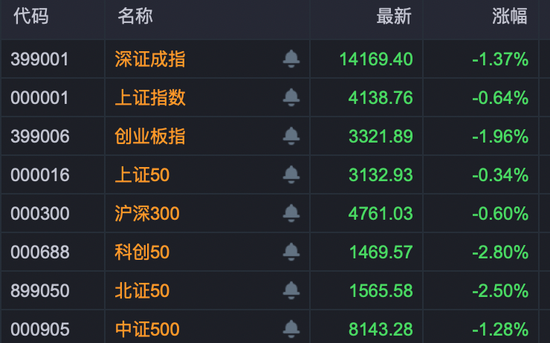
Market Overview - The A-share market experienced fluctuations with the Shanghai Composite Index down by 0.64% to 4138.76, the Shenzhen Component Index down by 1.37% to 14169.40, and the ChiNext Index down by 1.96% to 3321.89, while the total market turnover reached 3.7 trillion yuan [1][2][8]. Sector Performance - Sectors such as pharmaceuticals, precious metals, electric grid equipment, and oil service engineering showed positive performance, while previously popular sectors like commercial aerospace, controllable nuclear fusion, low-altitude economy, and chips faced declines [2][9]. - The electric grid equipment sector saw a significant rebound, with some stocks like YN Power and Double Jet Electric hitting their daily limit up by 20% and 30% respectively, indicating strong market interest [4][11]. Capital Flow - Major capital inflows were observed in the media sector with over 15.8 billion yuan, pharmaceuticals with over 9.1 billion yuan, and non-ferrous metals with over 5.3 billion yuan. Conversely, the electronics sector faced a net outflow exceeding 36 billion yuan [3][10]. Future Outlook - Analysts from Guangfa Securities suggest that if the spring market rally occurs earlier, it may indicate a favorable economic cycle, with potential adjustments in mid-January providing good investment opportunities [3][10]. - Haitong Securities noted that while the spring market may still have room for growth, the concentration of trading structures could lead to a rotation in market trends, advising investors to focus on high-value sectors with improving external demand [3][10]. Industry Developments - The Ministry of Industry and Information Technology and other departments released guidelines for the construction and application of industrial green microgrids, aiming to enhance green electricity usage in industrial sectors [6][13]. - The global demand for electricity in data centers is projected to increase significantly due to AI applications, with estimates suggesting an additional 325 to 580 TWh by 2028, which will elevate overall electricity demand [6][13]. - Goldman Sachs forecasts that investments in global digital infrastructure and energy systems driven by AI could reach 5 trillion USD over the next decade, with electric grid equipment being a primary beneficiary [6][13]. Transformer Industry Insights - Data from the General Administration of Customs indicates that transformer exports from January to November 2025 reached 57.86 billion yuan, marking a year-on-year increase of 36.3% [14]. - The transformer industry is currently facing significant order backlogs, leading to supply chain bottlenecks and market shortages [14]. Commercial Aerospace Sector - The commercial aerospace sector experienced a sharp decline, with the sector index dropping by 5.01%, and numerous stocks within the sector facing significant losses, including Aerospace Huan Yu and Aerospace Software [6][14][15].


每日市场观察-20260112
Caida Securities· 2026-01-12 05:24
Market Performance - A-shares experienced a strong upward trend, with the Shanghai Composite Index closing at 16 consecutive gains, surpassing the 4100-point mark[1] - The total trading volume in the Shanghai and Shenzhen markets reached 3.15 trillion yuan, an increase of 326.1 billion yuan from the previous trading day[1] - Over 3900 stocks rose, with more than 70% of stocks in the two markets experiencing gains[1] Sector Analysis - The media, military, computer, non-ferrous metals, and machinery sectors showed significant gains, while the banking index slightly declined[1] - AI applications are entering a value realization phase in 2026, with a projected 40% year-on-year reduction in computing costs, accelerating commercialization[2] Capital Flow - On January 9, net inflows into the Shanghai Composite were 48.9 billion yuan, while the Shenzhen Composite saw net inflows of 47.5 billion yuan[5] - The top three sectors for capital inflow were IT services, software development, and advertising, while the banking sector saw the largest outflows[5] Economic Indicators - In December 2025, the Producer Price Index (PPI) decreased by 1.9% year-on-year, with a narrowing decline of 0.3 percentage points from the previous month[8] - The Consumer Price Index (CPI) rose by 0.8% year-on-year in December 2025, with food prices increasing by 1.1%[9] Policy Developments - The National Medical Insurance Administration announced a policy to enhance the cross-provincial pooling of personal medical insurance accounts, expanding the scope of mutual assistance[11] - The Ministry of Water Resources aims to maintain large-scale and high-level investment in water infrastructure construction in 2026[12]
20cm速递|五部委下发工业绿色微网建设指南!创业板新能源ETF华夏(159368)规模同类第一
Mei Ri Jing Ji Xin Wen· 2026-01-12 03:30
Group 1 - The core viewpoint of the article highlights the performance and significance of the ChiNext New Energy ETF (华夏, 159368), which has a recent scale of 646 million yuan, making it the largest in its category [1] - The Ministry of Industry and Information Technology, along with other government bodies, has issued a guideline for the construction and application of industrial green microgrids from 2026 to 2030, emphasizing the integration of renewable energy sources and advanced energy management systems [1] - Guotai Junan believes that the policy clarifies the synergy of "source-network-load-storage" and positions new energy storage and carbon management systems as standard configurations, driven by technological innovation and practical applications [1] Group 2 - The ChiNext New Energy ETF (华夏, 159368) tracks the ChiNext New Energy Index, which covers various sectors within the new energy and electric vehicle industries, including batteries and photovoltaics [1] - The ETF exhibits high elasticity with a potential price increase of up to 20%, and it has the lowest fee structure, with a total management and custody fee of only 0.2% [1] - As of January 9, 2026, the ETF has a significant average daily trading volume of 69.49 million yuan over the past month, with nearly 90% of its holdings in energy storage and solid-state batteries, aligning with current market trends [1]

投资前瞻(1.12—1.18)| 高盛建议今年超配A股和H股;三大热门领域受机构调研关注
和讯· 2026-01-11 09:12
Macro and Financial - CPI continues to rise, with a year-on-year increase of 0.8% in December 2025, driven mainly by food prices, which rose by 1.1% [5][6] - The Ministry of Finance announced adjustments to export tax rebates for photovoltaic products, effective from April 1, 2026, aiming to reduce trade friction and improve fiscal resource allocation [7] - The Ministry of Industry and Information Technology (MIIT) is promoting the construction of a national integrated computing network to enhance industrial smart computing capabilities [8] - A guideline for the construction of industrial green microgrids has been issued, aiming to promote the use of green electricity in key industrial sectors [9][10] Capital Market - The China Securities Regulatory Commission (CSRC) has introduced new regulations to enhance whistleblower rewards for securities and futures violations, increasing the reward percentage from 1% to 3% of penalties [14][15] - The Shanghai Composite Index has reached a new high, closing at 4120.43 points after a 16-day consecutive rise, with significant trading volume exceeding 3.1 trillion yuan [19] - Goldman Sachs has expressed a positive outlook on the Chinese stock market, predicting a 20% increase in the MSCI China Index and a 12% increase in the CSI 300 Index for the year [17] Business and Industry - The MIIT has warned against irrational competition in the lithium battery industry, emphasizing the need for market regulation and quality supervision [27] - The State Council's Anti-Monopoly Committee is investigating the competitive landscape of the food delivery platform industry due to issues of excessive subsidies and price competition [28] - The Ministry of Commerce has stated that any foreign acquisitions must comply with Chinese laws and regulations, particularly regarding Meta's acquisition of Manus [29] - The sixth batch of national high-value medical consumables procurement has been initiated, focusing on drug-coated balloons and urological intervention consumables [33]

上月居民消费价格同比上涨0.8% 1月份有3次冷空气过程影响我国
Xin Lang Cai Jing· 2026-01-11 05:53
Group 1: Consumer Price Index and Industrial Producer Prices - In December 2025, the national consumer price index (CPI) increased by 0.8% year-on-year, with urban areas rising by 0.9% and rural areas by 0.6% [1] - Food prices rose by 1.1%, while non-food prices increased by 0.8%. The overall CPI for 2025 remained flat compared to the previous year [1] - The industrial producer price index (PPI) decreased by 1.9% year-on-year in December 2025, with a month-on-month increase of 0.2% [1] Group 2: Water Resources and Infrastructure - The national water network now covers 80.3% of the country's land area, with significant investments in water infrastructure [4] - In 2025, 27 major water conservancy projects were initiated, and 9,420 rural water supply projects were completed, improving water supply for 134 million rural residents [4][5] - Total investment in water conservancy construction reached 1.28 trillion yuan, contributing to economic growth and job creation [4] Group 3: Healthcare and Insurance - The National Healthcare Security Administration announced the expansion of the personal account mutual aid system for employee medical insurance to a national level, allowing for cross-province mutual aid [6] - The mutual aid can be established voluntarily among close relatives and can be used for medical expenses and insurance payments [6] Group 4: Industrial Development and Standards - The Ministry of Industry and Information Technology, along with other departments, issued guidelines for the construction and application of industrial green microgrids from 2026 to 2030 [7] - The guidelines aim to promote the use of green electricity in industrial sectors and enhance energy efficiency [7] - New national standards for infant products, including portable baby sleep baskets and volatile organic compound (VOC) release measurement, were approved to ensure safety and reduce risks [9]