
先进封装

Search documents
圣泉集团跌2.02%,成交额1.38亿元,主力资金净流出2146.96万元
Xin Lang Cai Jing· 2025-11-14 02:15
Core Viewpoint - Shengquan Group's stock price has shown fluctuations, with a year-to-date increase of 19.90% and a recent decline of 13.57% over the past 60 days, indicating potential volatility in the market [1]. Financial Performance - For the period from January to September 2025, Shengquan Group achieved a revenue of 8.072 billion yuan, representing a year-on-year growth of 12.87%, while the net profit attributable to shareholders was 760 million yuan, reflecting a significant increase of 30.81% [2]. Shareholder Information - As of September 30, 2025, the number of shareholders for Shengquan Group reached 31,100, an increase of 15.57% from the previous period, with an average of 25,135 circulating shares per shareholder, which is a decrease of 13.47% [2]. Dividend Distribution - Since its A-share listing, Shengquan Group has distributed a total of 1.29 billion yuan in dividends, with 942 million yuan distributed over the past three years [3]. Institutional Holdings - As of September 30, 2025, Hong Kong Central Clearing Limited is the second-largest circulating shareholder with 34.131 million shares, an increase of 27.157 million shares from the previous period. New institutional investors include Penghua CSI Subdivision Chemical Industry Theme ETF, holding 10.166 million shares [3].

北方华创跌2.08%,成交额2.60亿元,主力资金净流出2322.86万元
Xin Lang Cai Jing· 2025-11-14 01:48
Core Viewpoint - Northern Huachuang's stock price has shown volatility, with a year-to-date increase of 40.23%, but a recent decline in the short term [1][2]. Company Overview - Northern Huachuang Technology Group Co., Ltd. was established on September 28, 2001, and listed on March 16, 2010. The company is located at 8 Wenchang Avenue, Economic and Technological Development Zone, Beijing [1]. - The main business involves the research, production, sales, and technical services of semiconductor basic products, with revenue composition as follows: 94.53% from electronic process equipment, 5.37% from electronic components, and 0.10% from other sources [1]. Financial Performance - For the period from January to September 2025, Northern Huachuang achieved an operating income of 27.301 billion yuan, representing a year-on-year growth of 34.14%. The net profit attributable to shareholders was 5.130 billion yuan, with a year-on-year increase of 14.97% [2]. - Cumulative cash dividends since the A-share listing amount to 1.535 billion yuan, with 1.217 billion yuan distributed over the past three years [3]. Shareholder Information - As of September 30, 2025, the number of shareholders is 84,400, a decrease of 0.83% from the previous period. The average number of circulating shares per person is 8,577, an increase of 0.83% [2]. - The second-largest circulating shareholder is Hong Kong Central Clearing Limited, holding 92.4871 million shares, an increase of 38.0334 million shares from the previous period [3].

汇成股份涨0.46%,成交额4.12亿元,近3日主力净流入7759.35万
Xin Lang Cai Jing· 2025-11-13 07:45
Core Insights - The company, Hefei Xinhui Microelectronics Co., Ltd., is focusing on strategic investments and partnerships to enhance its capabilities in the semiconductor industry, particularly in storage chip packaging and testing services [2][3]. Group 1: Company Developments - The company has acquired a 27.5445% stake in Hefei Xinfeng Technology Co., Ltd. and established a strategic partnership with East China Technology (Suzhou) Co., Ltd. to expand its 3D DRAM storage chip packaging business [2]. - The company is advancing its Chiplet packaging technology, which includes high-end packaging techniques such as bump manufacturing, Fan-out, 3D, and SiP [2]. - The company's main products include integrated circuit packaging and testing services, with a significant focus on display driver chip packaging [3][8]. Group 2: Financial Performance - For the period from January to September 2025, the company achieved a revenue of 1.295 billion yuan, representing a year-on-year growth of 21.05%, and a net profit of 124 million yuan, with a year-on-year increase of 23.21% [9]. - The company's overseas revenue accounted for 54.15% of total revenue, benefiting from the depreciation of the yuan [4][9]. - The company has distributed a total of 161 million yuan in dividends since its A-share listing [9]. Group 3: Market Position and Shareholder Information - As of September 30, 2025, the number of shareholders increased to 23,500, with an average of 36,445 shares held per shareholder, indicating growing investor interest [9]. - The company is classified under the electronic-semiconductor-integrated circuit packaging and testing industry, with its main revenue source being display driver chip packaging, which constitutes 90.25% of its total revenue [8].

三佳科技涨2.25%,成交额5962.97万元,主力资金净流入231.70万元
Xin Lang Zheng Quan· 2025-11-13 05:55
Core Insights - Sanjia Technology's stock price increased by 2.25% on November 13, reaching 27.71 CNY per share, with a total market capitalization of 4.39 billion CNY [1] - The company has experienced a 9.15% decline in stock price year-to-date, but a 5.68% increase over the last five trading days [1] Financial Performance - For the period from January to September 2025, Sanjia Technology reported a revenue of 238 million CNY, reflecting a year-on-year growth of 1.60%, while the net profit attributable to shareholders decreased by 71.67% to 5.06 million CNY [2] - Cumulative cash dividends since the company's A-share listing amount to 11.93 million CNY, with no dividends paid in the last three years [3] Shareholder Information - As of September 30, 2025, the number of shareholders decreased by 18.73% to 41,700, while the average number of tradable shares per person increased by 23.05% to 3,798 shares [2] - The third-largest shareholder is the Guotai Zhenzheng Semiconductor Materials Equipment Theme ETF, holding 1.37 million shares, an increase of 785,500 shares from the previous period [3]

山子高科涨2.26%,成交额11.05亿元,主力资金净流入8596.25万元
Xin Lang Cai Jing· 2025-11-13 03:38
Core Viewpoint - The stock of Mountain High Technology Co., Ltd. has shown significant volatility, with a year-to-date increase of 81.00%, but recent declines in the short term raise questions about future performance [1][2]. Financial Performance - For the period from January to September 2025, Mountain High Technology reported a revenue of 2.418 billion yuan, a year-on-year decrease of 38.67%, while the net profit attributable to shareholders increased by 153.47% to 437 million yuan [2]. - The company has cumulatively distributed 3.282 billion yuan in dividends since its A-share listing, with no dividends paid in the last three years [3]. Stock Market Activity - As of November 13, the stock price was 3.62 yuan per share, with a market capitalization of 36.191 billion yuan. The stock experienced a trading volume of 1.105 billion yuan and a turnover rate of 3.26% [1]. - The stock has appeared on the daily trading leaderboard 19 times this year, with the most recent net buy of 313 million yuan on October 29 [1]. Shareholder Structure - As of September 30, 2025, the number of shareholders increased by 141.83% to 587,000, while the average circulating shares per person decreased by 58.65% to 16,205 shares [2][3]. - Hong Kong Central Clearing Limited is the fourth-largest circulating shareholder, holding 217 million shares, an increase of 108 million shares from the previous period [3].

博威合金涨2.03%,成交额9512.52万元,主力资金净流入51.10万元
Xin Lang Cai Jing· 2025-11-13 03:05
Core Viewpoint - Bowei Alloy's stock price has shown fluctuations, with a year-to-date increase of 11.92% but a recent decline over various trading periods, indicating potential volatility in the market [1][2]. Company Overview - Bowei Alloy, established on January 22, 1994, and listed on January 27, 2011, is located in Ningbo, Zhejiang Province. The company specializes in the research, production, and sales of high-performance and high-precision non-ferrous alloy materials, solar cell components, and precision cutting wires [1][2]. - The company's revenue composition includes 77.63% from new materials, 21.23% from new energy products, and 1.14% from other sources [1]. Financial Performance - For the period from January to September 2025, Bowei Alloy reported a revenue of 15.474 billion yuan, reflecting a year-on-year growth of 6.07%. However, the net profit attributable to shareholders decreased by 19.76% to 881 million yuan [2]. - Since its A-share listing, Bowei Alloy has distributed a total of 1.694 billion yuan in dividends, with 923 million yuan distributed over the past three years [3]. Shareholder Information - As of October 31, 2025, Bowei Alloy had 47,100 shareholders, an increase of 3.80% from the previous period. The average number of circulating shares per shareholder decreased by 3.67% to 17,421 shares [2]. - Notable shareholders include Hong Kong Central Clearing Limited, which increased its holdings by 5.926 million shares, and Nuoan Pioneer Mixed A, which is a new entrant among the top ten circulating shareholders [3].

路维光电(688401):Q3盈利能力大幅提升,半导体业务进展加速
Huaan Securities· 2025-11-12 07:38
Investment Rating - The investment rating for the company is "Accumulate" (maintained) [1] Core Views - The company reported a significant improvement in profitability for Q3, with a revenue of 828 million yuan, representing a year-on-year increase of 37.25%, and a net profit of 172 million yuan, up 41.88% year-on-year. In Q3 alone, revenue was 283 million yuan, a 36.80% increase year-on-year, and net profit was 65 million yuan, reflecting a 69.08% year-on-year growth [4][5] - The gross margin for Q3 was 36.40%, an increase of 1.30 percentage points year-on-year, while the net margin was 23.09%, up 4.41 percentage points year-on-year. The company expects further improvement in profitability due to ongoing product structure optimization and refined cost management [4][5] Summary by Sections Financial Performance - For the first three quarters of 2025, the company achieved a revenue of 827 million yuan, with a net profit of 172 million yuan. The Q3 results showed a revenue of 283 million yuan and a net profit of 65 million yuan [4] - The projected revenues for 2025-2027 are 1.171 billion yuan, 1.589 billion yuan, and 2.172 billion yuan respectively, with corresponding net profits of 274 million yuan, 375 million yuan, and 523 million yuan [6][9] Business Segments - In the flat panel display mask segment, the company is the only domestic and fourth globally to master G11 mask technology, with a projected global market share of 25.52% in 2024, ranking second. The company is positioned to benefit from high utilization rates in G11 panel lines [5] - In the semiconductor mask segment, the company has made significant progress with its subsidiary's 90nm process products, which have passed customer validation. The company is also a leading supplier in advanced packaging, catering to major manufacturers [6] Investment Recommendations - The company is expected to see revenue growth driven by its advancements in technology and market positioning, with EPS projected at 1.42 yuan, 1.94 yuan, and 2.70 yuan for 2025, 2026, and 2027 respectively, and corresponding P/E ratios of 32.40, 23.69, and 16.98 [6][9]

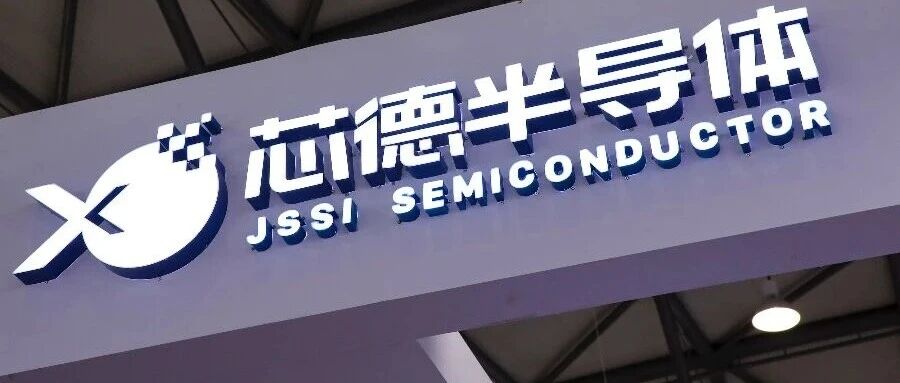
芯德半导体借政策东风申请香港IPO
BambooWorks· 2025-11-11 10:00
Core Viewpoint - The article discusses the recent developments of Jiangsu Xinde Semiconductor Technology Co., Ltd., which focuses on semiconductor packaging and testing, and its application for listing on the Hong Kong Stock Exchange amid supportive policies for the semiconductor industry [1][3]. Company Overview - Jiangsu Xinde Semiconductor was founded in September 2020 by Xinlianxin, Nanjing Yuanjun, and Ningtaixin, primarily engaged in semiconductor packaging design, customized packaging products, and testing services [3]. - The company has attracted significant investors, including MediaTek and Lei Jun's Xiaomi Changjiang, with Ningtaixin being the largest shareholder holding 9.49% of the equity [5][3]. Industry Context - The semiconductor industry is crucial in the era of AI, 5G, IoT, and automotive electronics, with packaging technology becoming a key area for innovation as Moore's Law slows down [6]. - Advanced packaging techniques are essential for maintaining performance and reliability in smaller, high-density semiconductor products, with high entry barriers due to equipment costs and the need for skilled talent [6]. Financial Performance - In the first half of 2025, Xinde Semiconductor's revenue reached 475 million yuan, a 22% increase year-on-year, driven by QFN and BGA packaging products, which accounted for 31% and 31.8% of revenue, respectively [7]. - Despite revenue growth, the company reported a loss of 207 million yuan in the same period due to high sales costs, primarily from material expenses, although adjusted EBITDA showed improvement [8]. Market Outlook - The global semiconductor packaging and testing market is projected to grow from 495.6 billion yuan in 2020 to 649.4 billion yuan in 2024, with a compound annual growth rate of 7%, and expected to reach 933 billion yuan by 2029 [8]. - The company faces seasonal sales fluctuations influenced by the consumer electronics sector, particularly around holidays [8]. Investment Considerations - The semiconductor sector is benefiting from national policies and domestic substitution demand, with companies like SMIC and Hua Hong Semiconductor showing strong performance [9]. - However, Xinde Semiconductor's revenue growth is slowing, with increases of 89%, 62.5%, and 22.1% expected for 2023, 2024, and the first half of 2025, respectively, and the company has yet to achieve profitability [9].

耐科装备跌1.44%,成交额4043.19万元,近3日主力净流入76.84万
Xin Lang Cai Jing· 2025-11-11 07:49
Core Viewpoint - The company, NAIKE Equipment, is involved in the semiconductor packaging and plastic extrusion molding sectors, focusing on intelligent manufacturing equipment and solutions, with a significant portion of its revenue coming from overseas due to the depreciation of the RMB [4][8]. Group 1: Company Overview - NAIKE Equipment was established on October 8, 2005, and went public on November 7, 2022, specializing in the research, production, and sales of intelligent manufacturing equipment for semiconductor packaging and plastic extrusion molding [8]. - The company's main products include semiconductor packaging equipment, plastic extrusion molding molds, and downstream equipment, with revenue composition being 64.66% from plastic extrusion molding molds, 26.93% from semiconductor packaging equipment, and 4.94% from semiconductor packaging molds [8]. Group 2: Financial Performance - For the period from January to September 2025, NAIKE Equipment achieved a revenue of 220 million yuan, representing a year-on-year growth of 11.59%, and a net profit attributable to shareholders of 66.24 million yuan, up 14.70% year-on-year [9]. - The company reported that as of September 30, 2024, overseas revenue accounted for 60.53% of total revenue, benefiting from the depreciation of the RMB [4]. Group 3: Market Activity - On November 11, the stock price of NAIKE Equipment fell by 1.44%, with a trading volume of 40.43 million yuan and a turnover rate of 2.33%, leading to a total market capitalization of 3.288 billion yuan [1]. - The stock has shown no significant trend in major capital inflows, with a net outflow of 1.09 million yuan on the day of analysis, ranking 67th out of 166 in its industry [5][6]. Group 4: Industry Context - NAIKE Equipment operates within the electronic semiconductor equipment sector, with its business aligned with concepts such as integrated circuits, semiconductors, advanced packaging, and specialized manufacturing [9]. - The company is actively upgrading its packaging equipment to support advanced packaging forms like FCCSP and FCBGA, indicating a focus on innovation in semiconductor manufacturing processes [2][3].

汇成股份涨2.67%,成交额8.57亿元,近5日主力净流入1.05亿
Xin Lang Cai Jing· 2025-11-11 07:49
Core Viewpoint - The company, Hefei Xinhui Microelectronics Co., Ltd., is strategically expanding its business in the semiconductor industry, particularly in advanced packaging and storage chip sectors, benefiting from the depreciation of the RMB and its recognition as a "specialized, refined, distinctive, and innovative" enterprise [2][3][5]. Company Overview - Hefei Xinhui Microelectronics was established on December 18, 2015, and went public on August 18, 2022. Its main business focuses on advanced packaging and testing services for integrated circuits, with a revenue composition of 90.25% from display driver chip packaging and testing [7]. - The company has a total market capitalization of 13.52 billion yuan, with a recent trading volume of 857 million yuan and a turnover rate of 6.34% [1]. Financial Performance - For the period from January to September 2025, the company achieved a revenue of 1.295 billion yuan, representing a year-on-year growth of 21.05%, and a net profit attributable to shareholders of 124 million yuan, up 23.21% year-on-year [8]. - As of the end of September 2025, the company's overseas revenue accounted for 54.15% of total revenue, benefiting from the depreciation of the RMB [3]. Strategic Developments - The company has acquired a 27.5445% stake in Hefei Xinfeng Technology Co., Ltd. and formed a strategic partnership with East China Technology (Suzhou) Co., Ltd. to expand into the 3D DRAM and storage chip packaging business, targeting the explosive demand in the AI infrastructure era [2]. - The company is focusing on advanced packaging technologies, including Chiplet, Fan-out, 2.5D/3D, and SiP, to enhance its competitive edge in the semiconductor market [2][3]. Market Position - Hefei Xinhui Microelectronics is recognized as a "specialized, refined, distinctive, and innovative" enterprise, which is a prestigious title for small and medium-sized enterprises in China, indicating its strong market position and innovation capabilities [3][5]. - The company operates within the semiconductor industry, specifically in the integrated circuit packaging and testing sector, and is part of various concept sectors including advanced packaging and LED [8].