新型城镇化

Search documents
地铁设计跌2.02%,成交额2939.57万元,主力资金净流出317.53万元
Xin Lang Zheng Quan· 2025-11-18 06:39
Core Viewpoint - The stock of Guangzhou Metro Design Institute Co., Ltd. has experienced fluctuations, with a recent decline in share price and mixed trading activity, while the company shows modest revenue growth and profitability improvements year-on-year [1][2]. Group 1: Stock Performance - On November 18, the stock price of the company fell by 2.02%, reaching 15.53 CNY per share, with a trading volume of 29.40 million CNY and a turnover rate of 0.47% [1]. - Year-to-date, the stock has increased by 6.08%, but has seen a decline of 1.90% over the last five trading days and 3.18% over the last twenty days [1]. - The company has appeared on the "龙虎榜" three times this year, with the most recent instance on February 20, where it recorded a net buy of -30.44 million CNY [1]. Group 2: Company Overview - Guangzhou Metro Design Institute was established on August 6, 1993, and listed on October 22, 2020, focusing on urban rail transit, municipal, and architectural design and consulting services [2]. - The revenue composition of the company includes 81.97% from design services, 16.07% from engineering contracting, 1.90% from planning consulting, and 0.06% from other services [2]. - The company operates within the construction decoration and engineering consulting sectors, with involvement in new urbanization, Guangdong-Hong Kong-Macau Greater Bay Area, maglev technology, small-cap stocks, and water conservancy construction [2]. Group 3: Financial Performance - For the period from January to September 2025, the company reported a revenue of 1.933 billion CNY, reflecting a year-on-year growth of 0.85%, and a net profit attributable to shareholders of 347 million CNY, which is a 16.92% increase compared to the previous year [2]. - Since its A-share listing, the company has distributed a total of 996 million CNY in dividends, with 572 million CNY distributed over the last three years [3]. Group 4: Shareholder Information - As of September 30, 2025, the number of shareholders increased by 2.50% to 13,000, with an average of 30,720 circulating shares per person, a decrease of 2.44% [2]. - Notable institutional shareholders include 招商量化精选股票发起式A and 香港中央结算有限公司, both of which are new entrants among the top ten circulating shareholders [3].

大禹节水跌2.02%,成交额5941.27万元,主力资金净流出1264.12万元
Xin Lang Cai Jing· 2025-11-18 03:15
Group 1 - The core viewpoint of the news is that Dayu Water-saving's stock has experienced fluctuations, with a current price of 4.86 CNY per share and a market capitalization of 4.969 billion CNY, reflecting a year-to-date increase of 21.17% [1] - As of November 18, the stock has seen a net outflow of 12.6412 million CNY in principal funds, with significant selling pressure from large orders [1] - The company has been listed on the stock market since October 30, 2009, and specializes in the research, manufacturing, and sales of water-saving irrigation materials, with a revenue composition heavily focused on smart agricultural water projects [1] Group 2 - Dayu Water-saving belongs to the agricultural sector, specifically in the subcategories of agriculture and comprehensive agriculture, and is involved in concepts such as new urbanization and ecological agriculture [2] - As of September 30, the number of shareholders increased by 54.01% to 48,200, while the average circulating shares per person decreased by 24.15% [2] - For the period from January to September 2025, the company reported a revenue of 2.067 billion CNY, representing a year-on-year growth of 9.73%, but the net profit attributable to the parent company decreased by 62.92% to 11.0768 million CNY [2] Group 3 - Since its A-share listing, Dayu Water-saving has distributed a total of 567 million CNY in dividends, with 165 million CNY distributed over the past three years [3]

建发股份跌2.04%,成交额8675.89万元,主力资金净流出601.18万元
Xin Lang Cai Jing· 2025-11-18 03:15
Core Viewpoint - Jianfa Co., Ltd. has experienced a decline in stock price recently, with a year-to-date increase of 7.74% and a significant drop in net profit for the first nine months of 2025 [2][3]. Group 1: Stock Performance - On November 18, Jianfa's stock price fell by 2.04%, trading at 10.58 CNY per share, with a market capitalization of 30.677 billion CNY [1]. - The stock has seen a 0.66% decline over the past five trading days and a 2.22% increase over the last 20 days, while it has decreased by 5.54% over the past 60 days [2]. Group 2: Financial Performance - For the period from January to September 2025, Jianfa reported a revenue of 498.983 billion CNY, a year-on-year decrease of 0.63%, and a net profit attributable to shareholders of 1.149 billion CNY, down 44.19% year-on-year [2]. - Cumulative cash dividends since the A-share listing amount to 19.039 billion CNY, with 6.570 billion CNY distributed over the past three years [3]. Group 3: Shareholder Information - As of September 30, 2025, Jianfa had 58,200 shareholders, a decrease of 2.69% from the previous period, with an average of 49,786 circulating shares per shareholder, an increase of 2.77% [2]. - The top ten circulating shareholders include Hong Kong Central Clearing Limited, which holds 111 million shares, an increase of 4.128 million shares from the previous period [3].

大悦城跌2.05%,成交额1357.47万元,主力资金净流出134.05万元
Xin Lang Zheng Quan· 2025-11-18 01:50
Core Viewpoint - Dalian City experienced a stock price decline of 2.05% on November 18, with a current price of 3.34 CNY per share and a total market capitalization of 14.316 billion CNY [1] Financial Performance - For the period from January to September 2025, Dalian City achieved a revenue of 20.648 billion CNY, reflecting a year-on-year growth of 0.83%, while the net profit attributable to shareholders was -533 million CNY, showing a year-on-year increase of 9.17% [2] - The company has not distributed any dividends in the past three years, with a total payout of 2.054 billion CNY since its A-share listing [3] Stock Market Activity - As of November 18, the stock has increased by 9.87% year-to-date, with a 2.45% rise over the last five trading days, a 1.18% decline over the last 20 days, and a 3.09% increase over the last 60 days [1] - The stock's trading volume showed a net outflow of 1.3405 million CNY from main funds, with significant selling pressure observed [1] Shareholder Information - As of September 30, 2025, the number of shareholders decreased by 7.16% to 89,700, while the average circulating shares per person increased by 15.33% to 47,810 shares [2] - The top ten circulating shareholders include Hong Kong Central Clearing Limited and ICBC Value Selection Mixed A, with notable changes in their holdings [3]

第十四届全国政协委员尹艳林:让有钱且愿消费的人顺利消费 个税起征点可提高,最高边际税率可下调 让有关群体少缴税、多收入
Mei Ri Jing Ji Xin Wen· 2025-11-17 14:29
10月28日,《中共中央关于制定国民经济和社会发展第十五个五年规划的建议》(以下简称《建议》) 正式发布。记者注意到,此次《建议》在投资、消费等领域出现多个新提法。这些新提法背后有怎样的 深意?在我国经济迈向"十五五"的关键节点,如何破解消费率偏低、内需动力不足的深层矛盾?面对复 杂严峻的国内外环境,深化改革的突破口究竟在哪里? 带着这些关乎经济发展全局的核心问题,近日,《每日经济新闻》记者(以下简称NBD)专访了第十 四届全国政协委员尹艳林。尹艳林深耕宏观经济领域多年,曾长期任职于国家发改委和原中央财经领导 小组办公室,对中国经济体制改革、供需结构调整等议题有着深刻洞察和独到见解。他对扩大内需、全 国统一大市场等领域的问题,都提出了具体的改革方向和建议。 新型城镇化仍然是经济增长的重要引擎 NBD:《建议》在"十五五"时期经济社会发展的主要目标中提出,全要素生产率稳步提升,居民消费率 明显提高,内需拉动经济增长主动力作用持续增强。这对今后几年的经济发展会产生哪些影响? 尹艳林:全要素生产率稳步提升对应高质量发展阶段的创新驱动逻辑。创新发挥作用,首先就表现在全 要素生产率的提升。这一表述是从供给端突出科技进步 ...
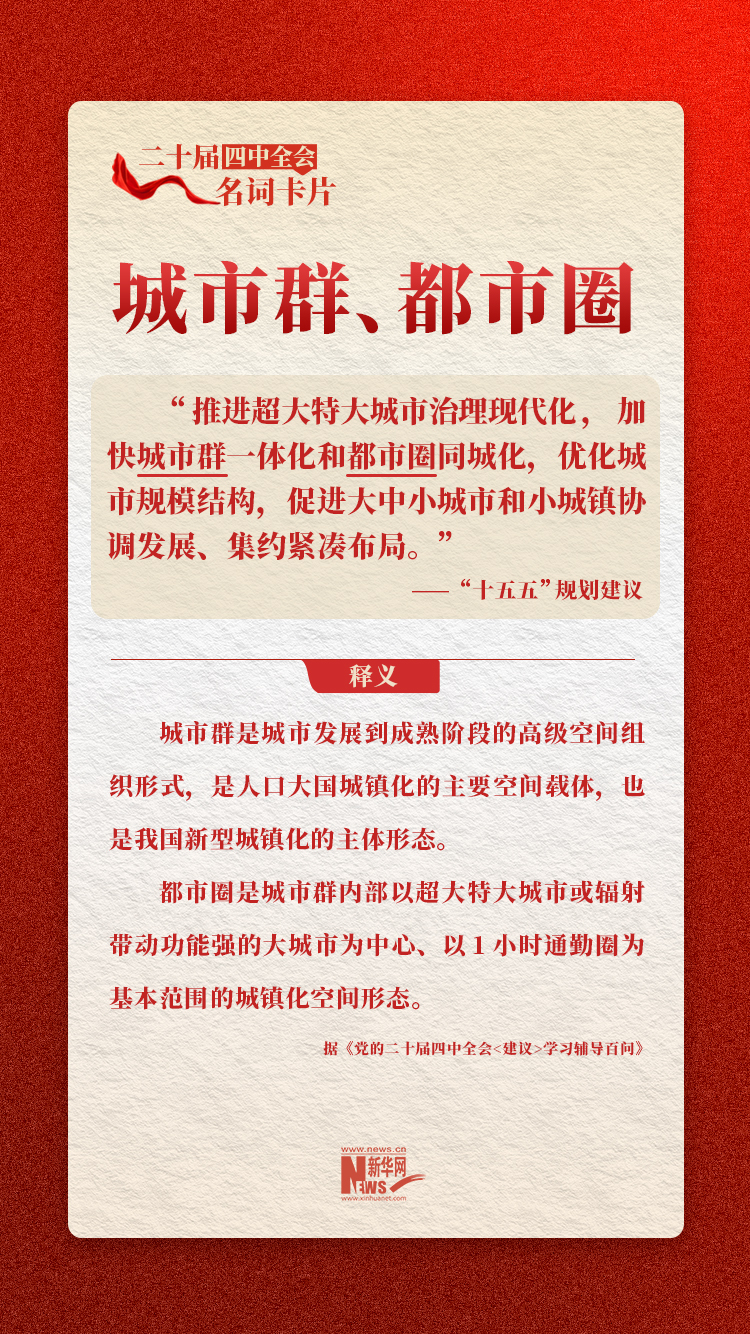
二十届四中全会名词卡片:城市群、都市圈
Xin Hua Wang· 2025-11-17 14:01
Core Viewpoint - The article emphasizes the necessity of accelerating the integration of urban agglomerations and the same-city development of metropolitan areas as a response to urbanization trends and a means to promote coordinated development among large, medium, and small cities and towns, thereby enhancing economic growth and high-quality development [7]. Group 1: Urban Agglomeration Integration - Accelerating urban agglomeration integration is essential for adapting to urbanization trends and advancing new urbanization [7]. - Key strategies include promoting differentiated positioning among cities, optimizing layout, and establishing a multi-center, multi-level, and multi-node network structure for urban agglomerations [8]. - Infrastructure connectivity is crucial, involving the collaborative improvement of transportation, logistics, energy, communication, and water resources networks [8]. Group 2: Metropolitan Area Same-City Development - The focus of same-city development in metropolitan areas is to enhance the central cities' radiating and driving roles, fostering collaborative development with surrounding cities and towns [9]. - Development should prioritize creating efficient commuting, industrial, and living circles, with an emphasis on integrated public transport systems and balanced public service distribution [9]. - Establishing a multi-level, regular coordination mechanism is necessary to ensure the effective implementation of these initiatives, including resource sharing and administrative reforms [9].

城镇化增速放缓之后,“十五五”城市发展如何破局?
2 1 Shi Ji Jing Ji Bao Dao· 2025-11-17 12:32
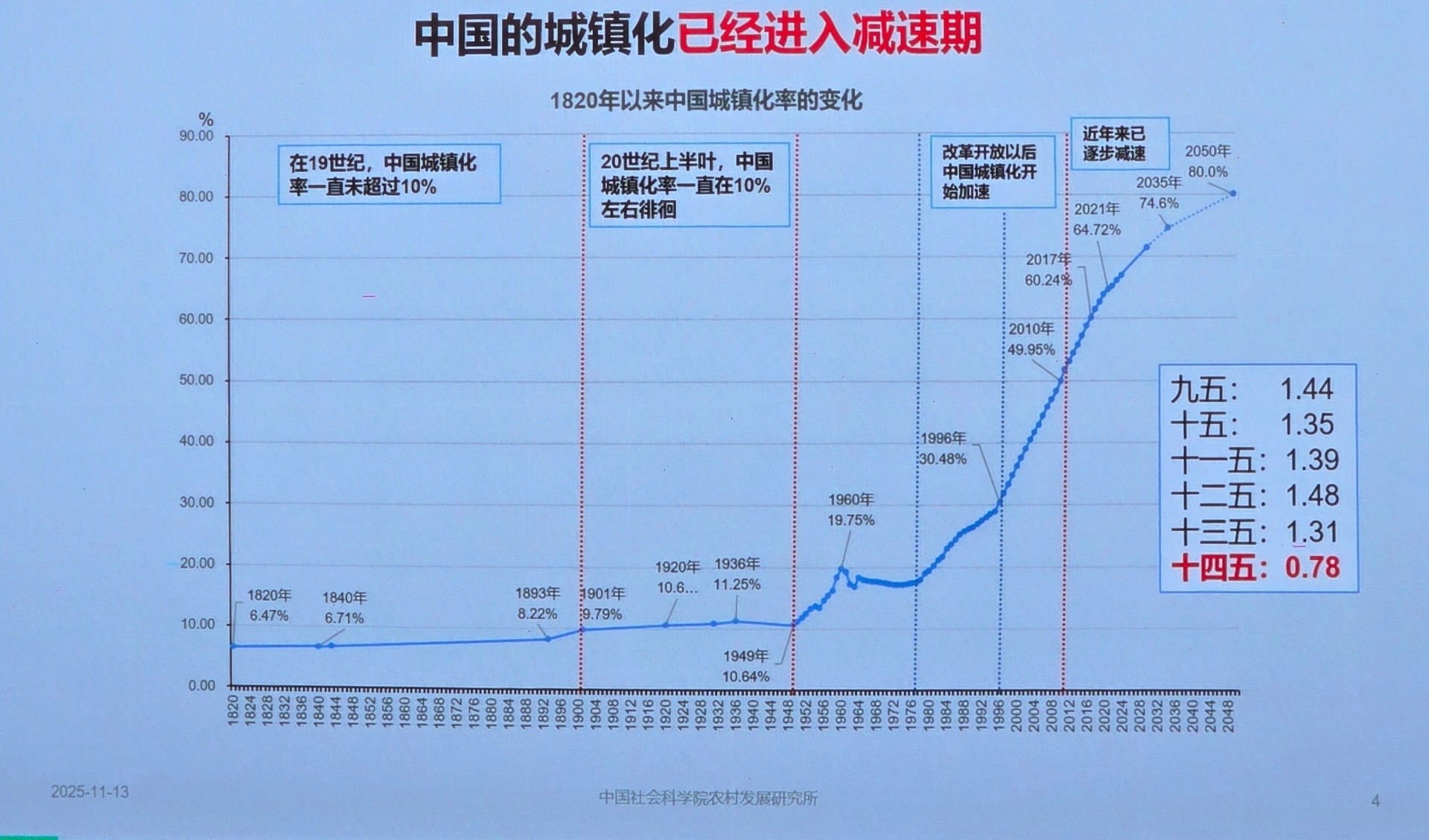
Core Insights - China's urbanization rate has reached 67%, indicating a shift towards the later stages of urban development, with a trend of slowing urbanization growth [1][2] - The "14th Five-Year Plan" period saw an average urbanization growth rate drop to 0.78 percentage points due to the pandemic, while the "15th Five-Year Plan" is expected to maintain a growth rate of around 0.7 percentage points, reaching an estimated 71.5% by 2030 [2][3] Urbanization Trends - Historical average annual urbanization rate increases were: 1.44 percentage points during the "9th Five-Year Plan," 1.35 during the "10th," 1.39 during the "11th," 1.48 during the "12th," and 1.31 during the "13th" [2] - The transition from rapid growth to stable development in urbanization is a key focus for the new period, as highlighted in the recent Central Urban Work Conference [2] Quality and Speed of Urbanization - The "15th Five-Year Plan" emphasizes balancing speed and quality in urbanization, with a focus on improving urbanization quality and synchronizing urbanization with citizenization [3][4] Rural-Urban Integration - The integration of rural and urban areas is crucial, with county-level cities becoming key hubs for absorbing rural labor migration [7][9] - The quality of urbanization for agricultural migrants needs improvement, with a focus on providing basic public services based on registered residence [4][6] Structural Optimization - The current urban structure is characterized by a polarization between mega-cities and smaller towns, necessitating a re-evaluation of urban scale and structure [11][12] - From 2010 to 2023, the number of mega-cities increased from 8 to 23, while small cities decreased from 489 to 469, indicating a need for coordinated development [11] High-Quality Urban Development - The shift towards high-quality urban development is a priority, focusing on enhancing urban characteristics, safety, and development atmosphere [13][14] - Urban renewal is identified as a critical strategy for achieving high-quality urban development, emphasizing the need for government support to attract investment and stimulate demand [13][14]

大宏立涨2.14%,成交额2884.84万元,主力资金净流出343.82万元
Xin Lang Zheng Quan· 2025-11-17 02:10
Company Overview - Chengdu Dahongli Machinery Co., Ltd. is located at 399 Daan Road, Dayi County, Chengdu, Sichuan Province, established on May 10, 2004, and listed on August 24, 2020 [1] - The company's main business involves the research, design, manufacturing, and sales of complete crushing and screening equipment [1] Financial Performance - For the period from January to September 2025, Dahongli achieved operating revenue of 243 million yuan, a year-on-year decrease of 19.50% [2] - The net profit attributable to the parent company was 10.42 million yuan, down 44.69% year-on-year [2] - Since its A-share listing, Dahongli has distributed a total of 40.37 million yuan in dividends, with 11.48 million yuan distributed over the past three years [3] Stock Performance - On November 17, Dahongli's stock price increased by 2.14%, reaching 31.55 yuan per share, with a trading volume of 28.84 million yuan and a turnover rate of 1.66%, resulting in a total market capitalization of 3.019 billion yuan [1] - Year-to-date, Dahongli's stock price has risen by 35.18%, with a recent decline of 1.59% over the last five trading days [1] - The company has appeared on the "Dragon and Tiger List" twice this year, with the most recent appearance on July 23, where it recorded a net buy of -66.0683 million yuan [1] Shareholder Information - As of October 31, Dahongli had 12,000 shareholders, an increase of 4.69% from the previous period, with an average of 4,706 circulating shares per person, a decrease of 4.48% [2] Business Segments - The revenue composition of Dahongli's main business includes: crushing equipment 46.41%, spare parts 26.37%, screening equipment 14.24%, installation and maintenance 10.79%, and others 2.19% [1]
重庆建工跌2.05%,成交额1.15亿元,主力资金净流出819.83万元
Xin Lang Zheng Quan· 2025-11-17 02:10
Core Viewpoint - Chongqing Construction's stock has experienced fluctuations, with a recent decline of 2.05% and a year-to-date increase of 27.24%, indicating volatility in market performance [1][2]. Financial Performance - For the period from January to September 2025, Chongqing Construction reported operating revenue of 18.418 billion yuan, a year-on-year decrease of 8.58%, and a net profit attributable to shareholders of -625 million yuan, reflecting a significant decline of 1088.34% [2]. - The company has distributed a total of 600 million yuan in dividends since its A-share listing, with 64.66 million yuan distributed over the past three years [3]. Stock Market Activity - As of November 17, the stock price was 3.83 yuan per share, with a total market capitalization of 7.284 billion yuan. The trading volume was 115 million yuan, with a turnover rate of 1.57% [1]. - The stock has appeared on the "Dragon and Tiger List" six times this year, with the most recent net purchase of 25.77 million yuan on November 10 [1]. Shareholder Information - As of November 10, the number of shareholders increased by 25.45% to 59,600, while the average circulating shares per person decreased by 20.29% to 31,884 shares [2]. - Hong Kong Central Clearing Limited is the seventh largest circulating shareholder, holding 5.2625 million shares, an increase of 1.6774 million shares from the previous period [3].

“十五五”谋局 中国城镇化下一个五年走向何方?
Mei Ri Jing Ji Xin Wen· 2025-11-16 14:34
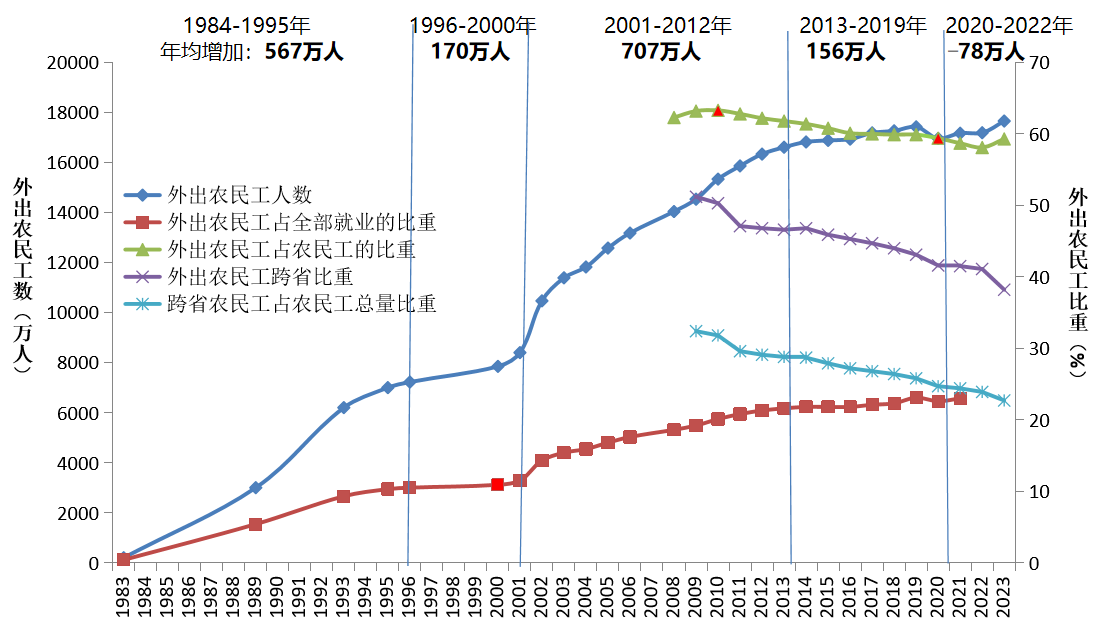
Core Insights - China's urbanization is transitioning from rapid growth to stable development, with a focus on improving quality and efficiency rather than merely expanding size [1][7][20] Urbanization Achievements - Over the past 46 years, China's urbanization rate has increased from 17.9% to 67%, with the urban population rising from 172 million to 940 million [1] - During the "14th Five-Year Plan" period, the urbanization rate is projected to rise from 63.9% in 2020 to 67% by 2024, with over 170 million rural residents moving to urban areas [4] Economic Transition - The focus of China's economic development is shifting from supply-side to demand-side strategies, particularly during the "15th Five-Year Plan" period, to address insufficient demand [2][3] - New urbanization is seen as a crucial driver for economic growth, aiming to enhance domestic demand and stabilize GDP growth [3] Quality of Urbanization - The "15th Five-Year Plan" emphasizes the need to balance speed and quality in urbanization, with an expected urbanization growth rate of around 0.7 percentage points [7] - Key tasks include promoting the urbanization of agricultural migrants and ensuring equal access to public services [7][12] Urban Structure and Coordination - The development of urban clusters and metropolitan areas is essential for enhancing economic growth and regional coordination [8][12] - There is a need to address the "polarization" issue, where large cities attract resources at the expense of smaller cities [12][14] Rural Integration - The integration of urban and rural areas is a strategic priority, with a focus on promoting rural revitalization and ensuring a balanced flow of resources [15][16] - Recent trends show a shift towards local labor migration, with a decrease in the proportion of migrant workers traveling long distances [16][18] Infrastructure and Public Services - Improving infrastructure and public services in rural areas is critical for supporting urbanization and enhancing the quality of life for residents [19] - The government is encouraged to utilize financial tools, such as issuing special bonds for new urbanization, to alleviate local fiscal pressures and support infrastructure development [18][19]