量化投资

Search documents
朝闻国盛:怎么看2026年美联储降息节奏?
GOLDEN SUN SECURITIES· 2025-12-12 00:29
证券研究报告 | 朝闻国盛 gszqdatemark 2025 12 12 年 月 日 朝闻国盛 怎么看 2026 年美联储降息节奏? 今日概览 ◼ 重磅研报 【宏观】增量信息不少—中央经济工作会议 6 大看点——20251211 【宏观】怎么看 2026 年美联储降息节奏?——兼评 12 月议息会议—— 20251211 【金融工程】低偏离度下的纯粹 Alpha 创造——兴银基金中小盘指增策 略探析——20251211 【非银金融】保险行业 2025 行情回顾——阶段性超额收益显著,全年跑 输大盘——20251211 ◼ 研究视点 【电子】蓝思科技(300433.SZ)-收购服务器业务公司,加码 AI 算力核 心布局——20251211 作者 | 分析师 | 杨润思 | | | | --- | --- | --- | --- | | 执业证书编号:S0680520030005 | | | | | 邮箱:yangrunsi@gszq.com | | | | | 行业表现前五名 | | | | | 行业 | 1 月 | 3 月 | 1 年 | | 通信 | 12.9% | 7.6% | 81.1% | | 国防 ...
量化私募强攻细分赛道 产品线竞争趋白热化
Zhong Guo Zheng Quan Bao· 2025-12-11 22:29
近期,从摩尔线程到沐曦股份,网下配售名单中高频出现幻方、九坤、衍复等头部量化机构的身影,两 家国产GPU龙头企业IPO引发了量化私募的抢筹热潮。不限于股票打新,一场围绕"双创"领域的布局已 悄然展开,多家量化私募正加紧推出科创、双创及AI等细分主题产品,试图在波动更大、交易更活跃 的市场中捕捉超额收益。 与此同时,部分量化私募也在布局红利等稳健型产品。布局方向的差异并不意味着投资观点的分歧,而 是竞争白热化的突围之举。热潮之下,争议浮现,在成份股集中、研究门槛更高的细分赛道,量化策略 能否持续奏效?前瞻布局到底能产生怎样的效果? 量化私募淘金硬科技 前不久,"国产GPU第一股"摩尔线程科创板IPO引发市场高度关注,共有94家公募和113家私募获得网下 配售。私募机构积极参与摩尔线程网下配售,量化私募更是在此次配售中占据主导地位,其中,九坤投 资、幻方量化、灵均投资等头部机构悉数在列。 紧随其后,同为国产GPU头部企业的沐曦股份IPO热度再攀高峰。最新公告显示,其以104.66元/股的发 行价位居2025年A股新股发行价第二位,公司网上最终中签率低于摩尔线程,中签难度进一步提升, 517.52万户投资者参与网上 ...
量化私募强攻细分赛道产品线竞争趋白热化
Zhong Guo Zheng Quan Bao· 2025-12-11 20:17
Core Insights - The recent IPOs of domestic GPU leaders, Moer Technology and Muxi Co., have sparked a surge in interest from quantitative private equity firms, indicating a strong demand for innovative technology investments [1][2] - Quantitative private equity firms are diversifying their product offerings, focusing on themes such as AI, robotics, and dual innovation, while also exploring stable products like dividend strategies [3][5] - The competition among quantitative private equity firms is intensifying, leading to a focus on niche markets and specialized products to capture excess returns [4][6] Group 1: IPO Participation - Moer Technology's IPO attracted significant attention, with 94 public and 113 private equity firms participating in the offline allocation, predominantly led by quantitative firms [1] - Muxi Co.'s IPO saw a high level of engagement, with 200 public and private equity firms involved, resulting in a total allocation of 13.76 million shares worth 1.44 billion yuan [2] Group 2: Product Diversification - Several quantitative private equity firms are launching products focused on dual innovation and technology, with firms like Longqi Technology and Xiaoyong Private Equity introducing specialized offerings [3][4] - The flexibility of trading rules and higher volatility in the Sci-Tech Innovation Board and Growth Enterprise Market are seen as favorable conditions for quantitative investment strategies [4] Group 3: Dividend Strategy - Some quantitative private equity firms are also developing dividend-themed products, indicating a strategy to enhance their product lines in response to market demand [5] - The differing product strategies among firms do not necessarily reflect divergent market views but rather a response to competitive pressures and client needs [5] Group 4: Market Competition - The competition among quantitative private equity firms is becoming increasingly fierce, with a trend towards multi-strategy and multi-asset product development to secure market positioning [5][6] - Concerns have been raised about the profitability of overly specialized products, as limited stock selection may increase volatility and reduce the likelihood of outperforming indices [6]
百亿基金经理跳槽背后:数据揭示的资本暗流
Sou Hu Cai Jing· 2025-12-11 16:59
Group 1 - The core point of the article highlights the significant career move of Todd Combs, often referred to as "the successor to Buffett," from Berkshire Hathaway to JPMorgan Chase, where he will manage a new $10 billion investment fund focused on safety and resilience [1][3] - Combs has a strong track record, having only experienced a 5.7% decline during the 2008 financial crisis, showcasing his risk management skills, although his recent investment returns have lagged behind the S&P 500 index [3] - The competition for talent among institutions reflects a broader struggle for market dominance, with JPMorgan's CEO Jamie Dimon recognizing the shift in investment strategies as early as 2016 [3] Group 2 - Market volatility has increased significantly in November, leading many to believe that the market is facing obstacles; however, historical data suggests that bull markets do not rise in a straight line [4][5] - The current market phase is characterized by a divergence where retail investors are reluctant to sell, preventing institutional investors from accumulating enough shares, which can lead to misinterpretations of market adjustments [5] - Data indicates that over the past decade, less than 30% of stocks outperform the index during major market rallies, emphasizing the importance of stock selection and timing [5] Group 3 - The article discusses the challenges investors face in identifying "good stocks," noting that they often experience significant volatility, making it difficult to hold onto them [7] - Institutional investors utilize strategies to shake off weak hands through price fluctuations, which can mislead retail investors [8] - The article emphasizes the importance of focusing on quantitative data to understand market movements rather than speculating on the decisions of high-profile investors [9][13] Group 4 - The article concludes with insights for ordinary investors, advising them to focus on the flow of funds and emotional dynamics in the market rather than the movements of individual investment stars [15] - It suggests that the phenomenon of "good stocks being hard to hold" is common, and the solution lies in establishing an objective data analysis system [14] - The article reinforces the idea that valuable information is often found in trading data rather than in headlines, highlighting the need for respect for real data and understanding market fundamentals [16]


大成基金苏秉毅:“固收+”走红源于供需共振 投资秉承均值回归理念
Zhong Zheng Wang· 2025-12-11 14:25
在回撤控制方式上,可能和市场上很多基金经理不太一样的是,他不会选择在价格跌破安全垫时减仓甚 至砍仓,而是在入场时就做好准备,在相对低位建仓,等到价格上涨再去兑现,而不是追高后再试图在 更高的位置卖出。对于不同"固收+"产品,会设置不同的回撤控制目标。 中证报中证网讯(记者 张韵)12月11日晚间,大成元瑞诚利拟任基金经理苏秉毅在做客中国证券报"中 证点金汇"直播间时表示,近年来"固收+"产品的走红主要源于供给和需求两方面的推动。供给端,权益 市场走强,带动"固收+"产品业绩显著提升;需求端,低利率环境里,许多存款理财产品的收益率下 行,居民在稳健基础上寻求更高收益的需求大幅提升。 在产品投资上,他表示,其在各类产品管理上均秉承均值回归的理念。交易偏左侧,根据市场情绪适当 逆向调整仓位。在操作上,量化与主观相结合,量化辅助风格及股票筛选,量化筛选核心指标为超跌 (反转因子),辅助基本面、技术面等指标,不同阶段指标权重主观调整;主观负责股票买卖与交易环 节。 以中波"固收+"的投资为例,他投资时设置的权益中枢通常为15%,市值维度对标中证1000指数,严格 控制个股与行业集中度,坚持"抄底等待修复",赚估值回归的 ...
AI 赋能资产配置(三十一):对冲基金怎么用 AI 做投资
Guoxin Securities· 2025-12-11 11:09
Core Insights - From 2024 to 2025, the application of AI in global hedge funds is transitioning from localized tools to a restructured process, integrating unstructured information processing and iterative research capabilities to enhance research productivity and shorten strategy iteration cycles [3][4] - The industry is showing three clear paths: 1) Agent-driven research systems represented by Man Group and Bridgewater, aiming for scalable closed-loop processes; 2) Fundamental research enhancement systems represented by Citadel and Point72, focusing on improving information processing and research coverage efficiency; 3) Platform-based infrastructure systems represented by Balyasny and Millennium, providing unified data and security frameworks to multiple trading teams [3][5] Industry Background - Traditional quantitative finance relied on structured data and statistical models to identify market pricing discrepancies, facing risks of data mining and crowded strategy spaces. The industry is experiencing a "Quant 3.0" revolution with the maturity of AI technologies centered around Transformer architecture by 2025 [4] - The changes stem from the engineering maturity of three capability modules: 1) Non-structured information can be absorbed and transformed into testable hypotheses; 2) Agent workflows break down research processes into roles, completing hypothesis generation, coding, backtesting, and attribution through multiple iterations; 3) Engineering efficiency directly impacts the speed of capturing profit opportunities [4] Industry Differentiation - Three mainstream paths are identified: 1) Fully automated research paths led by Man Group and Bridgewater, focusing on creating AI systems that can independently generate hypotheses, write code, validate strategies, and explain economic principles. 2) Fundamental research enhancement led by Citadel and Point72, where AI acts as an assistant to human fund managers, significantly improving the breadth and depth of fundamental stock selection. 3) Platform-based infrastructure led by Balyasny and Millennium, focusing on building centralized AI infrastructure to empower numerous independent trading teams [5] Case Studies - **Man Group**: Utilizes the "AlphaGPT" project to address strategy generation in quantitative investing, achieving an average score of 8.16 for AI-generated Alpha factors compared to 6.81 for human researchers, with an 86.60% success rate [7][8] - **Bridgewater Associates**: Developed the AIA Forecaster, a multi-agent system simulating investment committee debates, incorporating dynamic search capabilities and statistical calibration to ensure robust macroeconomic predictions [9][10] - **Citadel**: Focuses on enhancing research productivity and information processing capabilities, utilizing AI to generate targeted summaries and track key points for fund managers [11][12] - **Two Sigma**: Emphasizes advanced machine learning techniques, particularly deep learning, to capture weak and non-linear market signals, utilizing a platform called Venn for portfolio analysis [13][14][15] - **Point72**: Develops the "Canvas" platform to integrate alternative data into a comprehensive industry chain view, enhancing decision-making for fund managers [16] - **Balyasny Asset Management**: Implements a centralized AI strategy to improve internal document retrieval accuracy and semantic understanding in financial contexts [17] - **Millennium Management**: Adopts a decentralized approach, providing robust infrastructure for various trading teams while emphasizing data isolation and access control [18][19] Summary of Paths - The three paths converge on key competitive points: data governance, understanding of private contexts, engineering iteration mechanisms, and explainable and auditable systems, which are more critical for long-term advantages than the performance of individual models [20]
机构狂买12亿!散户却还在猜顶底?
Sou Hu Cai Jing· 2025-12-11 09:52
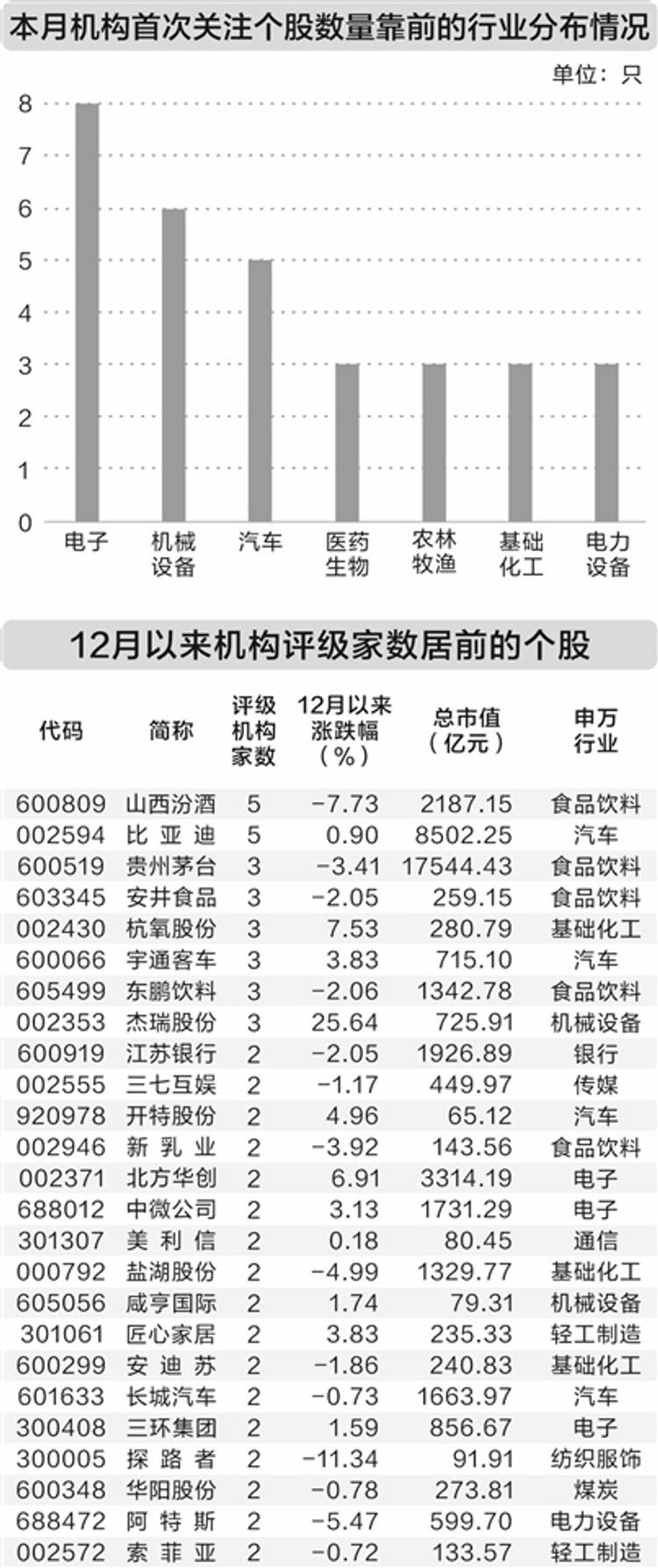
Group 1 - The article highlights the disparity between institutional recommendations and the actual performance of stocks, indicating that many retail investors are suffering losses despite positive ratings for companies like BYD and Shanxi Fenjiu [1][3] - Institutional ratings show 49 institutions issued 222 buy ratings across 185 stocks, yet some of these stocks, such as Shanxi Fenjiu, have seen significant declines, with a drop of 7.73% [3] - The article criticizes the notion of a bull market, suggesting that it is misleading and that many stocks are experiencing substantial losses despite overall market gains [4][7] Group 2 - The food and beverage index has decreased by 3.6%, while there has been a net purchase of 1.2 billion in financing, indicating a disconnect between market sentiment and institutional buying behavior [12] - The article emphasizes the importance of understanding institutional inventory data, which can provide insights into market movements that are not apparent from price charts alone [12][14] - It advises investors to be cautious and to recognize that the stock market operates on information asymmetry, where institutional investors often act before retail investors are aware of market changes [14]


AI赋能资产配置(三十一):对冲基金怎么用AI做投资
Guoxin Securities· 2025-12-11 09:36
Core Insights - From 2024 to 2025, global hedge funds are transitioning from localized AI tools to a restructured process-oriented approach, integrating unstructured information processing and iterative research capabilities into a cohesive investment research chain [3][4] - The industry is showing three clear paths: 1) Agent-driven research systems represented by Man Group and Bridgewater, aiming for scalable closed-loop processes; 2) Fundamental research enhancement systems represented by Citadel and Point72, focusing on improving information processing and research coverage efficiency; 3) Platform-based infrastructure systems represented by Balyasny and Millennium, providing unified data and security frameworks to multiple trading teams [3][5] Industry Background - Traditional quantitative finance relied heavily on structured data and statistical models, facing risks of data mining and crowded strategy spaces. The industry is now experiencing a "Quant 3.0" revolution with the maturation of AI technologies, particularly those based on the Transformer architecture [4] - The changes in 2024-2025 stem from the engineering maturity of three capability modules: 1) Unstructured information can be absorbed and transformed into testable hypotheses; 2) Agent workflows break down research processes into roles, completing hypothesis generation, coding, backtesting, and attribution through iterative cycles; 3) Engineering efficiency directly impacts the speed of capturing profit opportunities [4] Industry Differentiation - Three mainstream paths are identified: 1) Fully automated research path led by Man Group and Bridgewater, focusing on AI systems that can independently generate hypotheses, code, validate strategies, and explain economic principles [5] 2) Fundamental research enhancement led by Citadel and Point72, where AI acts as an assistant to human fund managers, significantly improving the breadth and depth of fundamental stock selection [5] 3) Platform-based infrastructure led by Balyasny and Millennium, emphasizing centralized AI infrastructure to empower numerous independent trading teams [5] Case Studies - **Man Group**: Utilizes the "AlphaGPT" project to address strategy generation in quantitative investing, achieving an average score of 8.16 for AI-generated Alpha factors compared to 6.81 for human researchers, with an 86.60% success rate [7][8] - **Bridgewater Associates**: Developed the AIA Forecaster, a multi-agent system simulating investment committee debates, incorporating dynamic search capabilities and statistical calibration to ensure robust macro predictions [9][10] - **Citadel**: Focuses on enhancing research productivity and information processing capabilities, utilizing AI to generate targeted summaries and track key points for fund managers [11][12] - **Two Sigma**: Emphasizes advanced machine learning techniques, particularly deep learning, to capture weak and non-linear market signals, utilizing a platform called Venn for portfolio analysis [13][14][15] - **Point72**: Developed the "Canvas" platform to integrate diverse alternative data into a comprehensive industry chain view, enhancing decision-making for fund managers [16] - **Balyasny Asset Management**: Implements a centralized AI strategy to improve internal dialogue and retrieval capabilities, focusing on financial semantic understanding [17] - **Millennium Management**: Adopts a decentralized approach, providing robust infrastructure for various trading teams while emphasizing data isolation and access control [18][19] Summary of Paths - The three paths converge on key competitive points: data governance, understanding of private contexts, engineering iteration mechanisms, and explainable and auditable systems, which are more critical for long-term advantages than the performance of individual models [20]
735亿美元市场,散户如何分一杯羹?
Sou Hu Cai Jing· 2025-12-11 07:18
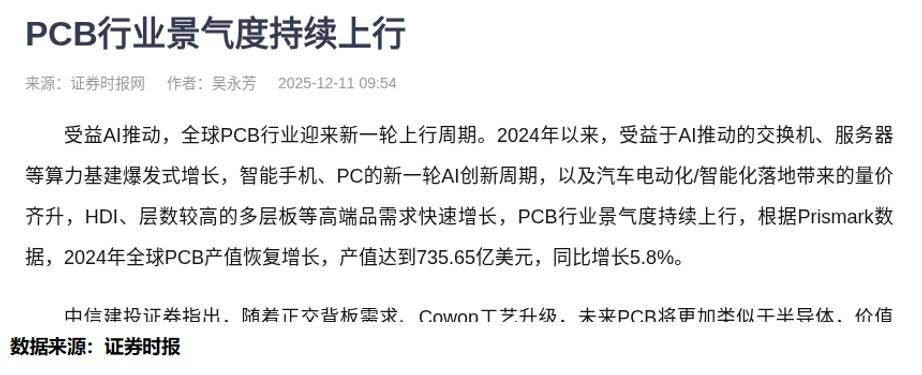
Group 1 - The PCB industry is expected to recover with a projected global output value of $73.565 billion, driven by advancements in AI computing infrastructure, consumer electronics innovation, and automotive intelligence [3] - The industry is anticipated to increasingly resemble the semiconductor sector, with a continuous increase in value [3] - There is a disconnect between market sentiment and the underlying data, highlighting the importance of recognizing market trends and potential risks [4] Group 2 - The current market phase is characterized by volatility, with only 20% of stocks expected to continue rising, while many investors may lose their positions during fluctuations [8] - Historical patterns indicate that the current market is in a second phase of differentiation, following a previous phase of valuation recovery [6] - Quantitative data reveals that significant market movements are often accompanied by institutional "inventory" and "recovery momentum," indicating potential market manipulation [13] Group 3 - Traditional methods of stock selection in the PCB sector may lead to misjudgments, emphasizing the need for a quantitative approach to understand fund behavior [11] - The disparity in institutional participation among different PCB stocks illustrates the essence of market differentiation [19] - Investors are encouraged to adopt a new cognitive framework, focusing on understanding fund language and accepting imperfect conditions in stock performance [20] Group 4 - The industry is projected to grow by 5.8%, prompting the need to identify companies that can outperform the average and those that may be eliminated from the market [21]
量化赋能,专业护航,建信创业板综增强ETF来了!
Xin Lang Cai Jing· 2025-12-10 13:56
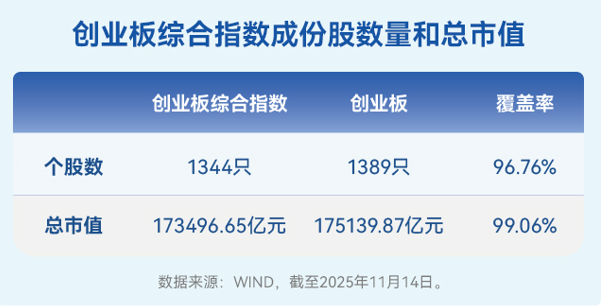
Core Viewpoint - The A-share market has shown strong performance this year, with major indices experiencing varying degrees of increase, reflecting an enhancement in market risk appetite and active structural opportunities [1][18] Index Overview - The ChiNext Composite Index (399102.SZ) covers over 1,300 listed companies on the ChiNext board, with a total market capitalization coverage of 98% [1][19] - The index has a base point of 1,000 and was established on May 31, 2010 [1] | | ChiNext Composite Index | ChiNext | Coverage Rate | | --- | --- | --- | --- | | Number of Stocks | 1344 | 1389 | 96.76% | | Total Market Value | 173,496.65 billion | 175,139.87 billion | 99.06% | Historical Performance - Since its inception on May 31, 2010, the ChiNext Composite Index has increased by 285.29%, significantly outperforming the Shanghai Composite Index and Shenzhen Component Index during the same period [2][19] Industry Distribution - The ChiNext Composite Index has a high concentration in technology sectors, covering industries such as power equipment, electronics, biomedicine, communications, and computers, which helps capture investment opportunities in various high-tech fields [4][21] - The top five industries by weight are: - Power Equipment (23.5%) - Electronics (13.7%) - Biomedicine (10.4%) - Communications (9.7%) - Computers (9.5%) - These five industries collectively account for approximately 66.8% of the index [4][21] Valuation - The current Price-to-Earnings (PE) ratio (TTM) of the ChiNext Composite Index is 66.75, which is within a reasonable range of around 57% over the past decade, indicating potential for upward adjustment compared to other major A-share indices [7][24] | | PE (TTM) | PE Percentile | | --- | --- | --- | | ChiNext Composite | 66.75 | 57.04% | | Shanghai Composite | 16.64 | 97.53% | | Shenzhen Component | 30.56 | 80.70% | | Wind All A | 22.20 | 89.96% | Investment Strategy - The enhanced strategy ETF aims to outperform the benchmark index by closely tracking the ChiNext Composite Index while employing quantitative management strategies to optimize portfolio holdings [8][25] - The investment model emphasizes consistent performance and aims to adapt to different market conditions to achieve better investment outcomes [10][27] Management Expertise - The management team at Jianxin Fund has extensive experience in index product investment management, with members possessing diverse academic backgrounds in mathematics, computer science, and finance [11][28]