
产教融合

Search documents
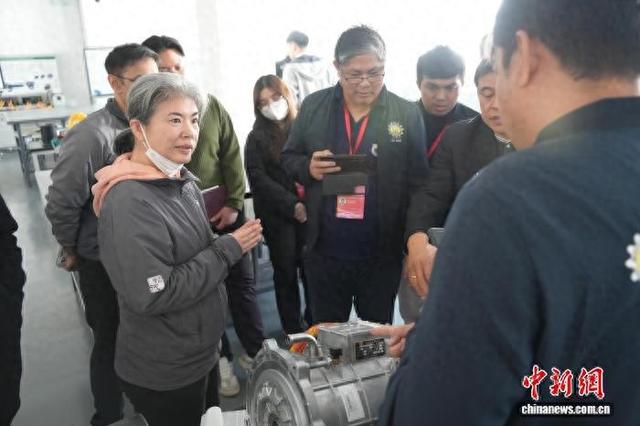
泰国师生赴津研修新能源汽车技术 产教融合助力人才共育
Xin Lang Cai Jing· 2025-12-23 04:37
Group 1 - The core focus of the training program was on key aspects of new energy vehicles, including practical operations of the three electric systems, high voltage operation standards, and comprehensive fault diagnosis [1][3] - The training incorporated advanced modules such as the Engineering Practice Innovation Project (EPIP) analysis and industry development trend assessments, combining theory, practice, and discussions [1] - Thai participants had the opportunity to visit production workshops and R&D centers of companies like Binhai Great Wall Motors and Tiandi Weiye Technology Co., gaining firsthand experience of China's new energy vehicle industry [3] Group 2 - The training program emphasized the integration of education and industry, facilitating exchanges between Thai students and Chinese technical personnel regarding product development and manufacturing experiences [3] - Participants expressed that the training not only provided practical skills but also offered a deeper understanding of China's vocational education and industrial development, highlighting the potential for future exchanges and collaborations [3]

苏州:从产教融合看职业教育新前景
Bei Jing Ri Bao Ke Hu Duan· 2025-12-23 02:57
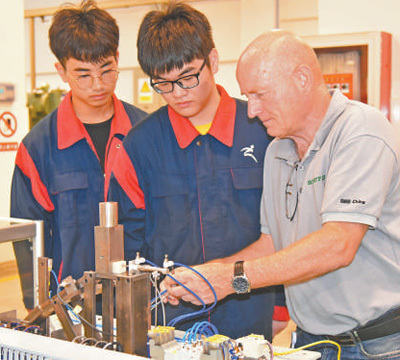
Group 1 - The core viewpoint of the article emphasizes the importance of integrating vocational education with industry needs, highlighting the establishment of industry-education integration platforms in Suzhou to enhance talent cultivation and meet regional industrial demands [5][7][11] - In 2023, the Ministry of Education announced two batches of city-level industry-education integration platforms, with 34 entities selected, reflecting a growing focus on vocational education in China [3][4] - Suzhou has 56 vocational institutions with over 250,000 students, and the alignment of vocational programs with regional industries exceeds 95%, indicating a strong connection between education and local economic needs [3][6] Group 2 - The article discusses the dual identity of educators who work both in academia and industry, which enhances their teaching capabilities and provides students with real-world insights [5][6] - The Wu Zhong Economic and Technological Development Zone has over 1,000 companies in the robotics and AI sector, showcasing a robust industrial base that supports the development of vocational education [6][7] - The integration of practical projects into the curriculum allows students to gain hands-on experience, thereby improving their employability and aligning educational outcomes with industry requirements [8][10] Group 3 - The article highlights the success of the dual vocational education model, where students simultaneously engage in academic learning and practical work, leading to high employment rates and skill development [10][11] - The collaboration between educational institutions and leading companies has resulted in the establishment of over 400 cooperative training projects, enhancing the quality of vocational education [3][7] - The focus on industry-specific talent cultivation has led to significant improvements in local industrial output, with Taicang City reporting a 4.3% year-on-year increase in industrial output value in 2024 [11]
从产教融合看职业教育新前景(大数据观察·点读“十四五”)
Ren Min Wang· 2025-12-22 22:23
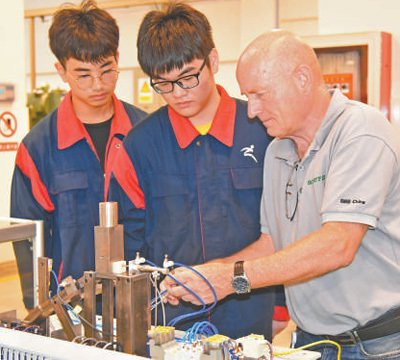
Core Viewpoint - The article discusses the innovative educational model in Suzhou, focusing on the integration of vocational education and industry, highlighting the establishment of industry-education integration alliances to cultivate high-level talents in robotics and intelligent manufacturing. Group 1: Industry-Education Integration - The "dual identity" model allows educators to work simultaneously in schools and companies, enhancing their teaching and research capabilities through real-world applications [10][11] - The Wu Zhong Economic and Technological Development Zone has over 1,000 companies in the "robotics + artificial intelligence" sector, accounting for more than 60% of the national service robot output [12] - The establishment of industry-education integration alliances aims to address innovation capacity and talent system issues within the rapidly growing robotics industry [12] Group 2: Talent Development and Curriculum - The curriculum is tailored to meet industry needs, with a "dual mentor system + real projects" approach that includes practical training in actual production environments [13][14] - Students are engaged in hands-on projects, such as designing and manufacturing high-temperature vacuum heating furnaces, which enhances their practical skills and problem-solving abilities [15][16] - The integration of educational resources with industry practices has led to a significant increase in the number of high-quality skilled talents, with 31.51% of graduates becoming technical engineers within three years [16] Group 3: Economic Impact - The collaboration between educational institutions and industries has resulted in improved economic performance, with Taicang City achieving a 4.3% year-on-year growth in industrial output value in 2024 [17] - High-end equipment manufacturing, advanced materials, aerospace, and biomedicine sectors accounted for 77.4% of the industrial output value in Taicang City [17] - The effectiveness of the industry-education integration model is expected to further enhance the prospects of vocational education and industrial development in the region [17]
做强“美丽经济” 锻造美妆高地 浙江省湖州市埭溪镇:书写乡镇转型新答卷
Ren Min Ri Bao· 2025-12-22 22:15
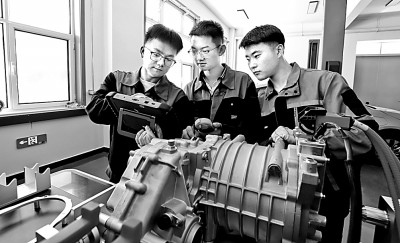
Core Insights - The article highlights the transformation of Daixi Town in Huzhou, Zhejiang Province, into a thriving hub for the beauty industry, achieving over 10 billion yuan in total output value by 2024, marking a significant shift from traditional industries to a focus on "beautiful economy" [1][7] Group 1: Industry Transformation - Daixi Town has successfully transitioned from a traditional industrial base focused on mining and machinery to a specialized beauty town, emphasizing the growth of the beauty industry as a key driver of economic development [1][7] - The beauty industry in Daixi Town has become a strong engine for regional economic growth, with total output surpassing 10 billion yuan, showcasing the effectiveness of focusing on a niche market [1][7] Group 2: Precision Investment and Service Optimization - The town has adopted a "precision investment" strategy, focusing on high-growth potential enterprises in the beauty and equipment manufacturing sectors, moving away from a scattershot approach to investment [2] - Daixi Town has established a new target of "10 billion in tax revenue" and has successfully attracted leading companies like Proya and Zhejiang Liju Thermal Equipment Co., which has achieved significant milestones, including being recognized as a national green factory [2] Group 3: Innovation and Market Expansion - Innovation is a key driver in the beauty industry, with companies like Zhenyan and Yufan achieving significant technological advancements and competitive advantages in their respective niches [3] - The establishment of the Beauty Health Association in 2019 has facilitated collaboration among local enterprises, helping to address challenges and expand market reach through participation in numerous domestic and international exhibitions [4] Group 4: Green Transformation and Ecological Integration - Daixi Town has prioritized ecological development, transitioning from a mining-based economy to one that integrates ecological protection with industrial growth, creating a model for sustainable development [5][6] - The town has successfully cultivated several national-level green factories, demonstrating the synergy between ecological advantages and industrial upgrades [6] Group 5: Talent Development and Educational Integration - Daixi Town emphasizes talent cultivation aligned with industry needs, establishing partnerships with educational institutions to create specialized training programs for the beauty industry [6] - The introduction of a segmented training model ensures that talent development is closely linked to practical industry requirements, enhancing the quality of workforce training [6]
技能型高校“国家队”,这样打造
Xin Lang Cai Jing· 2025-12-22 20:23
Core Viewpoint - The second phase of the "Double High Construction Plan" has been launched, aiming to enhance vocational education in China by establishing a broader coverage of schools and integrating education with industry needs, thereby improving the quality of skilled talent training. Group 1: Overview of the "Double High Construction Plan" - The second phase includes 220 schools, an 11.68% increase from the first phase, achieving nationwide coverage across all 32 provinces, including previously unrepresented regions like Qinghai, Tibet, and Xinjiang Production and Construction Corps [8][9] - The new plan emphasizes high-level educational capabilities and high-quality integration of industry and education, transitioning vocational schools from merely having good foundations to effectively serving national and regional strategic needs [8][9] Group 2: Service Development and Industry Integration - The second phase targets 278 national-level parks and aligns with major regional industries, with service proportions for trillion, hundred billion, and billion-level industries at 26.8%, 43.9%, and 22.9% respectively [10] - The plan promotes a demand-driven approach, enhancing the alignment of vocational education with national strategies and regional leading industries, thereby facilitating a new model of industry-education integration [10] Group 3: Reform and Innovation in Vocational Education - The plan aims to innovate the integration mechanisms between education and industry, establishing joint entities and collaborative platforms to enhance the adaptability of vocational education to regional economic needs [14] - Key educational elements such as curriculum, teaching materials, and faculty training will undergo comprehensive reforms, with a focus on dynamic optimization and alignment with industry standards [15] Group 4: Digital Transformation and International Cooperation - The initiative emphasizes building a digital teaching ecosystem, enhancing digital infrastructure, and integrating AI into teaching methods to support the transformation of vocational education [16] - The plan also aims to expand international cooperation, enhancing the global influence of Chinese vocational education through initiatives like the "Luban Workshop" and establishing standards for international vocational education [17][18]
“双高建设计划”:职教高质量发展的战略引擎
Xin Lang Cai Jing· 2025-12-22 20:23
Core Viewpoint - The "Dual High Construction Plan" for vocational education in China aims to enhance the quality of talent cultivation and social service capabilities, marking a shift from internal development to service empowerment in vocational education [1][2]. Group 1: Strategic Deployment - The second phase of the "Dual High Construction Plan" emphasizes a problem-oriented approach to address existing shortcomings in vocational education, such as insufficient integration of industry and education, lack of sustained policy support, and a disconnect between talent training quality and job requirements [2][3]. - The new policy framework consists of four dimensions: demand-oriented, integration of industry and education, quality-based, and standard-led, transitioning from government-led regulation to multi-party collaboration [2][3]. Group 2: Contribution-Oriented Initiatives - The second phase of the plan focuses on aligning vocational education with national development strategies, transforming its value framework to serve broader economic and social development [3][4]. - It establishes a three-dimensional layout that combines national frameworks with local characteristics and deep industry participation, allowing for tailored approaches in different regions [3][4]. Group 3: Digital and International Empowerment - Digital transformation is a core reform task, promoting the integration of technology and education to create a new digital teaching ecosystem [4][5]. - The plan also aims to enhance international cooperation through initiatives like overseas skills training and the establishment of international engineering technology colleges, thereby increasing the global influence of Chinese vocational education [4][5]. Group 4: Collaborative Innovation - The plan fosters a collaborative innovation network involving government, industry, and educational institutions, shifting the government's role from direct management to ecosystem builder [5][6]. - It emphasizes the importance of aligning educational programs with industry standards and technical requirements, enabling institutions to proactively respond to industry needs [5][6]. Group 5: Continuous Improvement Mechanisms - The plan advocates for a dynamic adaptation of demand, supply, and feedback to enhance service capabilities, including establishing a mechanism for monitoring industry demand and optimizing professional structures [6][7]. - It also calls for the development of international standards and cooperation models to align vocational education with global practices, facilitating the "going out" of vocational education alongside enterprises [7].
思政铸魂数智赋能 构建一体化教学育人体系
Xin Lang Cai Jing· 2025-12-22 19:21
(来源:内蒙古日报) 转自:内蒙古日报 在国家"双碳"战略深入推进、内蒙古煤化工产业向"高端化、多元化、低碳化"转型的关键时期,传统人 才培养模式与产业升级需求之间的矛盾日益凸显。为此,内蒙古化工职业学院化学工程系联合多家行业 头部企业,历经十年探索与实践,创新性地构建了"思政铸魂、数智赋能、双课联动、四维融通"的煤化 工技术专业群"育训赛研"一体化教学新范式,为区域产业转型升级提供了坚实的人才支撑和智力支持。 聚焦产业需求 构建"专业群"培养新体系 团队以"煤化工技术"专业为引领,整合煤炭深加工与利用、应用化工技术、石油化工技术、工业分析与 检验等专业,组建了覆盖煤化工全产业链的专业群。针对课程内容滞后、高危工序实训难、学生技术参 与度低、评价方式单一等痛点,该范式以"思政铸魂"为根本,以"数智赋能"为支撑,以"双课联动"为路 径,以实现"育人、实训、大赛、研创"四维融通为目标,打破教学、实训、竞赛与科研之间的壁垒。 教学资源建设成果丰硕。建成国家级课程思政示范课程、在线精品课程及多个国家级、省级专业教学资 源库,出版新形态教材专著26部。 科研与社会服务能力增强。团队主持纵横向科研项目31项,获发明专利1 ...
一所中职学校的 育人改革“日志”
Xin Lang Cai Jing· 2025-12-22 19:21
Core Insights - The Hohhot Modern Information Technology School has achieved a significant breakthrough in hydrogen-powered drone technology with the successful first flight of the LY-3200H model, marking a milestone in China's hydrogen drone research and industrialization [1][2] - The school emphasizes deep integration of education and industry, fostering talent development through practical projects and collaborations with local enterprises [2][3] Group 1: Drone Technology Development - The "Yilian Lantian" drone research team at the school completed the first flight of the 23kg LY-3200H hydrogen-powered drone, showcasing advancements in hydrogen drone technology [1] - The school has established a joint laboratory with Inner Mongolia Baosheng High-tech Co., creating the region's first high-performance industrial drone assembly and testing production line, enabling mass production of various drone models [2] Group 2: Educational Innovations - The school has implemented a unique educational model that integrates sports and education, exemplified by its successful football team, which has won multiple championships and reached the national finals [2] - The school is exploring the integration of vocational and general education, allowing students to choose flexible pathways for vocational college entrance exams and implementing a "one-year diversion" mechanism to cater to diverse student needs [3]
哪些城市具备未来产业爆发潜力?上海、北京领跑,还有呢?
Sou Hu Cai Jing· 2025-12-22 11:07
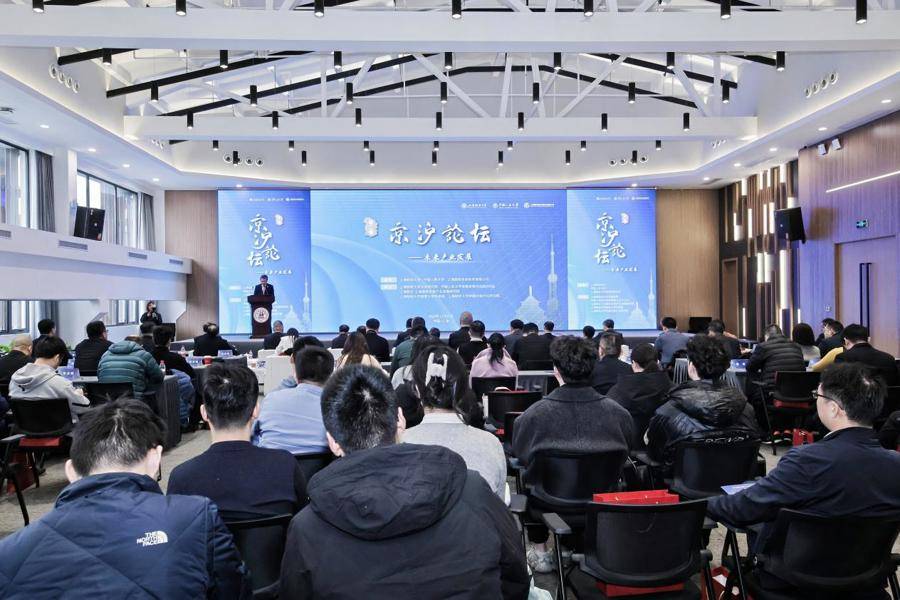
Core Insights - The second "Beijing-Shanghai Forum on Future Industry Development" highlighted that Shanghai and Beijing continue to lead the nation in comprehensive future industry development levels, with significant differentiation in competitive strengths among key cities [1] Group 1: Future Industry Trends - The report released at the forum evaluated the potential of ten cities across six key future industry sectors using a framework that includes innovation sources, market potential, and policy empowerment [1] - Cities exhibit clear differentiation in their advantageous sectors, such as Beijing and Hefei leading in quantum technology, while Shanghai, Beijing, and Guangzhou are in the top tier for biomanufacturing [1] - Shenzhen and Guangzhou dominate the 6G industry, indicating a need for cities to achieve coordinated development based on their unique endowments to avoid homogenized competition [1] Group 2: Technological and Financial Insights - Experts discussed the development prospects and challenges of the "space computing network," emphasizing the need to reduce launch costs and address heterogeneous resource management [3] - The acceleration of global layouts in embodied intelligence, brain-computer interfaces, 6G, and quantum technology was noted, with AI transitioning from quantitative to qualitative changes [3] - Financial innovation is deemed crucial for supporting the fourth industrial revolution, necessitating the construction of future financial forms to meet substantial capital demands and address revenue uncertainties [3] Group 3: Talent and Mechanism Innovation - Challenges in the future industry include a shortage of high-level technology and entrepreneurial talent, insufficient training, and barriers to talent mobility [4] - Six innovative paths for institutional mechanisms were proposed, including establishing collaborative education models and creating a diversified incentive mechanism [4] - The importance of capital cycle services and collaborative education models in supporting future industry development was discussed in sub-forums [4]
首届深港澳产教融合大赛收官:项目技术含量高,落地前景好
Nan Fang Du Shi Bao· 2025-12-22 06:51
Core Insights - The first Shenzhen-Hong Kong-Macao Industry-Education Integration Technology Skills Innovation and Application Competition concluded in Shenzhen, aiming to deepen vocational education cooperation among the three regions and cultivate skilled talents for the Guangdong-Hong Kong-Macao Greater Bay Area [1][2] Group 1: Event Overview - The competition was organized by the Shenzhen Municipal Human Resources and Social Security Bureau, the Education Bureau, and the General Labor Union, with the theme "Innovation Drives Industry-Education Empowerment" [1] - The event attracted over 50 institutions and enterprises from Shenzhen, Hong Kong, and Macao, featuring three main competition tracks: practical technology innovation, cultural creativity, and problem-solving [1][2] - A total of 86 projects advanced to the finals, where teams showcased their capabilities in technology upgrades, cultural innovation, and real-world problem-solving through presentations and defenses [1] Group 2: Competition Highlights - The "Problem-Solving" track focused on real industry needs, with 22 companies presenting 27 technical challenges, fostering collaboration between corporate employees and academic teams [2] - Some projects signed contracts post-competition, facilitating the application of their solutions [2] - A total of 60 awards were given, including first, second, and third prizes, with notable projects such as "Carbon Neutrality-Oriented Eco-Landscape and AI Maintenance Technology" and "AI-Based Active Fatigue Monitoring and Aroma Intervention System" winning top honors [2] Group 3: Support and Future Prospects - Winning teams received not only cash prizes and certificates but also entrepreneurial subsidies, loans, mentorship services, and industry connections, with outstanding leaders potentially included in the "Shenzhen Craftsman" cultivation program [2] - The competition serves as a platform for integrating vocational education in the Greater Bay Area, exploring a long-term mechanism that promotes the fusion of education, talent, and industry chains driven by real demand [2]