
绿色金融

Search documents
奋楫新征程,齐鲁银行举金融之力赋能山东高质量发展
Feng Huang Wang Cai Jing· 2026-01-23 05:56
Core Insights - Shandong province has entered the 10 trillion yuan economy club, attracting national attention for its high-quality economic and social development [1] - Qilu Bank, as a local bank, plays a significant role in supporting Shandong's economic growth through various financial services [1] Group 1: Financial Performance - As of the end of Q3 2025, Qilu Bank's asset scale reached 778.7 billion yuan, with loans and deposits growing by 13.6% and 10.4% respectively, and a net profit increase of 16.1% year-on-year [1] - The bank has established a comprehensive service network, empowering over 600 technology enterprises [3] Group 2: Technology Finance - Qilu Bank has actively explored new technology finance service models tailored to the characteristics of innovative enterprises, exemplified by its support for a technology company facing cash flow pressures [2][3] - The bank has set up 4 technology branches and 10 technology finance centers, enhancing its service capabilities [3] Group 3: Inclusive Finance - Qilu Bank has developed tailored financial products like "Bearing Village Loan" to address the financing difficulties faced by local enterprises in the bearing industry [5][6] - The bank has launched over 80 specialized credit products, covering more than 50 counties, and has maintained a leading position in inclusive loans among local commercial banks [6] Group 4: Green Finance - Qilu Bank has introduced innovative green finance products, such as "Sustainable Development Linked Loans," which link loan costs to environmental performance [7][8] - As of September 2025, the bank's green loan balance exceeded 45.3 billion yuan, with a growth rate of 35% [8][9] Group 5: Future Outlook - Qilu Bank aims to continue its commitment to serving the real economy and enhancing its financial services, aligning with the strategic goals of regional leadership and industry excellence [10]
深圳最新发布:14.63万亿元!
Zhong Guo Ji Jin Bao· 2026-01-23 04:51
Core Insights - In 2025, Shenzhen's total deposits and loans reached 14.63 trillion yuan, maintaining the third position among major cities in China, with a year-on-year growth of 7.8% [1][2] Financial Performance - As of the end of 2025, Shenzhen's total deposits and loans stood at 14.63 trillion yuan, with deposits increasing by over 1 trillion yuan compared to the beginning of the year, and loans reaching 9.97 trillion yuan, up 5.1% year-on-year [2] - The social financing scale in Shenzhen saw a reasonable increase, with an annual increment exceeding 630 billion yuan, and direct financing accounting for about 40% of the total, a historical high [2] - The average interest rate for newly issued corporate loans in December 2025 was 2.55%, down 0.47 percentage points year-on-year [2] Loan Structure and Support for Economic Development - The loan structure in Shenzhen has been optimized to support high-quality economic development, with loans for technology, green, and digital economy industries increasing by 1.9, 3.3, and 1.4 percentage points respectively compared to the end of 2024 [3] - Loans to the private economy reached 4.35 trillion yuan, accounting for 43.7% of total loans, while inclusive small and micro loans amounted to 2.01 trillion yuan [3] Innovation in Financial Products - The issuance of technology bonds in Shenzhen reached 44.15 billion yuan, ranking second among cities in China, with technology loans totaling 2.28 trillion yuan by the end of 2025 [4] - New consumer loans related to service consumption and elderly care exceeded 80 billion yuan, with personal medium- and long-term non-housing consumption loans growing by 13.12% year-on-year [4] Inclusive and Green Finance - Inclusive finance in Shenzhen has effectively supported the vitality of the private economy, with over 2 trillion yuan in inclusive small and micro loans [5] - Shenzhen has become one of the first cities in China to conduct green external debt pilot programs, with three enterprises signing contracts exceeding 170 million yuan [5] Cross-Border Financial Activities - Shenzhen ranked third in the country for cross-border payment and receipt scale, with a total of 5.83 trillion yuan in cross-border RMB transactions [6][7] - The city has implemented high-level pilot policies to enhance cross-border trade and investment facilitation, benefiting over 1,900 enterprises [7] - By the end of 2025, Shenzhen's cross-border RMB receipts for goods trade reached 1.2352 trillion yuan, a year-on-year increase of 191.3 billion yuan, marking a new high since the business's inception in 2009 [7] Service Quality in Cross-Border Finance - Shenzhen has continuously optimized the quality and efficiency of cross-border financial services, launching initiatives to enhance communication between government, banks, and enterprises [8]
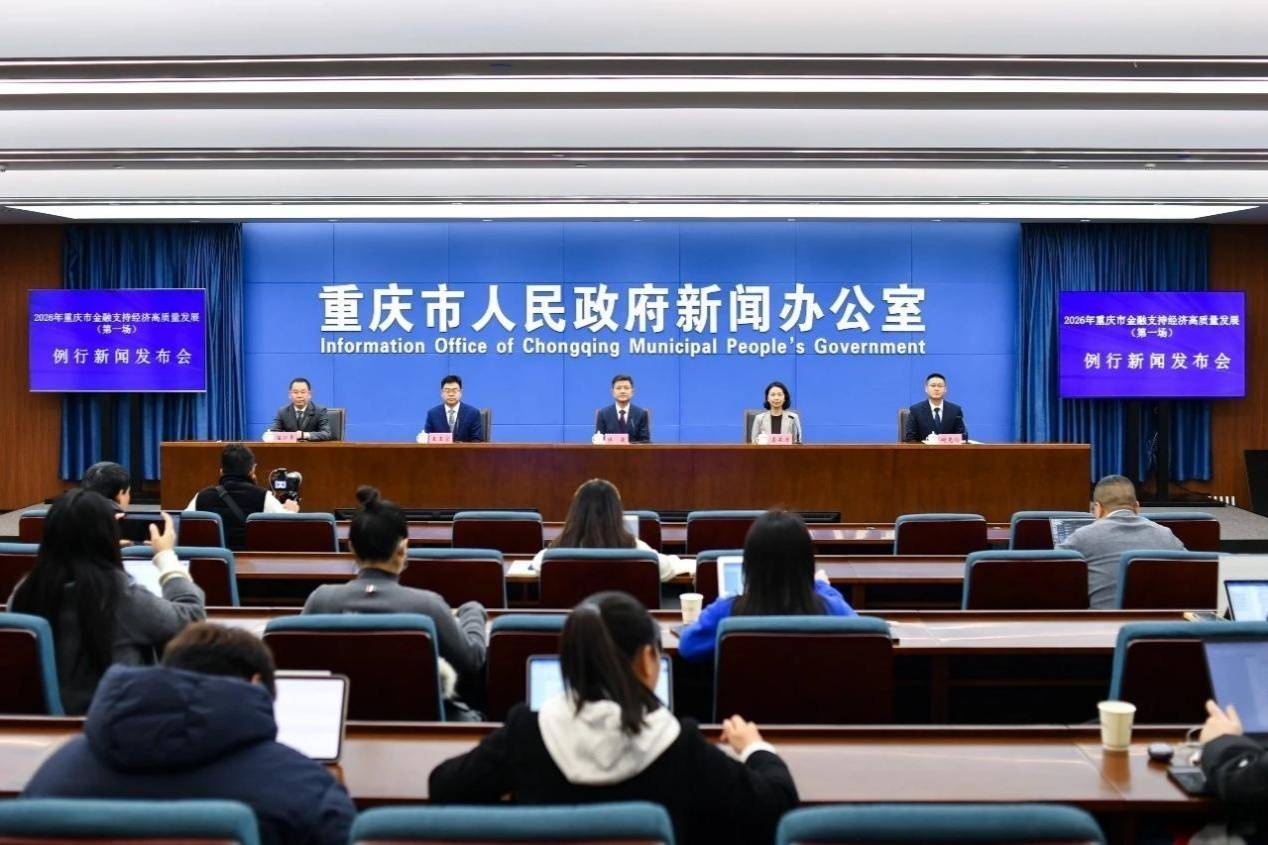
人行重庆市分行为重庆提质增效贡献金融力量
Sou Hu Cai Jing· 2026-01-23 04:46
Core Viewpoint - The financial sector in Chongqing has played a significant role in supporting the city's economic recovery and high-quality development during 2025, leveraging various monetary policy tools and innovative financing solutions [1][3]. Financial Support for Economic Development - The People's Bank of China Chongqing Branch implemented five major policy tools, collectively known as "渝科融," "渝绿融," "渝消融," "渝通融," and "渝民融," with a total funding of 127.7 billion yuan, leading to an increase of 430.2 billion yuan in loans for the city [3]. - By the end of 2025, the total loan balance in Chongqing grew by 7.2% year-on-year, consistently exceeding the national average for ten consecutive months [3]. - The branch also facilitated direct financing of 734.76 billion yuan in the interbank market and introduced innovative financial products to stabilize funding sources for enterprises [3]. Interest Rate Policies - The average interest rate for newly issued corporate loans in December 2025 was 3.15%, a decrease of 0.2 percentage points year-on-year, effectively reducing the financial burden on enterprises [4]. Targeted Credit Allocation - The Chongqing Branch led the nation in promoting a financial implementation plan focusing on key sectors such as technology, inclusive finance, and elderly care, with over 60% of new loans directed towards these areas [5]. - Loans for technology-oriented SMEs grew by over 30% in 2025, while loans for the elderly care industry surged by 72.8% year-on-year [5]. Green Finance Initiatives - The city has made significant progress in green finance, with the total balance of green loans surpassing 1 trillion yuan, maintaining a growth rate among the highest in the country [6]. - The Chongqing Branch has developed nearly 40 green transition financial standards and over 330 innovative green financial products [6]. Cross-Border Financial Services - The Chongqing Branch launched ten scenarios on the national foreign exchange management bureau's cross-border financial service platform, facilitating financing and settlement for over 1,800 enterprises, with a total financing amount of 75.6 billion USD [7]. - The implementation of a digital RMB settlement pilot project has enabled cross-border transactions exceeding 2 billion yuan [7]. Future Outlook - The Chongqing Branch aims to enhance financial services for the real economy, focusing on high-quality development and deepening reform and opening up, contributing to the construction of a modernized Chongqing and a strong financial nation [8].

深圳最新发布:14.63万亿元!
中国基金报· 2026-01-23 04:44
Core Viewpoint - In 2025, Shenzhen's financial performance shows stable growth, with total deposits and loans ranking third among major cities in China, and the balance of various deposits in domestic and foreign currencies reaching 14.63 trillion yuan, a year-on-year increase of 7.8% [2][4]. Group 1: Financial Growth and Structure - As of the end of 2025, Shenzhen's total deposits and loans remain third among major cities in China, with a balance of various deposits at 14.63 trillion yuan, up 7.8% year-on-year, and an increase of over 1 trillion yuan compared to the beginning of the year [4]. - The balance of various loans in domestic and foreign currencies reached 9.97 trillion yuan, growing by 5.1% year-on-year, with an increase of 4.83 billion yuan compared to the beginning of the year [4]. - The social financing scale in Shenzhen maintained reasonable growth, with an annual increment exceeding 630 billion yuan, a year-on-year increase of over 150 billion yuan, and direct financing accounting for about 40% [4]. Group 2: Loan Structure and Support for Economic Development - The loan structure has been optimized to support high-quality economic development, with loans for technology, green, and digital economy industries increasing by 1.9, 3.3, and 1.4 percentage points respectively compared to the end of 2024 [5]. - The balance of loans for the private economy in Shenzhen reached 4.35 trillion yuan, accounting for 43.7% of total loans, while inclusive small and micro loans amounted to 2.01 trillion yuan [5]. - In 2025, loans in the "Five Major Areas" of finance became a significant driver of credit growth, with technology loans reaching 2.28 trillion yuan and consumer loans growing by 13.12% year-on-year [6][7]. Group 3: Cross-Border Financial Activities - Shenzhen ranked third in the country for cross-border payment and receipt scale, with a total of 5.83 trillion yuan in cross-border RMB transactions, maintaining its position as the primary currency for cross-border settlements between Shenzhen and Hong Kong [9]. - The total cross-border RMB receipts for goods trade reached 12.352 billion yuan in 2025, a year-on-year increase of 1.913 billion yuan, marking a new high since the business began in 2009 [10]. - The city has implemented high-level pilot policies to enhance cross-border trade and investment facilitation, benefiting over 1,900 enterprises and achieving a business scale exceeding 250 billion USD [9].

2025年重庆人民币贷款新增4302亿元
Sou Hu Cai Jing· 2026-01-23 03:37
Core Viewpoint - The financial institutions in Chongqing have significantly supported the city's high-quality economic development in 2025, focusing on various sectors such as technology innovation, green finance, and small and micro enterprises [1][2][3][4]. Group 1: Financial Support for Economic Development - The total financial supply has been ample, with the People's Bank of China (PBOC) in Chongqing utilizing various monetary policy tools to support the real economy, resulting in a total of 1,277 billion yuan in central bank funding and an increase of 4,302 billion yuan in new RMB loans [1][2]. - The year-end loan balance in Chongqing grew by 7.2% year-on-year, consistently exceeding the national average for 10 consecutive months [1]. - The average interest rate for newly issued corporate loans in December 2025 was 3.15%, a decrease of 0.2 percentage points year-on-year, effectively reducing the financial burden on enterprises [1]. Group 2: Targeted Credit Allocation - Credit allocation has been precise and efficient, with over 60% of new loans directed towards key sectors such as technology, inclusive finance, and elderly care [2]. - Loans for technology-oriented small and medium-sized enterprises maintained a growth rate of over 30% throughout the year [2]. - The balance of loans for the elderly care industry increased by 72.8% year-on-year, indicating strong financial support for this sector [2]. Group 3: Financial Reform and Innovation - Continuous deepening of reforms has effectively stimulated regional financial vitality, with the green finance reform achieving significant milestones, including the establishment of nearly 40 green transition financial standards and over 330 innovative green financial products [3]. - The total balance of green loans in Chongqing surpassed 1 trillion yuan, maintaining a growth rate among the highest in the country [3]. - The establishment of a digital financial service platform for cross-border transactions has facilitated financing and settlement for enterprises, with related financing balances exceeding 730 billion yuan [3]. Group 4: Enhanced Financial Services for Citizens - The launch of a cross-border financial service platform has enabled over 1,800 enterprises in Chongqing to facilitate financing and settlement exceeding 75.6 billion USD, ranking among the top five in the country [4]. - The average processing time for certain financing procedures has been reduced from 2-3 days to approximately 10 minutes, significantly improving efficiency [4]. - The promotion of a funding flow information platform has allowed 36,000 small and micro enterprises to obtain credit totaling 121.37 billion yuan [4].
深圳市存贷款规模2025年末稳居全国主要城市第三,本外币各项贷款余额同比增5.1%
Sou Hu Cai Jing· 2026-01-23 03:13
Core Insights - Shenzhen's financial performance in 2025 shows significant growth in both deposits and loans, with total deposits reaching 14.63 trillion yuan, a year-on-year increase of 7.8%, and total loans at 9.97 trillion yuan, up 5.1% [1] - The social financing scale in Shenzhen maintained reasonable growth, with an increase of over 630 billion yuan, and direct financing accounting for about 40% of the total, marking a historical high [1][2] - The average interest rate for newly issued corporate loans in Shenzhen decreased to 2.55%, down 0.47 percentage points year-on-year, reflecting a downward trend in financing costs [2] Financial Growth and Support - The People's Bank of China and the State Administration of Foreign Exchange have guided financial institutions to focus on supporting key areas such as consumption and technological innovation, leading to a significant increase in loans for these sectors [3][4] - The balance of loans for technology, green, and digital economy industries increased by 1.9%, 3.3%, and 1.4 percentage points respectively compared to the previous year, indicating strong support for high-end, intelligent, and green production [2][3] Consumer and SME Financing - Personal medium- and long-term non-housing consumption loans grew by 13.12%, outpacing the overall loan growth rate by 8 percentage points, demonstrating robust consumer financing [4] - The balance of loans to the private economy reached 4.35 trillion yuan, accounting for 43.7% of total loans, with inclusive small and micro loans exceeding 2 trillion yuan, supporting the vitality of Shenzhen's private sector [5] Green Finance Initiatives - Shenzhen has initiated pilot programs for green finance, including green foreign debt, with three companies signing agreements totaling over 170 million yuan, promoting the development of green industries [6] - Banks issued carbon reduction loans totaling 2.72 billion yuan, supporting various green projects, including distributed photovoltaic and digital energy initiatives [6] Digital Finance Innovations - The balance of loans in the digital economy sector grew by 17.3%, significantly higher than the overall loan growth rate, indicating a strong push towards digital financial services [7] - Innovative financial products and services, such as cross-border credit and digital currency wallets, have been introduced to enhance financial service efficiency and support international trade [7][9] Cross-Border Financial Services - Shenzhen's cross-border payment volume reached 5.83 trillion yuan, maintaining its position as the leading city for cross-border RMB transactions [8] - The implementation of high-level pilot policies for cross-border trade and investment has expanded the coverage to over 1,900 enterprises, with a business scale exceeding 250 billion USD [8][9] Comprehensive Financial Service Improvements - The introduction of a new integrated currency pool has facilitated cross-border capital operations for multinational companies, supporting local economic development [9] - Efforts to enhance cross-border financial service efficiency have included reducing document review times from one day to one hour, significantly improving transaction processing [10]
国泰君安期货商品研究晨报:绿色金融与新能源-20260123
Guo Tai Jun An Qi Huo· 2026-01-23 01:39
2026年01月23日 国泰君安期货商品研究晨报-绿色金融与新能源 观点与策略 | 镍:印尼言论反复扰动情绪,镍价宽幅震荡运行 | 2 | | --- | --- | | 不锈钢:盘面锚定矿端矛盾,镍铁跟涨支撑重心 | 2 | | 碳酸锂:去库格局延续,偏强震荡 | 4 | | 工业硅:上游减产,震荡偏强 | 6 | | 多晶硅:注册仓单增加 | 6 | 国 泰 君 安 期 货 研 究 所 请务必阅读正文之后的免责条款部分 1 期货研究 资料来源:国泰君安期货、同花顺、Mysteel、SMM 【宏观及行业新闻】 商 品 研 究 2026 年 1 月 23 日 镍:印尼言论反复扰动情绪,镍价宽幅震荡运行 不锈钢:盘面锚定矿端矛盾,镍铁跟涨支撑重心 张再宇 投资咨询从业资格号:Z0021479 zhangzaiyu@gtht.com 【基本面跟踪】 镍基本面数据 | | | 指标名称 | T | T-1 | T-5 | T-10 | T-22 | T-66 | | --- | --- | --- | --- | --- | --- | --- | --- | --- | | | | 沪镍主力(收盘价) | 142 ...
大湾区国际商业银行筹建面临哪些挑战?
Nan Fang Du Shi Bao· 2026-01-22 23:10
Core Viewpoint - The establishment of the Greater Bay Area International Commercial Bank has been a focus since its proposal in 2018, with recent government reports emphasizing the acceleration of its setup, reflecting a shift from "seeking establishment" to "accelerating setup" [2][4]. Progress - A working group has been established by provincial and municipal governments to push for national support for the bank's establishment, with initial proposals dating back to 2018 [3][5]. - The bank's establishment has been mentioned in various policy documents and government reports, indicating a growing commitment to its realization [4][5]. Positioning - The bank aims to serve as a joint venture focusing on cross-border and green finance, leveraging the unique characteristics of the Greater Bay Area [6][7]. - It is expected to address gaps in cross-border financial services and enhance financial connectivity among Guangdong, Hong Kong, and Macau [7][8]. Challenges - The bank faces significant challenges in harmonizing financial regulations across the three regions, particularly under the "one country, two systems" framework [10][11]. - Key issues include regulatory coordination, legal conflicts, and data flow management, which are critical for its successful establishment [10][11]. Shareholding - The bank's shareholding structure is designed to include state-owned enterprises, private enterprises, and financial institutions from Hong Kong and Macau, which is crucial for its strategic positioning [13][14]. - This diverse ownership structure presents both opportunities and challenges in governance, requiring effective integration of varying interests and risk preferences [14][15].

数字人民币2.0来了!钱包余额能生息 绿色出行可变现
Di Yi Cai Jing· 2026-01-22 22:48
Core Viewpoint - The upgrade to version 2.0 of the digital RMB introduces interest-bearing wallets and integrates carbon credits into the digital currency ecosystem, enhancing its functionality and appeal to users [1][2][3]. Group 1: Digital RMB Upgrade - The digital RMB 2.0 version allows wallet balances to earn interest, aligning them with the characteristics of demand deposits [2][3]. - The upgrade shifts the digital RMB's role from a mere payment tool to a comprehensive financial infrastructure, expanding its functionalities beyond retail payments to include savings, loans, and investments [3][5]. Group 2: User Experience and Wallet Types - Digital RMB wallets are categorized into four types based on user authentication, with only real-name wallets eligible for interest, reflecting a principle of rights and responsibilities [2][3]. - Users can choose between the convenience of anonymous wallets and the benefits of interest-bearing real-name wallets, catering to different needs [2]. Group 3: Ecosystem Expansion and Application Scenarios - The digital RMB ecosystem is expanding, with a significant increase in transaction volumes and wallet openings, indicating growing adoption [4][5]. - Future applications of digital RMB are expected to include diverse financial products and services, enhancing payment efficiency and reducing operational risks for businesses [5].

深耕普惠金融促发展惠民生
Jing Ji Ri Bao· 2026-01-22 21:58
Core Viewpoint - The development of inclusive finance is a concrete manifestation of the people-centered development philosophy, emphasizing the importance of providing affordable and effective financial services to all social strata and groups, particularly small and micro enterprises and low-income populations [2][3]. Group 1: Importance and Achievements of Inclusive Finance - Inclusive finance promotes social equity and inclusive growth by focusing on equal opportunities and commercial sustainability [2]. - Since the concept was proposed by the United Nations in 2005, China has made significant progress in developing inclusive finance, with policies established since 2013 to support its growth [2][3]. - The 2023 State Council's implementation opinions emphasize high-quality development of inclusive finance to promote common prosperity for all [2]. Group 2: Current State of Inclusive Finance in China - China has established a comprehensive policy and service system for inclusive finance, significantly improving service coverage, accessibility, and satisfaction [4]. - By the end of 2024, there will be an average of 1.62 bank outlets per 10,000 people, with nearly 98% coverage in town banks [4]. - Mobile payment transactions in rural areas reached 33.93 billion, a year-on-year increase of 33.03% [4]. Group 3: Innovations and Technological Integration - Financial institutions are innovating products and services tailored to the characteristics of small and micro enterprises, such as flexible loan repayment options and supply chain finance [5][6]. - The integration of technologies like big data and artificial intelligence is enhancing the efficiency and effectiveness of inclusive finance, exemplified by digital banks offering rapid loan approval processes [6]. Group 4: Pilot Programs and Regional Experiences - Various pilot zones for inclusive finance have been established to explore differentiated approaches and accumulate experiences, with notable examples in regions like Henan and Zhejiang [8][9]. - Innovations in credit information sharing and risk-sharing mechanisms have been implemented to support rural revitalization and enhance credit access for agricultural entities [9][10]. Group 5: Focus on Key Demographics - Inclusive finance primarily targets five groups: small micro enterprises, agricultural workers, new urban residents, the elderly, and flexible employment individuals, addressing their unique financial needs [13]. - The quality of financial services in the livelihood sector has improved significantly, with efforts to integrate services into the daily lives of these key demographics [13][14]. Group 6: Future Directions and Challenges - Continuous efforts are needed to enhance the accessibility of financial services in key areas, with a focus on structural reforms and risk prevention [7][12]. - Challenges remain in balancing profitability with inclusivity, improving the precision and adaptability of financial products, and enhancing consumer financial literacy [16][17].