
大数据

Search documents
加快推进涉外法治体系建设战略布局
Xin Lang Cai Jing· 2026-01-28 00:15
Core Viewpoint - The construction of a comprehensive foreign-related legal system is essential for advancing China's modernization and ensuring a favorable legal environment for international engagement [2][3]. Group 1: Foreign-related Legislation - The goal of foreign-related legal construction is to establish a systematic and complete foreign-related legal framework, which is a complex and long-term project [3]. - Significant progress has been made in foreign-related legislation over the past five years, including the enactment of laws such as the Anti-Foreign Sanctions Law and the Foreign Relations Law [3][4]. - The focus during the 14th Five-Year Plan period will be on legislation in key areas such as national security, technology innovation, public health, and ecological civilization [4]. Group 2: Law Enforcement System - The effectiveness of laws relies on their implementation, and strict law enforcement is crucial for maintaining the authority and seriousness of foreign-related laws [5][6]. - Recent measures have significantly improved foreign-related law enforcement capabilities, particularly in countering unilateral sanctions and enhancing export control [6]. - There is a need for further reform in the foreign-related law enforcement system to address issues of non-compliance and improve transparency [6]. Group 3: Judicial System - The quality of foreign-related judicial work has steadily improved, with ongoing optimization of foreign-related trial systems and increased international judicial cooperation [7][8]. - Enhancing the credibility of foreign-related judicial processes is a priority, necessitating reforms to improve efficiency and fairness [8]. Group 4: Legal Awareness and Compliance - Promoting legal awareness among enterprises and citizens is vital for the construction of a rule-of-law society, especially for those engaging internationally [9][10]. - There has been significant progress in legal education and training for leaders and key personnel involved in international business [9]. Group 5: Legal Services System - The development of a robust foreign-related legal services industry is urgent, with a focus on international commercial arbitration as a primary method for resolving cross-border disputes [12][13]. - The current state of foreign-related legal services is underdeveloped, and there is a need for improved internationalization of legal practices [12]. Group 6: Talent Development - The cultivation of high-quality, internationalized legal professionals is essential for supporting the rule of law in foreign-related contexts [14][15]. - Educational reforms and targeted policies are being implemented to enhance the training of legal talent in foreign-related law [14]. Group 7: International Cooperation - Strengthening international law enforcement and judicial cooperation is crucial for protecting national interests and enhancing global governance [16][17]. - Future efforts will focus on improving judicial assistance mechanisms and expanding international cooperation in combating transnational crime [17].

陕西重点产业链总产值占规上工业比重逾八成
Zhong Guo Jing Ji Wang· 2026-01-27 15:02
Group 1 - In 2025, Shaanxi's industrial production achieved rapid growth, with a total output value of 2.5 trillion yuan for 34 key industrial chains, a year-on-year increase of 1.2%, surpassing the growth rate of industrial output above designated size by 1.5 percentage points [1][2] - The added value of Shaanxi's industrial enterprises above designated size grew by 7.3% year-on-year, 1.4 percentage points higher than the national average, ranking 13th in the country [1] - The proportion of equipment manufacturing in Shaanxi's industrial output increased, with the added value of equipment manufacturing accounting for 18.2% of the industrial output above designated size, up by 1.9 percentage points from 2024 [1] Group 2 - New momentum products in the industrial sector saw rapid growth, with charging pile production increasing by 43.6%, 3D printing equipment by 71.3%, civilian drones by 50.1%, industrial robots by 49.5%, and wind turbine generators by 63.5% [1] - Eight industrial chains experienced output growth exceeding 10%, including the solar photovoltaic industry chain with a 34.8% increase and the white liquor industry chain with a 21.6% increase [2] - Eleven industrial chains had output exceeding 100 billion yuan, with five chains, including coal and passenger vehicles (new energy), exceeding 200 billion yuan [2]
华正新材:公司不断深入开展数字化建设、推行智能制造
Zheng Quan Ri Bao Wang· 2026-01-27 14:13
Core Viewpoint - The company is actively advancing its digital transformation and smart manufacturing initiatives, leveraging industrial internet platforms and new generation information technologies such as AI, 5G, and big data [1] Group 1: Digital Transformation - The company is deepening its digital construction efforts [1] - It is implementing smart manufacturing practices [1] - The company utilizes industrial internet platforms as foundational support [1] Group 2: Technology Integration - The company applies advanced technologies including AI, 5G, and big data [1] - It employs various systems such as MES, SCADA, APS, QMS, and ERP to enhance production processes [1] - The focus is on achieving process-oriented and flexible manufacturing [1] Group 3: Smart Decision-Making - The company aims for intelligent diagnosis and decision-making in production processes [1]

申万宏源2025年预计实现净利润101亿元至111亿元
Zheng Quan Ri Bao Wang· 2026-01-27 11:52
Core Viewpoint - Shenwan Hongyuan (000166) has released a strong earnings forecast for 2025, projecting a net profit of 10.1 billion to 11.1 billion yuan, representing a year-on-year growth of 61.59% to 77.59% [1] Group 1: Financial Performance - The company expects basic earnings per share to be between 0.36 yuan and 0.40 yuan for 2025 [1] - Shenwan Hongyuan Securities (000562), a wholly-owned subsidiary, anticipates a net profit of 9.9 billion to 10.9 billion yuan, reflecting a growth of 60.29% to 76.48% compared to the previous year [1] Group 2: Business Strategy and Development - The company aims to build a first-class investment bank and institution, focusing on reform and business transformation to enhance core competitiveness [2] - Shenwan Hongyuan emphasizes its comprehensive financial service advantages through "research + investment + investment banking," contributing over 1.5 trillion yuan in financing for real enterprises in the past five years [2] - The company is accelerating the transformation of its business model, enhancing capabilities in investment research, product creation, risk pricing, and financial technology [2] Group 3: Innovation and Market Position - Shenwan Hongyuan has achieved breakthroughs in high-level opening-up and digital financial services, completing several "firsts" in the market [3] - The company has launched the first technology innovation fund in Xinjiang and issued the first bond index-linked income certificate in the market [3] - It actively integrates artificial intelligence and big data into its financial technology strategy, participating in the construction of the industry’s digital ecosystem [3]

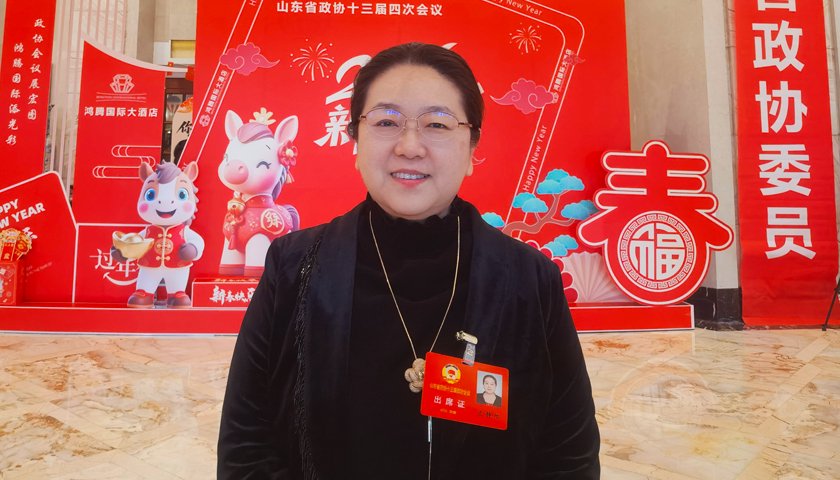
两会之声 | 山东省政协委员王静怡:以数字赋能文化创新,推动山东省文化产业高质量发展
Xin Lang Cai Jing· 2026-01-27 09:35
Core Viewpoint - Shandong Province aims to enhance its cultural industry through digital technology integration, as outlined in the "Shandong Province Cultural Industry Technology Innovation Action Plan (2025-2027)" which emphasizes improving cultural technology innovation capabilities to lead high-quality development in the cultural sector [1][3] Group 1: Current Challenges and Opportunities - Compared to advanced regions like Zhejiang and Guangdong, Shandong's cultural industry faces issues of being "large but not strong" and "rich but not vibrant," primarily due to insufficient integration of digital technology [3] - The province's strategy to transition from a "cultural resource province" to a "cultural industry powerhouse" involves leveraging digital empowerment as a key pathway for innovation and industry upgrade [3] Group 2: Proposed Initiatives - Implementation of five major projects to promote digital empowerment and industry upgrade, establishing a "Shandong model" for cultural innovation [3] - Creation of a "Cultural Resource Digital Decoding and IP Database Construction" project to digitize cultural resources and establish a unified "Shandong Cultural Digital Resource Database" [3][4] Group 3: Digital Content and Experience - Establishment of a "Shandong Cultural IP Super Symbol Library" to modernize and stylize key cultural symbols like Confucius and Mount Tai into a digital IP material library [4] - Development of a "Qilu Cultural Gene Digital Platform" using AI and knowledge graph technology to visualize the internal logic and spiritual lineage of Shandong's cultural resources [5] Group 4: Digital Creative Industry - Launch of a "Digital Cultural Content Creation and Industry Aggregation" project to establish a "Shandong Digital Cultural Content Creation Center" in key areas like Jinan and Qingdao, focusing on original content production based on Shandong cultural IP [6] - Encouragement of "Cultural + Manufacturing" digital integration by creating a platform for cultural design and smart manufacturing, enhancing the cultural connotation of "Shandong manufacturing" [6] Group 5: Digital Tourism and Consumption - Implementation of a "Digital Cultural Tourism Scene Integration and Consumption Upgrade" project to create a comprehensive digital cultural tourism service network through the "Good Guest Shandong" platform [7] - Development of immersive digital tourism experience landmarks in key scenic areas, utilizing VR/AR/MR technologies for enhanced visitor engagement [7] Group 6: Globalization of Cultural IP - Execution of a "Digital Communication and Cross-Border Expansion" project to globalize Shandong cultural IP through a multi-faceted digital communication matrix [8] - Support for digital creative products to reach global markets via overseas distribution platforms and cross-border e-commerce channels [8] Group 7: Ecosystem Optimization - Initiation of a "Market Entity Cultivation and Ecosystem Optimization" project to stimulate private sector vitality and encourage collaboration between state-owned cultural units and private digital tech companies [9] - Establishment of the "Qilu Digital Cultural Talent" program to attract and retain high-end interdisciplinary talent through partnerships with universities [9]
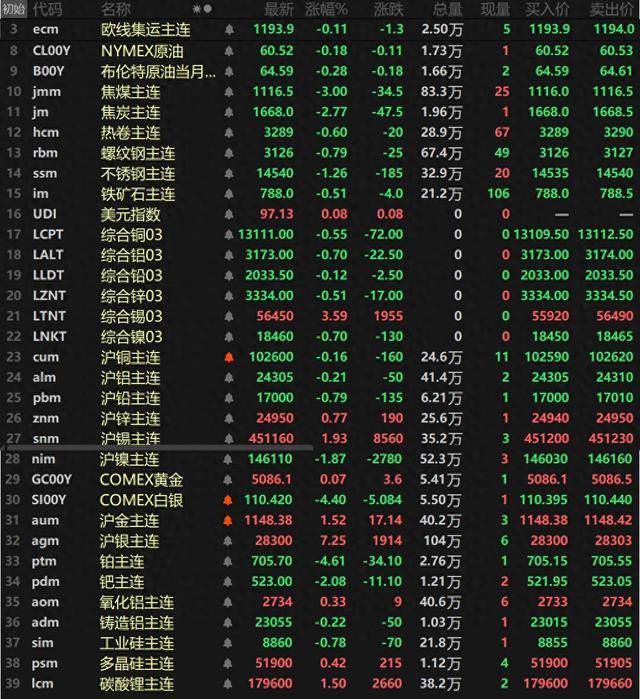
金属普跌 伦锡涨3.59% 沪银涨逾7%升破3万 沪金沪银续刷新高
Sou Hu Cai Jing· 2026-01-27 09:19
Metal Market - Domestic base metals experienced a general increase, with Shanghai tin rising by 1.93% and Shanghai zinc by 0.77%, while other metals saw declines, with Shanghai nickel leading the drop at 1.87% [1] - In the external market, most base metals fell, except for London tin, which increased by 3.59% [1] - Precious metals showed mixed results, with COMEX gold rising by 0.07% and COMEX silver dropping by 4.4%. In the domestic market, Shanghai gold rose by 1.52%, reaching a new historical high of 1154.46 yuan per gram, while Shanghai silver surged by 7.25%, breaking the 30,000 yuan per kilogram mark [1][2] Black Metals - The black metal sector collectively declined, with stainless steel down by 1.26% and rebar down by 0.79%. Other metals also saw minor declines [1] - In the coking coal sector, coking coal fell by 3% and coking coke by 2.77% [1] Lithium and Silicon - Lithium carbonate rose by 1.5%, while polysilicon increased by 0.42%. However, industrial silicon fell by 0.78% [1] Macro Economic Indicators - The National Bureau of Statistics reported that profits for large-scale industrial enterprises in China are expected to grow by 0.6% in 2025, totaling 73,982 billion yuan [4] - The People's Bank of China conducted a net injection of 780 billion yuan through reverse repos, maintaining the operation rate at 1.40% [5] Oil Market - Oil prices fell slightly, with WTI down by 0.18% and Brent down by 0.28%. Investors are closely monitoring the resumption of supply from Kazakhstan [8] - Canada and India are set to expand their oil and gas trade, indicating a strategic value in their energy relationship [8][9]
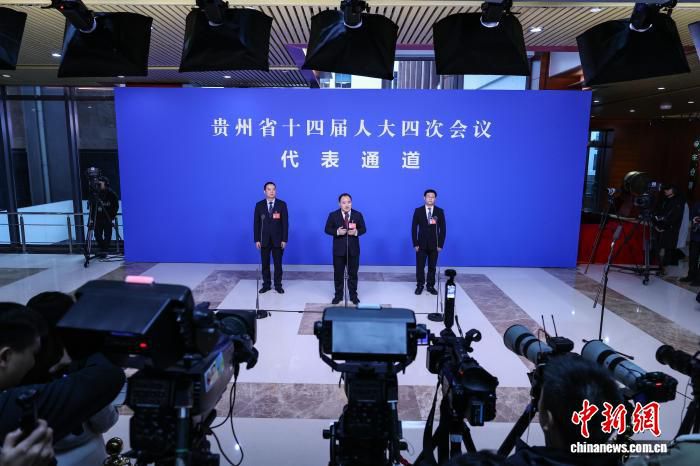
贵州省两会首次开启“代表通道” 话履职故事展责任担当
Zhong Guo Xin Wen Wang· 2026-01-27 08:58
Group 1 - The Guizhou Provincial People's Congress has established a "Representative Channel" for the first time, enhancing communication between representatives and the public, showcasing the representatives' responsibilities and engagement in various sectors [3][7]. - The "Village Super" football event has attracted 1,750 teams and over 1,700 international players, resulting in 27.5 million tourists and a tourism revenue of 31.2 billion yuan [3][4]. - Guizhou's tea industry, particularly the export of matcha, has seen significant growth, with 2,500 tons produced in 2025, making it the top producer in China and successfully exporting to 54 countries [5][7]. Group 2 - The use of artificial intelligence in the aluminum industry has led to a reduction of over 70 million kWh in electricity consumption, saving over 40 million yuan in costs, indicating a shift towards more efficient production methods [4]. - The integration of big data in tourism has enhanced visitor experiences and cultural engagement, with technologies like VR and AR transforming intangible cultural heritage into digital collectibles [7]. - The construction of the world's highest bridge, the Huajiang Gorge Bridge, is seen as a significant opportunity for local businesses to improve connectivity and market access, facilitating industry upgrades [7].
刚刚,两部委突发利好!A股,迎来三大变数!
券商中国· 2026-01-27 03:57
Core Viewpoint - The article discusses the rapid changes in the A-share market style, highlighting the influence of recent government policies on emergency management equipment innovation and the implications for investment strategies in the technology sector [1][3][4]. Group 1: Government Policies and Initiatives - The Ministry of Emergency Management and the Ministry of Industry and Information Technology issued guidelines to accelerate innovation in emergency management equipment, aiming to tackle over 20 key core technologies and develop more than 20 innovative equipment types by the end of 2027 [3]. - Recent favorable policies from various government departments aim to enhance the investment in technology innovation, including the promotion of artificial intelligence in manufacturing [4]. Group 2: Market Dynamics and Trends - The A-share market has experienced rapid style shifts, with funds rotating between technology, cyclical, and dividend sectors, leading to uncertainty among investors [1][6]. - The market is currently influenced by three main variables: the impact of deleveraging on bullish sentiment, the adjustment of large-cap stocks affecting theme speculation, and the potential for earnings surprises as the reporting season approaches [5][8]. - As of January 26, the financing balance in the Shanghai and Shenzhen stock exchanges remained high, indicating sustained market activity despite recent adjustments [7].

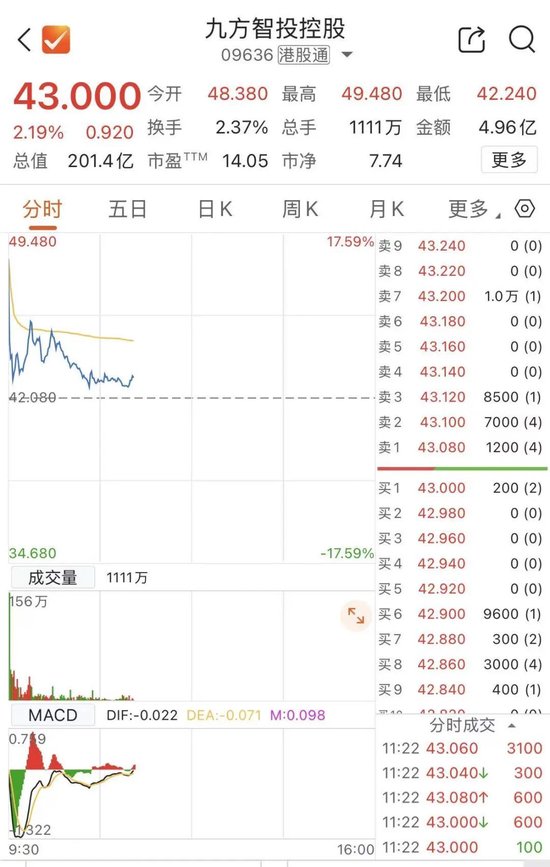
股价大幅跳水后,知名投顾公司九方智投控股启动1亿美元回购
Xin Lang Cai Jing· 2026-01-27 03:47
Core Viewpoint - Jiufang Zhitu Holdings experienced a significant stock price drop on January 26, leading to a rapid announcement of a share buyback plan worth up to $100 million, aiming to repurchase up to 10% of its total shares, reflecting the board's confidence in the company's future despite recent market volatility [3][12][14]. Stock Performance - On January 26, Jiufang Zhitu's stock price fell by 25.92%, closing at 42.08 HKD per share, with a market value loss of nearly 7 billion HKD [4][14]. - The stock had previously peaked at 84.05 HKD on August 27, 2025, indicating a nearly 50% decline since then [4][14]. Buyback Plan - The company announced a voluntary buyback plan to repurchase shares using existing cash reserves and cash flow, without external borrowing [3][14]. - The buyback plan allows for the repurchase of up to 44.8357 million shares, representing 10% of the total issued shares [3][12]. Financial Performance - For the first half of 2025, Jiufang Zhitu reported revenues of 2.1 billion CNY and a net profit of 865 million CNY, with a gross margin of 88.2% and a net margin of 41.2% [16]. - The company saw a 74.3% year-on-year increase in core business order amounts, with paid users rising to 102,000, a 152.7% increase [16]. Business Model and Strategy - Jiufang Zhitu positions itself as a leading player in the 2C financial information service industry, focusing on "content + traffic" for customer acquisition [14]. - The company utilizes live marketing and traffic operations to convert public traffic into private customers, supported by a network of 526 MCN accounts and 50.05 million followers [15][16]. Compliance Risks - The company faces compliance risks, highlighted by regulatory actions from the Shanghai Securities Regulatory Bureau regarding unauthorized investment advice and misleading marketing content [8][17].
上海钢联跌2.01%,成交额2.64亿元,主力资金净流入234.04万元
Xin Lang Cai Jing· 2026-01-27 03:25
Group 1 - The core viewpoint of the news is that Shanghai Steel Union's stock has shown a significant increase in price and trading activity, with a year-to-date increase of 14.33% and a recent 5-day increase of 4.55% [1] - As of January 27, the stock price was reported at 28.72 yuan per share, with a total market capitalization of 9.154 billion yuan [1] - The company primarily operates in B2B e-commerce services related to steel, energy, mining, and non-ferrous metals, with supply chain services accounting for 97.29% of its revenue [1] Group 2 - For the period from January to September 2025, Shanghai Steel Union reported a revenue of 57.318 billion yuan, a year-on-year decrease of 10.65%, while the net profit attributable to shareholders increased by 31.78% to 1.68 billion yuan [2] - The company has distributed a total of 1.51 billion yuan in dividends since its A-share listing, with 631.366 million yuan distributed in the last three years [3] - As of September 30, 2025, the number of shareholders increased by 3.49% to 37,200, while the average circulating shares per person decreased by 3.34% to 8,238 shares [2]
