能源安全

Search documents
高市早苗拒绝特朗普后 俄方发表评论
Zhong Guo Xin Wen Wang· 2025-10-31 22:12
中新网10月31日电据俄罗斯卫星通讯社31日报道,俄罗斯联邦委员会宪法委员会成员阿列克谢·普什科 夫认为,日本首相高市早苗拒绝停止采购俄罗斯液化天然气之举具有标志性意义,俄罗斯不可能被隔离 于全球能源市场之外。 报道援引《日本经济新闻》10月29日的消息称,高市早苗在10月28日与美国总统特朗普的会谈中表示, 由于可能危及日本的能源安全,日本很难禁止进口俄罗斯的液化天然气。 (文章来源:中国新闻网) ...
保加利亚议会决定暂停向其他欧盟成员国供应石油产品
Yang Shi Xin Wen· 2025-10-31 21:04
Core Points - The Bulgarian Parliament passed a law on October 31, with 135 votes in favor, 4 against, and 42 abstentions, to suspend the export of oil products, including diesel and aviation fuel, to EU member states [1] - The ban does not apply to fuel supplied to domestic and foreign ships and aircraft, nor to oil products provided to armed forces of EU and NATO member countries [1] - The measure aims to ensure Bulgaria's energy security and stabilize the domestic fuel market in response to recent U.S. sanctions against Russian oil companies [1] - On October 22, the U.S. announced sanctions against two major Russian oil companies, Rosneft and Lukoil, with Lukoil operating the largest refinery in the Balkan region located in Bulgaria [1]
海油发展(600968):业绩受非经损益影响,Q3毛利率创历史新高
Changjiang Securities· 2025-10-30 23:31
Investment Rating - The investment rating for the company is "Buy" and is maintained [8]. Core Insights - The company reported a revenue of 33.947 billion yuan for the first three quarters of 2025, a year-on-year increase of 0.81%, and a net profit attributable to shareholders of 2.853 billion yuan, up 6.11% year-on-year. The net profit excluding non-recurring items was 2.860 billion yuan, reflecting a year-on-year increase of 14.54%. In the third quarter alone, revenue was 11.350 billion yuan, a decrease of 5.75% year-on-year, while net profit attributable to shareholders was 1.023 billion yuan, down 4.51% year-on-year. The net profit excluding non-recurring items reached 1.027 billion yuan, an increase of 5.52% year-on-year. The gross margin for the third quarter reached a historical high [2][5][12]. Summary by Sections Financial Performance - For the first three quarters of 2025, the company's gross margin and net margin were 16.16% and 8.62%, respectively, both achieving historical highs. The gross margin for the third quarter was 17.79%, a year-on-year increase of 2.35 percentage points [12]. - The decrease in non-recurring income led to a decline in quarterly performance. In the third quarter of 2025, non-recurring gains and losses totaled -0.03 billion yuan, a decrease of 1.02 billion yuan year-on-year, primarily due to asset damage from a typhoon [12]. Business Outlook - The company's profitability is closely related to the production levels of CNOOC, demonstrating strong resilience to oil price fluctuations. The company has maintained stable gross margins even during periods of oil price volatility, benefiting from increased oil and gas production [12]. - The outlook for offshore oil services is positive, driven by national energy security initiatives and increased capital expenditures by CNOOC, which are expected to benefit the offshore oil service industry [12]. Earnings Forecast - The projected earnings per share (EPS) for 2025-2027 are 0.41 yuan, 0.45 yuan, and 0.49 yuan, respectively. The corresponding price-to-earnings (PE) ratios based on the closing price on October 28, 2025, are 9.53X, 8.58X, and 7.89X [12].

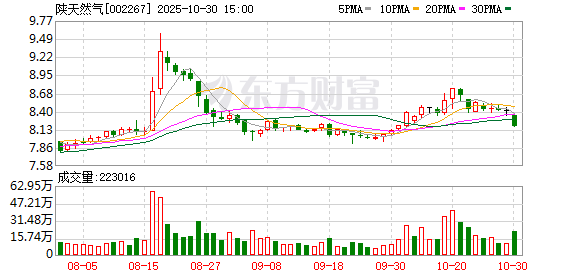
陕天然气:公司管网建设主要依托上游天然气资源增产及下游市场发展双重驱动
Zheng Quan Ri Bao· 2025-10-30 10:16
Core Viewpoint - The company emphasizes the importance of its pipeline construction, driven by both upstream natural gas resource increases and downstream market development, to enhance energy security and reliability in the region [2] Group 1: Pipeline Construction and Development - The pipeline project from Yulin to Xi'an aims to connect new gas sources and fill the pipeline gap in eastern Shaanxi, expanding market demand along the route [2] - The project is expected to improve interconnectivity and flexibility in gas source allocation across the Guanzhong region and the entire province [2] - Continuous advancement of this project is deemed essential for implementing provincial energy development plans and ensuring long-term energy security [2]


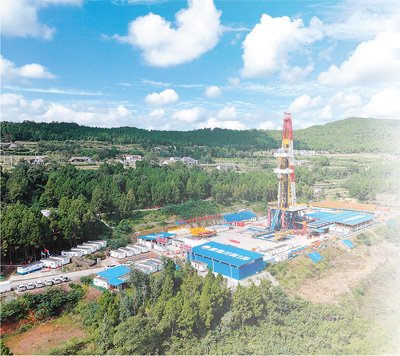
“十四五”时期,中国首口超万米科探井完钻,成为亚洲第一、世界第二垂直深度井—— 掘进地下万米
Ren Min Ri Bao Hai Wai Ban· 2025-10-30 10:09
Core Viewpoint - The successful completion of China's first 10,000-meter scientific exploration well, the Deep Earth Taka 1 Well, marks a significant milestone in deep earth engineering and oil and gas exploration, showcasing advancements in technology and geological understanding [9][13][18]. Group 1: Project Overview - The Deep Earth Taka 1 Well, located in the Tarim Basin, achieved a drilling depth of 10,910 meters, setting five global drilling records [9][12]. - This well is part of China's major deep earth engineering initiatives during the 14th Five-Year Plan period, aimed at enhancing national energy security [8][10][16]. Group 2: Technical Challenges - Drilling at such depths involves extreme conditions, including high temperatures (up to 220 degrees Celsius) and pressures (145 MPa), making it a formidable engineering challenge [12][14]. - The well had to penetrate 12 different geological layers, each with varying rock properties, necessitating frequent adjustments in drilling techniques and equipment [11][12]. Group 3: Technological Innovations - The project utilized a self-developed 12,000-meter automated drilling rig, capable of lifting 900 tons, significantly enhancing operational efficiency [14][15]. - Advanced drilling technologies, including high-temperature drilling fluids and specialized drill bits, were developed to meet the unique challenges of deep drilling [14][15]. Group 4: Geological Insights - The successful drilling provided valuable geological data from depths previously unexplored, confirming the potential for oil and gas resources in the Tarim Basin [13][17]. - The exploration of deep geological formations can reveal insights into ancient environmental conditions and the evolution of sedimentary basins [17][18]. Group 5: Strategic Importance - The advancement in deep drilling capabilities is crucial for China's energy strategy, as the country seeks to reduce its reliance on foreign oil and gas [16][18]. - The exploration of deep and ultra-deep oil and gas resources is identified as a key area for future discoveries, with significant remaining resources in the 8,000-meter and deeper categories [16][18].

美委战争一触即发!美机舰压境委导弹待命,中国能源安全恐遭冲击
Sou Hu Cai Jing· 2025-10-30 07:03
美军在加勒比地区的兵力部署仍在持续加速。据《环球时报》10月18日报道,路透社指出,美国目前在这一地区部署的军事人员已突破1万人,他们分布在 波多黎各、美属维尔京群岛等地,还包括多个航母战斗群和两栖攻击舰。 除了海上舰队外,美方的空中打击力量也在同步增强。B-52战略轰炸机频繁在委 内瑞拉北部空域执行长时间巡航任务,F-35战斗机则常驻波多黎各基地,从空中构建起了一张海空立体化的压制网络。 特别值得注意的是,美军第160特种作战航空团,绰号"夜行猎手",已经推进至前沿阵地,MH-60与MH-6轻型直升机的作战半径已经接近委内瑞拉的海岸, 只有大约90英里的距离。分析人士认为,此举是为了支持美国海军"海豹突击队"等精锐部队进行快速渗透、定点清除或者高风险抓捕任务。 值得一提的 是,美军内部对于这轮军事部署并非所有人都认同。10月18日,五角大楼宣布,南方司令部司令霍尔西将提前于12月12日离职,较原定的任期提前了两年。 加勒比海地区的军事紧张局势正在迅速升级,几乎接近爆发的边缘。2025年10月22日,委内瑞拉总统马杜罗对外宣布,委内瑞拉全国范围内部署了超过5000 套由俄罗斯制造的"针-S"便携式防空导弹系统 ...
视频丨美制裁俄石油公司引发保加利亚各界担忧
Yang Shi Xin Wen Ke Hu Duan· 2025-10-29 12:48
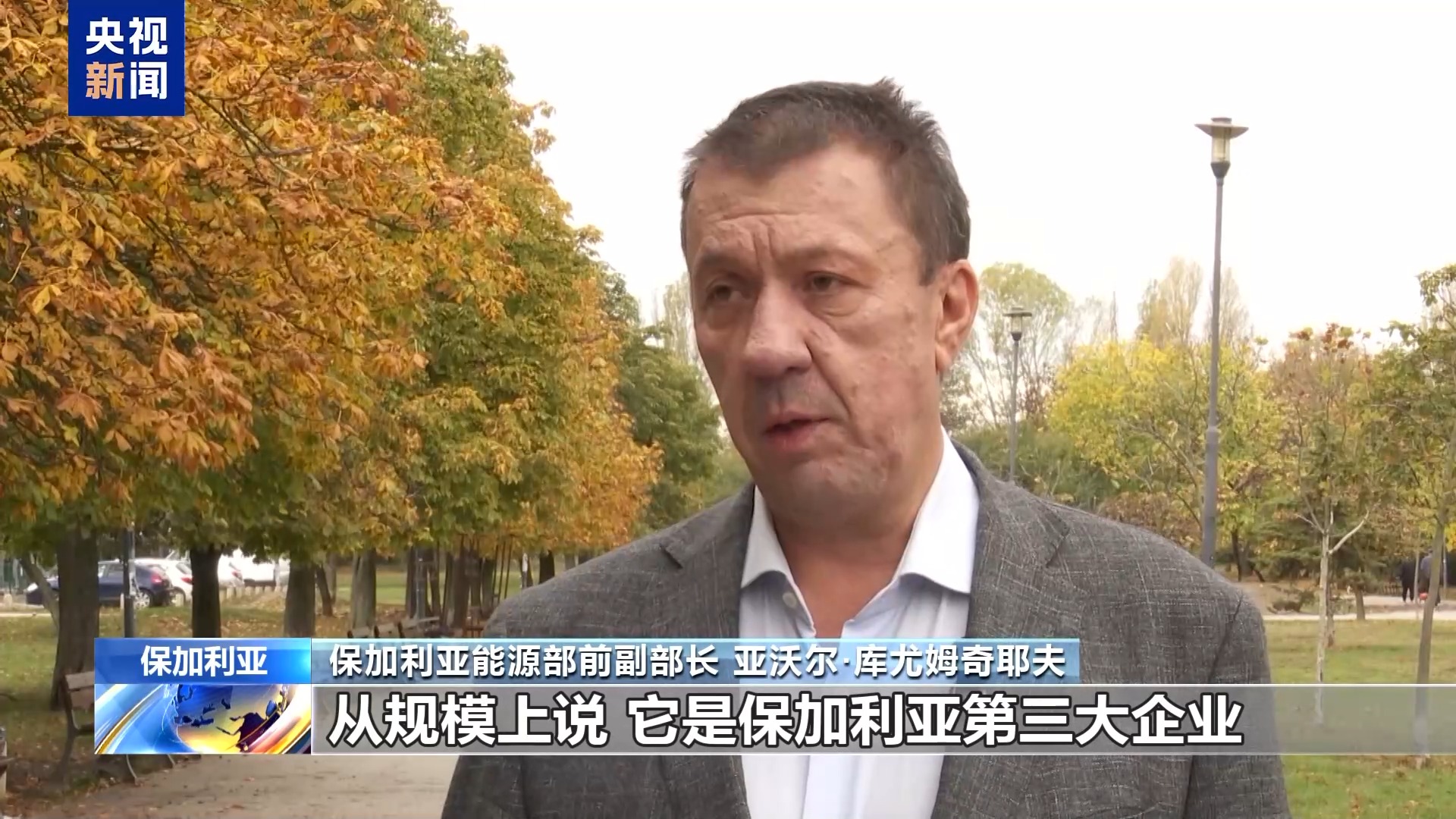
Core Points - The U.S. Treasury announced sanctions against two major Russian oil companies, including Lukoil, which operates the largest refinery in the Balkans located in Bulgaria [1][3] - The sanctions are expected to impact Bulgaria's energy security and also affect other countries like Hungary and Slovakia that import oil from Russia [3] Group 1: Impact on Bulgaria - Lukoil is the third-largest company in Bulgaria, providing significant tax revenue and employment [5] - If Lukoil ceases operations due to sanctions, it would cause a major disruption in Bulgaria's fuel market [5] - Local residents express concerns about potential fuel shortages and rising prices due to the sanctions [6][9] Group 2: Government Response - The Bulgarian government held an emergency meeting to discuss measures in response to the U.S. sanctions [13] - The Energy Committee of the Bulgarian Parliament passed an amendment requiring government approval for any sale or transfer of Lukoil's assets in Bulgaria [13] - The Bulgarian President emphasized the need to prevent a fuel crisis or price increases [13]
这一次的俄罗斯,狠狠地给中国上了一课!
Sou Hu Cai Jing· 2025-10-29 06:37
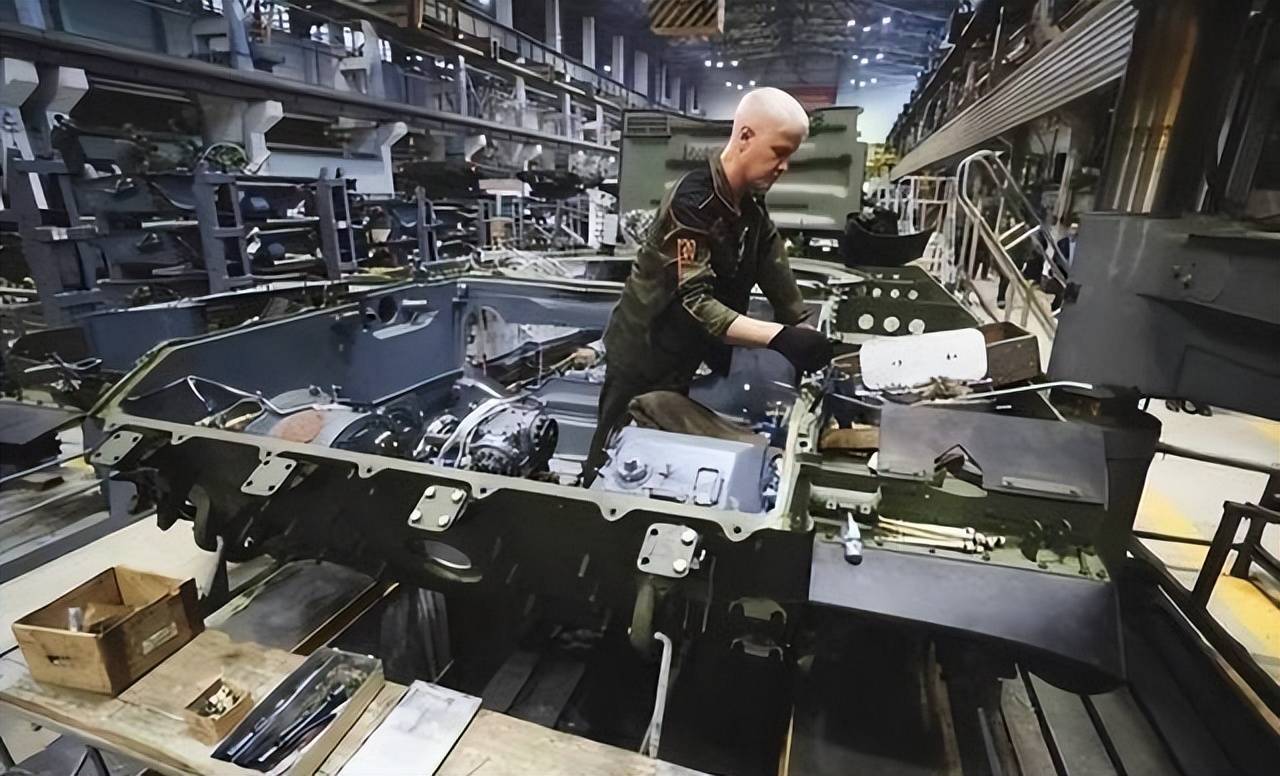
Core Viewpoint - Recent fluctuations in international oil prices are attributed to new sanctions targeting Russia's energy sector, with Brent crude oil prices surging nearly 6% [1] Group 1: Sanctions Overview - Since the outbreak of the Russia-Ukraine conflict, Western sanctions have escalated, impacting various sectors including finance and energy, with over 30,000 sanctions imposed by October 2025 [3][5] - The initial focus of sanctions was on the financial sector, leading to significant disruptions in trade and a sharp decline in the ruble's value [3][5] - The latest round of sanctions, effective October 22, 2025, included 117 new entities and vessels, directly targeting major Russian oil companies [6] Group 2: Impact on Russian Economy - The energy sector is a critical weakness for the Russian economy, with oil and gas revenues constituting nearly 40% of GDP, and a 23% year-on-year decline in oil and gas income reported in September 2023 [8][10] - The sanctions have led to a significant reduction in oil production and an increase in unemployment from 3% in 2023 to approximately 5% by 2025 [11] - Despite a projected GDP growth of 3.6% in 2023, the forecast for 2025 has been downgraded to 0.9%, indicating a slowdown in economic activity [10] Group 3: Broader Economic Consequences - The sanctions have caused a ripple effect across various industries, with financial disruptions leading to inflation rates stabilizing above 8% and essential goods prices doubling [11] - The Russian economy has been forced to pivot towards Asian markets, but high shipping costs and discounts have eroded profits [11] - The overall impact of sanctions is likened to a chronic condition, gradually undermining economic vitality and increasing hardship for the populace [11][12] Group 4: Lessons and Future Outlook - The experience of Russia over the past three years highlights the risks of over-reliance on a single economic strategy, emphasizing the need for self-sufficiency [12][14] - In contrast, China has developed a robust industrial chain and diversified energy supply strategies, positioning itself to withstand potential sanctions [12][14]
高市政府警惕外国光伏板?英媒:日本将对大型光伏电站开发采取监管
Huan Qiu Shi Bao· 2025-10-28 22:39
Group 1 - The newly established government under High City plans to regulate the development of large-scale photovoltaic power plants, indicating a shift in Japan's energy policy towards more stringent oversight [1] - The ruling coalition between the Liberal Democratic Party and the Japan Innovation Party has proposed legal measures for regulating megawatt-scale solar power plants by 2026, as there are currently no specific regulations for such projects [1] - High City expressed concerns about the environmental impact and the dominance of foreign-manufactured solar panels in Japan, with statistics showing that 95% of solar panels in the Japanese market were produced overseas from April to June 2025, a 29% increase from a decade ago [1] Group 2 - High City emphasizes that environmental and energy policies will be central to her administration's agenda, advocating for a shift towards self-sufficient technologies like perovskite solar cells and diversifying imports to enhance Japan's technological independence and supply chain security [2] - Despite support for next-generation solar technologies, the development of perovskite solar technology in Japan is still in its early stages, raising concerns about energy security due to reliance on foreign solar panels, primarily from China [2] - The push for nuclear energy faces significant regulatory challenges, with only 14 out of 33 commercial reactors having resumed operation post-Fukushima, leading to skepticism about Japan's ability to meet renewable energy targets under High City's policies [2] Group 3 - Diverging opinions have emerged within the Japanese government regarding renewable energy policies, with the Minister of Economy, Trade and Industry emphasizing the importance of balancing local consensus and international cooperation in promoting renewable energy [3]
俄罗斯天然气被切断,欧洲天然气价格或迎来下调,背后暗示了什么?
Sou Hu Cai Jing· 2025-10-28 19:11
Core Insights - The article discusses the unexpected decline in natural gas prices in Europe despite a significant reduction in Russian gas supplies, highlighting a transformation in the energy market dynamics [1][6]. Group 1: Market Dynamics - European natural gas prices have dropped significantly, with the Dutch TTF futures falling to around €25 per MWh, a decrease of over 92% from the historical high of €339 in August 2022 [1][3]. - Russian gas exports to the EU have plummeted to about 15% of the levels seen in 2021, which would typically lead to price increases, yet prices have decreased instead [1][3]. Group 2: Supply Diversification - Europe has successfully diversified its energy supply, with LNG imports increasing by 121% compared to 2021, primarily from the US, Qatar, and North Africa [3][4]. - The construction and expansion of 12 LNG terminals in Europe have increased processing capacity by approximately 75 billion cubic meters, equivalent to half of the peak Russian pipeline gas supply [3][4]. Group 3: Internal Connectivity - The completion of key gas interconnection pipelines has enhanced internal energy connectivity, resulting in a 35% increase in cross-border gas flows within Europe [4][6]. Group 4: Demand Changes - The energy crisis has accelerated Europe's energy transition, with renewable energy capacity increasing by 58% in the first half of 2025 compared to the previous year [4][6]. - Overall natural gas consumption in Europe has decreased by about 18% compared to pre-crisis levels, with industrial gas demand dropping by 27% [4][6]. Group 5: Market Sentiment - Speculative trading in the natural gas futures market has decreased by 65% from the peak in 2022, indicating a more rational market environment [6][9]. Group 6: Global LNG Supply - Global LNG supply is expected to expand by approximately 6 million tons per year from 2024 to 2025, contributing to downward pressure on prices [6][9]. Group 7: Economic Implications - The decline in natural gas prices is projected to boost the Eurozone's GDP growth by 0.4-0.6 percentage points and reduce inflation by 0.8-1.2 percentage points [6][7]. - Average household energy expenditures in Europe are expected to decrease by 25-30% in winter 2025 compared to the previous year, saving each household between €200-350 [7][9]. Group 8: Lessons Learned - The energy crisis has underscored the importance of energy security through diversification, as reliance on a single energy source poses significant risks [9][10]. - Market mechanisms play a crucial role in resource allocation, as evidenced by the significant price fluctuations in the natural gas market [9][10]. - The crisis has acted as a catalyst for transformation, enabling Europe to achieve renewable energy targets ahead of schedule [9][10].