
京津冀协同发展

Search documents
京津冀联合宣讲活动在廊坊举办
Xin Lang Cai Jing· 2026-01-08 23:08
此次活动由北京市社会科学院(北京市委讲师团)联合北京市通州区、天津市武清区、河北省廊坊市三 地宣传部门主办,采用"理论+文艺""百姓+故事""线上+线下"多元形式,搭建京津冀联学联讲交流平 台,促进党的创新理论共学共享。 从天津武清"一根萝卜"的乡村产业振兴路,到北京南海子"天鹅归巢"的生态答卷,再到廊坊"熊猫侠"的 热血守护……8位来自京津冀基层一线的宣讲员,通过一个个身边故事,勾勒出三地资源共享、经济共 荣、文化共融、民生共通的生动图景,以发展成效诠释全会精神在基层的生动实践。 "原来全会精神就藏在跨城通勤的便捷、快递寄送的畅达及家门口的风景里。"现场观众王曼羽说,宣讲 拉近了三地的时空和心理距离,更让人们对协同发展的未来充满信心。 据了解,京津冀联学联讲合作机制建立两年来,已累计联合开展"瓣瓣同心 理响为民"等理论宣讲活动 300余场,覆盖受众1200余万人次。京津冀三地将持续深化联学联讲合作,以百姓语言讲活政策,用身 边故事凝聚共识,推动全会精神在基层落地生根。 (来源:河北日报) 转自:河北日报 京津冀联合宣讲活动在廊坊举办 本报讯(记者刘杰)"刚刚开启运营的北京城市副中心综合交通枢纽,将助力打造一 ...
一个园区聚集三地企业
Ren Min Ri Bao· 2026-01-08 22:50
"现在有很多事得抓紧,优化提升协同发展机制,引入战略投资创新载体运营模式,推动成立投资基 金;同时加强与北京市科委、中关村管委会对接,挖掘产业协作重点方向和资源。"新年伊始,朱昌瑞 和同事们踌躇满志,"三地合力,相信未来发展会更好!" (文章来源:人民日报) "十四五"时期,科技园深化三地合作,共同打造协同创新示范基地、成果转化中心、集成服务中心等, 去年园区新增注册经营主体中来自北京、河北的占比近三成。"我基本上每周都得去北京出差。现在国 家管网集团科学试验基地已经签约落户,国内最大金属3D打印装置也落户在我们的新型产业用地。"说 起过去一年的工作,朱昌瑞很自豪。 "我们这款工业机器人需要联系汽车配件制造商磨合测试,您有合适的企业推荐吗?" "没问题,我马上联系。" 一大早,天津滨海—中关村科技园办公室里,京津冀协同科工作人员朱昌瑞的电话就没断过。"这是最 近对接的一家北京具身智能初创企业。北京有很多完成产品验证的初创企业需要实际应用场景磨合细 节,科技园所在的天津经开区先进制造业集聚,很多企业都来这儿找应用场景。"朱昌瑞说,京津冀协 同发展不仅是产业协同、政策协同,更是所有职能部门协同服务,只要企业有需求 ...
第二十期中国企业大讲堂 在首衡集团举办
Xin Lang Cai Jing· 2026-01-08 21:03
Group 1 - The core theme of the event was "Breaking Walls, Winning Together: New Opportunities for Enterprises under the National Unified Market" [1] - Shouheng Group has successfully integrated into the Beijing-Tianjin-Hebei coordinated development strategy, relocating over 7,200 merchants and more than 50,000 people to Hebei [1] - The operational costs for merchants in Shouheng's market are reduced by over 35% compared to the average in Beijing, with 70% of merchants experiencing revenue growth [1] Group 2 - Shouheng Group's dual-track practice involves building a network to overcome geographical barriers and using smart platforms to eliminate information silos [2] - The company has seen significant success in its layouts in regions like Xiaogan, Hubei, and Changde, Hunan, achieving a "double thousand" breakthrough in transaction volume and value within two years [2] - Shouheng Group aims to enhance supply chain resilience through cross-regional resource allocation and promote the free flow and efficient allocation of factors nationwide [1][2]
大厂至北京地铁潞阳站通勤公交专线开通试运营
Xin Jing Bao· 2026-01-07 01:48
Core Points - The new commuter bus line (Special Line 2) connecting Dachang (Qigezhuang Village Committee) to the Luyang Station of Beijing's Tongzhou District officially commenced trial operations on January 5, providing a more convenient travel option for residents [1] - This new line adds to the existing 10 bus routes linking Beijing and Dachang, enhancing cross-province commuting options [1] - The bus line features 15 stops over a distance of approximately 20 kilometers, serving over 60,000 residents along the route [1] - The service operates 14 trips daily from 5:55 AM to 8:25 PM, with a fare of 6 yuan per trip, and discounts available for certain payment methods and specific groups [1] Industry Developments - The opening of Special Line 2 marks the second direct bus service to Beijing, following the rapid commuter bus line to Lucheng Station, indicating an improvement in public transport connectivity between the two areas [1] - The Dachang Autonomous County is leveraging the strategic opportunity of the Beijing-Tianjin-Hebei coordinated development plan to enhance transportation connectivity, having already launched multiple bus routes and express lines to facilitate easier travel for residents [1] - The local transportation authority plans to monitor passenger flow during the trial period and optimize service arrangements, aiming to create a more diverse and personalized public transport experience [2]
288万户存续机构获“数字身份证”
Xin Lang Cai Jing· 2026-01-06 22:38
Core Viewpoint - The implementation of the unified social credit code system in Beijing has significantly improved administrative efficiency and governance, marking its tenth anniversary in 2025 with 2.8867 million organizations fully integrated into the system [1][2]. Group 1: Historical Context and Development - Before 2015, businesses faced a cumbersome process requiring multiple approvals from various departments, taking nearly half a month to complete [2]. - The introduction of the unified social credit code system streamlined this process by consolidating 24 types of organization codes from 10 departments into a single 18-digit code, which serves as a lifelong unique identifier for organizations [2]. Group 2: Smart Regulation and Data Management - The unified social credit code acts as a digital identity for organizations, facilitating data sharing and collaboration across departments throughout the regulatory process [3]. - The Beijing market supervision bureau has created a comprehensive big data system by aggregating registration, licensing, and regulatory data, enabling full coverage of credit risk analysis for all business entities [3]. Group 3: Collaborative Empowerment - The unified social credit code has broken down departmental barriers, enhancing regional collaboration by linking data from over 20 departments, thus eliminating redundant paperwork and improving service efficiency [4]. - In the context of the Beijing-Tianjin-Hebei coordinated development, the unified social credit code serves as a crucial link, with two local standards established for data exchange and sharing, resulting in 5.9019 million data exchanges by 2025 [4].
因大联科“京津冀企业加速计划”启动,产业“新生态”模式获多方认可
Jin Tou Wang· 2026-01-06 09:57
Group 1 - The summit highlighted the importance of platform-based development models as a key approach to drive regional innovation and high-quality development in the Beijing-Tianjin-Hebei area [1][2] - The Beijing-Tianjin-Hebei Enterprise Headquarters Science and Technology Innovation City is recognized for providing comprehensive support for enterprise growth through a platform that integrates space, capital, technology, and talent [2][4] - Experts noted that platformization effectively addresses the challenges of resource fragmentation faced by small and medium-sized enterprises, offering one-stop solutions from technology transformation to market expansion [2][6] Group 2 - The summit featured discussions on low-altitude economy and AI-driven industrial transformation, with insights from Chinese Academy of Engineering academicians on their potential as new growth engines [3] - A strategic cooperation award ceremony was held, signifying authoritative recognition of the Science and Technology Innovation City in building an industrial ecosystem that integrates production, education, research, and application [4] - The launch of the "Beijing-Tianjin-Hebei Enterprise Acceleration Plan" aims to provide full-cycle empowerment for resident enterprises by integrating resources such as patient capital and global market access [5][6] Group 3 - Media commentary emphasized that the platform-based development model represents a transformative direction for China's industrial parks, shifting from a landlord to a shareholder approach and from management to empowerment [6] - The platform model is seen as a means to enhance resource allocation efficiency and foster a culture of continuous innovation, providing a replicable practice for building a world-class urban agglomeration in Beijing-Tianjin-Hebei [6]
国际科创中心扩围至京津冀,北京如何发挥龙头作用?
2 1 Shi Ji Jing Ji Bao Dao· 2026-01-06 09:37
Core Viewpoint - The expansion of the Beijing International Science and Technology Innovation Center to the Beijing-Tianjin-Hebei region is a significant strategic deployment aimed at enhancing global influence and competitiveness in international technology innovation [1][2]. Group 1: Expansion and Strategic Importance - The Ministry of Science and Technology is developing a construction plan for the Beijing (Beijing-Tianjin-Hebei) and Shanghai (Yangtze River Delta) international technology innovation centers, focusing on optimizing regional technology innovation spatial layout [1][4]. - The expansion is seen as a critical move to strengthen the collaborative innovation among Beijing, Tianjin, and Hebei, with Beijing positioned as a leading source of original innovation [2][9]. - The initiative aims to transform the historical "siphoning effect" of Beijing into a "radiation driving force" for surrounding areas, enhancing regional economic integration and competitiveness [5][9]. Group 2: Collaborative Innovation and Resource Sharing - The expansion will promote resource sharing, talent cultivation, platform co-construction, project co-research, industry collaboration, and policy mutual recognition, facilitating the efficient flow of various innovation elements [4]. - The Beijing-Tianjin-Hebei National Technology Innovation Center is the first comprehensive national technology innovation center in China, focusing on key R&D programs and enhancing technology transfer mechanisms [2][3]. - Since the implementation of the Beijing-Tianjin-Hebei collaborative development strategy in 2014, there has been a significant increase in technology contract transaction amounts, growing from 8.32 billion yuan in 2014 to over 84 billion yuan in 2024, with an average annual growth rate of approximately 26% [8]. Group 3: Future Prospects and Goals - The expansion is expected to shift the focus from "single-point breakthroughs" in core cities to "collaborative operations" within the urban cluster, enhancing the overall effectiveness of the national innovation system [9]. - The initiative aims to create a world-class technology innovation source and strategic support for building a strong technological nation, with a focus on advanced manufacturing clusters in fields such as biomedicine and intelligent vehicles [2][3].

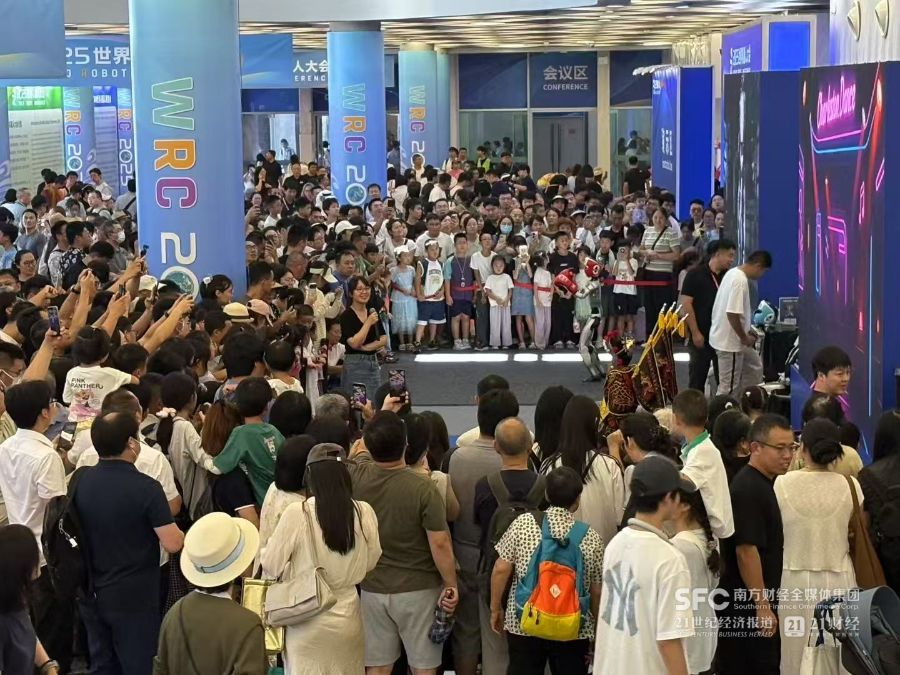
“火星科幻城”落地城市副中心!“十五五”还有——
Sou Hu Cai Jing· 2026-01-06 07:10
Group 1 - The "14th Five-Year Plan" period is a critical phase for the high-quality development of Beijing's urban sub-center, with comprehensive carrying capacity expected to continuously improve [2] - The M101 line is set to be completed and operational, along with the northern extension of the Yizhuang line, enhancing the "11 horizontal and 9 vertical" backbone road network [2] - The urban sub-center will accommodate the relocation of eight municipal state-owned enterprises, including Beijing Bank, and develop an 80-kilometer national-level pedestrian path along the Grand Canal [2] Group 2 - The "Mars Science Fiction City" project is planned to start construction in the second half of this year, with a total area of approximately 190,000 square meters, featuring cutting-edge technology such as artificial intelligence and robotics [5] - The project aims to create an immersive science fiction experience, including a science fiction museum, educational programs, and various entertainment zones, with a projected opening in 2029 [5] - The project will also collaborate with popular domestic science fiction IPs and may introduce a joint ticketing system with nearby theme parks [5] Group 3 - Xiaomi's automotive factory in Tongzhou has produced over 500,000 vehicles since its establishment three years ago, with plans to focus on smart cockpits and automotive-grade chips [6] - The company aims to enhance the industrial chain ecosystem by attracting specialized enterprises and promoting a new model of "cultural tourism + industry" [6] - An industrial tourism route has been developed, integrating production observation, technology experience, and educational programs, particularly targeting middle and primary school students [6]


雄商高铁(聊城段)完成征地拆迁等,工程建设驶入“快车道”
Feng Huang Wang Cai Jing· 2026-01-05 23:59
Core Insights - The construction of the Xiongshan High-speed Railway (Liaocheng section) is progressing rapidly, with land acquisition and demolition expected to be completed by the end of December 2025 [1] Investment and Financial Summary - As of December, the project has completed an investment of 277 million yuan, with a cumulative investment of 2.935 billion yuan expected by the end of 2025, achieving 104.08% of the annual investment plan of 2.82 billion yuan [1] - Cumulatively, the project has completed an investment of 11.401 billion yuan, which is 72.29% of the total project investment of 15.77 billion yuan [1] Project Status - All land acquisition and demolition for the Xiongshan High-speed Railway (Liaocheng section) have been completed, and the relocation of utilities is nearly finished [1] - The construction of the main structures for the Linqing East Station and Yanggu East Station has been completed, and decoration work is currently underway [1] - The earthworks and bridge construction are fully completed, with the main line track laying completed and 88% of the contact network installation finished [1]
三河:4家企业通过省级创新平台认定
Xin Lang Cai Jing· 2026-01-05 10:44
Core Insights - The Hebei Provincial Department of Science and Technology announced the list of new provincial key laboratories and technology innovation centers for 2025, highlighting the successful approval of four entities from Sanhe City, which include Liangke Weize Industrial Coating Co., Ltd., Hebei Huakan Geological Exploration Co., Ltd., Hebei Yanda Hospital, and North China University of Science and Technology [1][3] Group 1: Company Achievements - Liangke Weize Industrial Coating Co., Ltd. and Hebei Huakan Geological Exploration Co., Ltd. have been approved as provincial technology innovation centers, showcasing their strong capabilities in innovation [1][3] - Hebei Yanda Hospital and North China University of Science and Technology have successfully passed the provincial key laboratory recognition, further establishing their roles in technological advancement [1][3] Group 2: Innovation Ecosystem - Sanhe City has positioned technological innovation as the core engine for high-quality development, aligning with the Beijing-Tianjin-Hebei coordinated development strategy [2][4] - The number of provincial innovation platforms in Sanhe City has steadily increased, covering key areas such as new materials, high-end equipment, and health technology, leading to a leading position in Langfang City for approved research and development platforms [2][4] - Sanhe City aims to enhance precise services and policy support to foster the newly approved provincial technology innovation centers and key laboratories, encouraging increased R&D investment and accelerating the application of technological achievements [2][4]