
内外贸一体化

Search documents
浙江宁波外贸企业积极布局国内市场 一个新品牌,从无到有做起来(经济聚焦·加快推动内外贸一体化)
Ren Min Ri Bao· 2025-05-12 22:13
这段时间,浙江宁波今日食品有限公司(以下简称"今日食品")副总经理陈胜楠开启了"连轴转"的工作 模式,"抢占国内市场,得先打响品牌知名度,耽误不得。" 她的手机里,密密麻麻地记录着一项项工作动态:线下,提交入驻大型连锁超市申请,并准备安排铺 货;线上,在国内电商平台上架更多金枪鱼产品;借助人工智能技术,打造"24小时不打烊"直播间,拓 展直播带货新场景…… 过去今日食品主攻海外市场,通过宁波舟山港销往30多个国家和地区,"产品主要面向欧美市场,内销 占比不到20%。"陈胜楠说,开拓国内市场,许多事情都要从头做起。 "说到底,品牌知名度和定位很关键。"夏迪分析,"要建立全新的品牌体系,产品也要进行细分。"于 是,公司推出"非常鱼块"品牌,"这是我们近期专门针对国内消费者打造的新品牌。" "在海外,金枪鱼吃法非常多,但国内消费者不熟悉如何烹饪金枪鱼。我们认为从即食产品做起更合 适。"企业针对国内消费者口味和健康需求,陆续推出了油浸蓝鳍金枪鱼罐头、黄鳍金枪鱼鱼块等简餐 即食产品。"品牌'非常鱼块'取自'非常愉快'的谐音,产品一目了然,更贴近中国老百姓。"夏迪说。 新品牌表现如何?据介绍,"非常鱼块"进驻连锁超市和线 ...
热点聚焦 | 中美日内瓦经贸会谈联合声明发布 A股、港股全线飘红 高端制造、绿色新能源产业受益
Guang Zhou Ri Bao· 2025-05-12 19:31
Core Points - The joint statement from the US-China Geneva trade talks indicates a significant reduction in tariffs, with the US committing to cancel 91% of tariffs on Chinese goods and modify 34% of reciprocal tariffs, while China will also cancel 91% of its counter-tariffs on US goods [1] - The announcement is expected to boost confidence among export enterprises and stabilize the global market, with industries such as high-end manufacturing, agriculture, green energy, electronics, machinery, and textiles anticipated to benefit [1][3] Industry Impact - The trade talks signal positive developments for global supply chains and industrial stability, providing valuable confidence for businesses [3] - Companies in the textile and apparel sectors, particularly those exporting to the US, are expected to leverage their advantages to enhance supply chain capabilities and compete in international markets [3] - The reduction in tariffs is projected to lower marginal costs for foreign trade enterprises, potentially leading to a rebound in export orders in the second quarter [4] - High-end manufacturing and green energy sectors are likely to see substantial benefits, with reduced costs for semiconductor equipment and materials aiding domestic manufacturing upgrades [4] - The green energy industry, particularly in components for electric vehicles and energy storage, is expected to experience rapid growth due to lower import costs [4] Integration of Domestic and Foreign Trade - The positive progress in US-China tariff negotiations is anticipated to accelerate the integration of domestic and foreign trade, encouraging more Chinese companies to engage in exports [5] - The easing of trade tensions is expected to enhance the resilience and efficiency of supply chains, with new logistics models and cross-border e-commerce gaining traction [6] - A stable trade relationship will support long-term investment planning in cross-border business [5]
电商赋能 按下内外贸一体化“加速键”
Guang Zhou Ri Bao· 2025-05-12 19:12
广州日报评论员付迎红 闯关夺隘,需练好"内功"。于广大企业而言,要主动加快业务转型实现自我"造血"。具体来说,要通过 调研摸清不同市场的"性格"和"水温",因地制宜地调整经营策略;通过提升产品附加值、优化市场布 局、加强技术创新、提高外贸优品认知度等方式,推出更多好产品、积极开拓新的发展空间。在这方 面,不少企业已尝到内外贸一体化的甜头,实现了内外贸"双促进、双增长"的局面。今年一季度,广州 市外贸增长17.3%,增速走在全国前列,培育了127家内外贸一体化试点企业,400多家外贸企业成功开 辟国内市场。 内外贸一体化之路,并非一蹴而就。国内国际两个市场有时"内外有别",国内国际市场的产品、技术、 质量标准不一致,国内外消费者需求也不尽相同,企业仅靠自身不易跨过这一鸿沟。因此,和拥有丰富 消费数据的电商平台合作就变得至关重要。加之电商平台有着巨大的流量与模式优势,通过直接采购、 流量倾斜、数据分析、营销支持、密集培训等方式,能够快速帮助商家拓展国内市场、跨越"水土不 服"这一关。因此,借力电商平台积极"搭梯子""架桥梁",无疑会让内外贸一体化更加顺畅和高效,这 也是本次座谈会召开的意义所在。 市场形势往往瞬息 ...
政府搭台 平台赋能 企业唱戏 外贸大省“内外兼修”打出护企“组合拳”
Shang Hai Zheng Quan Bao· 2025-05-12 18:53
Core Viewpoint - The article highlights the proactive measures taken by major foreign trade provinces in China to stabilize foreign trade amidst external uncertainties, emphasizing a collaborative approach involving government support, platform empowerment, and enterprise initiative [2][4]. Group 1: Government and Platform Initiatives - Major foreign trade provinces have implemented a series of measures to support enterprises, including connecting domestic sales channels, expanding international markets, and strengthening financing guarantees [2]. - The "Foreign Trade Quality Products China Tour" events organized by the Ministry of Commerce aim to facilitate production and sales connections among key industries such as light industry, textiles, and food [4]. - Shandong province is promoting the "Same Line, Same Standard, Same Quality" initiative to facilitate the transition between domestic and international markets [5]. Group 2: Market Diversification - China is accelerating the diversification of foreign trade markets, with emerging markets in Latin America, Africa, Central Asia, and Central and Eastern Europe contributing nearly 60% to foreign trade growth last year [6]. - Various provinces are targeting these emerging markets through platforms and digital channels to assist foreign trade enterprises in entering new markets [6]. - The Ministry of Commerce plans to provide more public information services to foreign trade enterprises, including trade guides and information on the business environment in relevant countries [6]. Group 3: Financial Support for Enterprises - A comprehensive financial policy package has been introduced to support foreign trade enterprises, including measures from the People's Bank of China and financial regulatory bodies [7]. - Shandong province is enhancing the "Business + Finance" mechanism to increase financial product offerings for foreign trade enterprises transitioning to domestic sales [7]. - Guangdong has launched a special financial plan to strengthen credit support in the foreign trade sector, with a focus on small and micro enterprises [7]. Group 4: Trade Performance - In the first quarter, China's foreign trade exports increased by 6.9%, with a stable growth trend continuing into April [8]. - The Ministry of Commerce plans to enrich the toolbox of policies to stabilize foreign trade and introduce new measures as needed [8].

【地评线】荔枝网评:夯实“苏企”外贸压舱石,让“出海”动力更强劲
Yang Zi Wan Bao Wang· 2025-05-12 12:12
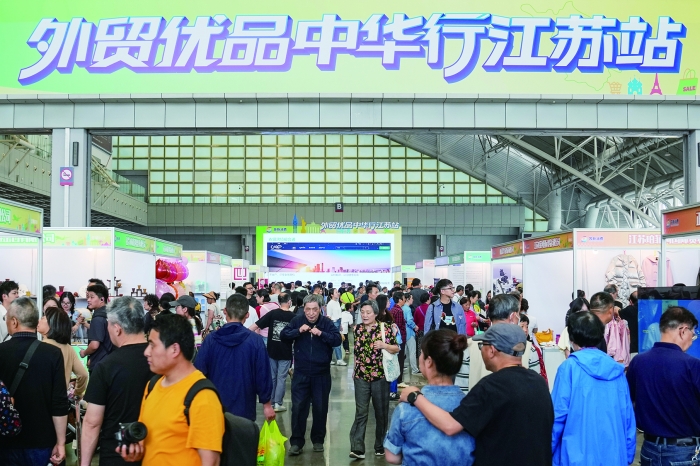
Group 1 - The core viewpoint emphasizes the adaptability and innovation of Jiangsu enterprises in navigating the uncertain international trade environment, showcasing their products at platforms like the Canton Fair to attract global customers [1][2] - Over 1,400 Jiangsu enterprises participated in the Canton Fair, demonstrating their innovative strengths across various sectors such as home textiles, stationery, and health products, leading to significant overseas market orders [2] - The latest data indicates that China's total import and export value reached 14.14 trillion yuan in the first four months of this year, with a year-on-year growth rate of 2.4%, highlighting the role of innovation in driving trade [2] Group 2 - The government plays a crucial role in facilitating international trade by providing support and services to enterprises, as seen in Jiangsu's proactive measures to assist foreign trade companies [3] - Jiangsu's foreign trade has shown a stable start this year, with rapid growth in trade with ASEAN countries and high-level operations in Belt and Road Initiative countries, supported by government initiatives [3] - The central government's recent meeting emphasized the importance of supporting technological innovation, expanding consumption, and stabilizing foreign trade to address the complex challenges facing the sector [4] Group 3 - The article highlights the importance of enhancing product quality and technological innovation to increase the value of exports, particularly for private enterprises, which are seen as the backbone of foreign trade [4] - There is a call for increased support for private enterprises to explore key areas and innovative fields, which can lead to new economic growth points [4]
建渠道、拓内销行动“加速跑” 多方合力托举外贸企业信心底气倍增
Yang Shi Wang· 2025-05-12 07:52
央视网消息:中国外贸企业正采取多元化市场布局、转战内需市场等策略,政府、采购商、外贸企业多举措建渠道、拓内销 行动"加速跑",对外贸企业拓内销的支持力度提质升级,促进内外贸渠道对接、品牌对接、产销对接、标准对接等,取得积极成 效。 细致入微举措 为外贸企业"撑腰杆" 优化内销事务部整合研发能力,加快推出新品,马不停蹄对接平台,拓展销售渠道。"外贸优品振兴计划"帮助近300家本地企 业实现了国内渠道的链接与推广。 契合消费需求 快速调整策略收效明显 "外贸优品南京行"活动,近160家优质外贸企业携自家好物纷纷亮出新动作。一家企业每年有30万台汽车充气泵销往海外,在 创新拓内销的过程中,积极挖掘契合国内消费者的需求点,快速调整的产品策略收效明显。 广东:紧盯需求 做国内消费者青睐的产品 广东东莞一家耳机企业实现"多条腿走路"的转型升级。在"出口转内销"的专场直播中,新产品从研发设计到技术创新到生产制 造都紧紧围绕国内消费者的需求。 广泛对接平台 外贸优品"链接"成势 近期,各地出台的相关一揽子政策从开拓多元市场、提升金融服务、优化营商环境等方面提出细致入微的举措,为外贸企 业"撑腰杆"。 多方合力托举外贸企业信心 ...
荔枝迎丰收季 即时零售平台多举措助力岭南荔枝抢“鲜”上市
Guang Zhou Ri Bao· 2025-05-11 22:43
Core Viewpoint - The Guangdong lychee industry is focusing on enhancing domestic sales channels while maintaining export capabilities, driven by changing consumer demands and market conditions [1][2]. Group 1: Market Trends - In early May, search volume for "lychee" on Meituan increased by 270% compared to early April, with cities like Shenzhen, Guangzhou, and Nanning showing the highest interest [1]. - The Guangdong lychee production base is significant, and the region is looking to integrate internal and external trade to adapt to global market fluctuations [2]. Group 2: Industry Initiatives - The 2025 Gaozhou Lychee Production and Sales Matchmaking Conference was held to promote local lychee products and establish connections between producers and retailers [1]. - Meituan launched the "Linking a Hundred Cities · Beautiful Lychee Promotes Agriculture" initiative to facilitate a series of matchmaking events aimed at expanding domestic sales channels for Guangdong lychee [1][2]. Group 3: Challenges and Solutions - Lychee producers are facing challenges in balancing export and domestic sales, necessitating the development of diverse sales channels and a focus on digital retail and brand building [2]. - The demand for high-quality lychee and the need for efficient cold chain logistics and digital capabilities are critical for companies looking to expand into the domestic market [2].

上海市积极为外贸企业与商超百货、电商平台等渠道牵线 一场对接会 助外贸优品入万家(经济聚焦·加快推动内外贸一体化)
Ren Min Ri Bao· 2025-05-11 22:12
Core Viewpoint - The Central Political Bureau of the Communist Party of China emphasizes the need to accelerate the integration of domestic and foreign trade, with local governments enhancing support for foreign trade enterprises to expand into domestic sales channels [1] Group 1: Economic Integration and Trade Support - The meeting highlighted the importance of promoting the integration of domestic and foreign trade, leading to positive outcomes in connecting trade channels, brands, production, and sales [1] - Various regions and departments are increasing efforts to assist foreign trade enterprises in tapping into domestic markets, showcasing the advantages of China's large-scale market [1] Group 2: Case Studies of Foreign Trade Enterprises - A shoe company in Zhejiang is selling products originally priced at hundreds of dollars in the U.S. for only one to two hundred yuan in China [2] - A denim company from Dongguan quickly launched its products in Shanghai, benefiting from multi-channel connections with supermarkets and e-commerce platforms [3] - A beverage company expressed interest in entering the domestic market, highlighting the challenges of lacking sales channels and experience [3] - A pet bag company is preparing to launch domestically, recognizing the growing pet economy as a significant opportunity [4] Group 3: Trade Facilitation Initiatives - Supermarkets are establishing dedicated teams to assist foreign trade enterprises in transitioning to domestic sales, offering guidance on compliance and product standards [5] - A stainless steel kitchenware company successfully completed the entire process of contract signing and product listing in just four days [6] - Various supermarkets are implementing measures such as "7-day rapid listing" services and dedicated exhibition areas for foreign trade products to facilitate market entry [6] Group 4: Government Support and Regulatory Measures - The Shanghai Municipal Commerce Commission is promoting the entry of high-quality foreign products into the domestic market as part of consumer promotion activities [6] - Regulatory authorities are developing measures to support foreign trade enterprises in expanding into domestic markets, including simplifying labeling and certification processes [6]
突围向“新” “外贸第一大省”如何在风浪中破题
Yang Shi Xin Wen· 2025-05-11 13:31
这场会议也颇有"功夫在诗外"的意味:遭受冲击的虽是外贸企业,但"解题者"却从不仅限于外贸企业。通过电商平台的流量、数据和技术优势,精准对接国 内的消费需求,能让广东的外贸优品也能顺利转场,同样是值得思考和借鉴的"破题之道"。 既问"短计",也问"长策":面临的是全新的市场和挑战,外贸大省广东如何着眼当下,以变应变?国际贸易环境疾风骤雨,广东又将如何在挑战中开好"顶 风船"? 5月9日,距离美国挑起所谓的"对等关税"正好一个月,"外贸第一大省"广东高规格召开了一场"特别"的座谈会。 "特别"之处在于会议主题和参会人员:15家企业中,有12家来自全国各大电商平台。会议主题则聚焦"电商平台助力内外贸一体化"。 "内循环"里看韧性:风浪中如何"转场"? "从长远来看,外贸企业需要注重产能转化。"与会的平台企业负责人黄晓敏认为,外贸企业需要将目光转向国内,就要求外贸企业找准定位和相应产品。 适应新环境,作出新变化。对一路从风浪中走来的广东外贸企业而言,产能转化不仅意味着市场环境的转变,更意味着市场策略的深度转变。在众多转型行 业中,就有一条来自广东本土成长起来的"鱼","游"出了新的天地。 如果不是"关税战",可能连很 ...
常州三百多场促消费活动推动内外贸一体化
Xin Hua Ri Bao· 2025-05-10 23:30
Group 1 - The core viewpoint of the articles highlights the increasing focus of companies in Changzhou on both domestic and international markets, with a significant shift towards online sales channels and the integration of foreign trade with domestic consumption [1][2][3] - Changzhou Himalaya Outdoor Products Co., Ltd. has seen a surge in orders, with production lines fully operational and orders extending into the second half of the year, indicating strong demand in the outdoor equipment sector [1] - The company has developed products tailored to domestic consumer preferences, such as automatic tents and multifunctional carts, reflecting a strategic approach to meet local market needs [1] Group 2 - Many foreign trade companies in Changzhou are actively engaging in online sales, with some reporting monthly sales of approximately 500,000 yuan through e-commerce platforms [2] - A commercial alliance has been formed among major retailers and e-commerce platforms to support quality foreign trade enterprises, providing logistical and marketing assistance [2] - The Changzhou Business Bureau is promoting the integration of domestic and foreign trade, establishing dedicated areas for foreign trade products in popular consumer locations and planning numerous promotional events [3]