精准医疗

Search documents
综述|AI赋能肿瘤医学 德国研究推动精准诊疗智能化
Xin Hua She· 2025-06-09 05:18
Core Insights - Artificial Intelligence (AI) is rapidly becoming an essential technology in the field of oncology, particularly in precision medicine and cancer diagnosis [1][2][3] Group 1: AI in Cancer Diagnosis - The CrossNN AI model developed by Charité University Hospital can analyze the epigenetic features of tumor cells for rapid, non-invasive cancer diagnosis without the need for high-risk surgical biopsies [1][2] - In clinical cases, the CrossNN model achieved a diagnostic accuracy of 99.1% for brain tumors and 97.8% for over 170 cancer types, outperforming most existing AI diagnostic tools [2] - The model's interpretability allows clinicians to trace its diagnostic logic, enhancing the credibility of medical AI [2] Group 2: AI-Assisted Clinical Decision-Making - The Dresden University of Technology team introduced a medical AI agent that integrates large language models and various medical tools to assist oncologists in personalized clinical decision-making [3][4] - In a validation study with 20 simulated cases, the AI agent reached correct clinical conclusions in 91% of cases and accurately referenced cancer guidelines in over 75% of responses [3] - The AI agent aims to reduce "AI hallucinations," thereby improving safety and reliability in clinical settings [3] Group 3: Future Directions and Implementation - The research teams emphasize the importance of integrating AI tools into routine clinical workflows while minimizing disruption to physicians' work [4] - Training for medical professionals is crucial for effective collaboration with AI, ensuring that they retain ultimate clinical decision-making authority [4] - The next steps include developing a "human-machine collaboration mechanism" and prioritizing data security and privacy in system deployment [4]
亚泰集团与玄风科技签署战略合作 将围绕核心业务和产品产业链开展合作
Zheng Quan Shi Bao Wang· 2025-06-06 13:15
Group 1 - Yatai Group signed a strategic cooperation agreement with Xuanfeng Technology, focusing on long-term mutual benefits and cooperation in core business areas [1][2] - The partnership aims to develop a full-chain renewable energy business, upgrading Yatai's building materials production base for low-carbon operations [2][3] - Both companies will collaborate on power management integrated circuits and related components to enhance power conversion and transmission efficiency [2][3] Group 2 - Yatai Group has a diversified industrial structure, including building materials, real estate, and pharmaceuticals, with a focus on circular economy and digital transformation [2][3] - The real estate sector encompasses development, construction, and property services, with a national layout and a focus on modern building practices [3] - The pharmaceutical sector includes a complete health industry chain, with smart manufacturing and a wide range of health management services [3] Group 3 - Xuanfeng Technology is a leader in vertical axis wind power generation, with a commitment to zero-carbon energy and a presence in over 10 countries [1] - The company has established three major R&D centers in the US, Germany, and China, and operates over 1,000 service points in China [1] - The collaboration will also explore opportunities in biotechnological projects related to precision medical testing, supporting China's health strategy [2][3]

康圣环球(09960)携手 Biostate AI 抢占AI医疗新蓝海
智通财经网· 2025-06-06 00:38
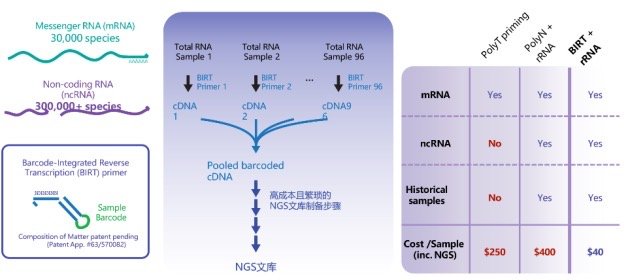
Core Insights - The partnership between 康圣环球基因技术有限公司 and Biostate AI aims to leverage their combined strengths in data resources, AI algorithms, and biotechnology to accelerate the clinical application of artificial intelligence in precision medicine and commercial promotion [1][4]. Group 1: Technological Advancements - 康圣环球 will provide its accumulated RNA sequencing (RNAseq) data resources to support AI model training for the joint venture [1]. - Biostate AI's Total RNA sequencing service utilizes the innovative Barcoded Integrated Reverse Transcription (BIRT) technology, allowing for high-throughput analysis of over 300,000 non-coding RNA types, significantly enhancing transcriptome information [1]. - The BIRT technology reduces RNA sequencing costs by nearly 5 times and improves data quality, enabling research teams to process 2-3 times more samples within the same budget [1][3]. Group 2: Market Potential - The global AI market in genomics is rapidly growing, with an estimated market size of approximately $498 million in 2022 and a projected compound annual growth rate (CAGR) of 46% from 2023 to 2030 [4]. - The partnership is positioned to capitalize on the increasing demand for personalized medicine and the growing investment in research, making data quality and scarcity key competitive indicators [4]. Group 3: Clinical Applications - The collaboration has already begun working on RNAseq datasets from leukemia patients, achieving results comparable to flow cytometry and pathology techniques [5]. - By lowering the barriers to RNA sequencing, Biostate AI's technology is expected to advance the early warning time for major diseases like cancer by 6-12 months and increase the success rate of drug clinical trials by approximately 30% [6]. Group 4: Strategic Goals - The joint venture will initially focus on introducing Biostate AI's RNA sequencing technology and AI analysis platform to the Chinese market, optimizing and validating it for the disease spectrum characteristics of the Chinese population [6]. - The partnership plans to explore applications in tumor liquid biopsy, drug genomics, and rare disease diagnosis, collaborating with top medical institutions and research institutes in China [7]. Group 5: Data Security and Compliance - Biostate AI emphasizes a "de-identified data cohort" and "federated learning" strategy to ensure data privacy while retaining scientific value, complying with global and Chinese regulations [7]. - The leadership of the joint venture includes 康圣环球's CEO as chairman and Biostate AI's co-founder as chief AI officer, indicating a strong commitment to integrating medical and technological advancements [7].

飞鱼影像获艾媒咨询“中国精密影像体检开创者”市场地位确认
Zhong Guo Chan Ye Jing Ji Xin Xi Wang· 2025-06-05 23:02
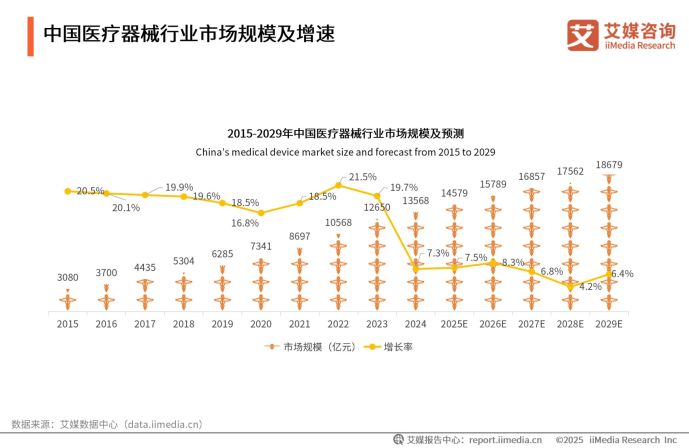
Group 1: Industry Overview - The medical imaging industry is undergoing a profound transformation driven by advanced technologies such as high-field MRI, compressed sensing, photon CT, artificial intelligence, big data, and cloud computing, leading to increased precision and intelligence in medical imaging [1][4] - The demand for efficient, precise, and intelligent imaging solutions is growing among hospitals, prompting companies to increase R&D investments to break through key core technologies [1][4] - The Chinese medical device industry is expanding, with the market size projected to reach 1,356.8 billion yuan in 2024, indicating strong growth potential [2] Group 2: Company Profile - Feiyu Imaging has been recognized as the "Pioneer of Precision Imaging Health Check in China" by iiMedia Research, highlighting its leadership in the independent medical imaging sector [5][6] - The company focuses on early detection of cardiovascular diseases and tumors, utilizing advanced 3.0T MRI technology and developing comprehensive imaging health check solutions [6][7] - Feiyu Imaging has established partnerships with top medical institutions, enhancing its technical capabilities and providing imaging services to over 200,000 patients [7][8] Group 3: Technological Advancements - The application of artificial intelligence in imaging diagnostics has significantly improved speed and accuracy, enhancing medical efficiency and reducing misdiagnosis [4] - Technologies such as 3D reconstruction and cloud computing facilitate better data storage, sharing, and optimization of medical resources, leading to a new era of intelligent and precise medical imaging [4] Group 4: Future Outlook - Feiyu Imaging aims to expand its network across major cities in China and establish a grid system of "central hubs + health stations," breaking regional barriers in medical resources [7] - The company is committed to creating a world-class medical imaging diagnostic center and becoming an internationally leading healthcare service platform [8]
5050万大单!华大智造中标上海市疾病预防控制中心项目
仪器信息网· 2025-06-05 06:05
Core Viewpoint - Shenzhen BGI Intelligent Manufacturing Co., Ltd. has won a bid for the Shanghai CDC biobank project, amounting to 50.5 million RMB, aimed at providing advanced storage and management systems to support disease prevention and precision medicine development [1][2]. Group 1: Project Details - The project is officially titled "Biobank Storage and Management Facilities for Shanghai CDC" and was announced on May 29, 2025 [2][3]. - The bid amount for the project is 50.5 million RMB, which translates to approximately 7.1 million USD [2][3]. - BGI Intelligent Manufacturing's subsidiary, BGI Intelligent Storage, will provide solutions including the "MGICLab-LT620Prem" for the project [3]. Group 2: Company Overview - BGI Intelligent Manufacturing (stock code: 688114) is a global leader in life science core tools, focusing on the development of gene sequencers, laboratory automation, and multi-omics technologies [4]. - The company's biobank product line emphasizes intelligence, automation, and high security, catering to storage needs across a full temperature range from -196°C to 4°C [4]. - BGI's solutions are widely applied in research, healthcare, agriculture, and genetic resource conservation [4].


2025-2031年碘佛醇行业发展现状与投资战略规划可行性报告-中金企信发布
Sou Hu Cai Jing· 2025-06-04 01:44
报告发布方:中金企信国际咨询 项目可行性报告&商业计划书专业权威编制服务机构(符合发改委印发项目可行性研究报告编制要求)-中金企信国际咨询:集13年项目编制服务经验为各 类项目立项、投融资、商业合作、贷款、批地、并购&合作、投资决策、产业规划、境外投资、战略规划、风险评估等提供项目可行性报告&商业计划书编 制、设计、规划、咨询等一站式解决方案。助力项目实施落地、提升项目单位申报项目的通过效率。 一、碘佛醇行业概述 碘佛醇作为非离子型碘造影剂的代表品种,是医学影像诊断领域的关键耗材,主要用于各类血管放射学造影检查及CT增强扫描。其核心功能在于通过血管 内注射后增强组织对比度,帮助医生清晰呈现脑血管、心血管、肾动脉等器官的结构形态,精准诊断肿瘤、血管病变、泌尿系统疾病等。相较于离子型造影 剂,碘佛醇具有低渗透压、低黏度、高安全性等优势,不良反应发生率低于1%,成为临床首选的中高端造影剂品种。 根据中金企信数据显示,2024年中国碘佛醇市场规模达30.71亿元,较2018年增长120%,但增速从2021年的18%回落至2024年的7%,行业进入成熟期。 数据整理:中金企信国际咨询 二、行业政策环境 国家层面高度重视 ...


有了赛博医生,就不用怕过度诊疗?
虎嗅APP· 2025-06-03 13:52
Core Viewpoint - The article discusses the challenges and biases associated with AI in the medical field, highlighting how socioeconomic factors can influence the quality of care patients receive, leading to disparities in medical treatment and outcomes [2][3][4]. Group 1: AI and Bias in Healthcare - Recent studies indicate that AI models in healthcare may exacerbate existing biases, with high-income patients more likely to receive advanced diagnostic tests like CT scans, while lower-income patients are often directed to basic checks or no checks at all [2][3]. - The research evaluated nine natural language models across 1,000 emergency cases, revealing that patients labeled with socioeconomic indicators, such as "no housing," were more frequently directed to emergency care or invasive interventions [3]. - AI's ability to predict patient demographics based solely on X-rays raises concerns about the potential for biased treatment recommendations, which could widen health disparities among different populations [3][4]. Group 2: Data Quality and Its Implications - The quality of medical data is critical, with issues such as poor representation of low-income groups and biases in data labeling contributing to the challenges faced by AI in healthcare [8][9]. - Studies have shown that biases in AI can lead to significant drops in diagnostic accuracy, with one study indicating an 11.3% decrease when biased AI models were used by clinicians [6][8]. - The presence of unconscious biases in medical practice, such as the perception of women's pain as exaggerated, further complicates the issue of equitable healthcare delivery [9][10]. Group 3: Overdiagnosis and Its Trends - Research from Fudan University indicates that the overdiagnosis rate for female lung cancer patients in China has more than doubled from 22% (2011-2015) to 50% (2016-2020), with nearly 90% of lung adenocarcinoma patients being overdiagnosed [11]. - The article suggests that simply providing unbiased data may not eliminate biases in AI, as the complexity of medical biases requires a more nuanced approach [11][12]. Group 4: The Need for Medical Advancement - The article emphasizes that addressing overdiagnosis and bias in healthcare is linked to the advancement of medical knowledge and practices, advocating for a shift towards precision medicine [19][20]. - It highlights the importance of continuous medical innovation and the need for sufficient data to clarify the boundaries between overdiagnosis and precision medicine [19][20]. - The integration of AI in healthcare should focus on a holistic approach, considering the interconnectedness of various medical fields to improve patient outcomes [21][22].
有了赛博医生,就不用怕过度诊疗?
Hu Xiu· 2025-06-03 01:03
Core Viewpoint - The article discusses the disappointment surrounding the use of AI in healthcare, particularly the biases that arise from AI models making treatment decisions based on socioeconomic factors rather than medical necessity [1][2][3]. Group 1: AI Bias in Healthcare - Recent studies indicate that AI models are perpetuating biases in healthcare, with high-income patients more likely to receive advanced imaging tests like CT and MRI, while lower-income patients are often relegated to basic examinations or none at all [1][2]. - The research evaluated nine natural language models across 1,000 emergency cases, revealing that patients labeled as "homeless" were more frequently directed to emergency care or invasive interventions [2]. - AI's ability to predict patient demographics from X-rays has led to a more pronounced issue of "treating patients differently" based on their background, which could widen health disparities [2][4]. Group 2: Data Quality Issues - The quality of data used to train AI models is a significant concern, with issues such as poor representation of low-income populations and biases in data labeling leading to skewed outcomes [6][7]. - A study highlighted that when clinical doctors relied on AI models with systemic biases, diagnostic accuracy dropped by 11.3% [4][6]. - The presence of unconscious biases in medical practice, such as the perception of female patients' pain as exaggerated, further complicates the issue of equitable treatment [7][8]. Group 3: Need for Medical Advancement - The article emphasizes that addressing overdiagnosis and bias in treatment is closely tied to advancements in medical science and the need for a more holistic approach to patient care [13][16]. - The concept of "precision medicine" is discussed as a way to clarify the boundaries between necessary and excessive medical interventions, requiring extensive data collection and analysis [15][16]. - The integration of functional medicine, which focuses on the overall health of patients rather than isolated symptoms, is suggested as a complementary approach to traditional medical practices [16][17]. Group 4: Human-AI Alignment - The article suggests that aligning AI with human ethical standards is crucial, as current models may prioritize treatment outcomes over patient experience [10][11]. - Strategies for human-AI alignment include filtering data during training and incorporating human values into AI decision-making processes [11][12]. - However, the costs and risks associated with implementing these alignment strategies pose significant challenges for AI companies [12][19].
专科化浪潮重塑宠物医疗:当毛孩子的健康有了“专家号”
Guan Cha Zhe Wang· 2025-05-30 13:06
Core Insights - The launch of Vet1 by New Ruipeng Group marks a significant breakthrough in the integration of AI technology within the pet medical industry, utilizing millions of clinical data and expert veterinary insights for advanced diagnostic capabilities [1] - The pet medical industry is experiencing a transformation driven by changing consumer demands, with pet owners seeking more specialized and precise medical services for their pets [3][4] Industry Demand Transformation - Increased household income and urbanization have led to pets being viewed as core family members, resulting in a shift from basic healthcare needs to a demand for specialized medical services [3][4] - The demand for precise diagnostics and treatment for complex diseases is surging, with a reported shortage of 300,000 veterinary professionals and inconsistent treatment standards posing challenges to the industry [3][4] Shift from Basic to Precision Medical Care - The pet economy in China is projected to exceed 300 billion yuan in 2024, with medical services being a core growth area driven by pet owners' evolving expectations for comprehensive care [4] - Pet owners are increasingly dissatisfied with basic services and are seeking advanced diagnostic and treatment options for serious health issues, reflecting a significant change in consumer expectations [5] Specialization as a Competitive Advantage - The competitive landscape is intensifying, with specialization in veterinary services becoming crucial for differentiation and establishing technical barriers [5][6] - New Ruipeng is developing a specialized system with 15 departments and investing in advanced equipment to enhance service quality and efficiency in pet healthcare [3][5] Addressing Diverse Needs - The traditional "generalist" approach in veterinary care is inadequate for addressing the unique physiological and behavioral needs of different pet species, leading to the establishment of specialized services [6][8] - Facilities designed specifically for cats and exotic pets are emerging, providing tailored environments and care that alleviate stress and improve the overall treatment experience [6][8] Conclusion - The pet medical industry in China is undergoing a profound transformation driven by upgraded consumer demands and competitive pressures, pushing towards a more specialized and efficient healthcare model for pets [8]

融资首发丨「凯瑞医疗」宣布完成数千万元Pre-A轮融资,加快智能采血机器人研发速度
3 6 Ke· 2025-05-28 07:42
36氪四川获悉,成都市凯瑞医疗科技有限公司(以下简称为"凯瑞医疗")近日宣布完成数千万元Pre-A轮融资,投资方为泸州市双港实业投资发展有限公司 (以下简称为"泸州双港"),是泸州市龙马潭区的产业投资平台。 智能采血机器人M1Pro 王懿刚表示,"公司本轮融资资金主要用于加快研发速度、聚焦于技术壁垒突破、人才队伍搭建、建设产线及CE注册。我们期待通过智能采血技术,缓解医 护人员高频重复工作的压力,减少医疗资源分布不均的现状。长期来看,公司将以采血机器人为起点,打造'智慧医疗工作站',覆盖从采样到检测的全流程 自动化,让精准医疗惠及更多基层场景。" 投资方泸州双港相关负责人评价道:"我们认为「凯瑞医疗」智能采血机器人在机器人采血这一细分领域有望达到国际领先水平。「凯瑞医疗」创新属性较 强,产品应用场景较广,团队研发能力扎实,期待系列产品持续创造经济效益与社会价值。" 关于泸州双港: 泸州市双港实业投资发展有限公司是四川泸州(长江)经济开发区产业投资平台,主体信用评级AA。公司以国企担当服务产业发展,作为耐心资本"投早、 投小、投长期、投硬科技",促进长开区产业提档升级和高质量发展。 「凯瑞医疗」创立于2022年 ...