双碳目标

Search documents
中电联预计今年太阳能发电装机规模首超煤电
第一财经· 2026-02-02 15:59
Core Viewpoint - By 2025, China's total electricity consumption is expected to exceed 10 trillion kilowatt-hours, marking a significant milestone in energy consumption and reflecting the country's ongoing green and low-carbon transition in the power supply sector [2][5]. Group 1: Electricity Consumption Growth - In 2025, China's total electricity consumption is projected to reach 10.37 trillion kilowatt-hours, with a year-on-year growth of 5.0%. During the 14th Five-Year Plan period, the average annual growth rate is expected to be 6.6%, an increase of 0.9 percentage points compared to the previous five-year period [5]. - Monthly electricity consumption is also set to break the 1 trillion kilowatt-hour mark for the first time, with July 2025 expected to see consumption reach 1.02 trillion kilowatt-hours, a global first [5]. - The second industry remains the main contributor to electricity consumption, with high-tech and equipment manufacturing expected to see a year-on-year growth of 6.4%, outpacing the average growth of the manufacturing sector by 3.0 percentage points [5][6]. Group 2: New Energy Sector Growth - The new energy sectors, including electric vehicles, lithium batteries, and solar cells, are showing remarkable growth in electricity consumption. The manufacturing of new energy vehicles continues to grow at double-digit rates each quarter [6]. - By 2025, the third industry is expected to consume 1.99 trillion kilowatt-hours, with a year-on-year growth of 8.2%, contributing 30.7% to the overall electricity consumption growth [6]. - Rapid growth in sectors such as charging services and information technology services is driving the increase in electricity consumption in the third industry, with respective growth rates of 48.8% and 17.0% [6]. Group 3: Power Supply Transition - By the end of 2025, the total installed power generation capacity in China is expected to reach 3.89 billion kilowatts, a year-on-year increase of 16.1% [10]. - Non-fossil energy power generation capacity is projected to reach 2.4 billion kilowatts, accounting for 61.7% of the total installed capacity, an increase of 3.5 percentage points from the previous year [10]. - Wind and solar power generation are expected to account for over 80% of the total new installed capacity, with a total of 5.5 billion kilowatts of new generation capacity added in 2025 [10][11]. Group 4: Market Development and Policy Recommendations - The establishment of a unified national electricity market is expected to be achieved by the end of 2025, with further development planned for 2026 [11]. - Recommendations include breaking down inter-provincial market barriers and promoting the integration of provincial and cross-regional markets to optimize electricity resource allocation nationwide [12]. - The report emphasizes the need for a robust electricity safety assurance mechanism and the optimization of capacity pricing compensation mechanisms for various energy sources [12].

今年中国电力供需预计总体平衡 新能源保持较大投产规模
Zhong Guo Xin Wen Wang· 2026-02-02 14:15
Core Insights - The report predicts that by 2026, the overall balance of electricity supply and demand in China will be achieved, with significant production capacity from renewable energy sources [1][2] - The report anticipates a stable growth in China's macro economy, which will drive a steady increase in electricity consumption [1] Electricity Demand and Supply - The total electricity consumption in China is expected to reach between 10.9 trillion and 11 trillion kilowatt-hours in 2026, representing a year-on-year growth of 5% to 6% [1] - The maximum electricity load for the year is projected to be between 1.57 billion and 1.63 billion kilowatts [1] - During peak summer periods, certain regions such as Southwest, Central China, and East China may experience tight electricity supply, but this can be mitigated through inter-provincial and inter-regional cooperation [2] Renewable Energy Development - By 2026, it is expected that over 400 million kilowatts of new power generation capacity will be added, with more than 300 million kilowatts coming from renewable sources [1] - The combined installed capacity of wind and solar energy is projected to account for about half of the total installed capacity, with solar power expected to surpass coal power for the first time [1] - By the end of 2026, the total installed power generation capacity in China is anticipated to reach approximately 4.3 billion kilowatts, with non-fossil energy sources accounting for 2.7 billion kilowatts, representing 63% of the total capacity [1] Historical Context and Future Projections - As of the end of 2025, the installed capacity of non-fossil energy sources is expected to be 2.4 billion kilowatts, a year-on-year increase of 23%, making up 61.7% of the total installed capacity [2] - The total installed capacity across all energy sources is projected to be 3.89 billion kilowatts by the end of 2025, reflecting a year-on-year growth of 16.1% [2] - The report indicates that during the "14th Five-Year Plan" period, the total installed capacity is expected to grow at an average annual rate of 12% [2] Contribution of Renewable Energy to Electricity Generation - In 2025, the total electricity generation from non-fossil energy sources is expected to reach 4.47 trillion kilowatt-hours, a year-on-year increase of 14.1%, accounting for 42.9% of total electricity generation [2] - The contribution of new electricity generation from wind, solar, and biomass sources is projected to constitute 97.1% of the total increase in electricity consumption [2]

风电光伏装机首超18亿千瓦,相当于约82个三峡电站
Bei Jing Ri Bao Ke Hu Duan· 2026-02-02 13:08
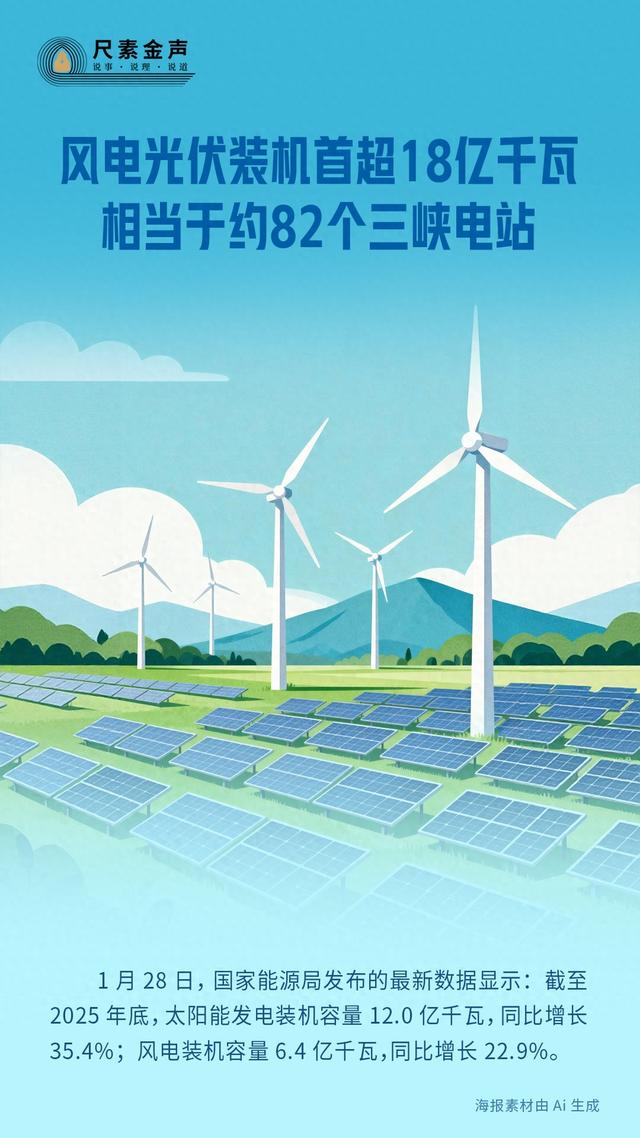
1月28日,国家能源局发布的最新数据显示:截至2025年底,太阳能发电装机容量12.0亿千瓦,同比增 长35.4%;风电装机容量6.4亿千瓦,同比增长22.9%。 这是我国风电光伏累计装机首次超过18亿千瓦、达到18.4亿千瓦,相当于约82个三峡电站总装机,占比 达47.3%。 纵向比,我国风电光伏从2020年底的5.3亿千瓦增加到2025年底的18.4亿千瓦,风电光伏累计装机连续跨 越13个亿级台阶,2025年历史性超过火电装机。通过坚持集中式与分布式、陆上与海上并举,风电光伏 发展速度更快、电量占比更高,当前平均度电成本已比煤电低三成左右。 横向看,我国风电光伏装机规模均连续10余年稳居全球第一,占全球风光总装机的近一半。我国通过技 术创新,近十年推动全球风光发电成本分别下降超过60%和80%,"十四五"期间出口的风光产品累计为 其他国家减少碳排放约41亿吨,全球贡献更大,领先优势进一步巩固。 风电光伏向新向优发展,既是推动能源转型的主力军、保障能源安全的新支点,也为经济社会发展注入 新动能。数据显示,2024年,我国包括风电光伏在内的可再生能源重点项目完成投资额,占电源投资比 重超过80%。 "风光"产 ...
中电联预计今年太阳能发电装机规模首超煤电
Di Yi Cai Jing· 2026-02-02 13:00
Core Insights - In 2025, China's total electricity consumption is projected to exceed 10 trillion kilowatt-hours for the first time, reaching 10.37 trillion kilowatt-hours, with a year-on-year growth of 5.0% [2] - The report indicates that the electricity supply will continue to transition towards green and low-carbon sources, with a balanced supply and demand overall [1][4] Electricity Consumption Growth - The average annual growth rate of total electricity consumption during the 14th Five-Year Plan period is expected to be 6.6%, an increase of 0.9 percentage points compared to the 13th Five-Year Plan [2] - By July 2025, the monthly electricity consumption is expected to surpass 1 trillion kilowatt-hours, marking a global first [2] Sector Contributions - The secondary industry remains the primary contributor to electricity consumption, with high-tech and equipment manufacturing sectors showing a significant increase in electricity usage, growing by 6.4% year-on-year, which is 3.0 percentage points higher than the average growth of the manufacturing sector [2][3] - The third industry is projected to consume 1.99 trillion kilowatt-hours in 2025, with an 8.2% year-on-year growth, contributing 30.7% to the overall electricity consumption growth [3] Renewable Energy Expansion - By the end of 2025, the installed capacity of renewable energy sources is expected to account for 61.7% of the total installed capacity, with a significant increase in solar and wind power installations [5][6] - The report anticipates that by 2026, the installed capacity of solar power will surpass that of coal power, with renewable energy sources expected to contribute over 80% of the new installed capacity [6] Electricity Market Development - By the end of 2025, the initial establishment of a unified national electricity market is expected to be achieved, facilitating better resource allocation across regions [7] - The report emphasizes the need for continued development of the unified electricity market, including breaking down inter-provincial barriers and enhancing market operations [7][8]

订单已排到2027年!中国变压器缘何成为全球“新石油”?
Xin Lang Cai Jing· 2026-02-02 12:27
Core Insights - The transformer manufacturing industry in China is experiencing high demand, with production lines operating at full capacity and orders extending to 2027, driven by accelerated domestic power grid construction, energy structure transformation, and global digital economy expansion [1][4][8] Domestic Market Dynamics - During the transition from the 14th to the 15th Five-Year Plan, the investment scale in the power grid is set to reach 4 trillion yuan, a 40% increase compared to the previous plan, indicating a new round of expansion and upgrade in power grid construction [5] - By 2025, China's total electricity consumption is projected to exceed 10 trillion kilowatt-hours, reaching 10.4 trillion kilowatt-hours, providing a solid foundation for the transformer industry [5] Technological Advancements - The national transformer technology conference emphasizes the need for the large-scale application of environmentally friendly products, such as amorphous alloy transformers and natural ester insulated oil transformers, to promote green transformation in the industry [6] - The integration of advanced sensors and artificial intelligence algorithms aims to shift from passive maintenance to proactive warning systems in transformers, aligning with both domestic and international market demands for efficient and reliable power equipment [6] Export Growth - Since 2021, China's transformer exports have maintained high growth, with a projected total export value of 64.6 billion yuan in 2025, marking a significant increase of approximately 36% compared to 2024 [7] - Export growth is particularly strong in the Asian market, with a year-on-year increase of 65.39%, while exports to Europe have surged by over 138%, becoming a key driver of overall growth [7] Industry Outlook - The transformer industry is expected to face diverse and higher-quality market demands in the context of dual carbon goals and the reshaping of the international energy landscape [8] - Continuous focus on technological innovation, green intelligence, and international operations is essential for the industry to transition from a manufacturing powerhouse to a stronghold of intelligent manufacturing [8]
“能源绿色低碳转型”看山东之泰开直流:打造“源-网-荷-储”一体化智慧能源示范样板
Zhong Guo Fa Zhan Wang· 2026-02-02 11:39
Core Viewpoint - Taikai Direct Current Technology Co., Ltd. focuses on the development of flexible direct current core equipment and aims to create an integrated smart energy demonstration model, promoting green electricity and innovation in energy solutions [1][3]. Group 1: Company Overview - Taikai Direct Current is a wholly-owned subsidiary of Taikai Group, located at the foot of Mount Tai, with a registered capital of 100 million yuan [1]. - The company specializes in flexible direct current technology, providing solutions for flexible microgrids and virtual power plants [1]. Group 2: Achievements and Recognition - The "Taikai Green Low-Carbon Flexible Microgrid Project" won first prize in the provincial low-carbon smart energy demonstration project innovation competition [2]. - Taikai Direct Current has developed a complete product system covering flexible direct current switches, energy conversion, and large-scale renewable energy integration [3]. Group 3: Product Development and Applications - The company has successfully developed core equipment such as DC/DC MPPT and large-capacity direct current transformers, achieving international leading standards [3]. - Products have been applied in several national key demonstration projects, including the State Grid Zhangbei 500kV DC grid demonstration project and the Southern Grid Zhuhai "Internet+" smart energy demonstration project [3]. Group 4: Collaborative Research - Taikai Direct Current collaborates with prestigious institutions like Tsinghua University and the Chinese Academy of Sciences to advance research in direct current systems [4]. Group 5: Innovative Projects - The company has established a leading "Hybrid Direct Current Green Low-Carbon Microgrid Demonstration Project," showcasing its capabilities in flexible direct current and energy routing [5]. - The project integrates various energy sources and technologies, including a 10.5 MWp distributed photovoltaic power station and a 2.48 MWh lithium iron phosphate energy storage system [5][6]. Group 6: Energy Efficiency and Sustainability - The microgrid project has increased the photovoltaic self-use rate from 50% to over 90%, resulting in an annual reduction of 9,295 tons of carbon emissions [7]. - The system's energy efficiency has improved by over 10%, achieving near-zero carbon emissions in building operations [6][9]. Group 7: Advanced Energy Management Systems - The park has implemented a comprehensive energy management system (EMS) that integrates IoT, big data, and AI technologies for efficient energy monitoring and management [12]. - The virtual power plant (VPP) platform aggregates distributed resources, enhancing resource management and enabling users to actively participate in energy markets [13]. Group 8: Future Goals - The company aims to contribute to the realization of the "dual carbon" goals and the construction of a new power system through innovative technologies and high-quality products [14].
“能源绿色低碳转型”看山东之华能泰山新能源:推动绿色能源替代,助力“双碳”目标实现
Zhong Guo Fa Zhan Wang· 2026-02-02 09:35
华能泰山新能源有限公司隶属于华能集团,是华能泰山电力有限公司全资子公司,成立于2019年6月, 公司主要以投资开发新能源项目及相关配套产业为主,截至目前已累计开发新泰西张庄、翟镇20万千瓦 农光互补项目及部分工商业分布式项目,总投资近10亿元,目前在运光伏电站7个,总装机容量约24.16 万千瓦。基于当前的政策和市场环境,公司深刻认识到,单纯依赖光伏装机规模扩张的传统模式已难以 为继,开发电力调节装置、提升电力消纳能力,多举措确保项目收益稳定,是企业应对市场化改革、实 现可持续发展的必然选择。 目前,光伏电站直流侧电池储能技术已完成了首台样机的开发与现场测试,测试结果显示技术方案可 行,实现了光伏发电输出交流功率的灵活可调且稳定,不受太阳辐射变化的影响。光伏电站直流侧电池 储能,可实现光伏交流出力像火电出力一样可控可调,且调节性能优于火电,从根本上解决光伏出力的 波动性、间歇性的问题,是电网友好型的技术。 扎实推进独立储能项目的申报,助力区域新型电力系统构建。目前,公司新泰400MW/800MWh独立储 能示范项目已成功入库,正在开展项目投资建设准备工作。项目投运后,除参与电力现货市场峰谷套利 外,将积极拓展 ...
“能源绿色低碳转型”看山东之华电泰安片区:“风、光、储”并举规模化发展清洁能源
Zhong Guo Fa Zhan Wang· 2026-02-02 09:29
Core Viewpoint - China Huadian Group has been actively developing and operating renewable energy projects in Tai'an since 2014, aligning with the "dual carbon" goals and local development needs, achieving a total installed capacity of 471.7 MW in wind and solar energy projects [1] Group 1: Renewable Energy Development - The Tai'an area has seen the establishment of Huadian Shandong New Energy Co., which focuses on resource integration for renewable energy projects, enhancing safety and operational management [1] - As of now, the Tai'an area has generated a total of 2.9 billion kWh of electricity, replacing approximately 850,000 tons of standard coal and reducing carbon dioxide emissions by about 2 million tons [1] Group 2: Resource Optimization - The limited resources in densely populated areas like Tai'an and Feicheng have posed challenges for large-scale renewable energy development, prompting Huadian to optimize designs and expand a planned 100 MW wind farm to 150 MW, resulting in an additional annual generation of 90 million kWh [2] - The expansion of the wind farm has lowered overall costs and set a benchmark for wind energy development while improving operational economic efficiency [2] Group 3: Integration with Ecological Restoration - A project combining renewable energy with ecological restoration has been initiated in a coal subsidence area, featuring a 200 MW solar project that integrates agricultural development with renewable energy, including various forms of complementary agriculture [3] - The project has seen an investment of over 66 million yuan, establishing efficient agricultural planting areas and multi-layered livestock breeding zones, and has generated a cumulative electricity output of 440 million kWh since its commissioning [3] Group 4: Expansion of Renewable Resources - Huadian is actively expanding its renewable energy resources through initiatives like the "Muguang Action" and "Yufeng Action," focusing on household solar photovoltaic development and integrating energy sources, networks, loads, and storage [3] - The company is also prioritizing the development of integrated projects in idle land and industrial buildings in coal subsidence areas, including the construction and operation of a solar-storage integrated project [3]

崔东树:电动车储能推动分时电价调整 重构新型电力系统机制
智通财经网· 2026-02-02 09:20
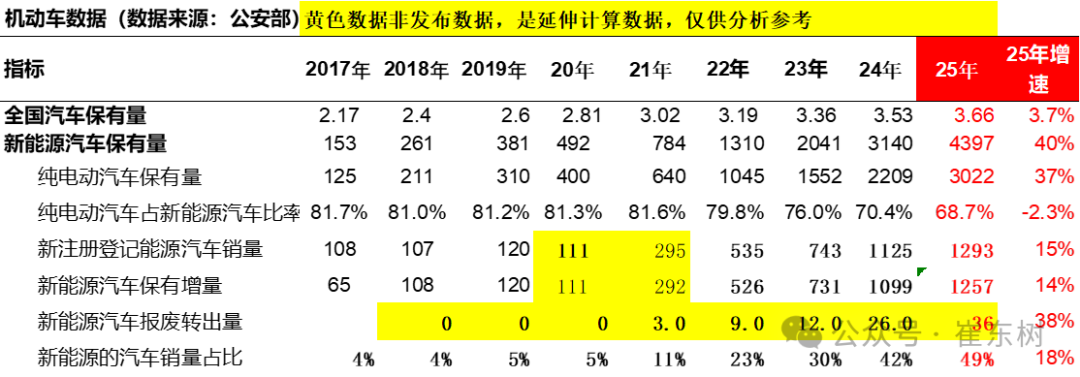
Core Insights - The development of China's new energy vehicles (NEVs) is significantly enhancing the energy ecosystem, with a current ownership of 43.97 million electric vehicles and a battery storage potential of 2000 GWh, contributing to the stability of the power grid [1][5] - The transition to dynamic pricing for time-of-use electricity is driven by the increasing value of energy storage from electric vehicles, which is expected to facilitate the construction of a new power system and support carbon neutrality goals [1][2] Time-of-Use Pricing Policy Adjustment - The National Development and Reform Commission and the Energy Administration will implement a market-based dynamic pricing model for commercial charging stations starting March 2026, while optimizing residential time-of-use pricing [2] - This shift aims to provide price support for the energy storage value of electric vehicles, moving from a fixed pricing model to a more responsive and market-oriented pricing mechanism [2] Rapid Growth of Electric Vehicle Ownership - As of 2025, the total number of NEVs in China is projected to reach 43.97 million, accounting for 12.01% of all vehicles, with pure electric vehicles making up 68.74% of this total [3] - The annual growth rate of new registrations for NEVs is expected to be 14.93%, indicating a robust market expansion [3] Energy Storage Effects of Electric Vehicles - The large-scale deployment of electric vehicles is transforming them into a significant flexible resource for the power grid, capable of participating in load regulation and energy storage [4][6] - The potential for electric vehicles to provide grid support during peak times and absorb excess energy during off-peak times is becoming increasingly evident, enhancing the overall efficiency of the power system [5][6] Charging Infrastructure Development - The number of public charging stations is expected to reach 4.72 million by December 2025, with significant year-on-year growth, which is crucial for the practical implementation of time-of-use pricing [7][8] - The widespread installation of charging infrastructure is enhancing the ability to manage load and respond to market signals, facilitating the transition to a more dynamic pricing model [8]
500MW/2GWh!中国绿发新疆首个储能项目成功并网
中关村储能产业技术联盟· 2026-02-02 08:51
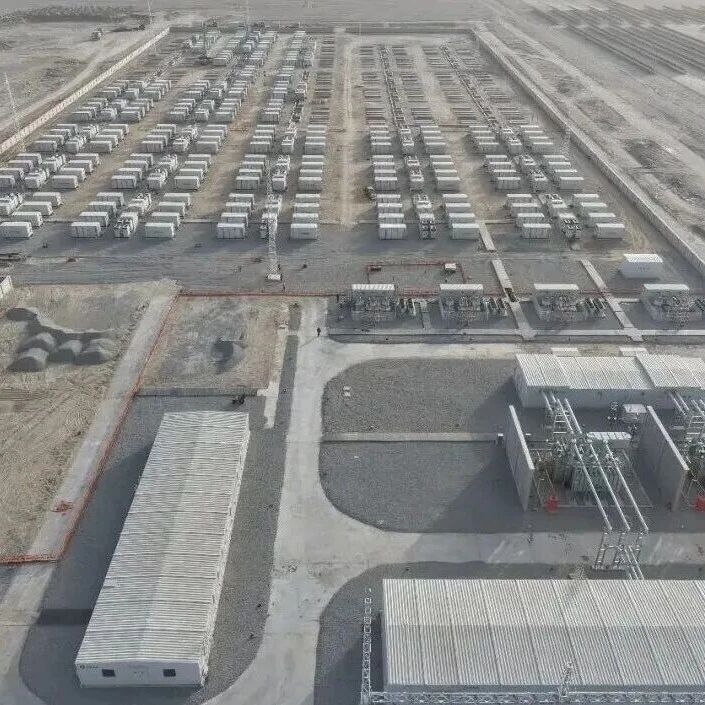
Core Viewpoint - The successful integration of the first device in the Xinjiang Green Power's 500,000 kW/200 MWh energy storage project marks a significant step in China's energy storage layout in Xinjiang, providing crucial support for the energy storage system in southern Xinjiang [2][4]. Group 1: Project Overview - The Xinjiang Green Power's energy storage project is located in Ruoqiang County, Bayingolin Mongol Autonomous Prefecture, approximately 18.3 kilometers from the county seat, covering an area of 141.88 acres [4]. - The project includes the construction of a 220 kV energy storage booster station and a new 1.429-kilometer transmission line connecting to the 220 kV Ruoqiang South photovoltaic gathering station [4]. - This project is the first energy storage initiative by Xinjiang Green Power and is a key component of the region's new energy storage engineering efforts, aligning with China's dual carbon goals and supporting high-quality energy development in southern Xinjiang [4]. Group 2: Project Benefits - Upon operation, the project will create a synergistic effect with photovoltaic projects, serving as a "super battery" to provide three integrated services: peak shaving, frequency modulation, and backup capacity, significantly enhancing the flexibility and operational stability of the southern Xinjiang power grid [4]. - The project aims to greatly improve the absorption capacity of renewable energy sources, such as solar power, in the region [4]. Group 3: Industry Events - Xinjiang Green Power has confirmed participation in the 14th International Energy Storage Summit and Exhibition (ESIE 2026), inviting industry peers to join the global energy storage industry event [5]. - The event is scheduled to take place from March 31 to April 3, 2026, at the Capital International Exhibition Center in Beijing [5].