
太空算力

Search documents
本轮商业航天概念爆发的底层逻辑是什么
2026-01-07 03:05
本轮商业航天概念爆发的底层逻辑是什么?20260106 摘要 中国商业航天受益于政策规划明晰和关键技术突破,如液体可重复发射 火箭技术,降低发射成本,提升竞争力。下游卫星互联网建设预期推动 市场需求,相关公司股价活跃,反映资金关注。 SpaceX 通过 Falcon 9 等可重复使用火箭实现成本优势,单次发射成本 仅 1,500 万美元,毛利率高达 68%,对传统军工企业形成降维打击。 中国商业航天可借鉴其发展路径,积极推进液体可重复发射火箭技术。 Starlink 已发射 1 万颗卫星,覆盖全球大部分地区,拥有 900 万用户, 2025 年收入预计达 120-130 亿美元。中国积极布局低轨通信卫星市场, 如"星网"和"原信",预计 2029 年将达 2000-3,000 颗。 美国政府通过立法、技术转让、人才输送和设施共享等方式扶持 SpaceX。中国也在加强政策支持,如将商业航天提升至与新能源汽车 同等地位,成立国家级监管机构,并出台行动计划。 国家重视商业航天源于卫星通信的巨大价值和海外进度超预期。低轨道 通信卫星提供高信息载量和低延迟,适合手机直连上网,但轨道资源有 限,各国加速推进卫星互联网组网 ...
东吴证券:太空光伏有望迎来高速发展 投资聚焦高效钙钛矿与叠层技术
智通财经网· 2026-01-07 02:25
Core Insights - The report from Dongwu Securities highlights the rapid development of commercial aerospace and low Earth orbit (LEO) satellites, indicating that space photovoltaic power supply is optimal and may experience rapid growth, supported by efficient perovskite/silicon tandem technology [1] Group 1: Commercial Aerospace Development - The maturity of reusable rocket technology has significantly reduced launch costs, breaking down economic barriers to entering space. The scarcity of satellite frequency resources is driving countries to accelerate the acquisition of strategic resources, leading to a sustained increase in global spacecraft launches. The number of global spacecraft launches has grown from 237 in 2016 to over 4,300 by 2025, with a CAGR of 34% and an increase of over 50% year-on-year in 2025 [2] Group 2: Photovoltaic Energy in Satellites - Photovoltaics are the only efficient and stable energy source for satellites, with solar wings accounting for approximately 20-30% of the satellite manufacturing cost. Solar wings are critical for spacecraft operation, representing over 60% of the value, with current mainstream gallium arsenide costing around 200,000 to 300,000 per square meter. As the power requirements of satellites increase, the area of solar wings is expected to grow significantly, with SpaceX's Starlink V3 satellite solar wing area increasing by over 10 times compared to earlier versions [3] Group 3: Technology Optimization - Gallium arsenide is the mainstream technology in China, known for its high efficiency and radiation resistance, with component efficiency exceeding 30%. However, its high cost (200,000 to 400,000 yuan per square meter) may limit large-scale satellite constellation deployment. In contrast, foreign companies like SpaceX have lower launch costs, and while silicon can offer lower weight-to-cost ratios, the lower-cost P-type silicon route may be preferred for single satellite costs. Perovskite batteries show promise in terms of lightweight, high energy-to-weight ratio, low cost, and stability, potentially becoming a superior solution for space power supply [4] Group 4: Market Potential and Investment Recommendations - The global deployment of low Earth orbit satellites is entering an explosive phase, with over 100,000 satellites registered globally by the end of 2025. The U.S. leads with approximately 42,000 satellites through Starlink, while China has submitted plans for over 51,000 satellites. Assuming an annual launch of 10,000 satellites, the solar wing market could reach nearly 200 billion. The surge in AI computing demand is pushing computational power to space, leveraging the advantages of solar energy and thermal conditions in near-Earth orbit. If a 10GW space computing system is established, the solar wing market could reach several trillion yuan. Investment recommendations include JunDa Co. (collaborating with Shangyi on satellite perovskite), Mingyang Smart Energy (subsidiary focusing on perovskite and HJT technology), and others in the HJT/perovskite battery sector [5]

东吴证券:商业航天+低轨卫星加速发展 太空光伏前景广阔
智通财经网· 2026-01-06 22:37
智通财经APP获悉,东吴证券发布研报称,商业航天+低轨卫星加速发展背景下,太空光伏供能最优, 或有望迎来高速发展。载荷升级推动太阳翼用量扩张,大面积、高效率的太阳翼将成商业航天竞备的关 键。低轨卫星锤炼技术+太空算力需求潜力大,太空光伏前景广阔。若后续构建10 GW太空算力系统, 太阳翼市场规模或达数万亿元。钙钛矿电池在轻量化与高能质比、低成本、稳定性等方面具备优势,潜 力十足、有望成为太空供电更优方案。 东吴证券主要观点如下: 科技竞争前沿,商业航天冉冉升起。随着可回收火箭技术的成熟,航天发射成本大幅下降,逐步打破进 入太空的经济壁垒。卫星频轨资源的稀缺性推动各国加速抢占战略资源,全球航天器发射量持续高增。 近10年来全球航天器发射数自2016年237颗增长至2025年超4300颗,CAGR达34%;25年同增超50%。全 球卫星在轨工作数已超万颗,备案数量超10万颗,后续发射数有望进一步井喷。 光伏是卫星唯一高效、长期稳定的能源形式,随功耗增长太阳翼用量提升。卫星电源系统在整星制造成 本中约20-30%,其中太阳翼是航天器在轨运行的能量心脏,材料特殊、可靠性要求极高,约占60%+价 值量,当前主流砷化镓对 ...
商业航天板块涨势不减 产业爆发拐点将至
Shang Hai Zheng Quan Bao· 2026-01-06 17:56
Core Viewpoint - The commercial aerospace sector in China is experiencing a significant surge due to favorable government policies, technological advancements, and market dynamics, indicating a potential turning point for the industry [2][4]. Group 1: Government Initiatives and Strategic Planning - The National Space Administration has established a commercial aerospace department and released the "Action Plan for Promoting High-Quality and Safe Development of Commercial Aerospace (2025-2027)" [2]. - The "14th Five-Year Plan" identifies aerospace as a strategic emerging industry cluster, emphasizing the importance of low-cost, large-scale commercial aerospace for global space competition [2][3]. Group 2: Technological Developments - China is planning to launch thousands of satellites as part of the "Thousand Sails Constellation" and "National Network Constellation (GW Constellation)," with launches starting in 2024 and increasing in frequency by 2025 [3]. - The development and testing of reusable rockets are progressing, which could significantly reduce launch costs and enable high-frequency launches [3]. Group 3: Market Dynamics and Capital Support - The A-share market for commercial aerospace and satellite internet has seen a resurgence, with leading stocks like China Satellite and China Satcom experiencing substantial gains of over 165% and 109%, respectively, from late November 2025 to early January 2026 [2]. - The introduction of IPO guidelines for commercial rocket companies on the Sci-Tech Innovation Board is expected to facilitate capital inflow and resource optimization within the industry [4]. Group 4: Commercialization Potential - The global commercial aerospace leader, SpaceX, serves as a model for creating a commercial ecosystem, with its upcoming IPO anticipated to be the largest in history [4]. - The concept of "space computing" is emerging as a new path for achieving a commercial closed loop in China's aerospace sector, with projected operational costs significantly lower than terrestrial computing [5]. Group 5: Future Growth and Investment Opportunities - The commercial aerospace sector is expected to be recognized as a "new growth engine" in government reports, highlighting its importance in the economy [5]. - Analysts suggest that private commercial aerospace companies in China may experience explosive growth in 2026, with a focus on key suppliers across the industry chain, including satellite assembly and core component suppliers [5].

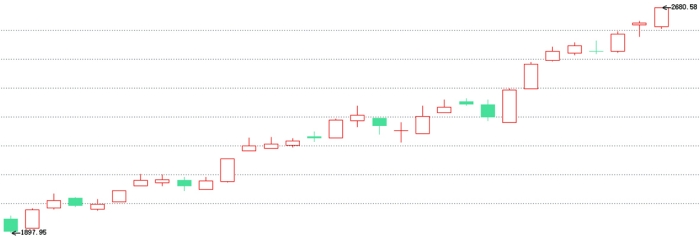
太空光伏:地外可靠能源,前景星辰大海
Soochow Securities· 2026-01-06 15:02
证券研究报告·行业研究·电力设备与新能源行业 太空光伏:地外可靠能源,前景星辰大海 电新首席证券分析师 :曾朵红 执业证书编号:S0600516080001 联系邮箱:zengdh@dwzq.com.cn 证券分析师:郭亚男 执业证书:S0600523070003 guoyn@dwzq.com.cn 目录 证券分析师:徐铖嵘 执业证书:S0600524080007 xucr@dwzq.com.cn 2026年1月6日 请务必阅读正文之后的免责声明部分 1 摘要 2 ◆ 科技竞争前沿,商业航天冉冉升起。随着可回收火箭技术的成熟,航天发射成本大幅下降,逐步打破进入太空的经济壁垒。卫 星频轨资源的稀缺性推动各国加速抢占战略资源,全球航天器发射量持续高增。近10年来全球航天器发射数自2016年237颗增 长至2025年超4300颗,CAGR达34%;25年同增超50%。全球卫星在轨工作数已超万颗,备案数量超10万颗,后续发射数有 望进一步井喷。 ◆ 光伏是卫星唯一高效、长期稳定的能源形式,随功耗增长太阳翼用量提升。卫星电源系统在整星制造成本中约20-30%,其中太 阳翼是航天器在轨运行的能量心脏,材料特殊、可靠性要求 ...
卫星概念股午后拉升,卫星相关ETF大涨逾5%
Mei Ri Jing Ji Xin Wen· 2026-01-06 06:28
| 代码 类型 名称 | 现价 | 涨跌 涨跌幅 ▼ | | | --- | --- | --- | --- | | 563790 主 卫星ETF胴华 | 1.192 | 0.073 6.52% | | | 512630 - 主 - 卫星ETF广发 | 1.577 | 0.086 | 5.77% | | 563530 主 卫星ETF易方达 | 1.569 | 0.085 | 5.73% | | 563230 主 卫星ETF | 1.576 | 0.083 | 5.56% | | 159218 主 卫星产业ETF | 1.918 | 0.098 5.38% | | 有券商表示,随着发射成本下降与在轨算力提升,未来太空算力有望形成"多发多省"格局,随着技术迭代与配套完善,太空算力和 其他新兴应用有望推动商业航天迎来具备规模化商业价值的产业变革。 (文章来源:每日经济新闻) 卫星概念股午后拉升,华测导航涨超13%,中国卫通、北斗星通、北方导航涨停。 受盘面影响,卫星相关ETF大涨逾5%。 ...



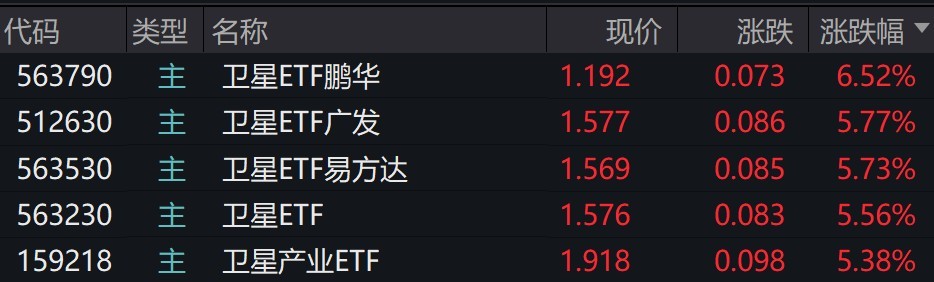
商业航天概念多股涨停,卫星ETF鹏华(563790)大涨超6%
2 1 Shi Ji Jing Ji Bao Dao· 2026-01-06 06:12
1月6日午后,商业航天概念再度拉升,中国卫通6天4板,金风科技走出7天3板,双双创历史新高。 商业航天领域近期迎来多重利好催化。从蓝箭航天IPO、到低轨卫星发射加速,以及太空算力概念火 热,二级市场热度不减,多家机构也纷纷发布研报关注商业航天行业进展。 卫星ETF鹏华(563790.SH)紧密跟踪中证卫星产业指数(931594.CSI),中证卫星产业指数选取50只业务涉 及卫星制造、卫星发射、卫星通信、卫星导航、卫星遥感等领域的上市公司证券作为指数样本,反映卫 星产业上市公司证券的整体表现。 (文章来源:21世纪经济报道) 有机构指出,2026年国内商业航天有望迎来"政策+技术+资本"三重共振,国内将有多款可重复使用中 大型运载火箭计划首飞发射,商业火箭企业IPO有望按下加速键。 也有机构认为,商业航天受政策驱动蓬勃发展,行业周期正处于商业化关键拐点,有望成为下一个万亿 级战略新兴赛道。 相关ETF中,卫星ETF鹏华(563790)昨日上市首日收涨2.94%,今日继续上涨,截至发稿涨6.26%,成交 额为8242.07万元,实时折价率为0.3%。成分股中,北斗星通、北方导航、中国卫通等多股涨停。 ...
太空光伏梦想将照进现实!钙钛矿能否突围
Mei Ri Jing Ji Xin Wen· 2026-01-05 23:27
Core Viewpoint - The concept of space photovoltaic (PV) is gaining traction, with significant potential for energy generation in space, driven by advancements in technology and the growing demand for energy from satellite networks [2][3]. Group 1: Space Photovoltaic Potential - Space PV can generate 7 to 10 times more energy than ground-based systems due to its ability to operate without the limitations of weather and time of day [2]. - The construction of low Earth orbit (LEO) satellite constellations in China is expected to unlock substantial market potential for space PV, with over 50,000 satellites planned across various applications [3]. Group 2: Technical Advantages - Space PV systems require energy storage, but their energy generation is more stable compared to ground systems, which need to account for weather variability [3]. - The efficiency of solar panels in space is significantly higher, with estimates suggesting that a single satellite could require 1 to 2 kW of power, leading to a demand of several megawatts for large constellations [4]. Group 3: Material Innovations - Current space PV technologies include gallium arsenide and silicon, with perovskite being identified as a promising future technology due to its high efficiency and lower cost [6][7]. - Perovskite solar cells have shown laboratory efficiencies nearing 35% and are lightweight and flexible, making them suitable for space applications [8]. Group 4: Market Dynamics - The cost of satellite launches is a critical factor for the viability of space PV, with the need for reduced launch costs to make large-scale deployment feasible [8]. - The development of space data centers is expected to drive exponential demand for space PV, as these centers require substantial energy for operations [4][5].
商业航天板块概览
2026-01-05 15:42
Summary of Key Points from the Conference Call on Commercial Aerospace Sector Industry Overview - The commercial aerospace sector in China is rapidly advancing, with private companies exploring low-cost reusable rocket technologies. Despite initial failures in trials, companies like Antarctic Aerospace and New Power are preparing for IPOs to seize market opportunities [1][2] - China Knowledge Network plans to launch approximately 1,200 satellites by 2029, necessitating accelerated development in commercial aerospace [1][2] Core Insights and Arguments - Reusable rocket technology, particularly the recovery of first-stage rockets, can significantly reduce launch costs, with various recovery methods being explored, including legged recovery, chopstick fixtures, and net recovery [1][4] - Learning from SpaceX's experience, Chinese commercial aerospace must focus on engineering validation through continuous testing and improvement of reusable rocket technology [1][5] - The Chinese government needs to increase R&D investment in private enterprises, expedite engineering validation, enhance international cooperation, and establish comprehensive laws and regulations to ensure healthy industry development and close the gap with international leaders [1][8] Innovations and Developments - China has innovated in offshore rocket recovery by employing a net recovery method, which captures rockets using an intercepting net, thus avoiding the risks associated with vertical landings. A dedicated vessel for this method is set for its first test in January 2025 [1][9] - The recent progress in electronic launch technology, with a project awarded to Lianchuang Optoelectronics for high-temperature superconducting components, is expected to be completed by 2028, positioning China ahead of the U.S. in this field [3][12] Financial and Market Dynamics - The cost structure of commercial launches indicates that first-stage rockets account for 60% to 70% of total costs. Successful recovery could reduce overall costs to about 30% of the original [4][15] - The recent capital increase of 396 million yuan in China Aerospace Technology Group's commercial rocket company signifies the state’s formal entry into the commercial aerospace sector, which may facilitate future IPO opportunities and resource integration [3][17] Competitive Landscape - The commercial aerospace sector is characterized by a mix of military and civilian projects, with military aerospace focusing on satellite systems and commercial aerospace relying on private enterprises for development and launch services [1][18] - Major companies in the commercial aerospace sector include Antarctic Aerospace, New Power, and Blue Arrow Space, which are advancing various low-cost, reusable rocket technologies [1][6][28] Future Outlook - The commercial aerospace sector is expected to attract significant capital investment, with projections indicating that the total market value could reach 2 trillion yuan in the next five years, with half attributed to state-owned enterprises and the remainder to private firms [1][34] - The industry is poised for growth as technological advancements and increasing market demand drive further investment and innovation [1][32][34]
太空光伏梦想将照进现实!马斯克站台、两光伏大佬看好 钙钛矿能否借机突围?
Mei Ri Jing Ji Xin Wen· 2026-01-05 14:49
Core Viewpoint - The concept of space photovoltaic (PV) is gaining traction, with significant potential for energy generation in space, driven by advancements in technology and the growing demand for energy from satellite networks [1][2]. Group 1: Space Photovoltaic Potential - Space PV can generate 7 to 10 times more energy than terrestrial PV due to the absence of atmospheric interference and consistent sunlight exposure [1]. - The establishment of large-scale space PV systems is being proposed, with Elon Musk's plan to deploy 100GW annually, highlighting the increasing interest in this sector [1][2]. - The construction of low Earth orbit satellite constellations in China is expected to unlock substantial market potential for space PV, with over 50,000 satellites planned across various applications [2]. Group 2: Advantages Over Terrestrial PV - Space PV offers more stable energy generation compared to terrestrial PV, which is affected by weather and time of day, thus requiring extensive energy storage solutions [2]. - The energy storage needs for space PV are more predictable, as satellites orbit the Earth every few minutes, allowing for consistent energy capture [2]. Group 3: Technological Developments - Current space PV technologies include gallium arsenide and silicon, with perovskite solar cells emerging as a promising alternative due to their high efficiency and lower cost [5][6]. - Perovskite cells are expected to dominate the market in the long term due to their superior performance characteristics, including high power-to-weight ratios and resistance to radiation [5][6]. Group 4: Investment and Development Plans - Domestic plans include the establishment of a space data center in Beijing, aiming for a gigawatt-level system by 2027, with phased development to enhance computational capabilities [4]. - Internationally, Musk's vision for a space AI computing center aims to deploy solar-powered satellites with capacities ranging from 100GW to 500GW [4]. Group 5: Challenges and Considerations - The high costs associated with satellite launches and the need for advanced materials that can withstand extreme conditions in space pose significant challenges for the commercialization of space PV [6]. - The successful implementation of space PV will depend on reducing launch costs and developing new battery technologies that can endure the harsh space environment [6].