
民生保障

Search documents
“大国财政”系列之四:财政“下半场”,可能的“后手”?
Shenwan Hongyuan Securities· 2025-09-17 06:42
Group 1: Economic Support and Fiscal Performance - In the first half of 2025, broad fiscal expenditure growth reached 8.9%, significantly higher than the nominal GDP growth of 4.3% and the average annual growth of 1-3% since 2022[1] - By June 2025, the broad fiscal revenue and expenditure gap was -5.3 trillion yuan, the highest for the same period historically, indicating strong support from government bonds and special bonds[1] - Social security and employment expenditures increased by 9.2% year-on-year, while scientific and technological expenditures rose by 9.1%, reflecting a focus on industry upgrades and consumer welfare[2] Group 2: Future Fiscal Strategies and Challenges - If economic pressure increases in the second half of 2025, there may be a need for fiscal stimulus, especially to meet the annual GDP growth target of around 5%[3] - The broad fiscal revenue and expenditure gap in July was -5.6 trillion yuan, indicating a slight increase of only 0.4 trillion yuan from June, suggesting a potential slowdown in fiscal support[3] - The issuance of new government debt is nearing its limit, which may hinder the ability to maintain high growth rates in fiscal expenditure moving forward[3] Group 3: Key Areas of Fiscal Support - The fiscal policy is increasingly focused on risk prevention, transformation promotion, and consumer protection, with significant attention on resolving hidden debt issues[5] - The government has allocated approximately 900 billion yuan for child-rearing subsidies, with central government covering about 90% of this amount[5] - Emerging industries such as marine economy, artificial intelligence, and commercial aerospace are identified as key areas for future policy support[5]
国家财政这五年:“钱袋子”增收约19%,财政民生投入近100万亿元
Hua Xia Shi Bao· 2025-09-14 10:56
Core Insights - The financial situation in China has improved significantly over the past five years, with public budget revenue expected to reach 106 trillion yuan, an increase of 17 trillion yuan or approximately 19% compared to the previous five-year plan [1] - Public budget expenditure is also at an unprecedented level, projected to exceed 136 trillion yuan, an increase of 26 trillion yuan or 24% from the previous period [1] Fiscal Policy and Economic Impact - Fiscal policy has become a crucial tool for macroeconomic regulation, enhancing total demand and structural adjustments, with a notable increase in correlation between fiscal spending and domestic demand [2] - The deficit ratio has risen from 2.7% to 4%, with new local government special bond quotas set at 19.4 trillion yuan and tax reductions exceeding 1 trillion yuan, indicating expanded fiscal policy space [2][3] Economic Growth and Contributions - China's economy has achieved an average growth rate of 5.5% over the past four years, contributing approximately 30% to global economic growth [3] - The government has implemented measures to manage local government debt effectively, including a one-time arrangement of 6 trillion yuan to replace hidden debts, alleviating repayment pressures [3] Social Welfare Investments - Significant investments in social welfare have been made, with education spending at 20.5 trillion yuan, social security and employment at 19.6 trillion yuan, and healthcare at 10.6 trillion yuan during the current five-year period [3] - Employment support funds have increased by 29% to 318.6 billion yuan, resulting in over 50 million new urban jobs [4] Fiscal Reform Initiatives - The Ministry of Finance is accelerating fiscal reform, focusing on improving budget management and tax systems, with a tenfold increase in funds transferred to the general public budget compared to the previous five-year plan [6] - The government aims to clarify responsibilities and enhance financial coordination between central and local authorities, with nearly 50 trillion yuan in transfer payments to support local governance [7]
国家财政账本里,分量最重的始终是民生
Zhong Guo Qing Nian Bao· 2025-09-13 06:38
Group 1 - The core viewpoint of the articles emphasizes the significant increase in public budget allocations for education, social security, health, and housing during the "14th Five-Year Plan" period, totaling nearly 100 trillion yuan in fiscal spending [1][2] - The central government's fiscal revenue is projected to reach 106 trillion yuan during the "14th Five-Year Plan," an increase of 17 trillion yuan compared to the previous five-year period, while total public budget expenditure is expected to exceed 136 trillion yuan, marking a 24% growth [2][3] - The fiscal policy has become more proactive and adaptable to economic conditions, with a focus on supporting stable economic growth, particularly during periods of economic downturn [2][3] Group 2 - Continuous tax reform efforts are being made to optimize resource allocation and enhance efficiency, including budget management and tax structure adjustments [3][4] - The government debt situation is under control, with a total debt of 92.6 trillion yuan, including various categories of debt, and a government debt ratio of 68.7%, indicating a reasonable level of risk [3] - Looking ahead to the "15th Five-Year Plan," the fiscal department aims to enhance macroeconomic regulation, deepen tax system reforms, and improve fiscal management to support high-quality economic development [4]
全国财政科技支出增长34%(权威发布·高质量完成“十四五”规划)
Ren Min Ri Bao· 2025-09-13 01:37
Core Insights - The article discusses the achievements and developments in fiscal reform during the "14th Five-Year Plan" period, highlighting the strengthening of national fiscal capacity and efficiency [1] Fiscal Strength and Growth - National general public budget revenue is expected to reach 106 trillion yuan, an increase of 17 trillion yuan or approximately 19% compared to the "13th Five-Year Plan" period [2] - By 2024, 16 provinces are projected to have fiscal revenue growth of over 20% compared to 2020, with 7 provinces exceeding 500 billion yuan, and 2 provinces surpassing 1 trillion yuan [2] - General public budget expenditure is expected to exceed 136 trillion yuan over five years, an increase of 26 trillion yuan or 24% compared to the previous period [2] Social Welfare and Public Services - Over 70% of national general public budget expenditure is allocated to social welfare, ensuring that modernization benefits all citizens [2] - Participation in basic pension insurance exceeds 1.07 billion people, and basic medical insurance covers 1.327 billion people [2] - The standard for resident medical insurance subsidies increased from 580 yuan to 700 yuan per person annually, with rural and urban minimum living standards raised by approximately 20% [2] Public Service Equity - The scale of equalization transfer payments is projected to grow from 1.9 trillion yuan in 2021 to 2.7 trillion yuan by 2025, averaging a 9.6% annual increase [3] - All administrative villages have access to hardened roads, with over 95% coverage for express delivery services and 94% for tap water [3] - Approximately 20 million economically disadvantaged students receive living subsidies, and 13 million children of migrant workers have access to education funding [3] Fiscal Policy and Economic Strategy - The fiscal macro-control has become more proactive, with the deficit rate increasing from 2.7% to 3.8%, and further to 4% this year [4] - New local government special bond quotas amount to 19.4 trillion yuan, with over 10 trillion yuan in tax reductions and refunds [4] - The government employs various tools, including bonds and tax incentives, to enhance policy effectiveness [4] Employment and Consumption Support - Central fiscal employment support funds amount to 318.6 billion yuan, a 29% increase from the previous period, contributing to over 50 million new urban jobs [5] - Approximately 4.2 trillion yuan has been allocated to support consumption through trade-in programs, boosting sales by over 2.9 trillion yuan [5] Innovation and R&D Investment - National fiscal spending on science and technology is expected to reach 5.5 trillion yuan, a 34% increase from the previous period [6] - Basic research funding has reached 730 billion yuan, with an annual growth rate of 12.3% [6] - R&D investment intensity is projected to rise from 2.41% at the end of the "13th Five-Year Plan" to 2.68% by 2024 [6] Risk Management and Debt Control - The central government has allocated nearly 50 trillion yuan for transfer payments to local governments, ensuring stable fiscal operations [7] - A legal debt management system has been established to address hidden debts, with a focus on reducing existing liabilities [7] - By the end of 2024, total government debt is projected to be 92.6 trillion yuan, with a debt-to-GDP ratio of 68.7%, indicating manageable risk levels [7] Financing Platform Reforms - Over 60% of financing platforms have exited, indicating significant progress in reducing hidden debts [8] - The government aims to establish a debt management mechanism aligned with high-quality development during the "15th Five-Year Plan" period [8]
财政部:“十四五”时期我国财政的民生导向更加鲜明
Xin Hua Cai Jing· 2025-09-13 01:18
Core Insights - The Chinese government has allocated significant financial resources for public welfare during the "14th Five-Year Plan" period, with total fiscal spending nearing 100 trillion yuan across various sectors [1][3][4]. Fiscal Strength and Budget Allocation - The national general public budget revenue is expected to reach 106 trillion yuan during the "14th Five-Year Plan," an increase of 17 trillion yuan or approximately 19% compared to the "13th Five-Year Plan" [4]. - Total public budget expenditure is projected to exceed 136 trillion yuan, marking an increase of 26 trillion yuan or 24% from the previous five-year period [4]. - Key allocations include 20.5 trillion yuan for education, 19.6 trillion yuan for social security and employment, 10.6 trillion yuan for health care, and 4 trillion yuan for housing security [1][3]. Economic Policy and Development - Fiscal policies have become more proactive and precise, enhancing macroeconomic stability and supporting healthy economic growth [4][5]. - The government is focusing on counter-cyclical adjustments to smooth short-term fluctuations while promoting long-term development [4]. Social Welfare and Public Services - The government is committed to improving living standards, with initiatives such as 1 billion yuan for childcare subsidies and 200 million yuan for free preschool education [3]. - The fiscal strategy emphasizes that the most significant allocations are directed towards improving the welfare of the population [5]. Risk Management and Financial Stability - The government has implemented measures to manage local government debt and ensure financial stability, including a five-year transfer payment of nearly 50 trillion yuan to local governments [5]. - Efforts are being made to stabilize the real estate market and reform small financial institutions to mitigate risks [5]. Fiscal Reform and Governance - Ongoing fiscal reforms aim to optimize resource allocation, enhance efficiency, and ensure fairness in tax structures [5][6]. - The government is focusing on a systematic and standardized approach to fiscal management, extending oversight from budget preparation to fund utilization across all levels of government [6]. International Cooperation - The Ministry of Finance is actively engaged in international financial cooperation, contributing to global economic governance and supporting initiatives like the Belt and Road [6].

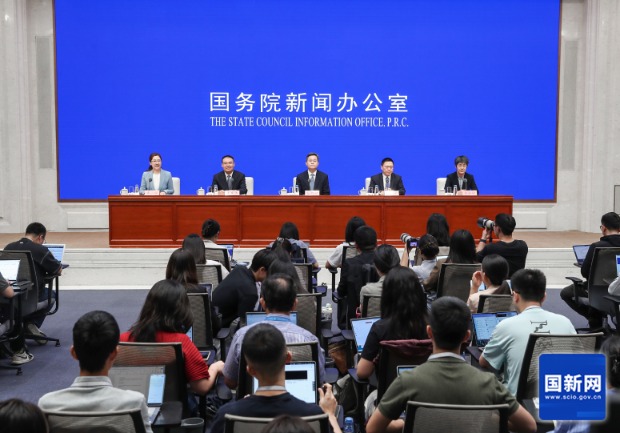
财政民生投入近100万亿元
Sou Hu Cai Jing· 2025-09-12 20:32
Group 1 - The core viewpoint emphasizes that the government is significantly increasing its fiscal investment in people's livelihoods during the "14th Five-Year Plan" period, with nearly 100 trillion yuan allocated, accounting for over 70% of the national general public budget expenditure [1] - The national general public budget revenue is expected to reach 106 trillion yuan during the "14th Five-Year Plan," an increase of 17 trillion yuan or approximately 19% compared to the "13th Five-Year Plan" [1] - The total expenditure is projected to exceed 136 trillion yuan, marking an increase of 26 trillion yuan or 24% from the previous five-year period, with a focus on optimizing the structure of spending [1] Group 2 - The government debt total is projected to be 92.6 trillion yuan by the end of 2024, with a debt-to-GDP ratio of 68.7%, which is considered reasonable compared to G20 and G7 averages [2] - The government debt is backed by substantial quality assets, indicating that the overall risk is manageable [2] Group 3 - The government aims to enhance the quality of life for citizens, with a focus on expanding social security systems, which currently cover over 1.07 billion people in basic pension insurance and 1.327 billion in basic medical insurance [3] - Financial assistance for residents' medical insurance will increase from 580 yuan to 700 yuan per person per year during the "14th Five-Year Plan" [3] - The government is also addressing public service gaps in rural areas, achieving significant improvements in infrastructure and service coverage [3] Group 4 - The national fiscal education expenditure is expected to remain above 4% of GDP, with significant improvements in education access and quality, including a 95.9% consolidation rate for compulsory education by 2024 [4] - The government emphasizes the need for continuous efforts to improve people's welfare, aligning fiscal investments with public needs [4] Group 5 - The government is implementing fiscal policies to stimulate domestic demand, with a focus on employment and consumption, including a 29% increase in employment subsidy funding to 318.6 billion yuan [5] - Approximately 4.2 trillion yuan has been allocated to stimulate consumption, resulting in over 2.9 trillion yuan in sales [5] - The government has arranged over 19.4 trillion yuan in special bonds to support infrastructure projects, enhancing social investment [5] Group 6 - The government recognizes the potential for significant investment demand driven by new industrialization and urbanization, aiming to leverage fiscal tools to stimulate consumption and investment [6]

国家财政护航国计民生——国新办发布会聚焦“十四五”时期财政改革发展成效
Xin Hua She· 2025-09-12 20:21
Core Insights - The Chinese government has significantly enhanced its fiscal strength during the "14th Five-Year Plan" period, with a focus on improving efficiency and supporting national governance and public welfare [1][2]. Fiscal Strength Enhancement - National general public budget revenue is expected to reach 106 trillion yuan, an increase of 17 trillion yuan or approximately 19% compared to the "13th Five-Year Plan" period [2]. - General public budget expenditure is projected to exceed 136 trillion yuan, marking an increase of 26 trillion yuan or 24% from the previous period [2]. Focus on Public Welfare - Fiscal investment in the public welfare sector has approached 100 trillion yuan, accounting for over 70% of total general public budget expenditure [3]. - In the education sector, fiscal investment is expected to exceed 25 trillion yuan, representing a growth of around 38% compared to the "13th Five-Year Plan" [3]. Active Fiscal Policy - Fiscal policy has become more proactive and precise, enhancing its adaptability to economic conditions and supporting stable economic growth [4]. - National fiscal expenditure on technology is expected to reach 5.5 trillion yuan, a 34% increase from the previous five-year period, with a focus on basic research and strategic technology tasks [4]. Tax and Fiscal Reform - Fiscal and tax reforms are being advanced to better serve the modernization of the national governance system [5]. - Key reform focuses include optimizing resource allocation, enhancing efficiency and fairness, and improving the tax system to align with economic and social structures [6][7]. Risk Management - The government is actively managing risks in key areas, particularly in local government debt, with a focus on regular supervision and a legal debt management system [8]. - Central fiscal transfers to local governments are projected to be nearly 50 trillion yuan over five years, ensuring financial stability at the local level [8].
中国财长:国家财政账本里民生分量最重
Zhong Guo Xin Wen Wang· 2025-09-12 13:49
Core Points - The Chinese Minister of Finance, Lan Fang'an, emphasized that the most significant and substantial aspect of the national fiscal accounts is the livelihood of the people [1] - Since the beginning of the 14th Five-Year Plan, over 70% of the national general public budget expenditure has been allocated to livelihood-related areas, directly benefiting the public [1] - As of now, over 1.07 billion people are participating in basic pension insurance, and 1.327 billion people are covered by basic medical insurance [1] - The country has established the world's largest and most comprehensive social security system, with over 45 million people receiving basic living assistance [1] - A rapid allocation mechanism for disaster relief funds has been innovatively established, with a total of 2.59 trillion yuan allocated during the 14th Five-Year Plan to assist the public in disaster recovery [1] Financial Allocations - During the 14th Five-Year Plan, the national general public budget allocated 20.5 trillion yuan for education, 19.6 trillion yuan for social security and employment, 10.6 trillion yuan for health care, and 4 trillion yuan for housing security, totaling nearly 100 trillion yuan in fiscal livelihood investments [1] - The Deputy Minister of Finance, Guo Tingting, noted that the national fiscal investment has continuously increased, supporting the establishment of the world's largest education system [2] - The proportion of national fiscal education funding to GDP has remained above 4% for over a decade, with approximately 130 billion yuan allocated annually for scholarships and grants benefiting around 150 million students [2]
新华鲜报|分量最重!5年间民生领域财政投入近百万亿元
Sou Hu Cai Jing· 2025-09-12 13:19
Core Insights - The Chinese government has invested nearly 100 trillion yuan in the livelihood sector over the past five years, accounting for over 70% of the national general public budget expenditure [1] Group 1: Social Security and Welfare - The number of participants in basic pension insurance exceeds 1.07 billion, and those in basic medical insurance reaches 1.327 billion, establishing the world's largest and most comprehensive social security system [2] - During the "14th Five-Year Plan" period, the financial subsidy standard for resident medical insurance increased from 580 yuan to 700 yuan per person per year, with rural and urban minimum living standards raised by approximately 20% [2] - A total of 2.59 trillion yuan has been allocated for disaster relief efforts to assist the public in disaster recovery and production restoration [2] Group 2: Balanced Public Services - The government has increased policy and resource support for underdeveloped regions, with the scale of equalization transfer payments growing from 1.9 trillion yuan in 2021 to 2.7 trillion yuan by 2025, an average annual growth of 9.6% [3] - All administrative villages in China have been connected by hardened roads, with over 95% coverage for express delivery services, 94% for tap water, and 90% for waste collection and treatment [3] - Approximately 7.8 million affordable housing units have been supported, and 160,000 old residential communities have been renovated to help urban vulnerable groups achieve housing security [3] Group 3: Education and Healthcare - The government has increased financial investment to promote the expansion and accessibility of public resources in education and healthcare during the "14th Five-Year Plan" [6] - All students in compulsory education are exempt from miscellaneous fees and receive free textbooks, with around 20 million economically disadvantaged students receiving living subsidies [6] - Over 800 billion yuan has been allocated to support clinical specialty and regional healthcare capacity building, significantly enhancing the service capabilities of various medical institutions [7] Group 4: Accessibility and Inclusivity - The government has promoted direct settlement for cross-province medical treatment, benefiting 560 million people and reducing out-of-pocket expenses by 590 billion yuan [9] - Initiatives for home-based elderly care and the renovation of old communities for children and the elderly have been supported, along with nearly 50,000 public libraries and museums offering free access to the public [9] Group 5: Future Outlook - The government emphasizes that future financial investments will focus on areas where the public has urgent needs and expectations for a better life [10]
分量最重!5年间民生领域财政投入近百万亿元
Xin Hua She· 2025-09-12 12:28
Core Insights - The Chinese government is significantly increasing its fiscal spending on public welfare, with nearly 100 trillion yuan allocated, accounting for over 70% of the national general public budget expenditure [1] Group 1: Social Security and Welfare - The number of participants in basic pension insurance exceeds 1.07 billion, and those in basic medical insurance reaches 1.327 billion, establishing the world's largest and most comprehensive social security system [2] - During the "14th Five-Year Plan" period, the financial subsidy for residents' medical insurance increased from 580 yuan to 700 yuan per person per year, with rural and urban minimum living standards raised by approximately 20% [2] Group 2: Education and Healthcare - The government is enhancing public resources in education and healthcare, with all students in compulsory education exempted from fees and receiving free textbooks, benefiting around 20 million economically disadvantaged students [6] - Over 800 billion yuan has been allocated to support clinical specialties and regional healthcare capacity building, significantly improving service capabilities across various medical institutions [7] Group 3: Infrastructure and Public Services - The government is focusing on equal access to basic public services, with the scale of balanced transfer payments increasing from 1.9 trillion yuan in 2021 to 2.7 trillion yuan by 2025, reflecting an annual growth of 9.6% [3] - All administrative villages in China have been connected by hardened roads, with over 95% coverage of express delivery services and 94% access to tap water [3] Group 4: Accessibility and Inclusivity - The government is promoting diverse and accessible public services, with 560 million people benefiting from direct settlement for cross-province medical treatment, reducing out-of-pocket expenses by 590 billion yuan [10] - Initiatives for home-based elderly care and the renovation of old residential areas are being supported, along with free access to nearly 50,000 public libraries and museums [10] Group 5: Future Outlook - The government emphasizes that fiscal policies will focus on areas where the public has urgent needs and expectations, ensuring that financial resources are directed towards improving the quality of life for citizens [11]