
数字技术

Search documents
花呗联手19家博物馆打造“数字周边”:45款文物皮肤 让国宝“活”在指尖
Sou Hu Cai Jing· 2025-08-29 05:56
Group 1 - The core idea of the articles is the collaboration between Huabei and various museums to create digital skins featuring national treasures, enhancing cultural engagement among young users [1][4] - Since December of the previous year, Huabei has partnered with 19 museums to launch a total of 45 digital skins, making cultural artifacts more accessible through digital technology [1] - Each digital skin is accompanied by a "cultural artifact ID" section that provides fun facts and auspicious phrases, promoting a "pain-free learning" experience about the stories behind the artifacts [1] Group 2 - Wang Xiaowen, the curator of Liaoning Museum, emphasizes the importance of popularizing and disseminating cultural artifacts through digital technology for better cultural transmission [4] - Since the launch of the "Dunhuang" and "Sanxingdui" digital skins in December 2024, many young users have actively shared their experiences on social media platforms, creating a trend of "receiving good fortune" [4] - Ouyang Rihui, a professor at Central University of Finance and Economics, states that Huabei's use of digital technology to animate cultural artifacts has a positive impact on cultural transmission among young consumers [4] - Huabei initiated the "Huabei Cultural Artifact Guardian Program" in 2021, focusing on the protection of cultural artifacts and cultural education, with plans to expand educational initiatives in the future [4]

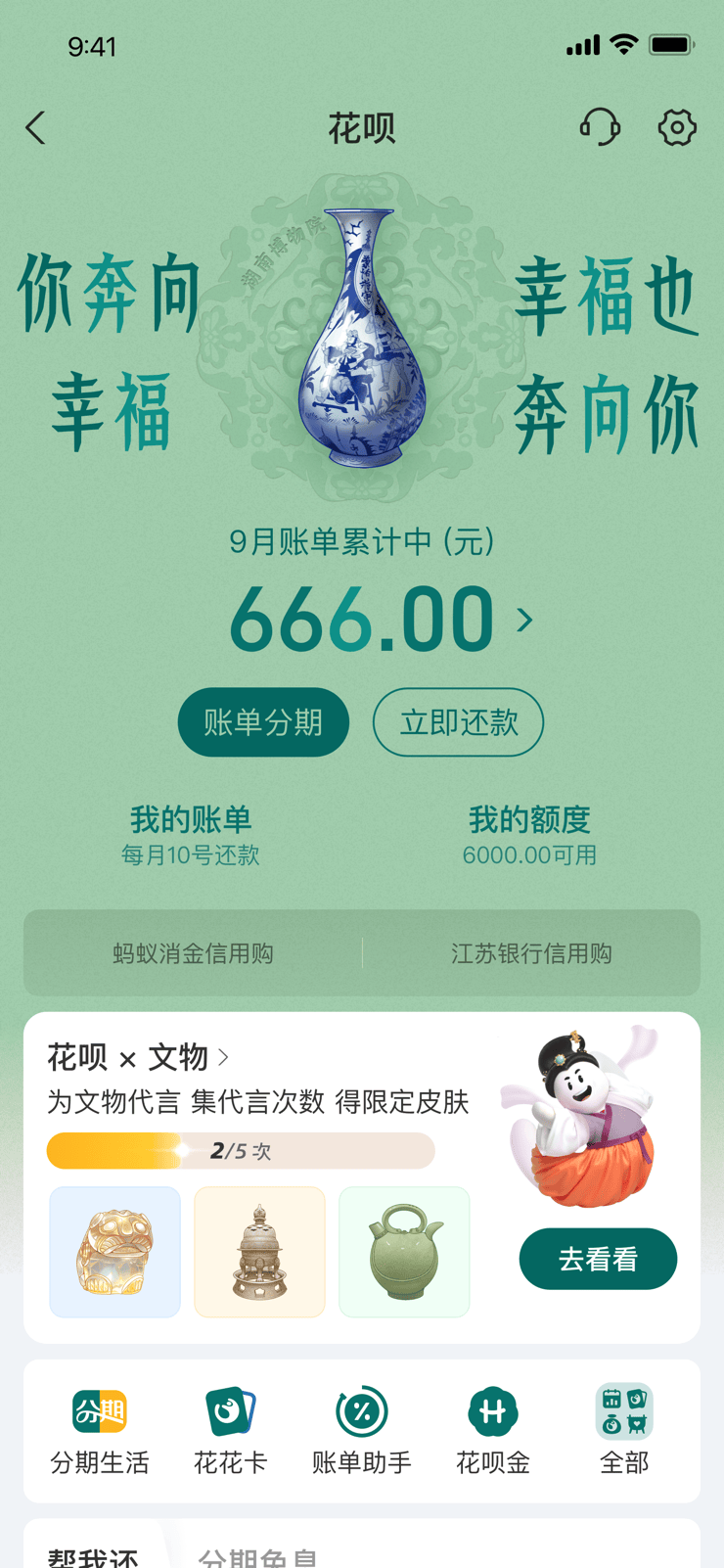
花呗联手山东等19家博物馆打造“数字周边”:45款文物皮肤 让国宝“活”在指尖
Qi Lu Wan Bao· 2025-08-29 03:10
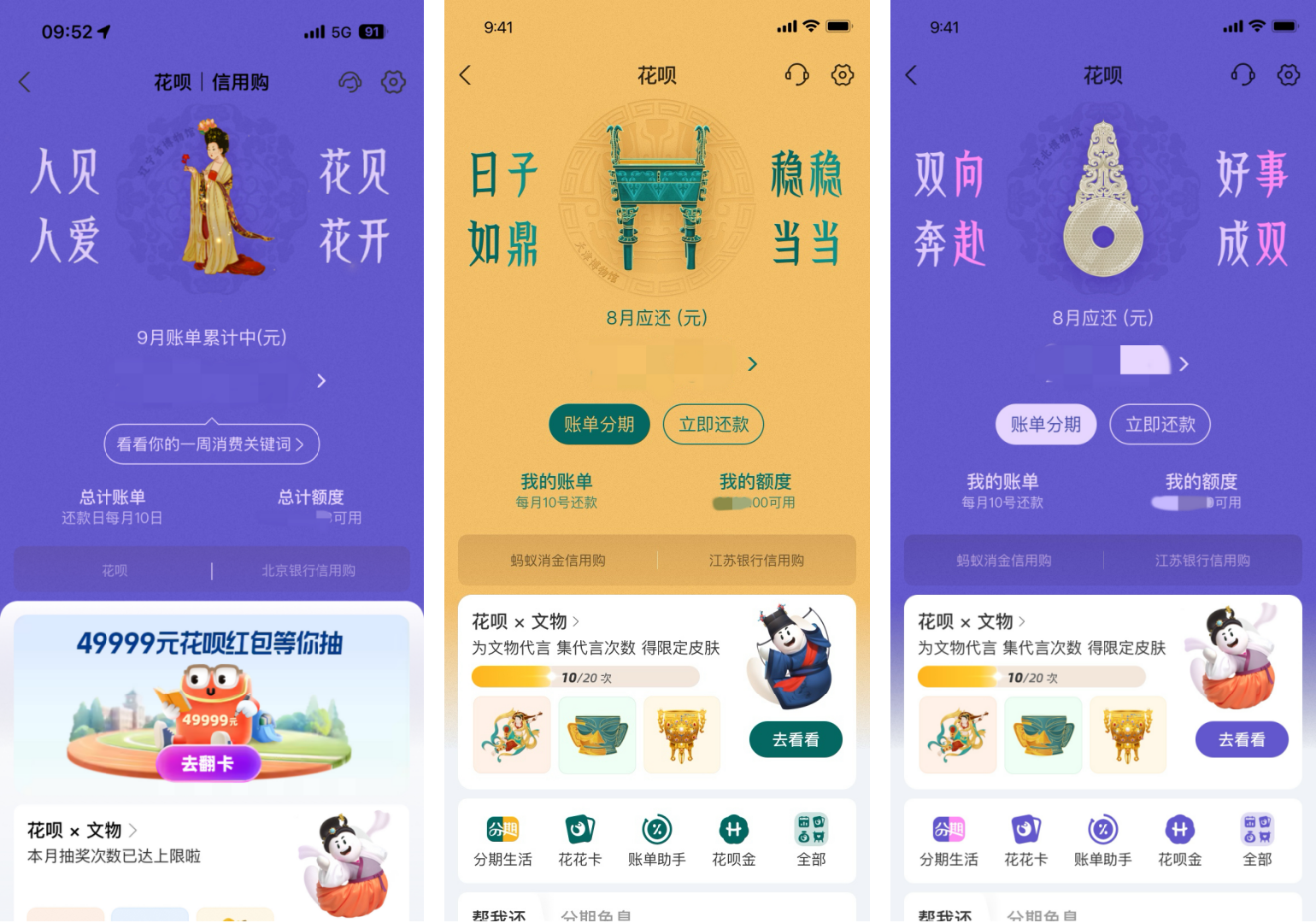
Core Insights - Huabei has launched 9 new cultural heritage skins in collaboration with museums from seven provinces and cities, showcasing a diverse array of artifacts [1][5] - The initiative aims to connect young people with ancient artifacts through digital technology, making cultural heritage more accessible [5][6] Group 1: Product Launch - The new skins include notable artifacts such as the "Colorful Phoenix Singing Qi" seven-stringed instrument from Zhejiang Museum and the "Double Dragon White Jade Bi" from Hebei Museum [1] - Each skin features a "Cultural Relic ID" section that provides fun facts and auspicious phrases, enhancing user engagement and learning [3] Group 2: Cultural Impact - Since December of the previous year, Huabei has collaborated with 19 museums to launch a total of 45 cultural heritage skins, including significant items like the "Sword of Yue King" and "Dunhuang" [5] - The initiative has sparked a trend among young users to share their experiences on social media platforms, promoting cultural awareness and engagement [5] Group 3: Future Plans - Huabei plans to expand its cultural outreach by launching the "Huabei Guide" program, which will involve more public lectures in collaboration with local museums [6] - The overarching goal is to make cultural heritage relevant and alive in contemporary society, fostering a deeper appreciation for traditional culture among the youth [6]
北京“十五五”建言:地铁公交未来可“一张网”
Xin Jing Bao· 2025-08-28 06:21
Group 1: Public Feedback on Transportation - The public feedback collection for Beijing's "14th Five-Year Plan" shows that transportation-related suggestions account for 8% of total submissions, ranking among the top three sectors [1] - Key concerns in the transportation sector include road traffic management, non-motor vehicle management, and public transportation services, which together represent over 40% of transportation-related suggestions [1] Group 2: Parking Utilization - There is a significant mismatch in parking demand and supply in old communities within Beijing's Fifth Ring, particularly around government and institutional units [2] - Suggestions include improving parking regulations for government units to allow community residents to utilize these spaces during off-peak hours, especially at night and on holidays [2] Group 3: Public Transportation Service Improvement - The focus of public transportation development should shift from infrastructure to enhancing service quality, as the attractiveness of public transport has declined despite increased investment [3][4] - Over the past decade, the operational mileage of urban rail has increased from 527 kilometers in 2014 to 879 kilometers in 2024, while the number of bus routes has grown from 877 to 1261 [3] Group 4: Integration of Public Transport Systems - A unified public transport system is essential, eliminating the separation between rail and bus services to improve coordination and efficiency [4] - Future reforms should focus on creating a comprehensive public transport planning and operational framework that integrates various stakeholders and data platforms [4] Group 5: Corporate Shuttle Services - Corporate shuttles represent a significant yet underutilized transportation resource, with potential for optimization through better route planning and shared services among neighboring companies [5] Group 6: Electric Bicycle Management - The rise of electric bicycles presents both opportunities for green commuting and challenges for traffic management, necessitating improved regulations and safety measures [6] - Recommendations include enhancing public awareness of safe riding practices, utilizing technology for monitoring violations, and improving parking and charging infrastructure for electric bicycles [6]
千余件档案史料再现铁血铸魂史 长三角地区新四军档案史料展在宁开展
Nan Jing Ri Bao· 2025-08-28 02:16
展览还借助全息影像、虚拟互动等数字技术及LED、高清投影、智能AI机器人等数字展陈设备,设 置了体验式时空影院、制胜之道、烽火家书、朗读亭等沉浸式体验区域和美术作品、电影电视剧戏曲、 知识问答等展示区域,并同步开通线上云展厅,以新技术、新角度、新方式多维呈现新四军和华中根据 地波澜壮阔的发展历程。 据悉,该展览将面向社会各界长期免费开放。 在展览中,尤为引人注目的还有《本军参加抗战五个月战斗成绩统计表》《江渭清同志谈抗战时期 苏南斗争状况》两件档案。前者记录了新四军刚成立时四个支队的名称——团结支队、坚决支队、英勇 支队、抗战支队;后者则记录了刚组建的新四军4个支队下8个团分别被命名为"保团""持团"……其团名 首字组合成"保持发扬优良传统"的故事。两份档案见证了新四军背负着民族的希望浴血华中、报国为民 的坚定决心。 此次展览还特别发掘了一批珍贵档案史料。《牺牲烈士荣哀录》记录了江上青和喻尊霞等烈士的牺 牲情况。刊载于《解放日报》1941年6月6日第2版的《苏北新四军激战歼敌于涟水,某连陷敌重围全部 壮烈殉国》,被考证出记录的是与刘老庄战斗齐名的大胡庄战斗。展览还特别展出了新四军开展体育运 动的情况,其中有关 ...
让科技密钥解锁森林宝藏
Jing Ji Ri Bao· 2025-08-27 22:20
Core Viewpoint - The integration of digital technology, biotechnology, and intelligent equipment is rapidly enhancing the development of the under-forest economy in China, transforming it into a key driver for high-quality growth in this green industry [1][2]. Group 1: Development of Under-Forest Economy - The under-forest economy is expanding in scale and becoming a crucial pillar for increasing income among mountain farmers, with various models such as ginseng, medicinal herbs, and edible fungi flourishing across different regions [1][2]. - The application of new technologies like remote sensing, intelligent environmental control, and blockchain traceability is increasing the added value of the under-forest economy, shifting it from scattered and extensive practices to intensive and efficient operations [1][2]. Group 2: Role of Technology - Technological advancements are significantly improving production efficiency and product quality, with modern breeding techniques and smart greenhouse technologies leading to substantial increases in yield and stability [2][3]. - Technology is facilitating the realization of multi-layered and composite operations, maximizing the utilization of forest resources while minimizing ecological disturbances [2][3]. Group 3: Challenges and Solutions - The under-forest economy faces challenges such as insufficient R&D investment, low efficiency in technology transfer, and a shortage of skilled professionals, which hinder the application of scientific advancements in practical production [2][3]. - Recommendations include increasing R&D funding, establishing mechanisms for technology transfer, and enhancing talent cultivation through training and incentives to attract professionals to the under-forest economy [3][4]. Group 4: Importance of High-Tech Integration - Enhancing the technological content of the under-forest economy is essential for achieving high-quality development, enabling the realization of both ecological and economic benefits, and contributing to rural revitalization and ecological civilization [4].
浙数文化上半年业绩稳健推进 AI与算力布局持续深化
Zheng Quan Ri Bao Wang· 2025-08-26 12:41
Core Viewpoint - Zhejiang Digital Culture Group Co., Ltd. (referred to as "Zhejiang Culture") reported a revenue of 1.414 billion yuan in the first half of 2025, with a year-on-year growth of 0.09%, and a net profit attributable to shareholders of 377 million yuan, reflecting a significant year-on-year increase of 156.26% [1] Group 1: Business Performance - Zhejiang Culture's half-year report indicates a stable performance in its main business, with a focus on deepening the "1335" strategic action plan, enhancing AI capabilities, and exploring new cultural and technological integration mechanisms [1][2] - The company’s subsidiary, Hangzhou Bianfeng Network Technology Co., Ltd., is optimizing user experience in online gaming through AI algorithms and exploring new models like "Guzi Economy" [1][2] Group 2: Digital Technology Initiatives - The company is advancing its digital technology business by establishing an integrated operation center in the cultural tourism sector, launching AI travel products, and developing a large language model [2] - Zhejiang Culture's subsidiary, Chuanbo Brain Technology (Zhejiang) Co., Ltd., is working on a provincial media integration network with a coverage rate of 86.7% [2] Group 3: Future Outlook - The chairman of Zhejiang Culture stated that the company will continue to innovate in AI applications and expand into diverse application scenarios, with seven major models or algorithms already registered with the National Internet Information Office [2][3] - The company aims to drive high-quality development in the cultural industry through digital technology, focusing on the "cultural + technology" main channel and deepening the "1335" strategic action plan [3]

456家企业参展、硬核科技革新体验,2025年服贸会将首发一批文旅服务新场景
Bei Jing Shang Bao· 2025-08-26 12:01
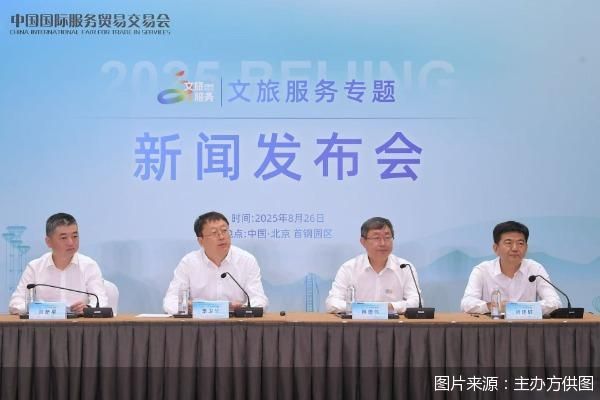
Group 1 - The core theme of the cultural and tourism service section at the China International Fair for Trade in Services is "Empowerment through Technology, Leadership through Creativity" [1] - A total of 456 enterprises are participating in the event, including 85 Fortune Global 500 and industry-leading companies [1] - The event features three main highlights: "Perceptible and Participatory," "Developable and Utilizable," and "Appreciable and Consumable" [1] Group 2 - The first highlight focuses on the integration of advanced technologies such as blockchain, AIGC, AR/VR, and film post-production to enhance cultural tourism experiences [3] - AI digital humans will be showcased, including the "Smart Customer Service" AI from the Summer Palace and the Galbot G1 humanoid robot, which will interact with attendees [3] Group 3 - The second highlight emphasizes the replication of cultural scenes using new technologies, showcasing projects like the "Longfu Temple Caisson" digital art exhibition and the "Amazon Adventure" mixed reality experience [4][5] - The event aims to promote the integration of traditional culture with modern design and technology, enhancing the diversity and innovation of the cultural industry [4] Group 4 - The third highlight illustrates the integration of cultural, commercial, and tourism sectors, featuring themed scenic areas, cultural markets, and experiential spaces [6] - The event will present a comprehensive range of inbound tourism services, including visa, transportation, payment, and travel technology, with participation from various enterprises across the tourism value chain [6][7] - Major travel companies will introduce inbound and outbound tourism products, while innovative tech products like instant translation devices will enhance visitor experiences [7]
调研速递|湖北富邦科技接受多家投资者调研,聚焦业务发展与战略布局要点
Xin Lang Cai Jing· 2025-08-26 10:48
Core Viewpoint - Hubei Fubon Technology Co., Ltd. held a half-year performance briefing on August 26, 2025, discussing business development and strategic layout with investors through an online platform [1][2]. Group 1: Business Development - The agrochemical additive business is performing well, with a focus on "precision, greenness, efficiency, and nutrition" in product strategy, leading to a revenue of 496.41 million yuan in the first half of 2025, a year-on-year increase of 5.62% [3]. - The company has established a digital agriculture industrial park in Sanhe Town, Echeng City, leveraging land transfer and smart agricultural technology [3]. - The modern agriculture business achieved a revenue of 122.37 million yuan in the first half of 2025, reflecting a year-on-year growth of 13.31% [3]. Group 2: Financial Performance - In the first half of 2025, the company reported total revenue of 684.60 million yuan, a year-on-year increase of 6.50%, with domestic revenue of 365.06 million yuan (up 5.10%) and overseas revenue of 319.54 million yuan (up 8.16%) [3]. - The net profit attributable to shareholders was 61.22 million yuan, with net assets increasing by 9.53% to 1.47 billion yuan [3]. Group 3: Strategic Initiatives - The company is focusing on technological innovation in the fields of biological and digital agriculture, with a dual strategy of "biotechnology + digital technology" to drive agricultural modernization [3]. - The company has developed a "soil digital map" and related digital solutions through its subsidiary, Wuhan Soutu Data Technology Co., Ltd., which is in the demonstration application stage domestically [3]. - The company has established a cooperative in the Netherlands to enhance its core competitiveness by utilizing European market resources [3].

数字技术再现话剧之美
Ren Min Ri Bao· 2025-08-25 22:40
Core Viewpoint - The "CNT Live" high-definition screening season of the China National Theatre is showcasing classic plays like "Green Snake," which has maintained high popularity since its premiere in 2013, indicating its status as a timeless theatrical classic [1][4]. Group 1: Performance and Production - The play "Green Snake" is adapted from Li Bihua's novel and offers a fresh interpretation of the well-known folk tale "Legend of the White Snake," blending classical charm with modern elements [2][3]. - The stage design is inspired by Jiangnan residential architecture, creating an ethereal atmosphere through the use of lighting, multimedia, and sound effects [2]. - The characters in the play, including the White Snake and Green Snake, represent different female archetypes, exploring various emotional states and relationships [3]. Group 2: Actor Performances - The performances by Qin Hailu, Yuan Quan, and Xin Baiqing are highlighted for their depth and skill, contributing significantly to the characters' portrayals [4]. - The actors' backgrounds in traditional Chinese opera enhance their performances, allowing them to embody complex character traits effectively [3][4]. - The play has toured multiple cities in China and has been featured in international festivals, showcasing the blend of classical and modern elements in Chinese storytelling [4].

上海肆书数字技术有限公司成立,注册资本500万人民币
Sou Hu Cai Jing· 2025-08-25 17:32
Company Overview - Shanghai Si Shu Digital Technology Co., Ltd. has been recently established with a registered capital of 5 million RMB [1] - The legal representative of the company is Ding Qi, and it is wholly owned by Shanghai Fengluomu Digital Technology Co., Ltd. [1] Business Scope - The company's business scope includes digital technology services, technical services, technical development, technical consulting, technical exchange, technical transfer, and technical promotion [1] - It also engages in internet sales (excluding goods requiring permits), information consulting services (excluding licensed information consulting services), daily necessities sales, electronic products sales, daily goods sales, domestic trade agency, import and export of goods, and technology import and export [1] Industry Classification - The company is classified under the national standard industry of information transmission, software, and information technology services, specifically in software development [1] - The registered address is located in the China (Shanghai) Pilot Free Trade Zone, Lingang New Area [1] Company Type and Duration - Shanghai Si Shu Digital Technology Co., Ltd. is categorized as a limited liability company (wholly owned by a natural person) [1] - The business duration is set from August 25, 2025, to an indefinite period [1]