
新发展理念

Search documents
人民日报等央媒持续点赞岚图汽车 赴港上市冲击高端新能源乘用车领导者
Xin Lang Cai Jing· 2025-10-23 06:56
Core Viewpoint - The article highlights the significant achievements of Lantu Automotive as a model of innovation in China's new energy vehicle sector, reflecting the historical accomplishments of high-quality development under the "14th Five-Year Plan" [1][3]. Group 1: Company Development and Achievements - Lantu Automotive has rapidly developed since its inception, focusing on brand building, product launches, technological innovation, channel construction, and overseas expansion [3]. - The company has adopted cutting-edge technologies such as artificial intelligence and the Internet of Things, reducing new car production preparation time by at least 20%, lowering process design costs by over 15%, and improving product quality by over 10% [3]. - Lantu Automotive aims to transition from a fuel vehicle production capacity to a new energy vehicle capacity, establishing a 5C smart charging network for green electricity [3][4]. Group 2: Market Position and Product Range - Lantu Automotive has established a comprehensive product matrix covering sedans, SUVs, and MPVs, becoming one of the most comprehensive high-end new energy vehicle companies in the industry [7]. - The Lantu Dreamer, as the world's first high-end new energy MPV, is projected to achieve sales of 47,000 units in 2024, securing the second position in the high-end new energy MPV market [7]. - The company has the fastest patent growth in the new energy vehicle sector, with 1,519 granted patents and 4,783 pending applications as of July 31, 2025 [7][8]. Group 3: Financial Performance - Lantu Automotive's sales are expected to grow at a compound annual growth rate of 103.2% from 2022 to 2024, with a delivery volume of 15,224 vehicles in September 2025, representing a 52% year-on-year increase [8][9]. - The gross profit margin has improved from 8.3% in 2022 to 21.0% in 2024, further increasing to 21.3% in the first seven months of 2025 [8][9]. - The company achieved its first quarterly profit in Q4 2023 and has maintained profitability in the first seven months of 2025, indicating a shift towards a focus on quality and efficiency [9]. Group 4: IPO and Market Strategy - Lantu Automotive is set to go public on the Hong Kong Stock Exchange through an introduction listing, which marks a significant step in its regulatory review process [10]. - The company's unique combination of being a state-owned enterprise and a high-end new energy brand provides significant scarcity value in the current Hong Kong market [10]. - The IPO is expected to enhance Lantu's brand influence globally and support its overseas business expansion, which is crucial for increasing its valuation [10][11].


四中全会期间,人民日报这三篇金社平讲了什么
2 1 Shi Ji Jing Ji Bao Dao· 2025-10-23 06:26
Group 1 - The article emphasizes the historical achievements and transformations in China's economic and social development over the past decade, particularly under the guidance of the new development philosophy proposed by Xi Jinping [1][4][16] - The average GDP growth rate for the first three quarters of this year is reported at 5.2%, with expectations for China's economic total to reach approximately 140 trillion yuan by 2025 [2][16] - The new development philosophy, which includes innovation, coordination, green development, openness, and sharing, is highlighted as a guiding principle for achieving higher quality and more sustainable growth [4][21] Group 2 - The article discusses the significant advancements in the new energy vehicle (NEV) sector, with China becoming the first country to produce over 10 million NEVs annually, showcasing a shift from following to leading in manufacturing [5][6] - The integration of cutting-edge technologies such as artificial intelligence and digital twins in NEV production has led to reduced production cycles and costs, as well as improved product quality [5][6] - China's NEV industry is noted for its continuous growth, with production and sales leading globally for ten consecutive years, and a strong international market presence in lithium-ion batteries [5][6] Group 3 - The article highlights the role of innovation as a driving force for economic and social development, with China's global innovation index ranking improving significantly from 34th in 2012 to 10th by 2025 [6][19] - The establishment of the largest renewable energy system globally and a significant reduction in energy consumption per unit of GDP are noted as key achievements in promoting green development [6][24] - The article emphasizes the importance of adhering to the new development philosophy to address issues of unbalanced and insufficient development, ultimately meeting the growing needs of the population [6][11] Group 4 - The article outlines the advancements in rural development and urban-rural integration, with initiatives like the "Million Project" in Zhejiang province serving as a model for coordinated development [8][10] - The implementation of the "Hundred Thousand Project" in Guangdong province aims to enhance rural economies and improve living standards, with significant increases in rural income reported [9][10] - The focus on shared development and the creation of rural operational roles is highlighted as a means to foster economic growth and improve quality of life in rural areas [8][10] Group 5 - The article discusses the opening of the global digital trade center in Yiwu, marking a transition from traditional trade to a digital trade ecosystem, which enhances China's role in global commerce [12][28] - The establishment of free trade zones and the expansion of foreign investment in China are emphasized as critical components of the country's strategy to enhance its global economic presence [13][28] - China's commitment to high-level openness is portrayed as essential for achieving high-quality development and fostering international cooperation [13][28]
周文:遵循新发展理念做好经济工作
Jing Ji Ri Bao· 2025-10-23 00:04
Core Ideas - The new development concept is a concentrated reflection of China's development ideas, directions, and focal points in the new era, emphasizing its strategic, programmatic, and guiding role in the comprehensive construction of a modern socialist country [1][2] Group 1: Innovation - Innovation is highlighted as the primary driving force for development, essential for determining the speed, efficiency, and sustainability of economic growth [3] - China has made significant progress in technological innovation, particularly in 5G technology, which has laid a solid foundation for the digital economy [3] - There are still challenges in basic research and key core technologies compared to developed countries, necessitating increased investment in foundational research and reforms in the research evaluation system [3] Group 2: Coordination - Coordinated development is crucial for optimizing the economic development structure, addressing the imbalances between urban and rural areas, and among different regions [4] - Efforts have been made to improve rural infrastructure and diversify industrial development, yet disparities remain, indicating the need for further progress [4] - Future strategies should focus on promoting equal exchange and flow of resources between urban and rural areas to accelerate rural modernization [4] Group 3: Green Development - Green development is essential for sustainable growth, with significant achievements in environmental protection and the development of green industries [5] - China has become the largest producer and consumer of new energy vehicles, reflecting its commitment to ecological priorities [5] - The importance of ecological protection and restoration is emphasized, alongside the need for a green industrial transformation [5] Group 4: Openness - Openness is deemed necessary for national prosperity, with China actively promoting higher levels of openness in trade and investment [6][7] - The focus is on expanding the scope of open development and enhancing cooperation in global economic governance [7] - The establishment of free trade zones and other platforms is crucial for fostering international competitiveness [7] Group 5: Sharing - The sharing concept is central to socialism with Chinese characteristics, aiming for common prosperity and improved living standards [8] - Significant achievements have been made in poverty alleviation and employment stability, with ongoing efforts to enhance social security systems [8] - Future initiatives should focus on increasing the income of low-income groups and expanding the middle-income population [8] Group 6: Systematic Transformation - The transformation of the new development concept into practice requires a systematic approach, enhancing political capability, strategic vision, and professional skills [9][11] - A collaborative mechanism is necessary to integrate the five development concepts, ensuring they support and promote each other [10] - Policies should be aligned to create a cohesive framework that supports innovation, ecological protection, and social welfare [10][12] Group 7: Leadership and Governance - Leadership must shift from traditional performance metrics to a new performance view that aligns with the new development concept [13][14] - Emphasis is placed on long-term stability and sustainable development, avoiding short-termism and impulsive decision-making [14][15] - A focus on practical results and addressing real issues is essential for effective governance [15][16] Group 8: Local Adaptation - Policies must be tailored to local conditions, respecting objective laws and resource endowments to avoid blind imitation [16][17] - A comprehensive approach is needed to balance various development aspects, ensuring that local initiatives align with national goals [17][18] - The importance of breaking down regional barriers and fostering a unified national market is highlighted to prevent inefficient competition [18]
遵循新发展理念做好经济工作
Jing Ji Ri Bao· 2025-10-22 22:27
Core Viewpoint - The new development concept is a concentrated reflection of China's development ideas, directions, and focal points in the new era, emphasizing its strategic, programmatic, and guiding roles in economic work [1][2]. Group 1: Innovation - Innovation is highlighted as the primary driving force for development, essential for determining the speed, efficiency, and sustainability of economic growth [3]. - China has made significant progress in technological innovation, particularly in 5G technology, which has laid a solid foundation for the digital economy [3]. - There are still challenges in basic research and key core technologies compared to developed countries, necessitating increased investment and reform in the research evaluation system [3]. Group 2: Coordination - Coordinated development is crucial for optimizing the economic development structure, addressing the imbalances between urban and rural areas, and among different regions [4]. - Efforts have been made to improve rural infrastructure and diversify industrial development, yet disparities remain, indicating the need for further progress [4]. - Future strategies should focus on promoting equal exchange and flow of resources between urban and rural areas, enhancing regional cooperation, and achieving common development [4]. Group 3: Green Development - Green development is essential for sustainable growth, with significant achievements in environmental protection and the growth of green industries [5]. - China has become the largest producer and consumer of new energy vehicles, reflecting its commitment to ecological priorities [5]. - The importance of ecological protection and restoration is emphasized, alongside the need for a green transition in industries [5]. Group 4: Openness - Openness is deemed necessary for national prosperity, with a focus on adapting to the trends of economic globalization [6][7]. - China aims to expand its open development space, enhance trade and investment liberalization, and deepen bilateral and regional economic cooperation [6][7]. Group 5: Sharing - The concept of sharing is central to socialism with Chinese characteristics, focusing on achieving common prosperity and improving the well-being of the population [8]. - Significant progress has been made in poverty alleviation and employment stability, with ongoing efforts to enhance the social security system [8]. Group 6: Implementation of New Development Concepts - A complete and accurate implementation of the new development concept is crucial for a profound transformation in China's overall development [9]. - Systematic collaboration and a unified approach are necessary to integrate the five development concepts of innovation, coordination, green, openness, and sharing [10]. Group 7: Institutional Support - Institutional frameworks are essential for the realization of new development concepts, requiring reforms that support innovation, environmental quality, and social welfare [12]. - Establishing a robust indicator system and enhancing the role of the market in resource allocation are critical steps [12]. Group 8: Leadership and Governance - Leadership must shift towards a performance view that aligns with the new development concepts, prioritizing the well-being of the people [13]. - A long-term perspective is necessary to balance immediate results with sustainable development goals [14]. - A pragmatic approach is required to avoid formalism and ensure that economic policies are grounded in reality [15]. Group 9: Local Adaptation - Policies must be tailored to local conditions, respecting regional differences and avoiding one-size-fits-all approaches [16]. - Leaders should analyze local resources and capabilities to develop appropriate strategies that align with national goals [16]. Group 10: Systematic Thinking - A holistic approach is essential for economic and social development, ensuring that various aspects are considered in policy-making [17]. - Leaders should integrate the five development concepts into a cohesive strategy that addresses both immediate and long-term needs [17]. Group 11: National Unity - A unified national approach is necessary to eliminate local protectionism and promote collaborative development across regions [18]. - The focus should be on optimizing market competition and ensuring that local interests do not undermine national objectives [18].
10月22日晚间央视新闻联播要闻集锦
Yang Shi Xin Wen Ke Hu Duan· 2025-10-22 13:59
Group 1 - The modernization of agriculture and rural areas is essential for the overall modernization of the country, as emphasized by General Secretary Xi Jinping [1][3] - During the "14th Five-Year Plan" period, significant historical achievements have been made in agricultural and rural development, laying a solid foundation for transitioning from an agricultural power to an agricultural strong nation [3][6] - The logistics network in China has been enhanced, supporting high-quality economic development by improving speed and connectivity [4] Group 2 - The industrial production in China has shown rapid growth in the first three quarters of the year, with notable improvements in corporate profitability [7] - The civil aviation sector has maintained steady growth, with transportation turnover, passenger volume, and cargo volume increasing by 10.3%, 5.2%, and 14% respectively year-on-year [9] Group 3 - The Long March National Cultural Park has been developed to preserve and promote the spirit of the Long March, integrating cultural resources from 15 provinces and enhancing the visibility of historical sites [10] - The international community is closely monitoring the 20th Central Committee's Fourth Plenary Session of the Communist Party of China, recognizing its potential to contribute to global stability and positive energy [2][11]
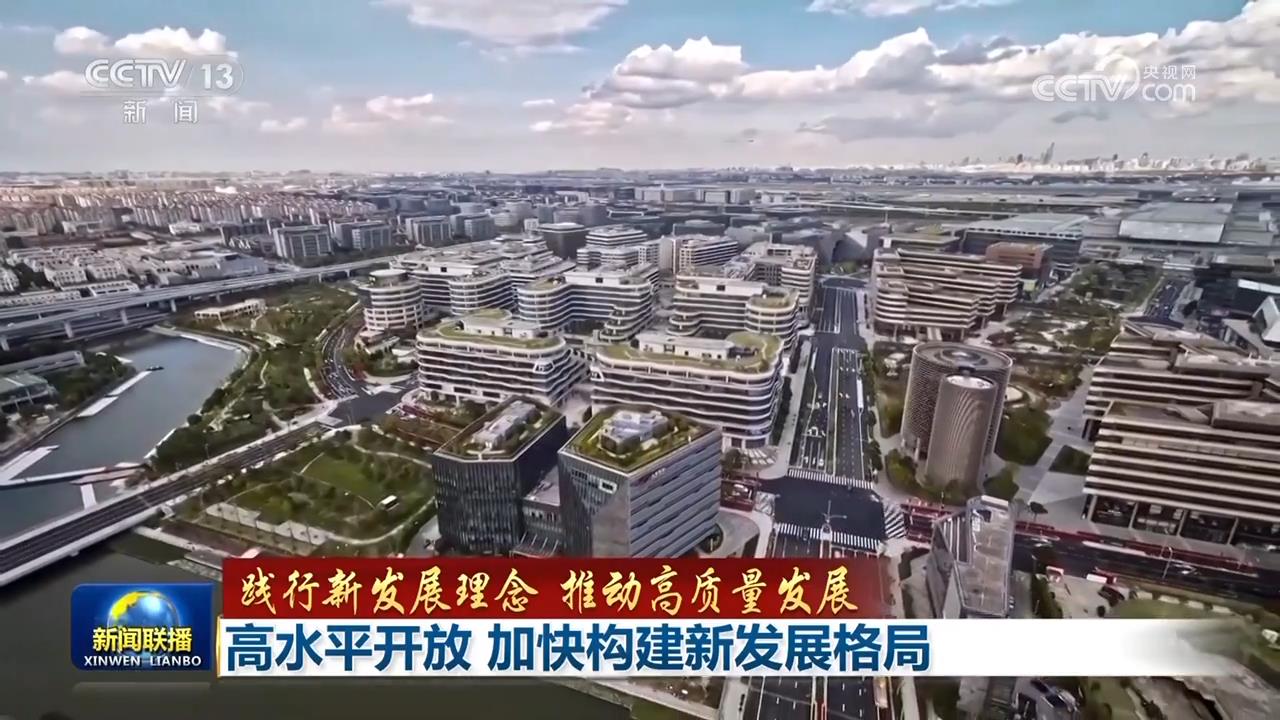
【践行新发展理念 推动高质量发展】高水平开放 加快构建新发展格局
Yang Shi Wang· 2025-10-22 12:43
Group 1 - The article emphasizes the importance of a new development concept to build a higher-level open economic system and promote high-quality development in China [1] - Shanghai has expanded its Free Trade Zone (FTZ) to include eight key areas and five national economic and technological development zones, transitioning from "single-point experiments" to a multi-point linkage model [3] - China has established 22 Free Trade Zones, exploring institutional openness across various regions, with notable developments in Qingdao and Dalian to enhance trade efficiency [3] Group 2 - Hainan is preparing for its island-wide customs closure on December 18, aiming to create a conducive environment for the free flow of people, goods, and capital [5] - The "Belt and Road" initiative is opening new development opportunities for central and western regions, with significant trade volumes from the Alashankou and Horgos ports in Xinjiang [5] - Hunan has established cooperation mechanisms with 28 African countries, achieving a nearly 20% year-on-year increase in trade with Africa in the first three quarters of this year [5] Group 3 - Infrastructure construction is being accelerated, with the Western Land-Sea New Corridor reaching 127 countries and regions, achieving a record high in import and export volume [7] - The China-Vietnam Friendship Pass project is in the testing phase, aiming for all-day customs clearance to enhance cross-border trade [7]
金社平:以理念之变引领发展之变——从发展实践看新发展理念引领高质量发展的历史性成就
Ren Min Ri Bao· 2025-10-22 03:24
Economic Growth - In the first three quarters of this year, China's GDP grew by 5.2% year-on-year, building on an average growth rate of 5.5% over the past four years, with a projected economic total of around 140 trillion yuan by 2025 [1][2] New Development Concept - The new development concept proposed by Xi Jinping emphasizes innovation, coordination, green development, openness, and sharing, which has guided China's economic transformation and historical achievements over the past decade [3][4] New Energy Vehicles (NEVs) - China became the first country to produce over 10 million NEVs annually, with significant advancements in manufacturing efficiency, including a 20% reduction in production preparation time and a 15% decrease in design costs [5] - The NEV industry is shifting from resource-driven to innovation-driven, focusing on high-end, intelligent, and green development [5][6] Innovation and Competitiveness - China's global innovation index ranking improved from 34th in 2012 to 10th in 2025, highlighting its rapid enhancement in core competitiveness and innovation capabilities [6] Green Development - China has established the world's largest renewable energy system, achieving an 11.6% reduction in energy consumption per unit of GDP over the first four years of the 14th Five-Year Plan [7] Rural Development and Urban-Rural Integration - Initiatives like the "Million Project" in Zhejiang have advanced urban-rural integration, improving rural living standards and increasing disposable income for rural residents [9][10] High-Quality Development - The focus on high-quality development is evident in various projects that enhance local economies and improve living conditions, reflecting a commitment to people-centered development [10][11] Open Economy - China's commitment to high-level openness is demonstrated by the establishment of free trade zones and the expansion of foreign investment, positioning the country as a key player in global trade [12][13] Future Planning - The upcoming 15th Five-Year Plan aims to continue the momentum of high-quality development and modernization, guided by Xi Jinping's economic thought [14]
金社平:于变局中开新局——从发展趋势看新发展理念指引下中国经济的活力与韧性
Ren Min Ri Bao· 2025-10-22 03:24
Economic Overview - China's economy maintained a steady growth of 5.2% in the first three quarters of the year, reflecting resilience and confidence in overcoming challenges [1] - The new development concept plays a crucial role in shaping the future of China's economy amidst global changes and internal transformations [1] High-Quality Development - High-quality development is essential for Chinese-style modernization, guided by Xi Jinping's economic thought and the new development concept [2] - Emphasis on technological innovation as a key driver for modernization and the development of new productive forces [2] Technological Innovation - The success of New Sound Semiconductor in developing high-end RF filters illustrates the transformation of technological innovation into significant contributions to high-quality development [3] - The company invested over 100 million yuan annually in R&D, achieving breakthroughs in core performance and establishing a strong market presence [3] Industrial Strength - A modern industrial system is the material and technical foundation for a modernized nation, with innovation ecology as its core engine [4] - China's R&D expenditure exceeds 3.6 trillion yuan, ranking second globally, with over 140,000 specialized small and medium enterprises [4] Green Development - The transition to a green low-carbon economy is a trend, with green development being fundamental to high-quality growth [5] - The photovoltaic industry exemplifies resilience and innovation, with significant contributions to reducing carbon emissions globally [7] Open Economy - The integration of domestic and international markets is crucial for enhancing the efficiency of the domestic cycle and responding to new challenges [8] - The Hainan Free Trade Port represents a high-level opening-up initiative, stimulating domestic demand and creating job opportunities [9][10] Future Outlook - China's economic foundation remains strong, with advantages in its socialist system, large market, complete industrial system, and rich talent resources [10] - The upcoming "15th Five-Year Plan" aims to further advance Chinese-style modernization, balancing opportunities and challenges [11]
于变局中开新局——从发展趋势看新发展理念指引下中国经济的活力与韧性
Ren Min Ri Bao· 2025-10-22 01:05
Economic Overview - China's economy maintained a steady growth of 5.2% in the first three quarters of the year, reflecting resilience and stability amid challenges [1] - The new development philosophy plays a crucial role in enhancing confidence and addressing issues of unbalanced and insufficient development [1] Technological Innovation - High-quality development is essential for China's modernization, with a focus on technological innovation as a key driver [2] - The success of companies like New Sound Semiconductor in developing high-end RF filters demonstrates the importance of self-reliance in technology [3] Industrial Development - A modern industrial system is the foundation of a modern nation, with innovation being the core engine driving transformation [4] - China invests over 3.6 trillion yuan in R&D, ranking second globally, and has over 14,000 specialized small and medium enterprises [4] Green Development - The transition to a green low-carbon economy is a significant trend, with initiatives like the solar power projects in Inner Mongolia showcasing China's commitment to sustainable development [5][6] - China leads the world in providing over 80% of solar photovoltaic components and aims for peak carbon emissions by 2030 and carbon neutrality by 2060 [6] Open Economy - The establishment of free trade zones and policies like the Hainan Free Trade Port exemplify China's commitment to high-level openness and integration into the global economy [9][10] - The interaction between domestic and international markets is crucial for enhancing economic resilience and creating new opportunities [10] Future Outlook - China's economic foundation remains strong, with advantages in its socialist system, large market, complete industrial system, and rich talent resources [10][11] - The upcoming "Fifteenth Five-Year Plan" aims to further advance China's modernization and economic development [11]
明纪释法 | 必须牢固树立和践行正确政绩观
Zhong Yang Ji Wei Guo Jia Jian Wei Wang Zhan· 2025-10-22 00:56
Core Points - The article emphasizes the importance of adhering to a correct view of performance and prioritizing high-quality development as a key task for building a modern socialist country [1][4] - It highlights the consequences of misaligned performance views, which can lead to significant long-term damage to regions and sectors, undermining the interests of the Party, the state, and the people [1][2] Summary by Sections Performance View and High-Quality Development - The article stresses that high-quality development should be a crucial aspect of the performance view for leaders, as mandated by the 20th Central Committee [1] - Misalignment in performance views can result in projects that waste resources and harm public interests, referred to as "image projects" and "performance projects" [1][3] Disciplinary Regulations - Article 57 of the Disciplinary Regulations specifies that party leaders who misalign their performance views and cause significant losses to the Party, state, and people may face various disciplinary actions, including warnings or expulsion from the Party [2][3] - The revised regulations in 2023 emphasize the political nature and harm of such violations, categorizing them under political discipline [4] Violations and Consequences - The article outlines that violations must be committed by party leaders and must involve actions that contradict the new development philosophy and high-quality development requirements [5][7] - Specific behaviors that may constitute violations include blindly setting unrealistic goals, incurring excessive debt, and engaging in wasteful projects [8][9] Subjective and Objective Aspects of Violations - The subjective aspect of violations involves intentional actions by party leaders who knowingly disregard the need to benefit the public and the new development philosophy [10] - Objective aspects include the requirement that the actions must lead to significant losses, both economic and social, with a necessary causal link to the leader's behavior [9][10] Distinctions from Other Violations - The article differentiates between violations of performance views and other misconduct, such as failure to implement central decisions or abuse of power, highlighting the unique nature of the consequences and the involved parties [11][12] Organizational Recommendations - The article suggests that party leaders who violate these regulations may also face organizational adjustments, including demotion or removal from their positions, in addition to disciplinary actions [13][14]