
AI泡沫

Search documents
黑天鹅突袭!全线杀跌!发生了什么?
天天基金网· 2025-12-11 08:36
上天天基金APP搜索777注册即可领500元券包,优选基金10元起投!限量发放!先到先得! 降息反成"坑"? 美联储昨晚降息且表示扩表,没想到反而成了诱多因子。今天早上,亚太主要股市皆高开,但随后全线跳 水。同时,标普500指数期货跌幅扩大至1%,纳斯达克100指数期货下跌1.5%。虚拟货币也集体下跌, 比特币再度跌破9万美元大关,其余主要币中全线大幅走弱。 那么,究竟发生了什么?分析人士认为,主要有三个原因: 一是,甲骨文公司股价盘后暴跌达11.5%,加深了市场对于AI泡沫的担忧; 二是,美联储虽然降息,但"点阵图"维持2026年只有一次降息的预测; 三是,最近市场都在反应日本央行加息。今早,更有日本央行前官员预计,到2027年或将有四次加息。 "黑天鹅"甲骨文 美东时间周三盘后,美股科技巨头甲骨文股价暴跌11.55%。 隔夜美股盘后,甲骨文公司公布了令人失望的财报。该公司近期大规模的人工智能订单可能需要更长时间 才能兑现。甲骨文第二财季财报显示,云业务销售额增长34%,达到79.8亿美元;公司备受关注的基础 设施业务收入增长68%,至40.8亿美元。但这两个数字均略低于分析师的预期。公司在周三的声明中表 ...


八位首席经济学家同台畅论中国股市叙事:A股价值重估明年新逻辑
2 1 Shi Ji Jing Ji Bao Dao· 2025-12-11 07:55
Core Insights - The Southern Finance Forum 2025 emphasized the theme of "The Power of Consensus - Innovation Surge, China's Asset Revaluation" and gathered leading economists to discuss the economic outlook and capital market prospects for 2026 [1][2] Economic Outlook - Experts agree that 2026 will be a key year for structural adjustment and rebalancing in China's economy, with GDP expected to grow by 5% in 2025, driven by strong performance in exports and new sectors [2][3] - The focus will shift from external demand to internal consumption, with a significant emphasis on enhancing the consumption rate as a new growth point [2][3] - The economic recovery is predicted to show a "front low, back high" trend, with weaker demand in the first half of 2026 but a rebound in investment in the second half [2][3] A-Share Market Revaluation - Since the implementation of the "9·24" policy, the A-share market has stabilized, with discussions centered on whether the logic of value revaluation will continue [4][5] - Key conditions for A-shares to enter a "second phase" of revaluation include reasonable valuation levels and a potential recovery in industrial enterprise profits if PPI improves [4][5] - The market evolution is expected to unfold in three stages: bond market yield decline, a surge in technology growth stocks, and a recovery in manufacturing profits driven by policy changes [4][5] Technological and Structural Changes - The consensus highlights that internal demand will become the main engine of economic growth, with technological innovation being crucial for both the real economy and capital market narratives [3][6] - The "15th Five-Year Plan" emphasizes the need for technology to be rooted in the industrial context to avoid becoming a mere capital bubble [8] Global Economic Context - The global economic landscape is expected to undergo significant adjustments, with potential for mild inflation and structural reforms in China [3][6] - Concerns about the AI bubble in the US market are noted, with experts suggesting that while risks are manageable, the impact on A-shares remains a point of interest [6][7] Potential Risks - Experts identified several potential risks, including liquidity crises stemming from accumulated debt, geopolitical factors affecting market stability, and the need for proactive measures to address employment impacts from technological advancements [8]
A股三大股指尾盘下跌,摩尔线程猛涨28%市值破4400亿,加密货币全线杀跌15万人爆仓
2 1 Shi Ji Jing Ji Bao Dao· 2025-12-11 07:32
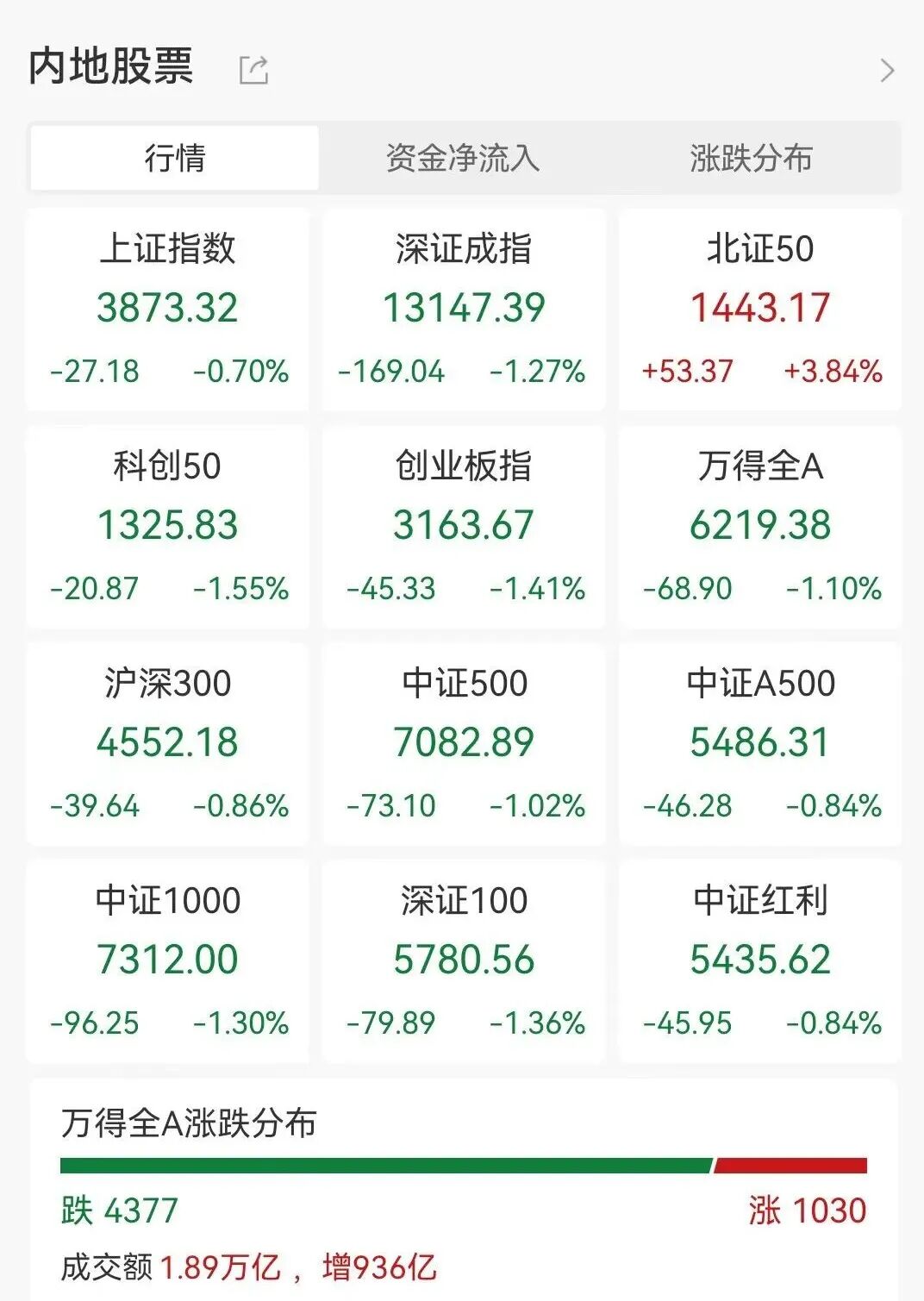
12月11日午后,亚太股市呈现"先扬后抑"的剧烈反转,截至收盘日韩股市集体收跌,A股三大股指尾盘也加速下跌,创业板指、深证成指均跌超1%,沪指 跌0.7%,全市场超4300只个股下跌。泛消费、房地产、纺织服装、食品饮料等方向跌幅居前。 | 行情 | 资金净流入 | 涨跌分布 | | --- | --- | --- | | 上证指数 | 深证成指 | 北证50 | | 3873.32 | 13147.39 | 1443.17 | | -27.18 -0.70% -169.04 -1.27% +53.37 +3.84% | | | | 科创50 | 创业板指 | 万得全A | | 1325.83 | 3163.67 | 6219.38 | | -20.87 -1.55% -45.33 -1.41% -68.90 -1.10% | | | | 沪深300 | 中证500 | 中证A500 | | 4552.18 | 7082.89 | 5486.31 | | -39.64 -0.86% -73.10 -1.02% -46.28 -0.84% | | | | 中证1000 | 深证100 | 中证红利 | | 731 ...
A股三大股指尾盘下跌,摩尔线程猛涨28%市值破4400亿,加密货币全线杀跌15万人爆仓
21世纪经济报道· 2025-12-11 07:29
记者丨江佩佩 编辑丨刘巷 12月11日午后,亚太股市呈现"先扬后抑"的剧烈反转, 截至收盘 日韩股市集体收跌,A股三大股指尾盘也加速下跌,创业板指、深证成指均跌 超1%,沪指跌0.7%,全市场超4300只个股下跌。泛消费、房地产、纺织服装、食品饮料等方向跌幅居前。 | 内地股票 [^ | | | | --- | --- | --- | | 行情 | 资金净流入 | 涨跌分布 | | 上证指数 | 深证成指 | 北证50 | | 3873.32 | 13147.39 | 1443.17 | | -27.18 -0.70% -169.04 -1.27% +53.37 +3.84% | | | | 科创50 | 创业板指 | 万得全A | | 1325.83 | 3163.67 | 6219.38 | | -20.87 -1.55% -45.33 -1.41% -68.90 -1.10% | | | | 沪深300 | 中证500 | 中证A500 | | 4552.18 | 7082.89 | 5486.31 | | -39.64 -0.86% -73.10 -1.02% -46.28 -0.84% | | | ...
A股收评 | 三大指数弱势震荡 北证50走高!可控核聚变概念活跃
智通财经网· 2025-12-11 07:16
12月11日,三大指数弱势震荡。截至收盘,上证指数跌0.7%,深证成指跌1.27%,创业板指跌1.41%, 北证50涨3.84%。 市场分析认为,午后北证50指数拉升的原因在于: 消息面上,根据指数编制方案,北京证券交易所和中证指数有限公司对北证指数样本股及备选名单进行 定期调整,于2025年12月15日正式生效。其中,北证50样本股名单中包括五新隧装、贝特瑞、艾融软 件、曙光数创、安达科技、锦波生物等。 而对于主要指数的调整,分析人士认为,主要有三个原因: 一是,甲骨文公司股价盘后暴跌达11.5%,加深了市场对于AI泡沫的担忧; 1、风电股震荡走强 风电股震荡走强,金风科技、东方电气、瑞风新能源等涨幅靠前。 点评:消息面上,国金证券研报指出,25Q3风电行业经营性净现金流继续改善,板块经营性净现金流 34亿元,同比增加7亿元。Q3行业存货规模继续提升,合同负债阶段性下降,预计Q4装机旺季行业需求 有望保持高增。 2、商业航天活跃 二是,美联储虽然降息,但"点阵图"维持2026年只有一次降息的预测; 三是,最近市场都在反映日本央行降息。今早,更有日本央行前官员预计,到2027年或将有四次加息。 盘面上,商业航 ...
AI泡沫?从霍华德·马克斯最新备忘录,到梁力一场关于理性押注的深度分享
聪明投资者· 2025-12-11 07:04
前段时间听了云脊资产创始人梁力的一场线下交流,主题绕不开当下最热也最危险的话题之一: AI 的繁荣 与泡沫。 而前天( 12 月 9 日)橡树资本联合创始人的霍华德 · 马克斯最新备忘录 《 2025年12月:AI泡沫? 》 (点击阅读 ), 用了 1.7 万字的雄文来讨论这个命题。 分析洋洋洒洒,而且马克斯是有结论的,他在文末写道:" 没有人能断言这是否为泡沫,因此我建议任何人 都不应孤注一掷,必须认识到若事态恶化,将面临破产风险。但同样地,也不应完全置身事外,以免错失这 一史上重大技术进步所带来的机遇。 适度的仓位,辅以甄选和谨慎,似乎是最佳之道。 " 在读完备忘录、回想那天和梁力的对话之后,会有一种很强烈的感觉:两个人站在完全不同的坐标系里,却 看到了很多类似的风险轮廓与机会逻辑。 他们最重要的共识有三点。 第一, AI 有望成为有史以来最具变革性的技术之一。 第二,真正危险的地方不在技术,而在围绕技术展开过度投资与资本循环。 马克斯反复提醒,历史上的每一轮大技术革命,几乎都伴随着 " 超前且过度 " 的资本开支和杠杆使用,泡 沫往往产生在资产价格和融资结构上,而不是在技术本身上。 梁力则从产业链内部切 ...

黑天鹅突袭!刚刚,亚太主要股市全线杀跌!
Sou Hu Cai Jing· 2025-12-11 07:02
那么,究竟发生了什么?分析人士认为,主要有三个原因: 美联储昨晚降息且表示扩表,没想到反而成了诱多因子。今天早上,亚太主要股市皆高开,但随后全线 跳水。同时,标普500指数期货跌幅扩大至1%,纳斯达克100指数期货下跌1.5%。虚拟货币也集体下 跌,比特币再度跌破9万美元大关,其余主要币中全线大幅走弱。 一是,甲骨文公司股价盘后暴跌达11.5%,加深了市场对于AI泡沫的担忧; 二是,美联储虽然降息,但"点阵图"维持2026年只有一次降息的预测; 三是,最近市场都在反应日本央行加息。今早,更有日本央行前官员预计,到2027年或将有四次加息。 但相比12月降息,对未来更重要的事情:一是美联储决定扩表(首月购买400亿美元),这比预期来得 更快,直接有利于市场流动性;二是明年初新主席即将被提名,虽然到明年6月才会换届,但市场利率 可以提前根据新主席表态来交易新的路径,进而通过市场利率变化来影响资产甚至实体经济。 短期内,降息被充分计入且降息暂停预期都可能使得美债和美元变动有限,不过扩表有望直接提供流动 性,更利好美股和短债。明年初等待新主席提名后,宽松预期再度回归。 美东时间周三盘后,美股科技巨头甲骨文股价暴跌11 ...
黑天鹅突袭!刚刚,全线杀跌!
券商中国· 2025-12-11 06:14
Core Viewpoint - The recent interest rate cut by the Federal Reserve, which was expected to be a positive factor, has instead led to market declines, raising concerns about potential AI bubbles and future monetary policy directions [1][5]. Group 1: Federal Reserve Actions - The Federal Reserve cut interest rates but maintained a forecast of only one rate cut by 2026, indicating a hawkish stance [5]. - The Fed's decision to expand its balance sheet by purchasing $40 billion in the first month is seen as a move to enhance market liquidity [5]. - Fed Chairman Jerome Powell suggested that current interest rates are at a "neutral level," which may limit future rate cuts [5]. Group 2: Oracle's Earnings Report - Oracle's stock plummeted by 11.55% after disappointing earnings, with concerns that AI orders may take longer to fulfill [3]. - The company's cloud business revenue grew by 34% to $7.98 billion, while infrastructure revenue increased by 68% to $4.08 billion, both slightly below analyst expectations [3]. - Oracle reported a free cash flow of -$10 billion for the second fiscal quarter, with capital expenditures reaching $12 billion, raising concerns about cash flow management [3]. Group 3: Japanese Monetary Policy - The Bank of Japan's potential for up to four interest rate hikes by 2027 has been highlighted, with expectations of a rate increase next week [7]. - The strengthening of the yen may reduce import cost sensitivity for Japanese companies, potentially impacting global commodity prices [7]. - Recent bond auction results showed strong demand for Japanese 20-year bonds, indicating market resilience despite previous volatility [7].



美科技企业加速在印布局AI 业内心存疑问
Yang Shi Xin Wen· 2025-12-11 02:55
Group 1 - Amazon plans to invest $35 billion in India by 2030 to develop the artificial intelligence (AI) industry, building on its previous investment of nearly $40 billion in the country for infrastructure [1] - Microsoft announced a $17.5 billion investment in India to establish AI infrastructure, with a key project being a data center in Hyderabad set to launch mid-next year [1] - Google has also revealed plans to invest $15 billion in building an AI data center in Visakhapatnam, Andhra Pradesh, India [1] Group 2 - Concerns have been raised by industry insiders regarding the prospects and risks of these investments, noting that India's late start in AI investment and the low success rate of government-driven projects may hinder progress [1] - The total scale of investment projects launched by U.S. tech giants in AI has reached trillions of dollars, raising concerns about a potential AI bubble as investors demand proof of returns on these massive investments [2]



美科技企业加速在印布局AI,业内心存疑问
Bei Jing Ri Bao Ke Hu Duan· 2025-12-10 15:27
不过,有业内人士对这些项目的前景和风险心存疑问。法国《回声报》援引印度科技界人士的话报道, 印度对AI领域的投资起步较晚,由政府推动的项目通常成功比例很低。一些企业虽有潜力,却难以从 风险投资基金那里筹集到资金,导致项目往往无法实施。 来源:新华社 按照亚马逊公司10日的说法,亚马逊公司此前在印度的投资额接近400亿美元,用于建设实体和数字基 础设施,包括交通网络、数据中心、数字支付等。计划中的350亿美元投资将涉及其在印度的所有商业 板块。 转自:北京日报客户端 此前,谷歌公司也宣布计划投资150亿美元在印度安得拉邦港口城市维萨卡帕特南建设一座AI数据中 心。 美国电子商务平台亚马逊公司10日说,到2030年,将在印度投资350亿美元,用于发展人工智能(AI)产 业。另一家美国大型科技企业微软公司9日也宣布计划在印度投资175亿美元建设AI基础设施。 上月,微软还宣布计划在葡萄牙投资100亿美元、在阿拉伯联合酋长国投资150亿美元,用于AI基础设 施。据统计,美国科技巨头围绕AI推出的投资项目总规模达数万亿美元。路透社评论,这些企业估值 飙升和一系列"循环投资"加剧了人们对AI泡沫的担忧。投资者要求美国科技 ...