东升西落

Search documents
“信心牛”再创新高,未来向何处去?
水皮More· 2025-08-19 10:00
Core Viewpoint - The article presents a bullish outlook on Chinese assets, emphasizing a "confidence bull market" driven by significant policy easing and a shift in market sentiment towards optimism regarding China's economic prospects [5][7]. Group 1: Market Trends and Economic Outlook - Recent performance of A-shares and Hong Kong stocks indicates a new high for RMB assets, coinciding with a weakening US dollar and strengthening RMB exchange rate [6]. - The "confidence bull market" is characterized by a historical turning point in macroeconomic policy, marked by substantial fiscal measures and ongoing monetary easing [7]. - The concept of "East rises, West falls" suggests that while the US economy may face a downturn, China's economy is poised for recovery and renewed interest from global investors [7]. Group 2: Historical Analysis of A-share Bull Markets - A-share bull markets require three conditions for initiation: policy shift, capital inflow, and low valuations, often emerging from periods of despair [9]. - Bull markets typically progress through three phases: policy-driven, capital-driven, and fundamental-driven, with initial phases less correlated to economic fundamentals [9][10]. - The average duration of A-share bull markets is 17.35 months, significantly shorter than the average bear market duration of 27.12 months [10]. Group 3: Economic Trends for the Second Half of 2025 - The global economic landscape is marked by rising populism and de-globalization, with Chinese companies increasingly seeking opportunities abroad [12]. - The ongoing US-China tariff conflict is expected to persist, with potential escalations in trade tensions [12]. - Key factors for economic recovery include restoring confidence in the private sector, stabilizing the real estate market, and fostering new productive forces [12][13]. Group 4: Strategies for Economic Recovery - The concept of "debt migration" is proposed as a strategy to revitalize the economy, emphasizing the need for government and central bank intervention to alleviate debt burdens on households and businesses [14][15]. - Three main strategies for implementing "debt migration" include aggressive economic policies, establishing a housing reserve bank, and investing in new infrastructure [16][17]. - The focus on new infrastructure aims to support long-term economic growth and technological advancement, positioning China for future economic prosperity [16][17].

任泽平:此轮牛市是风险偏好提升带来的“信心牛”,重启经济复苏关键在于“债务大挪移”
Sou Hu Cai Jing· 2025-08-19 05:02
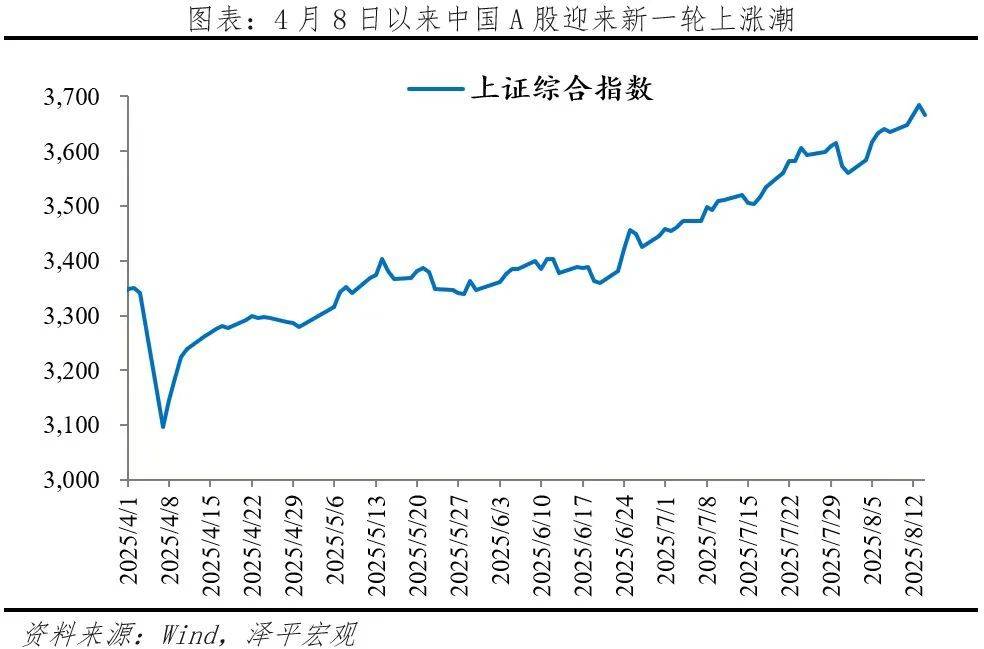
Group 1 - The core viewpoint of the article is that the current bull market in A-shares is characterized as a "confidence bull" driven by a significant shift in macroeconomic policy and an increase in risk appetite, rather than being fundamentally driven by corporate earnings [6][10][13] - A-shares have shown remarkable performance, with major indices reaching new highs and a significant increase in trading volume, indicating a strong market sentiment [2][3] - The increase in retail investor participation is evident, with a notable rise in new account openings and a shift of funds from savings to the stock market [3][4] Group 2 - The current bull market is not fundamentally driven, as economic indicators show signs of slowing down, including declines in industrial production, fixed asset investment, and real estate sales [4][5] - The bull market is influenced by a liquidity trap and a lack of alternative investment options, leading to a surge in capital inflow into the stock market as investors seek returns [5][9] - The driving forces behind the bull market include a significant increase in risk appetite and a decrease in the risk-free interest rate, which have been mutually reinforcing since the macroeconomic policy shift on September 24, 2023 [9][10][11] Group 3 - The macroeconomic policy shift on September 24, 2023, marked a turning point, leading to a series of measures that boosted market confidence, including monetary easing and support for the real estate sector [10][14] - The bull market is expected to have strategic significance for the development of new economies and hard technologies, providing necessary capital market support for these sectors [17] - The current bull market is seen as a potential driver for wealth effect recovery, which could positively impact consumer spending and the real estate market [17][18]
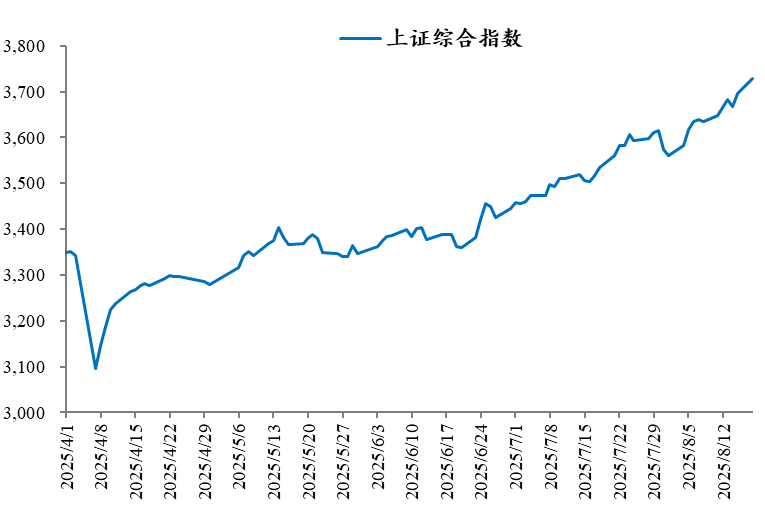
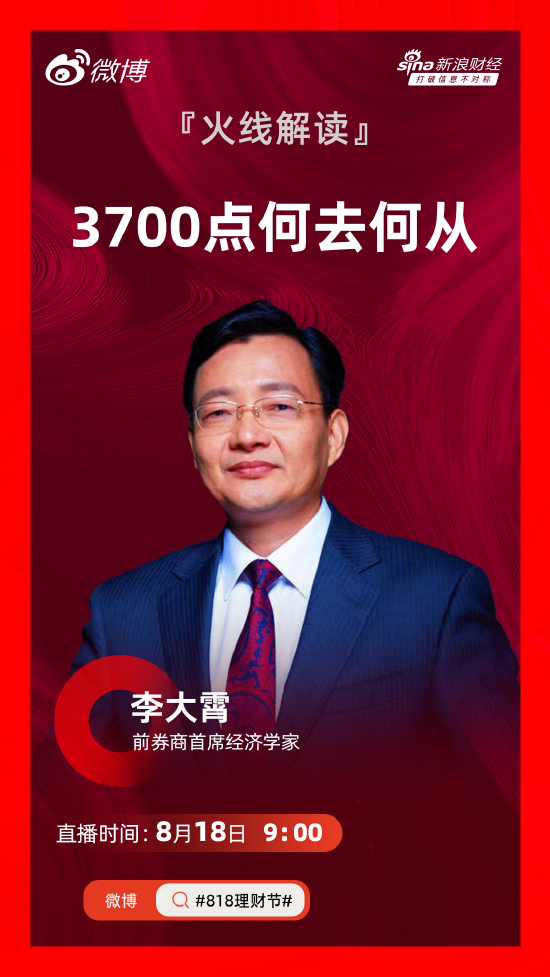
3700点何去何从?李大霄最新解读:3700点不是顶部!追高要谨慎!(附A股港股下半年投资攻略)
Xin Lang Zheng Quan· 2025-08-18 03:50
Core Viewpoint - The current market level of 3700 points is seen as a temporary station in the ongoing bull market, with different implications for various asset classes [1][3][4] Investment Strategy - Investors are advised to focus on high-quality stocks, particularly in the banking, insurance, and state-owned enterprises sectors, which are considered undervalued [1][9] - A strategy of investing in H-shares before A-shares is recommended, reflecting the "East rises, West falls" trend in global markets [1][9] Market Dynamics - The banking index is at 7, the dividend index at 7.8, and the state-owned enterprise index at 9, indicating that these levels are relatively low compared to previous peaks in 2015 and 2021 [3][4] - The bond market is currently experiencing its lowest yields in history, prompting a shift of funds from bonds to stocks [4][6] Cautionary Notes - Investors should avoid high-risk stocks, particularly those at risk of delisting, as 23 companies have already been delisted this year [4][5] - The market may experience volatility around the 3700-point mark, as many investors who have been trapped in poor-performing stocks may rush to sell [6][11] Recommendations for New Investors - New investors are encouraged to start with mutual funds before moving to individual stocks, emphasizing a gradual approach to investing [12][8] - A "pyramid" investment strategy is suggested, where larger amounts are invested at lower prices and smaller amounts at higher prices, contrasting with the less effective "inverted pyramid" strategy [8][11]
下半年A股与港股投资攻略!李大霄:关注低估核心资产 把握东升西落机遇
Xin Lang Zheng Quan· 2025-08-18 02:54
Core Viewpoint - The current investment sentiment is rising, and there is a discussion on whether the market may become overheated in the future. The focus is on the potential evolution of the slow bull market and the attractiveness of certain sectors, particularly financials and state-owned enterprises, which are considered undervalued [1][2]. Group 1: Investment Opportunities - Financial sector, including large financial institutions, is highlighted as an attractive investment area due to its relative undervaluation [1]. - H-shares are expected to be a focal point for global investors, reflecting the "East rises, West falls" narrative, indicating a shift in capital flows towards Asia [1][2]. - The Hong Kong capital market has shown significant growth, rising from 14,597 points to over 25,000 points, demonstrating its increasing attractiveness to global capital [2]. Group 2: Market Dynamics - There is a growing probability of capital returning from the U.S., where high asset prices and tax implications are prompting investors to consider repatriation [2]. - The U.S. market, particularly the Dow Jones Industrial Average, is described as historically high with a price-to-earnings ratio of 9, making it less appealing compared to emerging markets like China [2]. - The Chinese economy is contributing over 30% to global economic growth, reinforcing the belief in the potential for "East rises" [2]. Group 3: Core Assets - Core assets in both Hong Kong and A-shares include major indices such as the Shanghai Composite Index, Hang Seng Technology Index, and various financial indices, which are attracting long-term domestic and international investments [3]. - The non-bank financial sector is experiencing significant activity, indicating a diverse range of investment opportunities that combine traditional and technological assets [3].
李大霄:下半年看好大金融、红利等三个方向 且是“先H后A”策略
Xin Lang Zheng Quan· 2025-08-18 02:50
Core Viewpoint - The current investment sentiment is rising, and there is a discussion on whether the market may become overheated in the future, with a focus on the evolution of the slow bull market [1] Group 1: Investment Opportunities - Financial sectors, including large financial institutions, are considered undervalued and attractive for investment [1] - H-shares are highlighted as a significant focus for global investors, reflecting the "East rises, West falls" narrative, indicating a shift in capital towards Asia [2] - Core assets such as the Shanghai Composite Index, Hang Seng Technology, and Hang Seng National Enterprises are identified as mainstream core assets that can attract long-term domestic and international capital [3] Group 2: Market Dynamics - There is an increasing probability of capital returning from the U.S., where high asset prices and tax implications are driving investors to consider returning to the Chinese market [2] - The Hong Kong capital market has shown significant growth, rising from 14,597 points to over 25,000 points, demonstrating initial success in attracting global capital [2] - The non-bank financial sector is experiencing robust activity, indicating a diverse range of investment opportunities that include both traditional and technology-driven assets [3]
湖南金证:外资加速回流,A股“东升西落”趋势能否延续?
Sou Hu Cai Jing· 2025-08-16 04:18
Group 1 - The core viewpoint is that "East rises, West falls" has become a key theme in global capital markets, with strong performance in Chinese assets and a pullback in US stocks, leading to accelerated foreign capital inflow into A-shares and Hong Kong stocks [1][3] - The current logic behind foreign capital inflow is the "value gap effect" in Chinese assets, as A-share valuations are at global lows after a long adjustment, combined with an improving policy environment, attracting foreign investment in sectors like technology hardware and consumer services [3][5] - Despite the recovery in market sentiment, there are concerns about the sustainability of the "East rises, West falls" trend, as current foreign capital inflow is more about internal rotation within the Asia-Pacific market rather than a large-scale withdrawal from US stocks [3][5] Group 2 - Short-term, foreign capital inflow and valuation recovery may support a continued rebound in A-shares, but the medium to long-term trend will depend on the strength of economic recovery and the effectiveness of policy implementation [5] - The restructuring of the global capital landscape is ongoing, and whether "East rises, West falls" can become a new normal will require time to validate [5]

“信心牛”再创新高,未来向何处去?
Sou Hu Cai Jing· 2025-08-15 00:03
Group 1 - The core viewpoint is that the Chinese market is experiencing a "confidence bull market" due to significant policy easing, leading to a turnaround in confidence towards Chinese assets and economic prospects [2] - The historical turning point for macroeconomic policy was marked by the introduction of a 10 trillion yuan debt relief plan and continuous easing in monetary policy, including interest rate cuts [2] - The report suggests that a large-scale economic stimulus plan and protection for the private economy could lead to a scenario where the East rises and the West declines, indicating a potential recovery for the Chinese economy [2] Group 2 - The analysis of A-share bull markets reveals that three main conditions are necessary for a bull market to start: policy shift, capital inflow, and low valuations [5] - A-share bull markets typically go through three phases: policy-driven, capital-driven, and fundamental-driven, with the initial phase being less correlated with economic fundamentals [6] - The average duration of A-share bull markets is 17.35 months, significantly shorter than the average duration of bear markets at 27.12 months [6] Group 3 - The report identifies ten key trends for the Chinese economy in the second half of the year, including the need for a new round of large-scale economic stimulus due to downward pressure on the economy [8][9] - The recovery of the private economy, a soft landing for the real estate market, and the development of new productive forces are highlighted as critical points for economic recovery [10] - The fourth technological revolution is expected to create new opportunities in fields such as artificial intelligence, new energy, and commercial aerospace [11] Group 4 - The concept of "debt migration" is proposed as a strategy to restart economic recovery, emphasizing the need for government and central bank intervention to alleviate debt pressure on residents and businesses [15][16] - Three main strategies for implementing "debt migration" include aggressive economic policies, the establishment of a housing reserve bank, and the promotion of new infrastructure projects [17] - The report draws lessons from Japan's economic stagnation and the successful responses of the U.S. during the financial crisis and pandemic, advocating for a focus on repairing the balance sheets of residents and businesses to stimulate consumption and investment [18]
美元基金又活跃了
FOFWEEKLY· 2025-08-11 10:03
Core Viewpoint - The article highlights a resurgence of foreign investment interest in Chinese assets, driven by policy benefits and technological breakthroughs, indicating a strategic recalibration of international capital towards China [2][4][11]. Group 1: Market Dynamics - The foreign investment landscape in China is experiencing a revival, with significant increases in activity noted since 2025, particularly in the venture capital sector [5][11]. - Data from FOFWEEKLY shows that in June 2025, the activity level of industrial LPs increased by 14% month-on-month, with non-listed companies showing a 17% increase, the highest among all LP types [6]. - The number of newly registered private equity and venture capital funds surged to 409 in June, marking a 61.02% increase compared to the same period last year, reflecting a substantial recovery in market confidence [6]. Group 2: Foreign Investment Strategies - Several local VC firms are initiating new rounds of fundraising for dollar-denominated funds, with a total target of at least $2 billion [7]. - Foreign LPs are increasingly establishing local offices and participating in RMB fundraisings, utilizing QFLP policies to integrate deeper into the Chinese private equity market [12]. - Notable global PE firms are accelerating their presence in China, with recent registrations of private fund managers and the establishment of onshore funds, indicating a strategic shift towards the Chinese market [12]. Group 3: Talent Acquisition Trends - Since Q2 2025, multiple dollar and dual-currency funds have resumed hiring for key positions, particularly in Investor Relations (IR), signaling a renewed commitment to market engagement [8][9]. - The hiring trend is not limited to dollar funds; several RMB funds are also adding dollar IR positions, indicating a broader strategy to attract foreign capital [9]. Group 4: Long-term Outlook - The year 2025 is increasingly viewed as a pivotal turning point for foreign investment in China, with a notable recovery in investment interest from foreign LPs [11][13]. - The combination of technological advancements and policy incentives is reshaping perceptions of China as a valuable investment destination, with a growing focus on sectors like AI and robotics [13][14].

刘煜辉:当前中国资本市场正孕育一个“低波长流”的新牛市
Xin Lang Zheng Quan· 2025-07-29 09:00
直播连麦 炒股就看金麒麟分析师研报,权威,专业,及时,全面,助您挖掘潜力主题机会! 7月29日,新浪财经连线@刘煜辉lyhfhtx 博士,就A股走势、经济周期、资产配置等关键问题进行分 享。>>视频直播 在对话尾声,刘煜辉回应"普通投资者如何修炼心态"这一提问时表示,A股是一个"靠心定价"的市场, 核心并不在于谁最懂逻辑,而是谁能看得远、坐得住、信得过。他指出,中国股市波动大的本质原因, 在于估值的"分子"难以长期高增长,反而是"分母"——即投资者的信心与风险偏好——长期决定了市场 的主趋势。 从宏观结构来看,中国在极短时间内从"短缺经济"跃迁至"生产过剩",高增长期的红利窗口极为有限。 因此,市场难以依靠持续的盈利增长支撑估值。反之,信心、体制信任、国家治理能力、全球博弈中的 战略优势,才是撬动分母、驱动牛市的关键变量。 刘煜辉直言指出,如果你相信中国制度的韧性、相信长期战略方向没有错,那你就有资格享受市场的长 期红利。他对"东升西落"的全球趋势充满历史自信,并认为当前中国资本市场正孕育出一个"低波长 流"的新牛市,"不是情绪爆发型的,而是信任积累型的"。在他看来,真正的机会从来都不喧哗,而是 留给那些愿意 ...

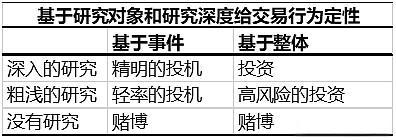
对当前市场的看法:估值不低,但谈泡沫还太早了
3 6 Ke· 2025-07-23 01:40
Core Insights - The article discusses investment philosophies, emphasizing the importance of practical methodologies over abstract theories [2][3] - It introduces the book "Big Money Thinks Small" by Joel Tillinghast, a notable public fund manager, focusing on stock selection strategies [4][5] Investment Methodologies - Tillinghast advocates for a bottom-up stock selection approach, prioritizing company-specific characteristics over macroeconomic factors [6][8] - The article contrasts top-down and bottom-up investment strategies, explaining that top-down approaches start with macroeconomic analysis before narrowing down to specific companies [7] Critique of Macroeconomic Analysis - Tillinghast expresses skepticism towards macroeconomic theories, arguing that they often lack objectivity and scientific validity [9][10] - He highlights the subjective nature of economic models and their inability to consistently predict economic outcomes [11][12][13] Stock Selection Criteria - Tillinghast emphasizes the importance of low price-to-earnings (P/E) ratios in stock selection, suggesting that lower initial P/E ratios correlate with higher long-term returns [31][33] - Historical data indicates that stocks with initial P/E ratios below 15 yield significantly higher returns over 10 years compared to those with P/E ratios above 25 [33][39] Industry Performance Insights - The article references a study on industry performance from 1900 to 2016, identifying consumer goods and tobacco as historically strong sectors, while shipping and textiles performed poorly [40][41] - It suggests that industries with stable consumer demand tend to yield better investment returns due to brand loyalty and market stability [40] Current Market Observations - The article notes a challenging investment environment in 2025, characterized by rapid style rotation and a lack of sustainable trends [44][46] - It discusses the potential impact of stablecoins on wealth transfer and market dynamics, suggesting that their proliferation could significantly influence global financial systems [46][47]