二级制裁

Search documents
三方会谈变两方,特朗普:普京无需同意和泽连斯基会面
Xin Lang Cai Jing· 2025-08-08 01:55
Group 1 - The core viewpoint of the articles revolves around the evolving dynamics of U.S.-Russia relations, particularly regarding potential meetings between the leaders of the U.S., Russia, and Ukraine [1][2][3] - Trump indicated that a meeting between him and Putin could occur without the necessity of a meeting with Zelensky, shifting the focus to a U.S.-Russia dialogue [1] - Putin expressed a willingness to meet with Trump and acknowledged the need for certain conditions to be met before a meeting with Zelensky could take place [2] Group 2 - Trump set August 8 as a "deadline" for a peace agreement between Russia and Ukraine, warning of new sanctions against Russia if no progress is made [2][3] - The U.S. has already imposed sanctions on 213 vessels related to Russia's oil transport, indicating a strong stance against Russia's circumvention of sanctions [3] - The U.S. is considering additional sanctions against third-party countries purchasing Russian oil, particularly targeting India with a 25% tariff on goods due to its continued oil purchases from Russia [3]
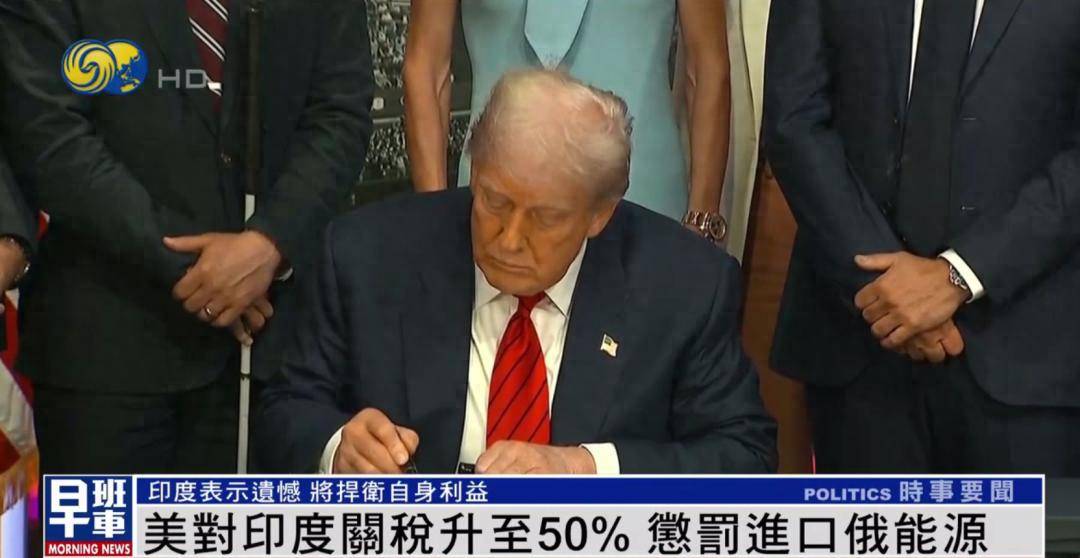
特朗普对印度关税翻倍升至50% 印度:将采取一切必要措施捍卫利益
Sou Hu Cai Jing· 2025-08-07 05:47
Core Points - The article discusses the announcement by President Trump to double tariffs on India from 25% to 50% due to India's continued purchase of Russian oil, marking an escalation in the trade conflict between the U.S. and India [1][4] - This new executive order represents the first instance of secondary sanctions imposed by the U.S. on a country identified as aiding Russia's war efforts [1][4] - The combined tariffs will result in the highest tariff rate currently imposed by Trump, affecting a wide range of imports from India [1] Group 1 - The new tariffs will take effect 21 days after the executive order is signed, significantly increasing the total tariff rate on imports from India to 50% [1] - In the previous year, the total value of goods imported by the U.S. from India was $87 billion, while India imported $42 billion worth of goods from the U.S. [6] - Major imports from India to the U.S. include pharmaceuticals, communication equipment like smartphones, and clothing, with smartphones being exempt from the new tariffs [6] Group 2 - The Indian government has expressed regret over the U.S. actions, emphasizing that its imports of Russian oil are based on market factors and aimed at ensuring energy security for its 1.4 billion citizens [3] - The new tariffs are expected to impact the long-standing efforts to deepen bilateral relations between Washington and New Delhi [4] - The U.S. exports to India primarily consist of various types of oil and gas, chemicals, and aerospace products and components [6]

深夜突发!特朗普:征收100%关税!
天天基金网· 2025-08-07 04:24
Group 1 - The core viewpoint of the article is that President Trump announced a plan to impose approximately 100% tariffs on chips and semiconductors, while companies manufacturing in the U.S. would be exempt from these tariffs [2] - Trump revealed this tariff plan during an announcement of a $100 billion new investment with Apple CEO Tim Cook, emphasizing that U.S. production would not incur tariffs [2] - The tariffs are intended to incentivize domestic manufacturing and job creation, as even companies in the construction phase would be exempt from tariffs [2] Group 2 - Trump also mentioned that he has begun interviewing candidates for the Federal Reserve, narrowing it down to three individuals, and does not expect Bessenet to take the position [3] - The Federal Reserve's Daly indicated that policy adjustments may be necessary in the coming months due to a softening labor market, and that inflation is not likely to be driven up in a way that requires monetary policy intervention [3] - The Fed needs to recalibrate its monetary policy to address various risks affecting its targets, and cannot wait for complete clarity before taking action [3] Group 3 - Trump announced plans for additional secondary sanctions against Russia, setting a deadline for peace negotiations between Russia and Ukraine [5] - If no progress is made by the set deadline, the U.S. will impose new sanctions on Russia [5] - The Trump administration also canceled the "Lava Ridge" wind project, citing significant legal flaws and violations of statutory review processes, which was intended to have a capacity of 1,000 megawatts [5]
消息人士称特朗普计划最早下周与普京和泽连斯基会面
证券时报· 2025-08-07 00:12
Group 1 - The article discusses President Trump's plans to hold a face-to-face meeting with Russian President Putin and Ukrainian President Zelensky, with the meeting expected to take place soon [2][3] - Trump has set a deadline of August 8 for Russia to make progress towards a peace agreement with Ukraine, after which new secondary sanctions will be imposed if no progress is made [6][14] - The article mentions a productive meeting between U.S. Middle East envoy Wittekov and President Putin, which lasted nearly three hours and covered topics including the Ukraine crisis and future U.S.-Russia strategic cooperation [12][15] Group 2 - Trump communicated with European leaders about his plans for the meetings, indicating that all parties agree the conflict must end and efforts will be made in the coming days and weeks to achieve this [13] - Zelensky confirmed that multiple European leaders participated in discussions regarding the Moscow talks, highlighting the collaborative nature of the diplomatic efforts [10] - The article notes that Russia has expressed a desire to continue engaging with the U.S., and the U.S. is expected to implement secondary sanctions on August 8 [14]

深夜突发!特朗普:征收100%关税!
Zhong Guo Ji Jin Bao· 2025-08-06 23:54
【导读】特朗普:将对芯片和半导体征收约100%的关税 一起来看下最新的海外动态。 特朗普:将对芯片和半导体征收约100%的关税 7月29日,特朗普称,把俄罗斯与乌克兰达成和平协议的最后期限设定为10天,从当天开始计算。如果 俄方没有就此取得进展,将面临美国新的制裁。特朗普对俄罗斯设置的完成俄乌和谈最后期限为8月8 日。 当地时间8月6日,特朗普政府宣布,取消拜登任期末批准的"熔岩岭"风电项目,称其存在"重大法律缺 陷",并违反多项法定审查程序。该项目原计划在爱达荷州南部修建231台风电机,总装机容量达1000兆 瓦,占地近5.7万英亩。特朗普政府内政部长伯格姆批评该项目"对农村社区构成危害"。 "换句话说,我们将对芯片和半导体征收约100%的关税,但如果你是在美国境内建造,则无需缴纳关 税。"特朗普说,"即使你正在建设,尚未投入生产,但就创造的大量就业岗位和所有建设项目而言,如 果你在建设,就不需要缴纳关税。" 特朗普:开始面试美联储候选人 当地时间8月6日,特朗普表示,开始面试美联储候选人,候选人降至三人,不认为贝森特会担任美联储 职务,将于未来几天任命临时美联储理事。 美联储戴利表示,未来几个月可能需要调 ...
深夜突发!特朗普:征收100%关税!
中国基金报· 2025-08-06 23:49
Group 1 - The core viewpoint of the article is that President Trump announced a plan to impose approximately 100% tariffs on chips and semiconductors, with exemptions for companies manufacturing in the U.S. [2][3] - Trump stated that companies like Apple would not face tariffs if they produce in the U.S. or have committed to U.S. production, emphasizing job creation and construction projects [3]. - The announcement was made during a meeting with Apple CEO Tim Cook, where a new investment of $100 billion was discussed [3]. Group 2 - Trump also mentioned that he is beginning to interview candidates for the Federal Reserve, narrowing the list down to three individuals [4]. - The Federal Reserve's Daly indicated that policy adjustments may be necessary in the coming months due to a softening labor market and the need to recalibrate monetary policy to address various risks [4]. - The article highlights that the U.S. government is taking a firm stance on international relations, including plans for additional sanctions against Russia if peace negotiations with Ukraine do not progress [6][7].
2025-08-06原油早报-20250806
Da Yue Qi Huo· 2025-08-06 03:30
1. Report Industry Investment Rating - Not provided in the content 2. Core Viewpoints of the Report - Overnight crude oil prices remained low. Trump's statement on sanctions against Russia will be decided after the envoy's meeting with Russian officials. The threat to India has not completely deterred India's purchases, and the oil price has shed its previous premium due to eased sentiment. Although the API inventory has significantly decreased, it has not significantly boosted the oil price. The market is waiting for more decisions on sanctions against Russia and the upcoming implementation of comprehensive reciprocal tariffs. The oil price is expected to continue to oscillate at a low level in the short term, with a short - term range of 500 - 508, and long - term long positions are recommended to be held [3] 3. Summary According to the Table of Contents 3.1 Daily Prompt - Trump will "significantly" increase the tariffs on goods imported from India from the current 25% within the next 24 hours and will decide whether to sanction countries that purchase Russian oil after the US - Russia official meeting on Wednesday. Fed's Daly said that the time for interest rate cuts is approaching, and two interest rate cuts this year are still an appropriate adjustment, but it's also possible that there won't be two cuts, and more cuts are more likely. The base difference shows that the spot price is at a premium to the futures price. The US API crude oil inventory decreased by 4.233 million barrels in the week ending August 1st, while the EIA inventory increased by 7.698 million barrels in the week ending July 25th. As of August 5th, the Shanghai crude oil futures inventory remained unchanged at 5.249 million barrels. The 20 - day moving average is downward, and the price is below the moving average. As of July 29th, the long positions of WTI and Brent crude oil increased [3] 3.2 Recent News - The Kremlin is considering making concessions to Trump, possibly including an air cease - fire agreement with Ukraine to avoid "secondary sanctions." Trump threatened to impose heavy taxes on countries like India that purchase Russian oil and other commodities from Friday. The US trade deficit narrowed by 16.0% to $60.2 billion in June, and the trade deficit with China shrank to the lowest in 21 years. In July, the US service - sector business activity was basically flat, orders hardly changed, employment weakened further, and input costs rose at the largest rate in nearly three years [5] 3.3 Long - Short Concerns - **Likely to be Bullish**: The US may impose secondary sanctions on Russian energy exports, and summer demand is starting to increase [6] - **Likely to be Bearish**: OPEC+ has increased production for three consecutive months, and the US has a tense trade relationship with other economies [6] - **Market Drivers**: Geopolitical conflicts are likely to drive up prices in the short term, and the market is waiting for the peak summer demand season in the long term [6] 3.4 Fundamental Data - **Futures Quotes**: The settlement prices of Brent crude, WTI crude, SC crude, and Oman crude decreased by - 1.63%, - 1.70%, - 1.49%, and - 1.12% respectively [7] - **Spot Quotes**: The prices of UK Brent Dtd, WTI, Oman crude, Shengli crude, and Dubai crude decreased by - 2.14%, - 1.70%, - 0.81%, - 0.36%, and - 1.36% respectively [9] - **Inventory Data**: The API inventory decreased by 4.233 million barrels in the week ending August 1st. The EIA inventory increased by 7.698 million barrels in the week ending July 25th, and the inventory in the Cushing area increased by 690,000 barrels in the same week [3] 3.5 Position Data - As of July 29th, the net long positions of WTI and Brent crude oil funds increased, with an increase of 2,692 for WTI and 33,959 for Brent [3][18][19]
中美瑞典会谈的观察总结
2025-08-05 03:20
Summary of Key Points from the Conference Call Industry or Company Involved - The conference call primarily discusses the ongoing trade negotiations between the United States and China, with a focus on tariffs, trade imbalances, and macroeconomic governance issues. Core Points and Arguments 1. **Extension of Tariffs**: The U.S. and China have agreed to extend the previously suspended reciprocal tariffs (24% from the U.S. and corresponding measures from China) for 90 days until mid-November, although the U.S. requires presidential approval for this extension [1][2][6][7]. 2. **Trade Imbalance Solutions**: The U.S. has suggested that China alleviate trade imbalances by increasing purchases of U.S. agricultural products and energy, similar to past globalization strategies [1][12]. 3. **Unresolved Issues**: Key unresolved issues include fentanyl tariffs, the TikTok transaction, and the potential visit of Trump to China. These topics were not explicitly discussed during the meeting [1][3][19]. 4. **Concerns Over China's Actions**: The U.S. expressed concerns regarding China's purchase of Iranian oil (over 10% of China's total crude imports) and military-civilian technology exports to Russia (valued at $15 billion), which could lead to secondary sanctions [1][15]. 5. **Macroeconomic Governance Discussions**: The talks included discussions on macroeconomic governance issues such as overcapacity and economic imbalances, with the U.S. highlighting China's significant share in global manufacturing [10][11]. 6. **Future Meetings**: Another meeting is expected around mid-November, with potential discussions in late October to address unresolved issues and maintain a constructive dialogue [19][21]. 7. **Trump's Evaluation of the Meeting**: Trump described the meeting as "very good," indicating a positive outlook on the tariff extension and overall discussions [7][20]. 8. **Potential Visit to China**: If invited, Trump may consider visiting China between late October and early November, avoiding significant domestic events [9][20]. Other Important but Possibly Overlooked Content 1. **Gradual Tariff Implementation**: The U.S. plans to implement lower tariffs initially and gradually increase them based on market reactions, emphasizing that these measures are not targeted at specific countries but aimed at rebuilding the domestic industrial system [14]. 2. **International Sanctions Coordination**: The U.S. is encouraging allies to join in potential secondary sanctions against China, which complicates trade negotiations and adds uncertainty to U.S.-China relations [16][17]. 3. **Long-term Uncertainties**: Despite short-term stability in U.S.-China relations, there are concerns about potential shifts in strategy from the Trump administration after late October, which could lead to increased tensions [21][22].
特朗普加税大棒砸向印度?8月3日,美印贸易战传来最新消息
Sou Hu Cai Jing· 2025-08-04 01:33
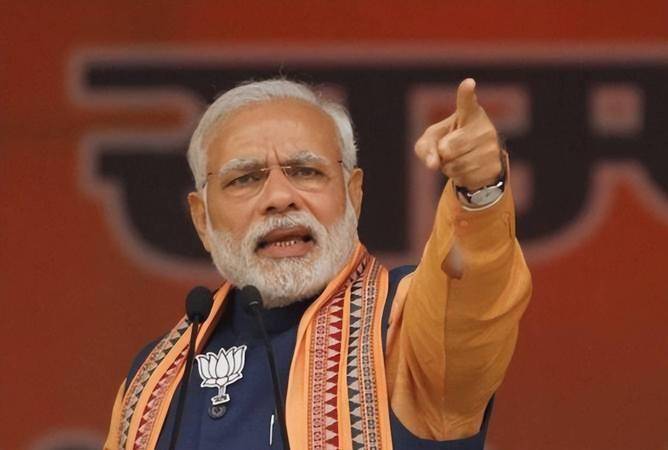
Core Viewpoint - The Modi government is facing significant challenges due to the U.S. imposing tariffs on India, which threatens its economic stability and strategic balance between the U.S. and Russia [2][4][10]. Group 1: U.S. Tariff Impact - The U.S. has raised tariffs to 25%, targeting India's economic lifelines, including military imports from Russia and oil from Siberia [2][4]. - This tariff increase is seen as a strategic move by the Trump administration to force India into compliance, reflecting a rapid shift in U.S.-India relations [2][10]. Group 2: India's Strategic Balancing Act - India has been attempting to maintain a strategic balance between the U.S. and Russia, holding oil contracts with Russia while engaging in strategic agreements with the U.S. [4][8]. - The recent U.S. actions have put this balancing strategy to the test, with Indian officials scrambling to find alternative oil supply sources [6][8]. Group 3: Diplomatic Maneuvering - In response to U.S. pressure, India is exploring new oil supply routes, potentially from the Persian Gulf, while also signaling a thaw in relations with China by easing investment restrictions [6][8]. - India's approach reflects a complex diplomatic strategy, attempting to leverage relationships with both Eastern and Western powers while avoiding excessive gains for any single party [6][10]. Group 4: Broader Implications - The tariff situation illustrates the complexities of international politics, where both the U.S. and India are employing their accumulated political strategies to navigate the crisis [16][18]. - The ultimate impact of these tariffs on the Indian populace and economy remains uncertain, as the Modi government seeks to find a stable path forward for its citizens [18][20].
不准买俄罗斯石油,买了就加税,美国的警告,中方可能不会在乎
Sou Hu Cai Jing· 2025-07-31 14:09
Core Viewpoint - The upcoming US-China trade negotiations are overshadowed by US threats regarding China's oil purchases from Iran and Russia, indicating a strategic maneuver by the US to exert pressure on China [1][12][19]. Group 1: US Strategy - The US Treasury Secretary has highlighted China's role as a major buyer of Iranian and Russian oil, suggesting that this issue will be a focal point in the upcoming trade talks [3][12]. - The US aims to leverage the threat of sanctions to compel China to reduce or cease its oil imports from these countries, which are economically dependent on oil exports [5][12]. - The concept of "secondary sanctions" is introduced, targeting countries that trade with Iran and Russia to further isolate these nations economically [7][12]. Group 2: China's Response - China has consistently opposed US unilateral sanctions, asserting that its oil purchases are a matter of national interest and not subject to US interference [14][15]. - The Chinese stance indicates that it will not engage in discussions regarding oil purchases during the trade negotiations, focusing instead on tariff-related issues [17][19]. - The situation reflects a broader strategy by the US to use oil sanctions as a tool for negotiation, which China is likely to dismiss as a tactic lacking real leverage [19][21].