
分布式光伏

Search documents
晚间公告丨10月28日这些公告有看头
Di Yi Cai Jing· 2025-10-28 10:33
Core Viewpoint - The news summarizes important announcements from various companies, highlighting stock suspensions, significant profit growth, and major contracts signed, which may present investment opportunities and insights into market trends [1][2]. Stock Suspensions - *ST Zhengping announced that its stock will be suspended from trading starting October 29, 2025, due to a significant price increase of 152.42% from September 1 to October 28, 2025, and abnormal trading fluctuations [3]. - Gongjin Co. announced a stock suspension starting October 27, 2025, due to the major shareholder planning a share transfer that may lead to a change in control [4]. Investment Activities - Juyuan Technology's subsidiary plans to invest 150 million yuan in establishing an industrial fund focused on chips, integrated circuits, and other high-growth sectors [5]. - YN Holdings decided to terminate investments in 17 distributed photovoltaic projects, originally planned to cost 1.197 billion yuan, due to changes in market conditions [6]. Earnings Reports - Suliy Co. reported a 2750% increase in net profit for Q3 2025, with revenue of 762 million yuan, up 26% year-on-year [8]. - Xianda Co. reported a net profit of 59.85 million yuan for Q3 2025, a 5447% increase, despite a 5.59% decline in revenue [9]. - Yutong Bus reported a net profit of 1.357 billion yuan for Q3 2025, a 78.98% increase, with revenue of 10.237 billion yuan, up 32.27% [10]. - Juxin Technology reported a net profit of 60.27 million yuan for Q3 2025, a 101.09% increase, with revenue of 273 million yuan, up 46.64% [11]. - Guanghong Technology reported a net profit of 99.61 million yuan for Q3 2025, a 99.68% increase, with revenue of 2.937 billion yuan, up 57.46% [12]. - Mingzhi Electric reported a net profit of 22.88 million yuan for Q3 2025, a 215.97% increase, with revenue of 729 million yuan, up 28.98% [13]. - Zhongwei Semiconductor reported a net profit of 65.82 million yuan for Q3 2025, a 3.66% decrease, with revenue of 269 million yuan, up 21.88% [14]. - Yiming Pharmaceutical reported a net profit of 44.21 million yuan for Q3 2025, a 1934.12% increase, with revenue of 178 million yuan, up 10.37% [15]. - Weilan Bio reported a net profit of 35.06 million yuan for Q3 2025, a 205.02% increase, with revenue of 364 million yuan, up 8.09% [16]. - Baiyunshan reported a net profit of 794 million yuan for Q3 2025, a 30.28% increase, with revenue of 19.771 billion yuan, up 9.74% [17]. - Giant Network reported a net profit of 640 million yuan for Q3 2025, an 81.19% increase, with revenue of 1.706 billion yuan, up 115.63% [18]. Share Buybacks - Haida Group announced a plan to repurchase shares worth between 1 billion and 1.6 billion yuan, aimed at reducing registered capital and implementing employee stock ownership plans [20]. Major Contracts - Bai'ao Intelligent announced it won a project worth 97.22 million yuan from a large state-owned company [22]. - Guangdong Construction signed a construction contract worth 1.924 billion yuan for a project in Guangzhou, with a duration of 1365 days [23][24].



第三季度“增收不增利” 光伏逆变器龙头锦浪科技拟发行可转债募资近17亿元
Mei Ri Jing Ji Xin Wen· 2025-10-14 15:24
Core Viewpoint - Jinko Technology reported a slight increase in revenue for Q3 2025, but a significant decline in net profit, indicating potential challenges in the solar inverter market [1][2]. Group 1: Financial Performance - In Q3 2025, Jinko Technology achieved revenue of 1.869 billion yuan, a year-on-year increase of 3.43%, while net profit dropped to 263 million yuan, a decrease of 16.85% [1]. - For the first nine months of 2025, the company reported revenue of 5.663 billion yuan, up 9.71% year-on-year, and net profit of 865 million yuan, an increase of 29.39% [2]. - The revenue figures for the first three quarters were 1.518 billion yuan, 2.276 billion yuan, and 1.869 billion yuan, with corresponding net profits of 195 million yuan, 407 million yuan, and 263 million yuan [2]. Group 2: Cost and Expenses - Jinko Technology's labor costs and R&D investments have been increasing, with employee compensation reaching 150 million yuan, a year-on-year increase of 34.51%, and R&D expenses totaling 341 million yuan, up 17.02% [2]. - Sales and management expenses were 417 million yuan and 237 million yuan, reflecting year-on-year increases of 22.94% and 29.53% respectively [2]. Group 3: Market Conditions - The company faced challenges in its core inverter revenue, which declined by 11.22% year-on-year, and a decrease in gross margin for household photovoltaic systems by 3.19 percentage points [2]. - Export data showed that in August, the inverter export value was 6.29 billion yuan, a year-on-year increase of 2.2% but a month-on-month decrease of 3.4% [2]. Group 4: Fundraising and Future Projects - Jinko Technology plans to issue 1.677 billion yuan in convertible bonds to fund various projects, including distributed photovoltaic power stations and new inverter projects [4]. - The projects are expected to add production capacity for high-voltage inverters and mixed storage inverters, with projected annual net profits of approximately 77.28 million yuan and 124 million yuan respectively [4]. - The company anticipates that these projects will enhance its competitive strategy and expand its product offerings in the distributed photovoltaic sector [4].

“生产限电”有了绿色解药——金融助力下的“厂房屋顶种电记”
Zhong Jin Zai Xian· 2025-10-10 07:46
Core Insights - The article highlights the resilience and innovation of small and micro enterprises in China, particularly in the context of financing support from the government and banks [1] - It emphasizes the successful transition of a traditional manufacturer to a renewable energy entrepreneur, showcasing the potential of distributed photovoltaic power stations to alleviate electricity supply issues [4][5] Group 1: Company Initiatives - Chen Jingli, a businessman from Wenzhou, faced challenges due to electricity supply restrictions, prompting him to explore renewable energy solutions [4] - After implementing a distributed photovoltaic power station, Chen's factory significantly reduced electricity costs, leading to a decision to pivot his business focus towards renewable energy [5][6] - The establishment of Oukong New Energy Technology Co., Ltd. in collaboration with Oujian Holding Group marks a strategic shift towards renewable energy solutions [6] Group 2: Financial Support and Impact - Zhejiang Bank's Wenzhou branch identified common challenges in the photovoltaic industry and introduced a financing solution, providing a loan of 5.4 million yuan to support Chen's project [6] - The photovoltaic project in the shoe manufacturing park resulted in a drastic reduction in electricity costs, from an average of 0.86 yuan per kWh to less than 0.5 yuan per kWh, saving approximately 930,000 yuan annually [9] - The bank's support for small and micro enterprises has led to a total loan balance exceeding 15 billion yuan, serving over 7,000 clients, and facilitating the construction of over 130,000 kW of photovoltaic power stations [12]

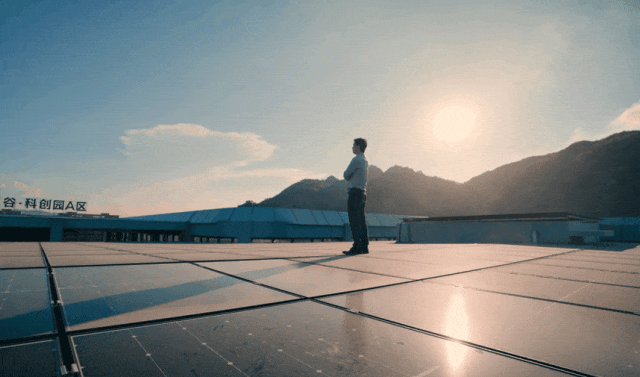
每3度电中就有1度绿电!风电光伏应用场景亟待进一步拓展
Zhong Guo Huan Jing Bao· 2025-09-17 03:10
Group 1 - The core viewpoint is that China has established the world's largest and fastest-growing renewable energy system, with renewable energy generation capacity increasing from 40% to approximately 60% [1] - The total electricity consumption in China now includes one-third green electricity, indicating a significant shift towards greener energy sources [1] - Distributed photovoltaic (PV) systems have emerged as a new force, with over 400 million kilowatts of new installations, including 160 million kilowatts from household PV systems, making over 7 million families "PV landlords" [1] Group 2 - China continues to prioritize large-scale renewable energy projects in regions with optimal conditions, such as Qinghai, Gansu, Shaanxi, and Ningxia, leading to the construction of major solar and wind power bases [1] - The "big base, big project" approach has resulted in significant investments and advancements in renewable energy technology, with China's renewable energy patents accounting for over 40% of the global total [1] - The average cost of electricity generated from wind and solar projects has decreased by 60% and 80%, respectively, over the past decade, showcasing China's contribution to global low-carbon transition [1] Group 3 - During the 14th Five-Year Plan, there has been a push to expand small-scale distributed wind and solar power markets, with over 7 million households adopting the "self-use and surplus electricity online" model [2] - The potential for small-scale distributed wind and solar power is significant, as these installations can be located near populated areas, leading to lower investment costs and improved land use [2] - Challenges remain in public awareness and willingness to utilize rooftops or barren land for solar installations, necessitating patience and targeted demonstrations in suitable communities [2] Group 4 - China has established a comprehensive wind and solar power technology system capable of producing a wide range of equipment and facilities [3] - To enhance product offerings, it is crucial to conduct thorough research to identify user needs and improve product design [3]
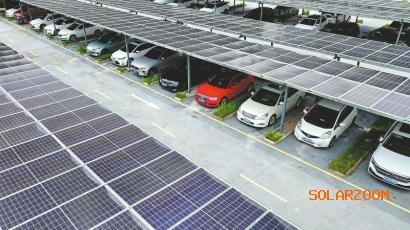
逾三千五百平方米的光伏棚每年发电超六十万度 露天停车场撑起“光伏伞”
Si Chuan Ri Bao· 2025-09-16 02:25
Group 1 - The core function of the newly installed photovoltaic panels at Anju District People's Hospital is to generate electricity, which will primarily supply the hospital's daily operations and reduce electricity costs, while excess electricity can be sold back to the grid [1][2] - The parking lot has been transformed into a multifunctional charging station that integrates parking, power generation, and environmental protection [1] - A similar integrated demonstration station in the He Dong New District features a 720kW liquid-cooled ultra-fast charging technology, allowing for rapid charging and vehicle-to-grid interaction [2] Group 2 - The photovoltaic project in Suining is part of the city's broader initiative to promote energy conservation and emission reduction, as outlined in the "14th Five-Year Plan for Energy Conservation and Emission Reduction" [2] - As of July this year, Suining has installed a total of 189.7 MW of photovoltaic capacity, with an additional 83.3 MW under construction [2] - The advancements in photovoltaic technology and decreasing material costs are enabling regions with average solar resources, like Suining, to develop solar projects [2]
四川遂宁露天停车场撑起"光伏伞"
Si Chuan Ri Bao· 2025-09-15 06:20
Core Insights - The main focus of the news is the integration of solar photovoltaic (PV) technology in parking lots in Suining, transforming them into multifunctional spaces that provide parking, power generation, and environmental benefits [1][3]. Group 1: Project Overview - The Anju District People's Hospital has upgraded its parking lot with large blue solar panels, referred to as "solar umbrellas," which primarily serve the purpose of power generation rather than just providing shade [1]. - The solar power station operates on a "self-consumption and surplus electricity grid connection" model, supplying green electricity to the hospital and reducing its electricity costs while generating additional income from surplus electricity fed back to the grid [3]. Group 2: Technological Features - Another project in the He Dong New District features a "solar-storage-charging" integrated demonstration station that covers over 3,500 square meters, capable of generating approximately 623,100 kWh of electricity annually [3]. - The station employs 720 kW liquid-cooled ultra-fast charging technology, achieving charging speeds of "1 second per kilometer," and includes four V2G (Vehicle-to-Grid) charging spots for bidirectional energy interaction [3]. Group 3: Regional Development and Policy - Despite Suining not being a solar resource-rich area, advancements in technology and decreasing costs of photovoltaic materials have enabled the development of solar projects in regions with average solar resources [4]. - The "14th Five-Year Plan for Energy Conservation and Emission Reduction" in Suining encourages the integration of solar energy in existing buildings and the construction of rooftop solar facilities, promoting distributed solar projects across the region [4]. - As of July this year, Suining has installed a total of 189.7 MW of photovoltaic capacity, with an additional 83.3 MW under construction [4].
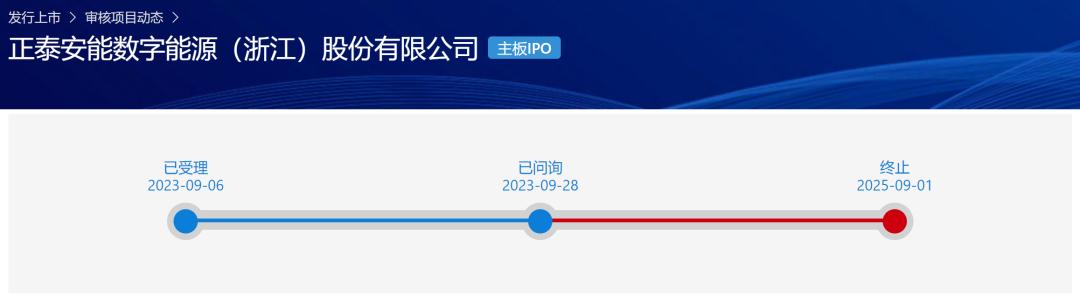
温州前首富,撤回一个IPO
3 6 Ke· 2025-09-15 04:04
Core Viewpoint - The IPO journey of Zhejiang Chint Aneng Digital Energy Co., Ltd. (Chint Aneng) has been abruptly halted after two years, with the company withdrawing its application due to favorable business performance and market conditions [1][3][7]. Company Overview - Chint Aneng, established in 2015, is a unicorn in the photovoltaic industry, valued at 44 billion yuan, ranking 128th on the Hurun Global Unicorn List [3][4]. - The company planned to issue up to 271 million shares, raising 6 billion yuan for various projects, including 5 billion yuan for household photovoltaic station collaborations [3][4]. Financial Performance - From 2022 to 2024, Chint Aneng's revenue grew from 13.704 billion yuan to 31.826 billion yuan, while net profit increased from 1.753 billion yuan to 2.861 billion yuan [4][10]. - The company's installed capacity for household photovoltaic stations reached 13.60 GW in 2024, maintaining the highest market share in the industry [4][10]. Market Context - Since 2024, hundreds of companies have withdrawn their IPO applications, leading to a significant decrease in the number of companies waiting for A-share IPOs [3][7]. - As of mid-August 2023, the number of companies in the IPO queue had dropped to 296 from 681 at the end of 2022 [3][7]. Strategic Decisions - Chint Aneng's parent company, Chint Electric, cited the need to coordinate business development and market conditions as reasons for terminating the IPO [3][7]. - The decision reflects a cautious assessment of the regulatory environment and the company's long-term strategic considerations [7][9]. Industry Dynamics - The rapid growth of the household photovoltaic market in China is evident, with new installed capacity increasing significantly from 25.25 GW in 2022 to 46.52 GW in 2024 [10]. - Despite its strong market position, Chint Aneng faces challenges such as increasing competition, declining component prices, and regulatory changes affecting profitability [10][11]. Future Outlook - The future capital strategy for Chint Aneng remains uncertain, with possibilities including waiting for a more favorable IPO environment or exploring alternative methods for asset securitization [9][11]. - The company aims to transition from a leader in distributed photovoltaic solutions to a global comprehensive energy service provider, focusing on innovative energy solutions and microgrid systems [12][13].
大美无度:全球5A级第一强国,中国光能耀世界
Sou Hu Cai Jing· 2025-09-10 06:42
Core Viewpoint - The Chinese photovoltaic industry has achieved high-quality development, ranking as the world's top 5A country in this sector, with significant advancements in technology and market presence [1][3]. Industry Overview - The Chinese photovoltaic industry has built the most competitive supply chain globally, maintaining the highest production and installation capacity for over a decade [3]. - In the first half of 2025, China added 212.21 GW of new photovoltaic installations, a 107% year-on-year increase, contributing over 45% to the global total expected to reach 570-630 GW [3]. - As of May 2025, the cumulative installed capacity of photovoltaic power generation in China surpassed 1 billion kW, equivalent to 48 Three Gorges power stations [3]. Market Dynamics - The industry faces structural contradictions, with production capacity exceeding global demand significantly, leading to price volatility and squeezed profit margins [4]. - Component prices have dropped below 0.6 yuan per watt due to supply exceeding demand, resulting in a challenging profit environment across the industry [4]. Technological Innovations - N-type batteries have become mainstream, with TOPCon technology accounting for over 75% of production capacity, while advanced technologies like HJT and BC are accelerating commercialization [4]. - Longi Green Energy's HIBC technology has achieved a laboratory conversion efficiency of 27.81%, with HPBC 2.0 components reaching 24.8% efficiency and HIBC components exceeding 25.9% efficiency [4][5]. Policy and Regulatory Environment - The Chinese government is implementing measures to regulate the photovoltaic industry, including curbing low-price competition and ensuring product quality [5][6]. - Recent international policy changes from the U.S. and EU pose new challenges for Chinese photovoltaic companies, including anti-dumping investigations and local manufacturing requirements [6][7]. Global Market Expansion - Chinese photovoltaic companies are diversifying their market presence to counter global trade barriers, actively participating in large projects in the Middle East and Southeast Asia [7]. - Investments in Latin America and Africa are increasing, with significant projects underway in Brazil, Mexico, and Ethiopia [7]. Future Challenges - The industry must align with international standards, including stricter ESG requirements and carbon footprint labeling, to enhance export competitiveness [8]. - Future policies will likely create a multi-dimensional regulatory framework encompassing market rules, environmental protection, and safety production [8].
撤回不是撤退!布局综合能源服务,正泰安能开启战略新篇
21世纪经济报道· 2025-09-05 04:44
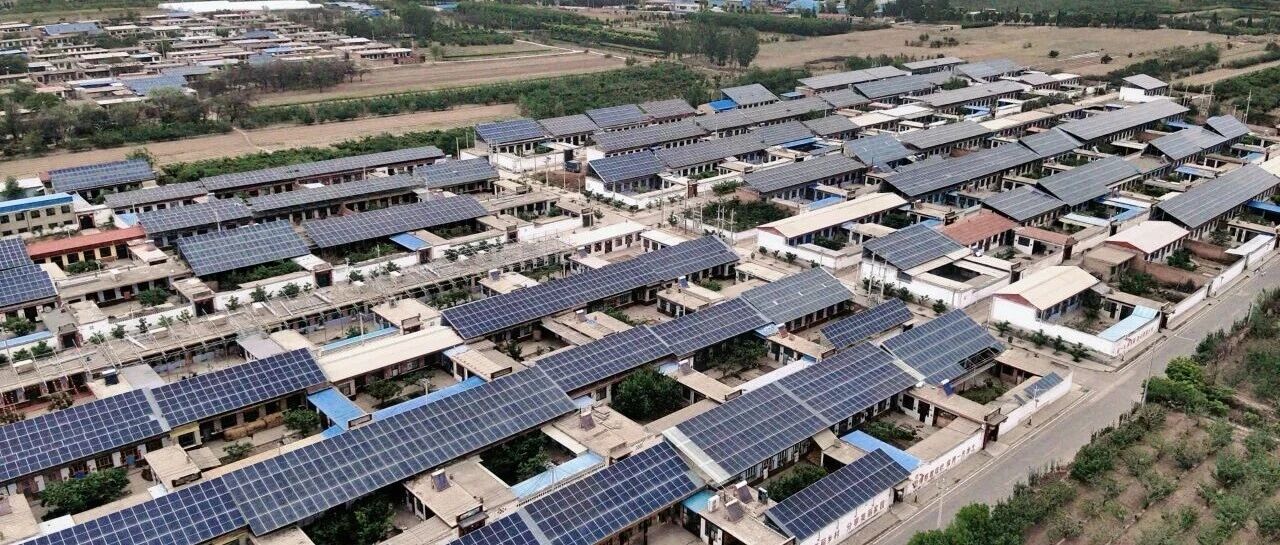
Core Viewpoint - The company has decided to withdraw its application for the IPO of its subsidiary, Zhengtai Aneng, which is seen as a strategic move to focus on its business development and optimize its operational capabilities [1][10]. Industry Overview - China is a strong advocate for green development, leading global efforts in renewable energy, with significant projects planned in collaboration with other countries [3]. - The renewable energy system in China has become the largest and fastest-growing globally, with renewable energy generation capacity increasing from 40% to around 60% since the "14th Five-Year Plan" [3]. - The share of green electricity in total electricity consumption is substantial, with one-third of the electricity coming from renewable sources [3]. Role of Private Enterprises - Private enterprises play a crucial role in the green low-carbon transition, with most photovoltaic equipment manufacturers and over 60% of wind turbine manufacturers being private companies [4]. Distributed Photovoltaics Development - Distributed photovoltaics are closely linked to improving livelihoods, with over 400 million kilowatts of new installations since the "14th Five-Year Plan," significantly benefiting rural households [6]. - The market for household photovoltaics has immense potential, with over 1600 GW of development capacity and a current market penetration of only about 10% [7]. Comprehensive Energy Services - The relationship between energy, electricity, and users is becoming increasingly interconnected, with comprehensive energy services emerging as a key pathway for integrating various energy technologies [8]. - Zhengtai Aneng is strategically transitioning from a leader in household photovoltaics to a global leader in comprehensive energy services, focusing on diverse business models and innovative solutions [8][9]. Future Outlook - The withdrawal of the IPO application is viewed as a new starting point for the company to refocus and enhance its capabilities, aiming to become a leader in comprehensive energy services and contribute to the dual carbon goals and global energy transition [10].

撤回不是撤退!正泰安能战略升维掘金综合能源服务新蓝海
Sou Hu Cai Jing· 2025-09-04 09:20
Group 1: Company Developments - Zhengtai Electric (stock code: 601877) announced the withdrawal of its subsidiary Zhengtai Aneng's application for listing on the Shanghai Stock Exchange, citing strong business performance and growth as the primary reasons [1] - The withdrawal of the IPO application is not seen as a setback but rather as a new starting point for the company to refocus and restructure its capabilities [8] - Zhengtai Aneng aims to transition from a leader in household photovoltaic systems to a global leader in comprehensive energy services, optimizing its business layout and resource integration [8] Group 2: Industry Trends - China is a strong advocate for green development, with plans to implement new photovoltaic and wind power projects in collaboration with other Shanghai Cooperation Organization countries over the next five years [3] - The share of renewable energy in China's power generation capacity has increased from approximately 40% to around 60% since the start of the 14th Five-Year Plan, with installed capacity for wind and solar power rising from 530 million kilowatts in 2020 to 1.68 billion kilowatts by July this year, reflecting an annual growth rate of 28% [3] - Distributed photovoltaic systems have become a crucial tool for improving livelihoods, with over 40 million kilowatts of new installations since the start of the 14th Five-Year Plan, generating approximately 14 billion yuan in annual income for farmers [4][5] Group 3: Market Opportunities - The household photovoltaic market in China has over 1600 GW of development potential, with only about 10% market penetration, indicating significant growth opportunities [5] - The rise of advanced manufacturing and digital industries is driving rapid growth in electricity demand, further expanding the development space for distributed photovoltaic systems [5] - Zhengtai Aneng is focusing on comprehensive energy services, integrating distributed energy, smart grids, and storage technologies to enhance energy production and consumption efficiency [6][7]
