
制造业高质量发展

Search documents
税收数据显示,前三季度中国制造业高质量发展持续推进
Zhong Guo Xin Wen Wang· 2025-10-15 08:54
Core Insights - The data from the National Taxation Administration of China indicates that the high-quality development of the manufacturing industry has been continuously promoted in the first three quarters of the year, supported by significant tax reductions and refunds totaling 1.2925 trillion yuan [1][2]. Group 1: Tax Policies and Financial Support - The main tax reduction policies for the manufacturing sector provided a total benefit of 485.7 billion yuan through R&D expense deductions and a reduced corporate income tax rate of 15% for high-tech enterprises [1]. - Additional tax benefits included 112 billion yuan from VAT deductions for advanced manufacturing, integrated circuits, and industrial mother machines, along with 694.8 billion yuan from other supportive policies [1]. Group 2: Manufacturing Sector Performance - In the first three quarters, the manufacturing sector's sales revenue increased by 4.7% year-on-year, accounting for 29.8% of total corporate sales revenue, thus providing significant support for economic growth [1]. - The equipment manufacturing sector saw a sales revenue increase of 9% year-on-year, with notable growth in specific areas such as computer communication equipment (13.5%) and industrial mother machines (11.8%) [2]. Group 3: Technological and Green Transformation - Investment in digital technology by manufacturing enterprises rose by 10.6% year-on-year, facilitating the rapid upgrade of smart industries, with smart device manufacturing (e.g., robots, drones) growing by 23.6% [2]. - The share of high-energy-consuming manufacturing in total manufacturing revenue decreased by 1.4 percentage points to 28.9%, while spending on energy-saving and environmental protection services increased by 34%, indicating a commitment to green governance [2]. Group 4: Tax Revenue Growth - Overall tax revenue from the manufacturing sector grew by 5.8% year-on-year, with high-end manufacturing sectors such as new energy vehicles and aerospace seeing tax revenue increases of 49.7% and 31.4%, respectively [2]. - The profitability of industries like steel and non-ferrous metals improved, leading to corporate income tax growth of 11.7% and 32.2% year-on-year [2].
税收数据显示:今年前三季度制造业高质量发展持续推进
Sou Hu Cai Jing· 2025-10-15 02:49
Core Viewpoint - The high-quality development of the manufacturing industry is crucial for China's overall economic growth, supported by significant tax reductions and policy incentives aimed at fostering innovation and development in the sector [1]. Group 1: Tax Reductions and Policy Support - From January to August, tax reductions and refunds supporting manufacturing amounted to 1.2925 trillion yuan [1]. - Key policies included a deduction for R&D expenses and a reduced corporate income tax rate of 15% for high-tech enterprises, providing a total benefit of 485.7 billion yuan [1]. - Additional tax benefits from VAT deductions for advanced manufacturing and related sectors totaled 112 billion yuan, while other supportive policies contributed 694.8 billion yuan [1]. Group 2: Manufacturing Sector Performance - In the first three quarters, manufacturing sales revenue grew by 4.7% year-on-year, accounting for 29.8% of total sales revenue across all enterprises [1]. - The equipment manufacturing sector saw a sales revenue increase of 9%, with notable growth in computer communication equipment (13.5%) and industrial mother machines (11.8%) [2]. - High-end manufacturing sectors, such as aerospace and high-speed rail, reported sales revenue growth of 12.5%, 16.1%, and 20.8% respectively [2]. Group 3: Transformation Trends - The adoption of digital technologies in manufacturing increased by 10.6%, with smart device manufacturing (e.g., robots, drones) growing by 23.6% [2]. - The share of high-energy-consuming manufacturing in total manufacturing revenue decreased by 1.4 percentage points to 28.9%, while spending on energy-saving and environmental services rose by 34% [2]. Group 4: Tax Revenue Growth - Manufacturing tax revenue increased by 5.8% year-on-year in the first three quarters, with high-end sectors like new energy vehicles and aerospace seeing tax revenue growth of 49.7% and 31.4% respectively [3]. - The recovery in prices for major commodities like steel and non-ferrous metals led to improved profitability, with corporate income tax from these sectors rising by 11.7% and 32.2% respectively [3]. - The implementation of tax reduction policies has effectively alleviated the burden on manufacturing enterprises, fostering a positive cycle of growth and tax contribution [3].
增值税发票数据显示:前三季度全国制造业销售收入同比增长4.7%
Xin Hua She· 2025-10-15 02:39
Group 1 - The core viewpoint of the articles highlights the significant growth and transformation in China's manufacturing sector, with a focus on high-end, intelligent, and green development [1][2] Group 2 - In the first three quarters of this year, manufacturing sales revenue increased by 4.7% year-on-year, accounting for 29.8% of total national enterprise sales revenue, providing crucial support for economic growth [1] - The equipment manufacturing sector saw a sales revenue increase of 9% year-on-year, representing 46.9% of the manufacturing sector, with notable growth in computer communication equipment (13.5%) and industrial mother machines (11.8%) [1] - Key industries related to major national projects, such as aircraft, high-speed trains, and deep-sea oil drilling equipment, experienced sales revenue growth of 12.5%, 16.1%, and 20.8% respectively [1] - The adoption of digital technologies in manufacturing increased by 10.6% year-on-year, with smart equipment manufacturing, including robots and drones, growing by 23.6% [1] - The share of high-energy-consuming manufacturing sales revenue decreased by 1.4 percentage points year-on-year to 28.9%, while spending on energy-saving and environmental protection services rose by 34% [1] Group 3 - The tax department has implemented significant tax reductions and refunds totaling 1.2925 trillion yuan (approximately 129.25 billion) in the first eight months of the year, easing the financial burden on manufacturing enterprises [2] - Specific tax policies, such as the R&D expense deduction and reduced corporate income tax rates for high-tech enterprises, provided a total of 485.7 billion yuan in benefits [2] - Additional tax incentives for advanced manufacturing, integrated circuits, and industrial mother machines amounted to 112 billion yuan, while other supportive policies contributed 694.8 billion yuan [2] - The high-quality development of the manufacturing sector is deemed essential for the overall high-quality economic development of China [2]
省十四届人大常委会第二十一次会议召开 黄楚平主持会议
Nan Fang Ri Bao Wang Luo Ban· 2025-10-11 01:41
Group 1 - The Guangdong Provincial People's Congress held its 21st meeting, focusing on various legislative proposals and reports related to modern enterprise systems, transportation development, and housing regulations [1] - The meeting included discussions on the adjustment of the provincial budget for 2025 and government debt management, highlighting the importance of fiscal planning and oversight [2] - Reports were presented on the integration of culture and tourism, elderly meal assistance services, and the construction of a talent team for elderly care services, indicating a focus on social welfare and economic development [2] Group 2 - The meeting addressed the implementation of laws related to the circular economy and high-quality development in the manufacturing sector, emphasizing the commitment to sustainable economic practices [2] - Personnel appointments and removals were also discussed, reflecting ongoing governance and administrative changes within the provincial government [2]
制造强国:从规模领先到实力领跑
Xin Hua Wang· 2025-10-09 00:02
Core Insights - China's manufacturing value-added accounts for nearly 30% of the global total, maintaining the world's largest scale for 15 consecutive years, with most industrial products ranking first in global output [1][2] Manufacturing Scale and Growth - From 2020 to 2024, China's total industrial value-added is projected to grow from 31.3 trillion yuan to 40.5 trillion yuan, while manufacturing value-added is expected to increase from 26.6 trillion yuan to 33.6 trillion yuan, contributing over 30% to global manufacturing growth [2] - The average annual growth rates for equipment manufacturing and high-tech manufacturing value-added are projected at 7.9% and 8.7%, respectively, with their shares in the industrial sector rising to 34.6% and 16.3% [2] Innovation and Technology - R&D expenditure of large-scale manufacturing enterprises exceeds 1.6% of their operating income, with over 570 industrial companies listed among the global top 2500 in R&D investment [2] - Significant achievements in key technology areas such as artificial intelligence and quantum communication have been made, with notable projects like "Chang'e" and "Beidou" demonstrating China's innovation capabilities [2] Supply Chain Resilience - The resilience of industrial and supply chains has been enhanced through the implementation of high-quality development actions and the re-engineering of industrial foundations, leading to breakthroughs in key technologies and products [3][4] - The self-sufficiency level of key industrial chains has steadily improved, with critical technology indicators for products like ultra-high voltage transmission and electric vehicles reaching international advanced levels [3] Digital Transformation - The integration of digital and physical economies is accelerating, with over 340 influential industrial internet platforms established, connecting more than 100 million devices and serving nearly 4 million enterprises [7] - The number of intelligent factories has exceeded 7000, with significant advancements in smart manufacturing technologies, including flexible production lines and predictive maintenance [7] Green Transformation - During the "14th Five-Year Plan" period, China has built the world's largest and most complete renewable energy industry chain, with a 20 percentage point increase in the share of renewable energy generation capacity [8][9] - The recycling of resources such as waste steel and waste copper is projected to exceed 400 million tons by 2024, with significant advancements in green manufacturing practices [9][10]
工信部等六部门:发展一批高可靠、高强度、高品质基础零部件、元器件和先进制造工艺
Xin Lang Cai Jing· 2025-09-29 07:23
Core Viewpoint - The document outlines a plan by six departments to enhance the resilience and competitiveness of the machinery industry through various initiatives from 2025 to 2026 [1] Group 1: Industry Development Initiatives - The plan emphasizes the implementation of an industrial foundation reconstruction project focusing on high-reliability, high-strength, and high-quality basic components and advanced manufacturing processes [1] - It aims to promote the green, efficient, precise, and intelligent development of basic manufacturing processes such as casting, forging, electroplating, and heat treatment [1] - The initiative seeks to enhance the supply capacity of advanced manufacturing and improve the collaborative support capabilities of the industrial chain and supply chain [1] Group 2: Technological Advancements - A major technological equipment breakthrough project will be implemented to strengthen collaboration across the industrial chain and promote technology breakthroughs and application of results throughout the entire chain [1] - The plan aims to foster a favorable industrial ecosystem by facilitating the transformation of technological achievements [1] Group 3: High-Quality Manufacturing Development - The document outlines actions to promote high-quality development in manufacturing, targeting key areas such as industrial mother machines, agricultural machinery, instruments, industrial robots, rail transit equipment, and medical equipment [1] - The goal is to quickly achieve a number of landmark results in these fields [1] Group 4: Public Service Platforms - The plan includes the establishment of public service platforms for industrial technology, focusing on common needs in research and development, inspection and testing, and experimental verification for equipment enterprises [1] - It also aims to build industrial measurement testing and inspection centers to support these initiatives [1]
行业聚焦:全球平板式砂磨机市场头部企业份额调研(附Top10 厂商名单)
QYResearch· 2025-09-28 04:23
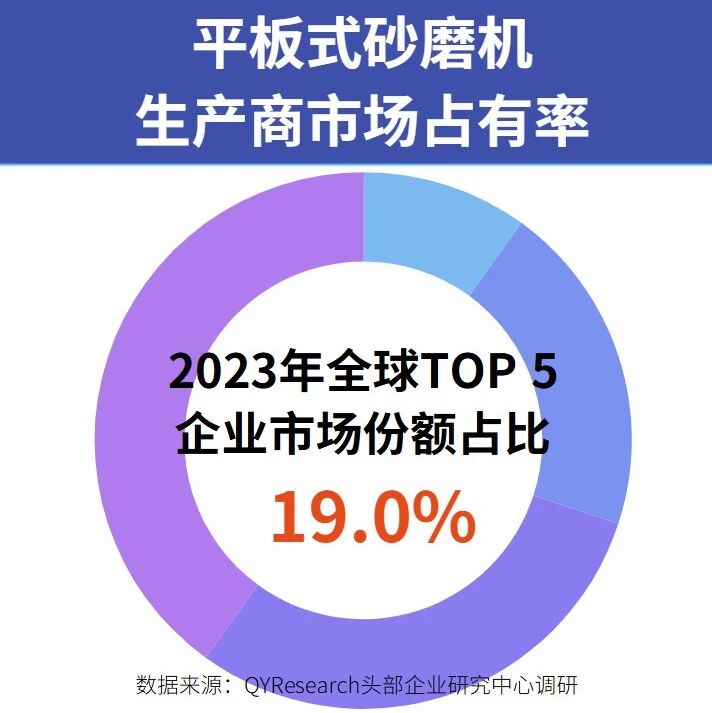
Core Insights - The global market for flat sanders is projected to reach $530 million by 2030, with a compound annual growth rate (CAGR) of 7.8% in the coming years [1]. Market Overview - The flat sander market is primarily driven by electric sanders, which hold approximately 60.6% of the market share [6]. - Online sales dominate the sales channels, accounting for 74.4% of the market [6]. Key Players - Major manufacturers in the global flat sander market include Bosch, Stanley, Makita, Dewalt, and Mirka, with the top five companies holding about 19.0% of the market share in 2023 [6][12][14]. Industry Trends - The flat sander industry benefits from national policies promoting high-quality manufacturing and industrial upgrades, including tax incentives and special funding [9]. - The industry is moving towards smart technology (integrating IoT and remote monitoring), automation (reducing labor costs), and green initiatives (energy-saving designs and pollution reduction) [9]. Challenges - The industry faces challenges such as intense homogenization competition, ongoing pressure for technological innovation, and technical bottlenecks related to grinding media optimization and cooling system efficiency [9]. - Barriers to entry include the need for technological research and development, significant capital investment for high-end equipment manufacturing, brand reputation, and compliance with stringent environmental and technical standards [9].

中国制造业500强榜单发布,23家深企上榜
2 1 Shi Ji Jing Ji Bao Dao· 2025-09-21 07:49
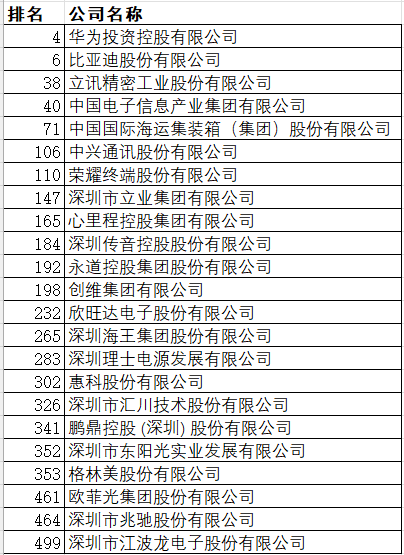
Core Insights - The "2025 China Manufacturing Enterprises Top 500" list was released, highlighting Shenzhen's strength with 23 companies listed, showcasing its status as the "Industrial First City" [1][5] - Huawei and BYD ranked 4th and 6th respectively, with revenues of 862.1 billion and 777.1 billion yuan, indicating strong performance among leading companies [2][3] Company Performance - Shenzhen's top companies include Huawei, BYD, Luxshare Precision, China Electronics Corporation, and ZTE, among others, reflecting a diverse industrial base [2][5] - The overall revenue scale of the top 500 companies remains stable, with R&D investment as a growing focus, reaching a research intensity of 2.45%, up by 0.03 percentage points from the previous year [2][3] R&D and Innovation - Shenzhen companies are characterized by high R&D intensity, with five out of the top ten companies in R&D intensity being from Shenzhen, led by Huawei at 20.84% [3] - The emphasis on R&D is evident as these companies continue to invest significantly in innovation, contributing to their competitive edge [3][5] Global Expansion - Shenzhen companies are increasingly expanding internationally, with notable mentions of Transsion Holdings, Pegatron, and Jiangbolong Electronics, which have high overseas revenue ratios [3] - Transsion Holdings leads with 99.73% of its revenue from overseas markets, particularly in Africa and Southeast Asia, indicating successful global strategies [3] Industry Landscape - The listed Shenzhen companies span multiple strategic industries, including electronics, new energy, high-end equipment manufacturing, and smart terminals, creating a collaborative industrial ecosystem [5] - Shenzhen's commitment to high-end, intelligent, and green manufacturing continues to drive its industrial development, supporting the overall growth of China's manufacturing sector [5]





学习进行时丨推动制造业高质量发展,习近平总书记指明方向
Xin Hua She· 2025-09-20 02:58
Core Viewpoint - The development of the manufacturing industry is crucial for national strength and economic stability, with a strong emphasis on self-reliance and technological advancement [1][2][4]. Group 1: Importance of Manufacturing - Manufacturing is the foundation of the nation and a key pillar of the economy, essential for achieving modernization in China [1][3]. - The manufacturing sector must maintain a reasonable proportion within the national economy to support sustainable development [3]. Group 2: Self-Reliance and Technological Innovation - Emphasis on self-reliance in manufacturing is critical, as China cannot solely depend on international markets [4]. - Strengthening technological research and development is necessary to enhance domestic production capabilities and ensure national strength [5][6]. Group 3: High-Quality Development - High-quality development of the manufacturing sector is a priority for the overall economic growth of the country [7]. - There is a need to optimize and upgrade industries to foster a robust and modern manufacturing landscape [7]. Group 4: Innovation and Competitiveness - Companies must be positioned as the main drivers of innovation to create internationally competitive manufacturing clusters [9]. - The shift towards digitalization, networking, and intelligence in manufacturing is essential for reducing operational costs and enhancing efficiency [12]. Group 5: Investment and R&D - Increased investment and research efforts in equipment manufacturing are vital for gaining a competitive edge in global markets [13].

干春晖:制造业高质量发展的理论贡献与实践路径
Jing Ji Ri Bao· 2025-09-18 00:06
Core Viewpoint - The manufacturing industry is crucial for national economic stability and security, with a focus on high-quality development and self-innovation to overcome existing challenges and enhance global competitiveness [1][2][3]. Group 1: Importance of Manufacturing - Manufacturing is described as the "ballast stone" of a major country's economy, essential for national security and modernization [1]. - China's manufacturing sector has maintained its position as the largest globally, but faces challenges such as reliance on key technologies and supply chain resilience [1]. - The dual mission of advancing manufacturing includes supporting Chinese-style modernization and addressing issues arising from industrial civilization [1]. Group 2: Strategic Directions - The emphasis is on high-end, intelligent, and green development of the manufacturing sector, with self-innovation as a key to breaking technology monopolies [2][4]. - The approach combines efficiency and equity, integrating technological progress with civilizational evolution [2]. Group 3: Theoretical Foundations - Advanced thought and theory are essential for guiding high-quality development in manufacturing, rooted in Marxist political economy [3]. - The development philosophy prioritizes improving people's lives and enhancing welfare, linking employment stability to common prosperity [3]. Group 4: Development and Safety - A dialectical approach to development and safety is necessary, focusing on building industrial strength while enhancing safety through collaborative efforts [4]. - The integration of ecological protection with economic development is highlighted, showcasing successful transformations in traditional industries [4]. Group 5: Unique Development Path - China's manufacturing development is characterized by a "parallel advancement" model, integrating industrialization, informatization, and intelligentization [8]. - This model has allowed China to achieve significant industrialization in a shorter time frame compared to developed countries, leveraging institutional advantages [8]. Group 6: Global Contributions - China's high-quality manufacturing development serves as a response to global industrial challenges, promoting cooperation and sustainable practices [9][10]. - The focus on green technology and sustainable practices aims to balance economic growth with environmental protection, showcasing a shift from traditional industrialization paths [10]. Group 7: Systematic Transformation - The coordinated development of high-end, intelligent, and green manufacturing is essential for systemic transformation, emphasizing the integration of technology, innovation, and value [12]. - The push for high-end upgrades involves overcoming core technology barriers and fostering new industries while revitalizing traditional sectors [12][13]. Group 8: Green Transition - The transition to green manufacturing emphasizes sustainable development across the entire lifecycle, with a significant number of national-level green factories established [13]. - The commitment to low-carbon development is seen as both a requirement for high-quality growth and an opportunity for new industrialization [13].