国产化替代

Search documents
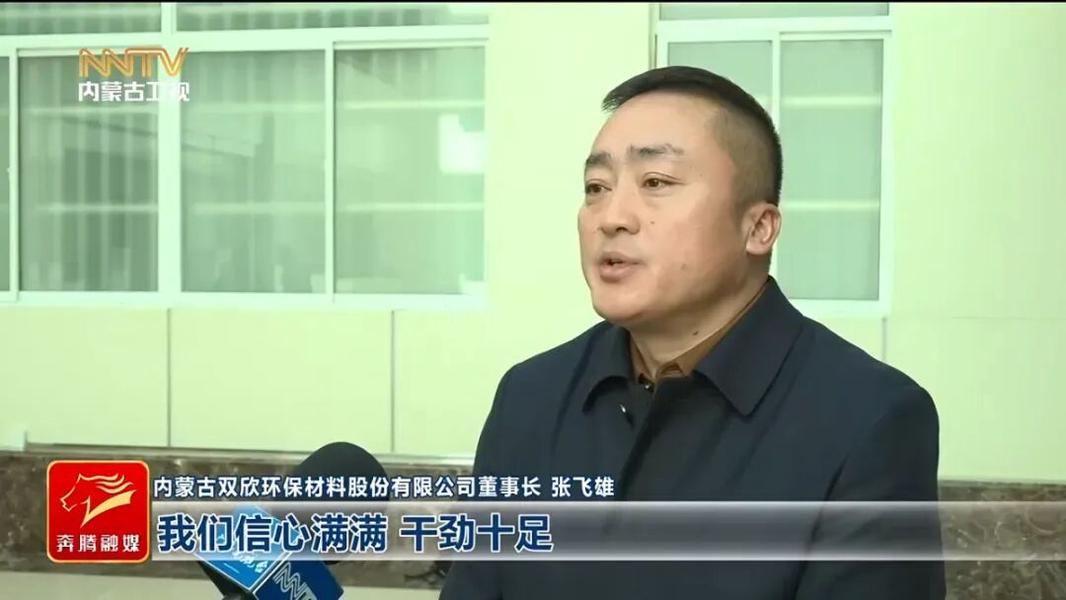
双欣环保:聚焦产业链创新,开展国产化替代攻关
Quan Jing Wang· 2026-02-27 14:23
Core Viewpoint - The company is committed to driving innovation and development in the polyvinyl alcohol industry chain, focusing on domestic substitution technology to enhance supply chain security in China [3]. Group 1: Company Development Strategy - The company aims to align with the Inner Mongolia Autonomous Region's "1571" work deployment to contribute to the region's economic growth during the 14th Five-Year Plan [3]. - The chairman emphasized the importance of quickly implementing production and operational strategies to support the region's development goals [3]. Group 2: Industry Focus - The company is concentrating on upstream and downstream collaborative innovation within the polyvinyl alcohol industry chain, particularly in critical material sectors [3]. - The company plans to leverage its flexibility and responsiveness as a private enterprise to enhance technological innovation and achieve breakthroughs in key materials [3].

公司问答丨八亿时空:正与下游相关企业及科研机构合作开发WSS用高端液晶材料 积极推进国产化替代进程
Ge Long Hui· 2026-02-27 07:39
Group 1 - The company is actively focusing on the development of high-end liquid crystal materials for WSS applications, indicating a commitment to advancing domestic alternatives in this sector [1] - The company is collaborating with downstream enterprises and research institutions to enhance its capabilities in AI computing power and optical communication fields [1] - The company expresses confidence in its ability to achieve domestic substitution for the required WSS liquid crystals needed by major clients such as Huawei and ZTE [1]

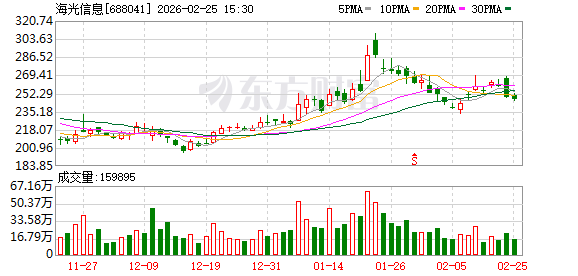
海光信息:2025年业绩快报点评:业绩高增验证景气,生态与研发共振打开成长空间-20260227
Soochow Securities· 2026-02-27 06:24
Investment Rating - The investment rating for the company is "Buy" (maintained) [3] Core Views - The company has two leading domestic products: CPU and DCU. The revenue from CPU products is expected to grow steadily as the industry progresses. The demand for AI computing power, combined with the acceleration of domestic production trends, presents a historic opportunity for domestic AI chip manufacturers. The company's DCU products rank in the first tier in terms of performance, with continuous new product iterations. Based on the company's 2025 performance report and the latest industry dynamics, the forecast for net profit attributable to the parent company for 2025-2027 has been adjusted to 25.42 billion, 41.22 billion, and 65.06 billion yuan respectively [3][9]. Financial Forecasts - Total revenue is projected to reach 14.376 billion yuan in 2025, representing a year-on-year growth of 56.91%. The net profit attributable to the parent company is expected to be 2.542 billion yuan, with a year-on-year growth of 31.64% [3][10]. - The earnings per share (EPS) for 2025 is estimated at 1.09 yuan, with a price-to-earnings (P/E) ratio of 231.06 based on the latest diluted shares [3][10]. - The company anticipates a revenue median of 40.65 billion yuan for Q1 2026, reflecting a year-on-year increase of 69% [9]. Research and Development - The company has a high R&D investment, with over 85% of its workforce dedicated to R&D. In the first three quarters of 2025, R&D expenditure reached 29.35 billion yuan, a year-on-year increase of 35.38%. The focus will be on chip design iteration and performance benchmarking against NVIDIA GPUs [9][10]. - The company is building a highly open and fully compatible industrial ecosystem, with over 6,000 partners and more than 15,000 software and hardware tests completed, covering the entire chain from chip design to application [9]. Market Position - The company’s products are fully compatible with mainstream x86 software and hardware ecosystems, allowing customers to achieve domestic replacement without significant system modifications. The DCU products are designed to meet a wide range of AI computing needs, covering from inference of billion-level models to training of trillion-level models [9]. Financial Metrics - The company’s total assets are projected to reach 39.601 billion yuan by 2026, with a debt-to-asset ratio of 20.49% [10]. - The return on equity (ROE) is expected to increase to 15.59% by 2026, indicating strong profitability [10].

海光信息(688041):业绩高增验证景气,生态与研发共振打开成长空间
Soochow Securities· 2026-02-27 05:53
Investment Rating - The investment rating for the company is "Buy" (maintained) [1][3] Core Insights - The company has two leading domestic products: CPU and DCU. The revenue from CPU products is expected to grow steadily as the industry progresses. The demand for AI computing power, combined with the acceleration of domestic production trends, presents a historic opportunity for domestic AI chip manufacturers. The company's DCU products rank in the first tier in terms of performance, with continuous new product iterations [3] - Based on the company's 2025 performance report and the latest industry dynamics, the forecast for net profit attributable to the parent company for 2025-2027 has been adjusted to 25.42 billion, 41.22 billion, and 65.06 billion yuan respectively [3] Financial Forecasts - Total revenue is projected to reach 14.38 billion yuan in 2025, representing a year-on-year growth of 56.91%. The net profit attributable to the parent company is expected to be 2.54 billion yuan, with a year-on-year increase of 31.64% [1][10] - The earnings per share (EPS) for 2025 is estimated at 1.09 yuan, with a price-to-earnings (P/E) ratio of 231.06 based on the latest diluted shares [1][10] - The company anticipates a revenue median of 40.65 billion yuan for Q1 2026, reflecting a year-on-year growth of 69% [9] Research and Development - The company has a high R&D investment, with over 85% of its workforce dedicated to R&D. In the first three quarters of 2025, R&D expenditure reached 2.935 billion yuan, a year-on-year increase of 35.38% [9] - The company is focused on rapid product iteration through saturated R&D investment, aiming to optimize its C86 architecture and compete with NVIDIA's GPU performance [9]
联想投资领投新川电子Pre-IPO融资,强化高端电子材料产业链布局
Ge Long Hui· 2026-02-27 03:32
Core Insights - Hangzhou Xinchuan Electronic Materials Co., Ltd. has completed nearly 100 million yuan in Pre-IPO financing, led by Lenovo Investment, with participation from various institutions including Fuzhe Technology, Zhejiang Jiaotou Industrial Transformation Fund, and Hangzhou Urban Investment [1] Group 1: Financing Structure - The investment structure is diverse, involving industrial capital, local state-owned assets, and professional investment institutions, creating a "combination of industry and finance + regional collaboration" investment pattern [1] - Lenovo Investment will leverage its deep expertise in the technology industry chain to provide support in areas such as intelligent production and supply chain management for Xinchuan Electronic [1] Group 2: Strategic Focus - Xinchuan Electronic specializes in the research and development of functional electronic chemicals and advanced packaging materials, with applications in the semiconductor, consumer electronics, and new energy sectors [1] - The financing will be used for core technology R&D upgrades, the construction of a second-phase production base, and market channel expansion, with an expected 150% increase in production capacity by 2026 [1] Group 3: Industry Implications - Analysts believe that Lenovo's investment in Xinchuan Electronic is a crucial step in the group's strategy to enhance its upstream layout in the industry chain and strengthen technological ecosystem collaboration [1] - This move is expected to further consolidate Lenovo's strategic advantages in AI chips, semiconductors, and new energy applications [1]
趋势研判!2026年中国化妆品原料行业产业链、发展现状、细分市场及未来发展趋势研判:本土崛起加速替代进程,技术赋能开辟原料新赛道[图]
Chan Ye Xin Xi Wang· 2026-02-27 01:13
Core Insights - The cosmetics raw materials industry in China is transitioning from "high-speed growth" to "high-quality development," with a projected total transaction value of 1,104.245 billion yuan by 2025, reflecting a year-on-year growth of 2.83% [6][7] - The global cosmetics raw materials market is steadily growing, expected to reach 359.2 billion yuan by 2024, with the Asia-Pacific region, particularly China, being the core growth driver [8][9] - The Chinese cosmetics raw materials market is anticipated to grow rapidly, reaching approximately 65.004 billion yuan in 2024 and 71.667 billion yuan by 2026, with a compound annual growth rate (CAGR) of 5% from 2024 to 2026 [8][9] Industry Overview - Cosmetics raw materials are essential components that determine the quality, stability, safety, and core efficacy of cosmetic products, encompassing various chemical, natural, and biological substances [2][3] - The industry is governed by strict regulations, ensuring that all raw materials used in cosmetics are safe and compliant with national standards [2] Market Segmentation - Cosmetics raw materials can be categorized into two main types: base materials (such as oils, powders, and surfactants) and functional materials (including moisturizing, whitening, and anti-aging agents) [3][4] - The market is further segmented by regulatory status into used and new raw materials, and by source into natural, synthetic, and biological materials [3] Industry Chain Analysis - The cosmetics raw materials industry chain consists of three segments: upstream raw material supply, midstream research and production, and downstream brand and application [5][6] - Upstream focuses on the supply of basic raw materials, while midstream involves the research and production of specialized raw materials, and downstream includes brand manufacturers and distribution channels [5][6] Current Market Dynamics - The Chinese cosmetics industry is experiencing a shift towards high-quality development, supported by regulatory frameworks that enhance safety and compliance [6] - The market is characterized by strong resilience, with a projected total transaction value exceeding 1.1 trillion yuan by 2025 [6][7] Growth Projections - The global cosmetics raw materials market is expected to grow at a CAGR of approximately 2.64% from 2024 to 2026, reaching 378.4 billion yuan [8] - In China, the active ingredients market is projected to grow from 14.8 billion yuan in 2024 to 16.26 billion yuan by 2026, with a CAGR of 4.82% [9][10] Competitive Landscape - The industry is characterized by a multi-tiered competitive landscape, with international giants dominating the high-end market while domestic companies rapidly rise [11] - Leading domestic firms like Huaxi Biological and Furuida are making significant strides in innovation and market share, particularly in the fields of biological fermentation and plant extraction [11] Future Trends - The industry is expected to focus on technological innovation, with synthetic biology emerging as a key area for breakthroughs in high-end active ingredient production [13][14] - Domestic companies are anticipated to deepen their market presence in high-end raw materials, leveraging local resources and innovation to challenge international competitors [15] - Regulatory compliance and sustainability will drive the industry towards high-quality development, emphasizing low-carbon and biodegradable materials [16]


超捷股份(301005) - 2026年02月26日投资者关系活动记录表
2026-02-26 15:00
Group 1: Automotive Business Overview - The company focuses on the research, production, and sales of high-strength precision fasteners and special connectors, primarily used in automotive engine turbocharging systems, transmission parking control systems, exhaust systems, and key components in both interior and exterior automotive systems [2] - The automotive business capacity layout has been completed across multiple bases, including Shanghai, Wuxi, and Zhenjiang, which can meet the production demand for the next three to five years [2][3] - The automotive business is expected to maintain stable growth due to the gradual ramp-up of key projects with domestic major clients and overseas export business [3] Group 2: Competitive Advantages - Key advantages include: 1) High-quality customer resources; 2) Rich technical accumulation providing design solutions; 3) Strong quality control capabilities; 4) Stable and sufficient production capacity; 5) Enhanced customer service; 6) Combination of metal and plastic components to meet automotive lightweight requirements [3] - The company has established good relationships with international suppliers such as Magna, Valeo, and Bosch, facilitating overseas market expansion [3] Group 3: Market Insights - The estimated value of fasteners for a mid-range passenger vehicle is around 2,000 RMB, while the value for small and medium-sized fasteners is approximately 800 RMB [3] - The commercial aerospace sector is expanding, focusing on the manufacturing of commercial rocket structural components, with a significant market demand [4] - The structural components of commercial rockets account for over 25% of the total cost of mainstream-sized rockets [4] Group 4: Technological Development - The company is currently unable to use 3D printing for large or ultra-large thin-walled structural components due to strict requirements on size precision and mechanical uniformity [4] - Continuous monitoring of advanced manufacturing technologies, including 3D printing, is planned to assess their potential impact on product structure and manufacturing systems [4]
AIDC浪潮来袭,国产智能配电何以站稳脚跟
Guan Cha Zhe Wang· 2026-02-26 07:12
Core Insights - The AIDC (Artificial Intelligence Data Center) industry is experiencing a significant growth phase driven by policy support, demand, and technological innovation, with smart distribution becoming a competitive battleground for domestic manufacturers against traditional international brands [3][4]. Group 1: Industry Dynamics - The rapid iteration of AI models is leading to an exponential increase in computing power demand, transforming AIDC from a "computing power base" to a core infrastructure of the digital economy [1]. - The "East Data West Computing" initiative is accelerating the establishment of major computing power hubs in regions like Beijing-Tianjin-Hebei and the Yangtze River Delta, promoting clustered data center construction [3]. - The Ministry of Industry and Information Technology has set strict energy efficiency targets for new large AIDCs, requiring a PUE (Power Usage Effectiveness) of below 1.25 by 2025, which is driving upgrades in data center power distribution systems [3]. Group 2: Market Opportunities - The global competition for computing power is intensifying, with major cloud service providers like Amazon AWS, Microsoft Azure, Google GCP, and Meta projected to spend nearly $120 billion by Q3 2025, primarily on AI computing infrastructure [4]. - Traditional UPS (Uninterruptible Power Supply) systems are becoming inadequate for high-density computing needs, leading to a shift towards new power distribution architectures like 800V HVDC (High Voltage Direct Current) and solid-state transformers [4]. - The domestic AIDC market is expected to generate nearly $2 billion in revenue for related distribution companies by 2027, with the adoption of 800V HVDC technology potentially increasing the value of the distribution segment by 2-3 times [4]. Group 3: Company Positioning - Company has over 20 years of experience in the data center sector, providing stable power distribution solutions for major clients like China Mobile and China Unicom [5]. - The company is leveraging its "Two Intelligence and One New" strategy to establish a digital energy business unit, integrating its expertise in direct current technology into the AIDC sector [5][10]. - The company’s new generation of DC contactors is designed to meet the stringent demands of data centers and energy storage, with features such as a lifespan exceeding 100,000 cycles and compatibility with 800V HVDC systems [7]. Group 4: Competitive Advantages - The company has achieved significant breakthroughs in overseas markets, with its digital energy business projected to account for 10-15% of total revenue by 2024 [8]. - The company is actively involved in setting industry standards for AIDC power distribution, enhancing its influence in the sector [8]. - The company’s prefabricated production of AIDC distribution cabinets has reduced delivery times from six months to three months, providing a competitive pricing advantage of 15-20% lower than international brands [9]. Group 5: Future Growth Prospects - The company’s digital energy business is expected to experience explosive growth, potentially contributing over 40% of revenue growth from 2024 to 2027, with a compound annual growth rate of 20-30% [10]. - The gross margin for AIDC-related businesses is projected to be 5-8 percentage points higher than traditional low-voltage electrical products, with overseas business margins exceeding 35% [10]. - The company aims to enhance its product competitiveness by focusing on new power distribution architectures and increasing R&D investments, while also expanding its market presence domestically and internationally [11].


2026年top10企业项目管理最新排行
Sou Hu Cai Jing· 2026-02-26 05:03
Core Insights - The article discusses the challenges companies face in selecting project management software, emphasizing that reputation alone is insufficient; practical performance is crucial [2][3] - A ranking of the top 10 enterprise-level project management platforms for 2026 is presented, highlighting significant shifts in market dynamics and the emergence of new players [6][8] Selection Criteria - The evaluation of project management platforms is based on five key dimensions: scalability, service responsiveness, clarity in management processes, suitability for Chinese enterprises, and user-friendliness [5][3] - The ranking primarily targets medium to large enterprises with complex project management needs [6] 2026 Top 10 Rankings - The top-ranked platform is EasyTrack by 蓝云软件, noted for its strong client base including major companies like 深交所 and 海尔, indicating its reliability [9][12] - Other notable platforms include Teambition, 金蝶云·星瀚项目云, 用友BIP项目云, and ONES企业版, each with unique strengths and weaknesses [8][14] EasyTrack's Strengths - EasyTrack is characterized as a "versatile player" with a modular architecture that allows customization based on specific company needs [10][11] - It integrates various management methodologies and offers comprehensive functionality across project management, financial oversight, and resource management [12][13] Market Trends - The article notes a significant trend towards domestic software solutions due to the challenges faced by international brands in adapting to local management philosophies [8][9] - The importance of compliance with domestic standards (信创) is highlighted, with EasyTrack being fully compatible with the local ecosystem [13] Other Platforms Overview - Teambition excels in collaboration for internet-native teams but struggles with complex project management [14] - 金蝶 and 用友 leverage their strong ERP foundations but may lack depth in project management specialization [14] - ONES and PingCode are focused on IT project management, with clear boundaries in their applicability [15] - 飞书项目 and 鼎捷PLM+PM cater to specific needs but may not meet broader project management requirements [16] Implementation Considerations - The article emphasizes the importance of user experience and implementation support in the successful adoption of project management software [17][18] - Companies are advised to prioritize platforms that align with their management philosophies and operational needs [19]

海光信息发业绩快报:2025年度净利润同比增逾31%
Mei Ri Jing Ji Xin Wen· 2026-02-25 23:33
Core Viewpoint - The domestic chip manufacturer Haiguang Information has reported significant growth in revenue and net profit for the year 2025, driven by the increasing demand for high-end chips in the domestic market [3]. Group 1: Financial Performance - In 2025, Haiguang Information achieved a revenue of 14.376 billion yuan, an increase of 56.91% compared to the previous year [3]. - The net profit attributable to the parent company was 2.542 billion yuan, reflecting a growth of 31.66% year-on-year [3]. - The net profit after deducting non-recurring gains and losses was 2.303 billion yuan, up by 26.82% from the previous year [3]. - Total assets at the end of the reporting period reached 35.687 billion yuan, a growth of 24.96% from the beginning of the period [3]. - For Q1 2026, the company expects revenue between 3.91 billion yuan and 4.22 billion yuan, representing a year-on-year growth of 62.91% to 75.82% [3]. - The projected net profit for Q1 2026 is estimated to be between 620 million yuan and 720 million yuan, with a year-on-year increase of 22.56% to 42.32% [3]. Group 2: Market Position and Strategy - Haiguang Information specializes in high-end processors and accelerators, with its processors compatible with the mainstream x86 instruction set [4]. - The company has established deep partnerships with leading internet firms such as ByteDance, Tencent, Alibaba, and Baidu [4]. - The product "Deep Calculation No. 3" has been launched in the market, covering applications in AI training/inference, scientific computing, and financial risk control [4]. - The next-generation product "Deep Calculation No. 4" is progressing well in its development [4]. Group 3: Industry Trends - The domestic chip market is accelerating, with the AI chip server market in China expected to reach a scale of 16 billion USD in the first half of 2025, with over 1.9 million units shipped [5]. - Domestic AI chips are gaining market share, accounting for approximately 35% of the market, with growth rates surpassing that of Nvidia [5]. - At least nine Chinese AI chip companies have reported shipment or order volumes exceeding 10,000 units, indicating a growing recognition of the performance, stability, and total cost of ownership of domestic AI chips [6]. - Haiguang Information's CPU products are fully compatible with mainstream x86 software and hardware ecosystems, allowing for seamless domestic replacement without significant system overhauls [6].