基本公共服务均等化

Search documents
镜观回响2025丨在发展中保障和改善民生
Xin Hua She· 2025-12-22 05:59
Group 1: Core Achievements of Chinese Modernization - The core value of Chinese modernization is to benefit the people, with a focus on improving their sense of gain, happiness, and security [1] - The government emphasizes the importance of ensuring and improving people's livelihoods during development [1] Group 2: Elderly and Child Care Initiatives - The focus for 2025 is on elderly care and child-rearing, with measures aimed at ensuring the well-being of the elderly and children [3] - Guizhou Province has developed a "institution + community + home" model for elderly care, enhancing the quality of life for seniors [5] - Shandong Province has established a "1+N" inclusive childcare service system to address the needs of children under three years old [7] - Yunnan Province has implemented a "one-stop" service for elderly and child care in rural areas, integrating various resources to support these groups [13] Group 3: Employment and Skills Development - Employment is highlighted as the biggest livelihood issue, with efforts to expand job opportunities and enhance labor protection [14] - Various regions are actively working to improve employment services, including skill training and job placement [19][21] - The integration of vocational training in local industries, such as tea culture education in Fujian, aims to cultivate skilled talent for specific sectors [23] Group 4: Public Services and Healthcare - The goal is to achieve equal access to basic public services, with ongoing improvements in healthcare and education [27] - Initiatives in rural areas, such as the establishment of village clinics in Jinhua, aim to enhance healthcare accessibility [29] - The "group-style" medical assistance program in Tibet has significantly improved healthcare services and trained local medical personnel [32] Group 5: Community Support and Welfare - Community initiatives, such as mutual aid canteens for the elderly in Tianjin, address food security and foster community connections [45] - The government has implemented various support measures for vulnerable populations, including providing heating supplies to those in need during winter [41][43]


周广智在镇宣讲党的二十届四中全会精神 并调研省公共法律服务条例实施情况
Zhen Jiang Ri Bao· 2025-12-09 23:36
Core Points - The Jiangsu Provincial People's Congress Standing Committee is actively promoting the implementation of the "Public Legal Service Regulations" and the spirit of the 20th Central Committee of the Communist Party of China [1][2] - The focus is on enhancing the accessibility and equality of public legal services, responding to new demands from the public, and addressing existing weaknesses in service delivery [1] Group 1 - The Vice Chairman of the Provincial People's Congress, Zhou Guangzhi, conducted on-site research in various districts to understand the implementation of public legal services [1] - Zhou emphasized the importance of integrating the spirit of the 20th Central Committee into the legal service practices and regulations [1] - The need for a systematic approach to enhance the sustainability and quality of public legal services was highlighted [1] Group 2 - Key officials from the Provincial People's Congress and the Provincial Justice Department participated in the research activities [2] - The discussions included engagement with grassroots legal service institutions to gather insights on service implementation [1][2]
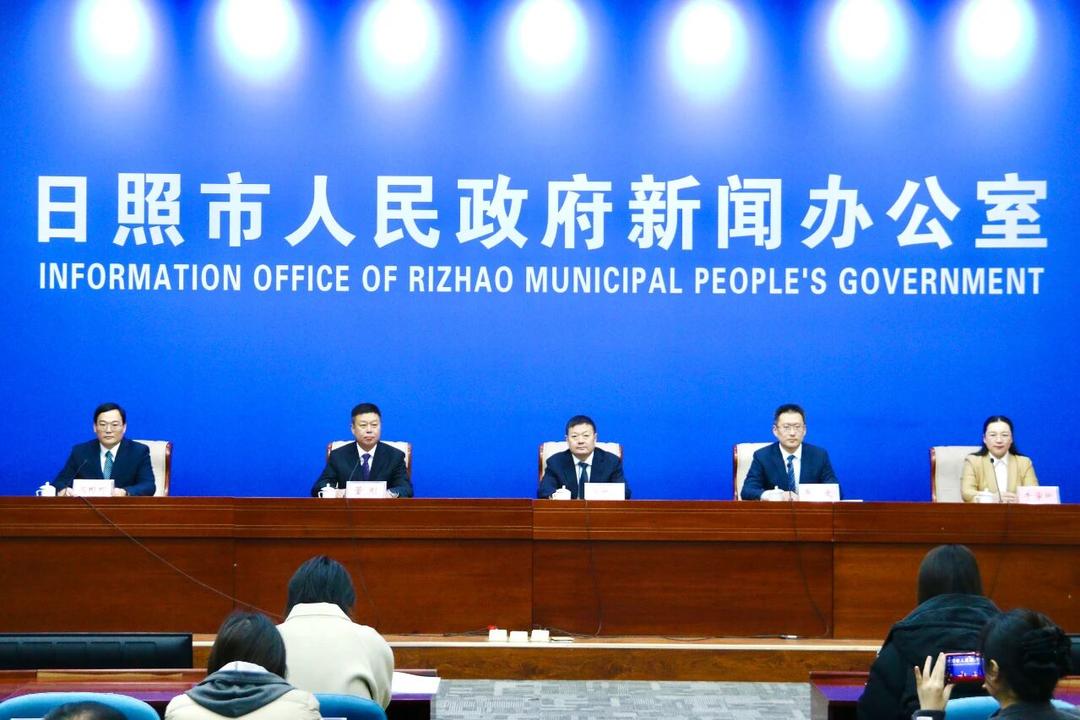
“十四五”期间,日照全市民生支出累计达到1184.3亿元
Qi Lu Wan Bao· 2025-12-09 10:15
Core Viewpoint - The news highlights the achievements and future plans of Rizhao City in enhancing public welfare and social services during the "14th Five-Year Plan" period, with a total expenditure of 118.4 billion yuan on people's livelihood, maintaining around 80% of the general public budget expenditure [1]. Group 1: Employment and Social Security - The city has focused on five key areas: employment and social security, educational equity, health for all, assistance for the vulnerable, and services for the elderly and children [3]. - A total of 1.63 billion yuan has been allocated for employment and entrepreneurship funding, with approximately 3.3 billion yuan in guaranteed loans, directly supporting 14,000 individuals in starting businesses [3]. - The city has organized over 100 recruitment events and provided vocational skills training for 149,000 participants, resulting in 148,000 new urban jobs [3]. Group 2: Education and Health - The city has constructed or renovated 81 primary and secondary schools and inclusive kindergartens, and has initiated a model for early childhood education [4]. - The maximum payment limit for employee medical insurance hospitalization has been raised to 200,000 yuan, and the reimbursement threshold for outpatient services has been lowered, with a reimbursement rate of 65% for rural residents [3][4]. - The per capita funding for basic public health services has increased to 99 yuan, with significant upgrades to medical facilities and services [3]. Group 3: Support for Vulnerable Groups - The urban and rural minimum living standards have increased by 36.1% and 45.3% respectively since the end of the "13th Five-Year Plan," aiming for monthly standards of 977 yuan and 812 yuan by 2025 [4]. - Over 700 million yuan has been distributed in subsidies for disabled individuals, ensuring basic living standards for those in need [4]. - A total of 630 million yuan has been invested in elderly care services, promoting a coordinated system of community and home-based care [4]. Group 4: Future Outlook - Looking ahead to the "15th Five-Year Plan," the city plans to enhance service awareness, optimize expenditure structure, and increase investment in public welfare to improve the quality of life for residents [4].
谋篇布局“十五五”·热点问答|如何稳步推进基本公共服务均等化?
Zhong Guo Jing Ji Wang· 2025-12-06 12:06
Group 1 - The core viewpoint of the article emphasizes the need to steadily promote the equalization of basic public services, which are essential for the survival and development of all citizens and should align with the level of economic and social development [2][6] - Basic public services include education, employment, social security, healthcare, housing, and cultural sports, all of which are government-led initiatives [2][6] - The article suggests optimizing the allocation of basic public service resources by enhancing coverage in rural areas, remote regions, and among disadvantaged populations [5][6] Group 2 - It is important to establish a comprehensive system for basic public services, including evaluation standards and clear goals for achieving equalization [6][8] - The article highlights the need for a matching public resource allocation mechanism that corresponds with the resident population [7] - There is a call to increase the financial support for basic public services, ensuring that the expenditure on these services constitutes a reasonable proportion of total fiscal spending [8][9]
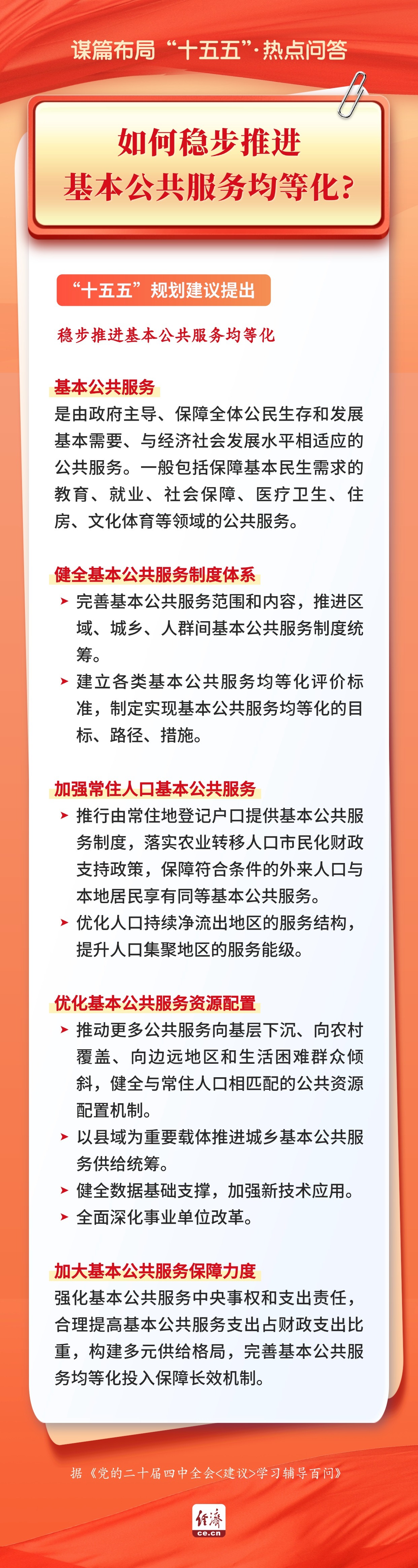
谋篇布局“十五五”·热点问答|如何稳步推进基本公共服务均等化
Zhong Guo Jing Ji Wang· 2025-12-06 12:00
Core Viewpoint - The "15th Five-Year Plan" emphasizes the need to steadily promote the equalization of basic public services, which are essential for the survival and development of all citizens and should align with the level of economic and social development [2]. Group 1: Basic Public Services - Basic public services are government-led and include essential areas such as education, employment, social security, healthcare, housing, and cultural sports [2]. - The plan aims to establish a comprehensive system for basic public services, ensuring that all citizens have access to these services regardless of their location or demographic status [3][6]. Group 2: Service Accessibility - There is a focus on enhancing basic public services for the resident population, particularly in rural and remote areas, to ensure that these services are more accessible to disadvantaged groups [4][5]. - The strategy includes optimizing the allocation of public service resources, promoting the decentralization of services to grassroots levels, and ensuring coverage in rural and economically challenged regions [5][6]. Group 3: Service Standardization and Support - The plan proposes to improve the range and content of basic public services, aiming for uniformity across regions, urban and rural areas, and different population groups [6]. - It suggests establishing evaluation standards for the equalization of basic public services and formulating specific goals, pathways, and measures to achieve this equalization [6]. - The initiative includes policies to support the urbanization of agricultural migrants, ensuring that eligible migrants receive the same basic public services as local residents [6].
湖南提出优化国土空间发展格局,推进以人为本的新型城镇化
Huan Qiu Wang· 2025-12-02 01:57
Group 1 - The core viewpoint emphasizes the need for Hunan Province to integrate into national regional strategic layouts, enhancing the level of integrated development in the Chang-Zhu-Tan area through a "one city" concept [1] - The "14th Five-Year Plan" period will focus on balancing the speed and quality of urbanization, with an expected urbanization speed of around 0.7 percentage points [1] - Key tasks include the orderly promotion of the urbanization of agricultural transfer populations and the equalization of basic public services [1] Group 2 - The development of urbanization will shift from scale expansion to quality improvement, with urbanization rates projected to reach 67% in 2024, nearing the 70% threshold where growth tends to slow [3] - The era of metropolitan areas and urban agglomerations is approaching, indicating a significant transition in urban development strategies [3] - Future county development should focus on establishing a "shortlist of leading industries" to concentrate resources in advantageous sectors, highlighting the importance of counties as key links in urban-rural integration [1]
让基本公共服务更加“公平可及”
Zhong Guo Jing Ji Wang· 2025-11-28 02:01
Group 1 - The core viewpoint emphasizes the importance of gradually promoting the equalization of basic public services to enhance the quality of life and social stability [1][3] - The "14th Five-Year Plan" has implemented various measures to improve public services, focusing on inclusive and foundational aspects to enhance overall living standards [1][2] - There are still disparities in the allocation of public service resources, indicating a need for improved efficiency and adaptability to meet the growing demands of the population [1][2] Group 2 - The scope and standards of basic public services are dynamic and should evolve with socio-economic development, necessitating a robust national public service system [2] - The focus on "fair accessibility" requires actionable policies to eliminate barriers for marginalized groups, ensuring equal access to education, healthcare, and social security [2] - Enhancing the quality of public services will require increased fiscal expenditure and innovative methods, including the use of digital tools to bridge capability gaps among users [2] Group 3 - The task of promoting equalization of basic public services is long-term and complex, with a clear national strategy outlined in recent policy documents [3] - The "15th Five-Year Plan" continues the approach established in previous policies, providing a scientific guide for public service development [3] - Emphasizing a steady approach, the focus should be on systematic strategies and clear priorities to ensure that public service benefits are equitably distributed among the population [3]
发展向前 民生向暖|让基本公共服务更加“公平可及”
Zhong Guo Jing Ji Wang· 2025-11-28 01:04
Group 1 - The core viewpoint emphasizes the importance of gradually promoting the equalization of basic public services to enhance the quality of life and social stability [1][3] - The "14th Five-Year Plan" has implemented various measures to improve public services, achieving a 100% internet access rate for primary and secondary schools and extending social security services to rural residents [1] - There are still disparities in the allocation of public service resources, and the efficiency of supply and demand needs improvement to meet the growing needs of the population [1][2] Group 2 - The scope and standards of basic public services are dynamic and should be adjusted according to economic and social development, requiring a more robust national public service system [2] - The focus on "fair accessibility" in public services necessitates practical actions to eliminate barriers for marginalized groups, such as migrant workers and flexible employment individuals [2] - Enhancing the quality of public services requires increased fiscal spending and innovative methods, including the development of digital infrastructure to facilitate efficient data flow and service delivery [2] Group 3 - The task of promoting the equalization of basic public services is long-term and complex, with a clear goal set for 2035 to achieve this equalization [3] - The "15th Five-Year Plan" continues the strategic direction for public service development, emphasizing a systematic approach and clear steps for implementation [3] - The focus on improving public services aims to ensure that the benefits of development are distributed more equitably among the population [3]
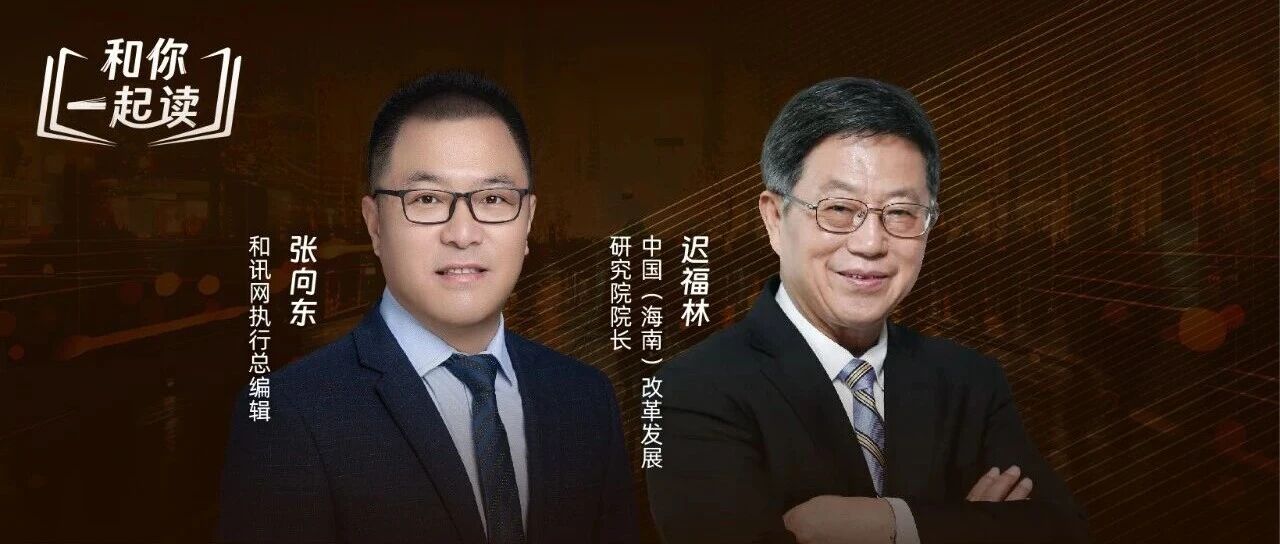
迟福林:如何让大家愿消费、敢消费、能消费?
和讯· 2025-11-24 09:49
Core Viewpoint - The article emphasizes the importance of enhancing social security and public services to boost consumer confidence and spending in China, particularly in the context of achieving common prosperity and addressing income distribution reform [3][4][5]. Group 1: Social Security and Consumer Confidence - The experience of observing full restaurants in Australia led to the realization of the importance of a legally confirmed social security net, which enhances consumer confidence [3][20]. - There has been significant investment in basic social security in China, resulting in noticeable growth in guaranteed income, but further legal confirmation of social security is necessary to stabilize consumer expectations [3][20]. - The need for a robust social security system is highlighted as a foundation for increasing consumer spending and ensuring a sense of safety among the populace [9][20]. Group 2: Income Distribution Reform - The "two-fold doubling plan" proposed by the National Committee aims to double national income and the middle-income group, which is seen as crucial for achieving common prosperity [3][4]. - The article discusses the necessity of narrowing the income gap between urban and rural residents, with recent improvements noted in rural income levels [16][17]. - Future reforms should focus on increasing the proportion of labor remuneration in national income, targeting a rise from 50% to 60% over the next decade [17]. Group 3: Economic Growth and Consumption - The article suggests that increasing the service consumption ratio from 46.1% to 60% could generate an additional 40 trillion yuan in consumer demand, indicating a significant opportunity for economic growth [8]. - The current economic model is criticized for being overly reliant on traditional investment, with a call for a shift towards a consumption-driven economy [9][10]. - The importance of investing in human capital, particularly in education, healthcare, and elder care, is emphasized as a means to stimulate service consumption and improve quality of life [11][12]. Group 4: Public Services and Urbanization - The "15th Five-Year Plan" aims to enhance the equality of basic public services, which is essential for urbanization and addressing the needs of a growing population [4][19]. - The article stresses the need for a balanced approach to investment in both physical infrastructure and human services to meet the evolving demands of society [10][14]. - Achieving basic public service equality is seen as a long-term goal that requires sustained effort and legal frameworks to ensure fairness and security for all citizens [19][21].
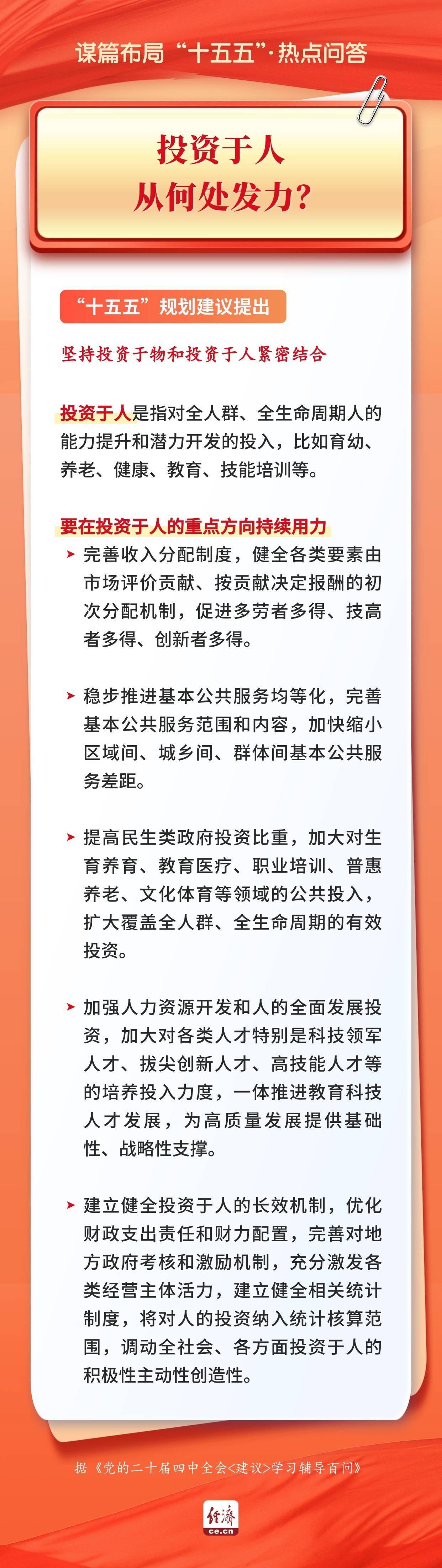
谋篇布局“十五五”·热点问答|投资于人,从何处发力?
Sou Hu Cai Jing· 2025-11-24 05:30
Group 1 - The core viewpoint emphasizes the integration of investments in both physical and human capital, highlighting the importance of enhancing capabilities and potential development across the entire population and lifecycle [2][4]. - Key focus areas for investment in human capital include early childhood education, elderly care, health, education, and skills training [2][4]. - The proposal suggests improving the income distribution system to ensure that compensation is based on contribution, promoting a merit-based reward system [3][4]. Group 2 - There is a call for gradual advancement towards equalization of basic public services, aiming to reduce disparities in service availability across regions, urban-rural divides, and different demographic groups [4]. - The plan advocates for increasing the proportion of government investment in areas related to people's livelihoods, such as childcare, education, healthcare, vocational training, inclusive elderly care, and cultural sports [4][5]. - The establishment of a long-term mechanism for investing in human capital is recommended, which includes optimizing fiscal responsibilities and enhancing local government assessment and incentive mechanisms [5].